Best Hiking Socks for Preventing Blisters: 9 Trail Tested Picks

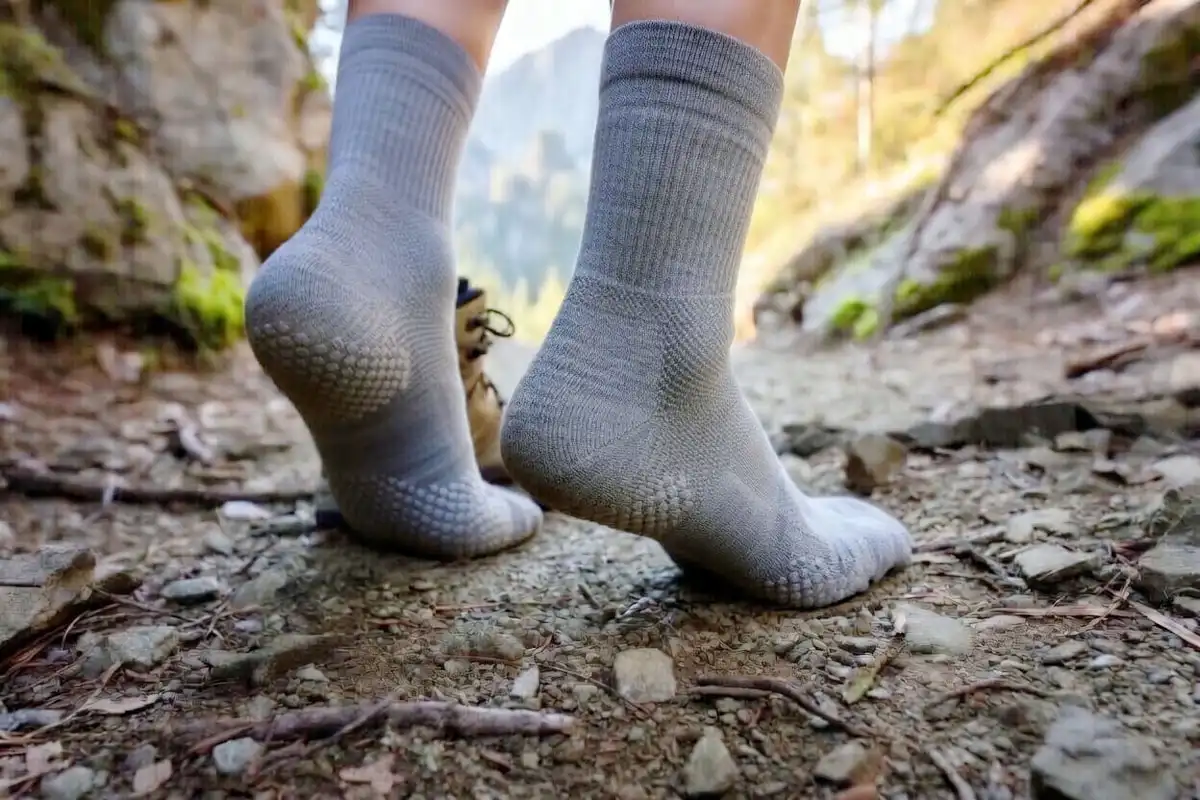
Looking for the best hiking socks for preventing blisters but not sure which pair holds up on a long trail? The right sock uses merino wool or moisture-wicking synthetics to pull sweat away, reduces friction at pressure points, and stays in place inside your hiking boots. This guide covers what separates a blister-prevention sock from a standard one, including material, cushion level, seamless construction, and fit criteria, so you pick the right pair before your next hike.
The best hiking socks for preventing blisters use merino wool or synthetic moisture-wicking fibers, seamless toe construction, and a snug heel cup. Midweight cushioning suits most hikers. Brands like Darn Tough, Smartwool, and Injinji consistently deliver reliable blister protection across varied terrain.
Top 9 Hiking Socks for Preventing Blisters: Quick Look Comparison
| Preview |
#1
Darn Tough Hiker Micro Crew
Superb Rating
Overall score: 95 of 100
List price: $25.95
|
#2
Injinji Trail Midweight Crew
Superb Rating
Overall score: 95 of 100
List price: $20.00
|
#3
Coolmesh II CrewWrightSock
Great Rating
Overall score: 91 of 100
List price: $21.00
|
#4
Smartwool Men's Run Zero Cushion
Superb Rating
Overall score: 95 of 100
List price: $18.00
|
#5
Balega Blister Resist Quarter
Great Rating
Overall score: 94 of 100
List price: $19.02
|
#6
Multisport Light MiniIcebreaker Merino
Superb Rating
Overall score: 96 of 100
List price: $17.30
|
#7
Le Bent The Range Light Cushion
Superb Rating
Overall score: 100 of 100
List price: $17.46
|
#8
Sockwell Circulator
Great Rating
Overall score: 90 of 100
List price: $32.95
|
#9
Darn Tough Vermont Coolmax Micro Crew
Great Rating
Overall score: 94 of 100
List price: $24.95
|
|---|---|---|---|---|---|---|---|---|---|
| Item Name | Darn Tough Hiker Micro Crew | Injinji Trail Midweight Crew | Coolmesh II CrewWrightSock | Smartwool Men's Run Zero Cushion | Balega Blister Resist Quarter | Multisport Light MiniIcebreaker Merino | Le Bent The Range Light Cushion | Sockwell Circulator | Darn Tough Vermont Coolmax Micro Crew |
| Price |
$25.95 Listed
Check Price on Amazon
|
$20.00 Listed
Check Price on Amazon
|
$21.00 Listed
Check Price on Amazon
|
$18.00 Listed
Check Price on Amazon
|
$19.02 Listed
Check Price on Amazon
|
$17.30 Listed
Check Price on Amazon
|
$17.46 Listed
Check Price on Amazon
|
$32.95 Listed
Check Price on Amazon
|
$24.95 Listed
Check Price on Amazon
|
| Overall Score |
Audience score
Calculated from Amazon global ratings percentages for Darn Tough Hiker Micro Crew.
95 / 100 from 11,754 ratings
Weighted average: 4.8 / 5 stars
Amazon rating breakdown
5 star
87%
4 star
8%
3 star
2%
2 star
1%
1 star
2%
Score position
This product
|
Audience score
Calculated from Amazon global ratings percentages for Injinji Trail Midweight Crew.
95 / 100 from 2,770 ratings
Weighted average: 4.8 / 5 stars
Amazon rating breakdown
5 star
85%
4 star
10%
3 star
2%
2 star
1%
1 star
2%
Score position
This product
|
Audience score
Calculated from Amazon global ratings percentages for Coolmesh II CrewWrightSock.
91 / 100 from 770 ratings
Weighted average: 4.5 / 5 stars
Amazon rating breakdown
5 star
78%
4 star
10%
3 star
5%
2 star
2%
1 star
5%
Score position
This product
|
Audience score
Calculated from Amazon global ratings percentages for Smartwool Men's Run Zero Cushion.
95 / 100 from 652 ratings
Weighted average: 4.7 / 5 stars
Amazon rating breakdown
5 star
84%
4 star
10%
3 star
3%
2 star
1%
1 star
2%
Score position
This product
|
Audience score
Calculated from Amazon global ratings percentages for Balega Blister Resist Quarter.
94 / 100 from 6,765 ratings
Weighted average: 4.7 / 5 stars
Amazon rating breakdown
5 star
84%
4 star
9%
3 star
4%
2 star
1%
1 star
2%
Score position
This product
|
Audience score
Calculated from Amazon global ratings percentages for Multisport Light MiniIcebreaker Merino.
96 / 100 from 27 ratings
Weighted average: 4.8 / 5 stars
Amazon rating breakdown
5 star
80%
4 star
20%
3 star
0%
2 star
0%
1 star
0%
Score position
This product
|
Audience score
Calculated from Amazon global ratings percentages for Le Bent The Range Light Cushion.
100 / 100 from 1 ratings
Weighted average: 5.0 / 5 stars
Amazon rating breakdown
5 star
100%
4 star
0%
3 star
0%
2 star
0%
1 star
0%
Score position
This product
|
Audience score
Calculated from Amazon global ratings percentages for Sockwell Circulator.
90 / 100 from 1,781 ratings
Weighted average: 4.5 / 5 stars
Amazon rating breakdown
5 star
73%
4 star
15%
3 star
5%
2 star
2%
1 star
5%
Score position
This product
|
Audience score
Calculated from Amazon global ratings percentages for Darn Tough Vermont Coolmax Micro Crew.
94 / 100 from 2,428 ratings
Weighted average: 4.7 / 5 stars
Amazon rating breakdown
5 star
84%
4 star
9%
3 star
4%
2 star
1%
1 star
2%
Score position
This product
|
| Blister Defense | True Seamless |
5-Toe Design |
Double Layer |
Virtually Seamless |
Seamless Toe Box |
Seamless Toe |
Ghost Seams |
Graduated Compression |
True Seamless |
| Cushion | Midweight |
Midweight |
Lightweight |
Zero cushion (minimal) |
High-volume cushion |
Light cushion |
Full underfoot cushion |
Ultra light cushion sole |
Midweight |
| Moisture Wicking | Merino wool + fast-dry wicking |
Coolmax® fibers, mesh top |
Recycled polyester + Nylon |
100% Merino wool thermoreg |
Drynamix + mohair hollow fiber |
Merino wool + Nylon breathe zone |
Bamboo Rayon + Merino blend |
Merino wool + Rayon moisture mgmt |
Coolmax® polyester fast-wick |
| Seamless Toe | ✓ |
✓ |
✓ |
✓ |
✓ |
✓ |
✓ |
✓ |
✓ |
| Arch / Heel Support | Contoured fit, Lycra stretch |
Arch band, double elastic cuff |
Lycra fit, snug wrap |
Achilles tab, mesh breathe zones |
Deep heel pocket, high heel tab |
Achilles + instep support |
Elasticated instep, Achilles band |
Arch support, turn welt top |
Lycra stretch fit |
| Rise | Micro Crew |
Crew |
Crew |
Low Cut |
Quarter |
Mini / Low Cut |
Mini / Over Ankle |
Knee-High |
Micro Crew |
What Causes Blisters on Hiking Trails?
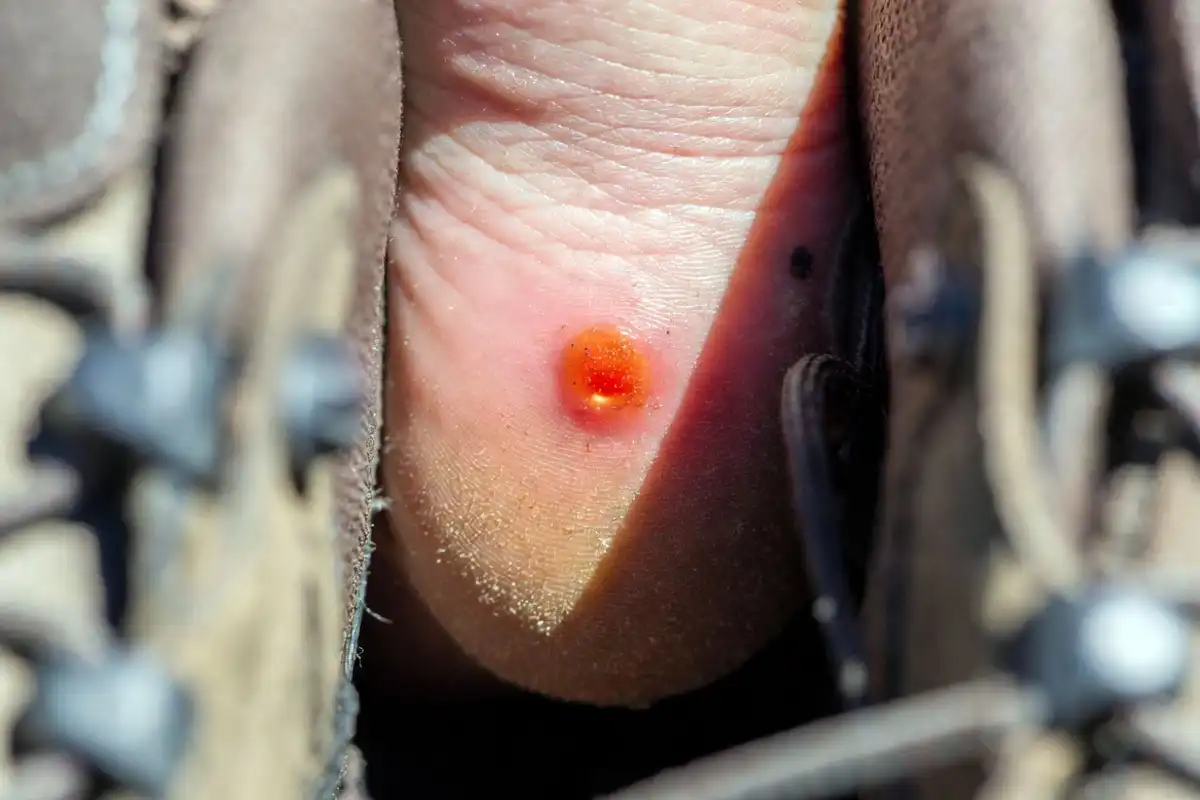
Blisters form when repetitive friction separates the upper skin layers. Three factors drive blister formation: friction from sock movement, moisture from sweat, and poor sock fit that lets fabric bunch or slide.
Heat builds up inside hiking boots during sustained effort. Wet skin softens faster and tears more easily under friction. Cotton socks absorb sweat and hold it directly against your skin, which accelerates hot spot development. A sock that fits poorly folds inside the boot and creates uneven pressure points at the heel and toe.
What Makes a Hiking Sock Good at Blister Prevention?
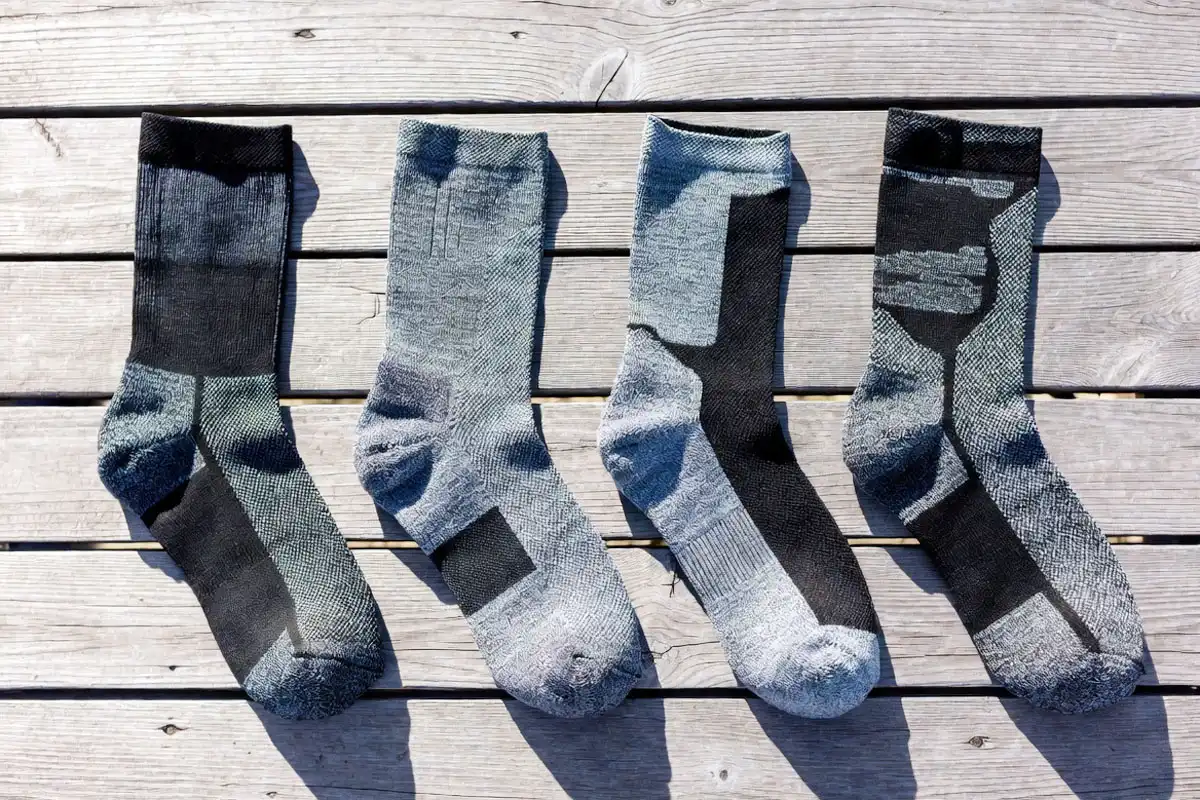
Four features separate a blister-prevention sock from a regular one: material, cushion level, seamless toe construction, and a secure arch and heel fit. Each one targets a specific cause of friction or moisture buildup.
- Material: Merino wool and synthetic fibers like nylon and Coolmax pull sweat away from the skin. Cotton holds moisture and fails on wet trails. A wet cotton sock softens skin and increases blister risk on every step.
- Cushion level: Cushioned hiking socks absorb impact and reduce skin-to-boot contact at pressure points. The right cushion level depends on your trail type and boot style.
- Seamless toe construction: Traditional seams sit against the skin and rub on every downhill step. Seamless toe socks remove that friction point entirely.
- Snug arch and heel fit: A sock that slips inside the boot bunches and folds, creating friction hot spots. A structured arch band and a deep heel cup hold the sock in place.
Merino Wool vs. Synthetic: Which Prevents Blisters Better?
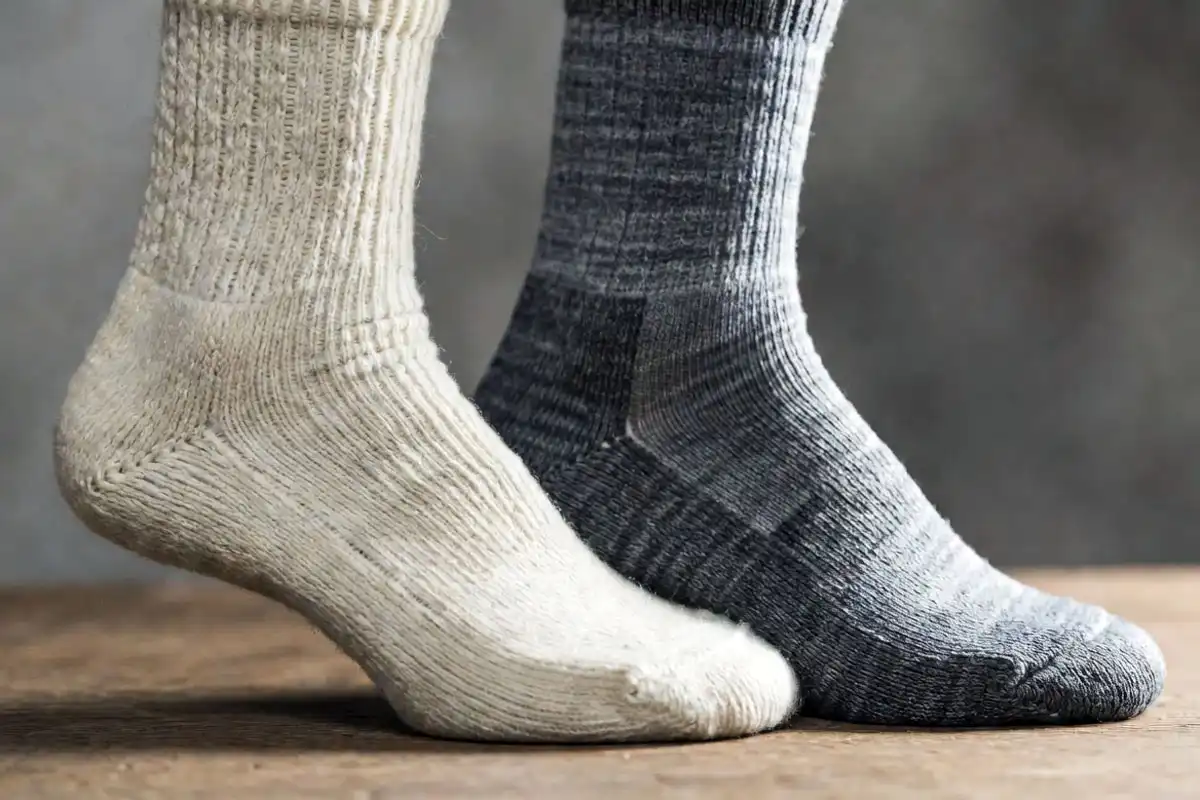
Merino wool regulates foot temperature, resists odor, and wicks moisture even when wet. Synthetic fibers like nylon and Coolmax dry faster and hold up longer under heavy daily use.
Merino wool hiking socks suit most hikers across three-season conditions. Synthetic hiking socks suit thru-hikers or hot-weather hikes where fast drying matters more than odor resistance. Both outperform cotton for moisture management and blister prevention.
Cushion Level: Which Weight Is Right for You?
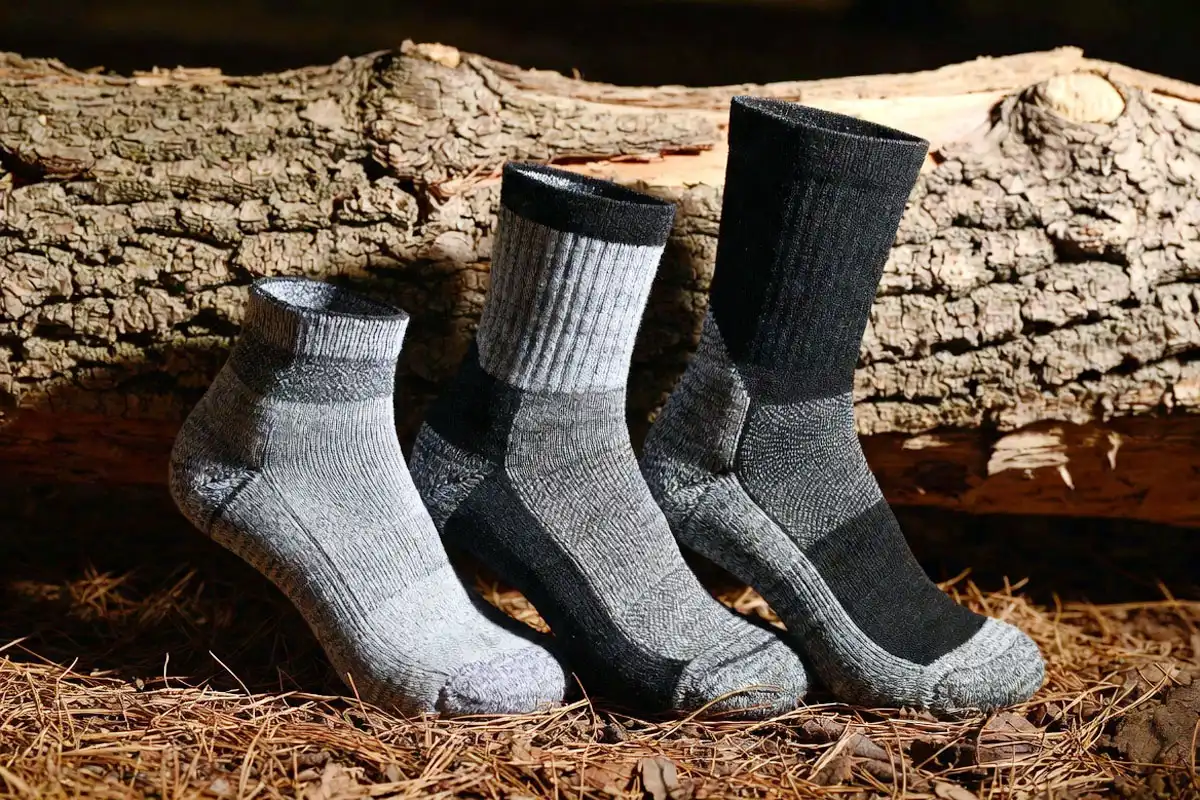
Lightweight hiking socks work well for day hikes and warm-weather trails. Midweight hiking socks suit most hiking conditions and deliver the best balance between cushion and boot fit. Full-cushion heavyweight socks serve mountaineering and cold-weather use.
Thick socks shift inside the boot and create hot spots on longer trails. For blister-prone hikers, midweight is the most reliable choice.
Why Seamless Toe Construction Reduces Blisters
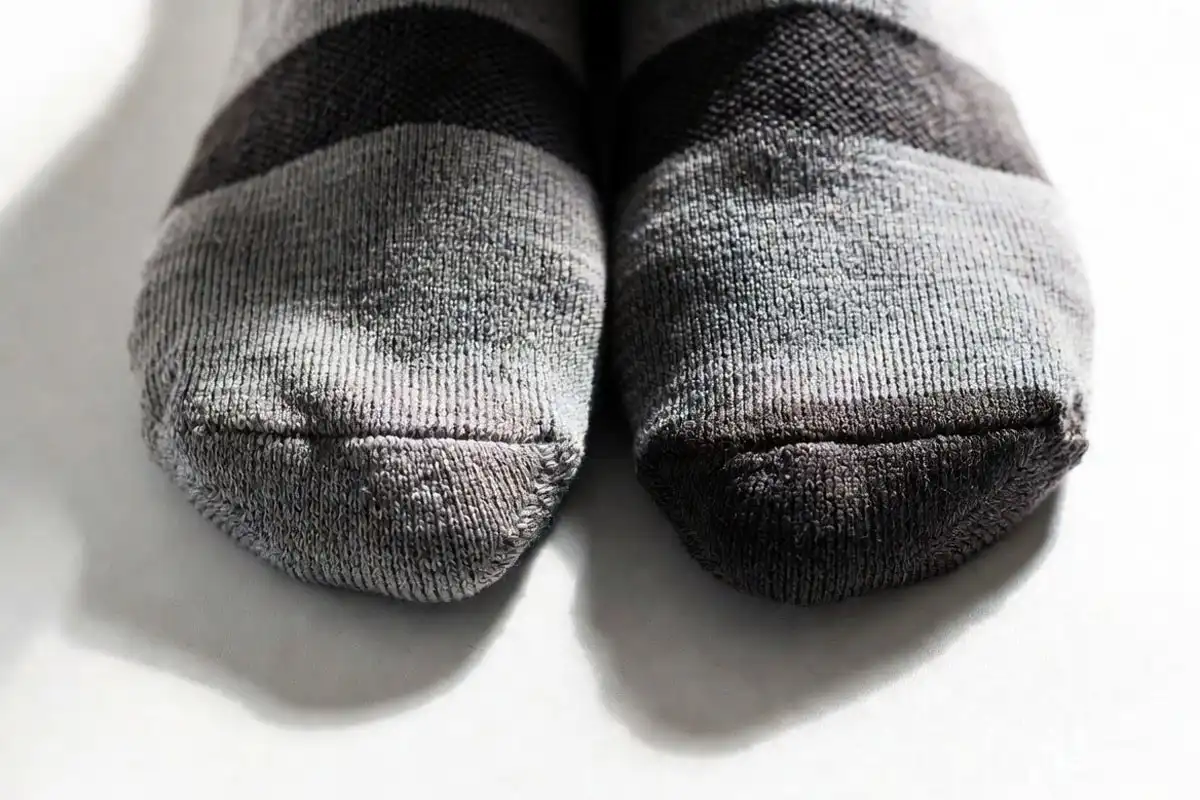
Traditional toe seams sit directly on the skin and create a friction point on every downhill step. Seamless or hand-linked toe construction removes that ridge entirely.
Toe seams are one of the most overlooked blister triggers on the trail. Many hikers blame their boots when the sock’s toe seam causes the problem. Seamless hiking socks eliminate this friction point before it starts.
How Arch and Heel Fit Prevents Sock Slippage
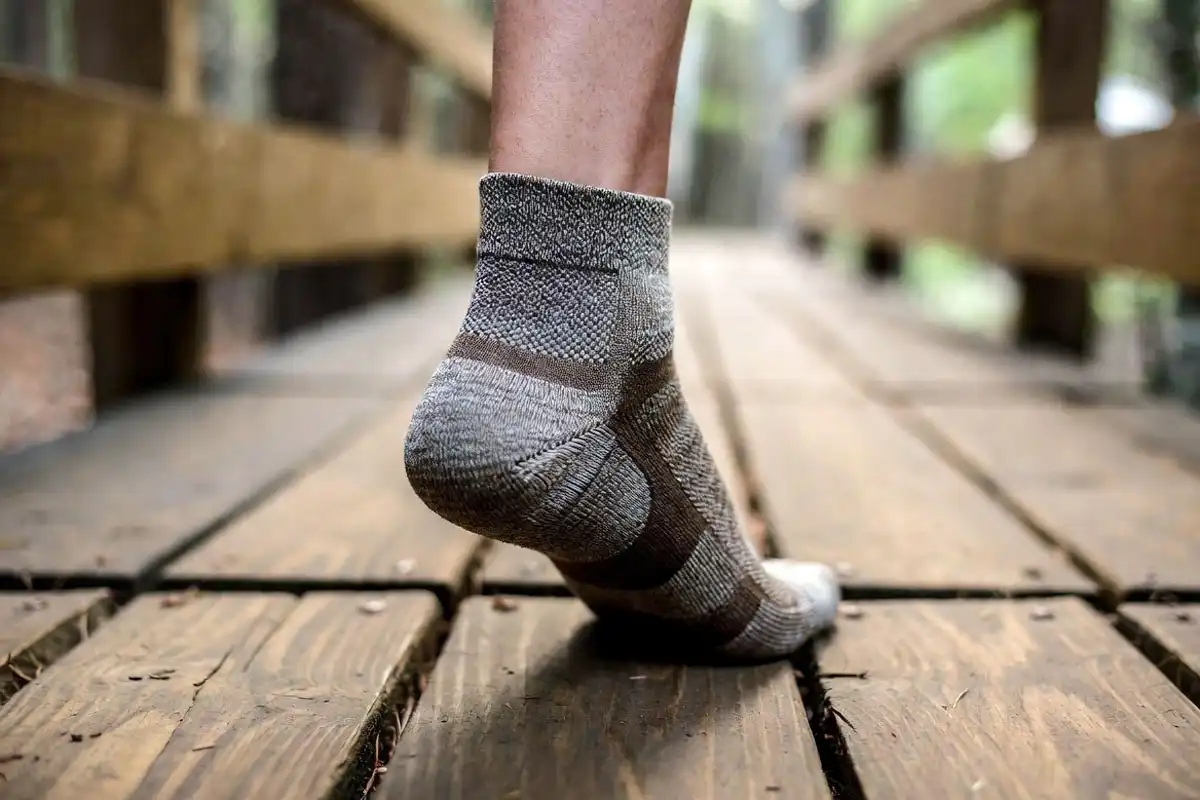
A sock that slips folds inside the boot, and folded fabric creates friction hot spots at the heel and arch. A structured arch band holds the sock in place with light compression. A deep heel cup keeps the sock aligned with the heel bone.
When putting on a hiking sock, check that the heel cup sits directly on your heel, not above or below it. Any gap or overlap points to the wrong size or fit.
The 9 Best Hiking Socks for Blister Prevention (Reviews)
These are the nine socks I recommend for blister prevention, covering merino wool blends, toe socks, dual-layer synthetics, and compression options. Each pick targets a specific hiker need, from budget buyers to high-mileage thru-hikers. If you want the short answer: Darn Tough delivers the best overall protection, Injinji leads for toe-to-toe friction, and WrightSock covers the budget end well.
1. Best Overall: Darn Tough Hiker Micro Crew
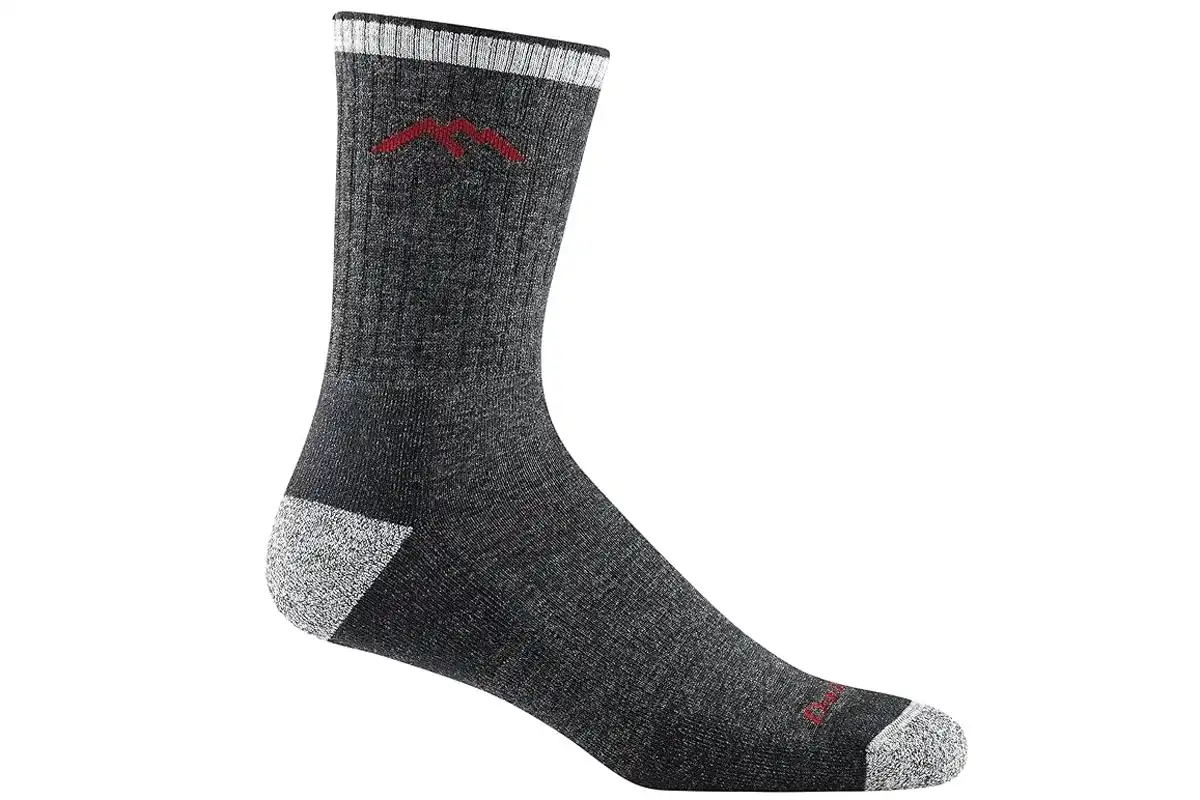
Darn Tough is a Vermont-based brand that knits every sock in the USA. The Hiker Micro Crew uses 61% merino wool, 36% nylon, and 3% Lycra Spandex with midweight cushion and True Seamless construction. The snug crew height sits just above a standard hiking boot collar and prevents sock movement inside the boot. Best for: all-season hikers who want one reliable sock backed by a lifetime warranty.
Why it’s a good buy:
Why it’s not recommended:
|
Fabric |
61% Merino Wool, 36% Nylon, 3% Lycra Spandex |
|---|---|
|
Cushion level |
Midweight |
|
Height |
Micro Crew |
|
Construction |
True Seamless technology |
|
Warranty |
Lifetime replacement guarantee |
2. Best Toe Sock for Blister Prevention: Injinji Trail Midweight
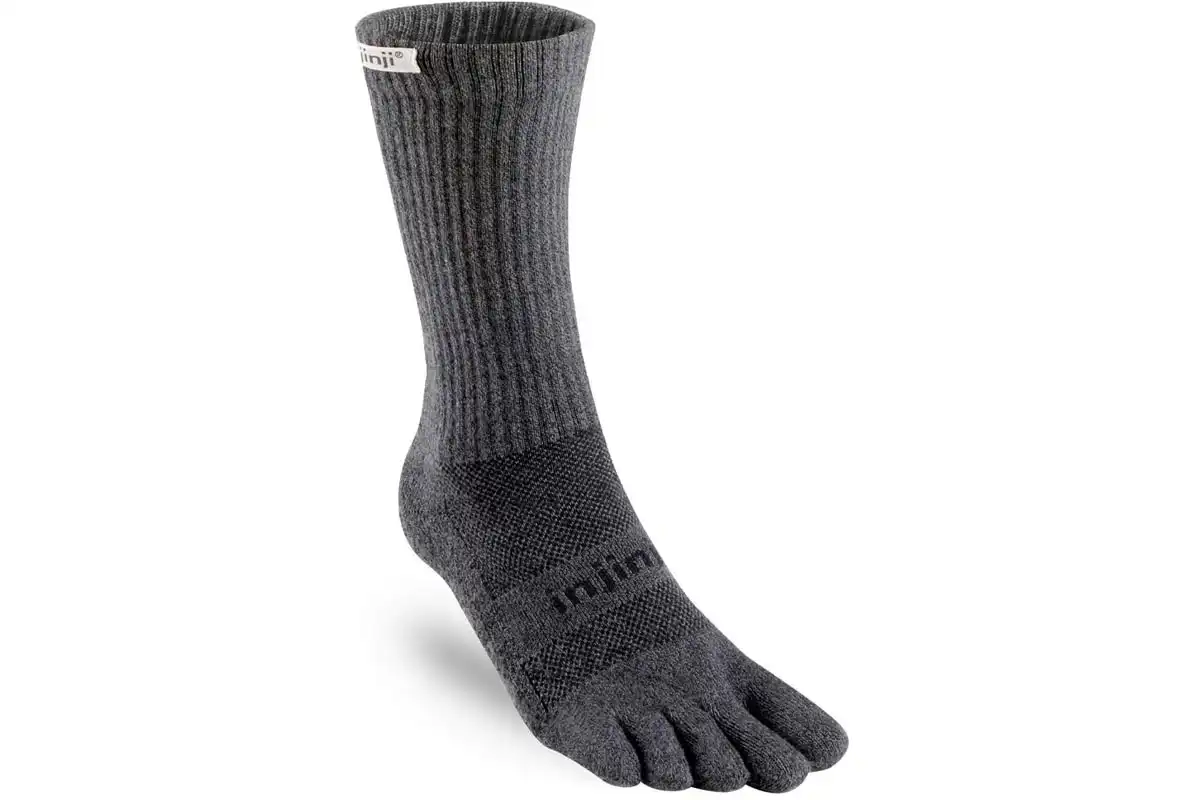
Injinji is a California-based performance sock brand. The Trail Midweight uses a five-toe design that wraps each toe individually, eliminating skin-to-skin friction between toes. The 39% Coolmax and 58% Nylon blend keeps feet dry on longer efforts. Best for: hikers who blister between the toes or have wide feet that splay on uneven terrain.
Why it’s a good buy:
Why it’s not recommended:
|
Fabric |
39% Coolmax, 58% Nylon, 3% Lycra |
|---|---|
|
Cushion level |
Midweight |
|
Height |
Crew Length |
|
Toe design |
Five-toe individual sleeve |
|
Arch |
Supportive arch band included |
3. Best Budget Pick: WrightSock Coolmesh II Eco-Friendly Anti Blister Socks
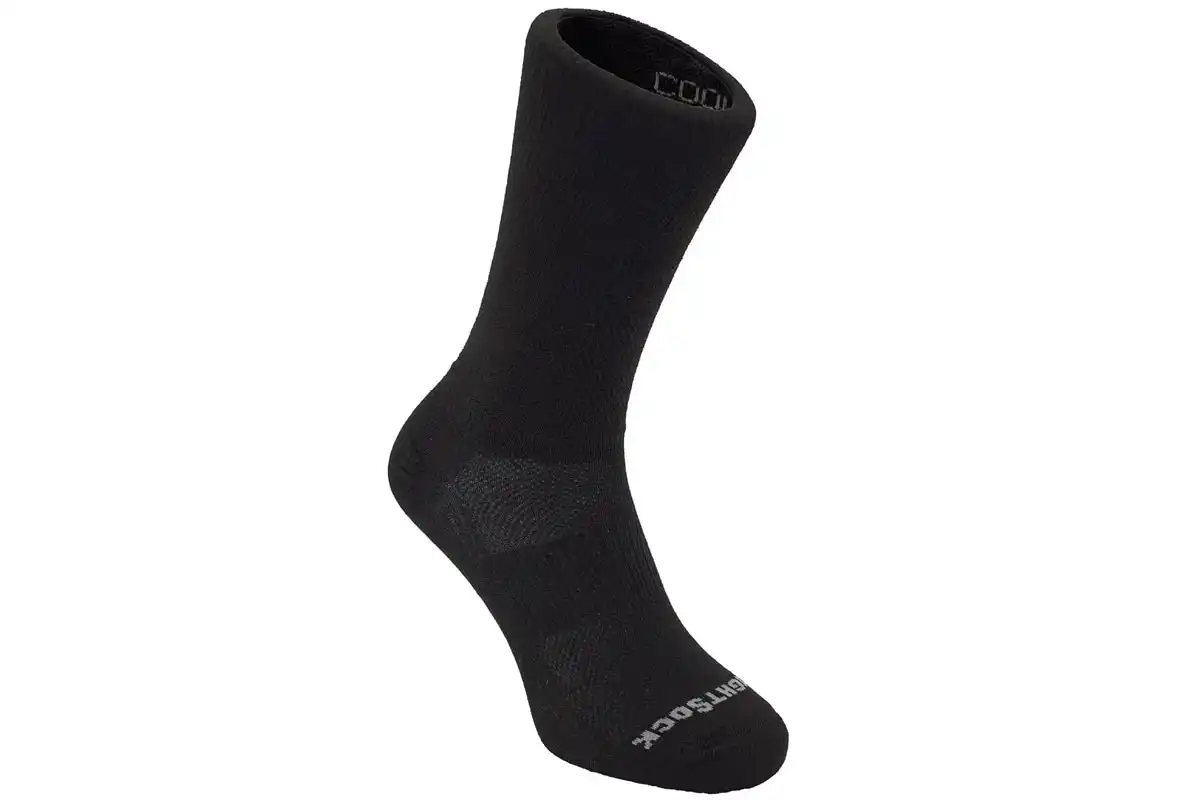
WrightSock is a USA-made brand built around one idea: a double-layer design that prevents blisters by letting the two sock layers rub against each other instead of against skin. The Coolmesh II uses recycled polyester and nylon, making it lightweight and breathable. Best for: budget-conscious hikers and travelers who need reliable blister protection without merino pricing.
Why it’s a good buy:
Why it’s not recommended:
|
Fabric |
Inner/Outer recycled polyester, nylon, Lycra blend |
|---|---|
|
Cushion level |
Lightweight, minimal profile |
|
Height |
Crew Length |
|
Construction |
Double-layer anti-friction system |
|
Origin |
Made in the USA |
4. Best for Summer Hiking: Smartwool Run Zero Cushion
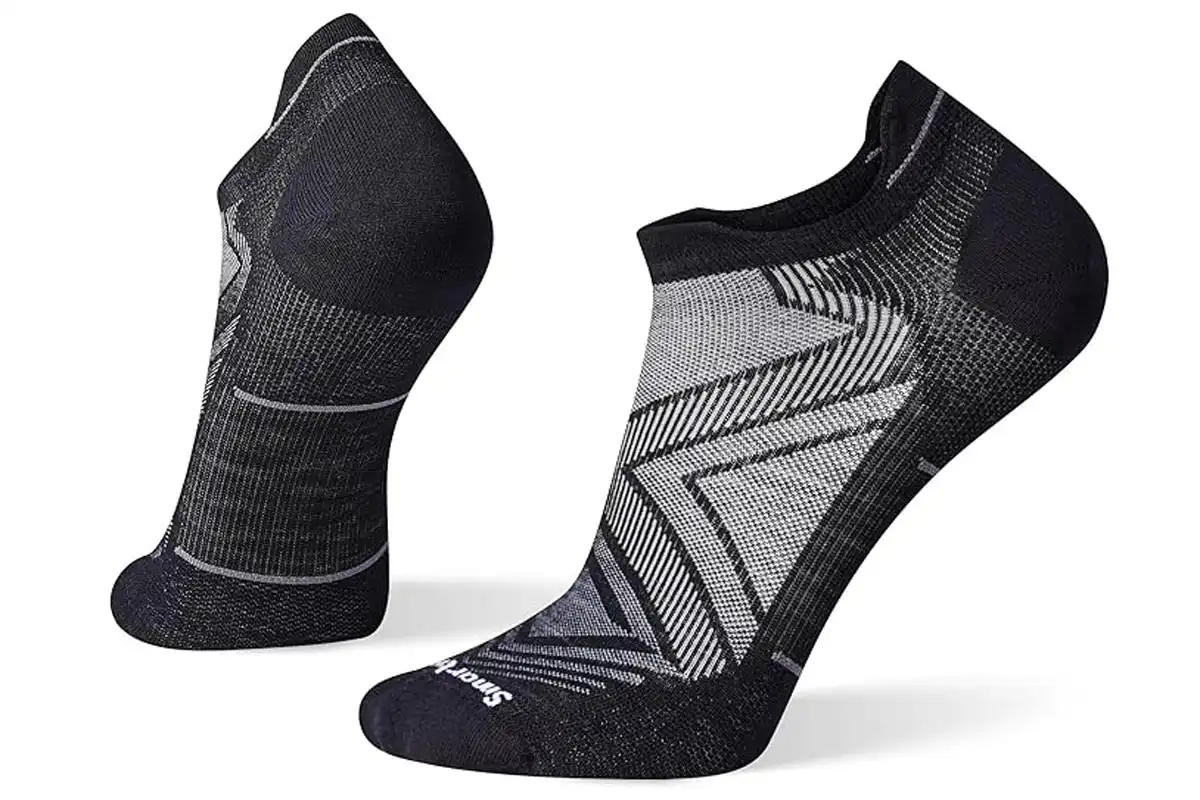
Smartwool is a Colorado-based brand with decades of merino performance. The Run Zero Cushion uses 100% wool construction with Indestructawool reinforcement zones and mesh panels for ventilation. The Virtually Seamless toe reduces friction, and an Achilles tab prevents the sock from slipping into the shoe. Best for: summer hikers and trail runners who need lightweight merino temperature regulation in warm conditions.
Why it’s a good buy:
Why it’s not recommended:
|
Fabric |
100% Wool with Indestructawool reinforcement |
|---|---|
|
Cushion level |
Zero cushion |
|
Height |
Low Ankle Cut |
|
Construction |
Virtually Seamless |
|
Fit type |
Slim |
5. Best for High-Mileage and Hot Spots: Balega Blister Resist Quarter Socks
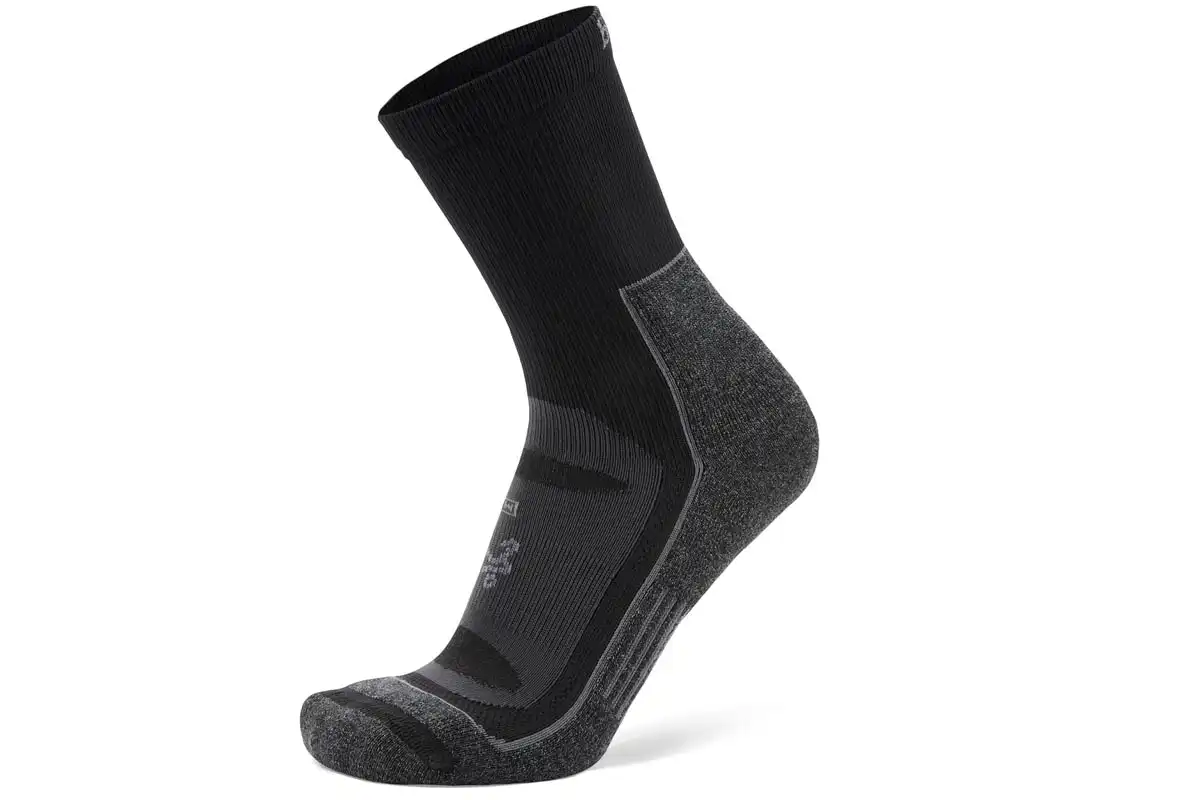
Balega is a South African-founded performance sock brand. The Blister Resist Quarter uses mohair and Drynamix fiber alongside merino wool for a blister-resistant combination. The seamless toe box minimizes friction, a deep heel pocket prevents slipping, and the plush underfoot cushion targets heel and forefoot hot spots on long days. Best for: high-mileage hikers who develop hot spots at the heel and ball of the foot.
Why it’s a good buy:
Why it’s not recommended:
|
Fabric |
34% Nylon, 32% Recycled Polyester, 13% Mohair, 13% Merino Wool, 6% Acrylic, 2% Elastane |
|---|---|
|
Cushion level |
High-volume plush sole |
|
Height |
Quarter Length |
|
Construction |
Seamless toe box |
|
Fit |
Snug arch band included |
6. Best Lightweight Summer Pick: Icebreaker Merino Multisport Light Mini
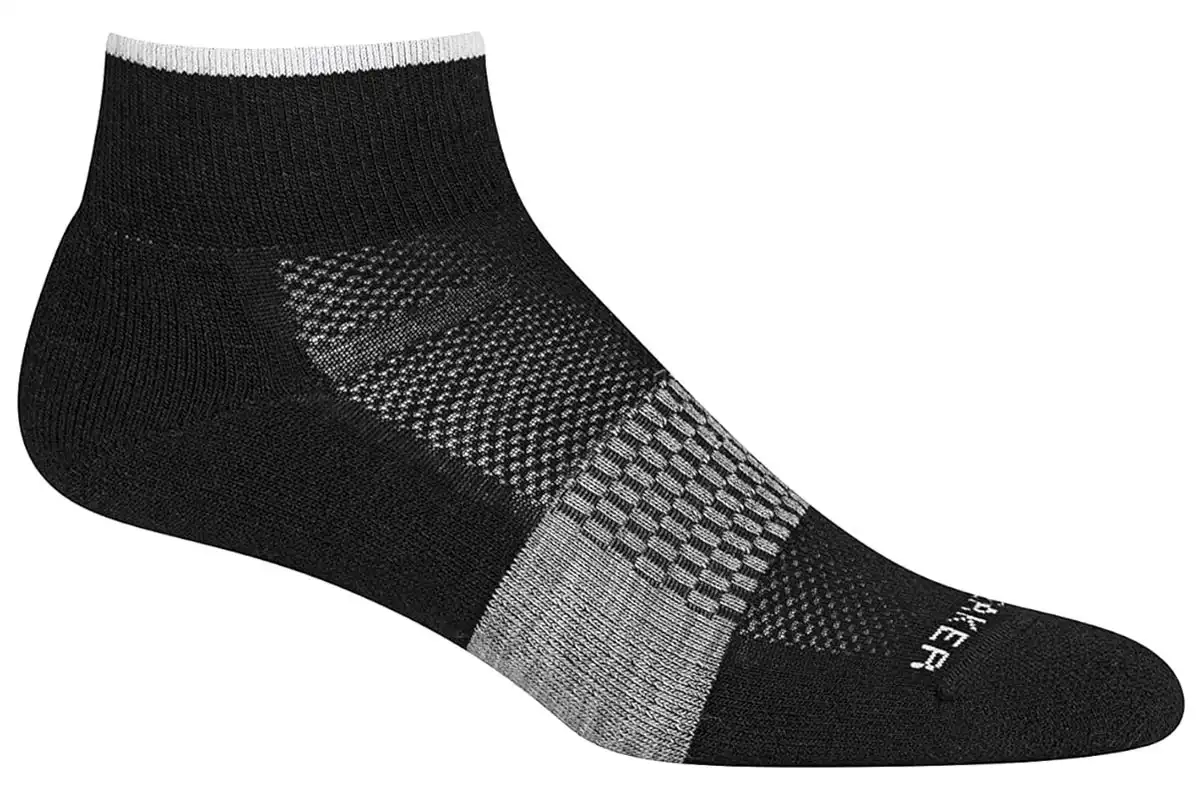
Icebreaker is a New Zealand merino brand focused on natural-fiber performance. The Multisport Light Mini uses 63% merino wool blended with nylon and Lycra for durability and stretch. Elasticity at the heel and instep keeps the sock stable and holds its shape over repeated washes. Best for: warm-weather hikes and low-cut trail shoes where a full crew sock adds too much bulk.
Why it’s a good buy:
Why it’s not recommended:
|
Fabric |
63% Merino Wool, 35% Nylon, 2% Elastane |
|---|---|
|
Cushion level |
Light |
|
Height |
Mini / Ankle |
|
Construction |
Seamless |
|
Support |
Achilles and instep elasticity |
7. Best Merino-Rayon Blend: Le Bent The Range Light Cushion Mini Hiking Socks
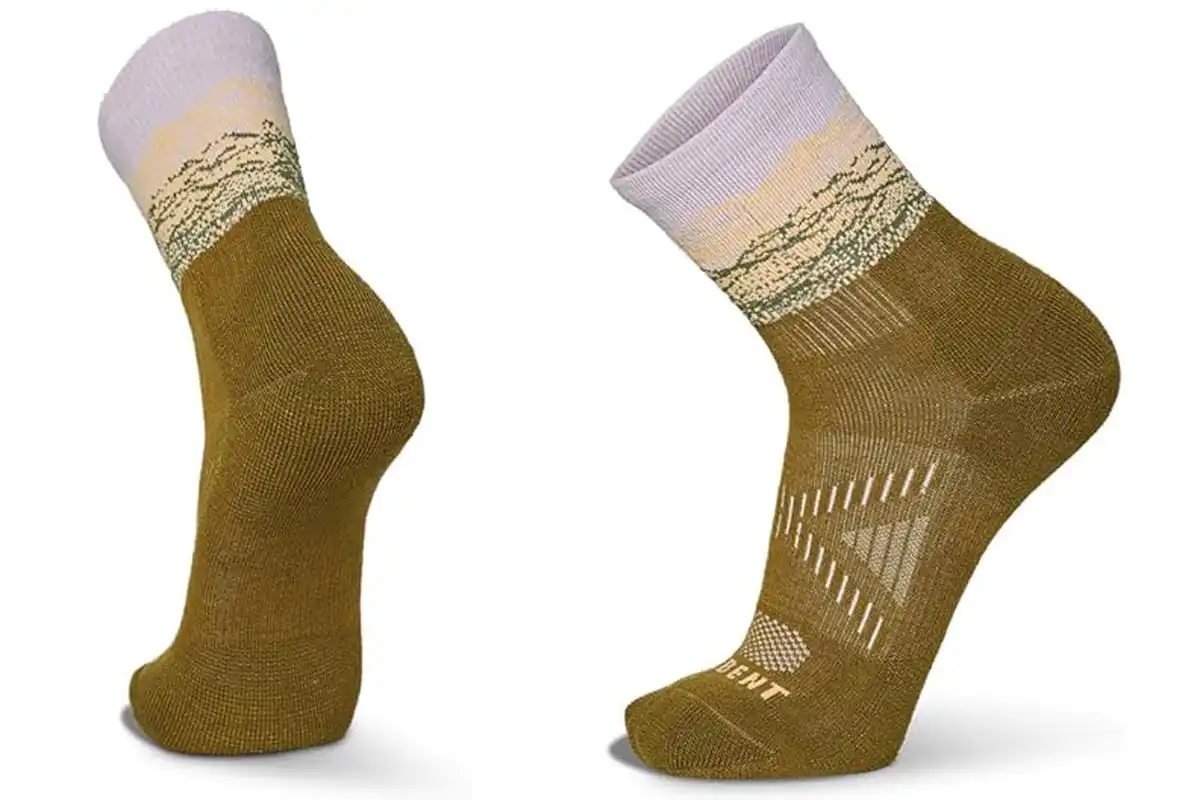
Le Bent is a Colorado-based sock brand that uses a certified non-mulesed merino and bamboo rayon blend. The Range Light Cushion Mini delivers softness and odor resistance through the bamboo rayon content, with foot-mapped construction that reinforces the ankle and Achilles. Minimalist ghost seams reduce toe rubbing. Best for: hikers who find pure merino too warm and want a softer, breathable trail running sock.
Why it’s a good buy:
Why it’s not recommended:
|
Fabric |
46% Nylon, 30% Bamboo Rayon, 21% Merino Wool, 3% Elastane |
|---|---|
|
Cushion level |
Light underfoot |
|
Height |
Mini Over Ankle |
|
Construction |
Minimalist ghost seams, foot-moulding memory stretch |
|
Support |
Elasticated instep and Achilles band |
8. Best Compression Sock for Blisters: Sockwell Circulator
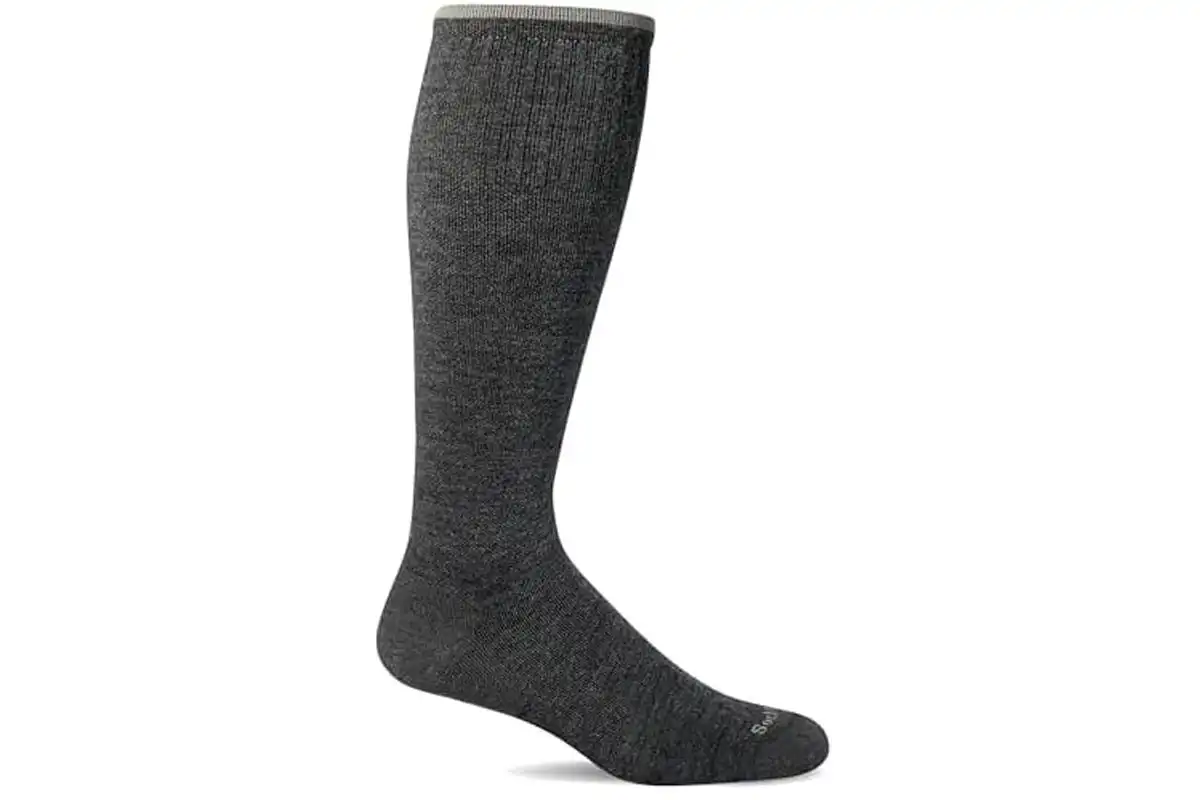
Sockwell is a USA-made brand specializing in graduated compression socks with natural-fiber blends. The Circulator uses 32% merino wool, 32% nylon, 31% rayon, and 5% spandex to deliver 15-20 mmHg moderate graduated compression from ankle to knee. Bamboo rayon provides a smooth glide layer against skin, reducing sock movement that causes blisters. Best for: hikers who experience foot swelling on multi-day trips or long travel days between hiking segments.
Why it’s a good buy:
Why it’s not recommended:
|
Fabric |
32% Merino Wool, 32% Nylon, 31% Rayon, 5% Spandex |
|---|---|
|
Cushion level |
Ultra-light cushion sole |
|
Height |
Knee-High |
|
Compression |
15-20 mmHg graduated |
|
Origin |
Made in the USA |
9. Best Synthetic and Wool-Free Option: Darn Tough Vermont Coolmax Micro Crew Cushion Socks
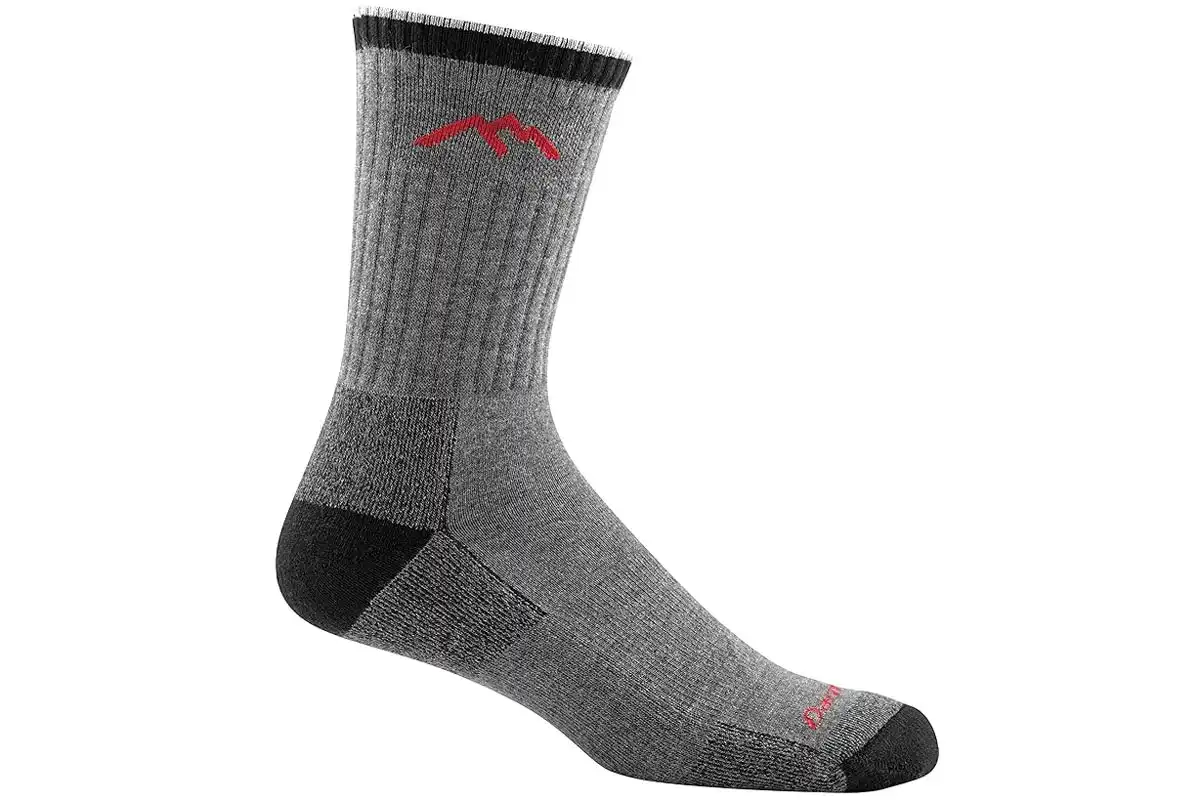
Darn Tough’s Coolmax Micro Crew is their fully wool-free, vegan-friendly hiking sock for hikers with wool sensitivity. The 55% Coolmax polyester, 37% nylon, 5% acrylic, and 3% Lycra Spandex blend wicks moisture fast in warm weather. True Seamless technology delivers the same low-profile, friction-free construction as their merino line. Best for: hikers who react to merino wool or prefer synthetic moisture-wicking performance on warm-weather routes.
Why it’s a good buy:
Why it’s not recommended:
|
Fabric |
55% Coolmax Polyester, 37% Nylon, 5% Acrylic, 3% Lycra Spandex |
|---|---|
|
Cushion level |
Midweight |
|
Height |
Micro Crew |
|
Construction |
True Seamless technology |
|
Warranty |
Lifetime replacement guarantee |
Sock Height Guide: Which Cut Reduces Blister Risk?
|
Sock Height |
Best Paired With |
Blister Risk It Addresses |
|---|---|---|
|
Ankle / Quarter sock |
Low-cut trail runners, approach shoes |
Prevents heel slip in low-cut shoes |
|
Crew sock |
Mid hiking boots |
Reduces calf rubbing against boot collar |
|
Knee-high sock |
Tall boots, winter hiking |
Eliminates full calf-to-boot friction |
Quarter socks work well for trail runners but leave the lower calf exposed to boot collar abrasion. Crew socks reduce collar rubbing and suit the widest range of hiking boots. Tall boots pair best with crew or knee-high socks that cover the full contact zone.
Should You Use Sock Liners to Prevent Blisters?
Sock liners work on a two-sock system where a thin liner sits beneath the main hiking sock. The liner absorbs friction so the outer sock rubs against the liner, not your skin.
This approach suits hikers prone to blisters, those breaking in stiff boots, or anyone hiking in wet conditions. Thin merino wool liners and synthetic liners both perform well. Smartwool and Injinji offer liner options designed to pair directly with heavier hiking socks.
Double-layer socks also dry faster between layers because air circulates between the two fabrics.
How to Get the Right Fit to Avoid Blisters
Fit matters as much as material. A well-chosen sock in the wrong size causes the same friction problems as a low-quality sock.
Size your hiking socks to your foot measurement, not your shoe size. Hiking shoes often run half a size large, but sock size should still match your actual foot.
Check these four points before heading out:
- The heel cup sits directly on your heel with no gap or overlap.
- The toe box holds no bunching or excess fabric against your toes.
- The arch compression feels snug without restricting circulation.
- The sock stays in place when you walk across a flat surface in your boot.
Other Blister Prevention Tips That Work With Good Socks
Good socks reduce blister risk significantly. A few added habits eliminate it further.
Break in boots before long trails. New boots create friction at stiff contact points. Short walks beforehand soften those zones before a full-day hike. I cover this step-by-step in my guide on soften stiff hiking boots.
Keep toenails trimmed. Long toenails press against the toe box on descents and cause pressure blisters under the nail.
Carry an extra pair of socks and change mid-hike if feet get wet. Wet skin blisters faster than dry skin. Swapping socks at the halfway point on a long trail cuts blister risk significantly.
Apply anti-friction balm on high-rub zones. Petroleum jelly on the heel, little toe, and ball of the foot reduces friction before it builds into a hot spot.
Use heel-lock lacing to reduce heel slip. A heel-lock lace technique prevents the foot from sliding forward in the boot on downhill sections, which is a common trigger for toe and toenail blisters. For anyone covering big elevation, my guide on downhill hiking knee pain relief well with this technique.
If blisters do form despite these steps, my guide on prevent infection in minor cuts walks through how to handle them safely on the trail.
FAQs: How Hiking Socks Help Prevent Blisters

Do hiking socks actually prevent blisters?
Yes. The right hiking sock reduces friction and pulls moisture away from skin, which are the two main causes of blisters. Material, fit, and cushion level all make a measurable difference.
What type of socks prevent blisters while hiking?
Merino wool or synthetic moisture-wicking socks with seamless toe construction and a snug heel cup prevent blisters best. Double-layer socks like WrightSock also work well by keeping friction between the layers, not your skin.
Are merino wool socks better than synthetic for blister prevention?
Both work well. Merino wool regulates temperature and resists odor better, making it the stronger all-season choice. Synthetics like Coolmax dry faster in heat. Neither outperforms the other in pure blister prevention when fit is correct.
Do toe socks really help prevent blisters on hikes?
Yes, especially between the toes. Toe socks like Injinji separate each toe, eliminating skin-to-skin friction entirely. Hikers who blister between their toes or have wide feet benefit the most from this design.
How thick should hiking socks be to avoid blisters?
Midweight cushion suits most hikers. Too thin leaves pressure points unprotected; too thick causes the sock to shift inside the boot and create hot spots. Match cushion level to your boot type and trail conditions.
Stop Hot Spots Before They Start
For most hikers, Darn Tough Hiker Micro Crew is the strongest choice for hiking socks blister prevention. It combines merino wool sock construction, midweight cushion, and a lifetime warranty in one reliable package. If you blister between the toes, go with Injinji. For budget hiking or summer heat, WrightSock Coolmesh II delivers solid trail comfort without the premium price.
No single factor prevents blisters on its own. Material pulls moisture away, fit keeps the sock from shifting, and the right sock height protects where your boot makes contact. Get all three right, and blisters stop being a trail problem.