Best Lightweight Sleeping Bag for Backpacking: 10 Tested Picks (2026)
Looking for the best lightweight sleeping bag for backpacking that keeps you warm without dragging your pack down? This guide compares top-rated options across weight, warmth, fill power, and packability to help 3-season hikers, thru-hikers, and minimalists find the right fit. I evaluated over 10 ultralight sleeping bag and backpacking sleeping bag options so you leave camp confident in your pick.
The best lightweight backpacking sleeping bags weigh under 2 lbs, use 800+ fill power down, and pack smaller than 6 liters. The right choice depends on your expected overnight lows, sleep style, and budget.
The 10 Best Lightweight Sleeping Bags for Backpacking: Quick Look
| Preview |
#1
Sea to Summit Spark 15
Best Overall Rating
Overall score: 93 of 100
List price: $999.00
|
#2
SENSORY4U Ultralight Sleeping Bag Top Quilt
Best Sleeping Quilt Rating
Overall score: 90 of 100
List price: $147.95
|
#3
Kelty Cosmic Down 20
Best Budget Rating
Overall score: 94 of 100
List price: $209.95
|
#4
NEMO Disco 15
Best Value Rating
Overall score: 93 of 100
List price: $329.95
|
#5
Western Mountaineering HighLite
Superb Rating
Overall score: 95 of 100
List price: $435.00
|
#6
Mountain Hardwear Bishop Pass 15
Great Rating
Overall score: 90 of 100
List price: $334.99
|
#7
Mountain Hardwear Phantom 30
Superb Rating
Overall score: 100 of 100
List price: $510.00
|
#8
Western Mountaineering MegaLite
Superb Rating
Overall score: 100 of 100
List price: $600.00
|
#9
Sea to Summit Cinder Down
Great Rating
Overall score: 92 of 100
List price: $486.32
|
#10
Marmot Trestles 30
Great Rating
Overall score: 94 of 100
List price: $119.00
|
|---|---|---|---|---|---|---|---|---|---|---|
| Item Name | Sea to Summit Spark 15 | SENSORY4U Ultralight Sleeping Bag Top Quilt | Kelty Cosmic Down 20 | NEMO Disco 15 | Western Mountaineering HighLite | Mountain Hardwear Bishop Pass 15 | Mountain Hardwear Phantom 30 | Western Mountaineering MegaLite | Sea to Summit Cinder Down | Marmot Trestles 30 |
| Price |
$999.00 Listed
Check Price on Amazon
|
$147.95 Listed
Check Price on Amazon
|
$209.95 Listed
Check Price on Amazon
|
$329.95 Listed
Check Price on Amazon
|
$435.00 Listed
Check Price on Amazon
|
$334.99 Listed
Check Price on Amazon
|
$510.00 Listed
Check Price on Amazon
|
$600.00 Listed
Check Price on Amazon
|
$486.32 Listed
Check Price on Amazon
|
$119.00 Listed
Check Price on Amazon
|
| Overall Score |
Audience score
Calculated from Amazon global ratings percentages for Sea to Summit Spark 15.
93 / 100 from 67 ratings
Weighted average: 4.7 / 5 stars
Amazon rating breakdown
5 star
85%
4 star
9%
3 star
0%
2 star
0%
1 star
6%
Score position
This product
|
Audience score
Calculated from Amazon global ratings percentages for SENSORY4U Ultralight Sleeping Bag Top Quilt.
90 / 100 from 108 ratings
Weighted average: 4.5 / 5 stars
Amazon rating breakdown
5 star
78%
4 star
9%
3 star
5%
2 star
2%
1 star
6%
Score position
This product
|
Audience score
Calculated from Amazon global ratings percentages for Kelty Cosmic Down 20.
94 / 100 from 221 ratings
Weighted average: 4.7 / 5 stars
Amazon rating breakdown
5 star
84%
4 star
9%
3 star
2%
2 star
3%
1 star
2%
Score position
This product
|
Audience score
Calculated from Amazon global ratings percentages for NEMO Disco 15.
93 / 100 from 20 ratings
Weighted average: 4.7 / 5 stars
Amazon rating breakdown
5 star
86%
4 star
0%
3 star
9%
2 star
5%
1 star
0%
Score position
This product
|
Audience score
Calculated from Amazon global ratings percentages for Western Mountaineering HighLite.
95 / 100 from 4 ratings
Weighted average: 4.8 / 5 stars
Amazon rating breakdown
5 star
76%
4 star
24%
3 star
0%
2 star
0%
1 star
0%
Score position
This product
|
Audience score
Calculated from Amazon global ratings percentages for Mountain Hardwear Bishop Pass 15.
90 / 100 from 2 ratings
Weighted average: 4.5 / 5 stars
Amazon rating breakdown
5 star
48%
4 star
52%
3 star
0%
2 star
0%
1 star
0%
Score position
This product
|
Audience score
Calculated from Amazon global ratings percentages for Mountain Hardwear Phantom 30.
100 / 100 from 1 ratings
Weighted average: 5.0 / 5 stars
Amazon rating breakdown
5 star
100%
4 star
0%
3 star
0%
2 star
0%
1 star
0%
Score position
This product
|
Audience score
Calculated from Amazon global ratings percentages for Western Mountaineering MegaLite.
100 / 100 from 4 ratings
Weighted average: 5.0 / 5 stars
Amazon rating breakdown
5 star
100%
4 star
0%
3 star
0%
2 star
0%
1 star
0%
Score position
This product
|
Audience score
Calculated from Amazon global ratings percentages for Sea to Summit Cinder Down.
92 / 100 from 10 ratings
Weighted average: 4.6 / 5 stars
Amazon rating breakdown
5 star
87%
4 star
0%
3 star
0%
2 star
13%
1 star
0%
Score position
This product
|
Audience score
Calculated from Amazon global ratings percentages for Marmot Trestles 30.
94 / 100 from 83 ratings
Weighted average: 4.7 / 5 stars
Amazon rating breakdown
5 star
82%
4 star
14%
3 star
0%
2 star
0%
1 star
4%
Score position
This product
|
| Weight | 1.71 lbs |
3.3 lbs |
2 lbs 6 oz |
2 lbs 13 oz |
16 oz (1 lb) |
3.05 lbs |
1.9 lbs |
1 lb 8 oz |
1.5 lbs |
3 lbs |
| Temp Rating | 15°F |
30°F |
20°F |
15°F |
35°F |
15°F |
30°F |
30°F |
35°F |
30°F |
| Fill Power | 850+ FP |
850 FP |
550 FP |
650 FP |
850+ FP |
650 FP |
800 FP |
850 FP |
750 FP |
Its features SpiraFil high-loft synthetic insulation. |
| Insulation | Goose down |
Down |
RDS down |
Hydrophobic down |
Goose down |
Down |
Q.Shield goose down |
Goose down |
Ultra-Dry down |
SpiraFil synthetic |
| Shape | Mummy |
Quilt |
Mummy |
Spoon |
Mummy |
Mummy |
Mummy |
Mummy |
Quilt |
Mummy |
| Shell Fabric | 10D nylon, DWR |
Weather-resistant nylon |
Recycled 20D nylon |
20D recycled polyester |
ExtremeLite |
20D ripstop nylon, DWR |
Ghost Ripstop 10D nylon |
ExtremeLite |
20D nylon, waterproof |
100% polyester |
| Best For | Thru-hikers |
Warm sleepers |
New backpackers |
Side sleepers |
Fastpackers |
3-season on a budget |
Warm sleepers, low elevations |
Side sleepers, ultralight |
2-season quilt users |
Wet-weather backpacking |
What Makes a Sleeping Bag Truly Lightweight for Backpacking?
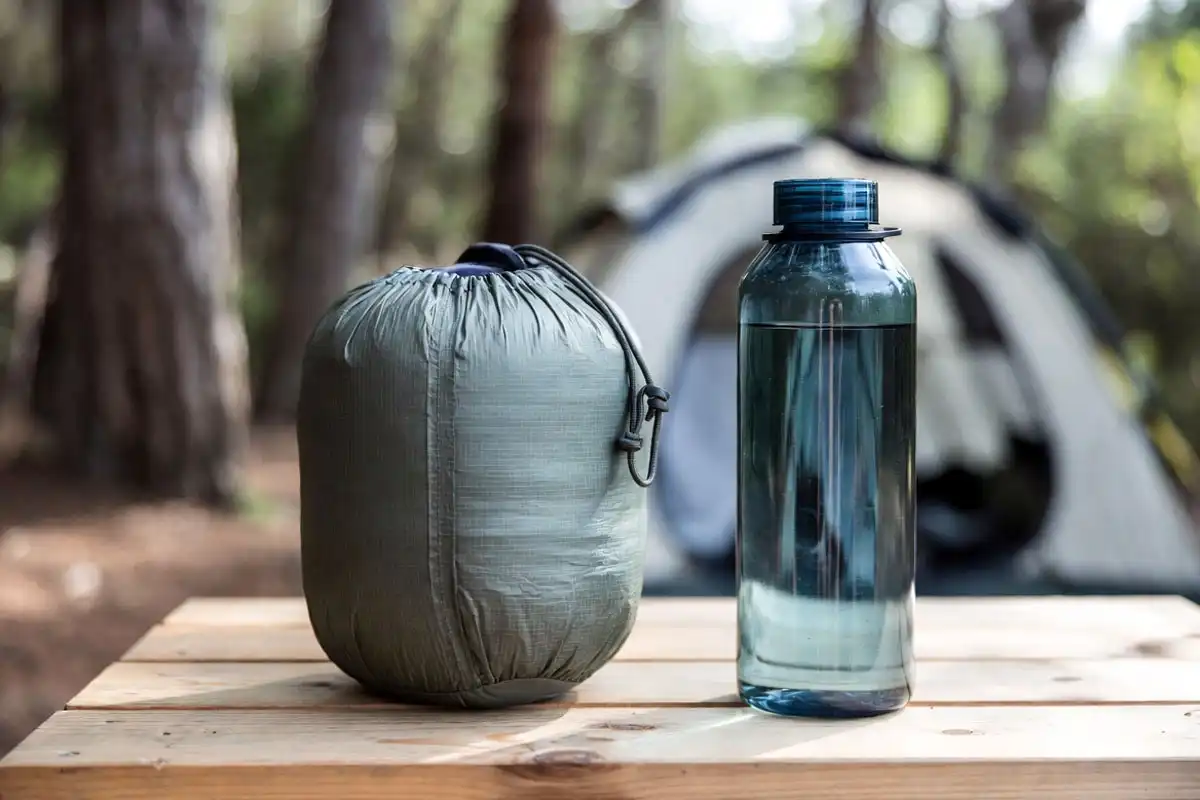
A sleeping bag qualifies as lightweight when it weighs under 2 lbs (32 oz). An ultralight sleeping bag drops below 1.5 lbs (24 oz). Sleeping bag weight matters in backpacking because every item rides on your shoulders mile after mile, unlike car camping where your vehicle carries the load.
The core tradeoff is straightforward: lighter bags cost more and often sacrifice durability. Backpacking gear weight adds up fast. Two extra ounces on five items equals over half a pound of added pack weight.
The metric that matters most is the warmth-to-weight ratio. A bag that keeps you warm at 20°F while weighing 1 lb 12 oz beats one rated to 10°F but weighing 3 lbs, if you camp in three-season conditions.
Both mummy bag and quilt designs achieve low weights, but through different methods. Packed size also matters. A lightweight bag that compresses to 4 liters fits better inside a 40L pack than one that takes up 8 liters.
Set realistic expectations: the lightest bags demand careful handling and higher budgets.
How to Read a Sleeping Bag Temperature Rating
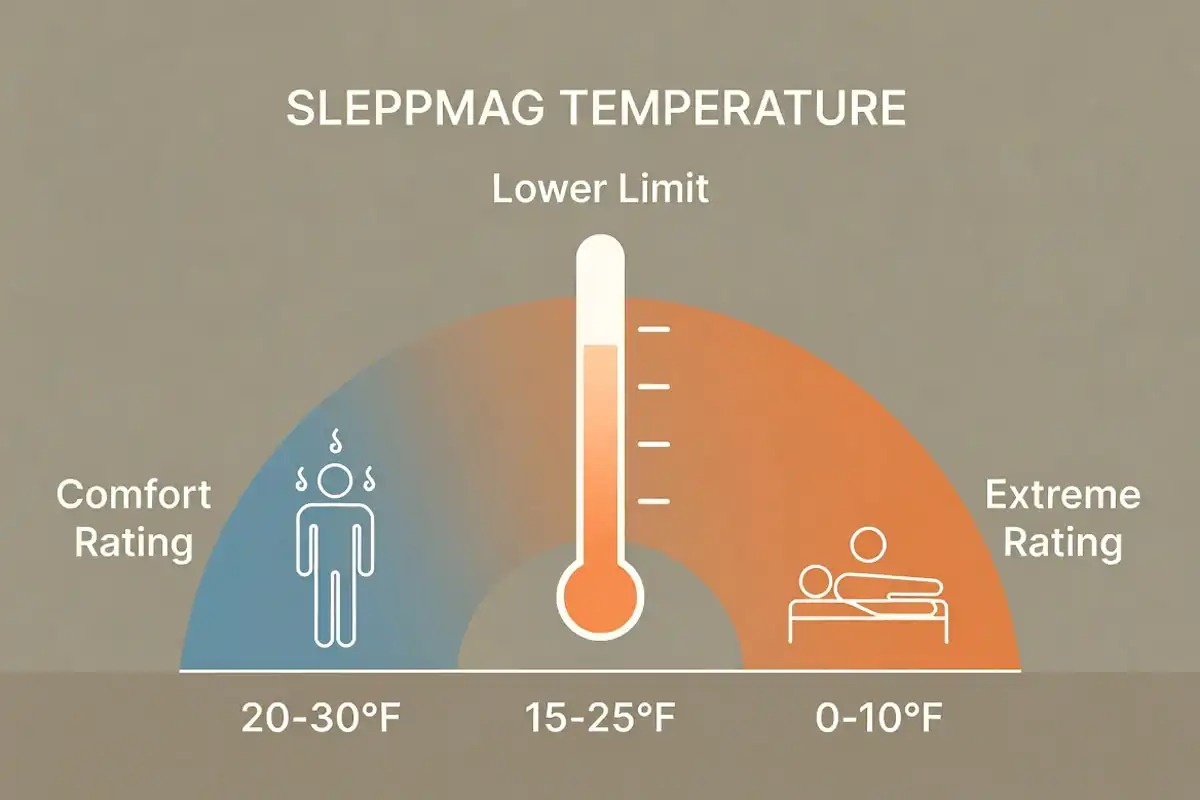
A sleeping bag temperature rating tells you the lowest temperature at which the bag keeps you comfortable. But not all ratings follow the same standard.
The EN rating and ISO standard testing use three numbers. The comfort rating indicates the temperature at which a cold sleeper stays warm. The lower limit suits average or warm sleepers. The extreme rating is survival-only and not safe for regular use.
If you sleep cold, trust the comfort rating. If you run warm, the lower limit rating works. Most 3-season bags carry comfort ratings between 25°F and 35°F.
Here is the common mistake: buying a bag rated exactly to your expected low. Buy 5 to 10°F colder than the lowest warmth you expect on trail. A 20°F bag handles unexpected cold snaps at 28°F far better than a 30°F bag does.
Some quilts skip EN/ISO testing and use manufacturer-only ratings. These lack independent verification, so compare those numbers with caution.
A draft collar helps seal warmth around your neck in colder conditions. Bags rated below 20°F often include one. Do not buy based on weight alone. Temperature suitability is a safety concern, especially when temperatures drop overnight.
Sleeping Bag vs Quilt: Which Is Lighter for Backpacking?
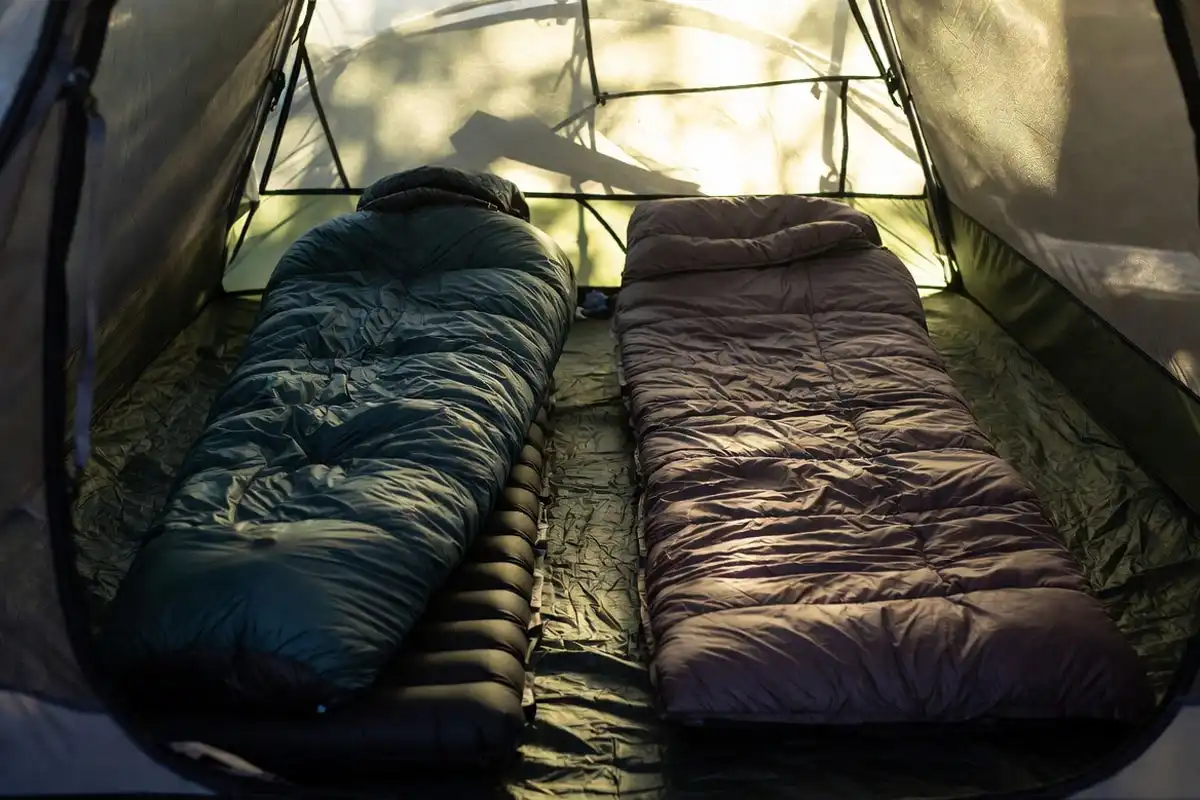
A backpacking quilt removes the hood, zipper, and bottom insulation found in a traditional mummy sleeping bag. This design strips 4 to 6 oz compared to a bag with the same temperature rating.
An ultralight quilt like the Enlightened Equipment Revelation or the Zpacks Classic attaches to your sleeping pad using a pad sleeve or strap system. The open-back design vents heat on warm nights and seals against drafts using an adjustable footbox.
Quilts work best for warm sleepers and summer-to-early-fall trips. Side sleepers appreciate the freedom to move without fighting a draft collar or tight zipper.
A mummy sleeping bag holds warmth better in colder conditions. The hood traps heat escaping from your head, which accounts for significant heat loss. For shoulder-season trips below 25°F, a mummy bag provides more consistent insulation.
Choose a quilt if you prioritize low weight and sleep warm. Choose a mummy bag if you camp in cold weather or sleep cold.
Key Features to Choose a Lightweight Backpacking Sleeping Bag
Picking the right backpacking sleeping bag goes beyond brand names. These features determine whether a bag works for your trips, body, and conditions. Match your temperature rating, insulation type, and fit to how and where you camp.
Pick the Right Temperature Rating for Your Trips
Match your sleeping bag temperature rating to the lowest overnight temperatures you expect on trail. A 3-season sleeping bag rated between 20°F and 32°F covers spring, summer, and fall trips in most regions.
Check whether the listed rating is the comfort rating or the lower limit. The EN/ISO rating label tells you which. Cold sleepers need the comfort number. Warm sleepers use the lower limit.
If you camp above 8,000 feet or in exposed ridgeline sites, overnight lows drop fast. Choose a bag rated 10°F below your expected low for those conditions. For cold-weather sleeping situations, a lower-rated bag is the safer pick.
Choose Between a Mummy Bag and a Backpacking Quilt
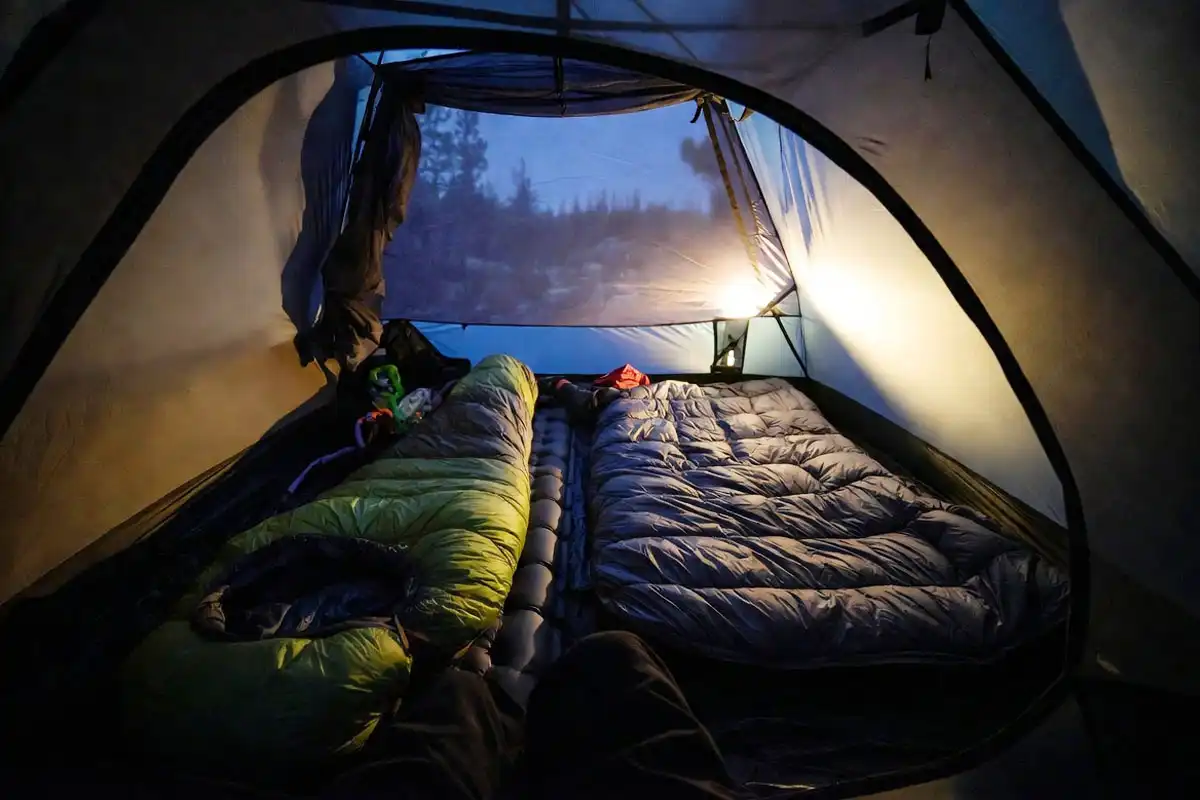
A mummy bag vs quilt decision depends on warmth needs, weight targets, and sleep habits.
A backpacking quilt weighs less, vents better, and gives side sleepers room to shift. The open design uses pad straps to stay in place. The footbox cinches closed on cold nights or opens flat for warm ones.
A mummy sleeping bag wraps your body with a hood that traps head heat. It reduces drafts along the edges and performs better in wind or below-freezing temps.
Quilts suit warm sleepers on 3-season trips. Mummy bags suit cold sleepers and exposed alpine camps.
Down vs Synthetic Insulation
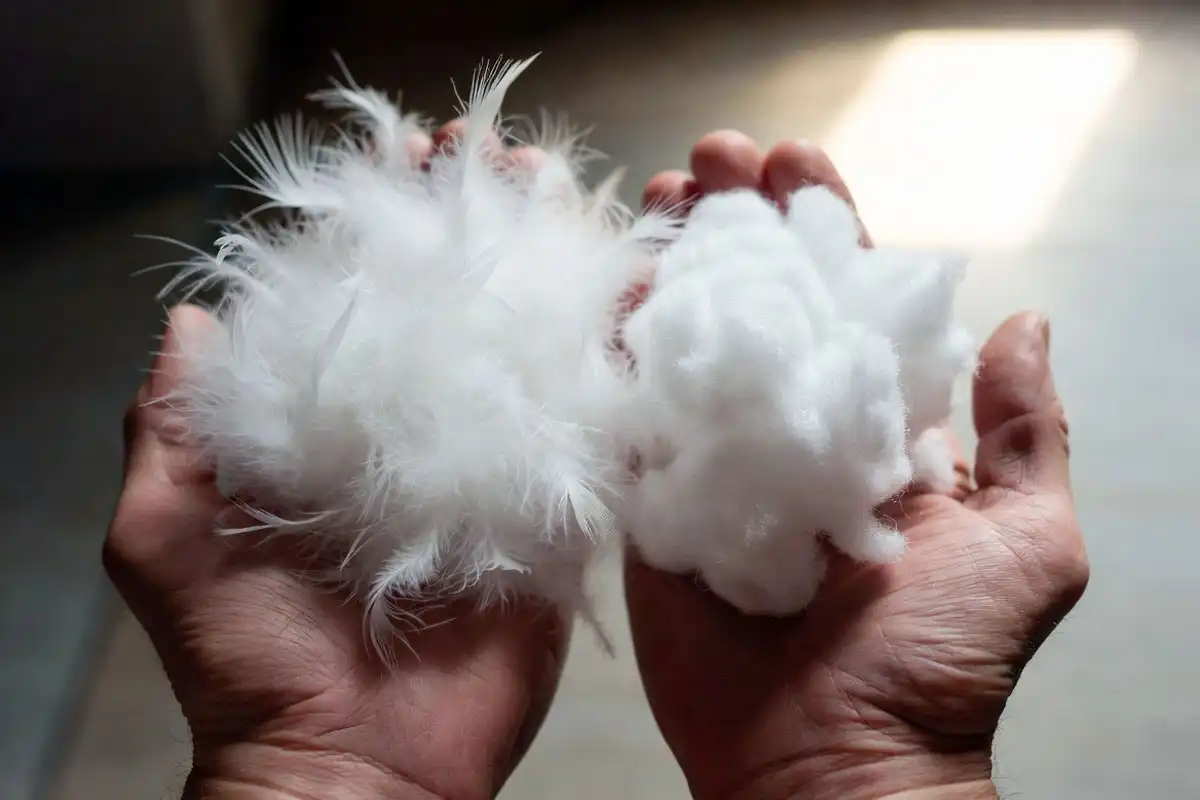
Down insulation provides the best warmth-to-weight ratio and compresses smaller than any other fill. A down backpacking sleeping bag with goose down at 800+ fill power packs to about half the size of a comparable synthetic option.
Duck down costs less than goose down but offers slightly lower loft per ounce. Both perform well in dry conditions.
A synthetic insulation sleeping bag retains warmth when wet and dries faster. Synthetic insulation handles humidity and water resistance better. For consistently damp environments, a synthetic backpacking sleeping bag is the safer choice.
The tradeoff: synthetic bags weigh more and pack larger. Down wins for most backpackers who protect their gear from moisture.
Understand Fill Power and Fill Weight Together
Fill power measures how many cubic inches one ounce of down occupies. Higher numbers like 850 fill power mean more loft from less material. An 800 fill power bag provides excellent warmth with low weight.
But fill power alone does not determine warmth. Fill weight shows how many ounces of down sit inside the bag. A bag with 850 fill power and 14 oz of fill insulates more than one with 850 fill power and 10 oz of fill.
The warmth-to-weight ratio improves when high fill power combines with sufficient fill weight. Compare both numbers side by side when evaluating bags.
Check Fit, Size, and Sleeping Position
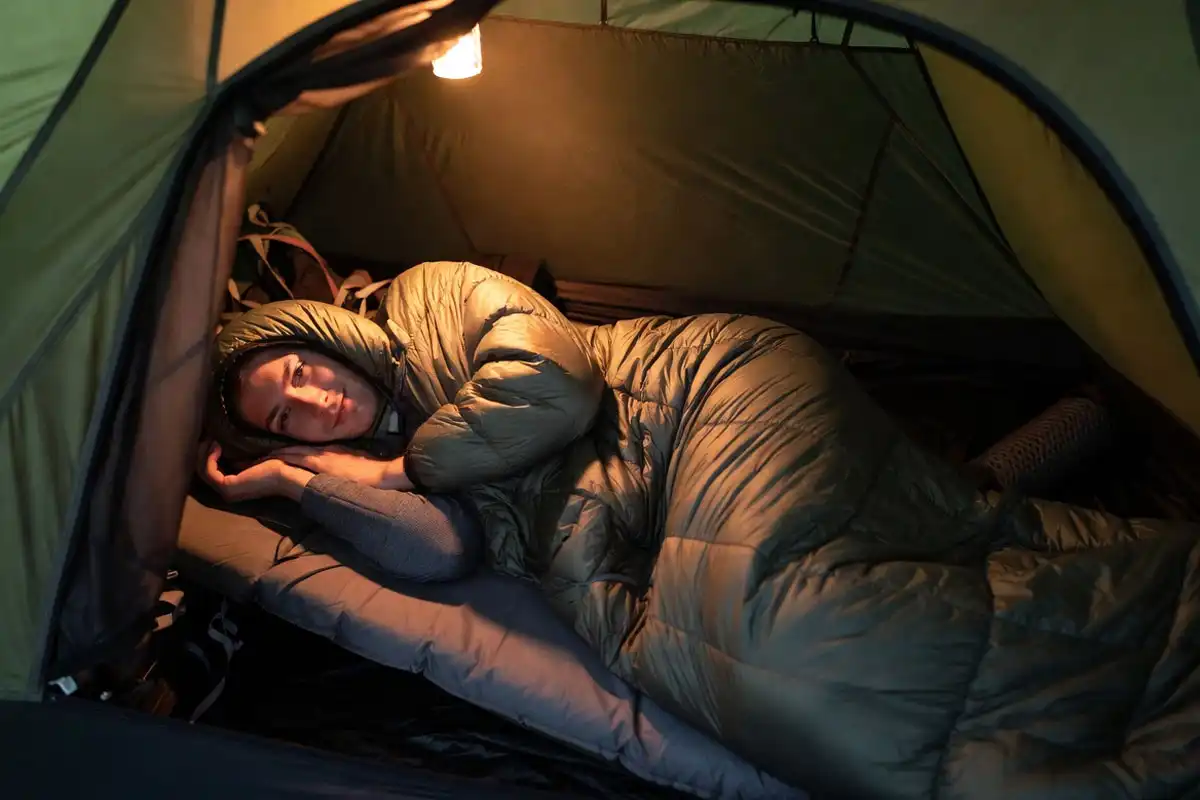
Sleeping bag fit affects both warmth and comfort. A bag that is too large creates cold air pockets. A bag that is too tight compresses insulation against your body and reduces loft.
Check the shoulder girth and length before buying. The mummy shape tapers at the feet to reduce dead air space. Most brands offer regular and long sizes.
If you ask “what size sleeping bag do I need,” measure your height and add 2 to 4 inches. Side sleepers need a wide fit or a quilt. A narrow mummy bag restricts hip and knee movement for side sleeper sleeping bag users.
People who move at night benefit from quilts or bags with a roomier cut.
Compare Weight, Packed Size, and Trail Practicality
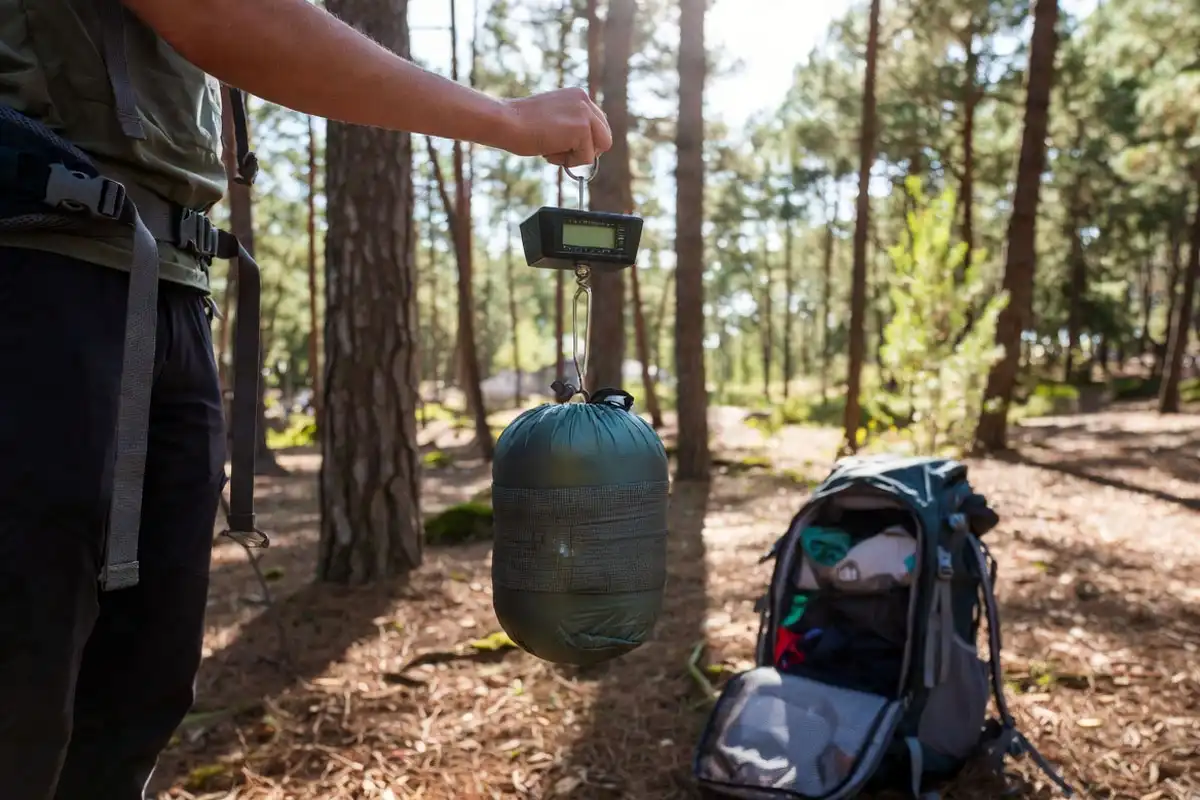
A lightweight sleeping bag rated at 1 lb 10 oz sounds ideal until you check packed size. If it fills 7 liters of your pack, it limits space for food, layers, and shelter.
Compare ounces alongside liters of compression. Most quality ultralight bags pack between 3 and 6 liters. Bags using higher fill power compress smaller.
Backpacking pack weight drops when your sleeping bag fits inside your pack without an external attachment. That keeps your pack balanced and weight distributed properly.
Packability and trail comfort matter together. The best bag is not the absolute lightest. It fits your trip distance, weather, and pack volume.
Decide Whether Water-Resistant Down Is Worth It
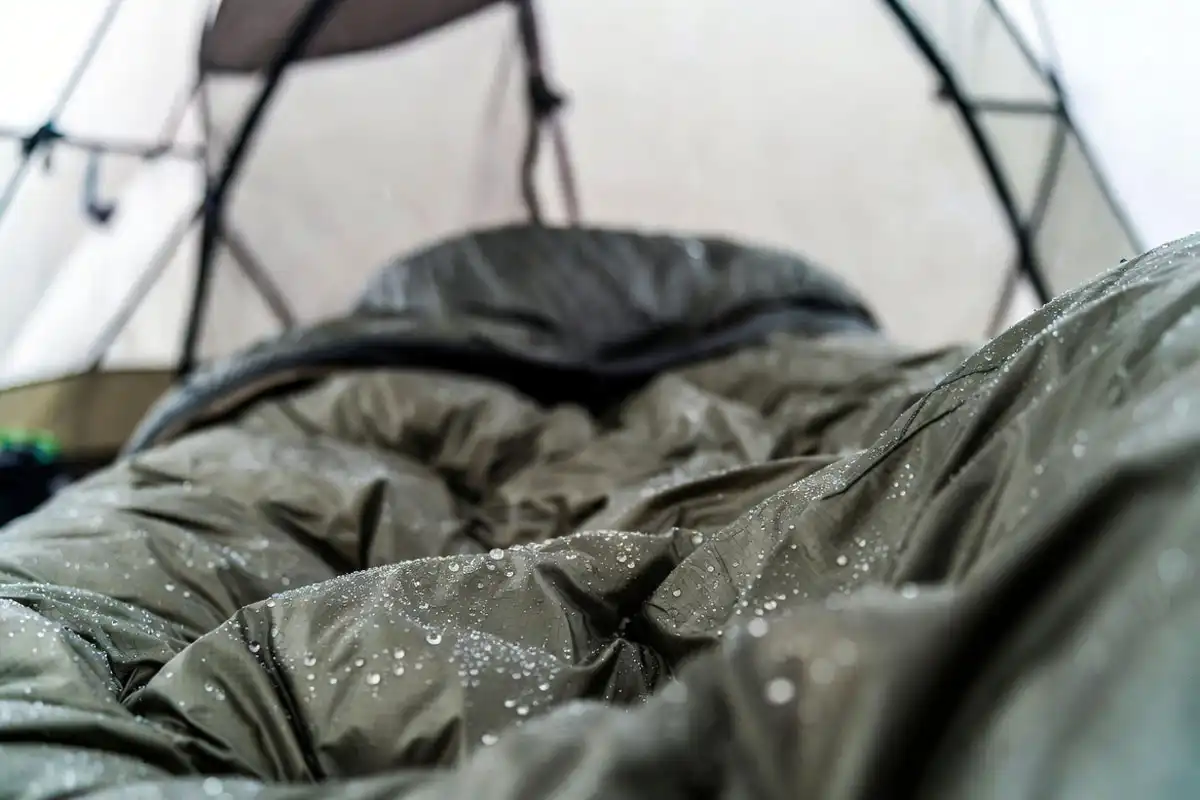
Water-resistant down (also called hydrophobic down) receives a DWR (durable water repellent) treatment that helps it resist moisture longer than untreated down.
This feature helps in wet-weather backpacking conditions, inside a single-wall tent where condensation drips onto your bag, or in high-humidity environments.
Hydrophobic down still loses loft when fully saturated. For consistently rainy trips, synthetic insulation remains the safer choice. Water-resistant down adds a small cost premium but provides a useful buffer against light dampness. It is worth it for 3-season backpackers who camp in variable weather.
Price, Long-Term Value, and Durability
A premium backpacking sleeping bag costs between $300 and $1000. Budget options run $150 to $250 but weigh more and compress less.
The best value sleeping bag balances upfront price with long-term value. Quality goose down retains down longevity for 10 to 15 years with proper care. Budget synthetic bags lose loft after 3 to 5 years of regular use.
Durability depends on shell fabric weight. Thinner shells (10D to 15D) save weight but snag easier. Thicker shells (20D+) handle rough use better.
If you backpack 10+ nights per year, investing in a premium bag pays off over time. For occasional campers, a mid-range option works well.
The 10 Best Backpacking Sleeping Bags (Reviews)
These 10 picks cover every type of backpacker, from thru-hikers chasing grams to beginners building a first kit. Each ultra lightweight sleeping bag below earned its spot through real performance on trail.
1. Sea to Summit Spark 15 – Best Overall Lightweight Sleeping Bag for Backpacking
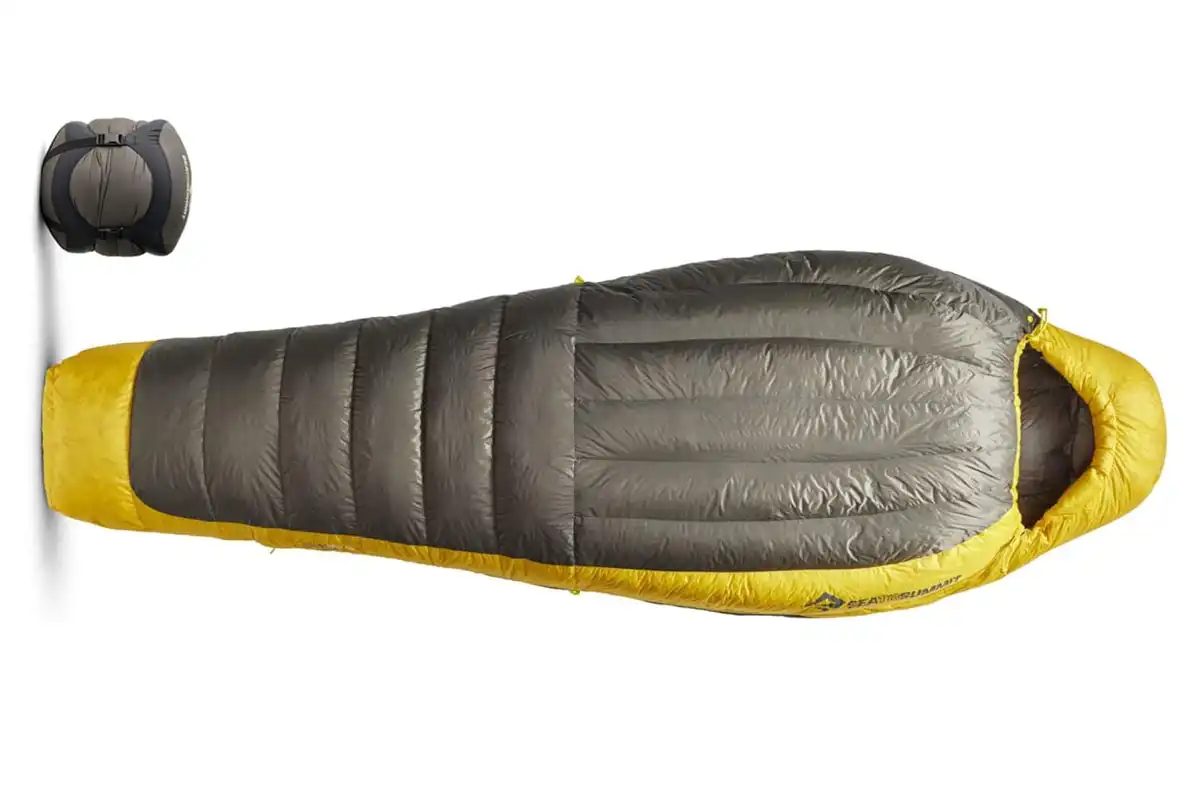
Sea to Summit builds technical sleep systems for minimalist backpackers. The Sea to Summit Spark uses 850+ fill power Ultra-Dry goose down inside a Pertex Quantum-grade 10D nylon shell. Full box baffles trap heat evenly. A 360-degree draft collar seals warmth around your neck. The hood and footbox fabric use PFC-free DWR for water-resistant down protection. At 1.71 lbs with a 15°F rating, the warmth-to-weight ratio leads this list. Best for 3-season thru-hikers and fast-packers who count every ounce.
Why it’s a good buy:
What to consider:
|
Weight |
1.71 lbs |
|---|---|
|
Temperature Rating |
15°F (-9°C) |
|
Fill |
850+ FP Ultra-Dry goose down |
|
Shell |
10D nylon with PFC-free DWR |
2. SENSORY4U Ultralight Sleeping Bag Top Quilt – Best Sleeping Quilt
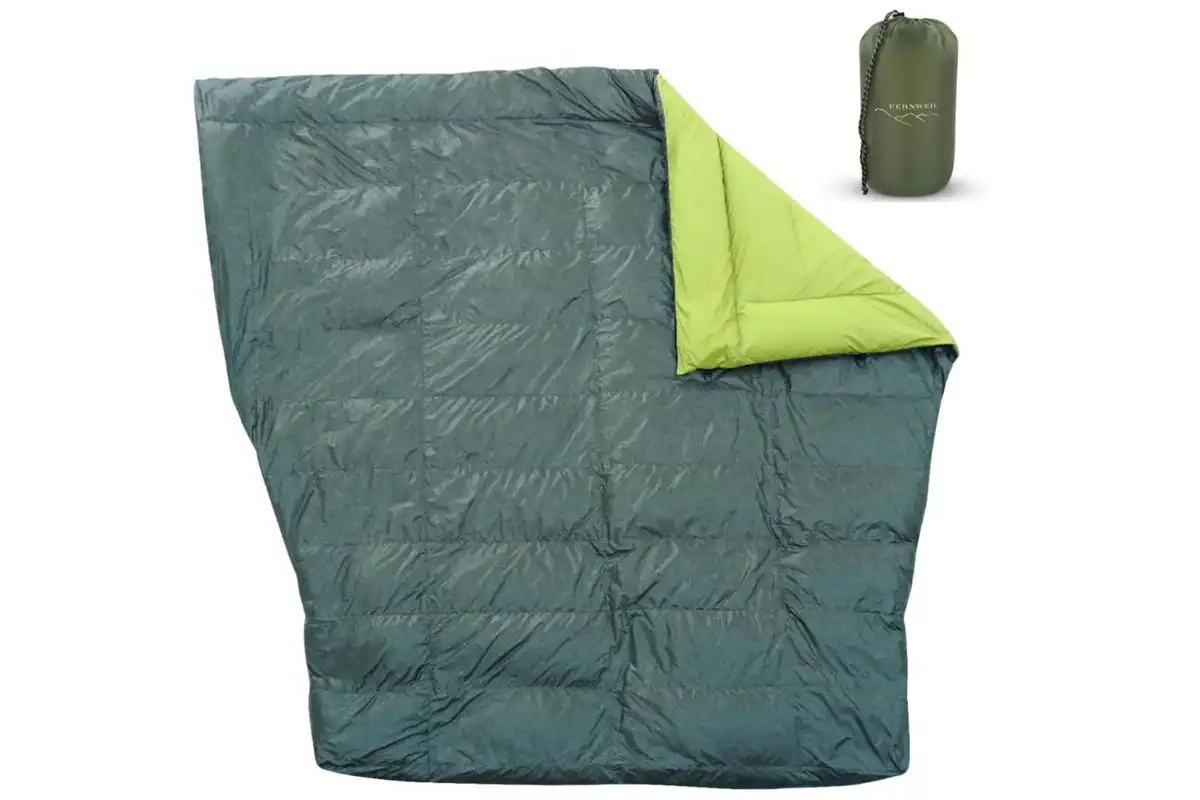
SENSORY4U produces handmade quilts in Minnesota. The Revelation-style backpacking quilt design removes hood, zipper, and back insulation to cut weight. This 850 fill power down quilt weighs 3.3 lbs in the double-wide version. A customizable footbox with pad attachment straps keeps it secured to your mat. The draft collar option works well for cold sleepers. Best for warm sleepers who toss at night and want freedom from mummy bag restrictions.
Why it’s a good buy:
What to consider:
|
Weight |
3.3 lbs (double-wide) |
|---|---|
|
Temperature Rating |
Comfort 40°F / Survival 30°F |
|
Fill |
850 FP down |
|
Shell |
Durable weather-resistant nylon |
3. Kelty Cosmic Down 20 – Best Budget Pick
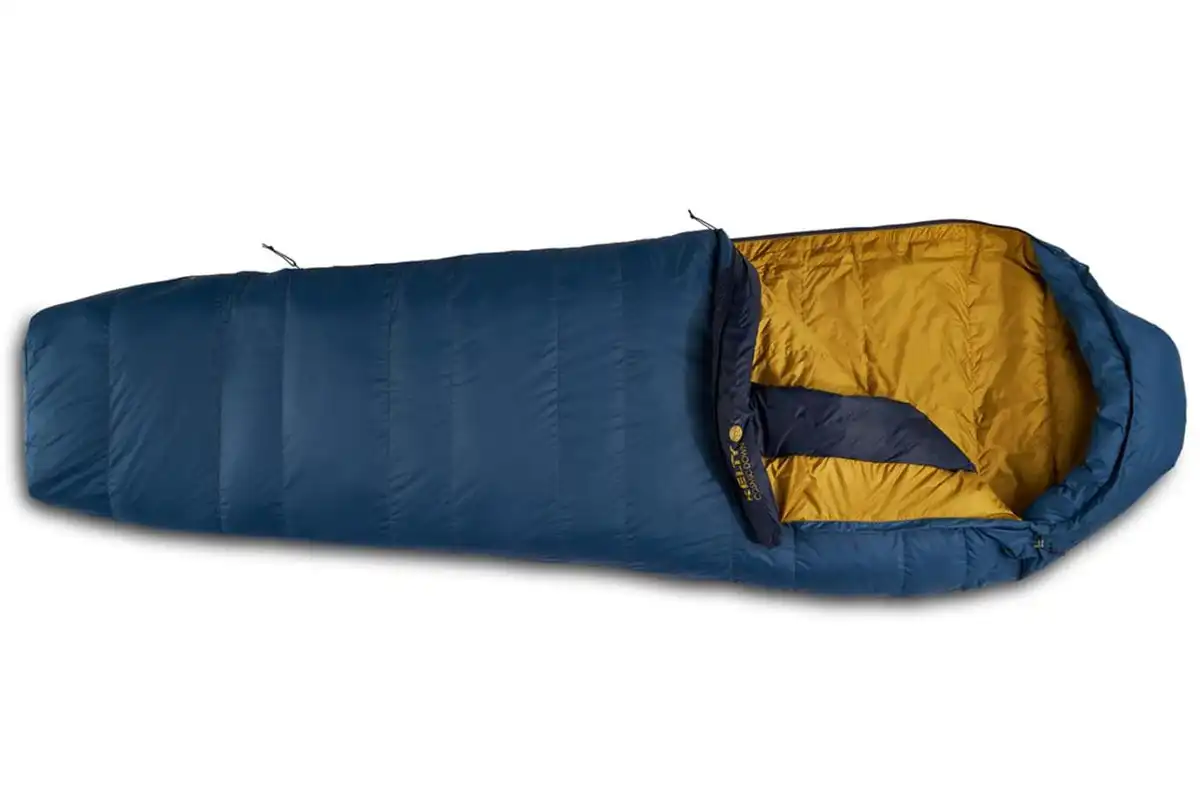
Kelty has built camping gear in Colorado since 1952. The Kelty Cosmic Down 20 uses 550-fill RDS-certified down inside a recycled 20D nylon taffeta shell. A draft tube and collar block cold air along the zipper line. ISO limit rating sits at 21°F. This is the best budget sleeping bag for new backpackers building a first kit. At around 2 lbs 6 oz, it trades ultralight weight for an unbeatable entry price.
Why it’s a good buy:
What to consider:
|
Weight |
2 lbs 6 oz (regular) |
|---|---|
|
Temperature Rating |
20°F (ISO limit 21°F) |
|
Fill |
550 FP RDS-certified down |
|
Shell |
Recycled 20D nylon taffeta |
4. NEMO Disco 15 – Best Backpacking Sleeping Bag for Side Sleepers
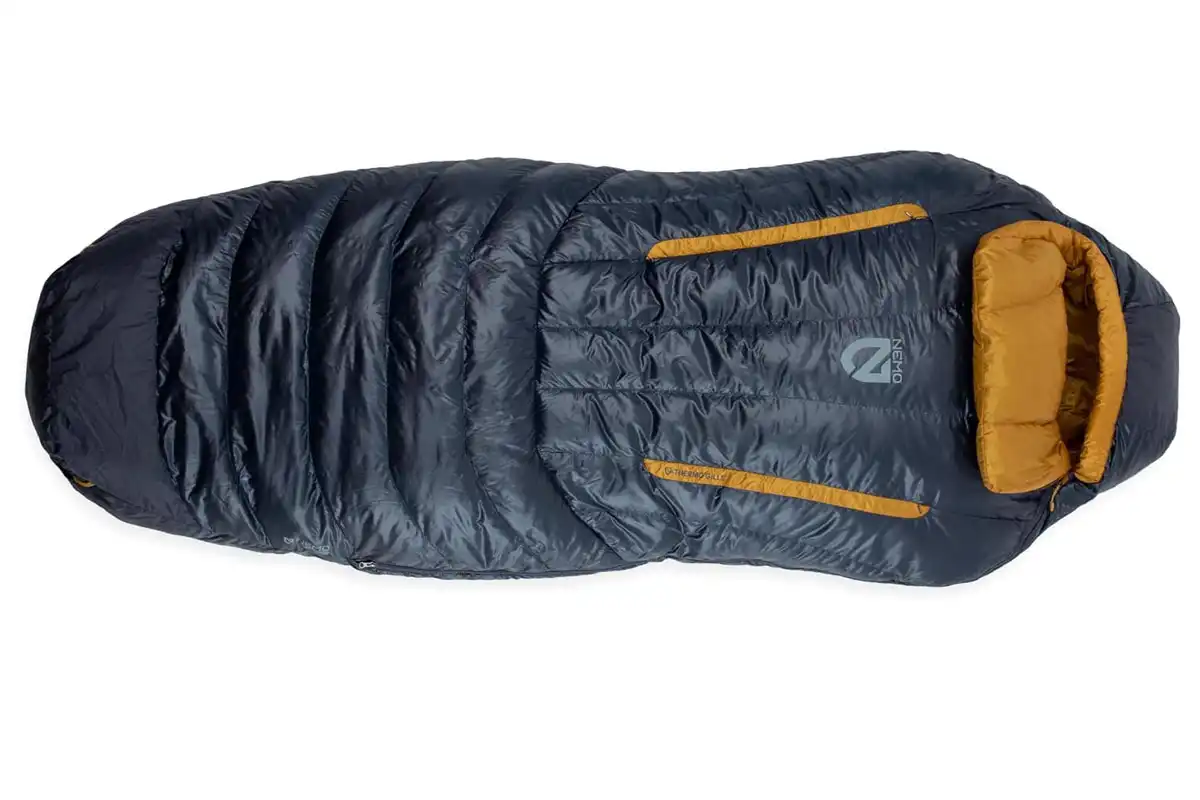
NEMO designs sleep systems with body-mapped shapes. The NEMO Disco uses a spoon-shaped footbox that gives extra room at elbows and knees. Thermo gills on the chest provide fine-tuned heat venting through a multi-stage zipper system. An oversized draft collar (Blanket Fold design) blocks cold air or releases excess warmth. 650 FP hydrophobic down fills the baffles. This bag weighs 2 lb 13 oz. Not the lightest, but the most comfortable for side sleeper campers at a mid-range weight.
Why it’s a good buy:
What to consider:
|
Weight |
2 lb 13 oz |
|---|---|
|
Temperature Rating |
15°F (ISO comfort 27°F) |
|
Fill |
650 FP hydrophobic down |
|
Shell |
20D recycled polyester ripstop with DWR |
5. Western Mountaineering HighLite – Lightest Mummy Sleeping Bag
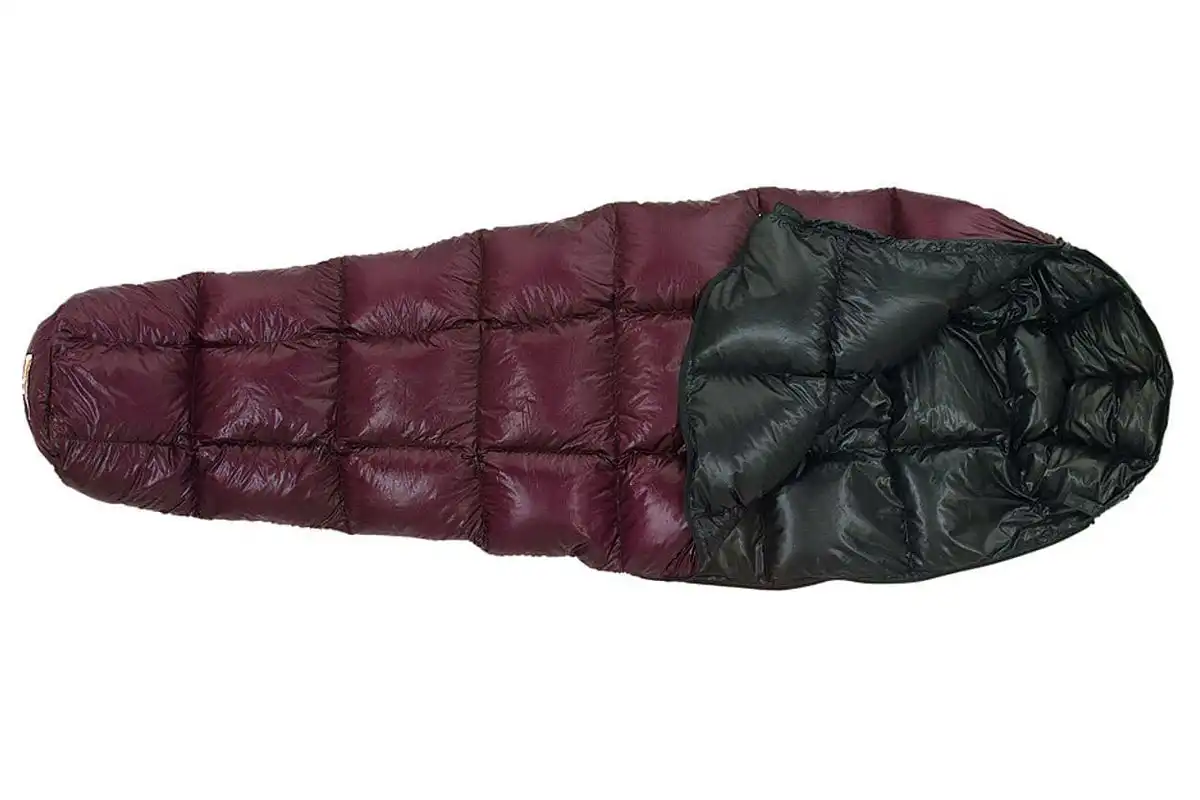
Western Mountaineering handcrafts sleeping bags in San Jose, California. The Western Mountaineering HighLite weighs 16 oz total. That is the lightest hooded mummy bag available. 850-fill goose down fills 8 oz of insulation inside an ExtremeLite shell. The 35°F rating suits warm weather and shoulder season trips above treeline. Pair it with a puffy jacket or bivy to extend the warmth range into colder alpine nights. Built for fastpacking and minimalist weekend trips. Made in the USA.
Why it’s a good buy:
What to consider:
Why it’s a good buy:
|
Weight |
16 oz (1 lb) |
|---|---|
|
Temperature Rating |
35°F |
|
Fill |
850+ FP goose down (8 oz fill) |
|
Shell |
ExtremeLite with DWR coating |
6. Mountain Hardwear Bishop Pass 15 – Best Value Down Sleeping Bag
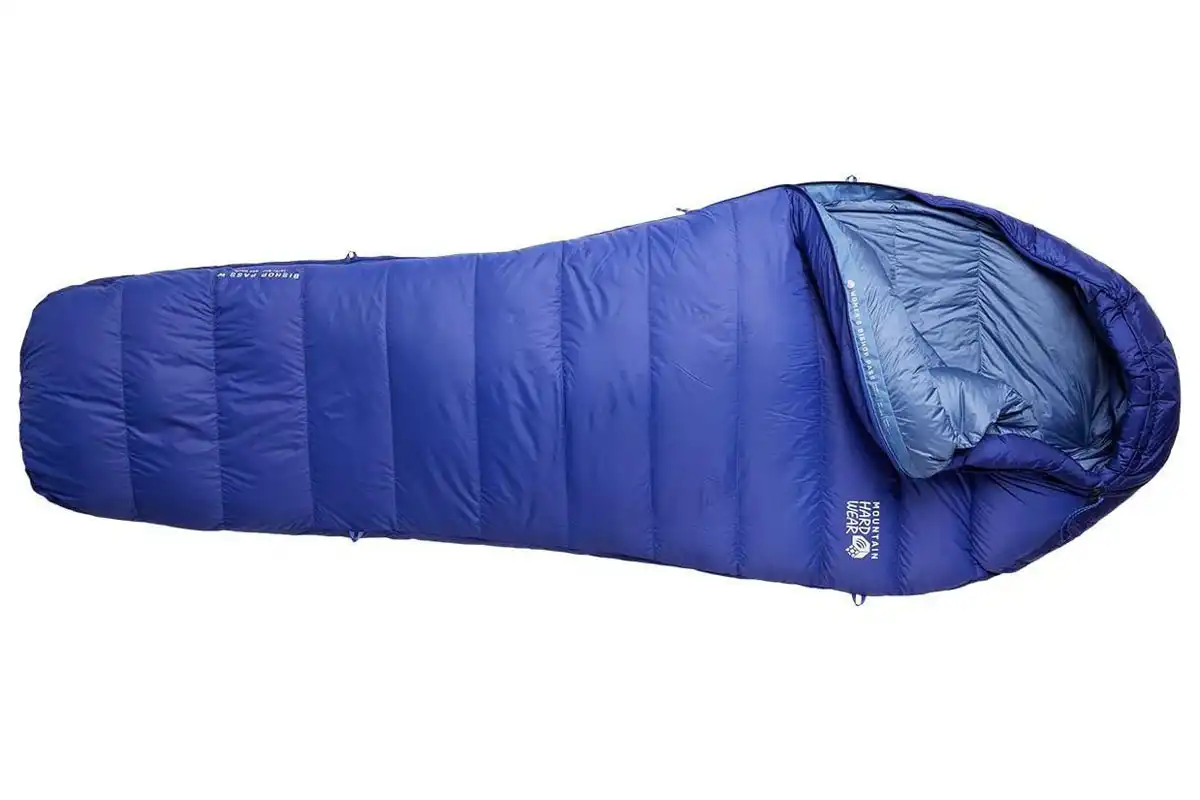
Mountain Hardwear builds gear for climbers and backpackers since 1993. The Mountain Hardwear Bishop Pass 15 uses 650-fill down inside a durable 20D ripstop nylon shell with DWR finish. The 15°F rating handles three-season camping with a solid draft collar and anti-snag zipper. It runs heavier than boutique ultralight options, but the price-to-performance value stands out. A strong pick for budget backpacking campers who want reliable down warmth without paying premium prices.
Why it’s a good buy:
What to consider:
|
Weight |
3.05 lbs |
|---|---|
|
Temperature Rating |
15°F (-9°C) |
|
Fill |
650 FP down |
|
Shell |
20D ripstop nylon with DWR finish |
7. Mountain Hardwear Phantom 30 – Best Ultralight for Warm Sleepers
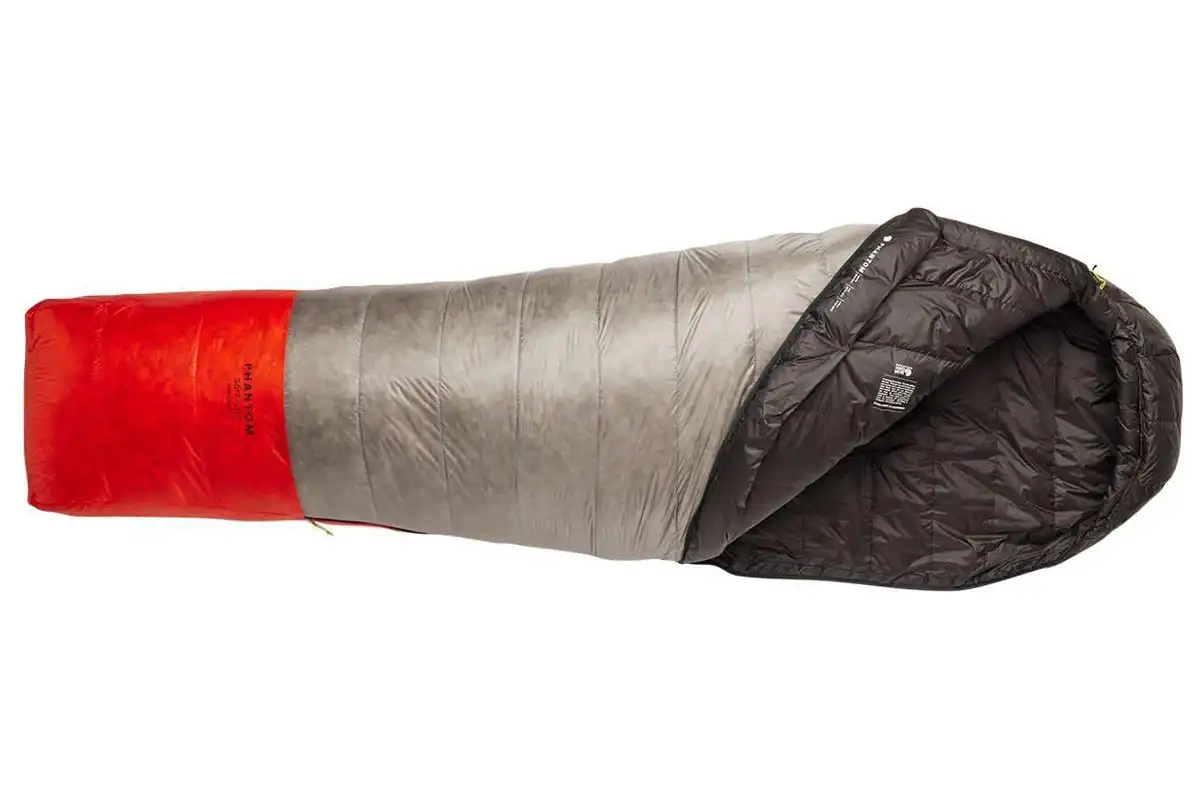
Mountain Hardwear engineered the Phantom for alpine missions. The Mountain Hardwear Phantom 30 uses Ghost Whisperer fabric (10D recycled nylon ripstop) from their flagship down jacket line. Q.Shield down (800-fill RDS-certified goose down) resists moisture and retains loft in damp conditions. Weight sits at 1.9 lbs. A contoured footbox and draft collar seal heat. The 4-chamber hood maintains even loft around your head. Best packability in the 30°F category. Built for warm sleepers on 3-season trips at lower elevations.
Why it’s a good buy:
What to consider:
|
Weight |
1.9 lbs |
|---|---|
|
Temperature Rating |
30°F (-1°C) |
|
Fill |
800 FP RDS goose down (Q.Shield) |
|
Shell |
Ghost Ripstop 10D recycled nylon |
8. Western Mountaineering MegaLite – Best Premium Mummy Bag
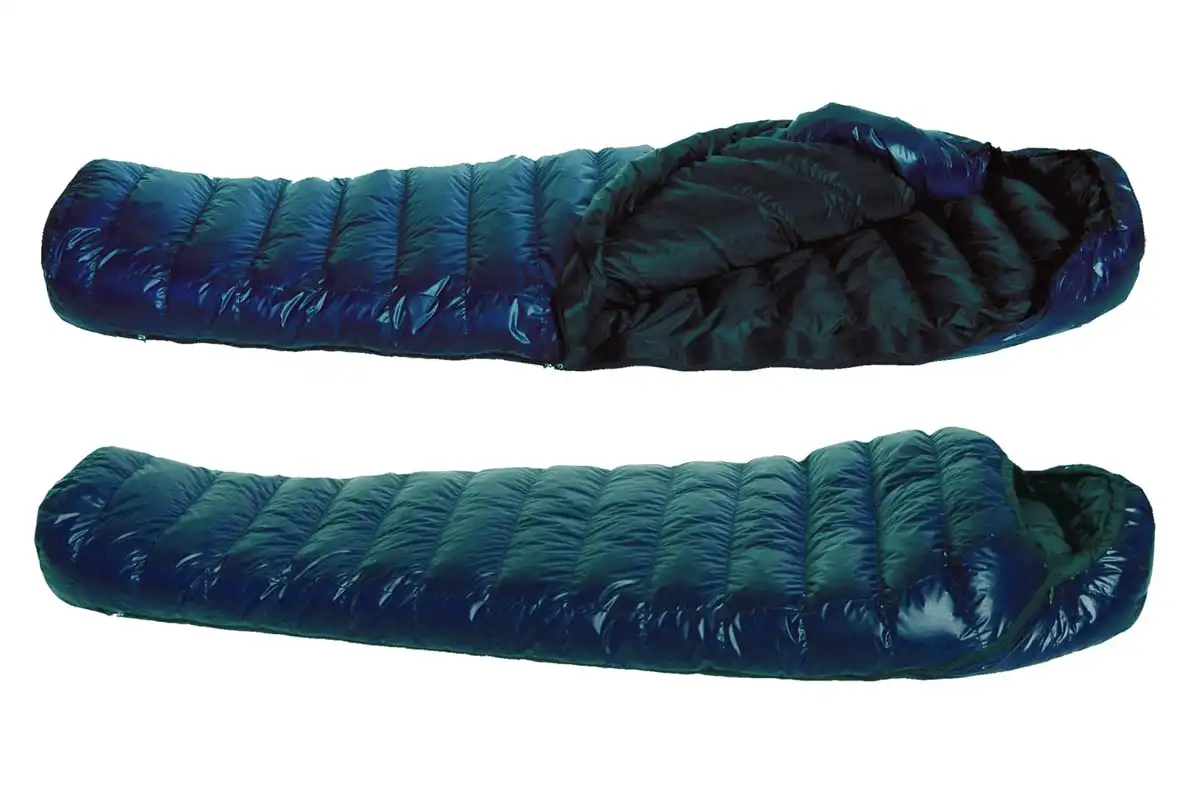
Western Mountaineering builds this bag by hand in the USA. The Western Mountaineering MegaLite fills 12 oz of 850-fill goose down into an ExtremeLite shell. At 1 lb 8 oz total weight, it is a roomy mummy bag with 64-inch shoulder girth. That extra space suits side sleepers who want ultralight performance without a tight fit. Continuous baffles let you adjust fill placement. Packed size compresses to about 6.6 liters. This is a USA-made sleeping bag with a 30°F rating for spring and summer backpacking.
Why it’s a good buy:
What to consider:
|
Weight |
1 lb 8 oz |
|---|---|
|
Temperature Rating |
30°F |
|
Fill |
850 FP goose down (12 oz fill) |
|
Shell |
ExtremeLite fabric |
9. Sea to Summit Cinder Lightweight Down – Best Premium Quilt
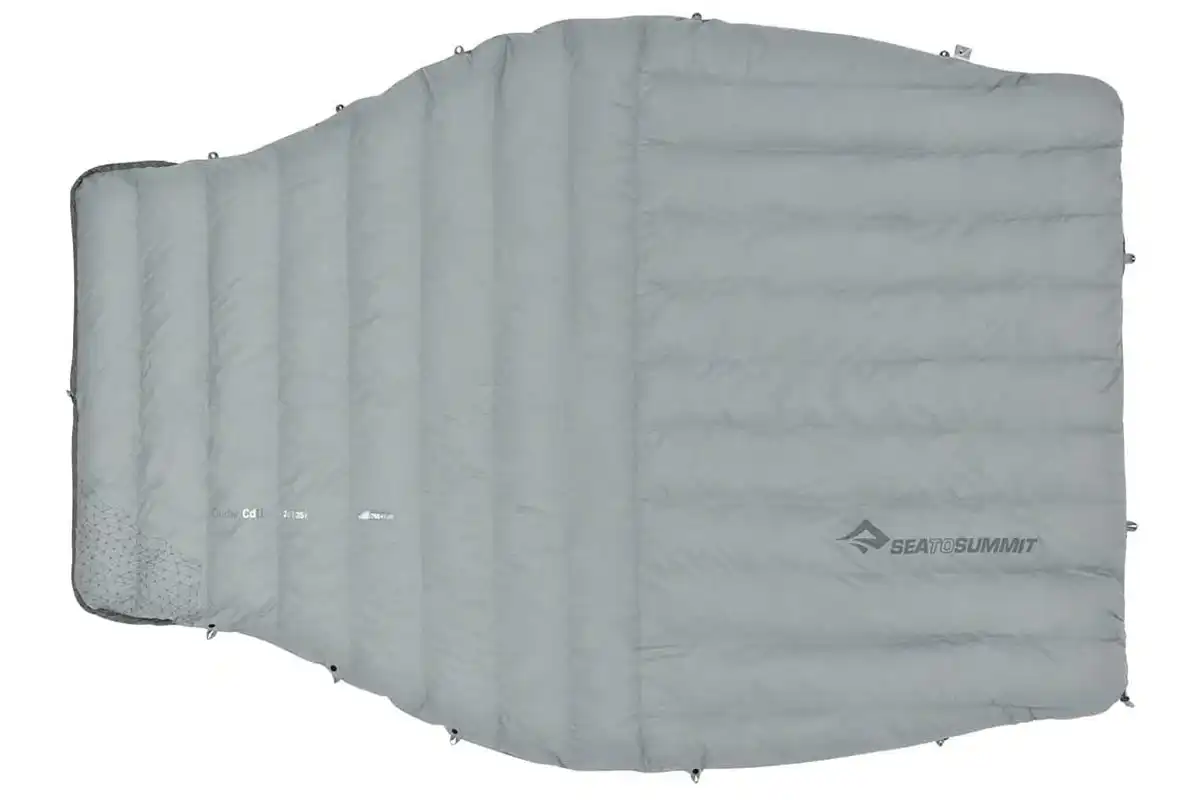
Sea to Summit designed the Cinder as a backpacking quilt for experienced hikers who prefer quilts over mummy bags. 750 fill power down (RDS certified) fills the sewn-through baffles. The 20D nylon shell provides waterproof, breathable protection. Snap-on straps secure it to your sleeping pad. A drawcord cinches the footbox on cold nights. Weight sits at 1.5 lbs. Compresses to 4.6 liters. Press-studs connect two quilts together for an oversized setup. Best for 2-season cool-weather backpacking, bike packing, and traveling.
Why it’s a good buy:
What to consider:
|
Weight |
1.5 lbs |
|---|---|
|
Temperature Rating |
35°F (-2°C) |
|
Fill |
750 FP Ultra-Dry down |
|
Shell |
Waterproof 20D nylon |
10. Marmot Mens Trestles 30 – Best Budget Backpacking Sleeping Bag
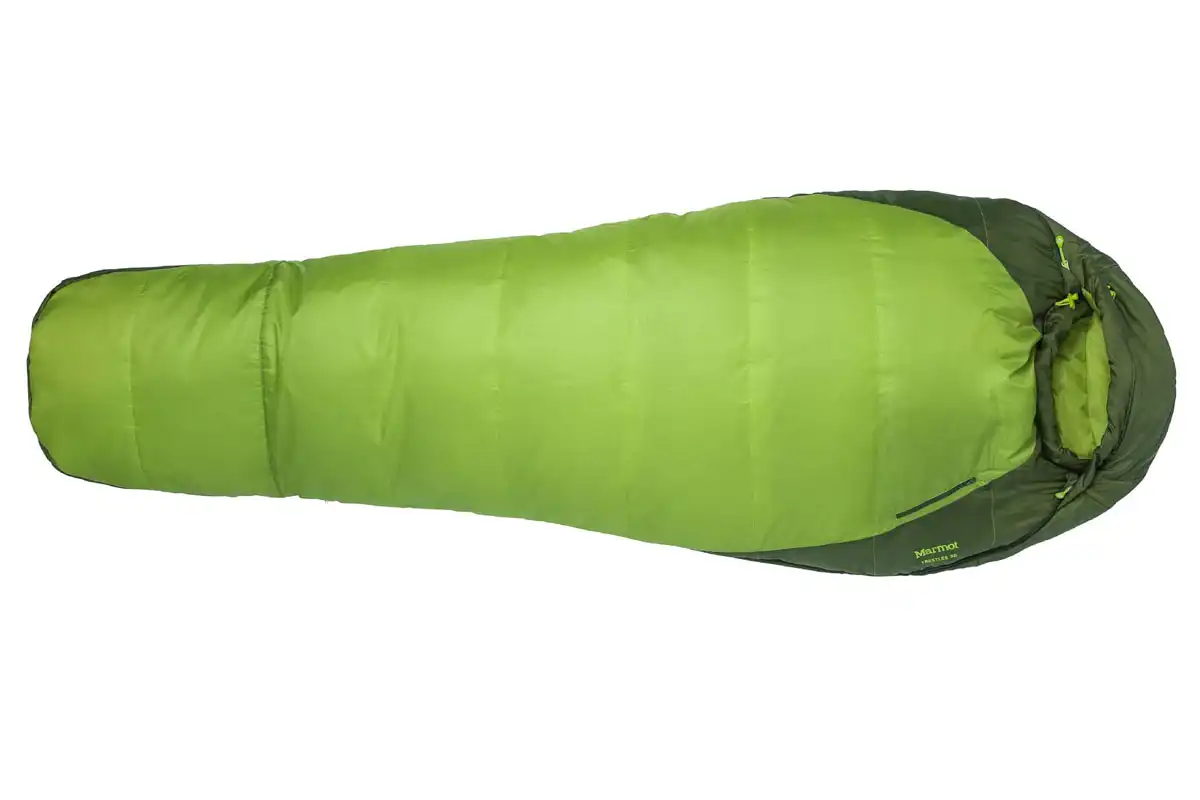
Marmot builds professional-grade outdoor gear inspired by working mountain guides. The Marmot Trestles 30 uses SpiraFil synthetic insulation instead of down. That means it retains warmth even in wet conditions where down fails. A summer sleeping bag rated to 30°F, it weighs 3 lbs with a wave-construction top and blanket-construction bottom. The anatomical 3D footbox gives your feet room to rest. A fold-down secondary zipper vents heat when the interior gets warm. Best for backpacking, trekking, and mountaineering in damp climates.
Why it’s a good buy:
What to consider:
|
Weight |
3 lbs (1.38 kg) |
|---|---|
|
Temperature Rating |
30°F |
|
Fill |
SpiraFil high-loft synthetic |
|
Shell |
100% polyester, machine washable |
Common Mistakes When Choosing a Lightweight Sleeping Bag for Backpacking
Buying on weight alone and ignoring the temperature rating. A 1 lb bag rated to 40°F leaves you cold on a 28°F night. Always match the rating to your expected conditions. The warmth-to-weight ratio matters more than raw ounces.
Ignoring sleep style. Back sleepers fit well in narrow mummy bags. Side sleepers need room at the hips and knees. Choosing the wrong shape leads to a miserable night and compressed insulation.
Skipping pad integration for quilts. A quilt vs bag setup only works when the quilt stays connected to your pad. Without proper straps or a pad sleeve, cold air flows underneath you. Test the attachment system before your trip.
Choosing too warm for summer. A 15°F bag on a 55°F night causes overheating and sweating. Match the three-season rating to the warmest conditions you expect. For hot summers, a 35°F to 40°F bag or quilt works better.
How to Care for Your Lightweight Sleeping Bag
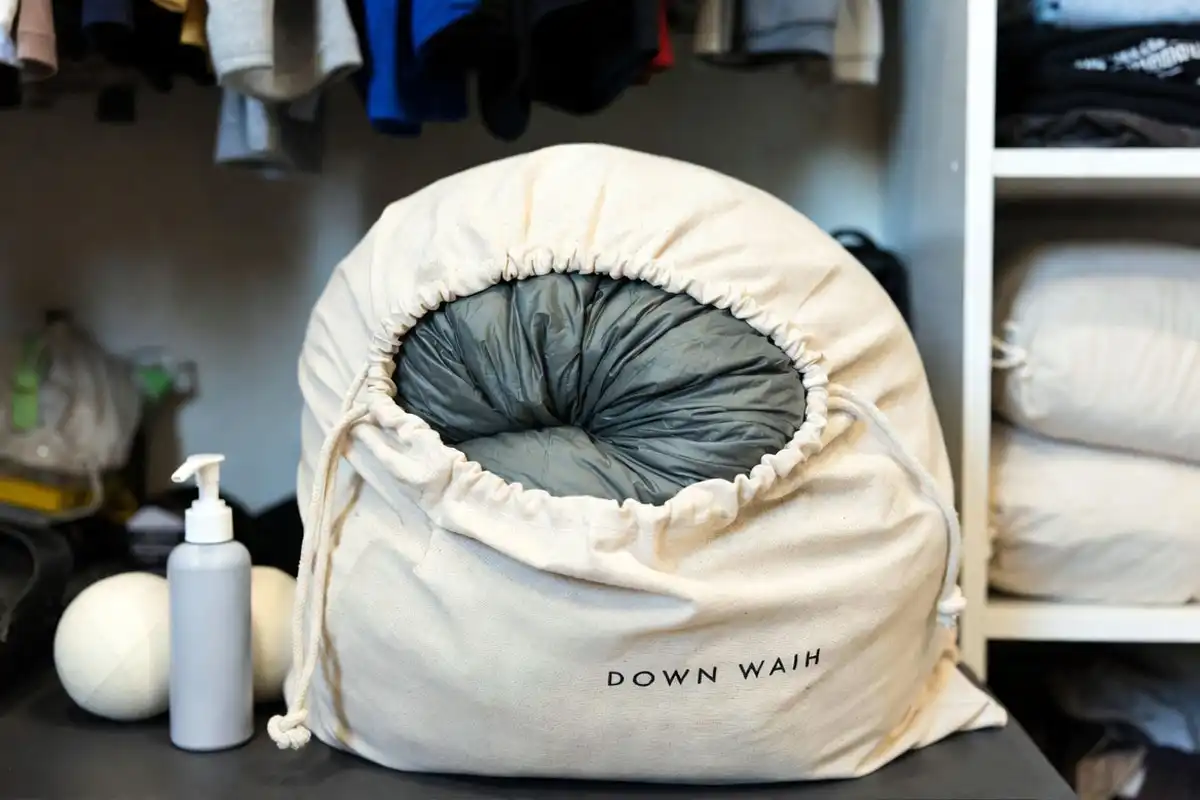
Store your bag uncompressed in a large cotton or mesh sack. Compressed storage over weeks or months destroys down loft and reduces warmth permanently.
On the trail, use a waterproof stuff sack to protect against rain and stream crossings. A dry bag liner adds extra insurance in humid weather that dampens bedding.
Wash your bag 1 to 2 times per year using a down wash product like Nikwax Down Wash Direct. Use a front-loading machine on a gentle cycle. Never use a top-loader with an agitator.
Dry on low heat with 2 to 3 clean tennis balls or dryer balls. These break up clumps and restore loft. A full dry cycle takes 2 to 3 hours. Check baffle integrity after each wash by holding the bag up to light and looking for thin spots.
Treat your sleeping bag well, and it performs for a decade or more. Skip maintenance, and even a $400 bag loses warmth within a few seasons.
FAQs on Lightweight Backpacking Sleeping Bags

What is the lightest sleeping bag for backpacking?
The Western Mountaineering HighLite weighs 16 oz (1 lb) with 850-fill goose down and a 35°F rating. It is the lightest hooded mummy bag available for backpacking.
What fill power is best for a lightweight backpacking sleeping bag?
Look for 800 to 850+ fill power for the best warmth-to-weight ratio. Higher fill power traps more heat with less material, which reduces both weight and packed size.
What temperature sleeping bag do I need for three-season backpacking?
A sleeping bag rated between 15°F and 30°F covers most three-season conditions. Buy 5 to 10°F colder than your expected lowest overnight temperature for a safety margin.
How much should a good lightweight backpacking sleeping bag weigh?
A good lightweight backpacking sleeping bag weighs under 2 lbs (32 oz). Ultralight options drop below 1.5 lbs. Weight above 3 lbs suits car camping more than trail use.
Is down or synthetic better for a lightweight backpacking sleeping bag?
Down provides better warmth-to-weight ratio and compresses smaller. Synthetic retains warmth when wet and costs less. Down suits most backpackers; synthetic works better in consistently rainy conditions.
Final Thoughts on Packable Sleeping Bag for Backpacking
For most 3-season backpackers on a moderate budget, the Sea to Summit Spark 15 delivers the strongest balance of weight, warmth, and packability. It weighs under 2 lbs and handles overnight lows down to 15°F.
When choosing your backpacking gear, focus on temperature rating first, then fill power, then packed size. A very lightweight sleeping bag means nothing if it leaves you cold at 2 AM on a ridgeline.
The warmth-to-weight ratio tells you more than raw ounces or price tags alone.
Before you buy, check the sizing chart against your height. Then compare the bag’s comfort rating to the coldest nights on your planned route. A 10-minute check now prevents a miserable night on trail later.