Best Sleeping Bag for Cold Weather: 10 Warmest Picks Tested
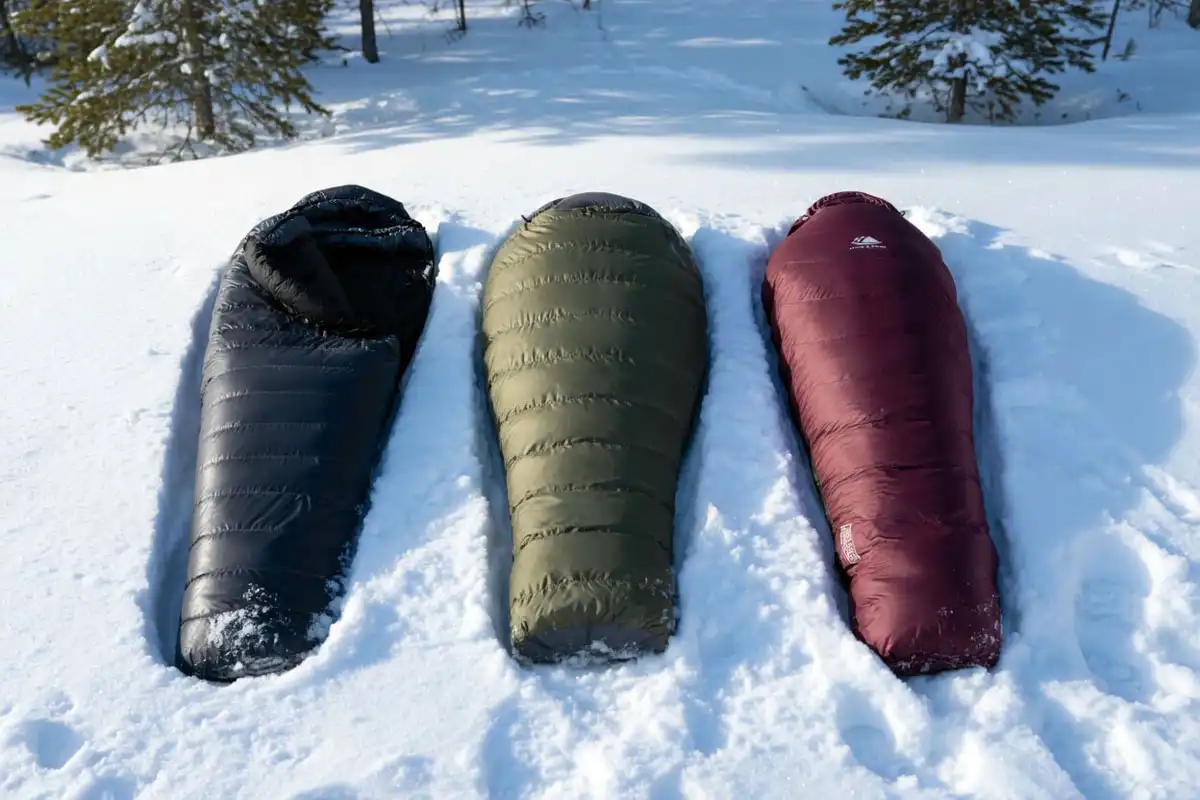
Looking for the best sleeping bag for cold weather that keeps you warm through freezing nights without adding bulk to your pack? This guide breaks down temperature rating, down insulation, fill power, and mummy bag design so you can pick the right sleeping bag for your cold weather camping trips with confidence.
The best winter sleeping bag combines a 0°F or lower EN/ISO comfort rating, 700-850+ fill power down insulation, a mummy shape with draft collar and draft tube, and enough fill weight to hold warmth below freezing. The Western Mountaineering Kodiak MF leads this list with 850-fill goose down, 34 oz of fill, and a proven 0°F rating. Pair any cold-weather bag with a sleeping pad rated R-value 4 or higher to complete the sleep system.
Quick Comparison of the 10 Best Sleeping Bags for Cold Weather Camping
| Preview |
#1
Western Mountaineering Kodiak MF
Superb Rating
Overall score: 100 of 100
List price: $891.43
|
#2
Coleman North Rim 0°F Big & Tall
Best Budget Rating
Overall score: 91 of 100
List price: $94.49
|
#3
NEMO Disco 15 Endless Promise
Good Rating
Overall score: 86 of 100
List price: $269.95
|
#4
MARMOT Ironwood Mummy
Great Rating
Overall score: 91 of 100
List price: $204.88
|
#5
The North Face Stormbreak 20°F
Great Rating
Overall score: 91 of 100
List price: $160.00
|
#6
Therm-a-Rest Parsec 0C
Fair Rating
Overall score: 73 of 100
List price: $251.89
|
#7
Kelty Cosmic Down 20
Great Rating
Overall score: 94 of 100
List price: $189.95
|
#8
Big Agnes Lost Ranger 3N1
Good Rating
Overall score: 86 of 100
List price: $469.95
|
#9
Marmot Col Long
Superb Rating
Overall score: 100 of 100
List price: $600.00
|
#10
Hyke & Byke Katahdin 0°F
Good Rating
Overall score: 89 of 100
List price: $131.90
|
|---|---|---|---|---|---|---|---|---|---|---|
| Item Name | Western Mountaineering Kodiak MF | Coleman North Rim 0°F Big & Tall | NEMO Disco 15 Endless Promise | MARMOT Ironwood Mummy | The North Face Stormbreak 20°F | Therm-a-Rest Parsec 0C | Kelty Cosmic Down 20 | Big Agnes Lost Ranger 3N1 | Marmot Col Long | Hyke & Byke Katahdin 0°F |
| Price |
$891.43 Listed
Check Price on Amazon
|
$94.49 Listed
Check Price on Amazon
|
$269.95 Listed
Check Price on Amazon
|
$204.88 Listed
Check Price on Amazon
|
$160.00 Listed
Check Price on Amazon
|
$251.89 Listed
Check Price on Amazon
|
$189.95 Listed
Check Price on Amazon
|
$469.95 Listed
Check Price on Amazon
|
$600.00 Listed
Check Price on Amazon
|
$131.90 Listed
Check Price on Amazon
|
| Overall Score |
Audience score
Calculated from Amazon global ratings percentages for Western Mountaineering Kodiak MF.
100 / 100 from 3 ratings
Weighted average: 5.0 / 5 stars
Amazon rating breakdown
5 star
100%
4 star
0%
3 star
0%
2 star
0%
1 star
0%
Score position
This product
|
Audience score
Calculated from Amazon global ratings percentages for Coleman North Rim 0°F Big & Tall.
91 / 100 from 11,366 ratings
Weighted average: 4.5 / 5 stars
Amazon rating breakdown
5 star
75%
4 star
13%
3 star
6%
2 star
2%
1 star
4%
Score position
This product
|
Audience score
Calculated from Amazon global ratings percentages for NEMO Disco 15 Endless Promise.
86 / 100 from 9 ratings
Weighted average: 4.3 / 5 stars
Amazon rating breakdown
5 star
82%
4 star
0%
3 star
0%
2 star
0%
1 star
18%
Score position
This product
|
Audience score
Calculated from Amazon global ratings percentages for MARMOT Ironwood Mummy.
91 / 100 from 76 ratings
Weighted average: 4.6 / 5 stars
Amazon rating breakdown
5 star
75%
4 star
17%
3 star
3%
2 star
0%
1 star
5%
Score position
This product
|
Audience score
Calculated from Amazon global ratings percentages for The North Face Stormbreak 20°F.
91 / 100 from 5 ratings
Weighted average: 4.6 / 5 stars
Amazon rating breakdown
5 star
55%
4 star
45%
3 star
0%
2 star
0%
1 star
0%
Score position
This product
|
Audience score
Calculated from Amazon global ratings percentages for Therm-a-Rest Parsec 0C.
73 / 100 from 4 ratings
Weighted average: 3.6 / 5 stars
Amazon rating breakdown
5 star
66%
4 star
0%
3 star
0%
2 star
0%
1 star
34%
Score position
This product
|
Audience score
Calculated from Amazon global ratings percentages for Kelty Cosmic Down 20.
94 / 100 from 211 ratings
Weighted average: 4.7 / 5 stars
Amazon rating breakdown
5 star
84%
4 star
9%
3 star
2%
2 star
3%
1 star
2%
Score position
This product
|
Audience score
Calculated from Amazon global ratings percentages for Big Agnes Lost Ranger 3N1.
86 / 100 from 5 ratings
Weighted average: 4.3 / 5 stars
Amazon rating breakdown
5 star
77%
4 star
0%
3 star
0%
2 star
23%
1 star
0%
Score position
This product
|
Audience score
Calculated from Amazon global ratings percentages for Marmot Col Long.
100 / 100 from 1 ratings
Weighted average: 5.0 / 5 stars
Amazon rating breakdown
5 star
100%
4 star
0%
3 star
0%
2 star
0%
1 star
0%
Score position
This product
|
Audience score
Calculated from Amazon global ratings percentages for Hyke & Byke Katahdin 0°F.
89 / 100 from 997 ratings
Weighted average: 4.5 / 5 stars
Amazon rating breakdown
5 star
72%
4 star
15%
3 star
4%
2 star
4%
1 star
5%
Score position
This product
|
| Temp Rating | 0°F |
0°F |
15°F |
30°F |
20°F |
32°F |
20°F (ISO 21°F) |
0°F (combined) |
-20°F |
0°F (EN 14°F) |
| Insulation | Goose Down |
TechLoft Synthetic |
RDS Hydrophobic Down |
Water-Resistant Down |
Heatseeker Pro Synthetic |
Hydrophobic Down |
RDS Down |
DownTek PFC-Free |
Goose Down |
Duck Down |
| Fill Power | 850+ |
It is filled with 100% post-consumer-recycled Ecotherm synthetic fill. |
650 |
650 |
It uses Heatseeker Pro synthetic insulation (85% recycled polyester microfiber) |
800 |
550 |
650 |
800+ |
650 |
| Shape | Mummy |
Semi-rectangular |
Spoon |
Mummy |
Rectangular |
Mummy |
Mummy |
Rectangular |
Mummy |
Mummy |
| Shell | MicroLite XP Polyester |
Polyester |
20D Recycled Polyester |
100% Nylon |
Recycled Polyester w/ DWR |
20D Recycled Nylon |
Recycled 20D Nylon |
Recycled 20D Polyester |
Pertex Shield 30D Nylon |
20D Ripstop Nylon |
| Total Weight | 3 lb 1 oz |
6.5 lbs |
2 lb 2 oz |
2.3 pounds |
3 lb 6 oz |
1 lb 8 oz |
2 lb 6 oz |
3 lb 13 oz |
4 lb 9 oz |
3.54 lbs |
| Best For | Serious winter backpacking Best Overall |
Car camping, base camps. Best Budget |
Side sleepers, eco-campers Sustainable |
3-season cold camping Feature-Rich |
Eco-conscious 3-season use Recycled Synthetic |
Ultralight backpacking Lightweight |
First-time cold-weather campers Best Value |
Year-round modular system Most Versatile |
Expedition, extreme winter Extreme Cold |
Budget cold-weather camping Best Value |
10 Best Sleeping Bags for Cold Weather (Reviews)
1. Western Mountaineering Kodiak MF – Best Overall Cold Weather Sleeping Bag
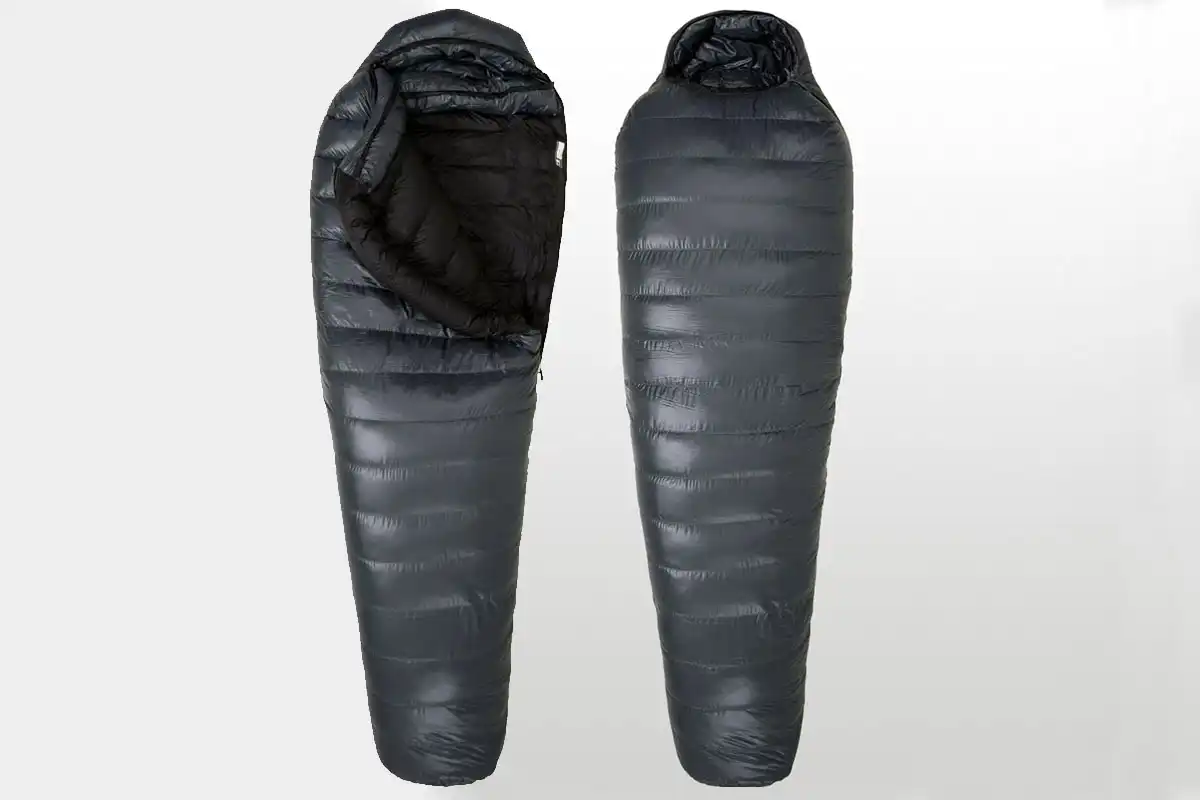
Western Mountaineering builds the Kodiak MF in the USA. This mummy bag carries a 0°F rating with 850-fill goose down and 34 oz of fill weight. The baffle construction uses continuous 5.25-inch spacing that prevents down shifting. Both the 3D draft tube and draft collar are three-dimensionally sewn and packed with down. The 67-inch shoulder girth fits all sleeping positions, including side sleepers who need room to move. I have stayed warm at -10°F with light layering. This bag is built for serious cold-weather backpackers and winter mountaineers.
Why it’s a good buy:
Why it’s not recommended:
|
Fill |
34 oz of 850+ fill power goose down |
|---|---|
|
Total weight |
3 lb 1 oz (7ft version) |
|
Shape |
Mummy, 67-inch shoulder girth |
|
Shell |
MicroLite XP polyester microfiber |
2. Hyke & Byke Eolus 0°F – Best Value Down Sleeping Bag for Cold Weather
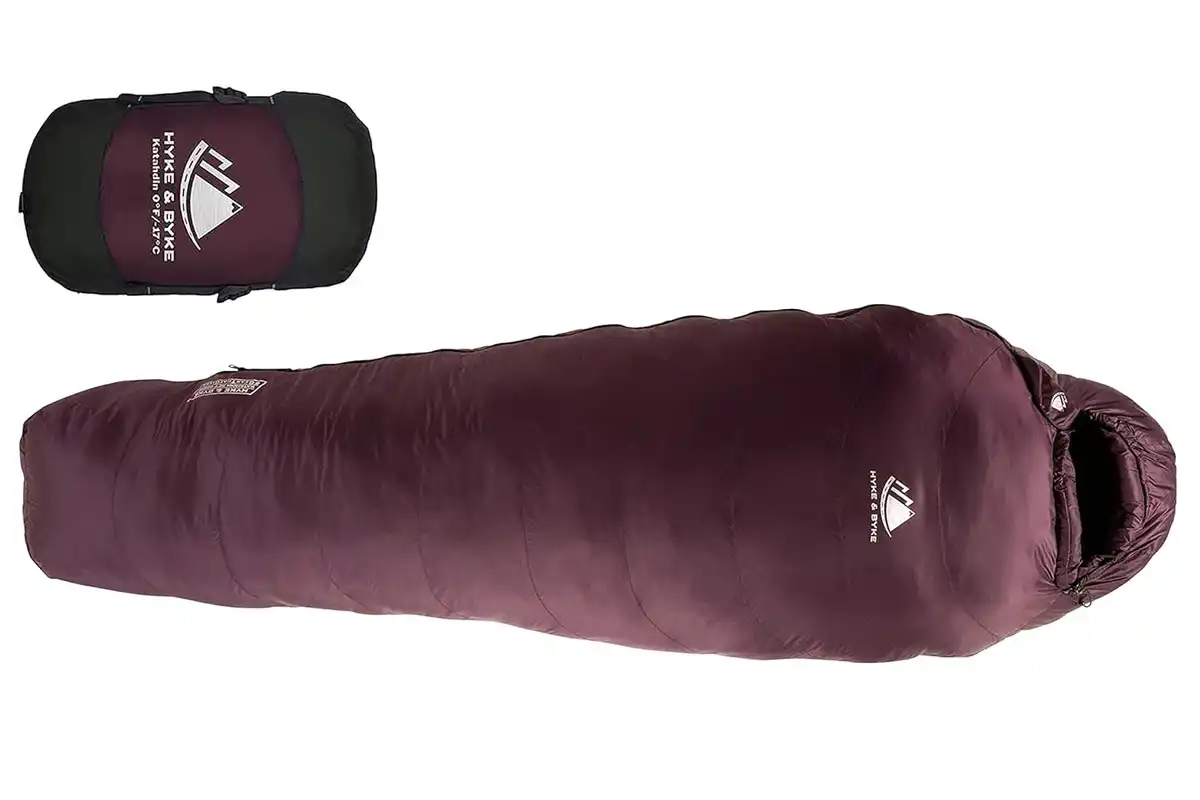
Hyke & Byke is a USA-based brand that makes the Eolus for cold-weather camping on a budget. This mummy bag uses 650-fill duck down insulation with a full-length draft tube and cinchable hood. It compresses to roughly the size of a large water bottle. The EN/ISO comfort rating sits at 14°F, which is more honest than most budget competitors claiming 0°F. The warmth-to-price ratio makes it the top pick for car campers and first-time cold-weather campers. Weighs around 3.5 lbs.
Why it’s a good buy:
Why it’s not recommended:
|
Fill |
650-fill power duck down |
|---|---|
|
Total weight |
3.54 lbs |
|
Shell |
20D ripstop nylon with DWR coating |
|
Packed size |
11″ x 8″ diameter |
3. Coleman North Rim 0°F – Best Synthetic Sleeping Bag for Cold Weather
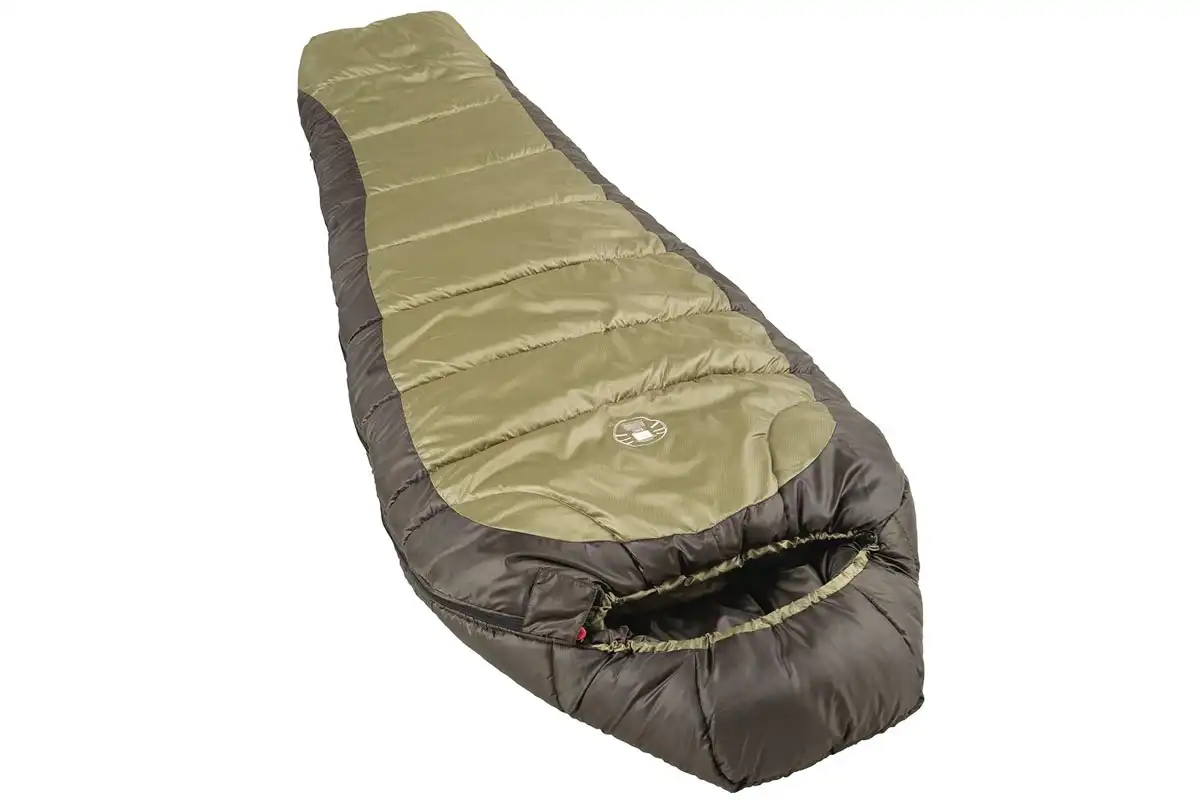
Coleman has made outdoor gear since 1901. The North Rim is their top-selling synthetic sleeping bag for cold weather use. It carries a 0°F temperature rating with TechLoft synthetic insulation in a semi-rectangular bag shape. The fold-down draft collar lets you adjust warmth around the neck. Moisture resistance and wet insulation performance stay reliable because synthetic fill does not collapse when damp. This is a machine washable sleeping bag built for car camping and base camps. Not suited for backpacking due to bulk.
Why it’s a good buy:
Why it’s not recommended:
|
Insulation |
TechLoft synthetic polyester |
|---|---|
|
Total weight |
6.5 lbs (Big and Tall) |
|
Shape |
Semi-rectangular mummy with footbox |
|
Care |
Fully machine washable |
4. MARMOT Ironwood Mummy Sleeping Bag – Best Feature-Rich Cold Weather Bag
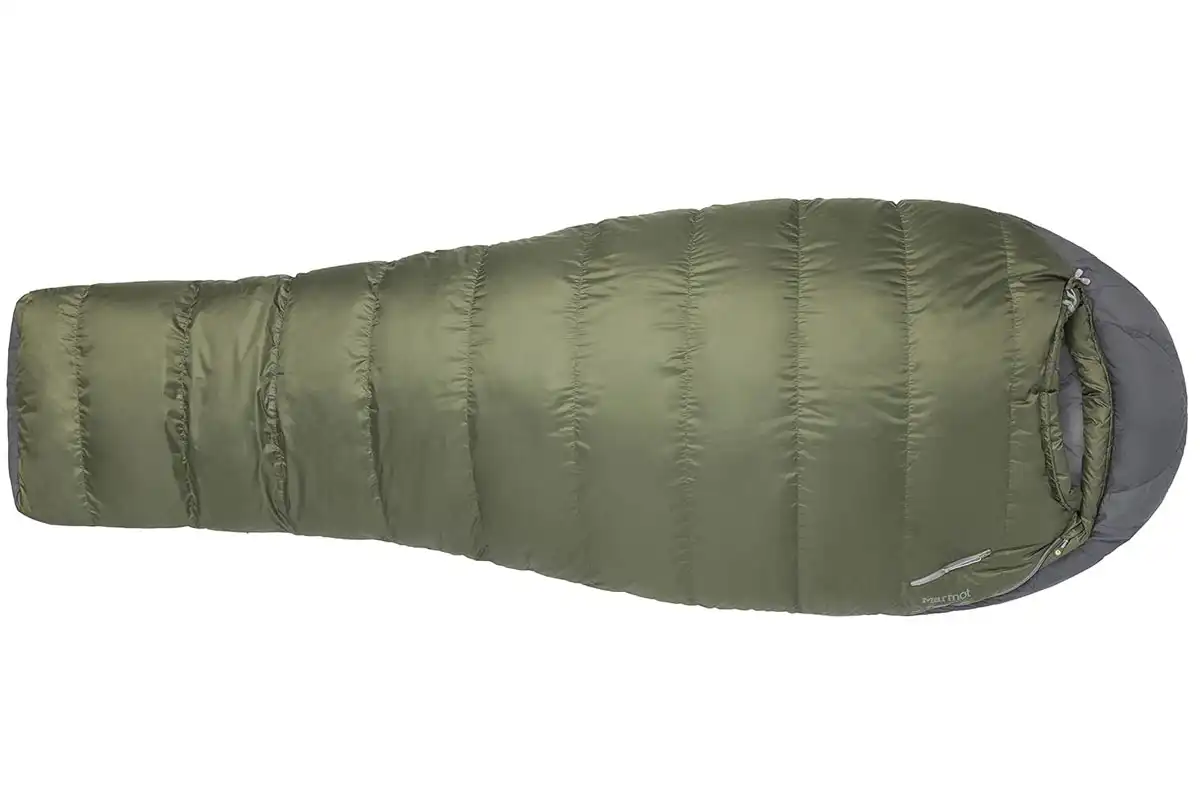
Marmot started in 1974 from working mountain guides. The Ironwood uses 650-fill power water-resistant down treated with Down Defender for protection in damp conditions. The full-length locking YKK two-way zipper includes a draft tube, snag guard, and zipper garage. A second quarter-length zipper on the opposite side adds temperature regulation on variable nights. The anatomically shaped footbox provides extra room. This unisex bag fits sleepers up to 6 feet and works well for 3-season cold camping.
Why it’s a good buy:
Why it’s not recommended:
|
Fill |
650-fill power down with Down Defender |
|---|---|
|
Temperature |
EN tested to 30°F |
|
Shell |
100% nylon |
|
Features |
Two-way zipper, snag guard, draft tube, stash pocket |
5. The North Face Stormbreak 20°F – Best Recycled Synthetic Bag for Cold Weather
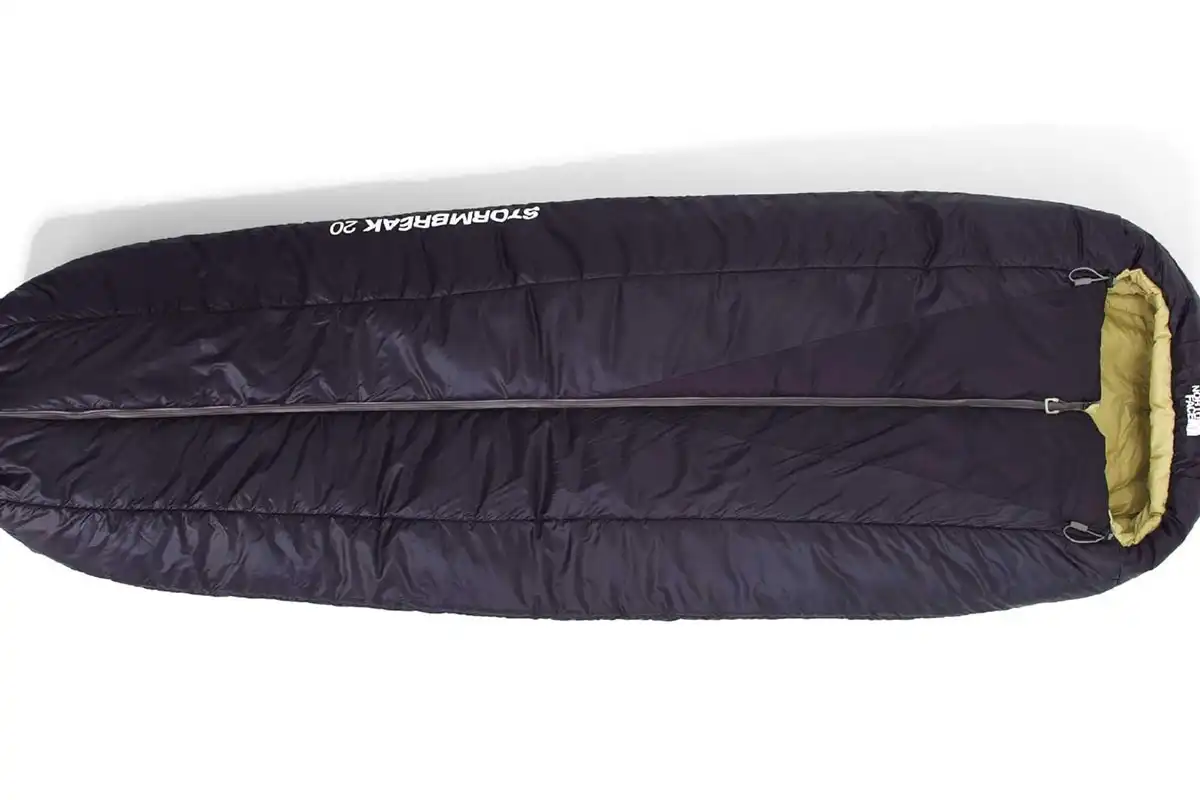
The North Face designed the Stormbreak for campers who want reliable synthetic warmth without down maintenance. It uses Heatseeker Pro 85%-recycled insulation that delivers solid warmth-to-weight ratio for a synthetic bag. The 100% recycled polyester shell carries a non-PFC DWR finish for light moisture protection. Soft vertical quilting adds stretch in the lower legs. The full-length 2-way center zip suits side sleepers and lets you vent on warmer nights. Loft recovery holds up well after compression. At 3 lb 6 oz, it balances weight and warmth for 3-season cold conditions.
Why it’s a good buy:
Why it’s not recommended:
|
Insulation |
Heatseeker Pro 85%-recycled synthetic |
|---|---|
|
Total weight |
3 lb 6 oz (Regular) |
|
Shell |
100% recycled polyester with DWR |
|
Packed size |
8.5″ x 18″ |
6. Therm-a-Rest Parsec 0°C – Best Lightweight Sleeping Bag for Cold Conditions
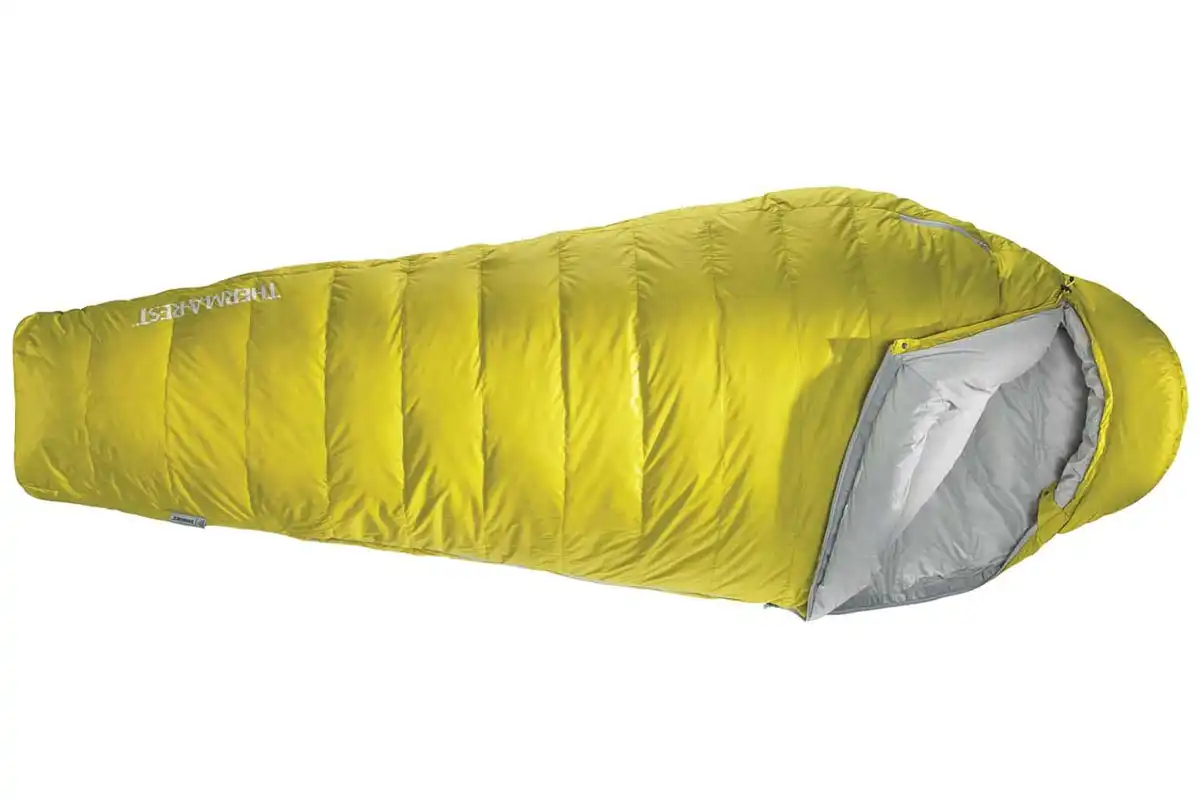
Therm-a-Rest designed the Parsec for weight-conscious backpackers. This ultralight sleeping bag uses 800-fill power Nikwax hydrophobic down that absorbs 90% less water and dries 3x faster than untreated down. The DWR treatment on the recycled nylon shell adds another moisture barrier. Compressibility is excellent. Packability ranks among the best in its class. The SynergyLink system connects the bag to your pad for better thermal efficiency. Comfortable for a side sleeper thanks to its ergonomic footbox. Weighs only 1 lb 8 oz.
Why it’s a good buy:
Why it’s not recommended:
|
Fill |
800-fill Nikwax Hydrophobic Down (RDS-certified) |
|---|---|
|
Total weight |
1 lb 8 oz |
|
Shell |
20D GRS-certified recycled nylon ripstop |
|
Features |
SynergyLink connectors, Toe-asis foot warmer |
7. NEMO Disco 15 Endless Promise – Best Sustainable Cold Weather Sleeping Bag
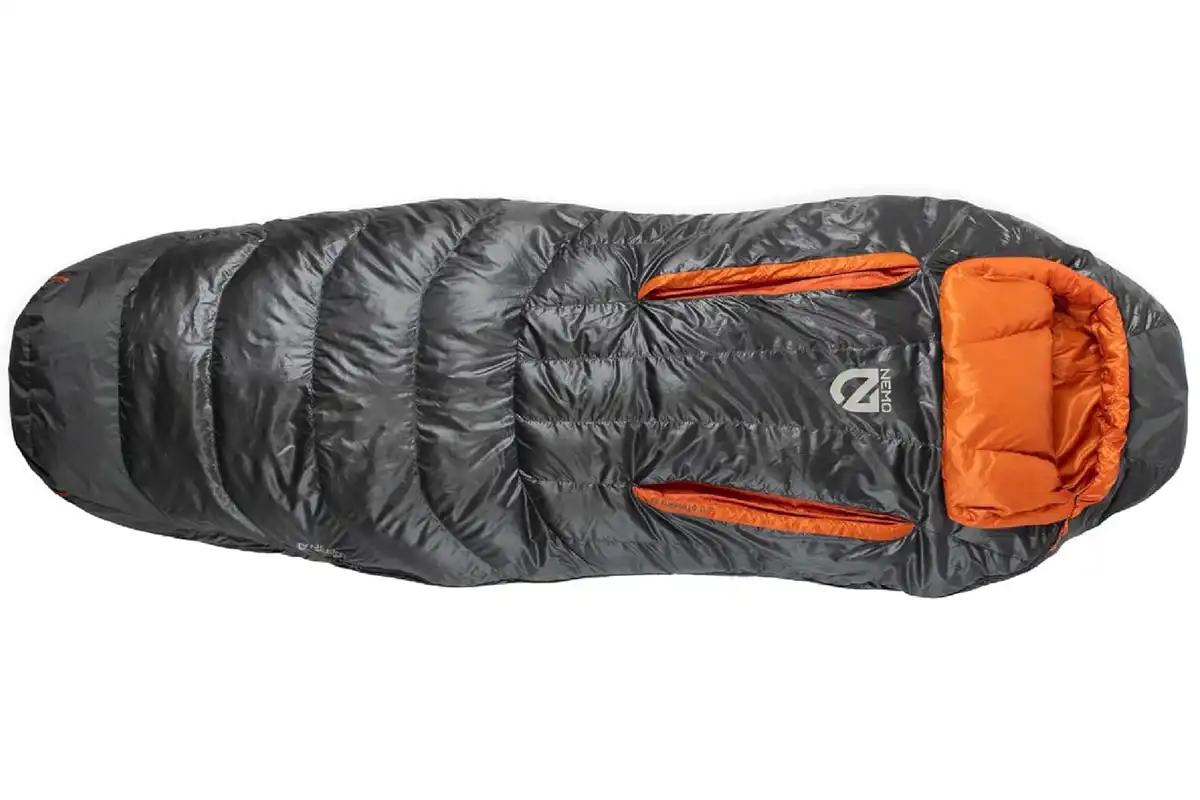
NEMO backs every Endless Promise product with a lifetime warranty and 100% recyclability. The Disco uses a spoon-shaped cut that gives extra room at elbows and knees for side sleepers. The shell is 20D recycled polyester ripstop that is bluesign-approved. The draft collar (Blanket Fold design) blocks cold air or dumps heat depending on position. A synthetic toebox protects the down from moisture wetting at the feet, which is smart moisture management. Filled with 650 FP hydrophobic, PFAS-free, RDS-certified down. Packs to 10.5″ x 7″ diameter.
Why it’s a good buy:
Why it’s not recommended:
|
Fill |
650 FP hydrophobic RDS-certified down |
|---|---|
|
Packed weight |
2 lb 2 oz |
|
Shell |
20D 100% recycled polyester ripstop with C0 DWR |
|
Shoulder girth |
62 inches |
8. Kelty Cosmic Down 20 – Best Budget Sleeping Bag for Cold Weather
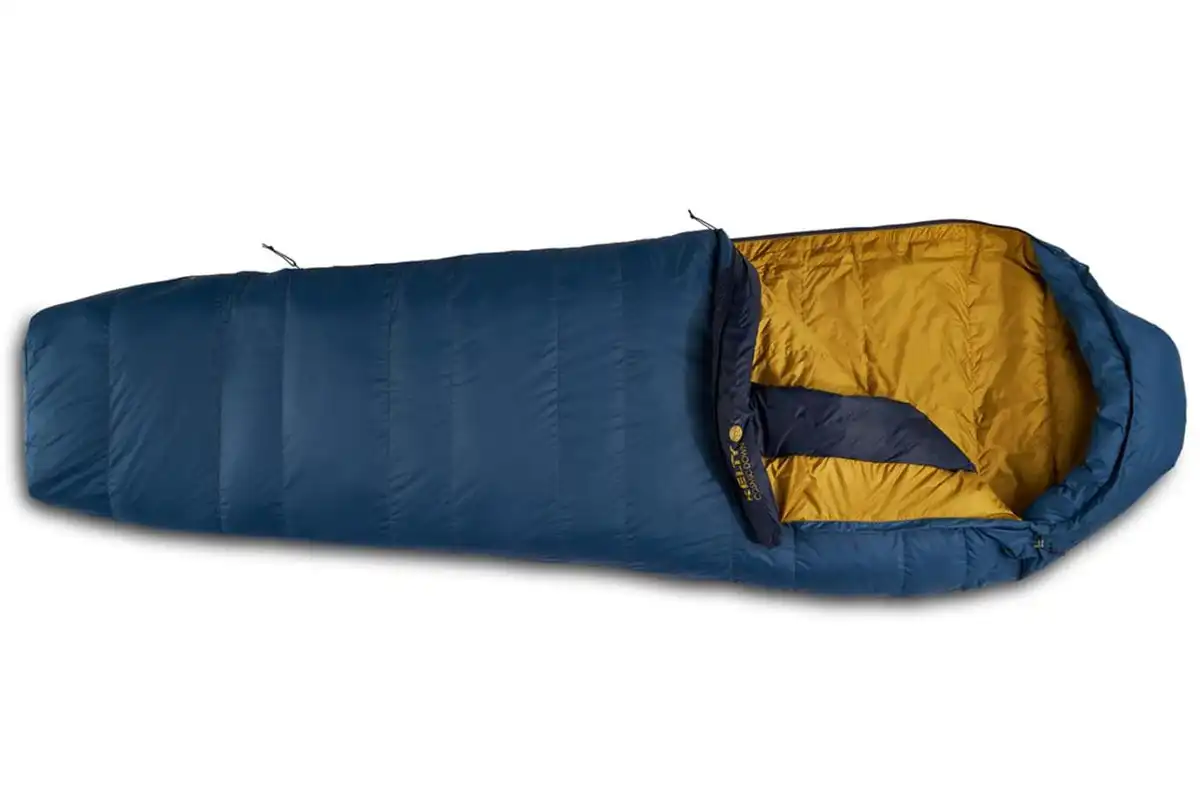
Kelty has made camping gear in Colorado since 1952. The Cosmic 20 is one of the most affordable cold weather sleeping bags in this list, priced around $180-190. This mummy bag uses 550-fill down with a temperature rating of 20°F (ISO limit 21°F, ISO extreme -11°F). The recycled nylon shell carries a PFC-free DWR finish. Fill weight keeps the bag warm for 3-season camping, though it runs heavier and less compressible than premium bags. Dual-direction zippers add convenience. Best for casual campers and first-time cold-weather sleepers.
Why it’s a good buy:
Why it’s not recommended:
|
Fill |
550-fill power RDS-certified down |
|---|---|
|
Total weight |
2 lb 6 oz (Regular) |
|
Shell |
Recycled 20D nylon taffeta with PFC-free DWR |
|
Packed size |
13″ x 7″ |
9. Big Agnes Lost Ranger 3N1 – Best Versatile Cold Weather System
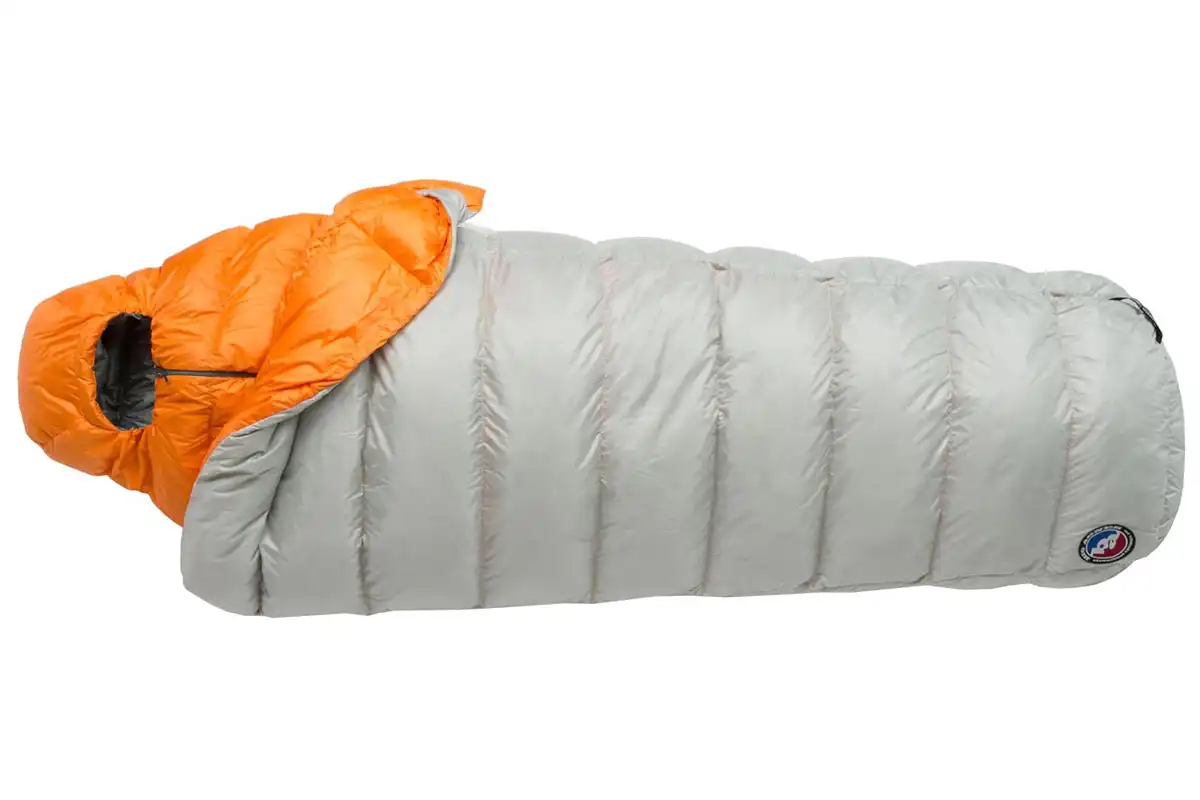
Big Agnes built the Lost Ranger as a modular three-in-one system. The outer quilt handles warm nights. The inner bag rated to 18°F covers cooler conditions. Combine both for a 0°F rating with offset quilting that eliminates cold spots. Insulated with 650-fill DownTek that retains warmth even when wet. The shell uses recycled 20D polyester ripstop with PFAS-free DWR. The Padlok system secures the bag to your sleeping pad so you do not roll off. Temperature versatility makes this one bag system for year-round camping.
Why it’s a good buy:
Why it’s not recommended:
|
Fill |
650-fill DownTek PFC-free |
|---|---|
|
Total weight |
3 lb 13 oz |
|
Shell |
Recycled 20D polyester ripstop with PFAS-free DWR |
|
System |
Outer quilt + inner bag + combined 0°F rating |
10. MARMOT Col Long – Best Extreme Cold Weather Sleeping Bag
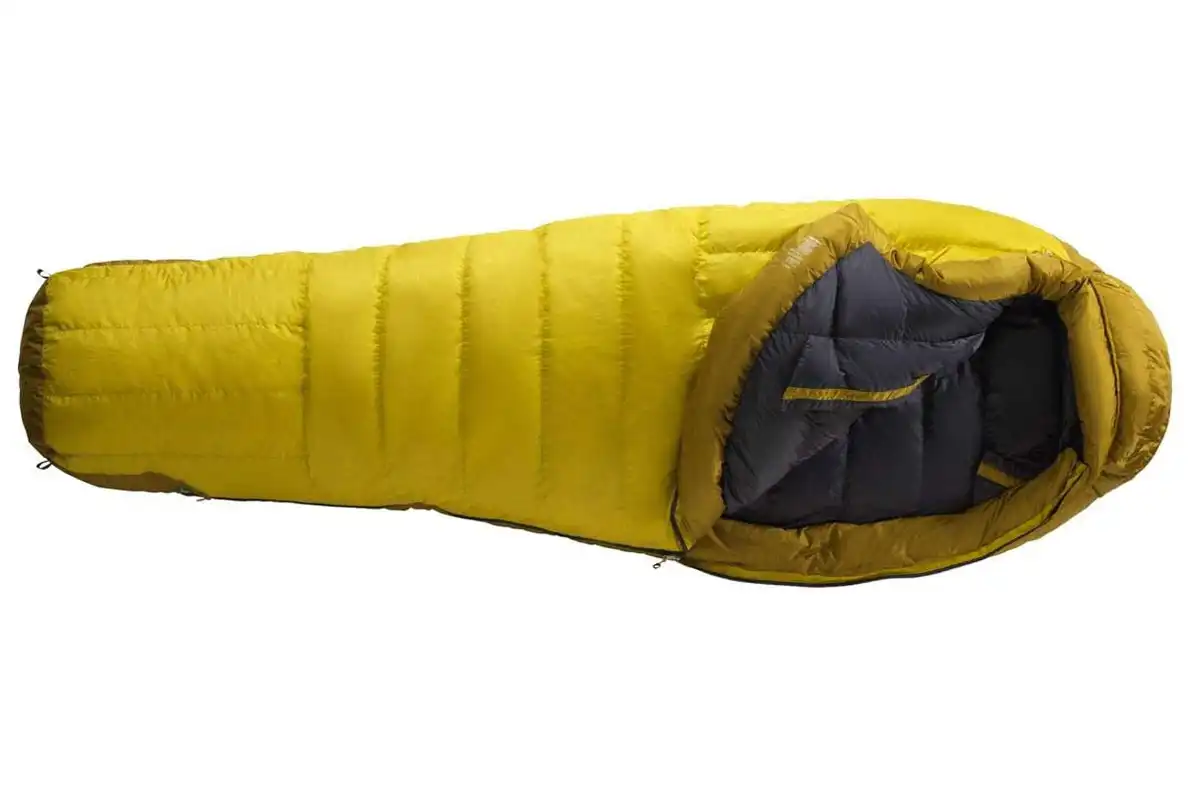
Marmot fills and finishes the Col in Rohnert Park, California. This is an expedition sleeping bag built for extreme conditions. It uses certified 800-fill goose down with 42 oz of fill (Long version). The 30-denier nylon shell features a Pertex membrane that is windproof, waterproof, and breathable. The 11-baffle wraparound footbox with vertical baffles prevents down shifting and cold spots. A secondary face muff and down-filled collar seal heat completely. Rated to -20°F. This bag handles the worst cold, but at 4 lb 9 oz (Long), it is overkill for anything short of extreme winter expeditions.
Why it’s a good buy:
Why it’s not recommended:
|
Fill |
42 oz of 800+ fill power goose down (Long) |
|---|---|
|
Total weight |
4 lb 9 oz (Long) |
|
Shell |
Pertex Shield 30D 100% nylon ripstop |
|
Loft |
9 inches |
How to Choose the Best Cold-Weather Sleeping Bag
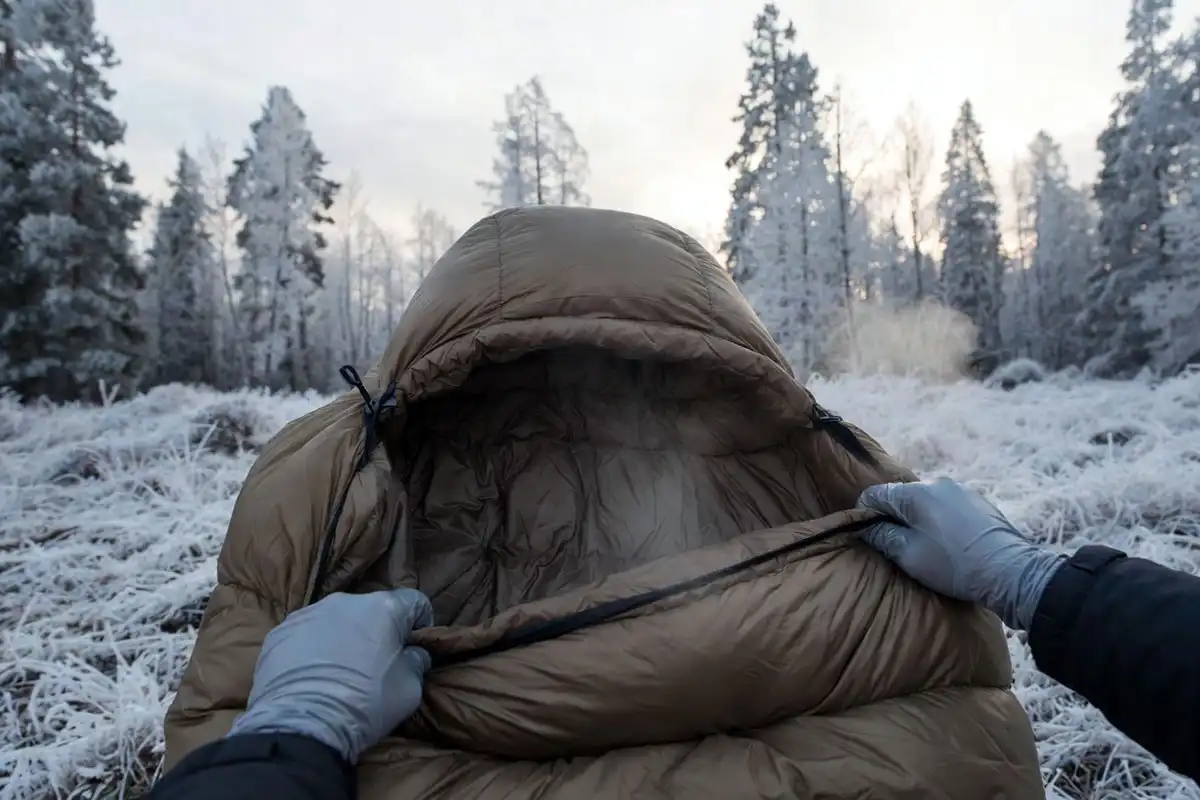
Choosing a cold-weather sleeping bag comes down to 5 factors: EN/ISO comfort rating, fill power, fill weight, heat-trapping features like a draft collar, your sleeping pad R-value, and baffle construction. Each factor directly affects how warm you sleep below freezing.
Understanding Temperature Ratings
The EN ISO sleeping bag rating system uses two key numbers. The comfort rating tells you the temperature where an average cold sleeper stays warm. The lower limit is the bare minimum for a warm sleeper.
I recommend buying a bag rated at least 10°F below your coldest expected conditions. Lab ratings follow the EN 13537 standard (now updated to ISO 23537), but those tests happen in controlled conditions. Your actual warmth depends on your sleeping pad, clothing layers, and body type.
Cold-weather bags typically carry 0°F sleeping bag ratings down to -20°F. If you run cold, a cold sleeper should pick one seasonal rating lower (warmer) than the expected low temperature.
Down vs. Synthetic Insulation for Winter Camping
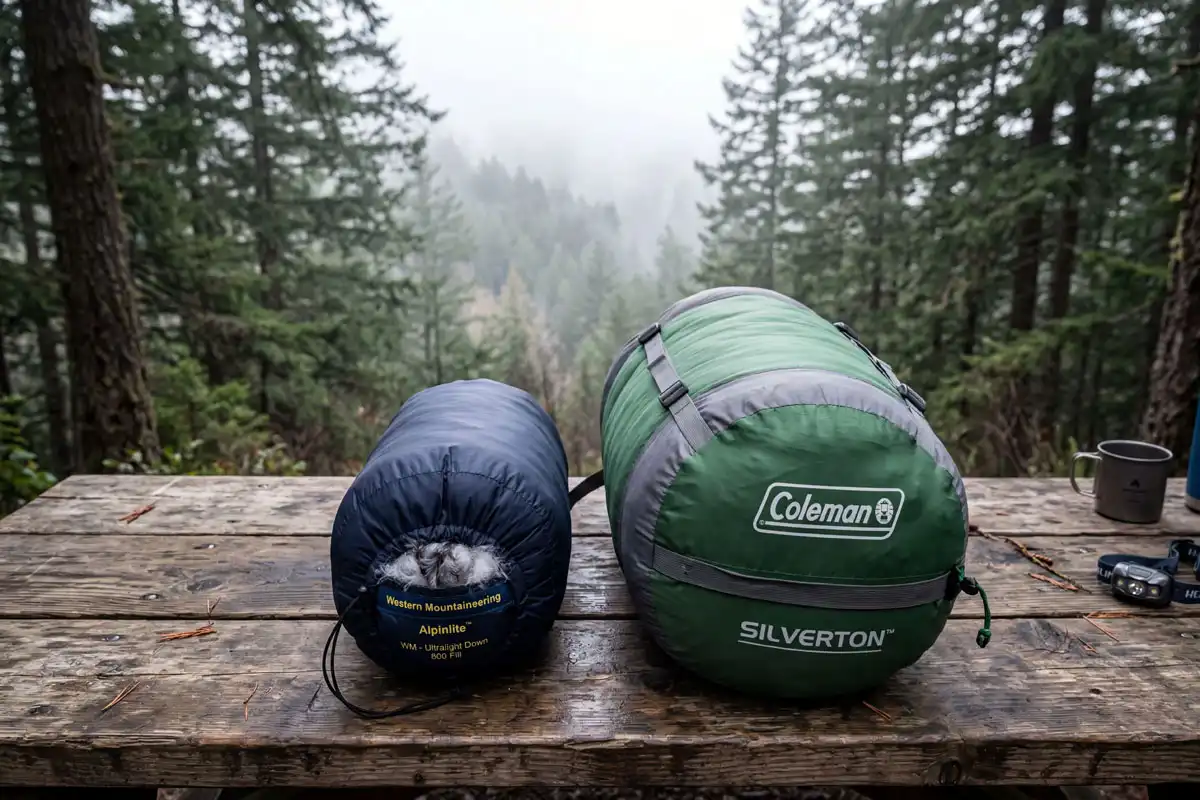
Down insulation delivers a superior warmth-to-weight ratio. It compresses smaller, packs lighter, and lasts longer than synthetic alternatives. The downside: standard down loses insulation when wet.
Hydrophobic down and DWR treatment on the shell reduce that risk. Look for RDS-certified down to confirm ethical sourcing.
Synthetic fill costs less and retains partial warmth when damp. It works well for consistently wet environments. The trade-off is weight. A synthetic bag rated to 0°F weighs noticeably more than a down bag with equivalent warmth.
Choose down for dry cold. Choose synthetic or a hybrid for wet conditions where moisture resistance matters more than saving weight. For tips on keeping bedding dry in humid conditions, check my separate guide.
Fill Power and Fill Weight – Why It Matters for Warmth
Fill power measures loft per ounce. Higher fill power sleeping bag ratings mean a lighter bag for the same warmth. For cold weather, the practical range sits between 700 and 850 fill power.
But fill power alone does not determine warmth. Fill weight, the total ounces of goose down fill or duck down inside, decides how warm the bag performs. A bag with 800 fill power but low fill weight still leaves you cold.
Think of fill power as quality and fill weight as quantity. You need both. Check the spec sheet for total fill weight before buying.
Mummy Shape, Draft Collar, and Draft Tube – Cold Night Essentials
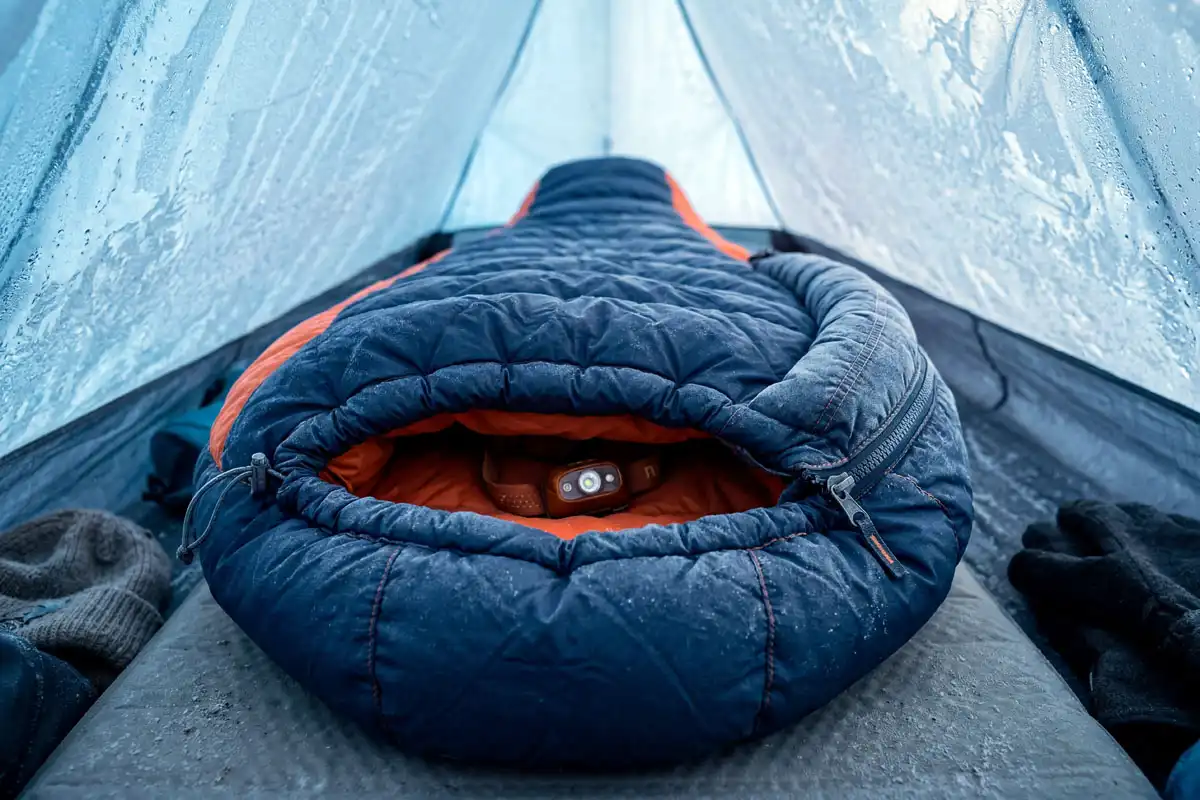
A mummy sleeping bag eliminates dead air space your body heats. The tapered shape keeps warm air close, which improves body heat retention at every temperature.
A draft collar seals heat around your shoulders and neck. Without one, warm air escapes every time you shift position.
A draft tube runs along the zipper length. It blocks cold-air entry through needle holes in the zipper insulation and stitching. Proper baffle construction keeps insulation from shifting and creating cold spots.
All three features together decide whether a bag performs at its stated rating in the field. If you spend winter nights staying warm in a tent when temperatures drop, these details matter.
Sleeping Pad R-Value – The Part Most Campers Ignore
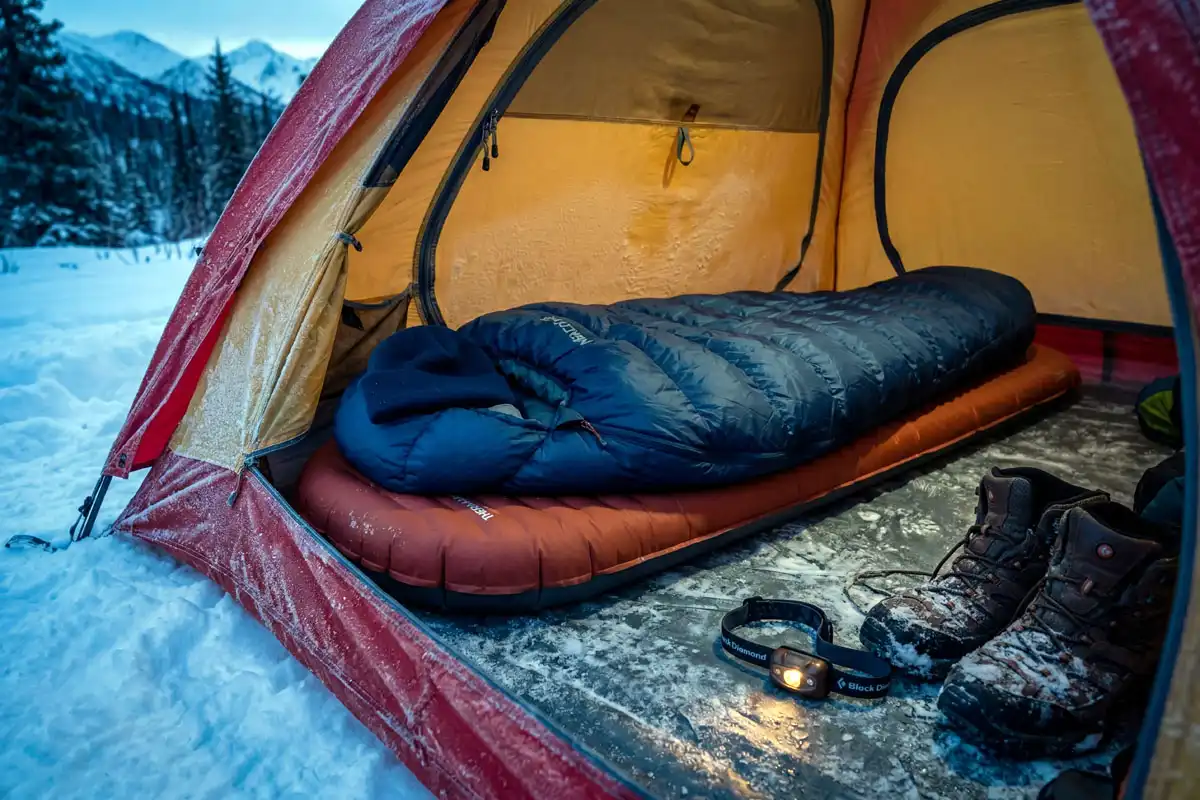
A sleeping bag does not insulate from below. A sleeping pad does. Cold ground pulls heat away from your body faster than cold air.
For winter camping, you need an insulated sleeping pad with an R-value of 4 or higher. Even the best cold-weather bag loses warmth without adequate ground insulation underneath.
This is the single most overlooked factor among first-time cold-weather campers. Your bag, pad, and layers form one sleep system. Ignore any piece and the whole system fails. If you are starting out with camping, get the pad right from day one.
Common Mistakes When Choosing a Winter Sleeping Bag
Here are the mistakes I see most often:
Trusting manufacturer ratings over EN/ISO ratings. Some brands skip independent testing. Always check for a verified EN/ISO rating before trusting any temperature rating claim.
Ignoring the sleeping pad. A quality bag on a low-R-value pad leads to sleeping cold every time. Your sleeping system starts from the ground up.
Confusing fill power with fill weight. High loft means nothing without enough fill inside the bag. Check both numbers on every spec sheet.
Buying a bag that is too tight. A snug mummy bag fit restricts movement and compresses insulation at pressure points. Side sleepers need extra shoulder room. A bag that is too tight causes insulation compression, reducing warmth.
Choosing a rectangular bag for extreme cold. A rectangular bag has too much dead air space for sub-freezing conditions. That extra room works against you when temperatures drop.
If you camp in extreme cold, also review what to do if you suspect hypothermia symptoms at camp.
How to Store and Care for Your Cold Weather Sleeping Bag
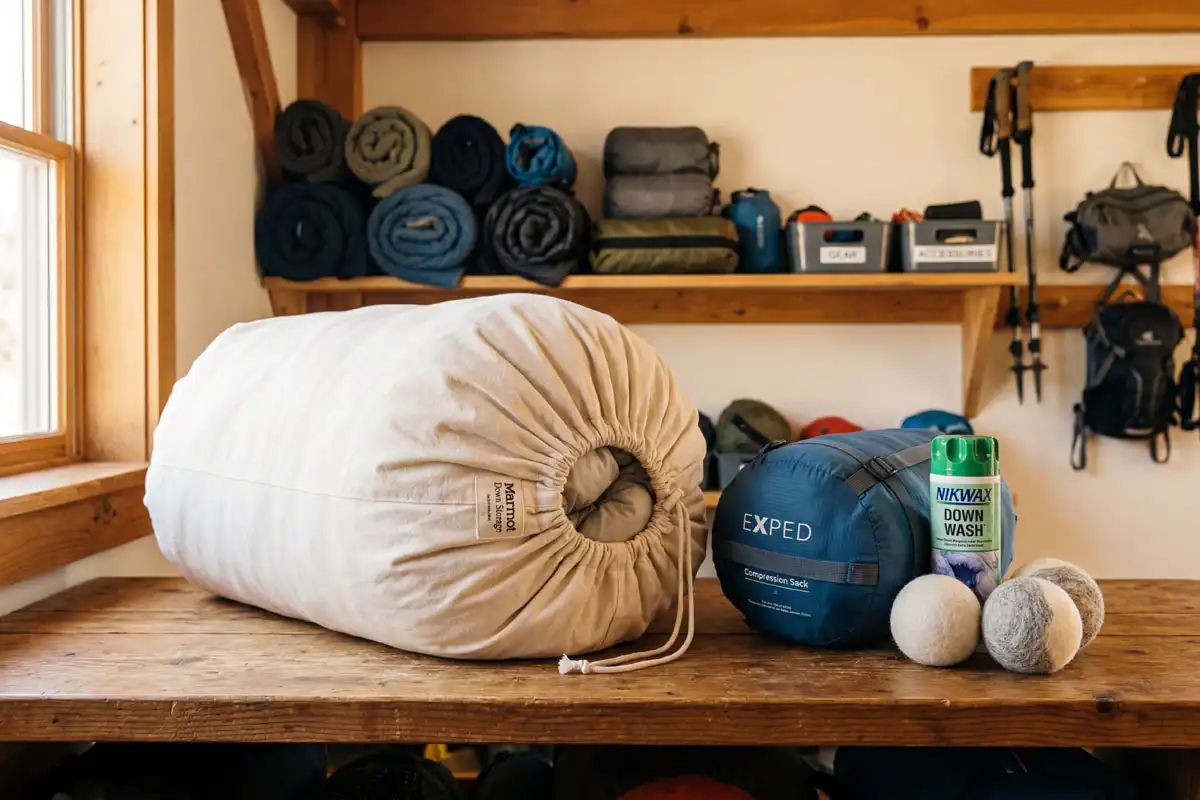
How you store a sleeping bag affects how long it keeps you warm. Never store your bag compressed in its compression sack. Prolonged compression breaks down loft over time.
Use a large breathable storage sack instead. Cotton or mesh sacks let insulation stay lofted between trips.
Wash your bag with a down-specific cleaner like Nikwax Down Wash. Use a front-loading machine on a gentle cycle. Tumble dry on low heat with clean tennis balls to restore loft evenly. The balls break up wet down clumps.
When water stops beading on the shell fabric, apply a DWR treatment spray for DWR reactivation. This restores water resistance on the outer shell and keeps moisture from soaking through to the insulation.
A well-maintained bag performs at its rated warmth for 10+ years. A neglected one loses significant loft within a few seasons. If you plan on reducing pack weight for multi-day solo trips, a lighter down bag that you maintain properly outperforms a heavier replacement.
The International Organization for Standardization publishes the ISO 23537 testing protocol for sleeping bag thermal performance. For cold-weather health risks, the CDC’s winter weather safety page covers hypothermia prevention and recognition.
FAQs on Cold Weather Sleeping Bags

What temperature rating do I need for a cold-weather sleeping bag?
Pick a bag rated at least 10°F below your coldest expected temperature. For winter camping, a 0°F to -20°F rated bag handles most freezing conditions. Cold sleepers should go even lower.
Is a down or synthetic sleeping bag better for cold weather?
Down provides better warmth-to-weight ratio and compresses smaller. Synthetic retains partial warmth when wet and costs less. Choose down for dry cold and synthetic for consistently damp conditions.
What fill power is best for a cold weather sleeping bag?
For cold weather, look for 700 to 850+ fill power. Higher fill power means lighter weight for the same warmth. Pair high fill power with adequate fill weight for reliable insulation below freezing.
Do I need a sleeping pad with a cold weather sleeping bag?
Yes. A sleeping bag does not insulate from below. Cold ground pulls body heat faster than cold air. Use a sleeping pad with an R-value of 4 or higher for winter camping.
Does a mummy bag keep you warmer than a rectangular bag?
Yes. A mummy bag eliminates dead air space around your body, so you heat less empty volume. The tapered shape, draft collar, and hood retain warmth better in freezing temperatures.
What fill power is best for a cold-weather sleeping bag?
Fill power measures insulation quality per ounce. For sub-freezing trips, 800+ fill power goose down delivers the best warmth with the least weight. Budget-friendly bags around 550-650 fill work for milder cold.
Final Thoughts For Cold Weather Campers
Choosing the right cold weather sleeping bag starts with your coldest expected conditions. Match that number to an EN/ISO temperature rating at least 10°F lower. Pick your insulation type next: down for dry cold and light weight, synthetic for wet environments.
Every bag needs an insulated sleeping pad underneath to complete your sleep system. For serious winter trips, the Western Mountaineering Kodiak MF delivers. For budget-friendly cold weather camping, the Kelty Cosmic Down 20 covers the essentials. Get the right bag, pair it with the right pad, and cold nights stop being a problem.