Best Two Person Camping Tents in 2026: 9 Picks for Backpackers
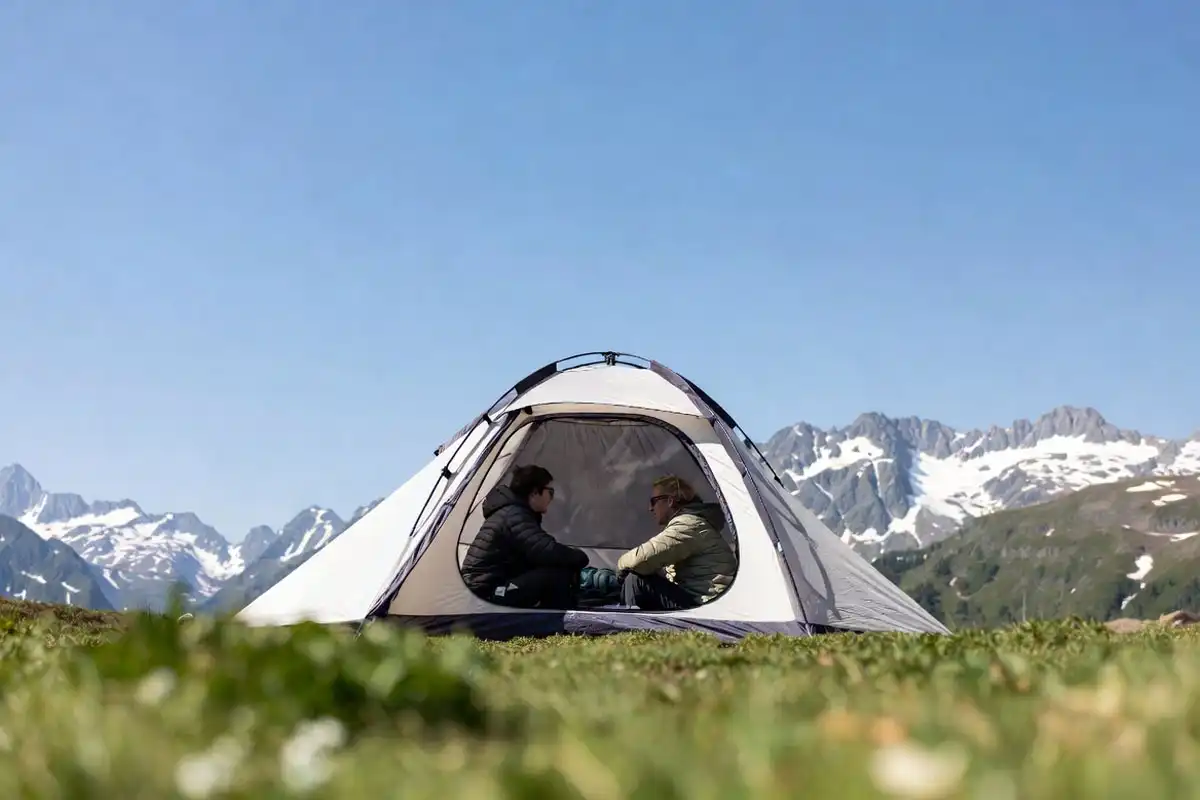
Are you looking for the best two person camping tent that weighs less than three pounds and performs well enough for backpacking? I tested hundreds of camping tents using five criteria: weight, floor space, weatherproofing, ease of setup, and vestibule design. This guide covers freestanding tents, ultralight tents, and three-season tents from brands like Big Agnes, MSR, and Nemo. It helps couples, backpacking partners, and solo campers who want extra space find the right shelter for their specific trip type.
The best two person camping tent weighs 3 lb or less, offers at least 28 sq ft of floor space, has a 3,000 mm hydrostatic head rating, and includes two doors with two vestibules. A three-season, freestanding dome tent covers most camping trips. Match weight to carry distance and floor width to your sleeping pad size before buying.
Best Two Person Camping Tents: Quick Comparison Table
| Preview |
#1
Big Agnes Copper Spur HV UL2
Superb Rating
Overall score: 95 of 100
List price: $389.46
|
#2
MSR Hubba Hubba 2 Person Tent
Great Rating
Overall score: 93 of 100
List price: $579.95
|
#3
Nemo Hornet 2P Tent
Fair Rating
Overall score: 77 of 100
List price: $479.95
|
#4
Nemo Dagger OSMO 2 Man Tent
Great Rating
Overall score: 92 of 100
List price: $599.95
|
#5
LANSHAN Ultralight Tent
Good Rating
Overall score: 85 of 100
List price: $99.44
|
#6
MSR Freelite 2
Good Rating
Overall score: 84 of 100
List price: $499.95
|
#7
3F UL GEAR Lanshan 2
Good Rating
Overall score: 88 of 100
List price: $189.97
|
#8
Gale Lite 2 Ultralight 2
Superb Rating
Overall score: 98 of 100
List price: $369.00
|
#9
Night Cat Ultralight Tent
Good Rating
Overall score: 86 of 100
List price: $169.99
|
|---|---|---|---|---|---|---|---|---|---|
| Item Name | Big Agnes Copper Spur HV UL2 | MSR Hubba Hubba 2 Person Tent | Nemo Hornet 2P Tent | Nemo Dagger OSMO 2 Man Tent | LANSHAN Ultralight Tent | MSR Freelite 2 | 3F UL GEAR Lanshan 2 | Gale Lite 2 Ultralight 2 | Night Cat Ultralight Tent |
| Price |
$389.46 Listed
Check Price on Amazon
|
$579.95 Listed
Check Price on Amazon
|
$479.95 Listed
Check Price on Amazon
|
$599.95 Listed
Check Price on Amazon
|
$99.44 Listed
Check Price on Amazon
|
$499.95 Listed
Check Price on Amazon
|
$189.97 Listed
Check Price on Amazon
|
$369.00 Listed
Check Price on Amazon
|
$169.99 Listed
Check Price on Amazon
|
| Overall Score |
Audience score
Calculated from Amazon global ratings percentages for Big Agnes Copper Spur HV UL2.
95 / 100 from 335 ratings
Weighted average: 4.7 / 5 stars
Amazon rating breakdown
5 star
87%
4 star
7%
3 star
2%
2 star
1%
1 star
3%
Score position
This product
|
Audience score
Calculated from Amazon global ratings percentages for MSR Hubba Hubba 2 Person Tent.
93 / 100 from 37 ratings
Weighted average: 4.7 / 5 stars
Amazon rating breakdown
5 star
81%
4 star
14%
3 star
0%
2 star
0%
1 star
5%
Score position
This product
|
Audience score
Calculated from Amazon global ratings percentages for Nemo Hornet 2P Tent.
77 / 100 from 49 ratings
Weighted average: 3.8 / 5 stars
Amazon rating breakdown
5 star
48%
4 star
20%
3 star
13%
2 star
6%
1 star
13%
Score position
This product
|
Audience score
Calculated from Amazon global ratings percentages for Nemo Dagger OSMO 2 Man Tent.
92 / 100 from 64 ratings
Weighted average: 4.6 / 5 stars
Amazon rating breakdown
5 star
82%
4 star
8%
3 star
2%
2 star
3%
1 star
5%
Score position
This product
|
Audience score
Calculated from Amazon global ratings percentages for LANSHAN Ultralight Tent.
85 / 100 from 869 ratings
Weighted average: 4.3 / 5 stars
Amazon rating breakdown
5 star
59%
4 star
23%
3 star
10%
2 star
2%
1 star
6%
Score position
This product
|
Audience score
Calculated from Amazon global ratings percentages for MSR Freelite 2.
84 / 100 from 29 ratings
Weighted average: 4.2 / 5 stars
Amazon rating breakdown
5 star
71%
4 star
12%
3 star
0%
2 star
0%
1 star
17%
Score position
This product
|
Audience score
Calculated from Amazon global ratings percentages for 3F UL GEAR Lanshan 2.
88 / 100 from 61 ratings
Weighted average: 4.4 / 5 stars
Amazon rating breakdown
5 star
61%
4 star
29%
3 star
4%
2 star
3%
1 star
3%
Score position
This product
|
Audience score
Calculated from Amazon global ratings percentages for Gale Lite 2 Ultralight 2.
98 / 100 from 15 ratings
Weighted average: 4.9 / 5 stars
Amazon rating breakdown
5 star
90%
4 star
10%
3 star
0%
2 star
0%
1 star
0%
Score position
This product
|
Audience score
Calculated from Amazon global ratings percentages for Night Cat Ultralight Tent.
86 / 100 from 286 ratings
Weighted average: 4.3 / 5 stars
Amazon rating breakdown
5 star
65%
4 star
14%
3 star
13%
2 star
2%
1 star
6%
Score position
This product
|
| Weight | 2.82 lbs |
3 lbs |
2.09 lbs |
3 lb 15 oz |
3 lbs |
2 lbs |
2.55 lbs |
2.89 lbs |
3 lbs |
| Floor Space | 29 sq ft |
29 sq ft |
27.5 sq ft |
37 sq ft |
30.6 sq ft |
29 sq ft |
25 sq ft |
35.5 sq ft |
30.6 sq ft |
| Peak Height | 44 in |
42 in |
44 in |
43 in |
49.2 in |
39 in |
47 in |
43.31 in |
49.2 in |
| Doors / Vestibules | 2 / 2 |
2 / 2 |
2 / 2 |
2 / 2 |
1 / 4 |
2 / 2 |
2 / 1 |
2 / 1 |
1 / 4 |
| Season Rating | 3-season |
3-season |
3-season |
3-season |
3-season |
3-season |
4-season |
3-season |
4-season |
| Fabric Type | Ultralight nylon double rip-stop fabric with mixed denier construction |
DWR treatment, [canopy] 20D ripstop nylon |
Proprietary osmo poly-nylon ripstop fabric |
High-strength osmo poly-nylon ripstop fabric |
15D nylon |
100% Ripstop Nylon with DuraShield Polyurethane Coating |
15D nylon, and silicone/PU coating |
10D Ripstop 2000mm double-silicone nylon ;15D Ripstop 2000mm double-silicone nylon;10D nylon mesh |
Nylon, Polyurethan, Climate Pledge Friendly certified, 50% recycled material |
| Pole Material | Aluminum |
Aluminum |
Aluminum |
Aluminum |
Trekking pole setup tent |
Aluminum |
Aluminum |
Aluminum |
Aluminum |
| Water Resistance Technology | 1200 Mm |
1200 Mm |
OSMO |
PFC-free water repellent coating |
Fly sheet: 5000mm+; Floor: 6000mm+ |
1,200mm DuraShield Polyurethane |
Silicon coating and waterproof index |
≥2000 mm |
300 Mm, Waterproof Oxford nylon fabric |
| Structural | Freestanding |
Freestanding |
Semi-freestanding |
Freestanding |
Trekking Pole |
Semi-freestanding |
Trekking Pole |
Freestanding |
Freestanding |
9 Best 2-Person Backpacking Tents (Reviews)
1. Best Overall for Backpacking Tent – Big Agnes Copper Spur HV UL2
Pros:
Cons:
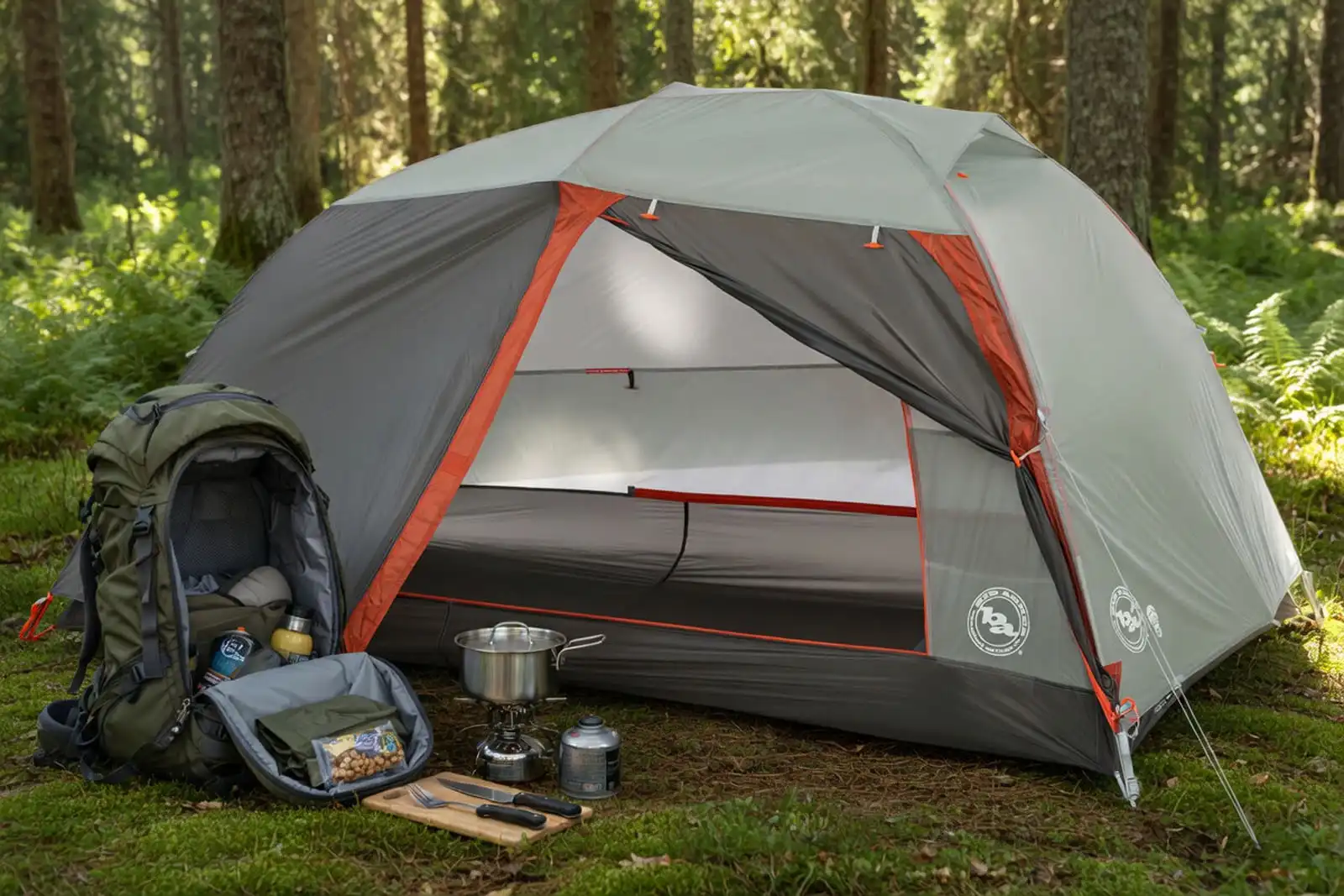
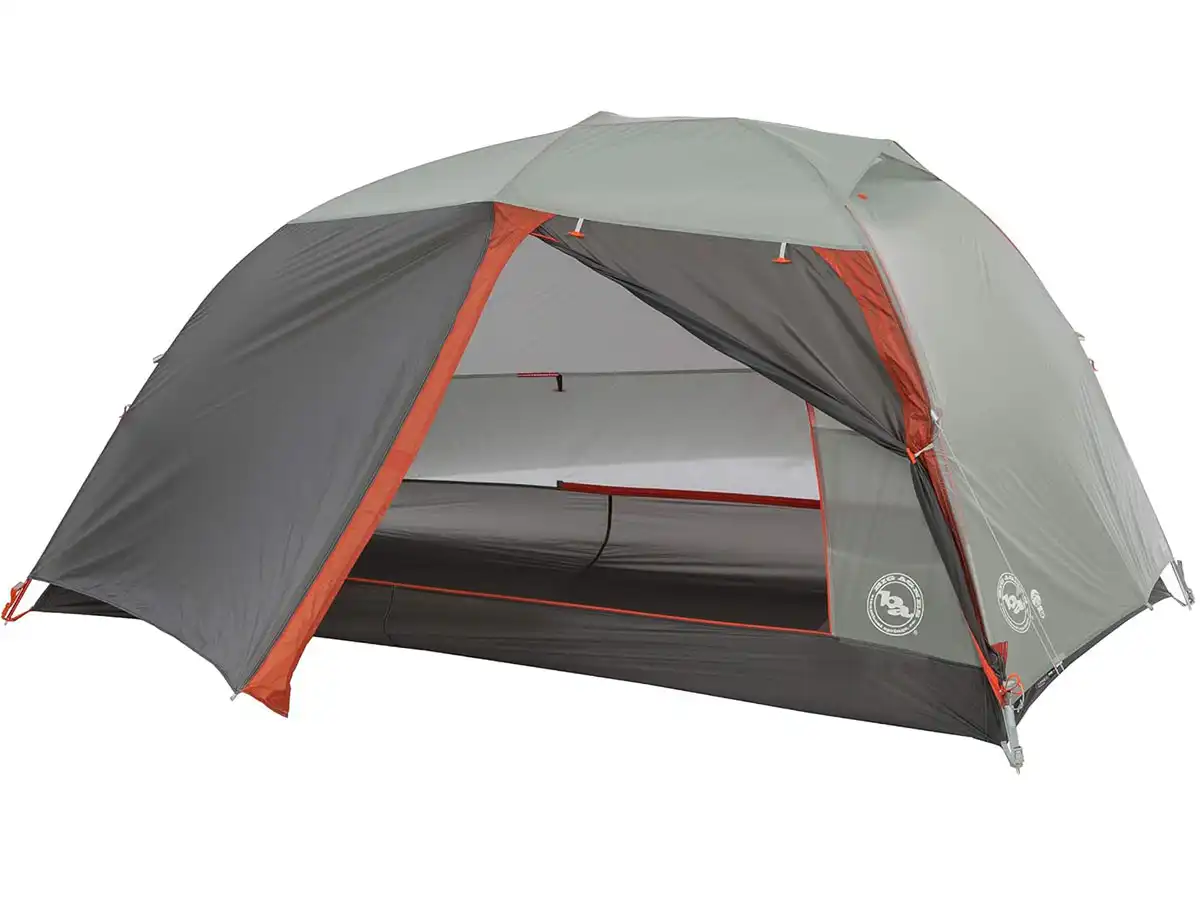
Big Agnes, founded in 2001 in Steamboat Springs, Colorado, builds the Copper Spur HV UL2 as a freestanding backpacking tent that weighs just 2.82 lbs. The pre-bent span pole and 4-way high-volume hub maximize headroom across the 29 sq ft floor.
DAC poles assemble fast and resist cold-temperature failure. The proprietary double-ripstop nylon with mixed denier construction adds tear resistance without weight gain. Two awning vestibules provide 18 sq ft combined gear storage, and the TipLok corner buckle speeds setup in rain.
The HyperBead fabric used on newer versions delivers improved waterproof performance. Clear sharp debris before pitching; the thin fabric is strong but not abrasion-proof.
|
Weight |
2.82 lbs (1.28 kg) |
|---|---|
|
Type |
Freestanding dome, 3-season |
|
Floor Area |
29 sq ft |
|
Packaged Size |
20.08″ x 5.91″ x 5.91″ |
|
Peak Height |
44 inches |
Best for backpackers who want the lightest full-featured two-door, two-vestibule tent without sacrificing headroom or setup speed.
2. Best Lightweight Backpacking Tent Pick – MSR Hubba Hubba 2 Person Tent
Pros:
Cons:
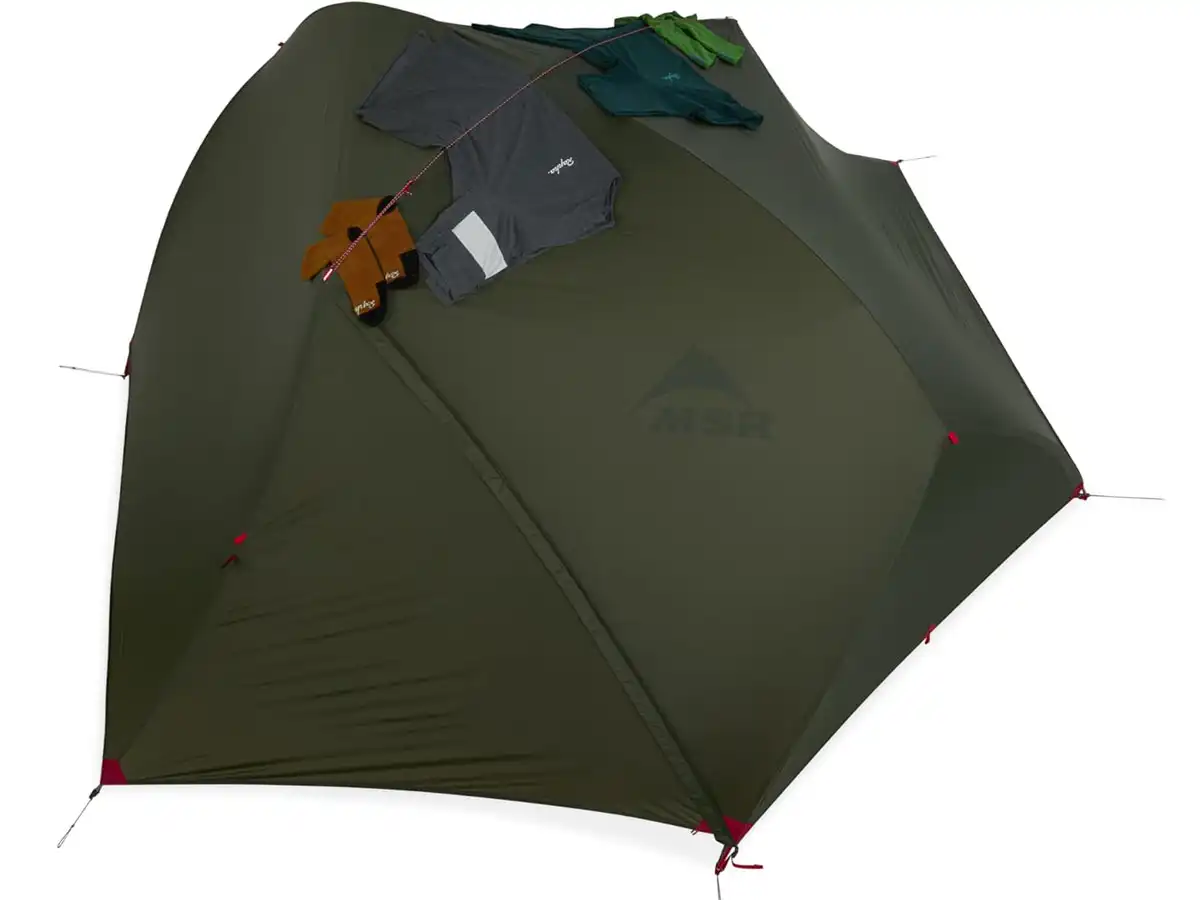
MSR, founded in Seattle in 1969, designs the Hubba Hubba 2 as a lightweight 2 person tent built around a true rectangular floor and a hubbed pole system for wind stability.
The 84 x 50 inch floor delivers 29 sq ft without any taper, so two 20-inch sleeping pads fit side by side cleanly. The DuraShield polyurethane-coated rainfly with taped seams handles three-season rain reliably.
Assembly clips together in under five minutes. At 3 lbs, it matches the Copper Spur on storage and floor space at a noticeably lower price.
|
Weight |
3 lbs 1 oz (1.4 kg) |
|---|---|
|
Type |
Freestanding dome, 3-season |
|
Floor Area |
29 sq ft |
|
Packaged Size |
Fits custom stuff sack (poles fold extra-short) |
|
Peak Height |
42 inches |
Best for backpacking partners and couples who prioritize a full rectangular floor, proven wind stability, and two vestibules at a price below the Copper Spur.
3. Best Ultralight Camping Tent – Nemo Hornet 2P Tent
Pros:
Cons:
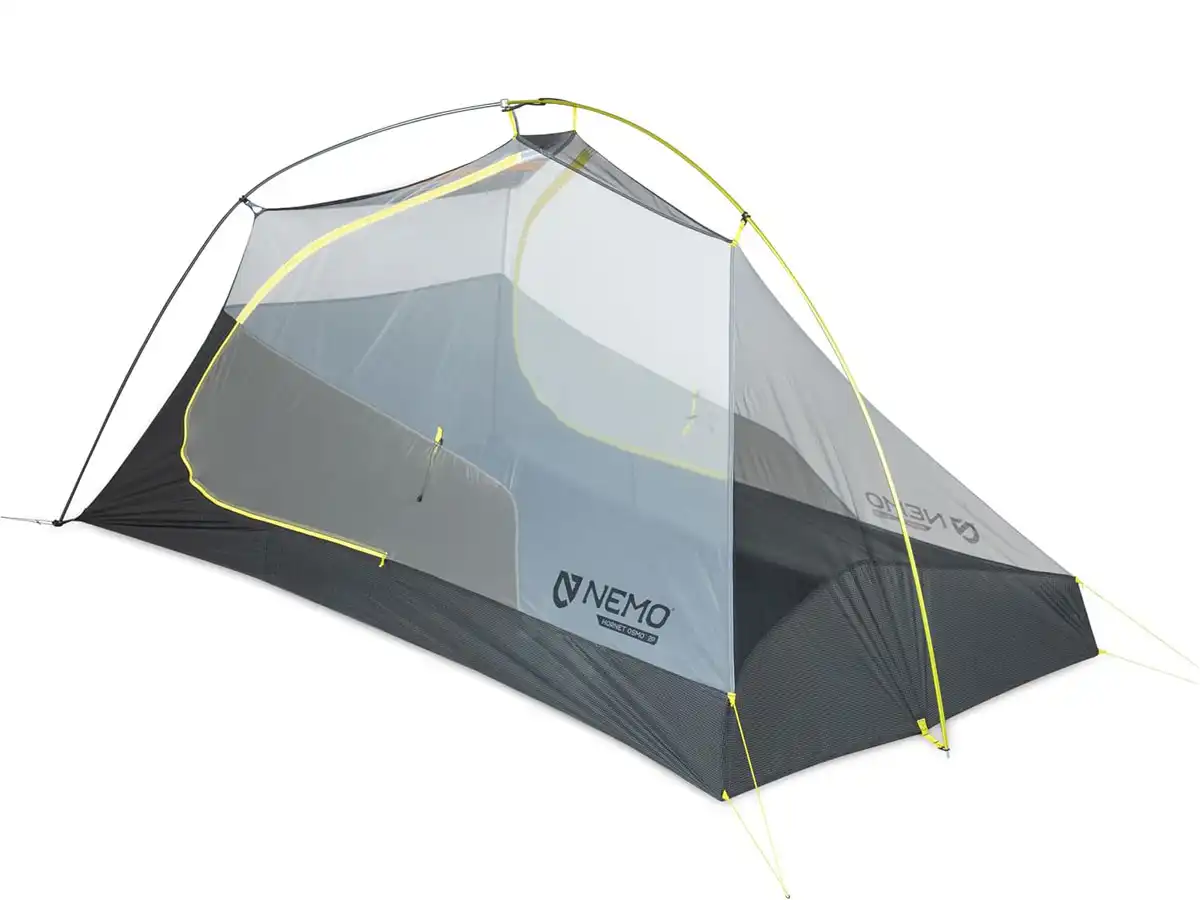
Nemo Equipment, founded in 2002 in Dover, New Hampshire, built the Hornet 2P as a sub-2lb tent at 948 grams. The semi-freestanding design uses two hubbed aluminum poles at the head end; the foot requires staking to open the full floor.
The OSMO fabric rainfly delivers 4x better water repellency and 3x less stretch when wet versus standard nylon, preventing fly-to-inner contact during rain. The patent-pending Flybar pole clip adds shoulder width at the head end.
At 27.5 sq ft, two campers fit, but two wide pads run tight; this ultralight two person tent suits minimalist partners or a solo camper with gear.
|
Weight |
948g (2.09 lbs) |
|---|---|
|
Type |
Semi-freestanding, 3-season |
|
Floor Area |
27.5 sq ft |
|
Packaged Size |
20.08″ x 5.91″ x 5.91″ |
|
Peak Height |
44 inches |
Best for ultralight backpackers covering high daily mileage who sleep in fitted bags and prioritize minimum carry weight above generous interior space.
4. Best for Comfort and Space – Nemo Dagger OSMO 2 Man Tent
Pros:
Cons:
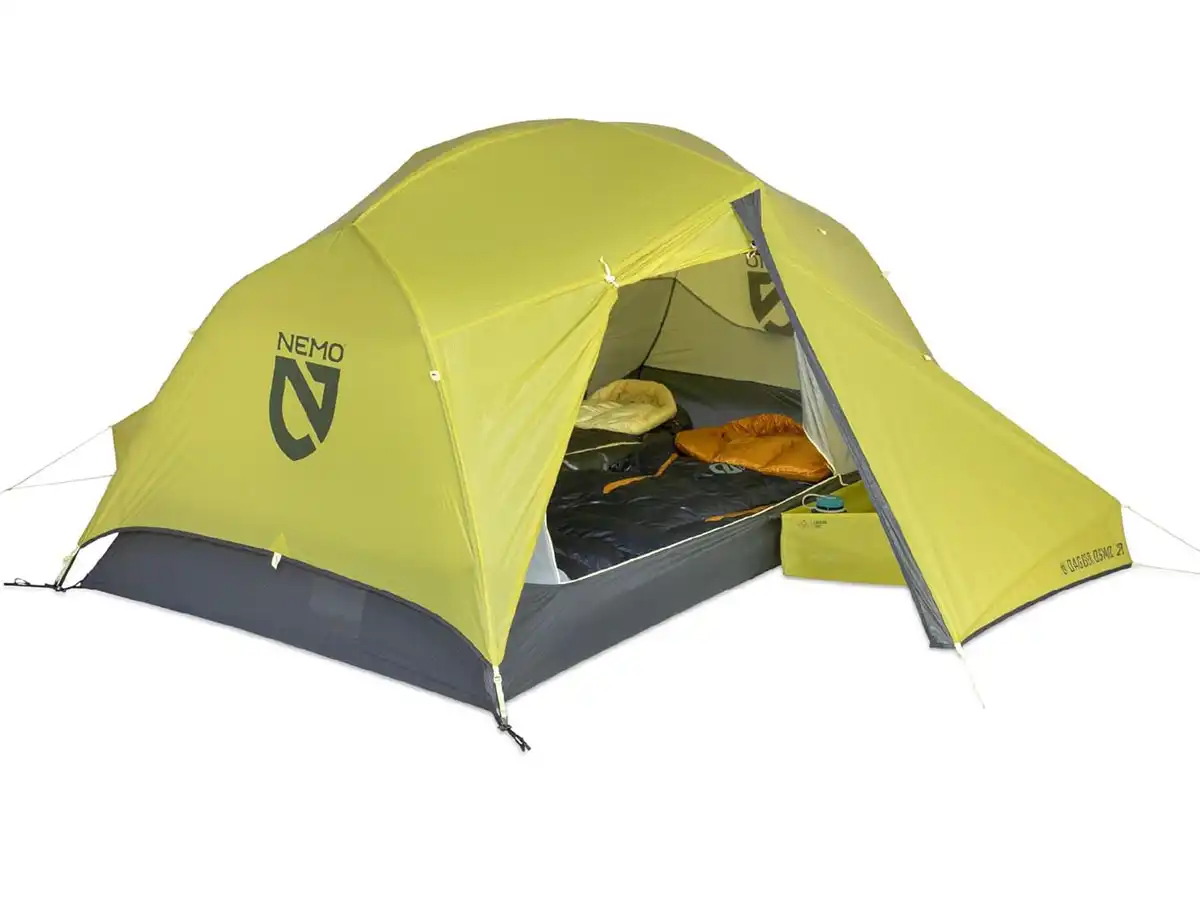
Nemo’s Dagger OSMO 2 delivers the most spacious 2 person tent experience in this list with 37 sq ft of floor space across a rectangular floor tent with nearly vertical walls. The 88-inch floor length and vertical wall tent geometry return usable shoulder room that angled walls take away.
OSMO fabric provides 4x longer-lasting water repellency and 3x less stretch when wet, preventing rain sag. The trapezoidal vestibule design with the Volumizing Stash strut increases storage volume by 22% over the previous generation.
Two campers splitting components each carry well under 2 lbs. This is the first bluesign-certified backpacking tent in the category.
|
Weight |
3 lb 15 oz |
|---|---|
|
Type |
Freestanding dome, 3-season optimized |
|
Floor Area |
37 sq ft |
|
Packaged Size |
20.08″ x 5.91″ x 5.91″ |
|
Peak Height |
43 inches |
Best for couples on extended multi-night trips who need genuine rain-day livability and shoulder room, and who split tent weight between two packs.
5. Best Budget Two Person Tent – LANSHAN Ultralight Tent
Pros:
Cons:
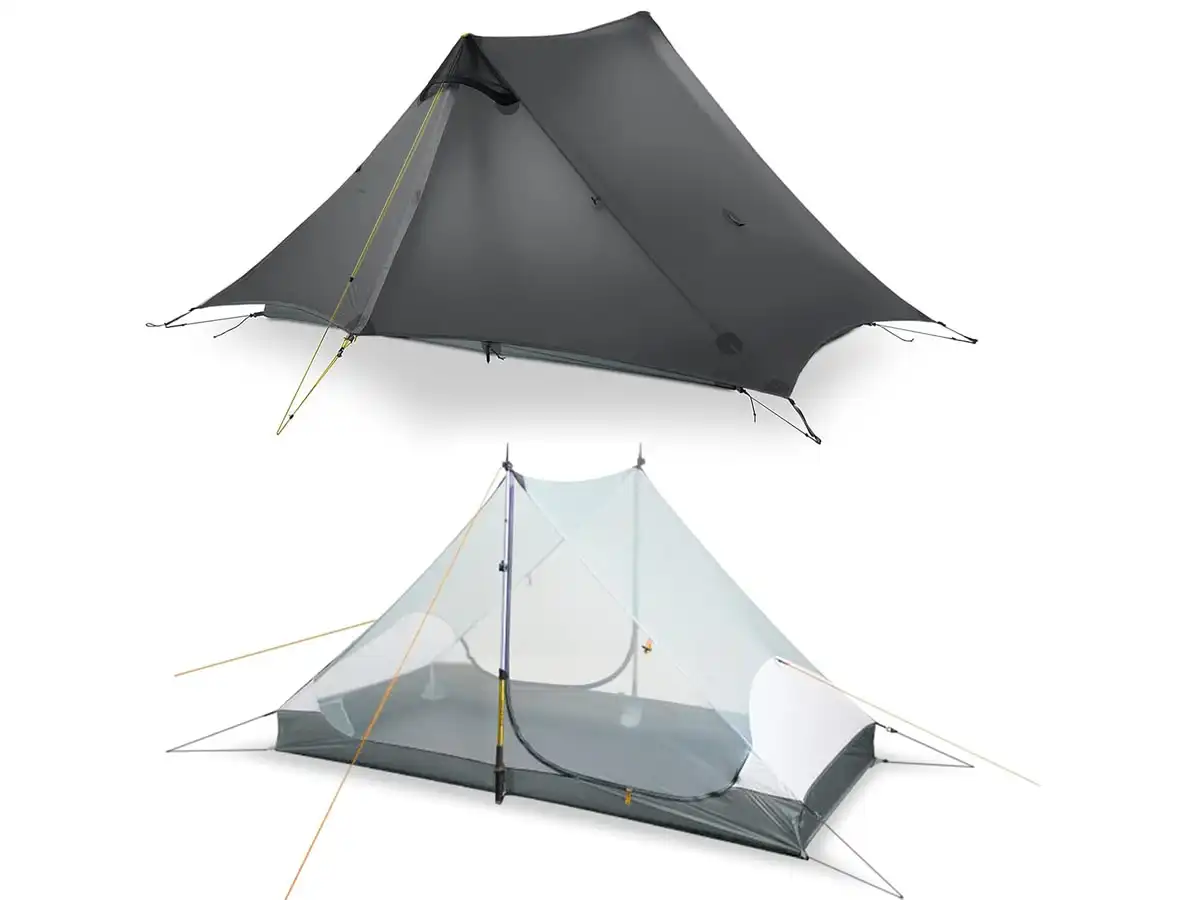
The LANSHAN Ultralight Tent targets budget backpackers who need a lightweight freestanding shelter without spending on premium brands. It weighs 3 lbs with a rectangular 86.6 x 51 inch floor that fits two adults side by side without taper.
The double-layer nylon construction with aluminum poles provides a stable structure at 49.2 inches peak height. The honest concern here is the 300mm waterproof rating, which handles only light drizzle. For a genuinely waterproof 2 person tent, the 3F UL GEAR Lanshan 2 carries a 5000mm rating at a comparable weight and price.
|
Weight |
3 lbs (1.36 kg) |
|---|---|
|
Type |
Freestanding, fair-weather use |
|
Floor Area |
86.6″ x 51″ (approx. 30.6 sq ft) |
|
Packaged Size |
14.5″ L x 5.5″ W x 5.5″ H |
|
Peak Height |
49.2 inches (120 cm) |
Best for dry-condition camping on a tight budget where rain protection is not a requirement; not recommended as a primary shelter for backpacking in variable weather.
6. Best Two Person Backpacking Tent – MSR Freelite 2
Pros:
Cons:
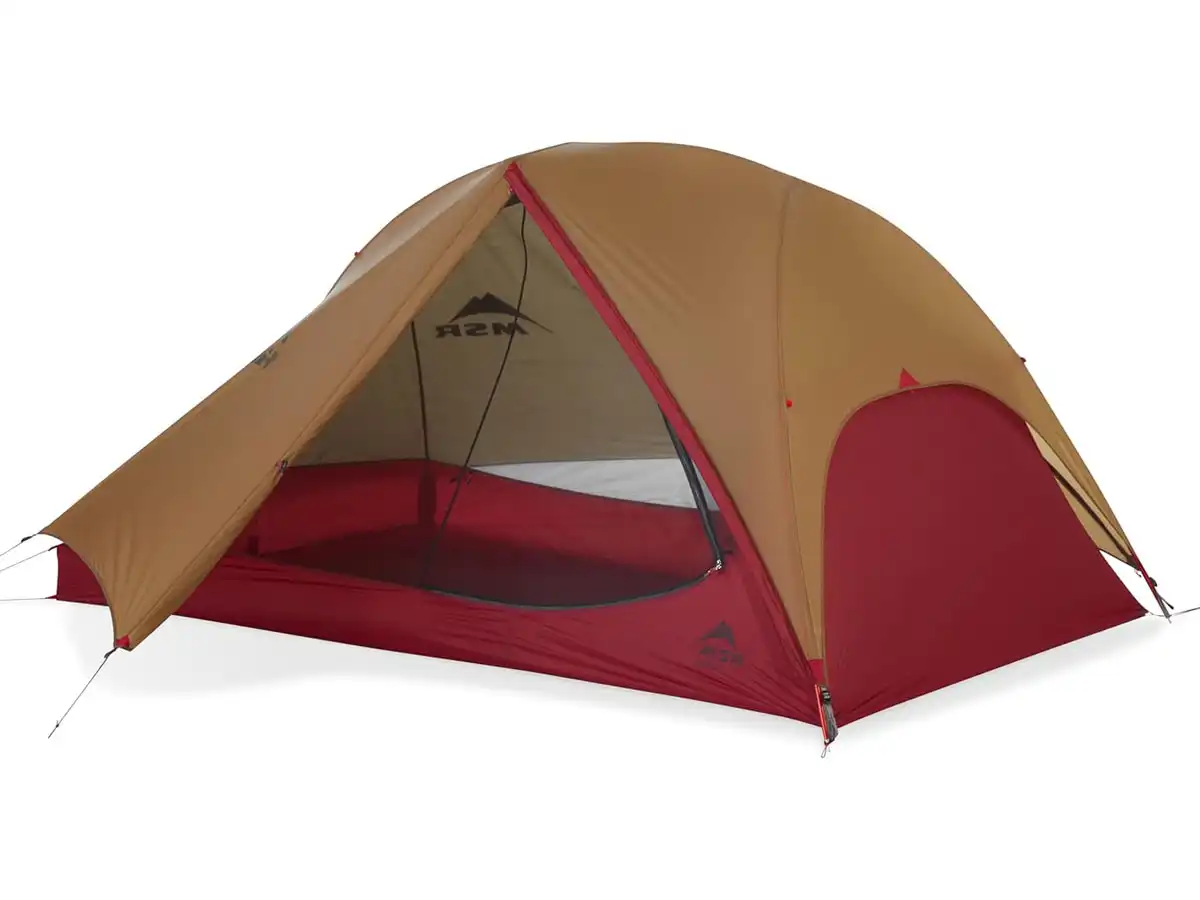
The MSR Freelite 2 is a semi-freestanding tent that hits exactly 2 lbs minimum trail weight with a full rectangular floor: 84 x 50 inches at 29 sq ft. The unified hub-and-pole system clips together symmetrically and breaks down fast.
The foot end needs staking before the floor lies flat. DuraShield polyurethane coating on the 100% ripstop nylon fly and floor carries a 1200mm PFAS-free rating. Peak height reaches only 39 inches, which works for sleeping but not sitting upright.
At this weight with dual vestibules and DAC NFL poles, the Freelite 2 earns its place among the best two person tent for backpacking options.
|
Weight |
2 lbs (0.91 kg) |
|---|---|
|
Type |
Semi-freestanding, 3-season |
|
Floor Area |
29 sq ft |
|
Packaged Size |
19.96″ L x 7.17″ W x 4.69″ H |
|
Peak Height |
39 inches |
Best for weight-focused backpackers who want a proven two-door, dual-vestibule three-season shelter at 2 lbs and accept a semi-freestanding pitch sequence.
7. Best 2 Person Hiking Tent – 3F UL GEAR Lanshan 2
Pros:
Cons:
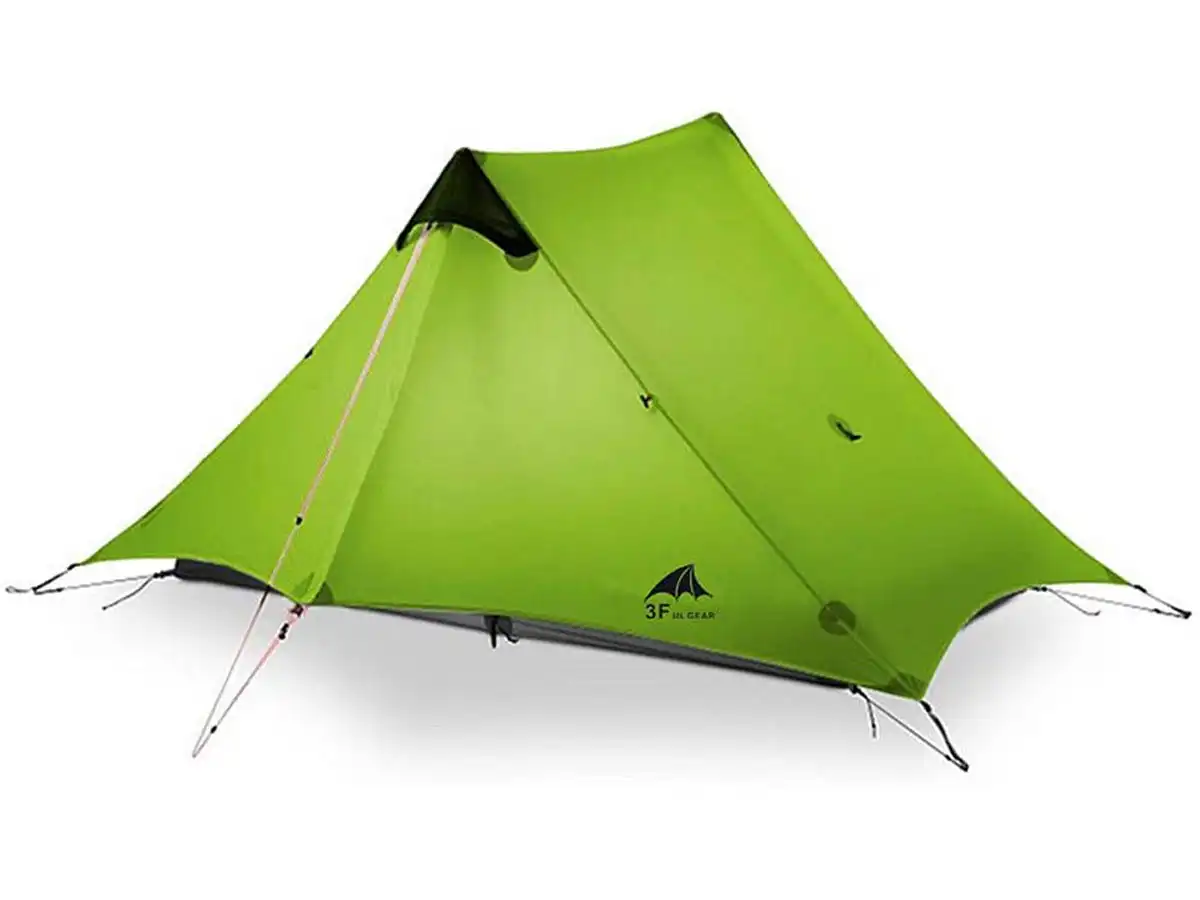
The Lanshan 2 from 3F UL Gear is a ultralight two person hiking tent built around a trekking pole structure that eliminates dedicated pole weight entirely.
At 1155 grams (2.55 lbs), the 15D silicone/PU-coated nylon flysheet carries a 5000mm waterproof rating and the 20D nylon bathtub floor reaches 8000mm, both figures that significantly exceed Western brands at this price. Interior measures 210 x 110 x 120 cm.
Two trekking poles are not included; the tent is unusable without them. Two doors provide access; a single vestibule handles gear storage. Sixteen stakes anchor the full structure; partial staking leaves the walls collapsed.
|
Weight |
1155g (2.55 lbs) |
|---|---|
|
Type |
Trekking pole shelter, 3-season / mild 4-season |
|
Floor Area |
210 x 110 cm interior (approx. 25 sq ft) |
|
Packaged Size |
13.62″ L x 5.98″ W x 5.67″ H |
|
Peak Height |
47 inches |
Best for budget-conscious ultralight hikers already carrying trekking poles who want a genuinely high-rated waterproof shelter at a fraction of the cost of Western alternatives.
8. Best Ultralight 2-Person Tunnel Tent – Gale Lite 2
Pros:
Cons:
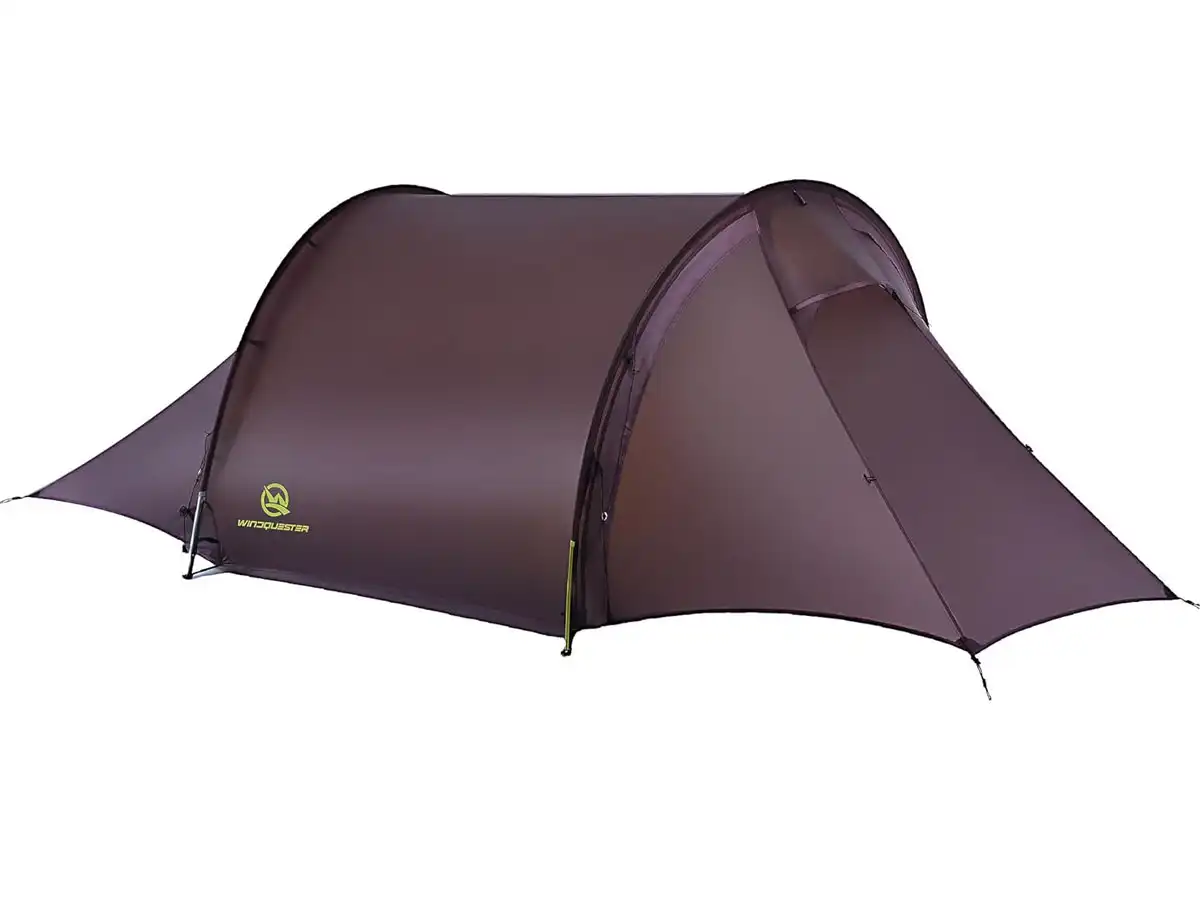
WindQuester’s Gale Lite 2 applies tunnel tent geometry to ultralight backpacking at 1.31 kg (2.89 lbs). Two parallel DAC NFL aluminum poles create a wind-stable aerodynamic frame that holds its shape in consistent directional wind better than dome designs at equivalent weight.
The fly uses 10D ripstop double-silicone nylon at 2000mm; the floor uses 15D ripstop at the same rating. YKK zippers resist corrosion on all openings. Six Dyneema core guylines anchor the structure without stretch. The 3.3 sq m (35.5 sq ft) interior fits two adults with gear. The tunnel requires staking at both ends; it does not stand freestanding.
|
Weight |
1.31 kg (2.89 lbs) |
|---|---|
|
Type |
Non-freestanding tunnel, 3-season |
|
Floor Area |
35.5 sq ft |
|
Packaged Size |
16.14 x 4.92 x 4.92 inches |
|
Peak Height |
43.31 inches |
Best for backpackers who camp in wind-exposed terrain and want a spacious tunnel shelter with premium-grade components at an ultralight weight.
9. Best Waterproof Trekking Pole Tent – Night Cat Ultralight Tent
Pros:
Cons:
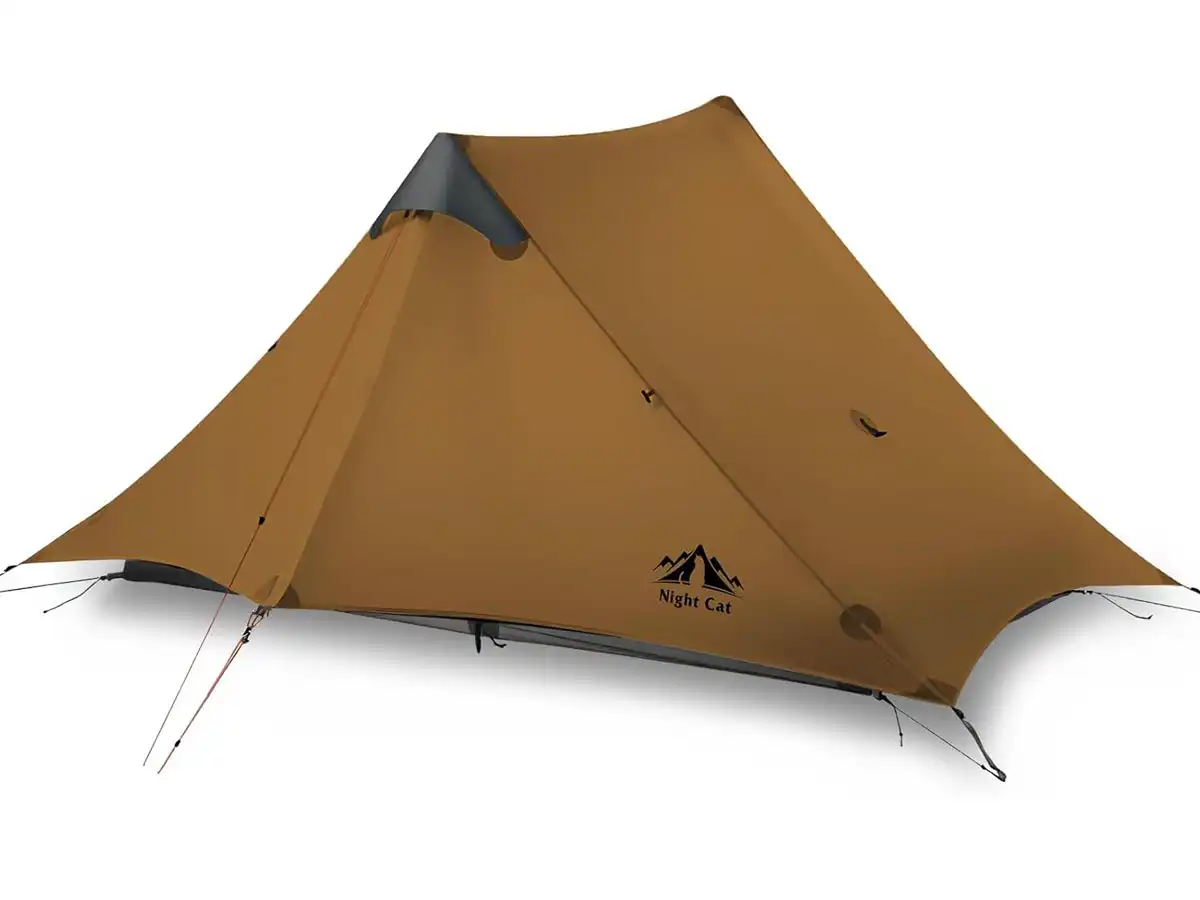
Night Cat produces budget-friendly backpacking shelters for weight-conscious campers. This freestanding tent weighs exactly 3 lbs with a rectangular floor measuring 86.6 x 51 inches, delivering comfortable two-person sleeping width.
The nylon/polyurethane construction with aluminum poles keeps the structure stable. However, the 300mm waterproof rating is critically low; most reliable three-season tents start at 1500mm. This tent handles light drizzle but not sustained rain. The all-season label in the listing does not align with a 300mm rating; treat this as a fair-weather shelter only.
|
Weight |
3 lbs (1.36 kg) |
|---|---|
|
Type |
Freestanding, fair-weather use |
|
Floor Area |
86.6″ x 51″ (approx. 30.6 sq ft) |
|
Packaged Size |
17.17″ L x 7.44″ W x 5.59″ H |
|
Peak Height |
49.2 inches |
Best for fair-weather car campers who need an affordable, lightweight shelter for dry conditions and do not expect reliable rain protection.
If you’re a tall camper, consider the Marmot Catalyst 2P camping tent. Its 90.6-inch floor length can accommodate campers up to 6 ft 5 in tall without their feet touching the end wall. This is technically a long tent floor three-person dome, but two tall campers use it as the most comfortable two person tent for tall people available at this price.
What to Look for in a Two Person Camping Tent
Six features separate a reliable two-person tent from one that lets you down mid-trip. Work through each before comparing models.
Weight and Packed Size
Most quality 2-person backpacking tents weigh between 3 and 5 lbs (1.4–2.3 kg). Ultralight two-person tent models drop below 2 lbs by using thin fabrics like Dyneema Composite Fabric or 20D ripstop nylon. Two campers can split the tent system between their packs: one carries the body and DAC poles, the other carries the fly and footprint. This split carry approach cuts individual packed weight significantly on longer routes.
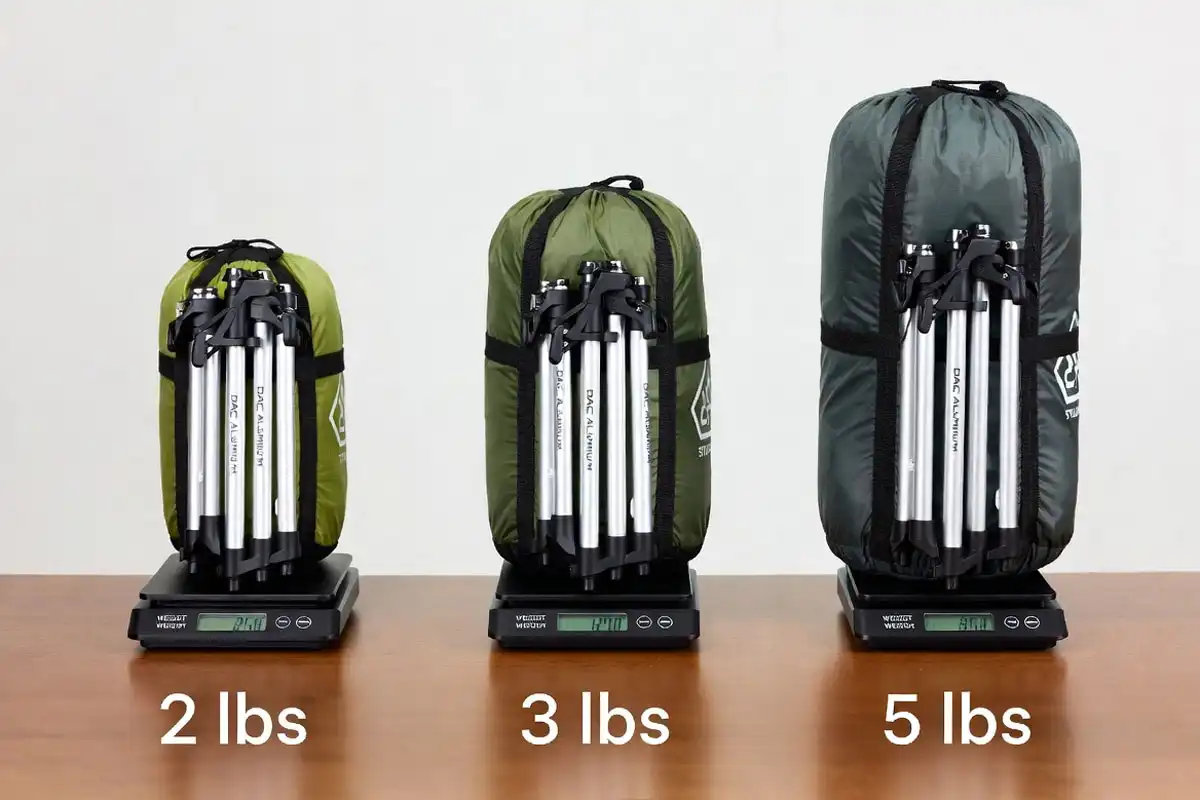
A tent’s trail weight includes only the shelter itself. Packaged weight adds stuff sack, stakes, and extras. A compression sack (sold separately) reduces pack size by 20–30% compared to a standard stuff sack. DAC poles compress small and assemble quickly, which is why they appear on most quality shelters. Floor dimensions of at least 80 x 50 inches fit two adults without overlap.
Floor Space and Interior Dimensions
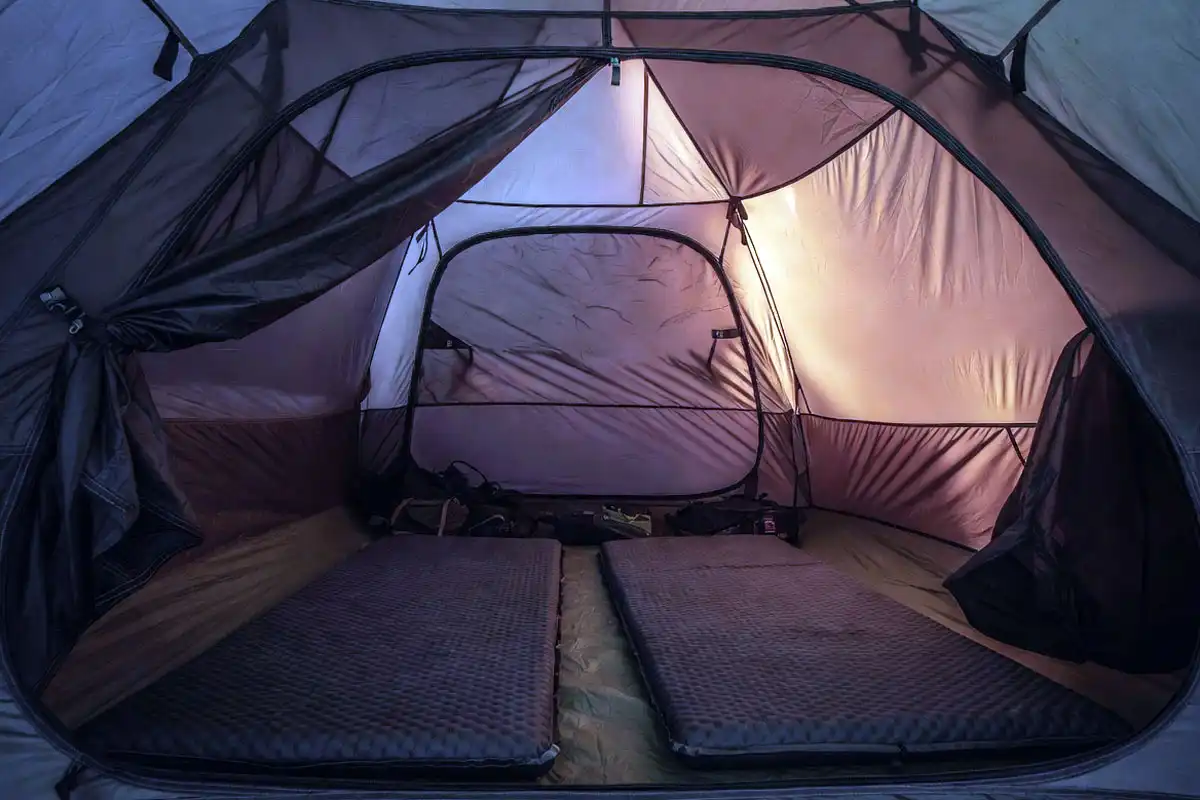
Tent floor space directly affects how comfortable two adults sleep. Most two-person tent dimensions fall between 28 and 35 sq ft. A rectangular floor fits two 20-inch sleeping pads side by side cleanly. A tapered floor forces one pad off-center and reduces usable width near the feet.
Peak height between 40 and 48 inches lets both campers sit upright, which matters on long rain days when you’re stuck inside. Tall campers above 6 ft 2 in need a tent at least 88 inches long to keep feet off the end wall. Check both the widest and narrowest floor measurements before buying; shoulder taper reduces tent headroom and usable width more than the spec sheet suggests.
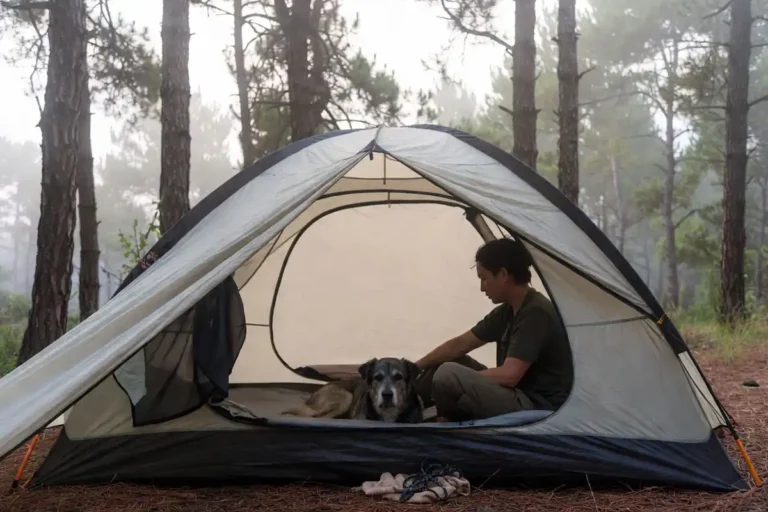
For campers adding a dog or storing large gear bags inside, sizing up to a 2+ or 3-person tent delivers the comfort a standard 2P cannot. You can find tents designed specifically for camping with dogs if that’s part of your plan.
Weather Protection and Waterproofing
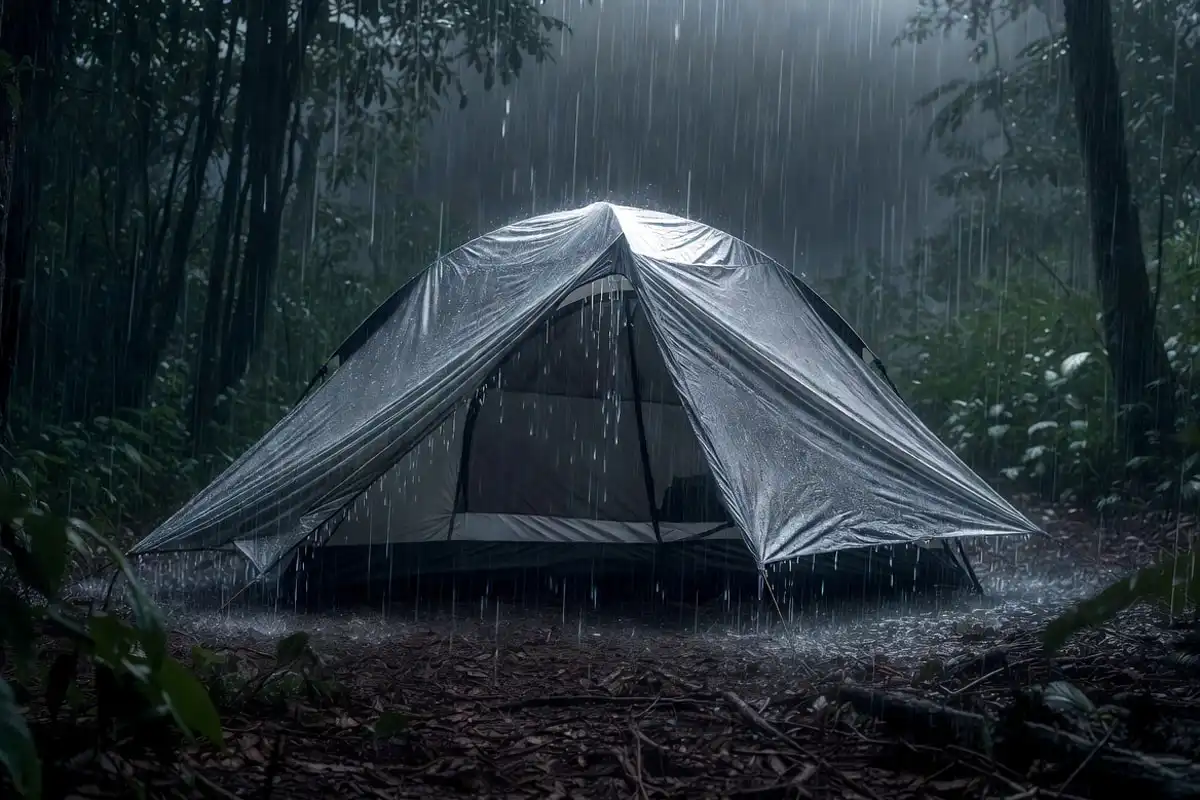
A three-season tent handles rain, wind, and temperatures above freezing across spring, summer, and fall. A 4-season tent adds extra pole structure and heavier fabric to manage snow loads and sustained high winds, but it runs warmer and heavier than most backpackers want.
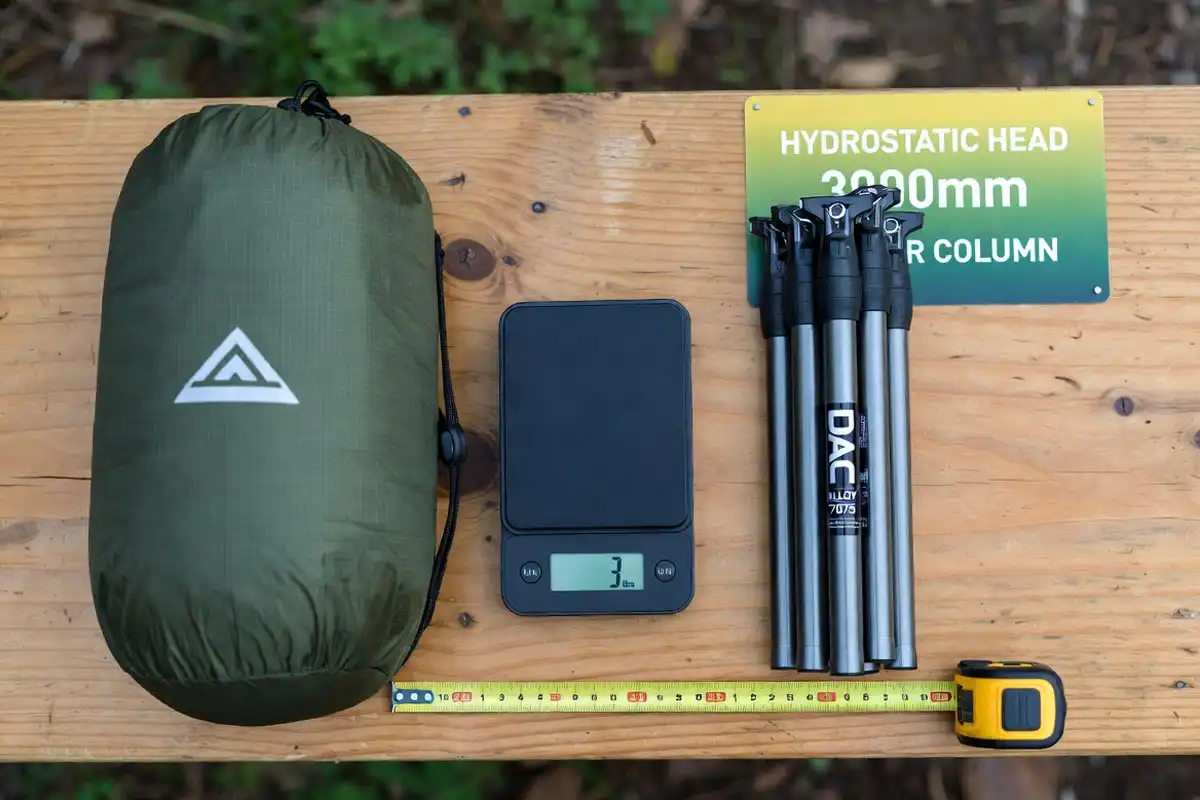
The hydrostatic head rating measures how much water pressure the fabric resists before leaking. A 1500mm rating handles light rain. A 3000mm rating suits extended wet conditions. A full-coverage rainfly that reaches near the ground blocks windblown rain better than a partial fly. Taped seams seal needle holes in the fabric and prevent water migration along stitching lines.
A bathtub floor curves fabric 6–8 inches up all sidewalls, which stops ground water from pooling under the inner tent. Mesh inner walls promote ventilation and reduce condensation, the moisture that forms inside when warm breath meets a cold fly. A waterproof camping tent needs all three elements: a rated floor, sealed seams, and a full fly. If you ever get caught in a downpour without your tent, knowing how to build a simple shelter in sudden rain serves as a practical backup.
Number of Doors and Vestibules
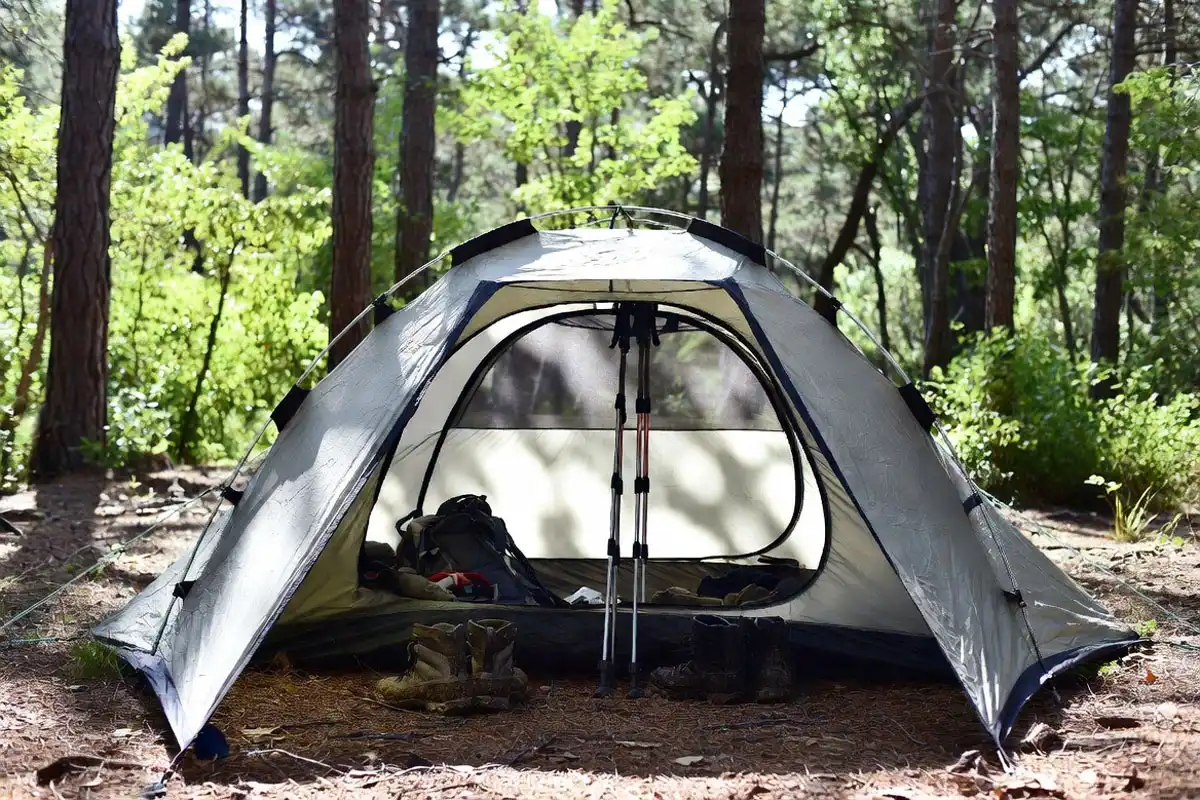
Two doors let both campers exit without climbing over each other at 2 a.m. A double door tent eliminates the awkward scramble that single-door designs create for the person sleeping farthest from the entrance. One door saves 2–4 oz of weight, but it creates daily inconvenience for two people over a multi-night trip.
Two tent vestibules store wet boots, muddy packs, and damp rain gear outside the sleeping area. A vestibule awning of 10 sq ft or more per side holds two full backpacks with room to pull boots on and off. Keeping wet gear storage out of the sleeping zone makes a real difference on back-to-back rain days. A tent footprint stowed in the vestibule protects the floor fabric and stays accessible for morning breakdown.
Freestanding vs. Semi-Freestanding vs. Trekking Pole Tents
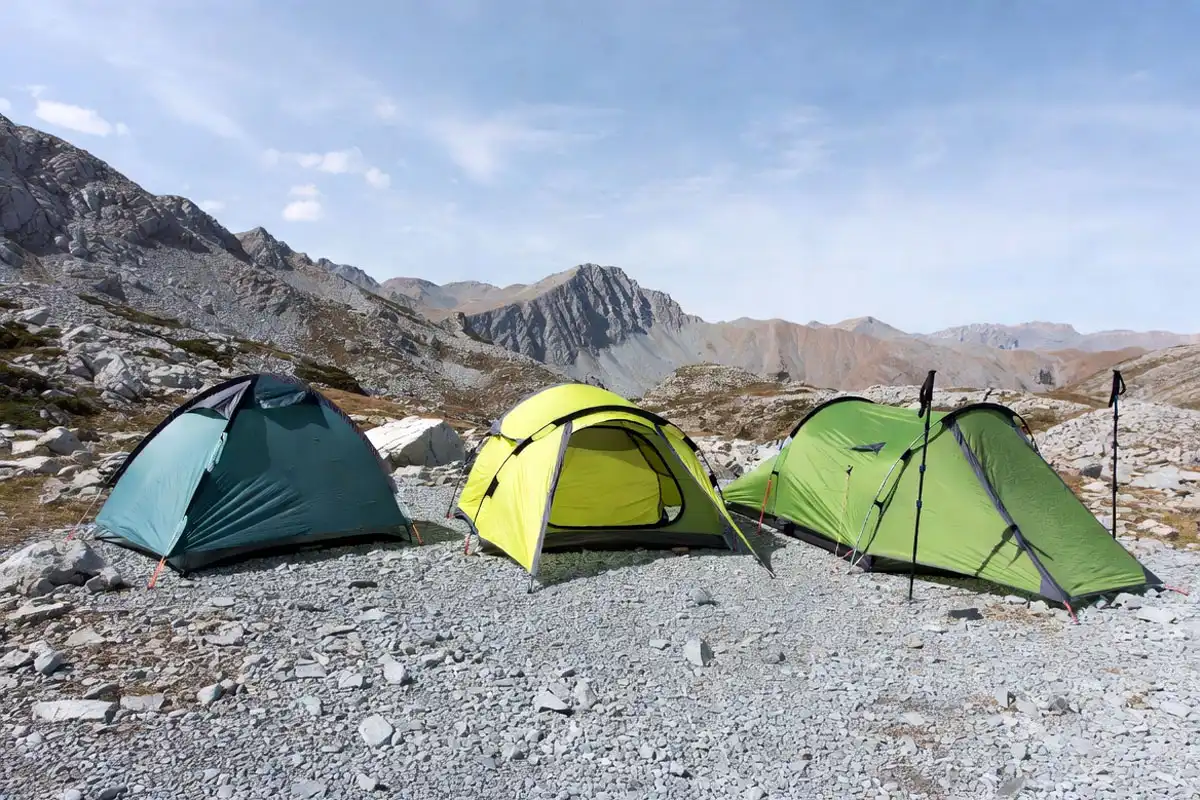
A freestanding tent stands without stakes and pitches on sand, rock, or compacted dirt. It suits campers who move sites often or arrive after dark. A semi-freestanding design needs stakes at the foot end to create full interior space. It pitches slightly faster than a fully freestanding model and often weighs less.
A trekking pole tent replaces dedicated poles with the hiker’s existing hiking poles, cutting 1–2 lbs from the carry. This suits ultralight backpackers who already carry poles and accept a steeper learning curve for pitching. Fly-first pitching, available on select designs, lets campers build the waterproof shell before clipping in the inner body, which keeps sleeping gear dry during setup in a downpour.
Color-coded poles and hubbed pole systems reduce assembly time in low light and bad weather. A wishbone pole at the door creates a tall, unobstructed entry without a center post. Exoskeleton designs route poles outside the tent body and return every inch of interior width to the campers.
Tent Fabrics and Durability
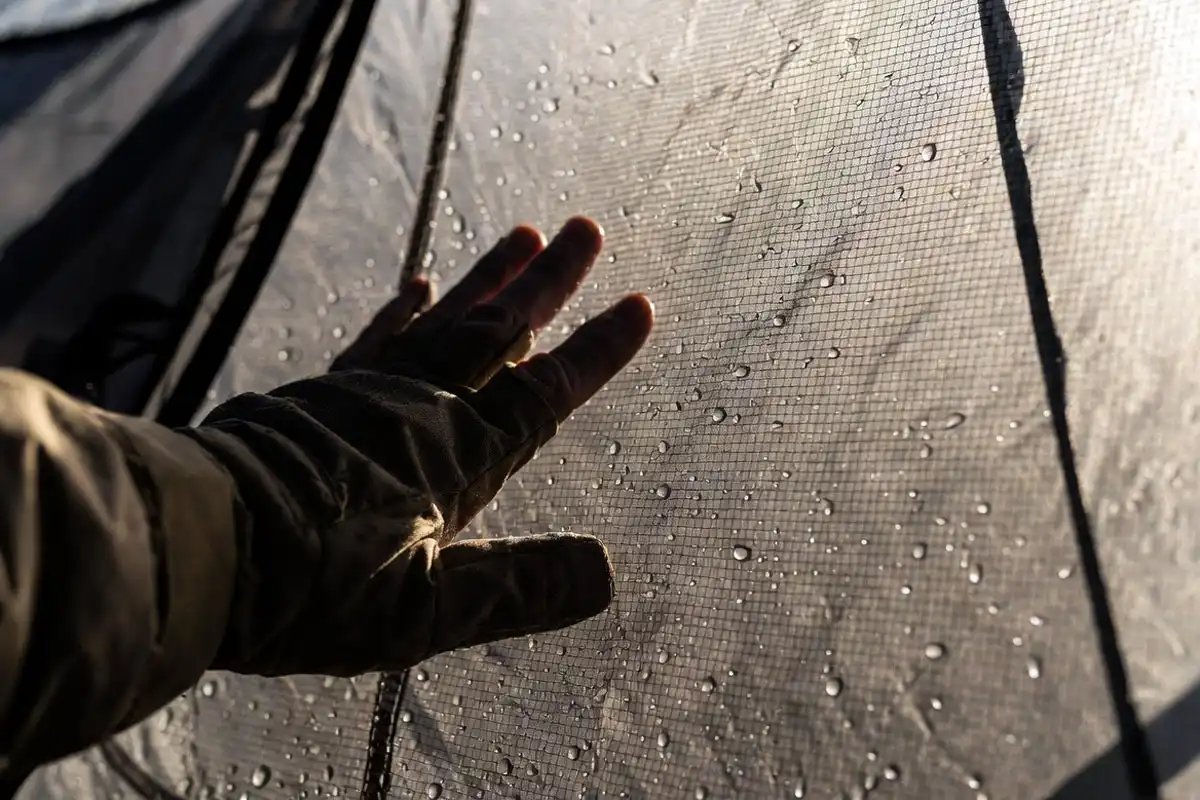
Tent fabric denier measures yarn thickness and directly affects durability. A 20D ripstop nylon tent weighs less but shows wear faster on rough ground. A 70D floor fabric resists abrasion and punctures far better and suits campers who pitch regularly on rocky terrain.
Polyester ripstop resists UV degradation better than nylon, which makes it the stronger choice for desert or high-altitude camping with sustained sun exposure. OSMO fabric, developed by Nemo, combines polyester and nylon to reduce sag when wet while keeping weight low. Dyneema delivers the highest strength-to-weight ratio of any tent fabric and appears in high-end ultralight shelters at a significant price premium.
Floor fabrics carry higher denier ratings than wall fabrics because they take constant abrasion from the ground. Seam tape width and adhesion quality vary between manufacturers; wider tape lasts longer through multiple seasons of use. YKK zippers appear on quality tents because they open smoothly under tension and resist corrosion from moisture and grit. Ultralight tents trade thinner fabrics for lower weight, so clear sharp debris from the campsite before pitching.
Two Person Camping Tent Types
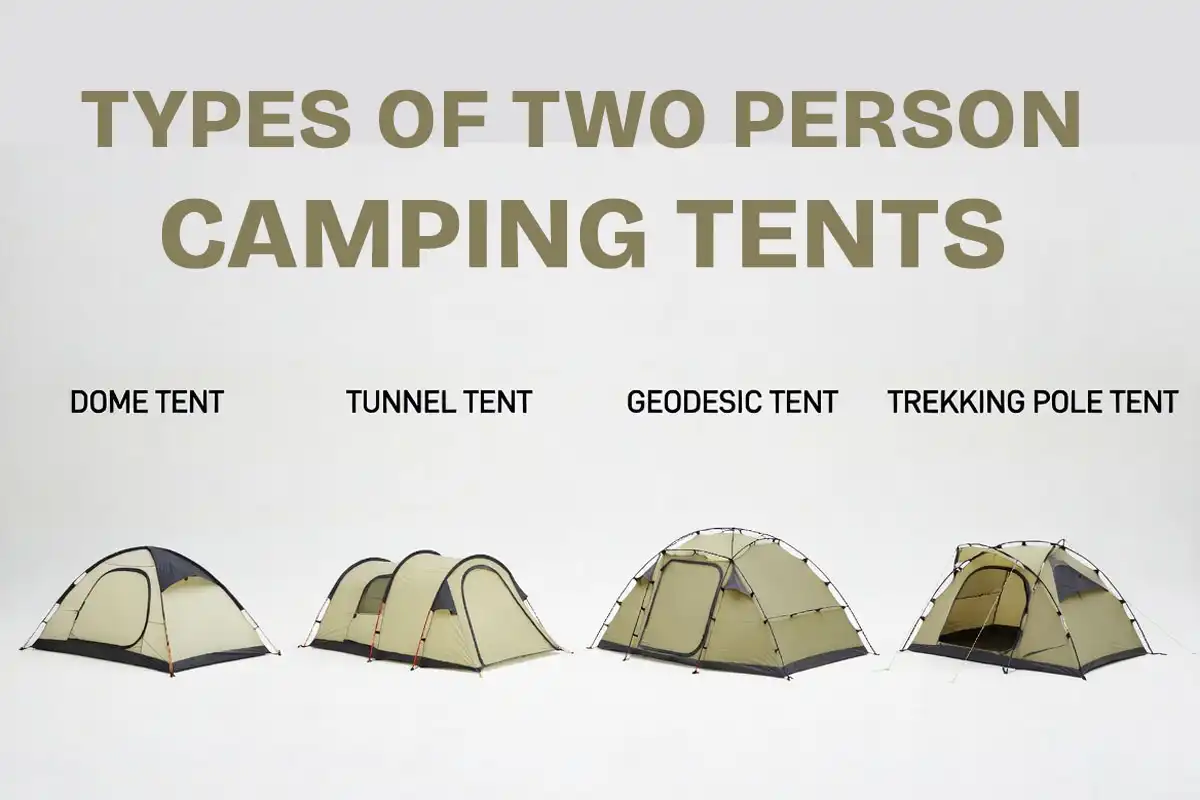
Two-person tents fall into four main designs, each suited to different conditions and priorities.
Dome tents use two crossed poles to create a freestanding structure. They suit most campers: quick setup, no required stakes to stand, and solid resistance to moderate wind. Dome vs. tunnel tent comparisons often favor the dome for versatility and inner-pitch speed. Headroom varies widely between models.
Tunnel tents use parallel hoops to create a spacious interior with a favorable space-to-weight ratio. They need stakes at both ends to stand and perform well in consistent wind from one direction. They flex more than domes in shifting gusts.
Geodesic tents use three or more crossing poles for maximum structural rigidity. They handle heavy snow and sustained high wind better than any other design. The additional poles add weight; geodesic shelters suit alpine or expedition use rather than standard backpacking.
Trekking pole tents cut pack weight by replacing dedicated poles with the camper’s hiking poles. They require precise staking to hold shape, a fly-pitch sequence rather than an inner-first setup, and more experience to pitch correctly in wind. They suit experienced ultralight backpackers, not beginners.
Three-Season vs. Four-Season: Which Do You Need?
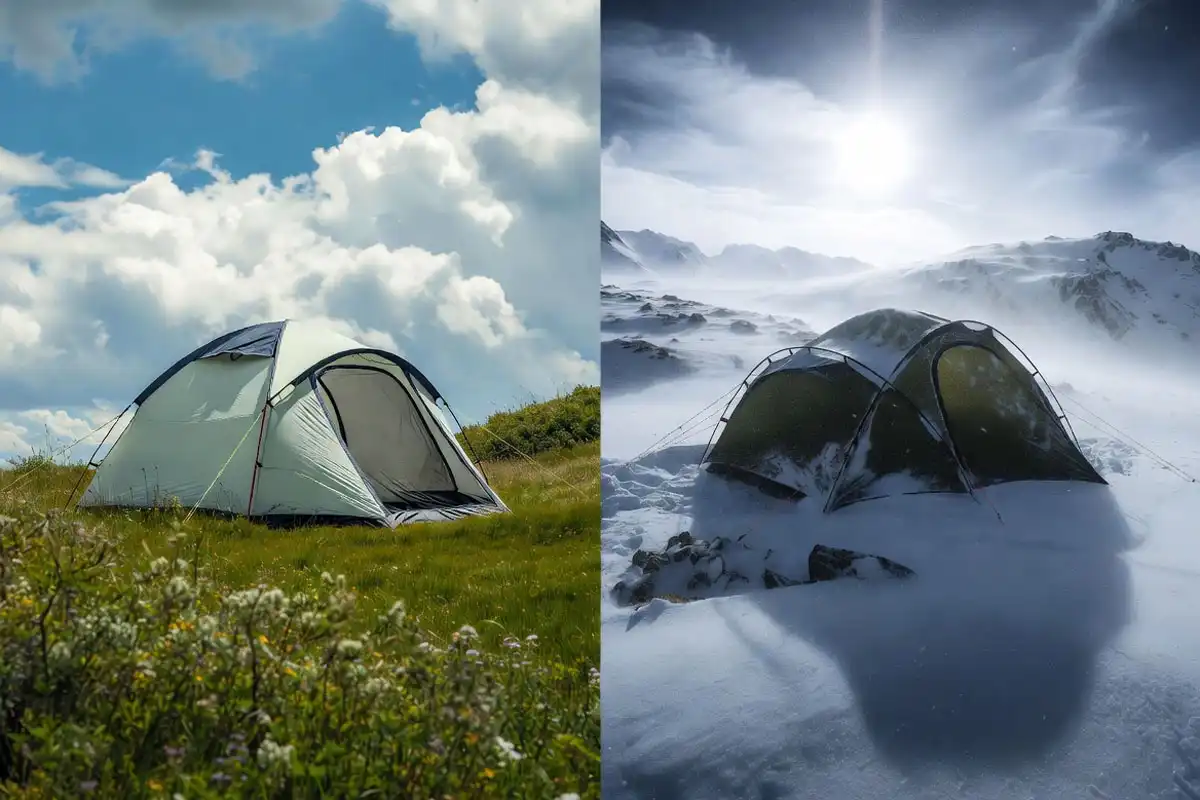
A 3-season tent handles rain, wind, and above-freezing temperatures. It covers spring, summer, and fall camping across the majority of trail conditions. Most shelters in any best two person camping tent roundup fall into this category. Mesh panels increase airflow and keep condensation manageable on cool, humid nights.
A 4-season tent, also called a winter tent or all-season camping tent, adds more poles, heavier fabric, and fewer mesh panels to manage snow loads and gale-force wind. This increases weight and reduces summer ventilation.
For 95% of camping and backpacking trips, a three-season tent covers all conditions encountered. A four-season tent makes sense for winter mountaineering, high-altitude base camps, or shoulder-season expeditions above treeline where heavy snowfall and sustained wind combine.
How to Set Up a Two Person Camping Tent
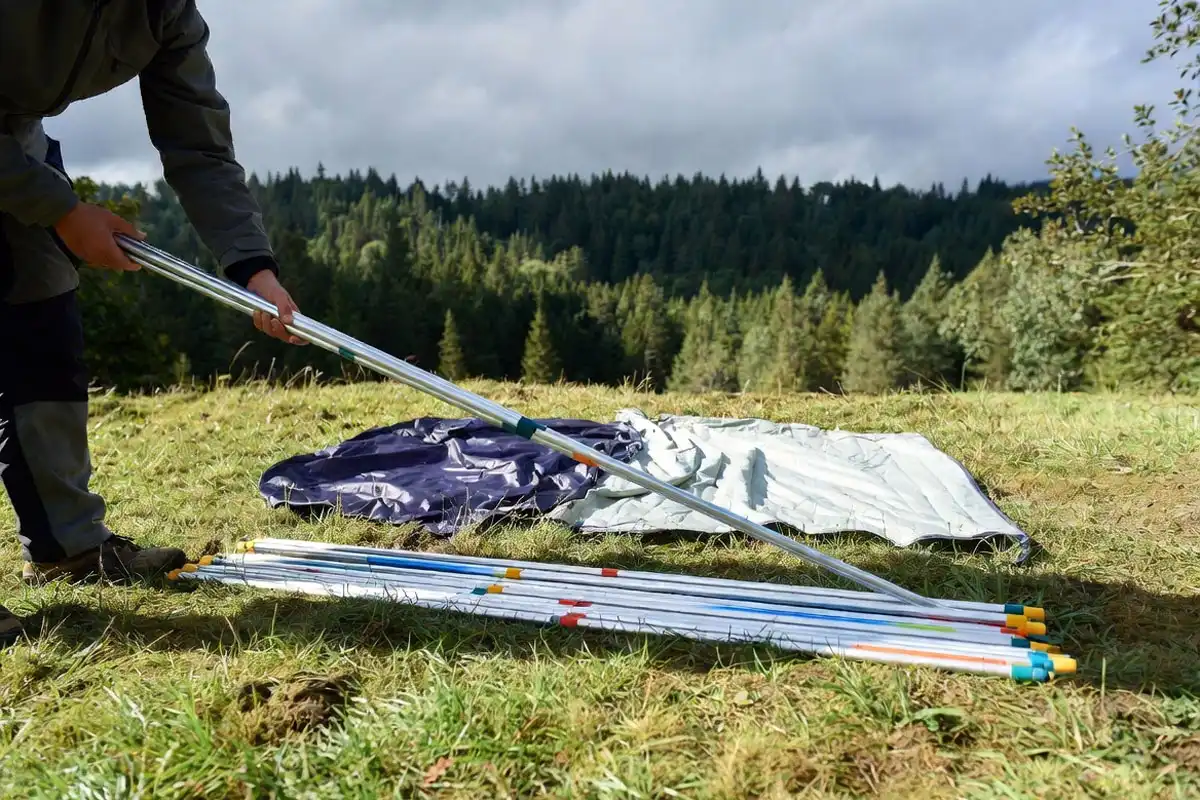
Setting up a two-person tent correctly takes 10 minutes or less once you know the sequence. The steps below apply to dome, tunnel, and semi-freestanding designs.
- Choose flat ground. Clear rocks, sticks, and roots from the site. A slight natural slope drains rain away from the door; check before committing to a spot.
- Lay the footprint. Match its shape to the tent floor. Tuck the footprint edges under the floor so rain cannot pool between the two layers.
- Assemble the poles. Connect shock-corded segments into full pole lengths. Color-coded sleeves or clips indicate which pole routes through which channel.
- Stake the corners first. Staking all four corners before raising the tent keeps the floor flat and positioned correctly while you work.
- Insert poles and raise the tent. Flex each assembled pole into its corner grommet. The tent body rises as the poles tension against the anchored corners.
- Attach the rainfly. Drape it over the tent body and secure all clips, buckles, or velcro points. A fly-first design reverses this: build the fly shell first, then slide the inner body up inside it.
- Tension the guylines. Stake at least the four main guylines. In wind, stake every available point to prevent the tent from shifting or flexing through the night.
For campsites where standard stakes won’t penetrate the ground, pitching a tent on rocky or sandy ground covers anchoring alternatives that hold without soft soil. And if you want to know the right tarp setup to extend shelter coverage around your tent, choosing the right tarp size for your tent setup walks through the math.
Safety note: Never leave a freestanding tent unstaked in wind. An unstaked tent acts as a sail and flips before the fly goes on. Stake the corners first, every time.
FAQs about Two Person Camping Tent

What is the best two person camping tent for backpacking?
The Big Agnes Copper Spur HV UL2 suits most backpackers: it weighs 2.82 lbs, offers 29 sq ft of floor space, and includes two doors and two vestibules. The MSR Freelite 2 is the stronger pick when hitting 2 lbs matters most.
How much does a good 2 person camping tent weigh?
A quality 2 person backpacking tent weighs between 2 and 3.5 lbs. Car-camping shelters like the North Face Stormbreak 2 run closer to 6 lbs, which is acceptable when you’re not carrying the tent on your back.
Are two person tents suitable for camping with a dog?
A standard two-person tent fits two adults and a small dog, but it gets tight fast. For a medium or large dog, sizing up to a tent designed for camping with dogs gives everyone room to sleep comfortably.
What floor dimensions should a two person tent have?
Two adults need a minimum of 80 x 50 inches of floor space. A rectangular floor fits two 20-inch sleeping pads side by side; a tapered floor reduces usable width at the feet and forces one pad off-center.
Are two person tents suitable for tall people?
Most two-person tents measure 84–88 inches in floor length, which suits campers up to around 6 ft 2 in. Taller campers should look at options like the Marmot Catalyst 2P, which stretches to 90.6 inches.
What is the difference between a 3-season and a 4-season 2 person tent?
A 3-season tent handles rain, wind, and above-freezing temperatures across spring, summer, and fall. A 4-season tent adds stronger poles and less mesh to manage snow loading and sustained high wind, but runs warmer and heavier.
How do I keep a two person tent dry in heavy rain?
Choose a tent with a 3000mm hydrostatic head rating, taped seams, and a full-coverage rainfly that reaches near the ground. A bathtub floor that curves 6–8 inches up the sidewalls stops ground water from seeping underneath.
Should I get a freestanding or non-freestanding two person tent?
Freestanding tents stand without stakes and pitch on any surface, including rock or packed dirt, making them the more versatile choice. Non-freestanding designs save weight but require full staking before the interior space opens correctly.
What is a vestibule on a two person tent and why does it matter?
A vestibule is a covered porch area outside the tent door, created by the rainfly. It stores wet boots, muddy packs, and rain gear outside the sleeping area. Two vestibules of 10 sq ft or more per side make a real difference on multi-night trips.
Final Thoughts for Campers
The best two person camping tent for most backpackers balances weight, floor space, weather protection, and ease of setup without forcing a trade-off that hurts on day three of a wet trip. The Big Agnes Copper Spur UL2 delivers that balance for campers who prioritize low weight and a two-door, two-vestibule layout. Budget campers who carry the tent to a drive-in site find reliable shelter in heavier dome designs that still handle rain and wind without the premium price.
Before buying, match weight to carry distance, floor dimensions to sleeping pad width, and hydrostatic rating to your typical weather. A 2 person backpacking tent rated at 3000mm with a freestanding structure, a full rainfly, and two vestibules covers the widest range of trips. If a feature from the buying guide above still feels unclear, revisit that section before committing to a model.