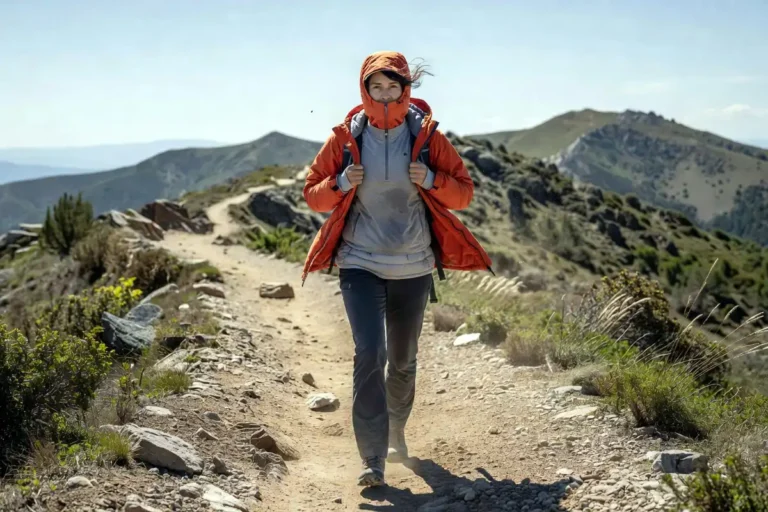
Hiking Boots vs Hiking Shoes for Beginners: 7 Key Differences

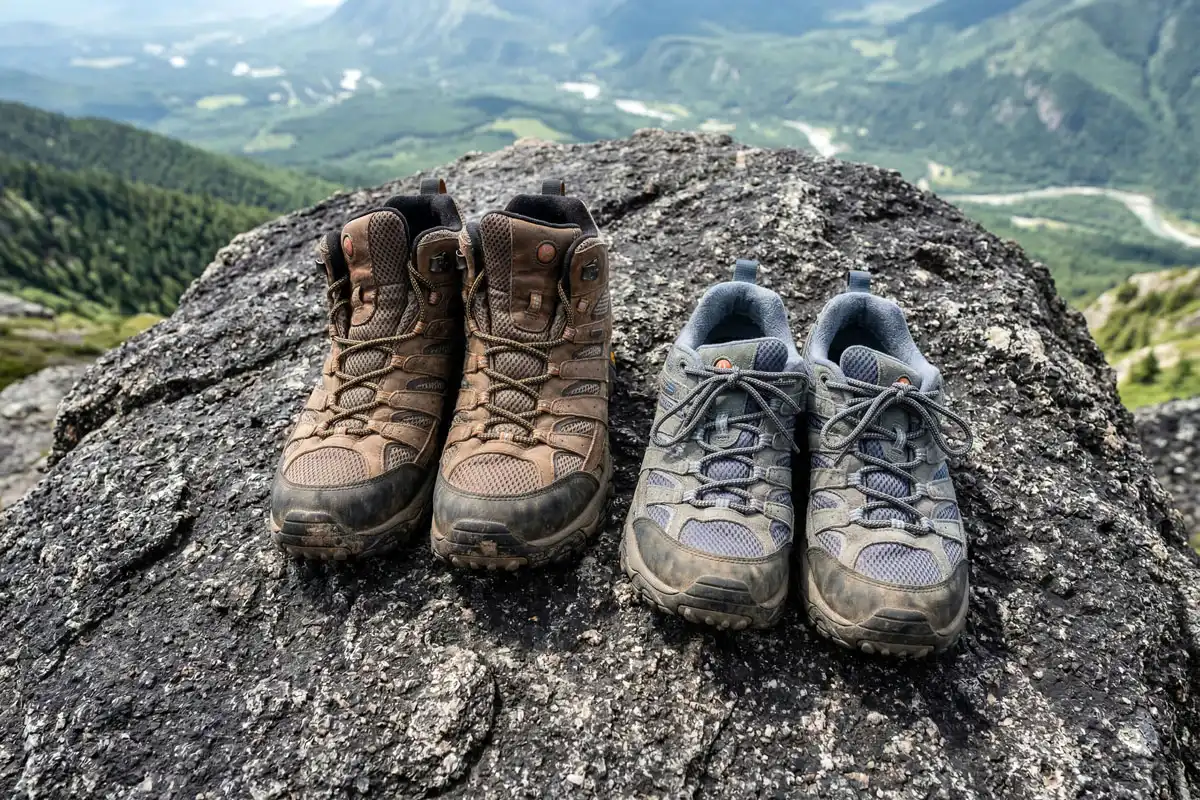
For hiking boots vs hiking shoes for beginners, hiking boots provide more ankle support and foot protection on rocky or uneven terrain, while hiking shoes weigh less and allow more natural movement on flat, well-maintained trails. This guide compares both options across ankle support, cushioning, waterproofing, weight, and terrain suitability so beginners can choose the right footwear with confidence.
Beginners hiking rocky, steep, or wet terrain should choose hiking boots. They deliver ankle support, a stiffer midsole, and better foot protection on technical ground. Beginners on flat, well-marked day hikes do well with hiking shoes for their lighter weight and breathability. Your terrain and pack weight decide the choice, not preference alone.
What Are Hiking Boots?
Hiking boots are mid-cut or high-cut footwear designed for rugged outdoor terrain. They use a stiff midsole, reinforced toe cap, and ankle collar to stabilize and protect the foot on uneven ground. Most hiking boots include a deep-lug rubber outsole for grip on rock, mud, and wet surfaces.
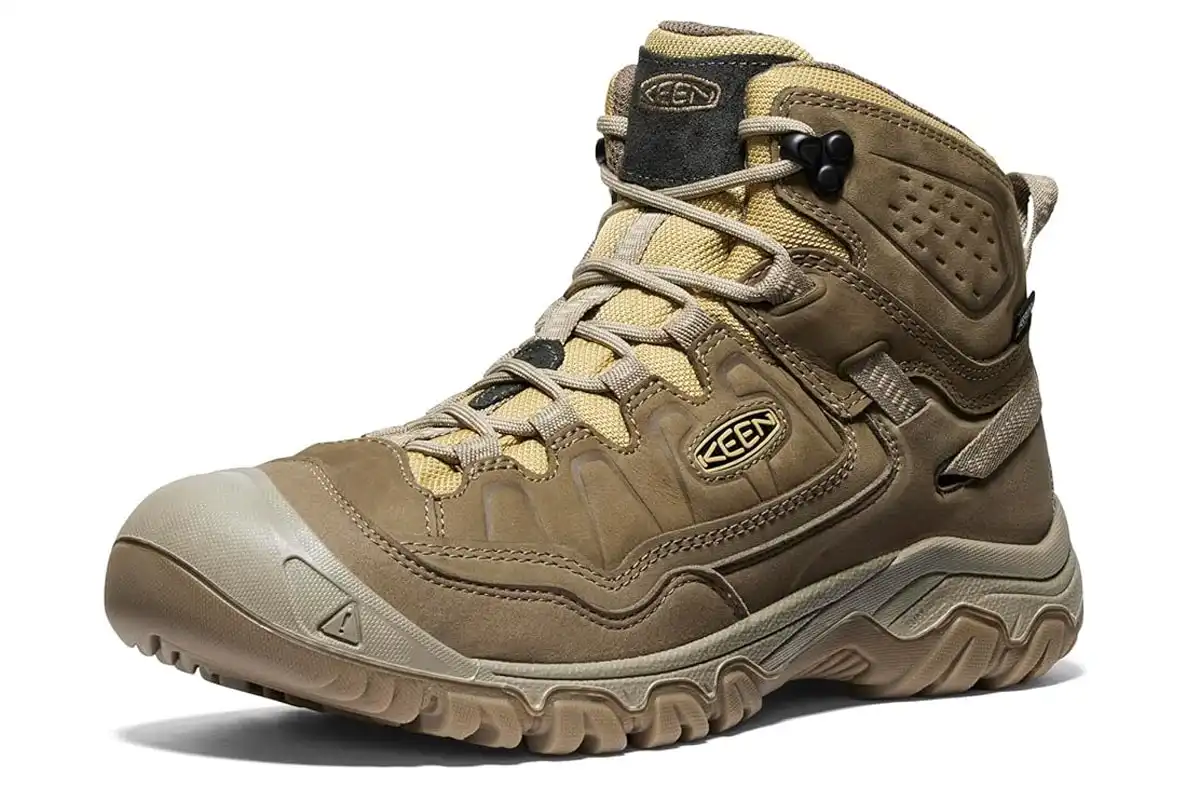
Many models add a waterproof membrane, such as Gore-Tex, to block water on stream crossings and rain-soaked trails.
What Are Hiking Shoes?
Hiking shoes are low-cut footwear that sit below the ankle. They use a flexible midsole and breathable mesh upper to reduce weight and increase airflow. Hiking shoes suit day hikes on maintained trails with moderate elevation gain.
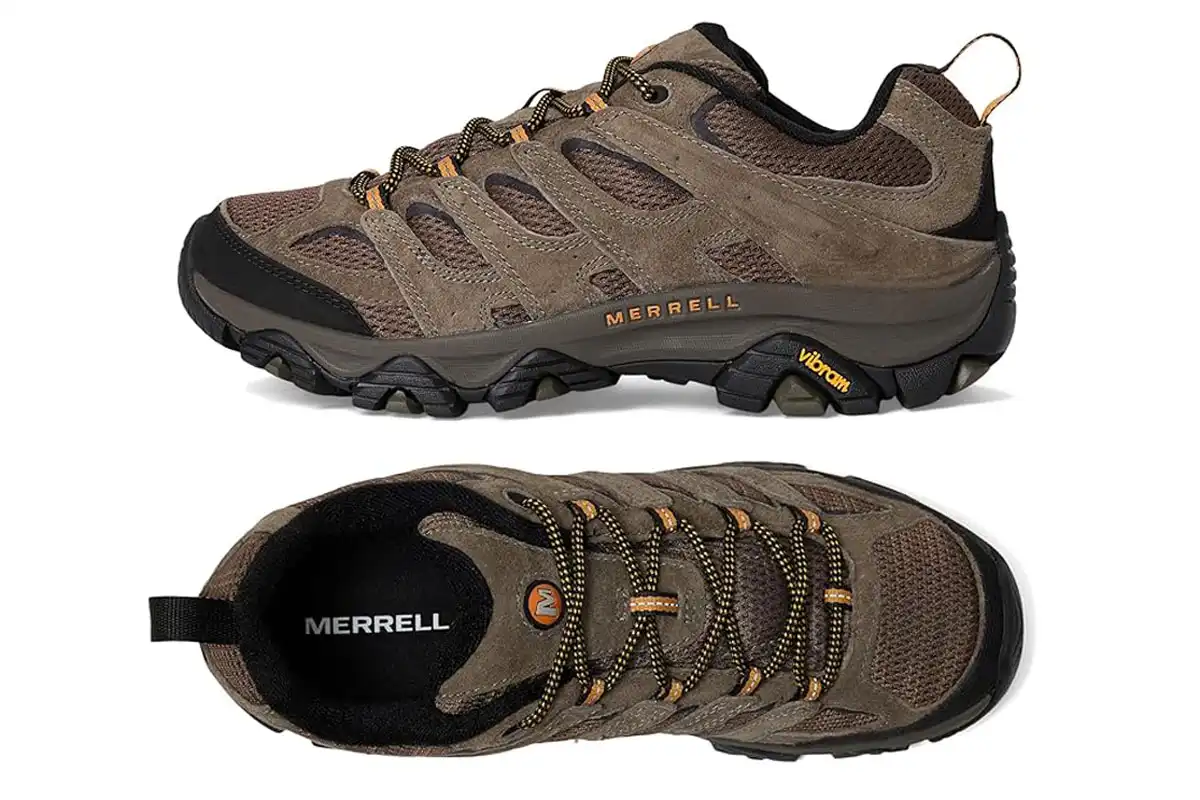
They weigh less than boots, which reduces leg fatigue on easier, longer routes.
Hiking Boots vs Hiking Shoes: Key Differences
|
Feature |
Hiking Boots |
Hiking Shoes |
|---|---|---|
|
Ankle support |
High (collar above ankle) |
Low (no ankle collar) |
|
Average weight |
2.5 to 3.5 lbs per pair |
1.5 to 2.5 lbs per pair |
|
Midsole stiffness |
Stiffer |
More flexible |
|
Waterproofing |
Common |
Less common |
|
Break-in time |
2 to 4 weeks |
Minimal |
|
Best terrain |
Rocky, steep, wet |
Flat, maintained, dry |
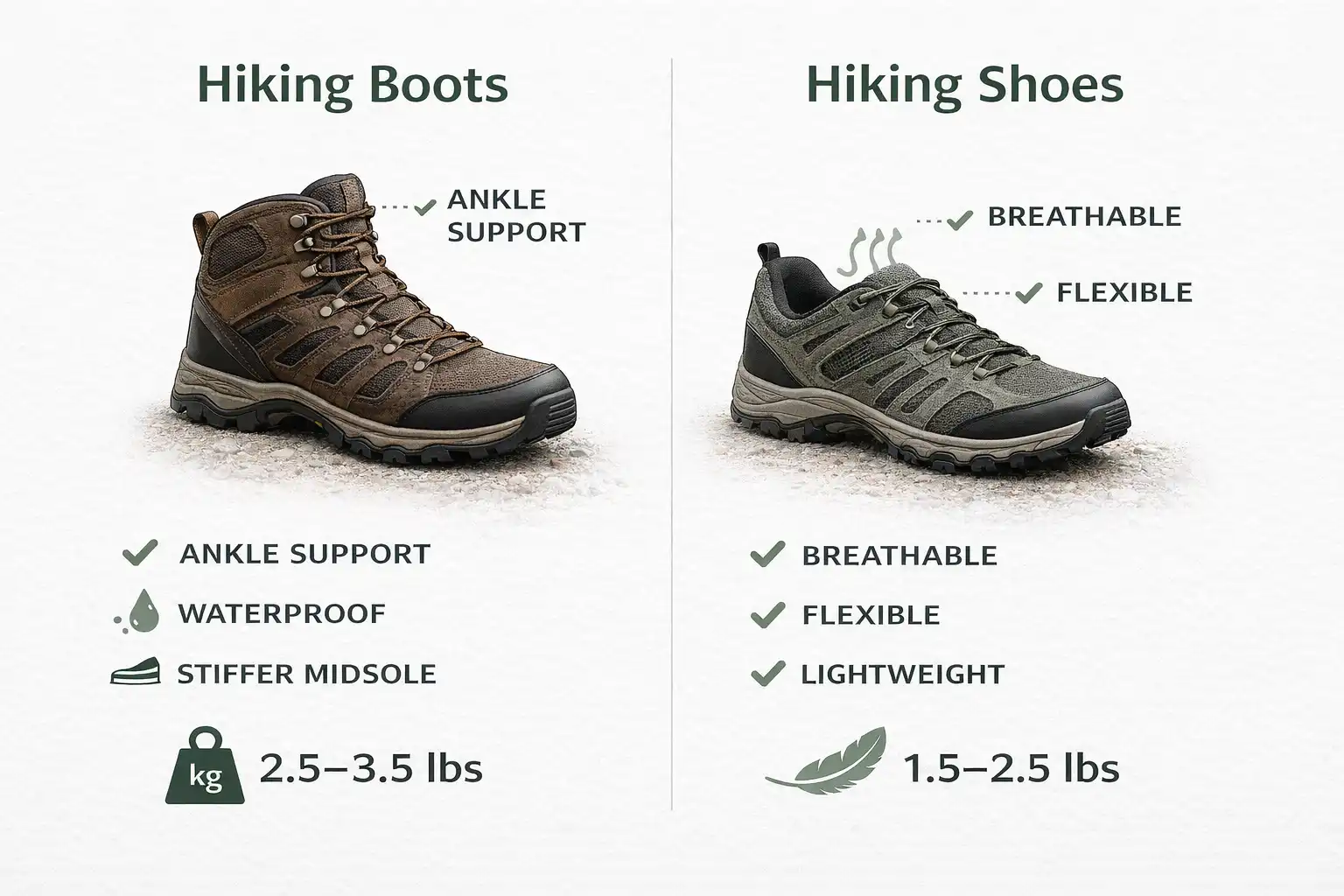
These differences affect comfort, safety, and energy on every mile you walk.
Ankle Support: The Biggest Difference for Beginners
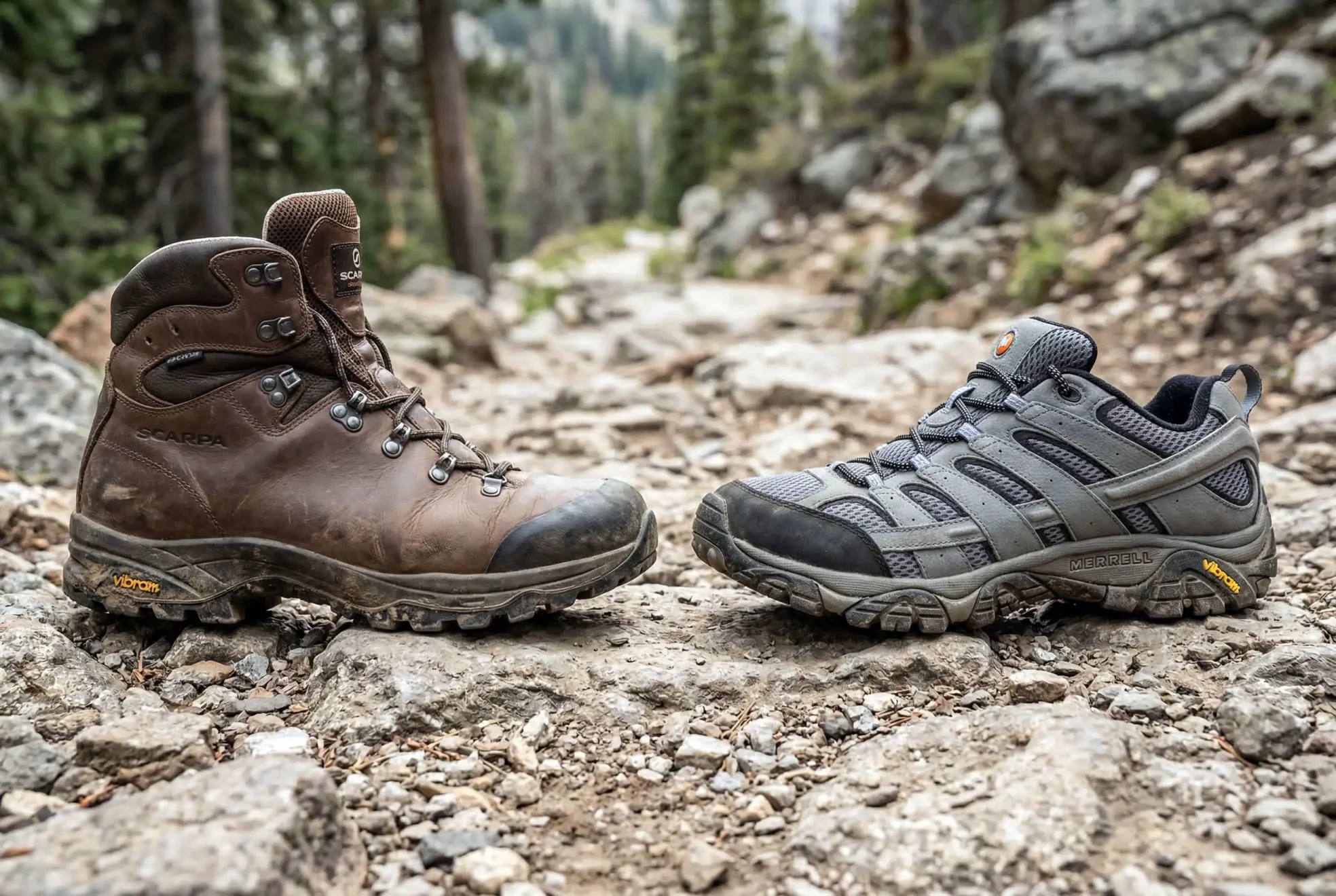
Hiking boots wrap above the ankle joint. That collar limits side-to-side movement on unstable ground. It reduces the chance of rolling your ankle on loose rock, root systems, or uneven trail surfaces.
Hiking shoes provide no ankle collar. Your ankle moves freely, which works well on flat terrain but increases sprain risk on technical trails.
If your ankle rolls mid-trail, knowing how to respond is critical. I covered treatment steps in detail in handle a sprained ankle on the trail.
Weight and Leg Fatigue
Hiking shoes weigh roughly 1 to 1.5 pounds less per pair than hiking boots. On a long day hike, lighter footwear reduces the cumulative energy your legs spend lifting each foot with every step.
Boots earn their extra weight when terrain demands ankle protection and foot stability under a loaded pack. On flat trails with minimal obstacles, that extra weight adds strain without adding benefit.
Waterproofing on the Trail
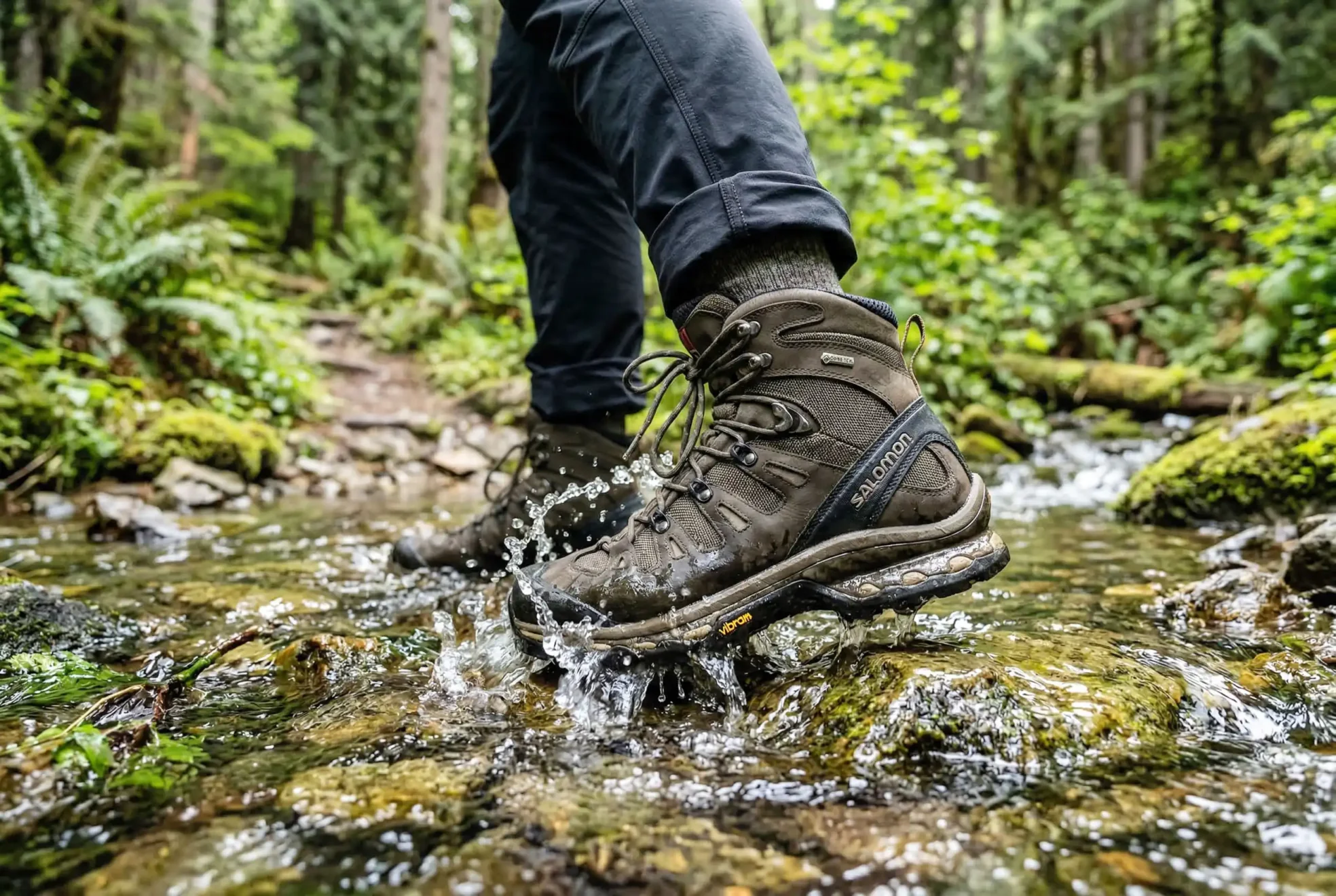
Hiking boots with Gore-Tex or similar membranes block water from stream crossings and wet vegetation. The higher ankle collar also prevents water from entering the top of the shoe.
Hiking shoes dry faster after getting wet. Mesh uppers drain and evaporate water quickly. In warm, dry conditions, this breathability prevents overheating and sweat-related blisters.
Cold and wet conditions favor waterproof boots. Warm and dry conditions favor breathable shoes.
When Should Beginners Choose Hiking Boots?
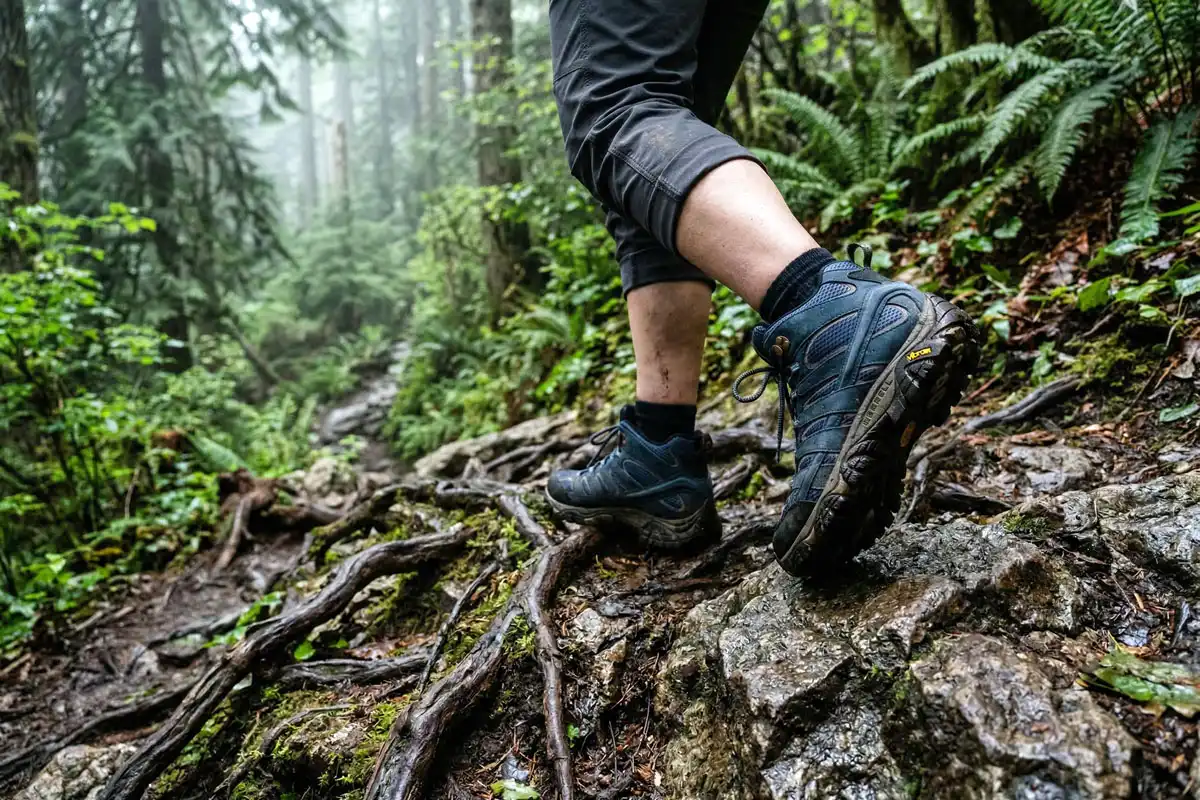
Choose hiking boots when any of these apply:
- The trail includes rocky, rooted, or steep sections
- You carry a pack heavier than 20 pounds
- The trail crosses streams or wet areas
- You hike in cool or rainy conditions
- Your ankles are weak or have a history of rolling
Beginners often underestimate how rough trails become after the first mile. Boots provide a safety margin on unpredictable terrain.
When Should Beginners Choose Hiking Shoes?
Choose hiking shoes when:
- The trail is well-marked and mostly flat
- You hike with a light daypack under 15 pounds
- Conditions are warm and dry
- The hike stays under 8 miles with modest elevation gain
- You want footwear that also works off-trail in town
I looked at this dual-purpose use in detail in hiking shoes hold up for city walking, which helps if you want one pair for both trail and travel.
Break-In Period: What Beginners Need to Know
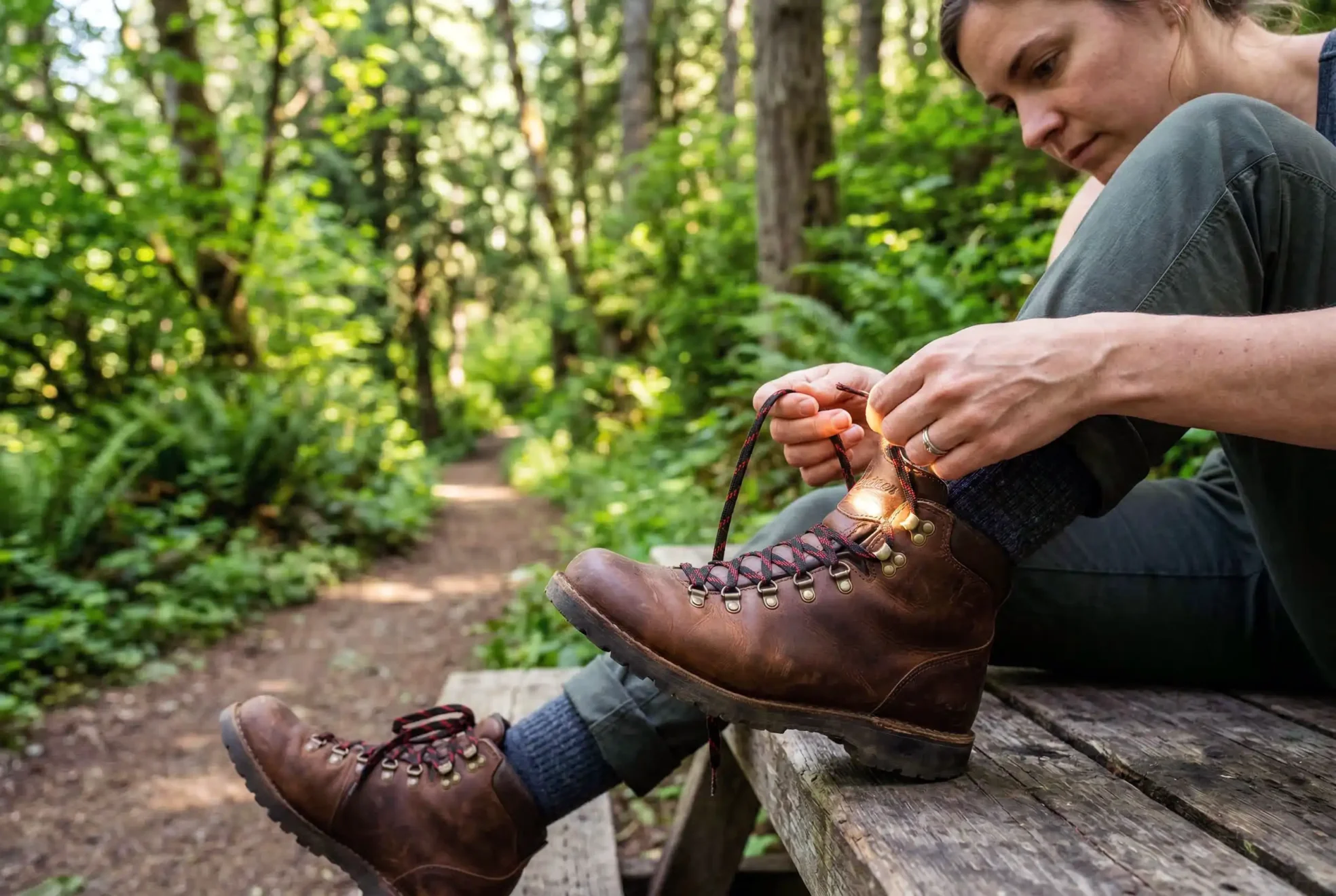
Hiking boots need a break-in period before any long trail. Stiff leather and synthetic materials require time to flex around the shape of your foot. Wearing new boots without prior use causes blisters and heel pain within the first few miles.
Hiking shoes require little to no break-in time. Their flexible construction adapts to your foot faster.
I wrote a full step-by-step breakdown on breaking in new hiking boots before a hike that walks through a gradual method to avoid boot pain on day one.
Getting the Right Fit
Both hiking boots and shoes need a thumb’s width of space between your longest toe and the front of the shoe. This prevents toenail bruising on descents.
Boots require firm lacing at the ankle to lock the heel in place. A loose heel creates friction with every step, producing blisters at the back of the foot. Shoes need a snug midfoot fit to prevent lateral sliding.
Socks affect fit and blister risk as much as the footwear itself. I covered the right sock choices in detail in socks that reduce friction on long hikes.
Common Mistakes Beginners Make
Buying boots designed for mountaineering. Stiff, heavy mountaineering boots work on glacier approaches, not forest trails. Match boot stiffness to actual terrain difficulty.
Skipping the break-in period. New boots worn on a 10-mile hike without prior use produce blisters within the first hour. Walk in them for short sessions first.
Wearing cotton socks. Cotton traps moisture and creates hot spots. Wool or synthetic hiking socks reduce blister risk with both boots and shoes.
Choosing trail runners as hiking shoes. Trail runners look similar to hiking shoes but often lack the outsole depth and midsole protection needed for uneven terrain. Check the lug pattern depth before buying.
Blisters are the most common beginner injury on the trail. I covered full prevention methods in prevent blisters while hiking.
Safety on the Trail
Ankle sprains rank among the most common hiking injuries. Low-cut shoes increase that risk on rocky or rooted terrain. Beginners with no trail experience benefit from mid-cut or high-cut boots when any section of the trail involves uneven footing.
Cold, wet feet increase fatigue and reduce focus on the trail. Waterproof boots reduce that risk in cold, damp conditions. The National Park Service includes sturdy, supportive footwear on its core gear list for any backcountry hike.
The American Orthopaedic Foot and Ankle Society notes that footwear with adequate ankle support and a firm outsole significantly reduces foot and ankle injury risk on uneven terrain.
FAQs on Comparison Between Hiking Boots and Hiking Shoes

Are hiking boots better than hiking shoes for beginners?
Hiking boots work better for beginners on rugged, wet, or steep terrain. Hiking shoes work better on flat, maintained trails. Match your footwear to the specific trail conditions, not a general preference.
Do hiking shoes provide enough ankle support for trail use?
Hiking shoes provide no ankle collar, so they offer minimal lateral support. On flat trails this works fine. On rocky or rooted ground, the lack of support increases ankle sprain risk considerably.
Can I use trail running shoes instead of hiking shoes?
Trail running shoes work on well-maintained paths but often lack the outsole depth and midsole stiffness needed for rough terrain. They are not a reliable substitute for hiking boots on rocky or steep trails.
How long does it take to break in hiking boots properly?
Most hiking boots need 2 to 4 weeks of gradual wear before a long hike. Start with short 20 to 30-minute walks, then increase daily wear time before your first full trail day.
Are waterproof hiking boots worth it for beginners?
Waterproof hiking boots are worth it for wet climates, stream crossings, and cool temperatures. In warm, dry conditions, a non-waterproof boot with a breathable upper keeps feet cooler and more comfortable.
Final Thoughts on Hiking Footwear Choice
Hiking boots and hiking shoes serve different purposes. Boots protect your feet on technical, wet, or uneven terrain. Shoes move faster and feel lighter on smooth, flat trails.
As a beginner, start with the terrain in mind. If your first hike involves anything rocky, rooted, or steep, choose boots. If it follows a clear path through flat forest or parkland, hiking shoes give you enough support and far more comfort.
The footwear you choose affects your safety and energy on every mile. Choose based on terrain, pack weight, and the trail’s character, not appearance or price alone.