How Cold Is Too Cold to Sleep in a Tent Without Proper Gear
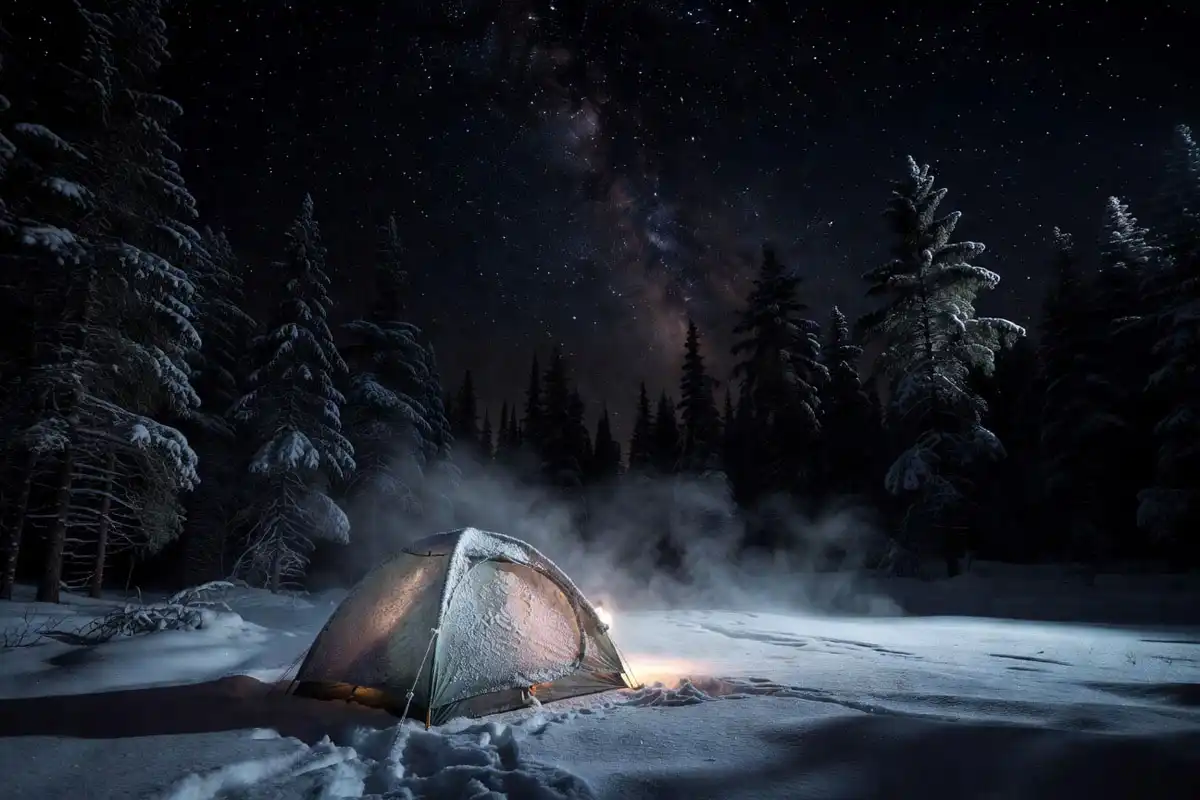
Below 32°F (0°C), sleeping in a tent without proper gear puts your body at risk of dangerous heat loss and hypothermia. This guide covers the temperature thresholds that separate safe from unsafe, how cold air affects your core temperature through the night, what basic gear you need, and step-by-step warming strategies you can apply on any cold camping trip.
Too cold to sleep in a tent without proper gear is generally below 32°F (0°C). At 20°F (-7°C) or lower, hypothermia risk increases significantly without an insulated sleeping bag and sleeping pad. Wind and moisture lower the safe threshold further. A sleeping bag rated at or below the expected nighttime low is the minimum protection needed.
What Temperature Is Too Cold for Tent Sleeping Without Gear?
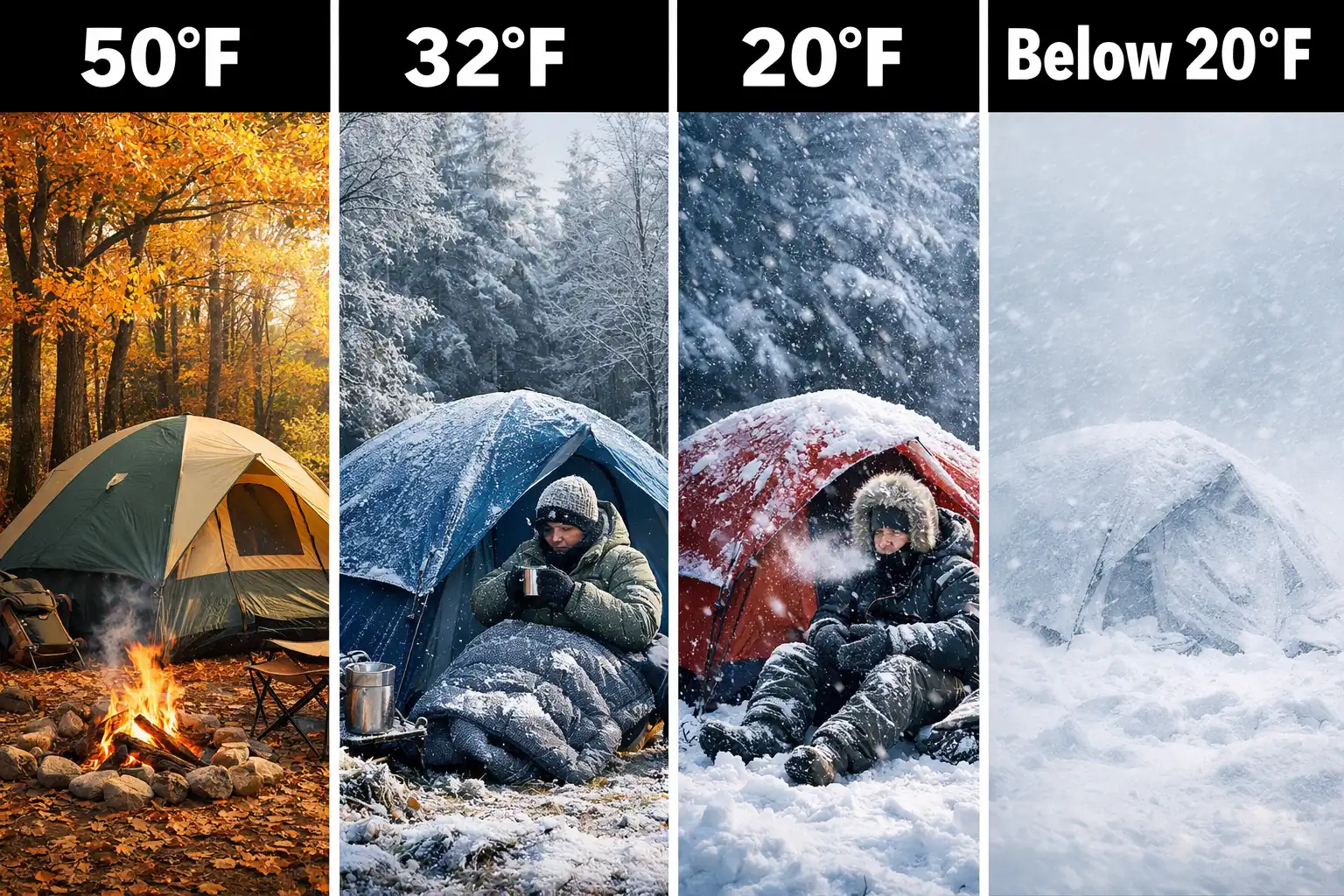
The comfortable lower limit for tent sleeping without insulation is around 50°F (10°C). Below that point, most people sleep poorly and feel cold stress throughout the night.
At 32°F (0°C), an unprotected body loses heat faster than it produces it.
At 20°F (-7°C) and below, the risk of hypothermia becomes serious. Without a properly rated sleeping bag, core temperature can drop to dangerous levels within a few hours.
Here is a practical temperature and risk reference:
|
Temperature |
Risk Without Proper Gear |
|---|---|
|
50°F–60°F (10°C–15°C) |
Low – discomfort, poor sleep quality |
|
32°F–50°F (0°C–10°C) |
Moderate – cold stress without insulation |
|
20°F–32°F (-7°C–0°C) |
High – hypothermia risk increases |
|
Below 20°F (below -7°C) |
Severe – dangerous without rated cold-weather gear |
Wind chill changes these numbers fast. A 15 mph wind at 30°F (-1°C) feels like 19°F (-7°C) on exposed skin. Always check forecasted wind speed alongside air temperature before you go.
How Cold Affects Your Body in a Tent at Night
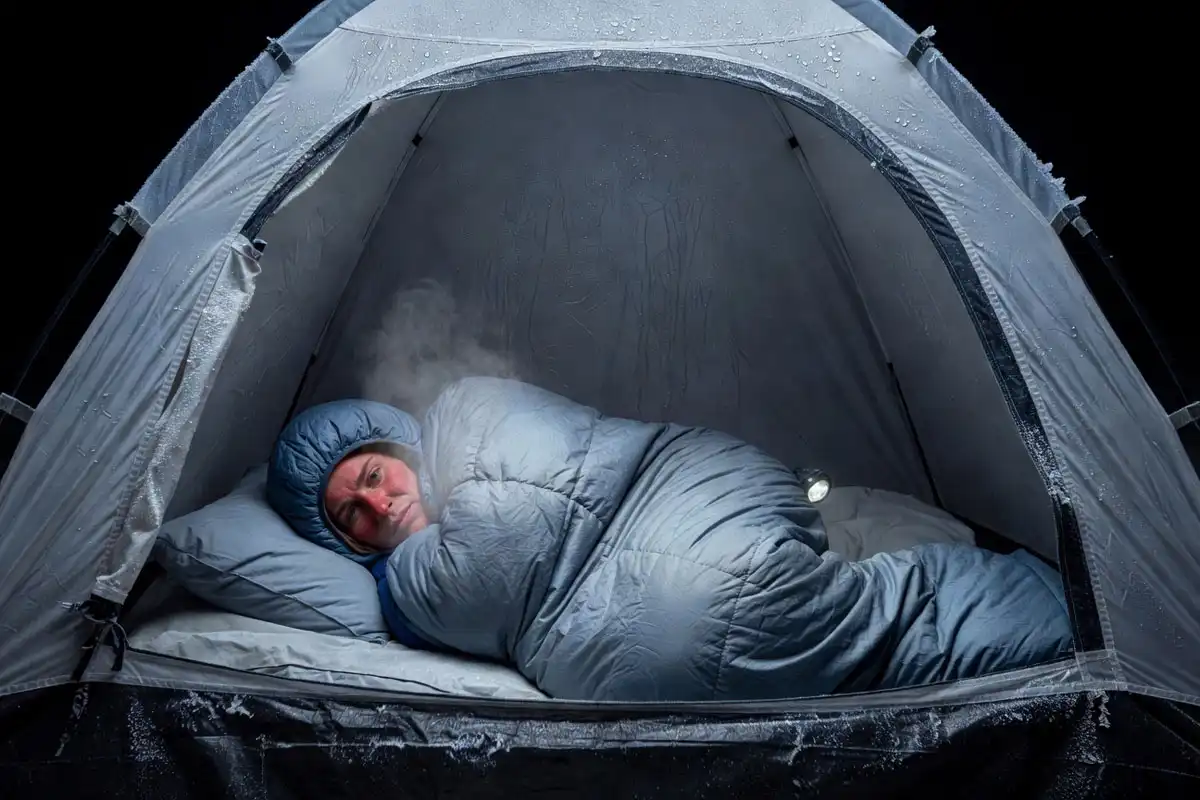
A tent blocks wind and rain. It does not provide meaningful thermal insulation on its own.
Your body loses heat through four processes: conduction (contact with cold ground), convection (cold air moving over skin), radiation (heat escaping outward), and evaporation (sweat and moisture). Without gear, all four work against you simultaneously.
Normal core body temperature is 98.6°F (37°C). According to the CDC, hypothermia begins when core temperature falls below 95°F (35°C), and it develops even at temperatures above freezing when wind and moisture are present.
Wet clothing or a damp sleeping bag loses most of its insulating ability. It conducts cold directly to the skin instead of trapping warm air.
For cold nights where wind is a factor, the strategies I covered in my piece on layering clothing for cold and wind on trail also apply inside the tent.
What Gear You Need to Sleep Safely in Cold Temperatures
Sleeping bag: Choose one rated at or below the expected nighttime low. A bag rated for 20°F (-7°C) provides a useful safety margin at 30°F (-1°C).
Sleeping pad: The R-value measures a pad’s resistance to heat flow. For temperatures below 20°F (-7°C), use a pad with an R-value of 4 or higher. Ground conduction pulls more heat from your body than cold air does.
Tent type: A three-season tent handles temperatures down to around 20°F (-7°C) in moderate conditions. A four-season tent uses denser fabric and reduced mesh to retain more warmth and resist heavy wind.
Clothing layers: Wear moisture-wicking base layers and an insulating mid-layer to sleep. Avoid cotton. Cotton absorbs moisture and loses all insulating ability when wet.
How to Stay Warm in a Tent on Cold Nights
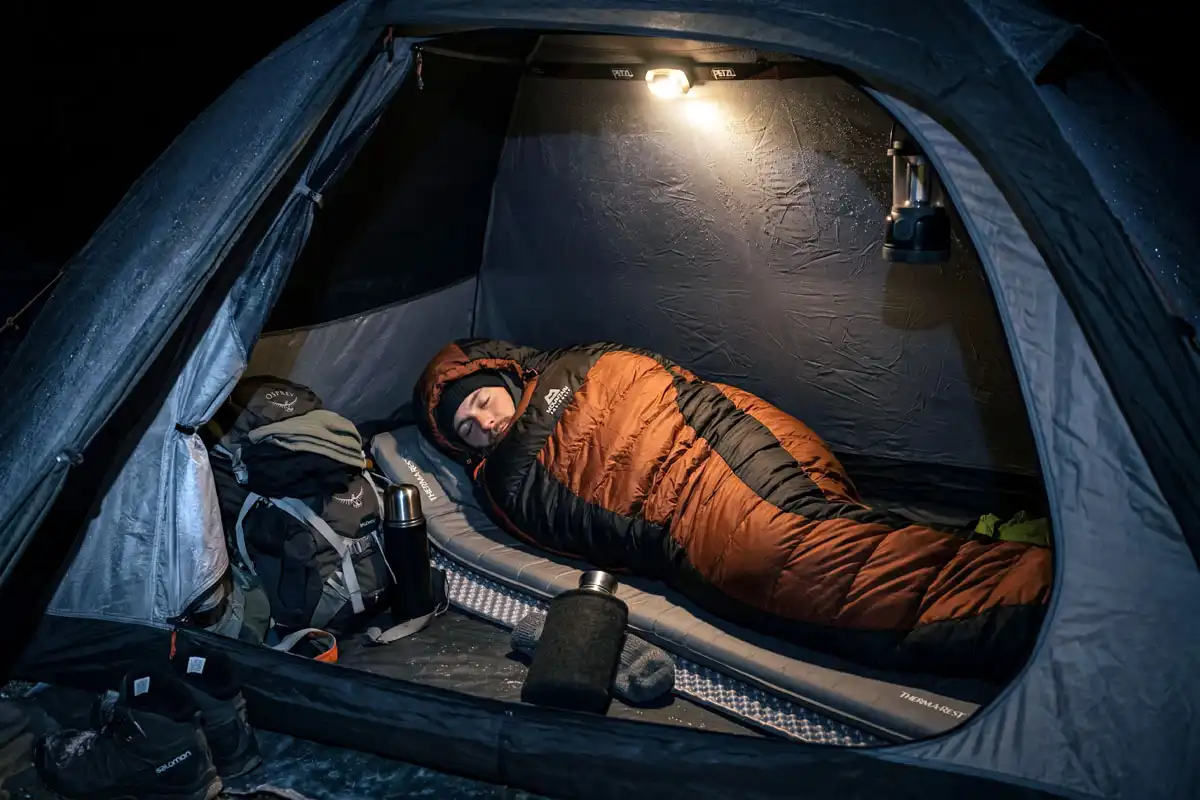
I have been caught in unexpectedly cold nights more than once. These steps help when temperatures drop and gear is limited.
Step 1: Insulate the floor first. Lay your sleeping pad before anything else. Cold ground pulls heat from your body faster than cold air does.
Step 2: Change into dry layers before sleeping. Avoid sleeping in clothes you hiked in. Sweat residue reduces insulation. Dry base layers trap warm air against your skin.
Step 3: Wear a hat and wool socks inside the bag. Your head and feet lose heat quickly. A light wool beanie and warm socks noticeably improve overnight warmth.
Step 4: Eat a calorie-dense snack before sleep. Your body generates heat by burning calories. Nuts, peanut butter, or a small meal before bed fuel your metabolism through the night.
Step 5: Pre-warm your sleeping bag. Place a sealed bottle of hot water inside the bag 10 minutes before you get in. This raises the starting temperature before your body takes over.
Step 6: Tighten the bag hood around your face. Leave only your nose and mouth exposed. Reducing the air space your body needs to heat improves efficiency.
Step 7: Ventilate slightly to reduce condensation. Crack a small vent to let moisture escape. A sealed tent traps humidity, which dampens gear and reduces warmth. I covered this in detail in my article on ventilating a tent in cold weather.
For a broader set of tactics when temperatures drop at night, I wrote abot stay warm inside a tent on cold nights as a dedicated guide.
Warning Signs You Are Too Cold in Your Tent
Shivering is your body’s first warming response. Persistent shivering that does not stop after adding layers means your core temperature is actively dropping.
Watch for these signs:
- Continuous shivering with no relief after adding insulation
- Stiff fingers and reduced grip strength
- Slurred speech or slow thinking
- Unusual drowsiness or confusion that does not match how tired you are
These are early-stage hypothermia symptoms. I wrote a full breakdown of what to do in that situation in my article on what to do when you suspect hypothermia. Read it before heading into cold conditions.
If these signs appear, add every available layer immediately, get inside a sleeping bag, consume warm fluids if alert, and seek emergency help if symptoms do not improve within 30 minutes.
Common Mistakes That Make Cold Nights Dangerous
Sleeping directly on the ground. Even a thin foam pad provides far more warmth than a bare tent floor. This is the mistake I see most often with newer campers.
Using cotton base layers or a cotton sleeping bag liner. Cotton holds moisture and collapses as an insulator when wet. Synthetic fill or down maintains loft and warmth.
Planning only for air temperature. Wind chill and humidity are the real overnight conditions. Checking only the daily high misses what you will face at 2 a.m.
Over-layering until you sweat inside the bag. Sweat saturates your insulation and drops your warmth rapidly. Dress warmly but not so heavily that you start perspiring.
Letting bedding get damp. Tent condensation is enough to reduce sleeping bag performance overnight. I covered the best approaches for this in my article on keeping bedding dry in humid camping conditions.
Safety Rules for Cold Tent Camping
Never sleep in a wet sleeping bag if you can avoid it. Squeeze out moisture and supplement with every dry layer available.
Never use a gas stove, candle, or charcoal burner inside a tent for heat. Carbon monoxide accumulates quickly in enclosed spaces and is fatal without warning.
The National Park Service notes that hypothermia can develop at temperatures as mild as 50°F (10°C) when a person is wet, fatigued, or underdressed. Cold does not need to be extreme to become dangerous.
Tell someone your planned campsite and expected return time before any cold-weather solo trip. Gear decisions and a communication plan both matter, and I covered the broader picture in my article on staying safe while camping alone.
FAQs on Cold Weather Tent Camping Safety

Is 40°F too cold to sleep in a tent?
40°F (4°C) is manageable with a sleeping bag rated for 35°F or lower, a sleeping pad, and dry base layers. Without that gear, 40°F causes real cold stress and disrupted sleep through the night.
Can you sleep in a tent at freezing temperatures?
Yes, with a sleeping bag rated at or below 32°F (0°C), a sleeping pad with an R-value of 4 or higher, and dry moisture-wicking layers. Without those, freezing temperatures are unsafe for overnight tent sleeping.
What sleeping bag temperature rating do I need for cold camping?
Choose a bag rated at least 10°F (-5°C) below the lowest expected overnight temperature. That buffer accounts for wind chill, moisture, and individual cold sensitivity during sleep.
How do I know if I am at risk for hypothermia while camping?
Persistent shivering, stiff fingers, slurred speech, and unusual drowsiness are the early warning signs. If these appear, add layers immediately and warm up before symptoms progress.
Does a tent keep you warm in cold weather?
A tent blocks wind and slows radiated heat loss, but it does not insulate on its own. The sleeping bag, sleeping pad, and clothing layers provide the actual thermal protection overnight.
Conclusion
Cold does not wait for you to get ready. Below 32°F (0°C) without rated gear, your body loses the heat battle faster than most people expect.
Three things determine whether a cold night stays safe: a sleeping bag rated for the temperature, a sleeping pad with adequate R-value, and dry clothing layers. Nail those three and most cold-weather tent nights remain manageable.
Check wind chill before every cold-weather trip. Keep your gear dry. Learn the early signs of hypothermia before you need to recognize them.