How to Choose a Campsite When You Arrive Late: Mistakes to Avoid

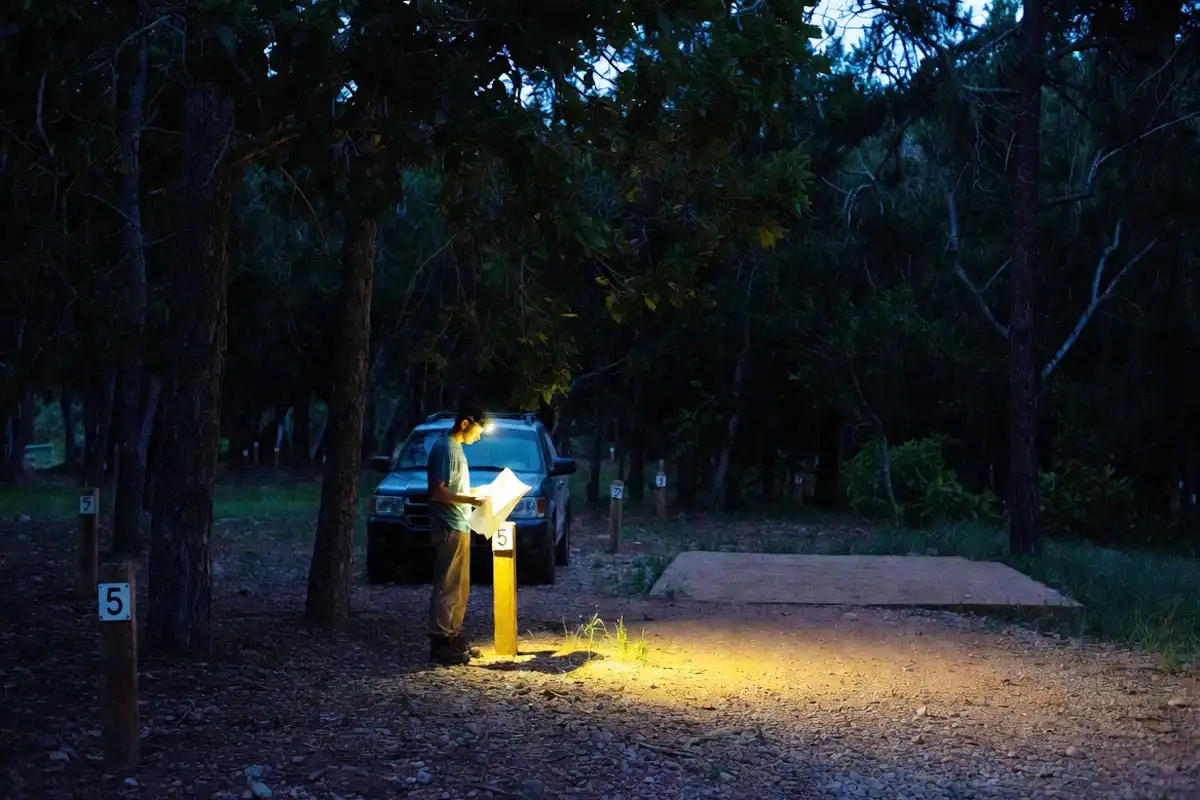
Arriving at a campground after dark calls for one priority: pick the safest site you confirm with a headlamp, then set up with little noise. This guide gives you a late-arrival routine, a clear hazard check for the dark, and simple decision points for full campgrounds or bad weather. I walk through what to look for on the ground, above your head, and around your neighbors. You learn when to keep driving, when to stop, and how to reset in the morning. The goal stays the same every time: sleep safe and wake up ready.
Pick a level site with firm ground, clear overhead branches, and an easy path from your vehicle to the tent pad. Avoid low spots, dry stream channels, and soft sand that turns to mud overnight. Stay inside campground rules, keep light and noise low, and leave complex setup for daylight.
What changes when you pick a campsite at night?
Dark hides hazards and shrinks your attention span. Fatigue also slows your judgment and your driving.
A late arrival also puts other campers close by. Quiet hours start early in many campgrounds, and headlights travel far.
At night, your campsite choice follows one rule. Safety and speed beat comfort and views.
What defines a safe late-night campsite?
A safe late-night campsite has three traits: stable ground, clean overhead space, and a simple walk-in path. Stable ground keeps your tent flat and dry. Clean overhead space removes dead limbs, called widowmakers, that drop in wind. A simple path cuts trips and gear spills when your hands stay full.
When is it better to keep driving?
Keep driving when you feel alert and you have a legal, familiar option ahead. Keep driving when the campground feels unsafe, full, or exposed to severe weather. Set a hard limit before the trip, such as the next town or the next campground, then stop and sleep.
Stop and camp when your body shows fatigue. Heavy eyelids, drifting attention, and slow reactions signal a driving risk that grows fast at night.
Know more: How to Keep Bedding Dry in Humid Weather: 10 Fast Solutions
Before you enter the campground: a 5-minute late-arrival routine
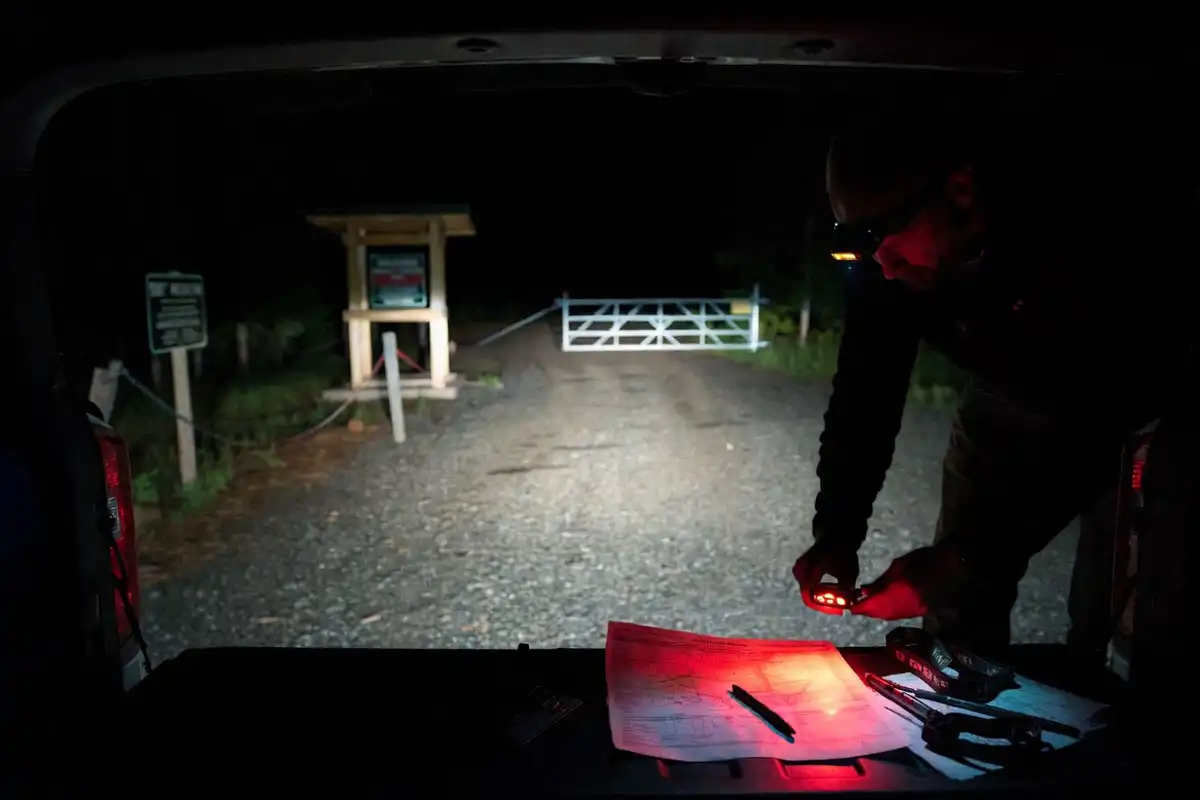
I treat late arrivals like a small drill. The drill keeps noise low and keeps decisions sharp.
- Park in a designated pull-off or near the entrance, not on a loop road.
- Switch your headlamp to a low setting or red mode.
- Pull out your reservation details, campground map, and a pen for self-registration.
- Take a quick restroom break if the bathhouse stays open.
- Fill one bottle if a water spigot sits near the entrance. A small buffer helps when you wake up thirsty. For planning at home, read my guide on how much water to pack per person.
- Pick two open sites as backups, then commit to one site and start setup.
Late-arrival kit: 9 items that speed up setup
These items reduce trips and reduce noise.
- Headlamp with fresh batteries, plus one spare set
- Small lantern for the picnic table or a nearby rock
- Printed reservation details or a screenshot saved offline
- Pen and small bills for self-registration envelopes
- Rainfly or tarp stored at the top of your pack
- Stakes and a simple mallet or rock bag for rocky pads
- One warm layer and dry socks in an easy-to-reach pocket
- Water bottle filled before you enter the loops
- Ready snack that needs no cooking
Step-by-step: choose a site you verify in the dark
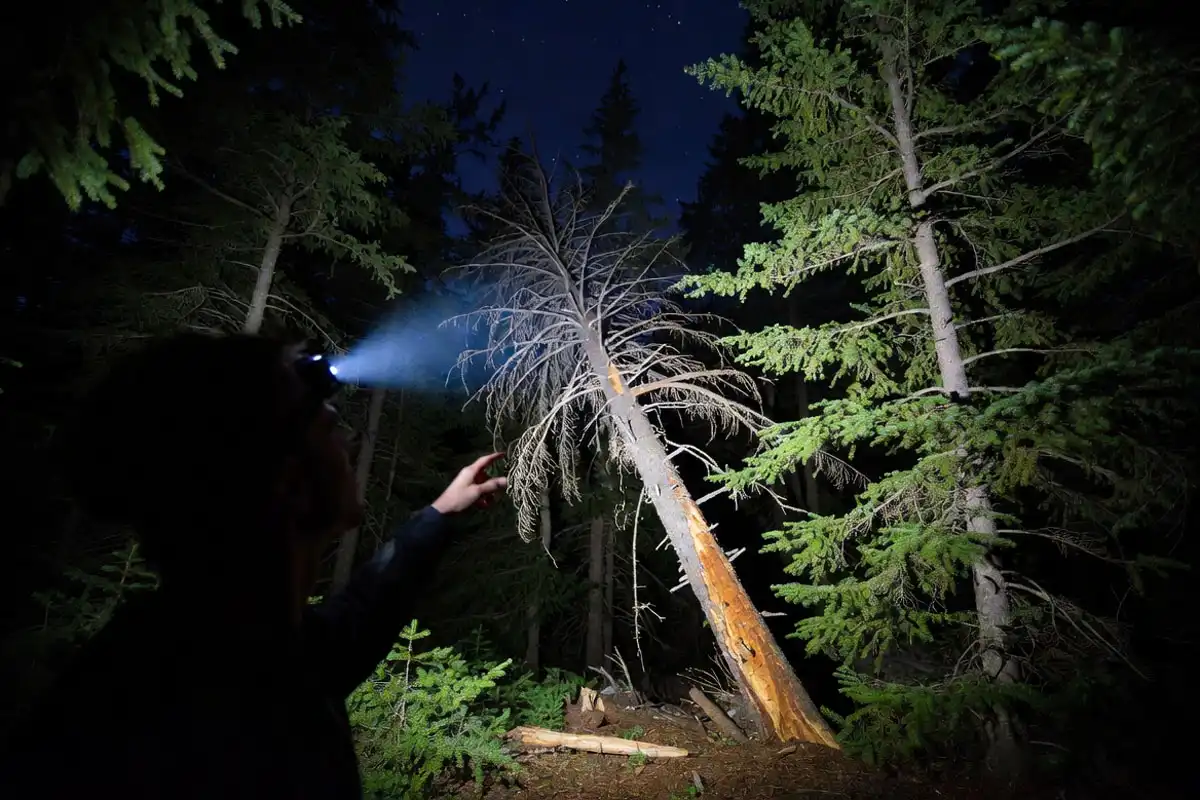
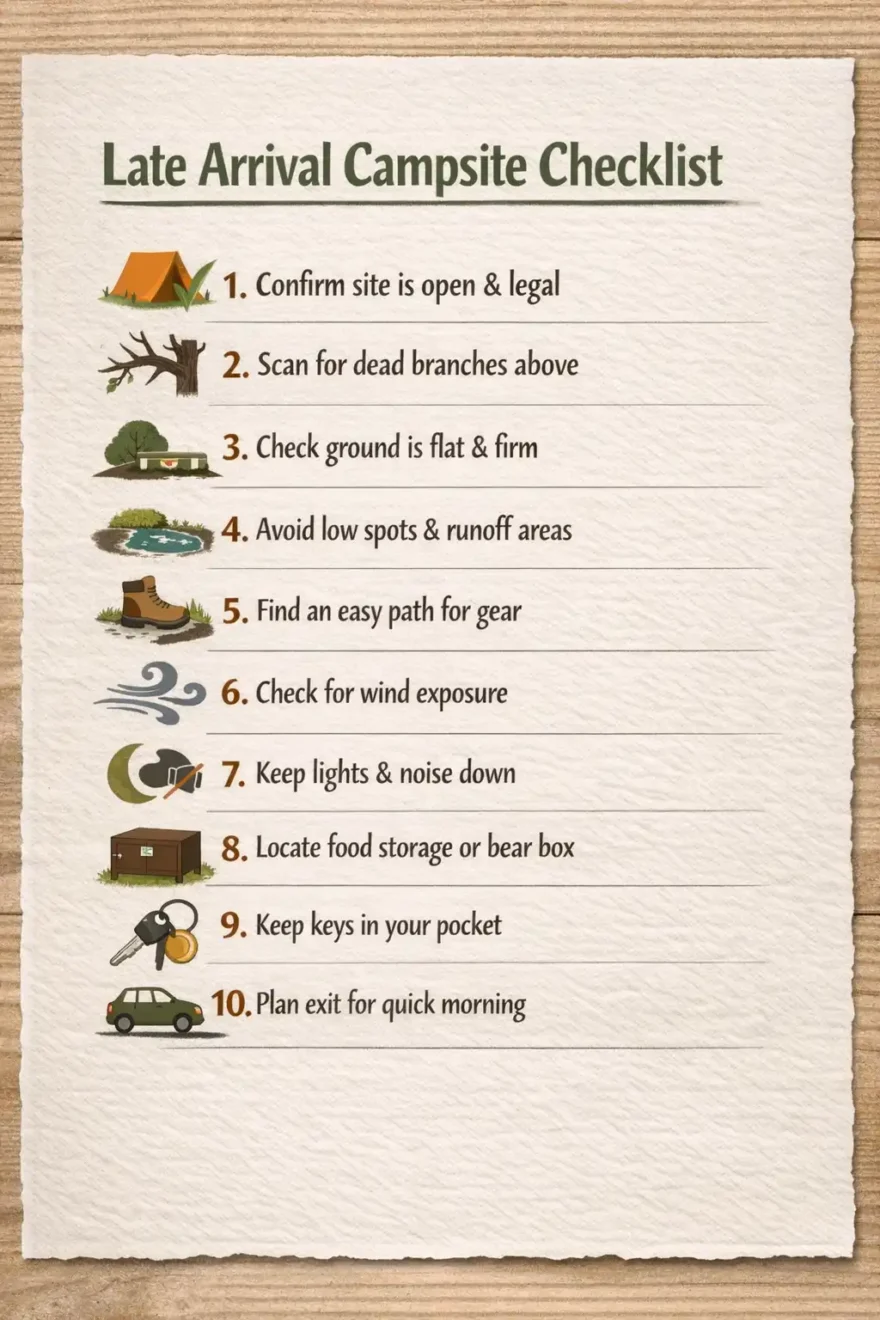
This is the exact order I use. Each step removes one risk before I unload gear.
- Confirm the site is legal and open. Read the site post and the loop signs. Check the reservation board when the campground uses one.
- Scan up for widowmakers. Look for dead branches, split trunks, and leaning trees. Wind and rain increase branch drop.
- Check slope with your feet. Walk the tent area in a slow circle. A small tilt turns into back pain at 2 a.m.
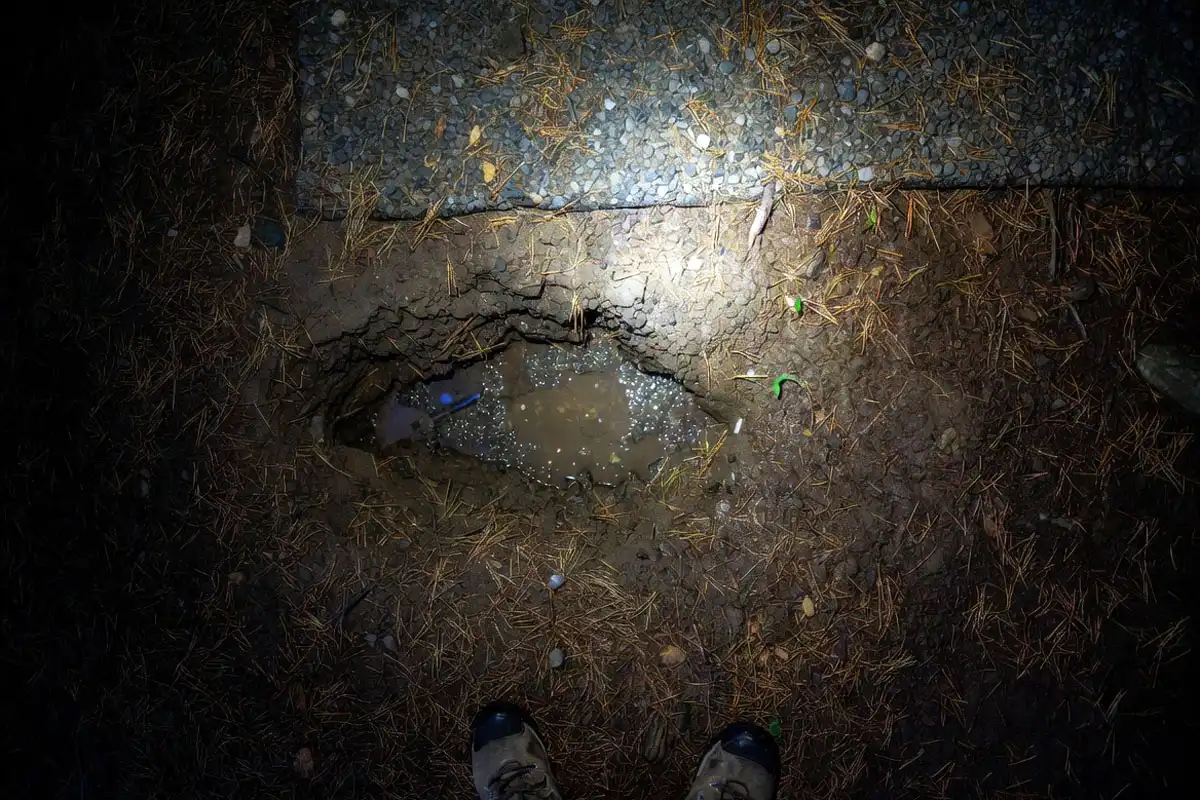
- Read the drainage. Look for shallow channels, hard-packed runnels, or a low bowl where water pools. Pick the high side of the pad.
- Feel the ground surface. Firm soil holds stakes and supports a sleeping pad. Loose sand and soft duff shift under weight.
- Find the easiest access line. Choose a site where you carry gear without stepping over roots or rocks. Fewer trips reduce noise.
- Check wind exposure. A ridgeline and an open shoreline take the full breeze. A site behind shrubs or a small rise cuts flapping fabric.
- Look for lights and late traffic. Avoid sites that face a busy road or point into a bright restroom light. Headlights wake you up.
- Confirm food storage and trash access. Find the bear box, food locker, or trash rules for that loop. Late arrivals still attract raccoons.
- Plan your exit. Park so you leave without backing long distances in the morning. Keep your keys in one pocket.
Quiet setup that respects your neighbors
Late setup works best when it stays boring.
- Use a headlamp on low. Point the beam at your hands and the ground.
- Close car doors with a steady hand, not a slam.
- Skip a full cook session. Eat a ready snack, drink water, and save the hot meal for morning. If you want a compact setup for simple breakfasts, see my picks for campfire cooking kits.
- Keep voices low and avoid music. Sound carries through trees at night.
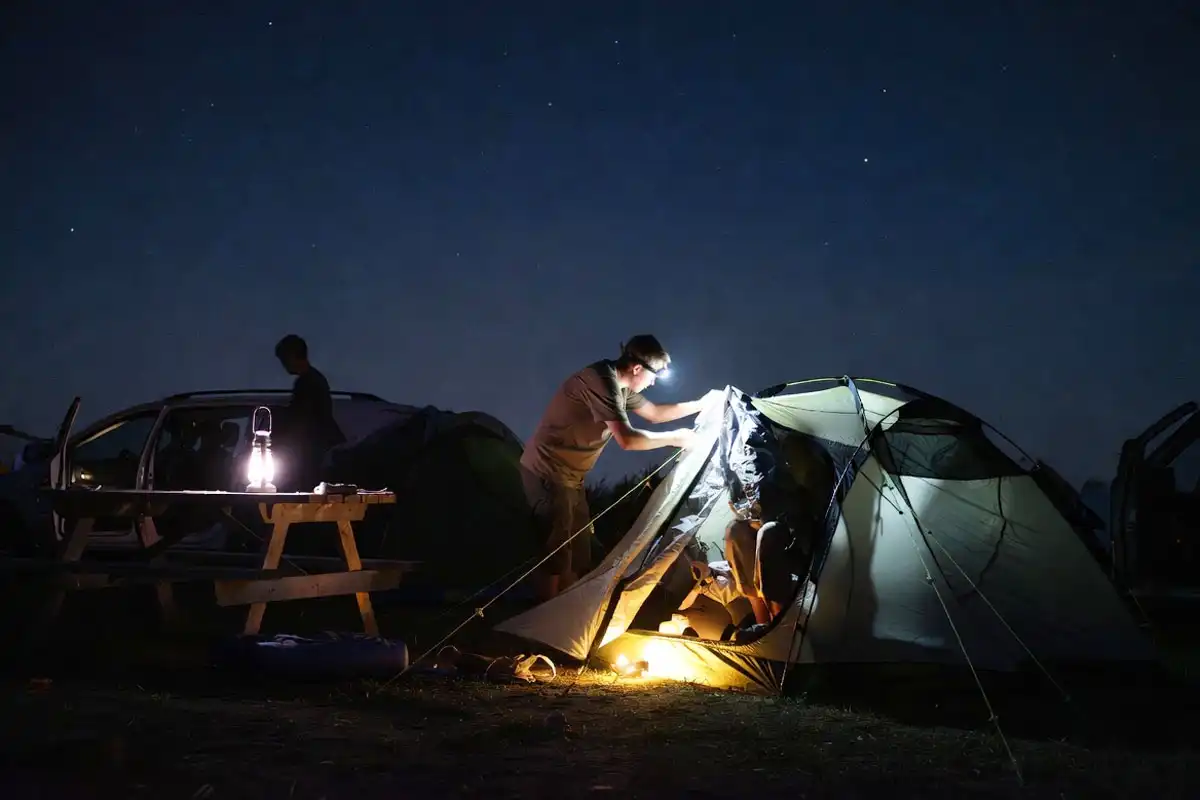
Where to place your tent, hammock, or vehicle
Late arrivals tempt you to drop gear in the first flat patch. Use these placement rules instead.
Tent placement
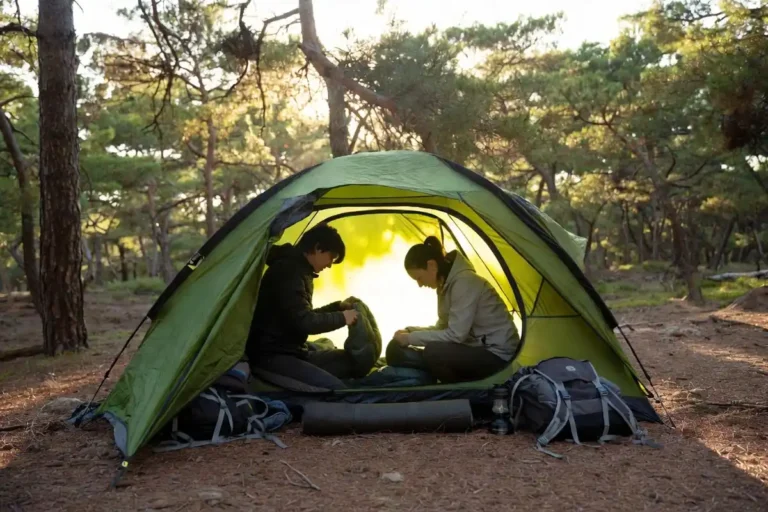
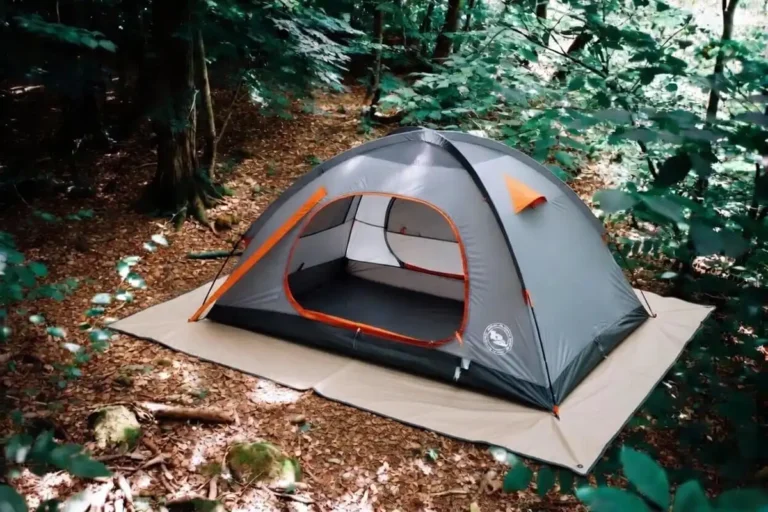
Place the tent on the flattest part of the pad with the door facing away from wind. Aim the door toward your vehicle path so you walk less in the dark.
Keep the tent away from the fire ring and picnic table if you arrive tired. A stumble into metal legs hurts more at night.
Hammock placement
Hang the hammock only when the trees look strong and healthy. Avoid dead snags and trees with loose bark. Use wide straps to protect bark and reduce damage.
Vehicle or RV placement
Back-in sites take patience at night. Use a spotter and slow movements. Pull-through sites reduce stress, especially when fatigue sits in your shoulders.
Keep your exhaust away from tents and sleep areas. Carbon monoxide risk rises when a vehicle idles near fabric walls. Do not sleep with the engine running.
Solutions for common late-arrival situations
The entrance gate is locked
A locked gate usually means vehicle traffic stops until morning. Park only where signs allow overnight parking, then walk in with a headlamp.
If the campground bans overnight parking at the entrance, use the next legal option on your route. A fine or tow ruins the trip faster than a short drive to another stop.
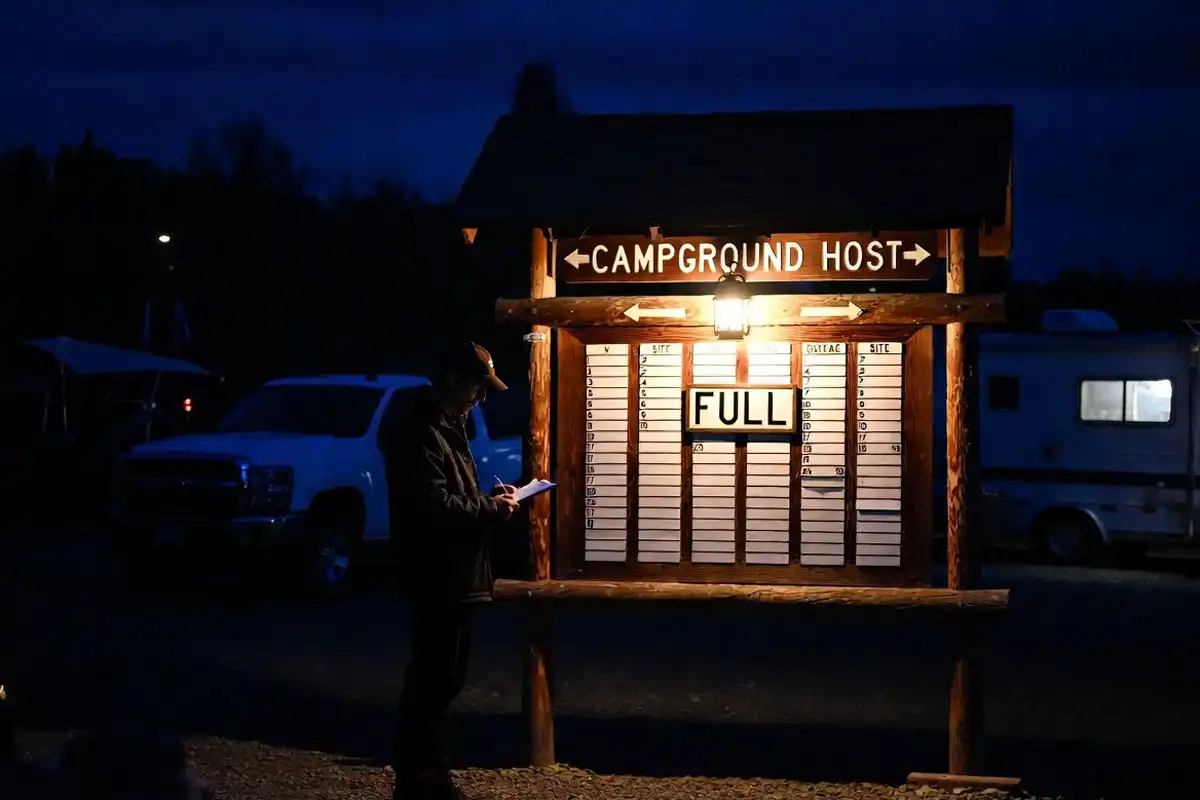
The campground is full
A full campground leaves three safe options.
- Check in with the host when a host site stays staffed. Hosts often know last-minute no-shows.
- Look for an overflow area if the campground posts one.
- Drive to the next legal campground or a town stop that allows overnight parking.
Avoid creating a new site in the trees. That choice breaks rules and damages ground cover.
You cannot find your reserved site
Start at the loop sign and match the site number with a slow drive. Use the map and read site posts with your headlamp, not your headlights.
If the loop feels confusing, park and walk. A short walk often beats repeated driving circles.
Bad weather rolls in
Bad weather changes the priority order. Wind and water take the top spots.
Avoid low bowls and dry creek channels in rain. Avoid isolated tall trees on open ground in lightning. Choose a site with even tree cover and good drainage.
You camp with kids or a tired group
Choose the simplest site, not the prettiest. A close walk to the tent pad and a short path to a restroom helps the group settle fast.
Lay out sleeping gear first. Everyone sleeps sooner when the pads and bags hit the ground early.
You camp with a dog
Pick a site with a clear boundary and low foot traffic. A dog relaxes when late-night walkers do not pass close to the tent.
If your dog claws floors or tracks mud, use a tent with a tougher floor and easy cleanup. My guide to tents that work well with dogs helps you match size and fabric.
Troubleshooting after dark
The tent area feels uneven after setup
Move the tent before you unpack more gear. Rotate the tent 90 degrees and test again. A small change often fixes a slope you missed.
If the pad stays uneven, shift to a different corner of the site. Ask the host about a move in the morning when the campground has openings.
Stakes do not hold
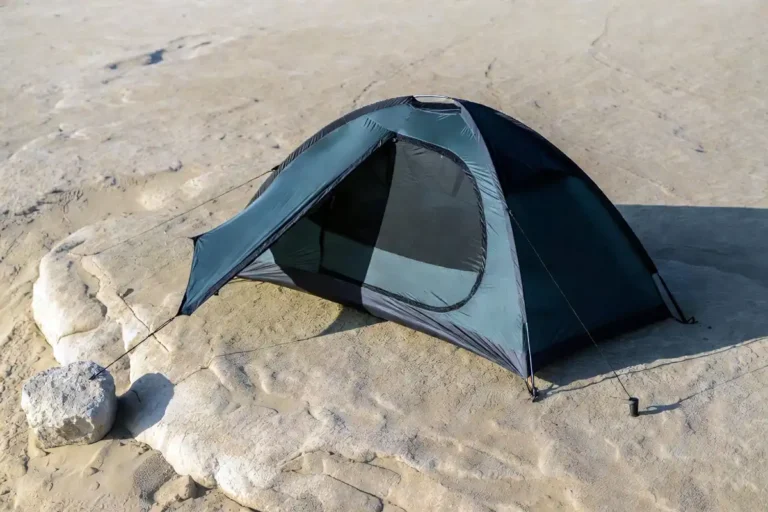
Switch to longer stakes or add a second anchor point with cord. In rocky soil, place the stake in gaps between stones.
In sand, bury a stake sideways as a deadman anchor. Use a small bag filled with sand when stakes fail.
Bugs swarm your headlamp
Turn the light down and aim it low. Bright beams pull insects toward your face.
Set a small lantern away from the tent work area. You work in a dimmer bubble while the bugs hover at the lantern.
The site feels noisy
Noise comes from roads, generators, and late arrivals. If noise repeats every few minutes, the site sits too close to traffic.
Use earplugs if you already set up. Consider a site change after sunrise if rules allow it.
Common mistakes that ruin late-night campsite choices
- Picking the lowest spot in the site because it looks flat. Water finds that spot first.
- Ignoring overhead branches in calm weather. Wind often arrives after midnight.
- Blasting high beams into other campsites while reading a post.
- Cooking a full dinner late and drawing animals close to your tent.
- Unpacking every bag before the shelter stands. Rain and dew soak open gear.
- Leaving food in the car seat or on the picnic table overnight.
Safety notes I follow every late arrival
Drive safety comes first
Fatigue causes more mistakes than darkness. If your focus slips, stop in a legal area and rest.
Keep a paper map or offline map. Cell service drops in many campgrounds.
If a site feels wrong, trust that signal. Move closer to the host, closer to other families, or to a brighter loop.
Lock your vehicle and keep your keys in one pocket. Consistency prevents midnight searches.
Wildlife safety stays active at night
Store food and scented items in the provided system, not in the open. Close the bear box or locker fully.
Keep a small headlamp inside the tent. A quick light reduces panic when you hear a rustle.
Fire safety and light discipline matter
Follow posted fire rules and local bans. Skip a fire on late arrivals. A fire takes time, makes noise, and attracts attention.
Use red or low light when you walk to the restroom. Bright beams wake neighbors and flatten your night vision.
For more backcountry risk skills, browse the Safety Skills section when you plan future trips.
Quick morning reset: improve the site in daylight
Morning light gives you a second chance.
- Recheck overhead branches and dead trees.
- Look at the drainage lines after dew settles.
- Adjust the tent position for shade, wind, and privacy.
- Confirm you follow campground rules for parking and food storage.
- If the site feels wrong, talk with the host before you move.
Conclusion
A late arrival rewards a simple, repeatable process. Pick legality first, then check overhead hazards, then protect yourself from water and slope. Keep setup quiet and basic, and save comfort upgrades for morning. When you follow the same order every time, you spend less energy at night and you wake up safer.