How to Cook a Full Camping Breakfast With Minimal Gear

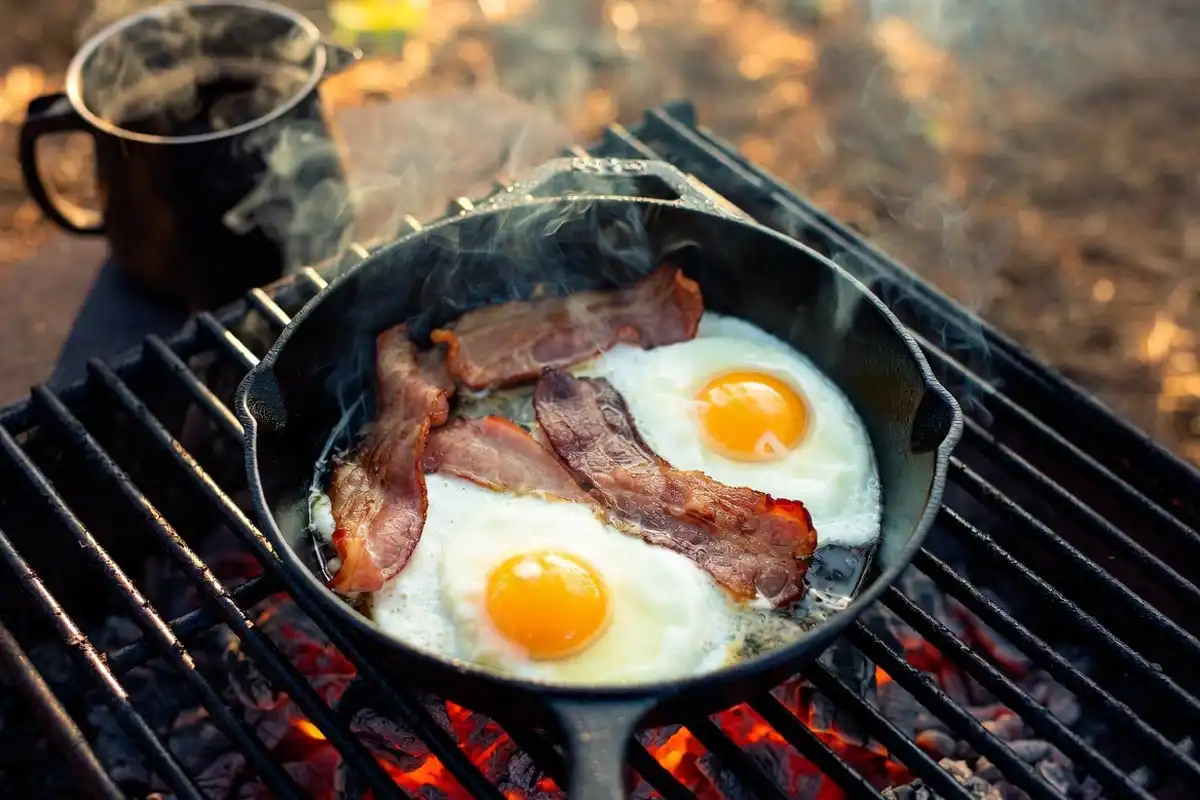
To cook a full camping breakfast, plan on 25 to 30 minutes using three pieces of gear: a cast iron skillet, a small pot, and a fire or camp stove. This guide covers every step from fire setup to plating, including which foods pack well, how to sequence cooking so everything finishes together, and which mistakes cause cold eggs or burnt bacon. I built this workflow over years of cooking at camp in Kaptai and Rangamati, where carrying a lightweight kitchen is non-negotiable.
Cook a full camping breakfast by heating a cast iron skillet over medium flame, starting with bacon or sausage first, then using the rendered fat to fry eggs. Boil water in a small pot alongside for oats or coffee. A sequenced cook takes 25 minutes with one skillet, one pot, and a stable heat source.
What Gear Do You Need for a Minimal Camp Breakfast?
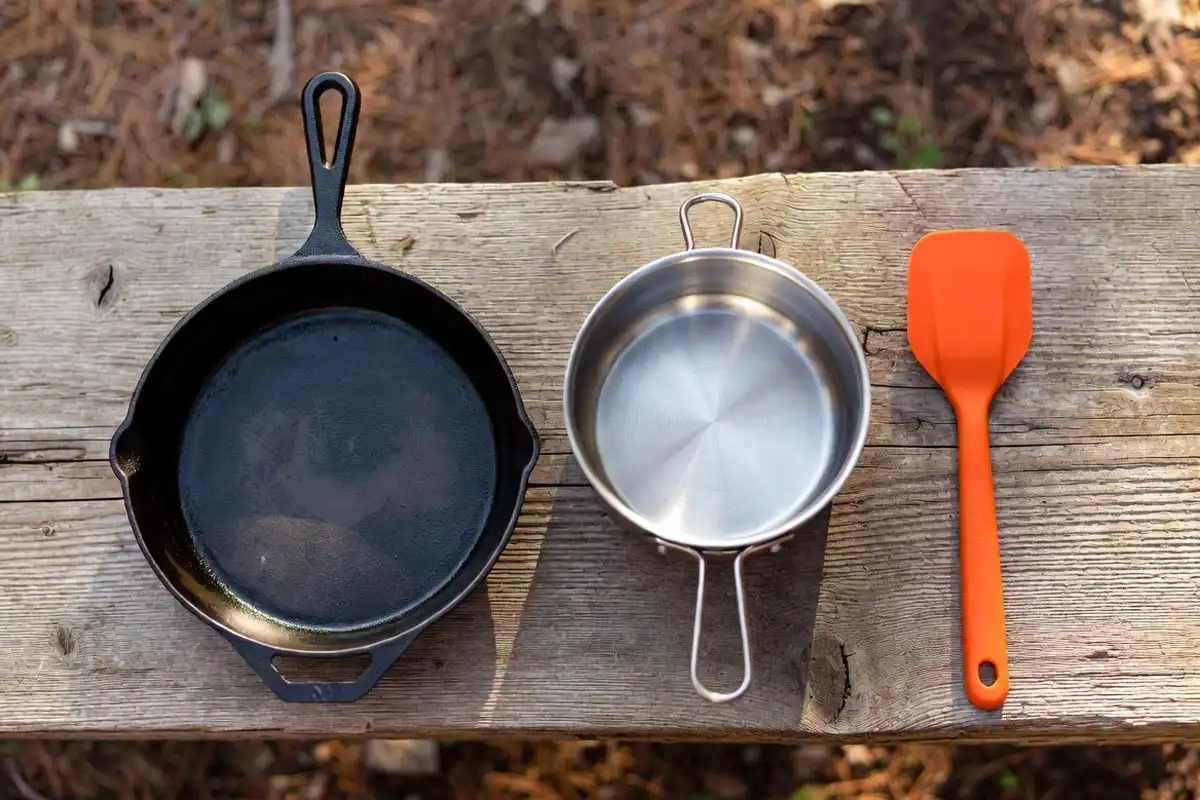
Three pieces of gear handle a complete breakfast: a 10-inch cast iron skillet, a 1-liter pot, and a heat source.
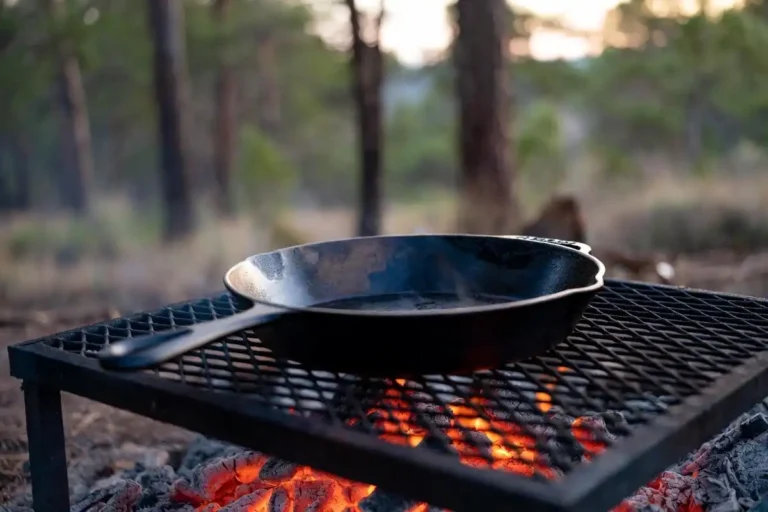
A cast iron skillet distributes heat evenly and handles eggs, bacon, sausage, and toast in one pan. A 1-liter pot boils water for oatmeal, coffee, or tea in under 5 minutes on a hot flame. A two-burner camp stove or an open fire with a flat grate works as the heat source.
Three optional items improve results without adding much weight: a silicone spatula, a skillet lid or foil sheet, and heat-resistant gloves.
I covered what to look for when putting together a full cooking kit in my article on portable campfire cooking kit if you want to check what you already own before packing.
Learn more: Make a Foil Packet Meal Over Campfire Coals
What Foods Work Best for a Full Camping Breakfast?
Good camp breakfast foods meet three criteria: they pack without refrigeration for at least one night, they cook in 10 minutes or less, and they generate minimal cleanup.
Foods that meet all three:
- Eggs (whole in a hard-sided carrier, or pre-cracked into a sealed bottle)
- Bacon or shelf-stable sausage (pre-cooked links reduce raw-meat handling)
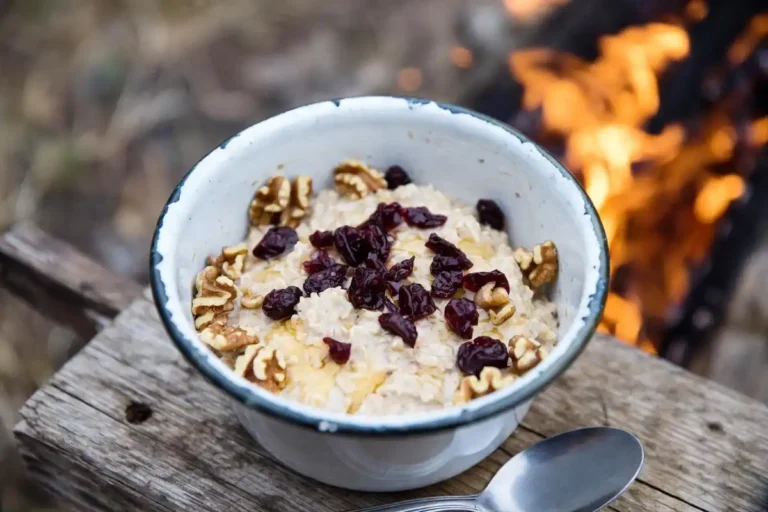
- Instant oats (add boiling water; ready in 3 minutes)
- Bread or tortillas (toast flat on the dry skillet)
- Instant coffee or tea bags
Pre-cracking eggs at home and storing them in a sealed leak-proof bottle reduces breakage risk on the trail. I wrote a full guide on keeping eggs intact during a camping trip worth checking before your first overnight.
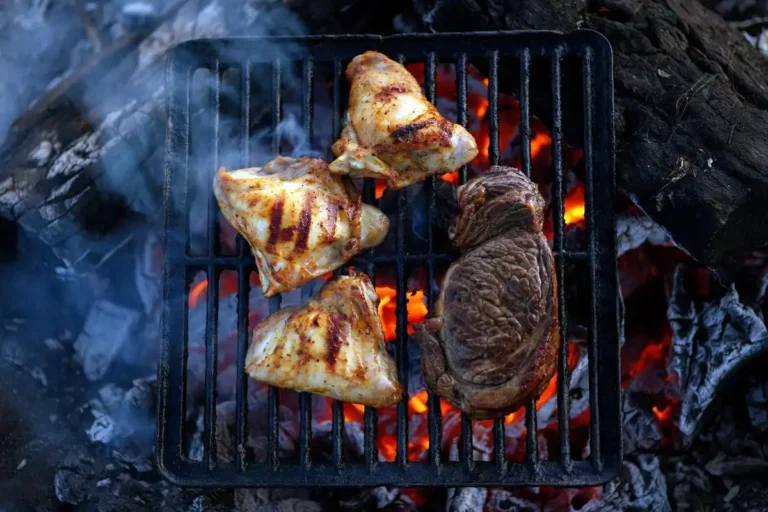
If you prefer cooking directly over coals rather than a grate, I covered which foods cook well directly on campfire coals with safe techniques for each.
How Do You Set Up a Cooking Area at Camp?
A stable, flat surface within 2 meters of your fire pit or stove forms a functional base. Set your stove on level ground before lighting it. Place your skillet, pot, spatula, and food within arm’s reach before you light the flame.
Getting the heat right before any food touches the pan determines the whole outcome. I explained heat management for open-fire cooking in detail in my article on how to regulate heat on a campfire if you’re cooking over wood rather than a stove burner.
How to Cook a Full Camping Breakfast: Step-by-Step
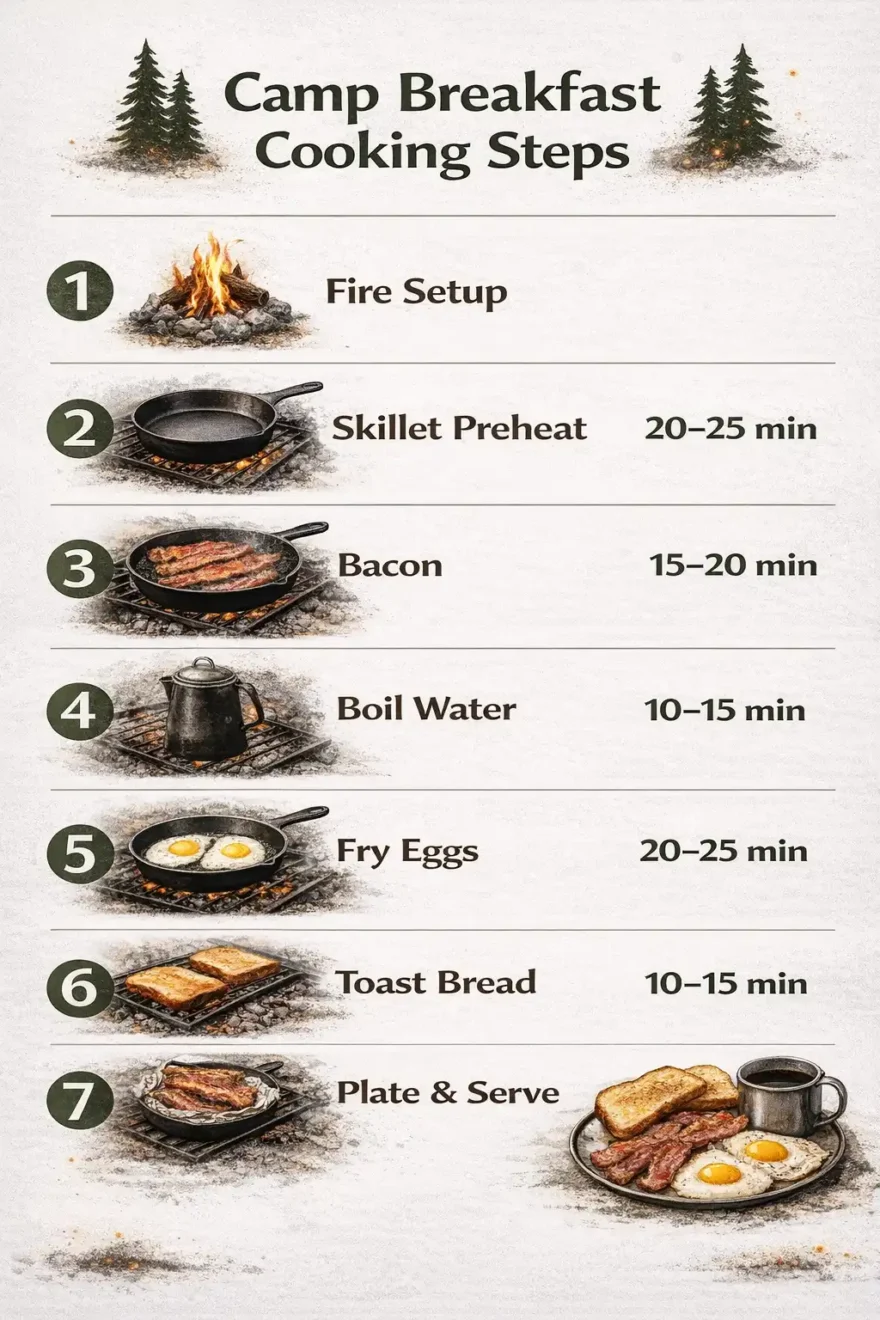
Step 1: Start Your Heat Source (5 Minutes Before Cooking)
Light your camp stove or build a small fire using dry kindling. Let the flame settle into a steady medium heat before placing cookware. A fire with rolling flames burns bacon before the inside cooks through.
Allow coals to form a white ash layer for best heat stability. That takes roughly 15 to 20 minutes from ignition for a wood fire.
Step 2: Preheat the Skillet (2 Minutes)
Place the cast iron skillet on the grate or burner. Let it heat for 90 seconds before adding food. A properly preheated skillet repels sticking without extra oil.
Test heat by flicking 2 drops of water onto the surface. Water that evaporates in under 2 seconds signals the skillet is ready.
Step 3: Cook Bacon or Sausage First (8 to 10 Minutes)
Lay bacon strips flat in the dry skillet. Bacon renders its own fat in 8 to 10 minutes over medium heat. Turn strips once at the 5-minute mark using a spatula.
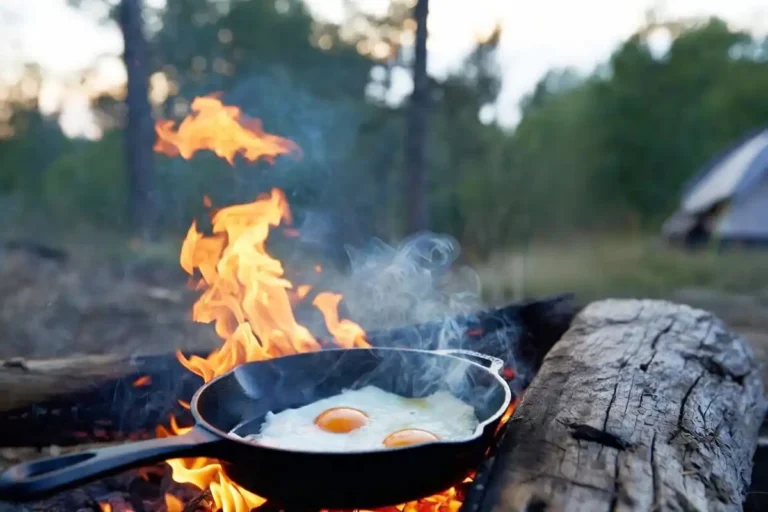
Remove the cooked bacon and rest it on a plate or folded paper towel. Leave the rendered fat in the skillet. That fat serves as the cooking medium for eggs in the next step.
Pre-cooked sausage links take 3 to 4 minutes per side. Raw sausage patties take 5 to 6 minutes per side. For raw pork, I covered internal temperature targets and safe handling in my post on cooking meat over a campfire without getting sick.
Step 4: Boil Water in Parallel (5 Minutes)
While bacon cooks, fill the 1-liter pot and place it on a second burner or directly on hot coals beside the main flame. Water reaches a full boil in 4 to 5 minutes over high heat.
Pour boiling water into instant oat packets, which need a 3-minute steep. Use the same pot for pour-over coffee or instant granules immediately after.
A quality open-fire kettle speeds this step significantly. My review of the best camping kettles for open fire use covers which designs heat fastest on a grate.
Step 5: Fry Eggs (3 to 4 Minutes)
Crack eggs directly into the bacon-fat skillet over medium heat. Eggs set in 2 to 3 minutes. Cover the skillet with a lid or foil sheet to cook the tops without flipping.
- Sunny-side up: lid on, 3 minutes, no touch
- Scrambled: continuous stirring, 2 minutes, no lid needed
- Over easy: flip once at 2 minutes, 30 seconds on second side
Step 6: Toast Bread or Warm Tortillas (2 Minutes)
Place bread flat on the dry skillet after removing eggs. Toast develops in 60 to 90 seconds per side with no oil. Tortillas warm in 30 seconds per side.
Step 7: Plate and Serve in Order
Plate oats first, then bacon, then toast, and add eggs last. Eggs cool faster than anything else on the plate. Serving them last keeps everything at eating temperature at the same time.
A standard plate per person: 2 eggs, 2 bacon strips or 2 sausage links, one oat portion, and one slice of toast.
What Mistakes Ruin a Camp Breakfast?
Cooking everything at once produces uneven results. Bacon takes 8 to 10 minutes; eggs take 3. Starting both at the same time burns eggs before bacon finishes.
Skipping the preheat causes eggs to stick to the iron. Cold cast iron bonds egg protein to the surface within seconds of contact.
Using full flame the entire time dries out eggs and chars the bacon edges. Medium heat produces better results than high heat for every breakfast item.
Not measuring water for oats produces runny or gummy results. Most single-serve instant oat packets require exactly 180 ml (6 oz) of boiling water.
Packing wet eggs in a standard carton increases breakage and creates a cleanup problem. A sealed bottle or hard-sided carrier prevents both.
Safety Notes for Cooking Breakfast at Camp
Keep your stove or fire grate at least 3 meters (10 feet) from your tent. Grease from bacon splashes and ignites tent fabric quickly.
Never leave a heated cast iron skillet unattended. Cast iron retains heat for 15 to 20 minutes after removal from the flame and causes burns on contact.
Store raw eggs below 4°C (40°F) or cook them within 12 hours of cracking them into a container at ambient temperature. Bacteria in raw egg doubles every 20 minutes above 4°C.
Dispose of cooking grease in a sealed container and pack it out. Pouring grease on the ground attracts wildlife to your campsite.
FAQs: Cook a Full Camping Breakfast With Minimal Gear

Can you cook a full camping breakfast without a camp stove?
Yes. An open fire with a flat grate or a set of stable campfire rocks supports a cast iron skillet and pot. A fire with settled coals at medium heat performs the same function as a stove burner. Allow 15 to 20 minutes for the fire to develop cooking-level coals before placing cookware.
What is the easiest camping breakfast with one pan?
Scrambled eggs on toast requires only a skillet and a spatula. Crack 2 to 3 eggs into a preheated, greased pan, stir continuously for 2 minutes over medium heat, and serve on bread toasted in the same pan. Total time runs about 8 minutes.
How do you keep eggs from breaking while camping?
Store whole eggs in a hard-sided egg carrier rated for camping use. Alternatively, crack eggs at home and transfer them to a sealed, leak-proof bottle. A properly sealed bottle survives a 12-hour pack without spillage and allows faster cooking with no shell handling at camp.
How long does a camp breakfast take from fire to plate?
A sequenced camp breakfast takes 25 to 30 minutes from lighting the fire to serving. This includes 15 to 20 minutes of fire building and preheat, 8 to 10 minutes of bacon cooking, and 3 to 5 minutes for eggs and toast. A camp stove cuts fire build time and brings the total to 20 to 25 minutes.
How do you clean a cast iron skillet while camping?
Wipe the skillet clean with a dry cloth or paper towel while it is still warm. Add a small amount of water if residue sticks, heat it briefly to loosen, then wipe dry. Avoid soap on cast iron; soap strips the seasoning layer that prevents sticking. Dry the skillet completely before storing to prevent surface rust.
Conclusion
A full camping breakfast does not require a full kitchen. One cast iron skillet, one pot, and a steady flame produce eggs, bacon, oats, toast, and coffee in under 30 minutes. Start with bacon, boil water in parallel, follow with eggs, then toast. Keep heat at medium, preheat the skillet before adding food, and sequence your cook so every item finishes at the same time. That covers everything from first flame to last sip.