How to Cook Eggs at Camp Without a Pan Using Simple Tools

ggs cook well at camp even when your pan cracks or stays home. This guide covers five practical methods for cooking eggs over a campfire or camp stove using foil, a tin can, a flat rock, or boiling water. I’ve used all of these on trips across the Rangamati hills and on longer backcountry routes. You’ll learn which method fits your setup, how to control heat, and what mistakes cause rubbery or undercooked eggs.
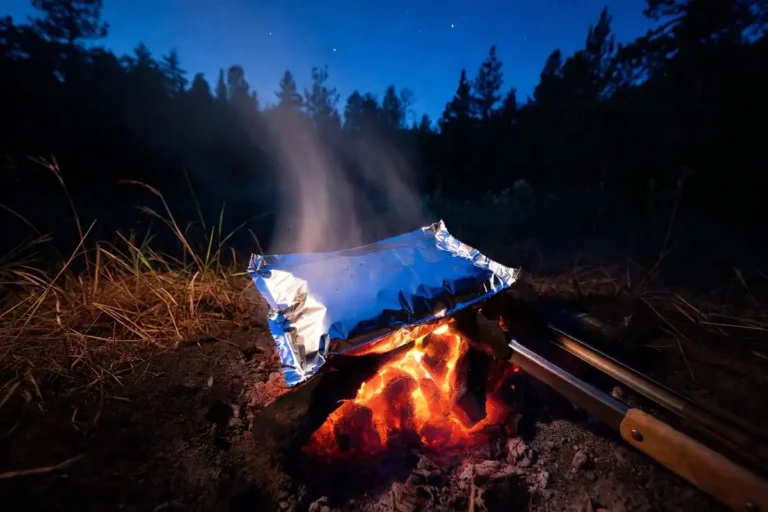
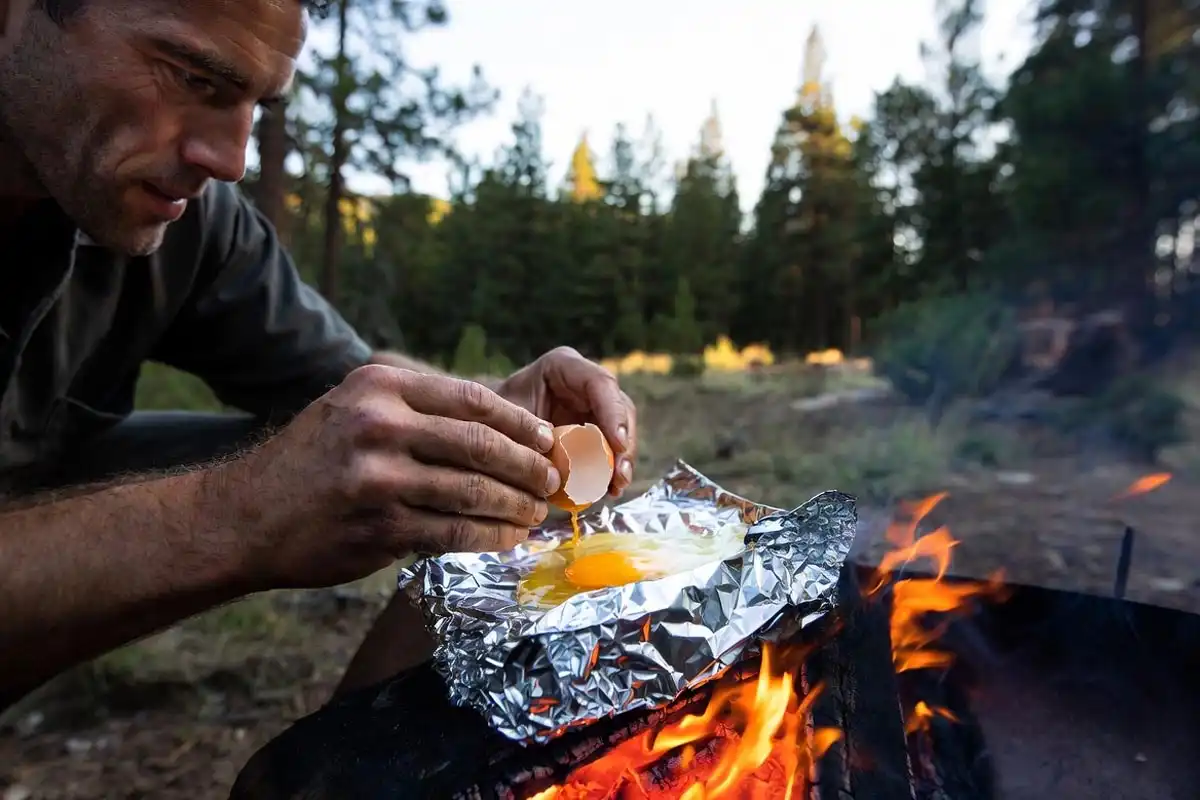
The fastest pan-free method is a foil packet. Crack 2 eggs onto a double-layered foil square, add a pinch of salt, fold the edges tightly, and set it on medium campfire coals for 4 to 5 minutes. A tin can placed on a camp stove grate serves as a direct pan substitute for scrambled eggs.
Why Do Camp Pans Crack or Break?
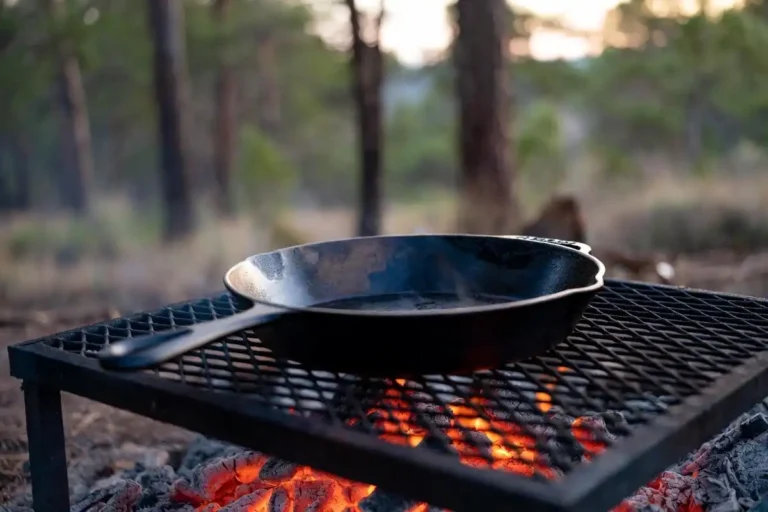
Thin aluminum camp pans crack from thermal shock. Thermal shock happens when a hot pan contacts cold water, cold food, or a cold surface.
Cast iron doesn’t crack from heat, but it chips if dropped on rock. Enamel-coated pans develop surface fractures over repeated high-heat cycles outdoors.
The most common camp scenario: you pour cold water into a hot aluminum pan to clean it. The rapid temperature change splits the base or warps the sides. A cracked pan leaks. Scrambled eggs run into the fire.
What You Need Before You Start
You don’t need a pan. You need three things:
- Heat source — campfire coals, a camp stove, or a grill grate
- A container — heavy-duty foil, a clean tin can, or a flat dry rock
- Fire control — steady medium heat, not high flame
I covered heat management in depth in an article on regulating campfire heat for cooking. That guide applies directly here.
5 Methods to Cook Eggs at Camp Without a Pan
Method 1: Foil Packet Eggs (Most Reliable)
What it works for: scrambled eggs, fried-style eggs, egg and vegetable mixes
What you need: heavy-duty aluminum foil, campfire coals or a grill grate
Steps:
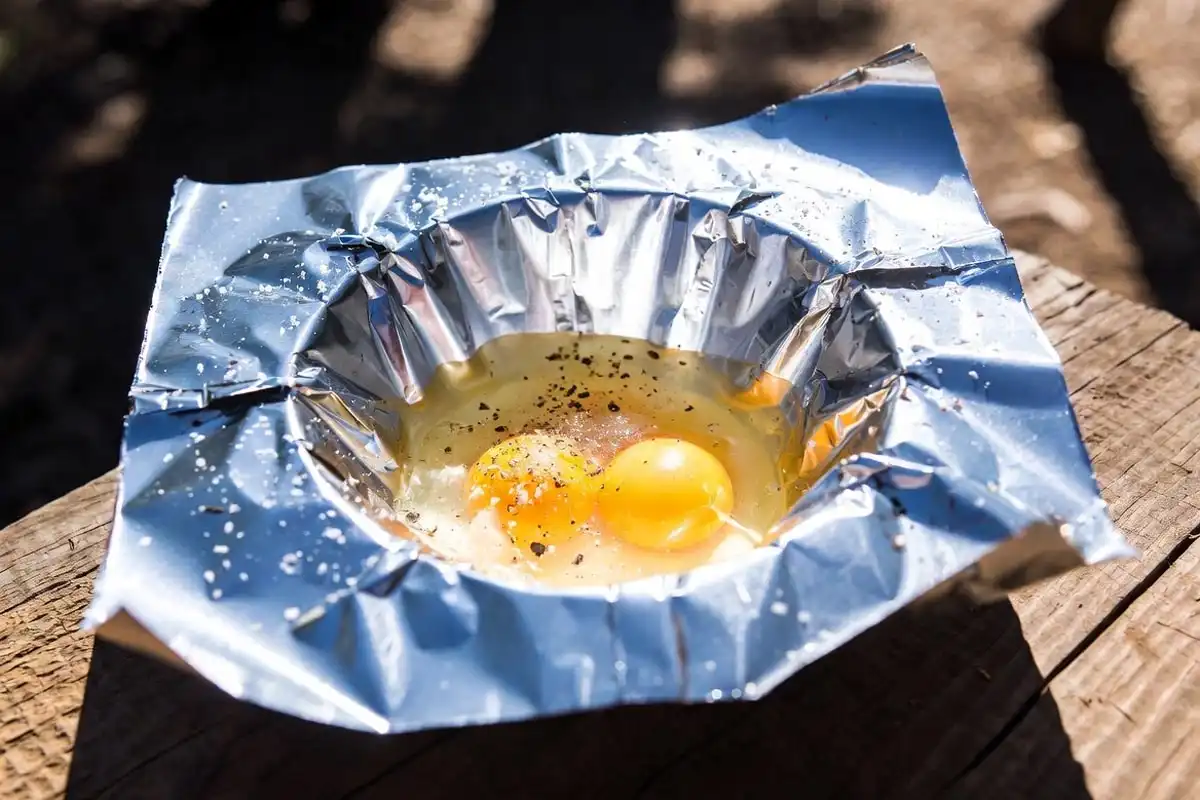
- Tear two sheets of heavy-duty foil, each about 30 cm square.
- Stack them to create a double layer. This prevents burning through.
- Press the center down to form a shallow bowl shape.
- Lightly coat the center with a small amount of cooking oil or butter.
- Crack 2 eggs directly into the foil bowl.
- Add salt, pepper, and any chopped vegetables.
- Fold the foil edges up and over to seal the packet completely.
- Set the packet directly on medium campfire coals or on a grill grate.
- Cook for 4 to 5 minutes for soft eggs, 6 to 7 minutes for fully set eggs.
- Remove using tongs. Let the packet cool for 30 seconds before opening.
Check: The packet feels firm when pressed gently. No liquid sloshes inside.
Outcome: Eggs steam inside the foil. The texture is soft and moist, similar to poached eggs.
Method 2: Tin Can Scrambled Eggs (Best Pan Substitute)
What it works for: scrambled eggs, beaten eggs with mix-ins
What you need: an empty clean tin can (400 ml or larger), a camp stove or fire grate
Steps:
- Remove the lid fully. Remove any paper label.
- Rinse and dry the can completely. Residue from canned food burns and taints the eggs.
- Place the can on a camp stove or balanced on two rocks over low coals.
- Add a small amount of oil or butter. Let it heat for 30 seconds.
- Crack 2 to 3 eggs into the can.
- Stir continuously with a long fork or a stick whittled flat.
- Remove from heat when eggs look 80% set. Residual heat finishes cooking.
- Eat directly from the can or tip onto a plate.
Check: Eggs pull away from the can walls cleanly. No wet liquid pools at the bottom.
A well-stocked campfire cooking equipment includes at least one set of long tongs, which makes handling a hot tin can much safer.
Method 3: Flat Rock Eggs (No Equipment Needed)
What it works for: fried eggs, over-easy eggs
What you need: a flat, dry, non-porous rock at least 20 cm wide
Steps:
- Select a rock with a smooth, flat surface. Avoid porous rocks such as sandstone and granite with visible holes. Trapped moisture in porous rock expands under heat and causes the rock to fracture or crack.
- Place the rock near the fire for 10 to 15 minutes to heat gradually. Do not put it directly in the flames at first.
- Move the rock over medium coals once it feels hot to hand-hover (2 to 3 seconds tolerance).
- Rub a small amount of fat across the surface using a cloth or folded paper.
- Crack the egg directly onto the rock surface.
- Cook for 3 to 4 minutes undisturbed. The white sets from the bottom up.
- Flip once if you prefer a firmer yolk.
Check: The egg white turns fully opaque with no translucent patches.
Important: Let the rock cool slowly after cooking. Pouring water on a hot rock causes the same thermal shock that cracks camp pans.
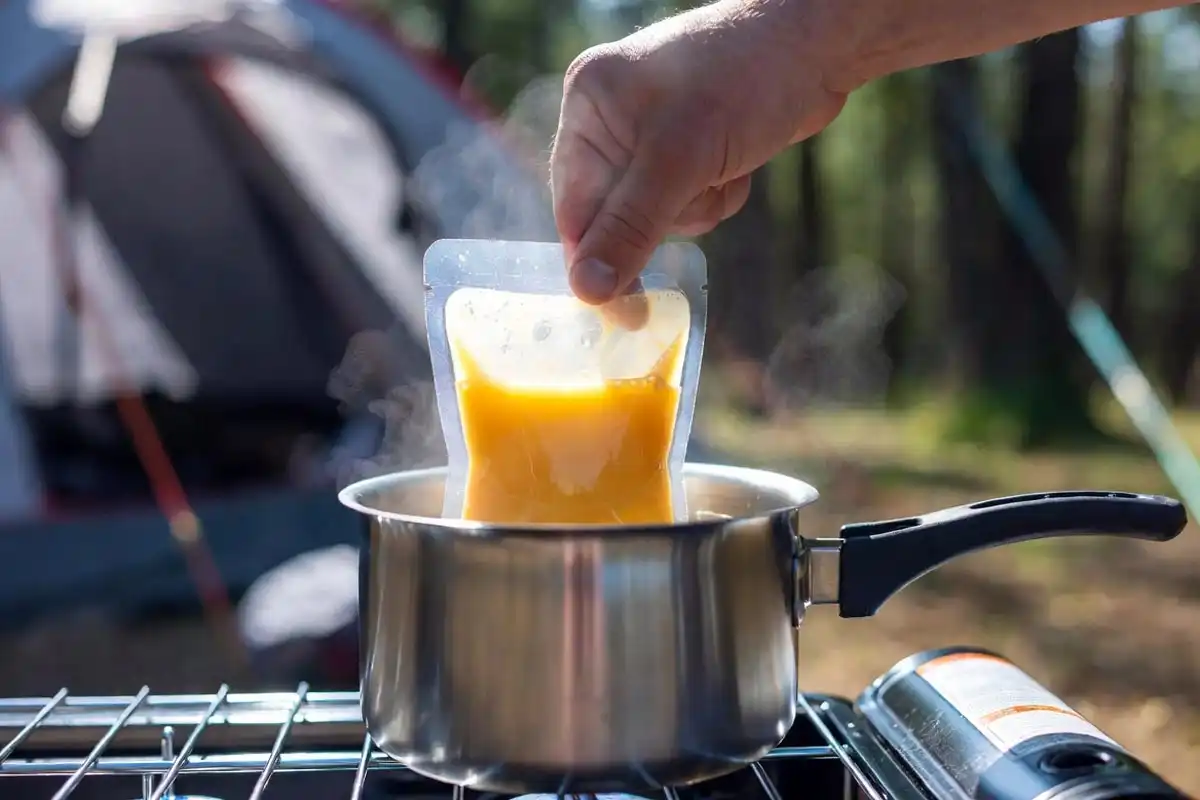
Method 4: Boil-in-Bag Eggs (Cleanest Method)
What it works for: scrambled eggs, soft egg mixes for groups
What you need: a heat-safe zip-lock bag or a dedicated boil bag, a pot of boiling water
Steps:
- Crack 2 eggs into the bag.
- Add salt and any seasoning or pre-chopped vegetables.
- Seal the bag, removing as much air as possible.
- Lower the bag into a pot of boiling water.
- Submerge fully. The bag should not float above the water line.
- Boil for 10 to 12 minutes.
- Remove the bag with tongs. Open and eat directly from the bag or squeeze contents onto a plate.
Check: The egg mixture feels solid and no longer jiggles when you press the outside of the bag.
Note: Use only bags labeled food-safe for boiling. Standard zip-lock bags tolerate boiling water temperatures without releasing harmful compounds according to the manufacturer’s specifications, but thin sandwich bags do not.
Method 5: Orange Shell Eggs (Good for Groups and Kids)
What it works for: scrambled or baked eggs over coals
What you need: a large orange, campfire coals
Steps:
- Slice the top third off an orange.
- Scoop out the pulp completely, leaving the shell intact.
- Crack 1 to 2 eggs into the orange shell.
- Add salt and any mix-ins.
- Place the orange shell directly on medium campfire coals.
- Cook for 6 to 8 minutes until the egg sets.
- Eat directly from the shell.
Check: The egg white holds its shape when you tilt the shell slightly.
The orange shell provides slight acidity to the egg flavor. It’s a method I covered briefly when writing about foods you can cook directly on campfire coals.
How to Control Heat for Each Method
Heat control determines whether eggs cook through or burn on the outside while staying raw inside.
| Method | Heat Level | Time |
|---|---|---|
| Foil packet | Medium coals | 4 to 7 minutes |
| Tin can | Low to medium stove | 3 to 5 minutes |
| Flat rock | Medium coals | 3 to 4 minutes per side |
| Boil-in-bag | Full boil | 10 to 12 minutes |
| Orange shell | Medium coals | 6 to 8 minutes |
Medium coals glow orange with a light layer of white ash on the surface. High flame coals glow bright red with no ash. High flame burns egg whites instantly while leaving the yolk raw.
Common Mistakes to Avoid
Using single-layer foil. Single foil tears over direct coals. The egg drains into the fire. Always double-layer.
Skipping the fat layer. Eggs stick to dry tin cans and rocks. A thin layer of oil prevents tearing when you remove the egg.
Using a cold rock. A cold rock placed directly on high heat fractures. Heat rocks gradually, starting near the fire rather than on it.
Sealing the bag with air inside. Air insulates the egg from the boiling water and extends cooking time unevenly. Squeeze the bag flat before sealing.
Opening a foil packet immediately. Steam inside the packet continues cooking the egg after you remove it from the coals. Wait 30 seconds to avoid a burst of steam on your face.
Cooking on high flame. High flame scorches the egg exterior while the center stays liquid. Use medium coals for all five methods.
Food Safety at Camp
Eggs carry Salmonella bacteria on the shell surface and occasionally inside the egg. Proper cooking temperature eliminates this risk. Eggs reach food-safe temperature at 71°C (160°F) internal temperature.
At camp, you reach this temperature when the egg white is fully opaque and no longer jiggles or runs. The yolk surface develops a light film when the egg approaches a safe temperature.
If you packed raw eggs for the trip, keep them in a sealed container in the coldest part of your cooler. Cracked shells let bacteria enter the egg interior. Discard any egg with a cracked shell that you did not crack yourself at the moment of cooking.
I covered safe food handling in more detail in my guide on cooking meat safely over a campfire. The same temperature principles apply to eggs.
FAQs abou Cook Eggs at Camp Without a Pan

Can you cook eggs directly on campfire coals without any container?
No. Raw egg runs between the coals and burns before it cooks through. You need a container such as foil, a tin can, or a flat rock to hold the egg in place.
Does a flat rock make eggs taste different?
A smooth, clean rock does not change egg flavor. A porous or dirty rock transfers mineral residue and ash to the egg surface. Choose a smooth rock and rub it clean before heating.
How do you keep foil packet eggs from getting rubbery?
Remove the packet from coals when the egg looks 80% set. The trapped steam inside finishes cooking the egg in about 30 seconds off the heat. Overcooking inside sealed foil produces rubbery, dry eggs.
What type of foil works best for campfire eggs?
Heavy-duty aluminum foil, doubled. Standard kitchen foil tears on sharp coal edges. Heavy-duty foil tolerates direct coal contact without puncturing.
Can you reuse a tin can for cooking eggs the next morning?
Yes, if you clean and dry it after the previous use. Food residue left in a hot can burns onto the surface and taints the next meal. Rinse the can and let it dry completely before storing it.
Conclusion
A cracked pan at camp doesn’t end breakfast. Foil packets, tin cans, flat rocks, boil-in-bags, and orange shells all cook eggs completely without a pan. The foil method works fastest and cleans up with no effort.
The tin can method comes closest to using an actual pan on a stove. Choose the method that matches what you have at camp, control the heat level carefully, and pull the eggs off before they look fully done. Residual heat finishes the job every time.