How to Cook Fish You Catch at Camp Without a Frying Pan
You can cook fresh-caught fish at camp without a frying pan using foil packets, a stick skewer, hot coals, or a camp pot. Each method needs a campfire and supplies you likely carry already. This guide covers pan-free cooking methods, fish prep, seasoning, doneness checks, and safety steps.
Wrap cleaned, seasoned fish in aluminum foil and place it on hot coals for 10 to 15 minutes. You can also thread a whole fish onto a sharpened green stick and rotate it over embers. Both methods cook fish evenly without a pan.
How to Clean Your Catch Before Cooking
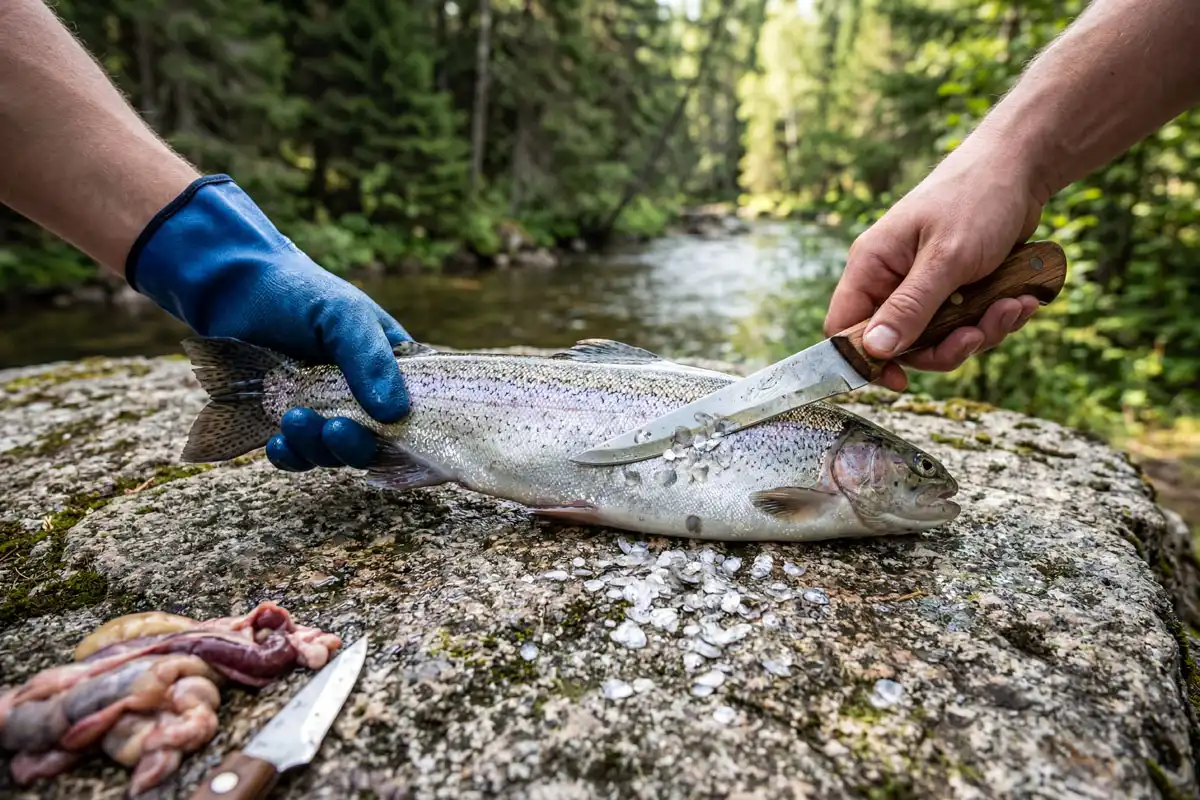
Rinse the fish in clean water. Scrape scales off from tail to head using the back of a knife. Cut a slit along the belly from the vent to the gills and pull out the entrails.
Rinse the cavity until no blood remains. Leave the skin on for stick roasting or coal cooking. The skin protects the flesh and holds the meat together over heat.
For foil packets or boiling, fillet the fish by sliding your knife along the backbone. Remove pin bones with your fingers. Wash your hands before and after handling raw fish.
How to Cook Fish in Foil Packets
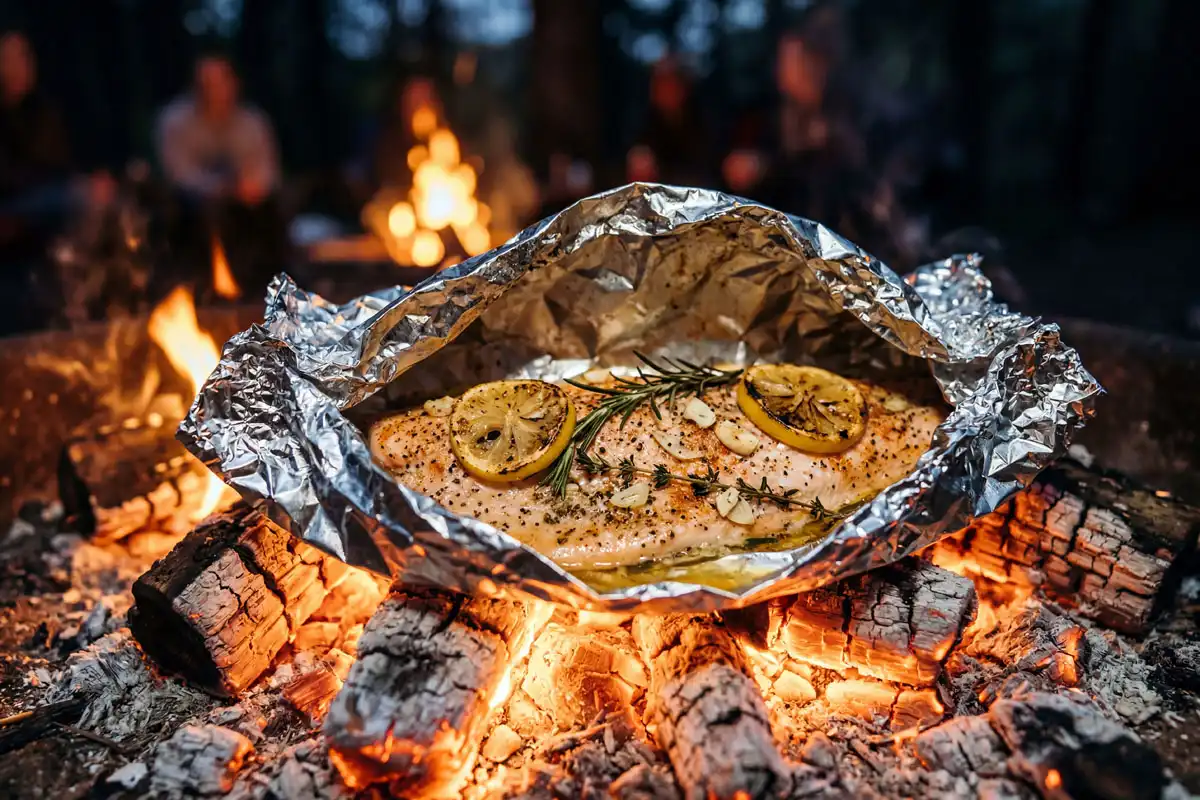
Foil packet cooking is the easiest pan-free method. It steams fish inside sealed aluminum foil, keeps the flesh moist, and makes cleanup simple.
Step 1: Gut, scale, and rinse your catch. Pat dry with a cloth.
Step 2: Rub salt, pepper, and lemon juice inside the cavity and on both sides. Add garlic slices or herbs if you have them. A thin coat of oil or butter prevents sticking.
Step 3: Place the fish on an 18 x 18 inch sheet of heavy-duty foil. Fold the foil over and double-fold the edges to seal. Leave a small air pocket so steam circulates.
Step 4: Place the packet on hot coals (no open flames) or a grate 6 to 12 inches above embers. Cook 10 to 15 minutes. Flip once halfway through.
Step 5: Open one corner carefully. The fish is done when the flesh turns opaque and flakes with a fork.
If you need help getting a campfire going in damp conditions, I wrote a guide on that.
How to Cook Fish on a Stick Over a Campfire
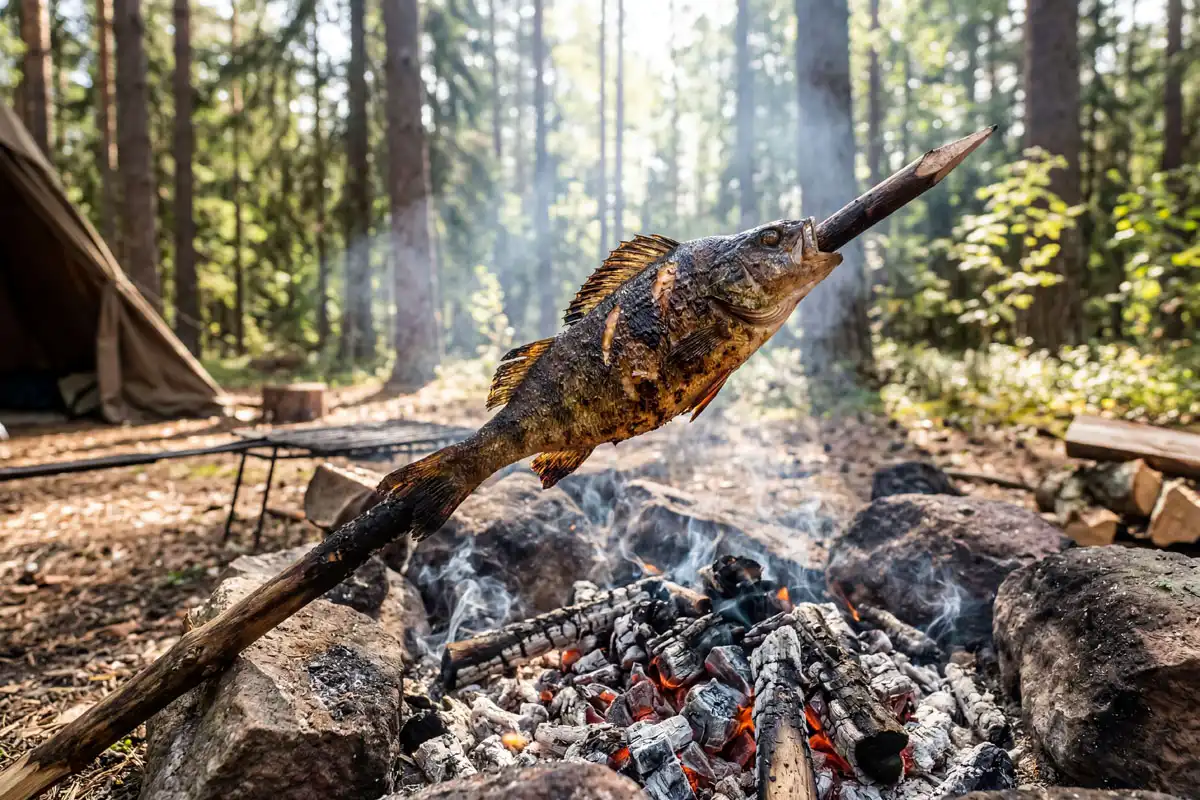
This method works best for small to medium whole fish like trout, perch, and bluegill.
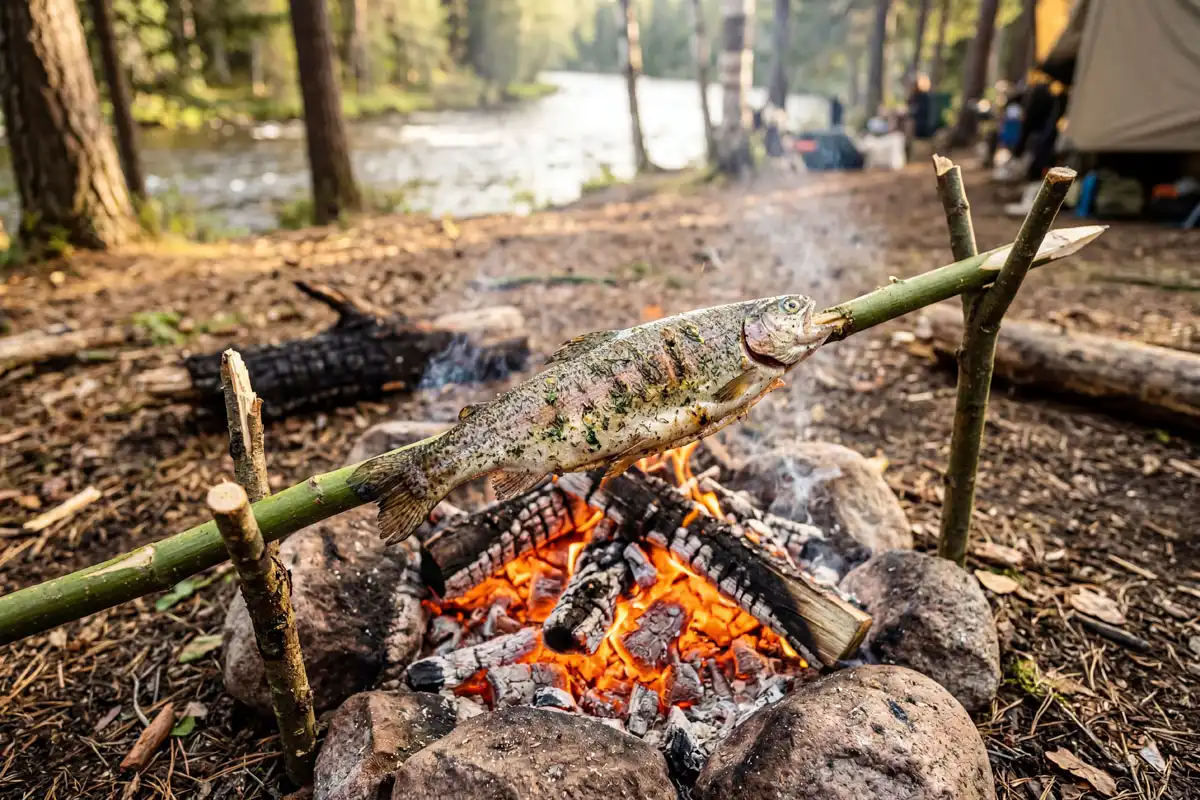
Find a fresh green hardwood branch about 3 feet long. Sharpen one end. Avoid pine and spruce because the resin leaves a bitter taste.
Push the sharpened end through the fish’s mouth, through the body cavity, and out near the tail. Tie the fish to the stick with wet string so it does not spin.
Prop the stick at an angle so the fish hangs 6 to 10 inches above hot embers. Turn a quarter rotation every 3 to 4 minutes. A whole trout takes about 10 to 15 minutes. The fish is ready when the skin crisps and flesh pulls from the bone.
Season the inside before cooking. Season the outside after.
How to Cook Fish Directly on Hot Coals
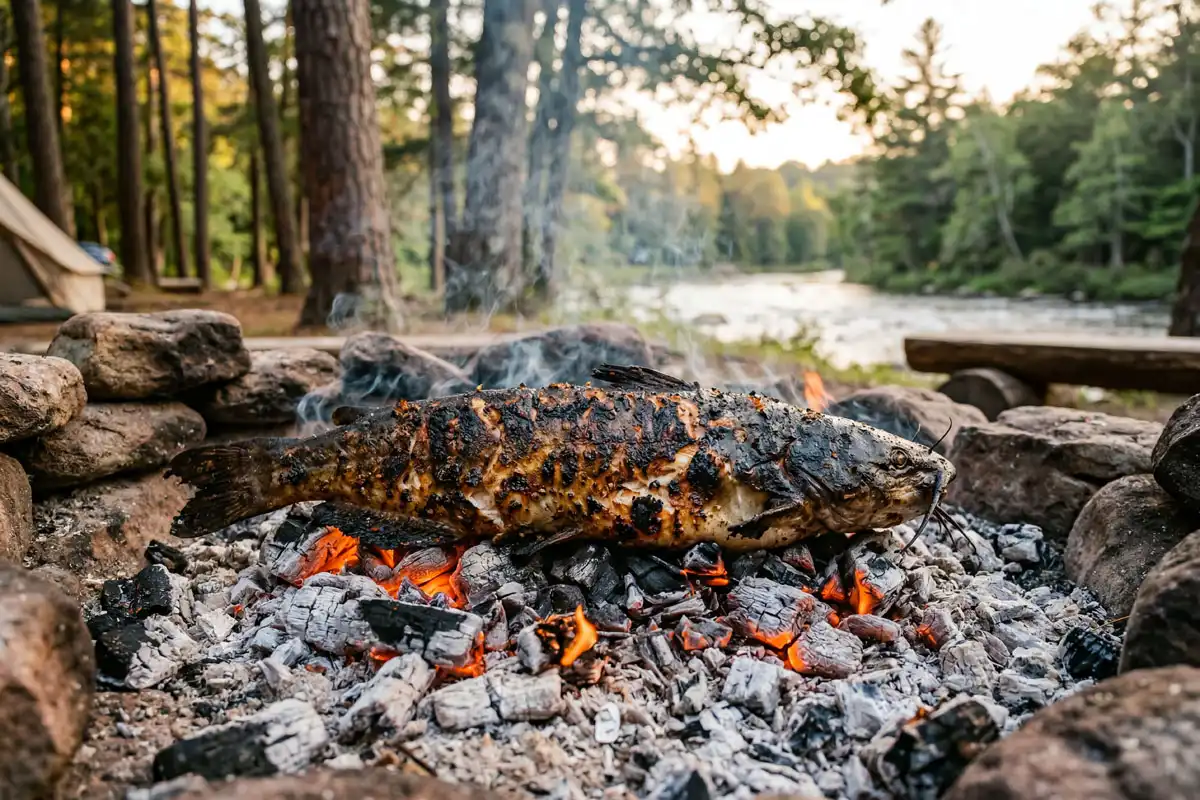
This method produces a smoky char and works for whole fish with thick skin, such as catfish or bass.
Scale and gut the fish but leave the skin on. Season the cavity with salt and pepper. Let the fire burn to a uniform bed of gray-white embers with no flames.
Place the fish directly on the coals. Cook 4 to 6 minutes per side. The outer skin will char. Peel it off to reveal clean, cooked flesh underneath.
I covered more detail on cooking food directly over campfire coals in a separate post.
How to Smoke Fish at Camp Using a Simple Setup
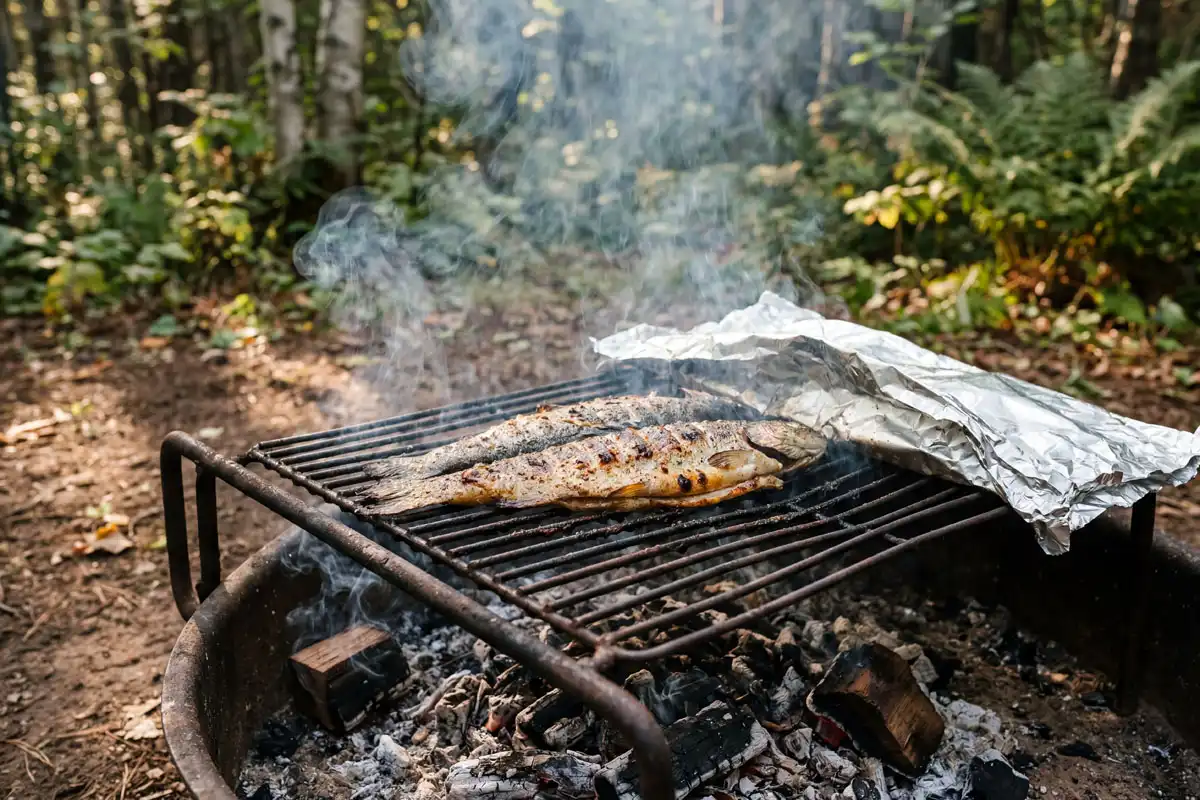
Smoking takes 2 to 3 hours but adds deep flavor and partially preserves the fish.
Butterfly your cleaned fish and season with salt and pepper. Build a small fire with hardwood like hickory, maple, or alder. Let it burn down to low coals and spread them in a thin layer.
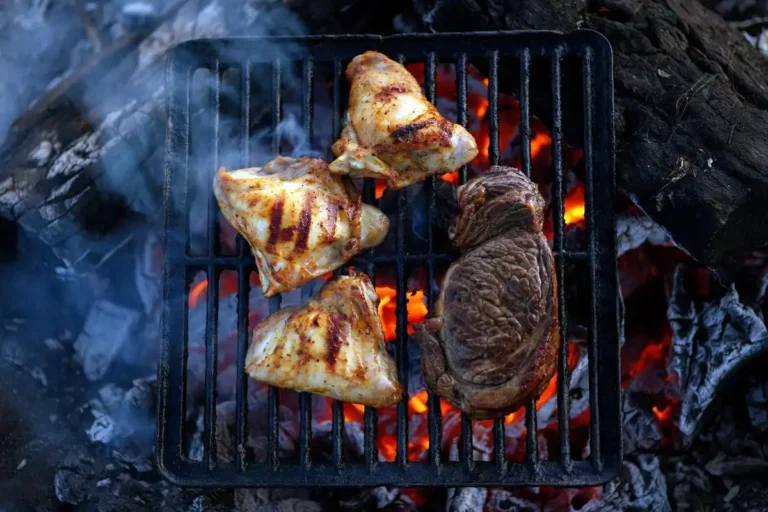
Place a grate 10 to 14 inches above the coals. Lay the fish flesh-side down. Cover loosely with foil to trap smoke. The fish is done when the flesh turns opaque, firm, and golden-brown.
Oily fish like trout and salmon absorb smoke flavor better than lean white fish.
How to Boil Fish in a Camp Pot
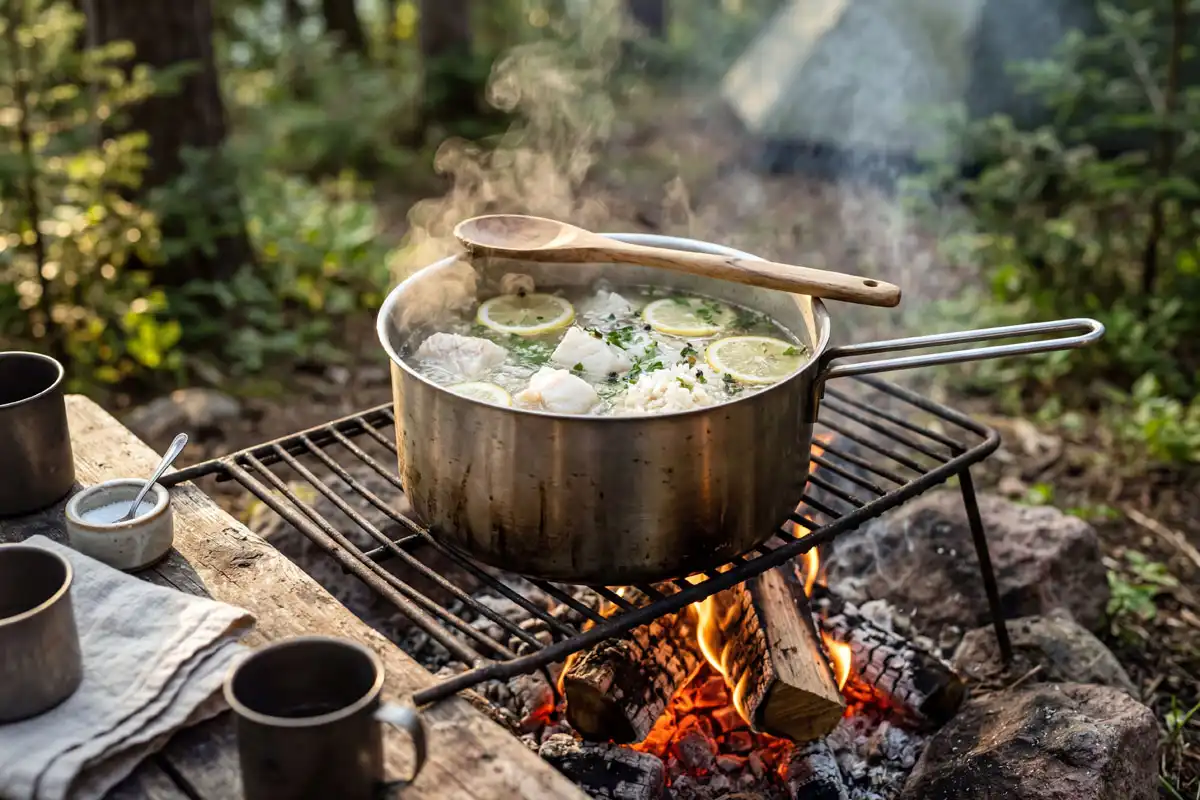
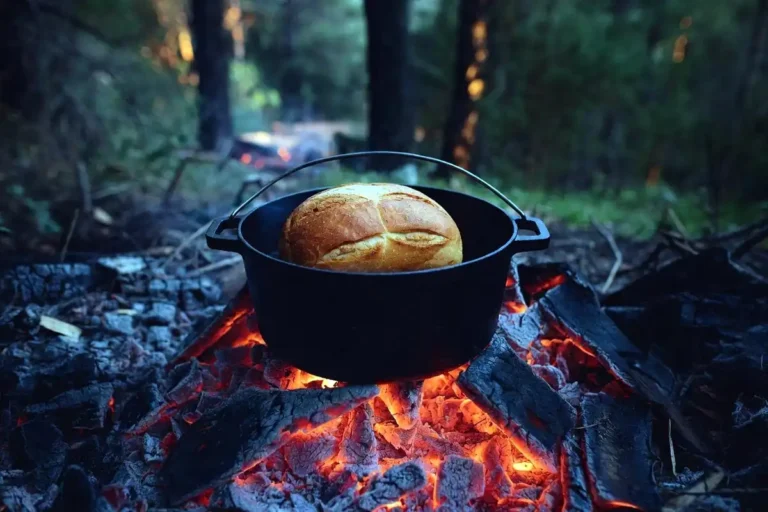
Boiling works when you carry a pot but no pan. It also lets you cook fish alongside rice, noodles, or vegetables in a single pot.
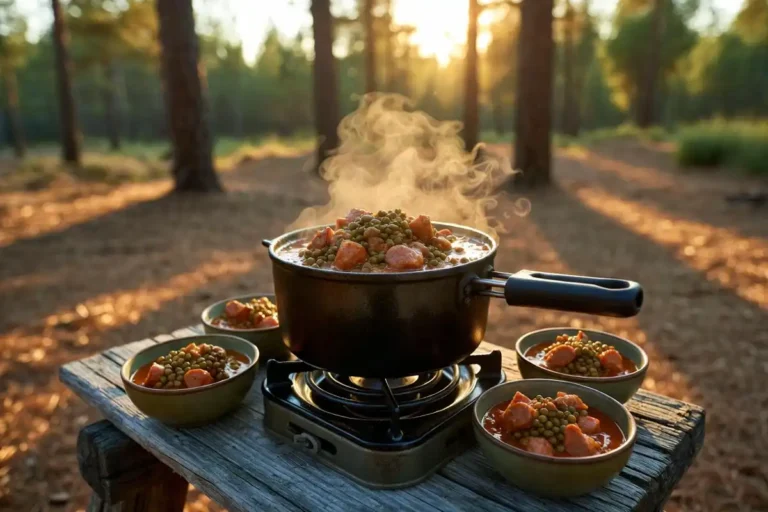
Cut the cleaned fish into chunks that fit inside your pot. Bring water to a rolling boil over your campfire or camp stove. Add the fish pieces, plus salt and any seasonings you have. Reduce heat to a gentle simmer.
Poach for 8 to 12 minutes depending on the thickness of the pieces. The fish is done when it turns opaque and separates into flakes. Remove it with a spoon or fork.
You can reuse the cooking liquid as a broth. Add dried herbs, garlic, or a squeeze of lemon for extra flavor.
The fish is done when it turns opaque and flakes apart. Cook rice or noodles in the same pot to save time. If you carry a basic campfire cooking kit, you already have what you need.
What Seasonings and Wood Work Best?
Salt, black pepper, and lemon juice handle most campfire fish. Garlic powder, dried oregano, thyme, and dill pair well with trout, bass, and walleye. Pack seasonings in small resealable bags.
For wood, use hardwoods like hickory, oak, maple, or cherry. Fruitwoods add mild sweetness. Avoid softwoods like pine and spruce. They produce bitter smoke. Never burn treated lumber or painted wood.
I discussed managing campfire heat for cooking in a dedicated guide that helps with all these methods.
How to Tell When Campfire Fish Is Fully Cooked
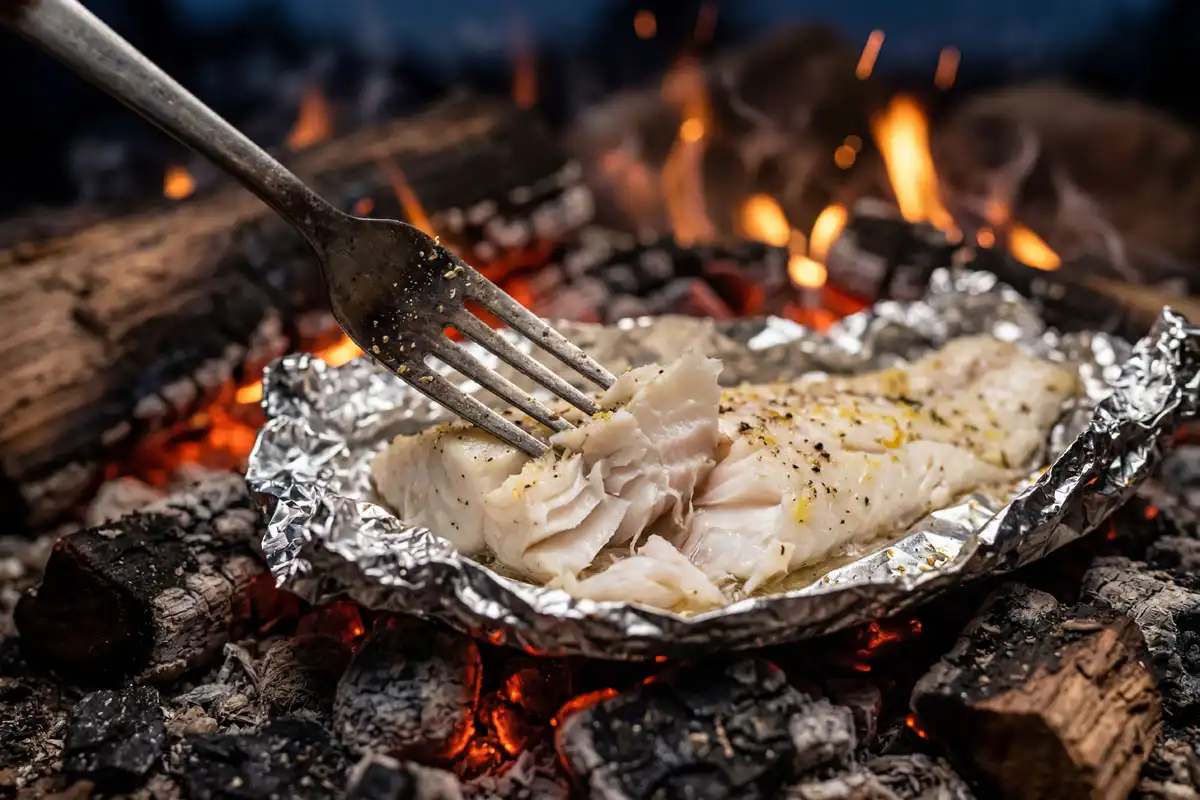
The FDA recommends cooking fish to 145°F (63°C). A small instant-read thermometer weighs under an ounce and fits in any camp kit.
Without a thermometer, use the fork test. Insert a fork into the thickest part at a 45-degree angle. Twist and pull. Done fish flakes apart easily and looks opaque. Undercooked fish resists flaking and looks translucent. Check early because fish cooks fast.
Common Mistakes to Avoid When Cooking Fish at Camp
Cooking over flames instead of coals. Flames char the outside while the inside stays raw. Wait for glowing embers.
Skipping proper cleaning. Leftover organs cause a bitter taste.
Wrapping foil too tight. Leave an air pocket so steam circulates inside the packet.
Using resinous wood. Pine and spruce sticks transfer bitter flavor. Use hardwood for skewering and cooking.
Safety Tips for Cooking Fresh-Caught Fish
Cook fish within 2 hours of catching it, or keep it on ice. Bacteria grow rapidly between 40°F and 140°F. The USDA calls this the danger zone for perishable food.
Clean your knife between raw and cooked fish to prevent cross-contamination. Dispose of scraps at least 200 feet from your campsite. I wrote about preventing food poisoning while camping in a related post.
Never eat fish that smells sour or ammonia-like. Fresh fish smells mild and clean.
FAQs about Cooking Fish at Camp Without a Frying Pan

How long does it take to cook fish over a campfire?
Foil packets and stick roasting take 10 to 15 minutes over hot coals. Smoking takes 2 to 3 hours. Check frequently because fish cooks faster than most camp meats.
Can you eat fish skin cooked over a campfire?
Yes, if you scale the fish first. Campfire heat crisps the skin. Remove charred skin from coal-cooked fish before eating the flesh underneath.
What is the easiest way to cook fish without cookware?
Thread a whole cleaned fish onto a sharpened green hardwood stick and rotate it over hot embers. No foil or tools needed beyond a knife and a stick.
What types of fish cook best over a campfire?
Trout, bass, walleye, panfish, and catfish hold up well over coals. Firm-fleshed fish stay together on sticks. Oily fish absorb smoke flavor effectively.
Last Notes on Cooking Fish at Campsite
Cooking fresh-caught fish at camp without a frying pan comes down to five methods: foil packets, stick roasting, direct coal cooking, smoking, and boiling. Each method needs a properly prepared campfire burned down to hot coals, a cleaned and seasoned fish, and 10 to 20 minutes of attention. Scale and gut your catch right away, cook it within 2 hours, and check for doneness with a fork or thermometer. The result is a hot, flaky meal straight from the water to the fire.