How to Cook Meat Over a Campfire Safely Without Getting Sick
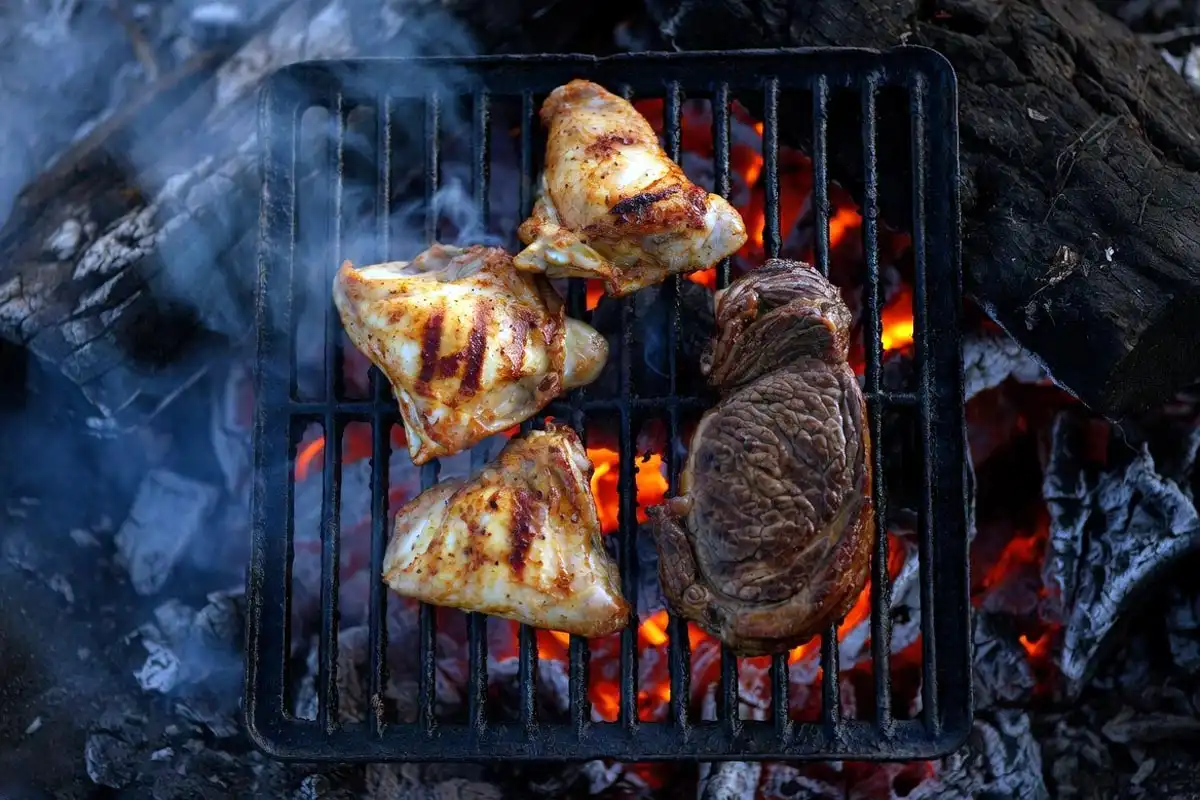
To cook meat safely over a campfire, you need proper fire preparation, correct internal temperatures, and clean handling from start to finish so you stay safely clear of getting sick. This guide covers everything from building the right cooking fire to checking doneness, preventing cross-contamination, and avoiding the most common mistakes campers make when cooking meat outdoors.
Cook campfire meat over glowing red-orange coals, not open flames. Use a meat thermometer to confirm safe internal temperatures: 165°F (74°C) for poultry, 160°F (71°C) for ground meat, and 145°F (63°C) for whole cuts of beef, pork, and fish. Keep raw meat cold before cooking and never reuse raw-meat utensils on cooked food.
What Equipment Do You Need to Cook Meat Over a Campfire?
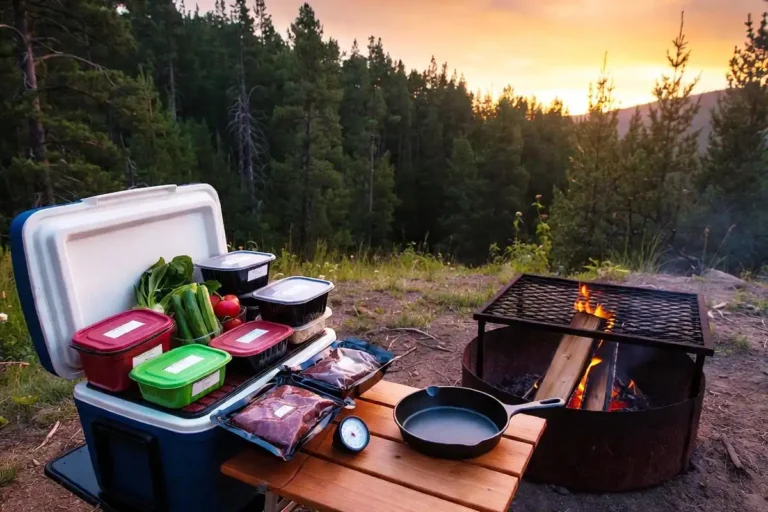
The right gear reduces risk and improves results. Before you light a fire, gather these items:
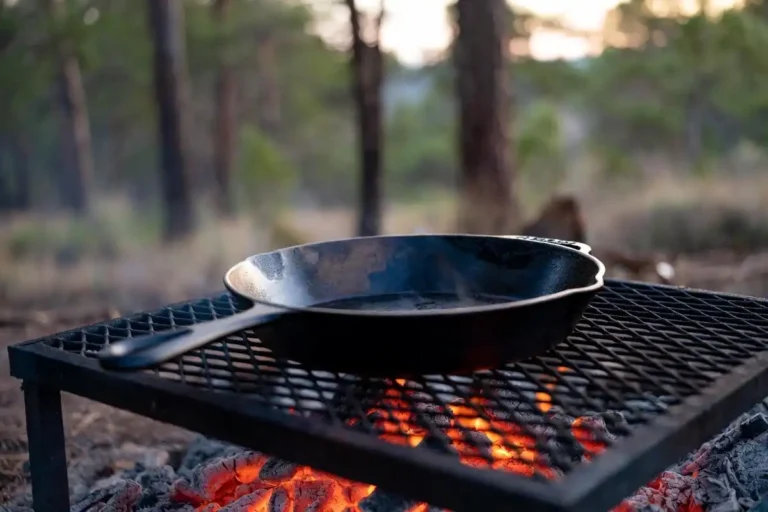
- A cast iron skillet or grill grate that sits stable over coals
- A meat thermometer (instant-read, not optional)
- Long-handled tongs and spatula to keep hands away from heat
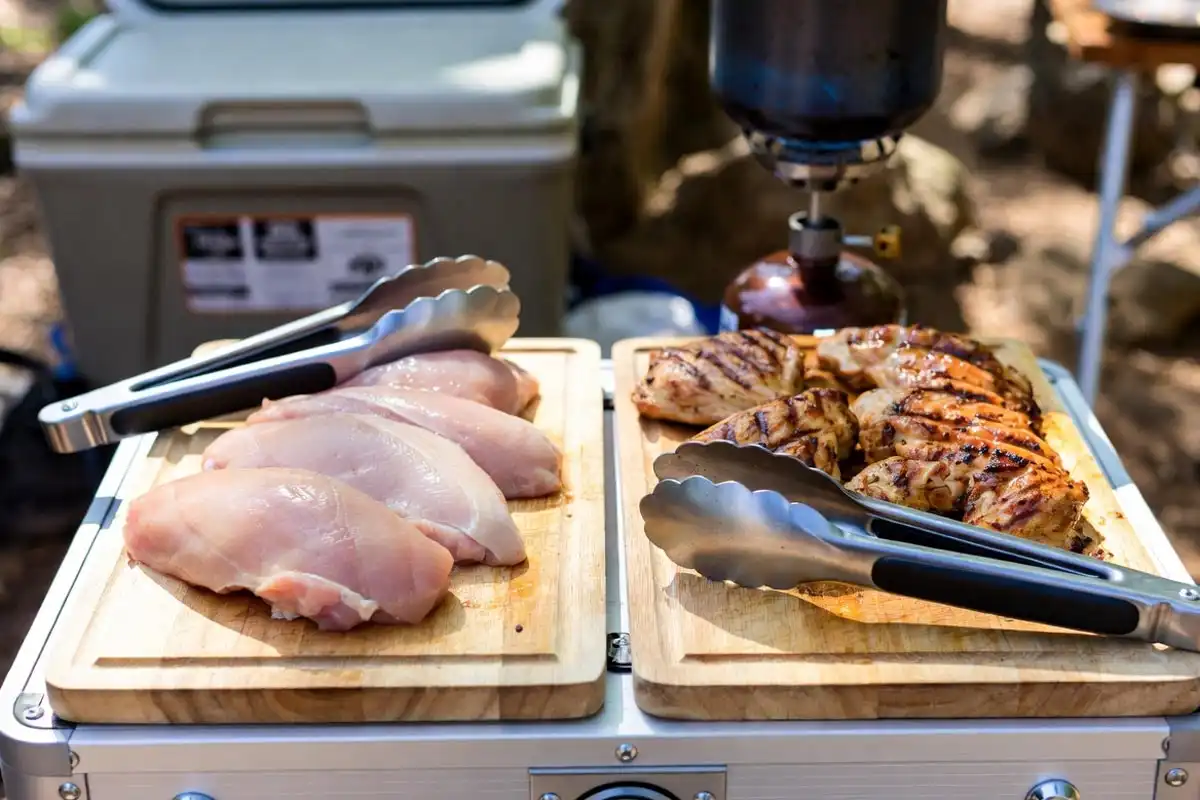
- Separate cutting boards for raw and cooked meat
- A sealable cooler to store raw meat below 40°F (4°C)
- Zip-lock bags or sealed containers for marinating meat at camp
I keep a dedicated campfire cooking kit with all these items packed together. If you want a full checklist of what to bring, I covered the key pieces in an earlier post on complete campfire cooking kits.
How to Build the Right Fire for Cooking Meat
Cooking over open flames produces uneven heat and burns the outside while leaving the inside raw. Glowing coals deliver steady, controllable heat that cooks meat all the way through.
To build a cooking fire:
- Light the fire 45 to 60 minutes before you plan to cook.
- Use hardwoods like oak, hickory, or maple. They produce dense coals that hold heat longer.
- Wait until the flames die down and the coals glow orange-red with a grey ash layer on top.
- Spread the coals into an even layer roughly 3 to 4 inches deep.
- Place your grill grate 4 to 6 inches above the coal bed.
Softwoods like pine burn fast and leave resinous residue that affects flavor and burns unevenly. Avoid them for cooking.
Step-by-Step: How to Cook Meat Safely Over a Campfire
Step 1 – Store Raw Meat at the Right Temperature
Raw meat stays safe below 40°F (4°C). Pack meat in a sealed bag inside a cooler with ice. Keep the cooler in shade and avoid opening it repeatedly.
Meat left between 40°F and 140°F (4°C–60°C) enters the “danger zone.” Bacteria double roughly every 20 minutes in this range. Discard raw meat left at ambient temperature for more than 2 hours.
Step 2 – Prepare Meat Away From Other Food
Use a dedicated cutting board for raw meat. Never cut vegetables or bread on the same surface without washing it first.
If you marinated meat at home, keep the marinade bag sealed until cooking. Discard the used marinade immediately. Never pour used marinade back onto cooked meat.
Step 3 – Season and Handle With Clean Hands
Wash hands with biodegradable soap and water for 20 seconds before and after handling raw meat. At camp, I carry a small bottle of hand sanitizer as a backup when water is limited.
Step 4 – Place Meat on the Grate Correctly
Lay cuts flat on the grate without crowding. Crowded pieces trap steam, lower the surface temperature, and produce uneven cooking.
For thick cuts like chicken thighs or pork chops, start away from the hottest coals to cook through slowly before finishing over direct heat.
Step 5 – Control Heat and Turn Meat Once
Turn meat once when it releases naturally from the grate. If it sticks, it needs more time. Constant flipping slows the cooking process and produces less even browning.
For flare-ups caused by dripping fat, move the meat to a cooler section of the grate. Do not use water to suppress fat fires. Water turns fat into a spray and spreads flames.
Step 6 – Check Internal Temperature
A meat thermometer is the only reliable way to confirm safe doneness. Insert the probe into the thickest part of the cut, away from bone.
Safe internal temperatures:
| Meat Type | Safe Temperature |
|---|---|
| Poultry (whole, ground, pieces) | 165°F / 74°C |
| Ground beef, pork, lamb | 160°F / 71°C |
| Whole beef, pork, lamb steaks/chops | 145°F / 63°C |
| Fish and seafood | 145°F / 63°C |
Color alone does not confirm doneness. Beef can brown on the outside while remaining undercooked inside.
Step 7 – Rest the Meat Before Serving
Let cooked meat rest on a clean plate for 3 to 5 minutes before cutting. Resting allows internal temperatures to stabilize and juices to redistribute. This step also ensures carry-over heat finishes any borderline sections.
Step 8 – Serve on Clean Plates and Utensils
Never place cooked meat back on a plate that held raw meat. Keep a separate set of serving tongs for cooked food.
I discussed safe food prep in a broader safety context in my post on staying safe while solo camping, which covers hygiene and illness prevention at camp.
What Are the Safe Internal Temperatures for Campfire Meat?
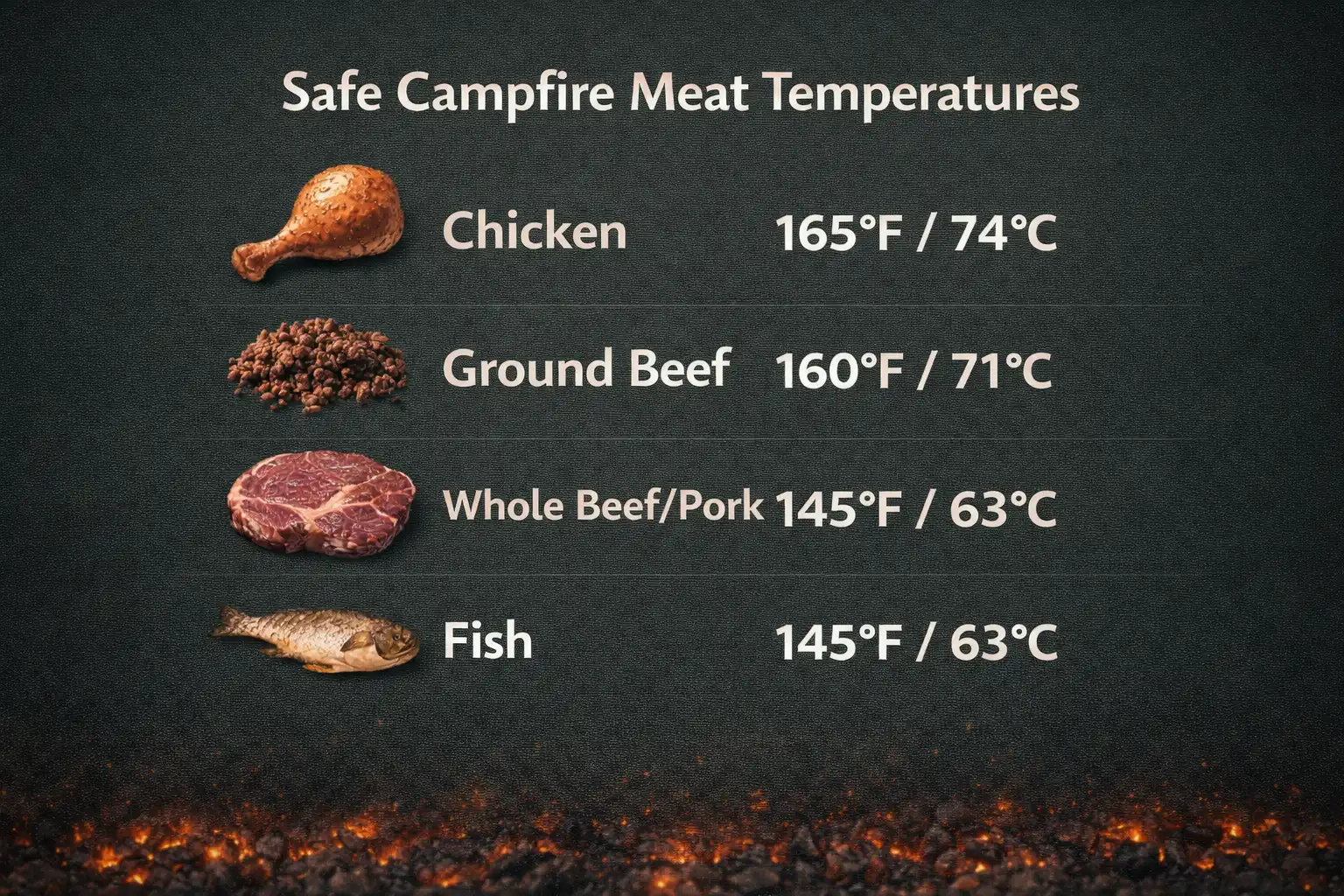
The USDA sets minimum safe cooking temperatures based on pathogen destruction.
- At 165°F (74°C), Salmonella and Campylobacter in poultry are destroyed.
- At 160°F (71°C), E. coli in ground beef is eliminated.
- At 145°F (63°C) with a 3-minute rest, whole muscle cuts of beef and pork reach safe levels.
These temperatures apply whether you cook over a campfire, camp stove, or kitchen range. The heat source changes; the biology does not.
How Do You Avoid Burning the Outside Before the Inside Cooks?
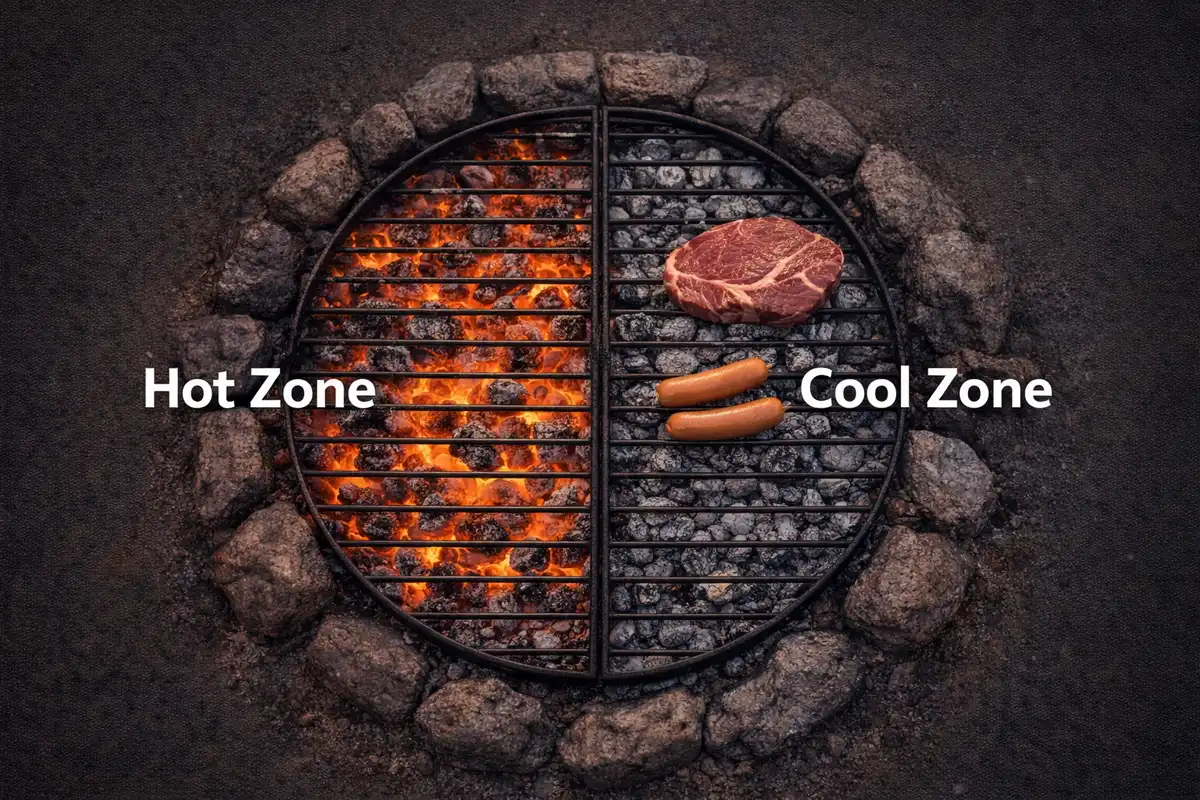
Thick cuts burn on the outside before the inside reaches a safe temperature when placed directly over hot coals.
Use a two-zone setup:
- Push coals to one side of the fire pit to create a hot zone and a cooler zone.
- Start thick cuts on the cooler side with the lid of a camp pot placed loosely over them. This traps heat and cooks the interior.
- Move the cut to the hot zone for the final 2 to 3 minutes to develop a seared exterior.
I also use this same two-zone method when cooking starches. I covered it in detail in my guide on cook rice over a campfire without burning it.
Common Mistakes That Make Campfire Meat Unsafe
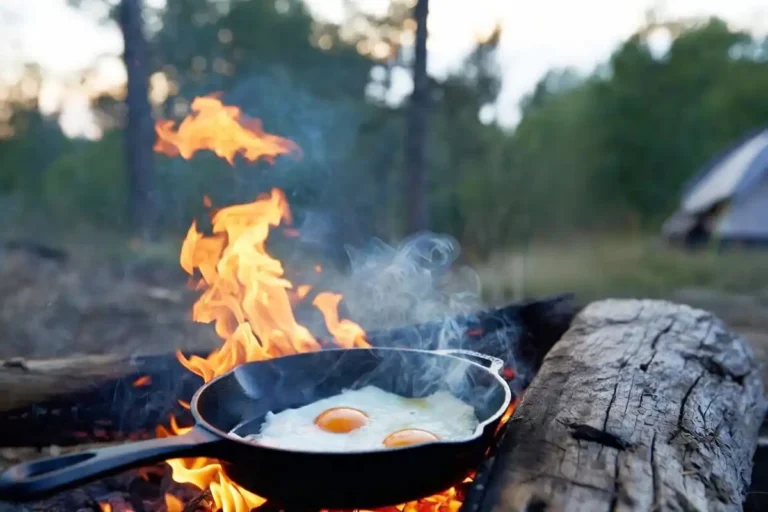
Cooking over active flames: Flames scorch the exterior and produce inconsistent heat. Coals are the correct cooking surface.
Skipping the thermometer: Visual cues like color and juice color are unreliable. Pink juice does not always mean undercooked; clear juice does not always mean safe.
Cross-contaminating utensils: Using the same tongs for raw and cooked meat transfers bacteria directly onto ready-to-eat food.
Defrosting meat at ambient temperature: Defrost in the cooler overnight. Never defrost on a camp table in open air.
Leaving cooked meat sitting out: Cooked meat left uncovered for more than 2 hours at temperatures above 40°F (4°C) should be discarded.
Safety Considerations When Cooking Meat at Camp
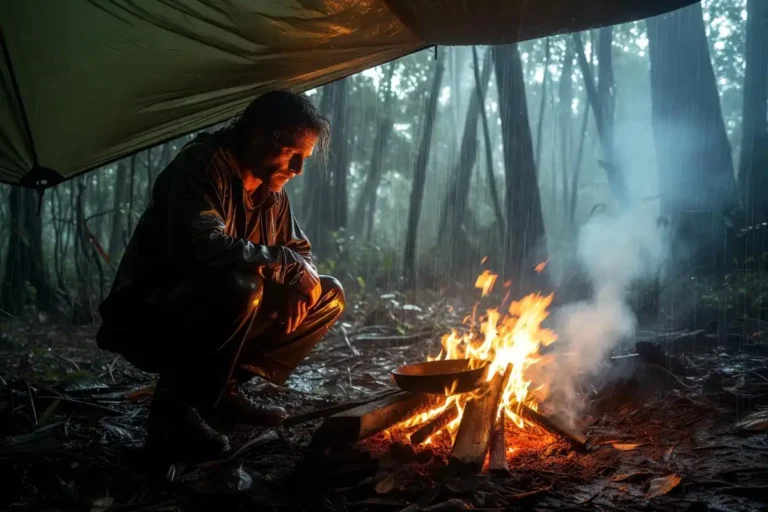
Fire safety: Build fires only in designated fire rings or cleared dirt areas at least 10 feet from tents, trees, and dry brush. Never leave a cooking fire unattended. Keep a bucket of water or dirt nearby to suppress flare-ups.
Fat drips: High-fat meats like sausages and marbled steaks produce significant dripping. Position a foil drip pan below the grate to reduce flare-ups.
Wildlife: The smell of cooking meat attracts bears and other animals. Cook at least 200 feet from your sleeping area. Store all cooked leftovers in sealed containers inside a bear canister or hung bear bag.
Smoke inhalation: Avoid positioning yourself directly in the smoke path. Campfire smoke contains particulate matter that irritates the lungs with extended exposure.
Burns: Use heat-resistant gloves when adjusting the grate. Long-handled tools keep hands at least 12 inches from the heat surface. If burns happen at camp, I covered how to treat minor injuries in my guide on treating minor cuts and blisters at camp.
What Meats Work Best Cooked Directly Over Campfire Coals?
Some cuts and preparations perform better than others over an open campfire. I covered the broader topic of which foods cook well directly on coals in a separate piece on foods you can cook directly on campfire coals.
For meat specifically:
- Sausages and hot dogs: Forgiving, cook evenly, and easy to check doneness by sight (split skin, firm texture throughout)
- Thin steaks (under 1 inch): Cook quickly over medium coals in 3 to 5 minutes per side
- Chicken thighs: More forgiving than breasts; the higher fat content reduces dryness during longer cook times
- Burgers: Require a grate or skillet; they fall apart on open coals and absorb ash
Avoid cooking bone-in chicken breasts directly over coals without a lid. The bone slows internal cooking while the exterior overcooks.
FAQs about Cook Meat Over a Campfire Safely

Can you cook raw chicken over a campfire safely?
Yes. Place chicken on a grill grate over coals at medium heat. Use a two-zone setup for thick pieces. Cook to an internal temperature of 165°F (74°C) measured at the thickest point, away from the bone.
How do you keep meat from drying out over a campfire?
Use cuts with higher fat content, avoid overcooking past the safe temperature, and let the meat rest 3 to 5 minutes before cutting. A loose foil tent during resting retains moisture.
Is it safe to use the same plate for raw and cooked meat at camp?
No. Raw meat deposits bacteria onto surfaces. Those bacteria transfer directly to cooked meat and cause foodborne illness. Bring separate plates or wash with hot soapy water between uses.
What do you do if you have no meat thermometer at camp?
Cut the thickest part of the meat and check the interior. Cooked beef shows no pink; cooked chicken runs clear juices and shows white interior throughout. These checks are less reliable than a thermometer but reduce risk. Pack a cheap instant-read thermometer to avoid this situation.
Conclusion
Safe campfire meat cooking comes down to three controllable factors: correct fire preparation, confirmed internal temperature, and clean handling. Build your fire 45 to 60 minutes ahead and cook over coals, not flames.
Use a meat thermometer on every cook. Keep raw and cooked foods fully separated from prep to plate. These three habits prevent most foodborne illness risks at camp and make the whole experience more reliable and enjoyable.