How to Cook Soup Over a Campfire Without Scorching the Bottom
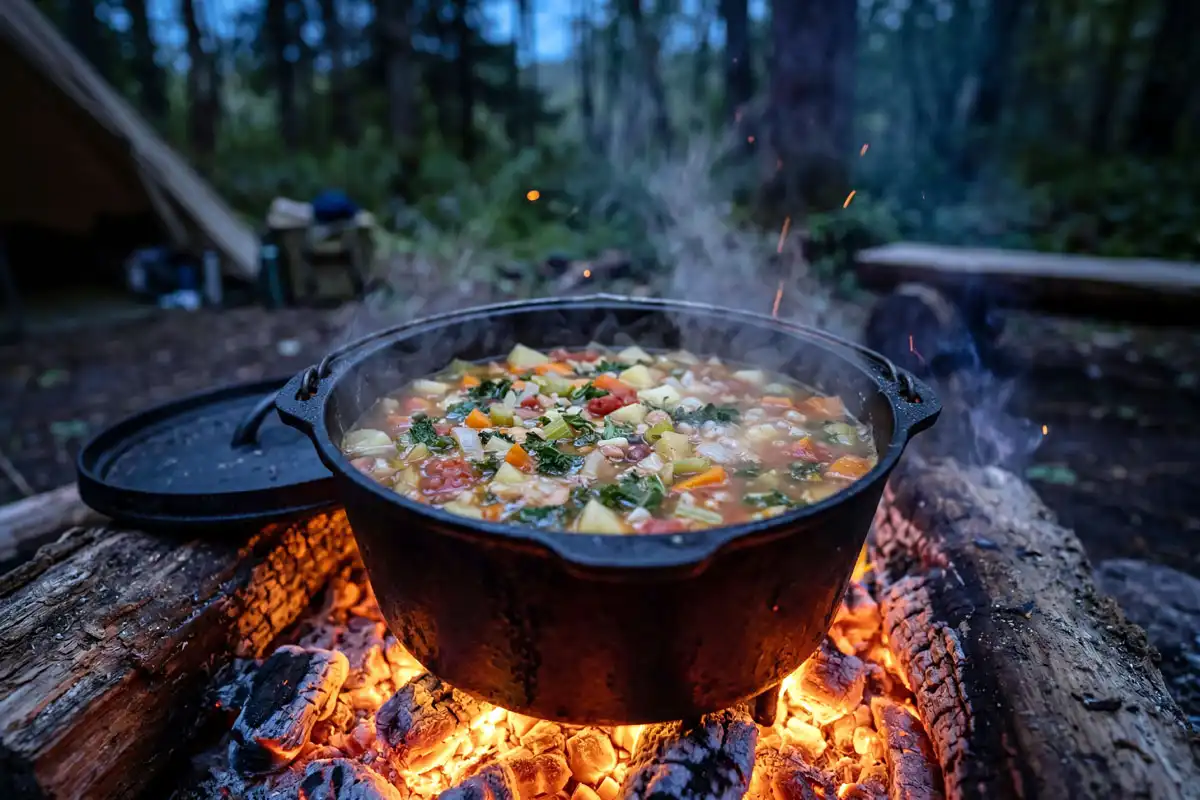
Soup scorches on a campfire when the pot sits on direct flame and the cook stirs too little. This guide covers cookware, fire setup, stirring technique, and heat control to simmer campfire soup without burning the bottom. Every tip here comes from my own camp cooking experience in Kaptai and on trails across Bangladesh.
Cook soup over hot coals, not open flames. Use a cast iron Dutch oven or thick-walled pot. Stir every 2 to 3 minutes. Keep the pot elevated on a grill grate or tripod. Add enough liquid to cover ingredients by at least 2 inches.
Why Does Soup Scorch on a Campfire?
A campfire reaches 600°F to 1,100°F at the flame tips. A kitchen stove hits about 400°F on medium. That gap causes food to stick and burn fast.
Thick soups with starch, like potato or bean, scorch faster. Starch settles at the bottom and traps heat. Without stirring, it hardens and burns within minutes.
Thin-walled aluminum pots make it worse. They transfer heat unevenly. Hot spots form where flames touch the pot, and those spots burn food before the rest of the soup warms up.
What Cookware Works Best for Campfire Soup?
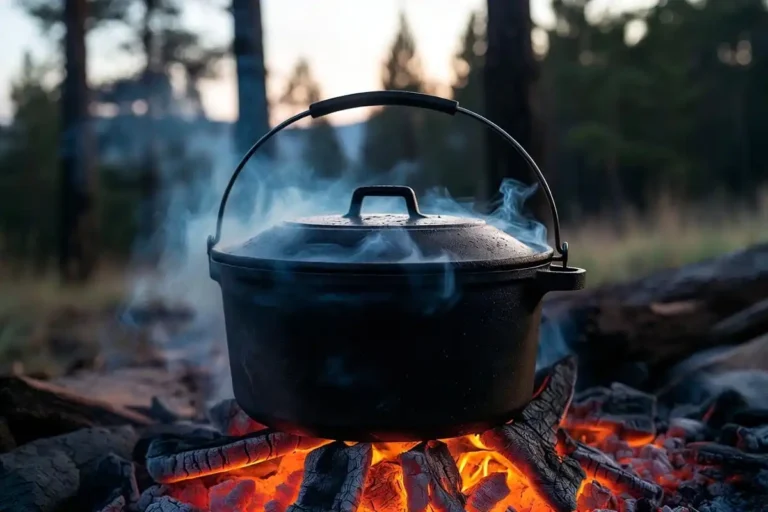
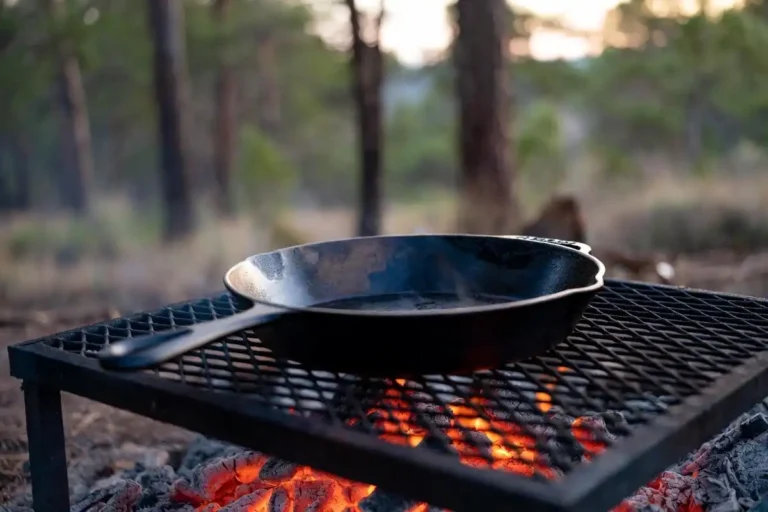
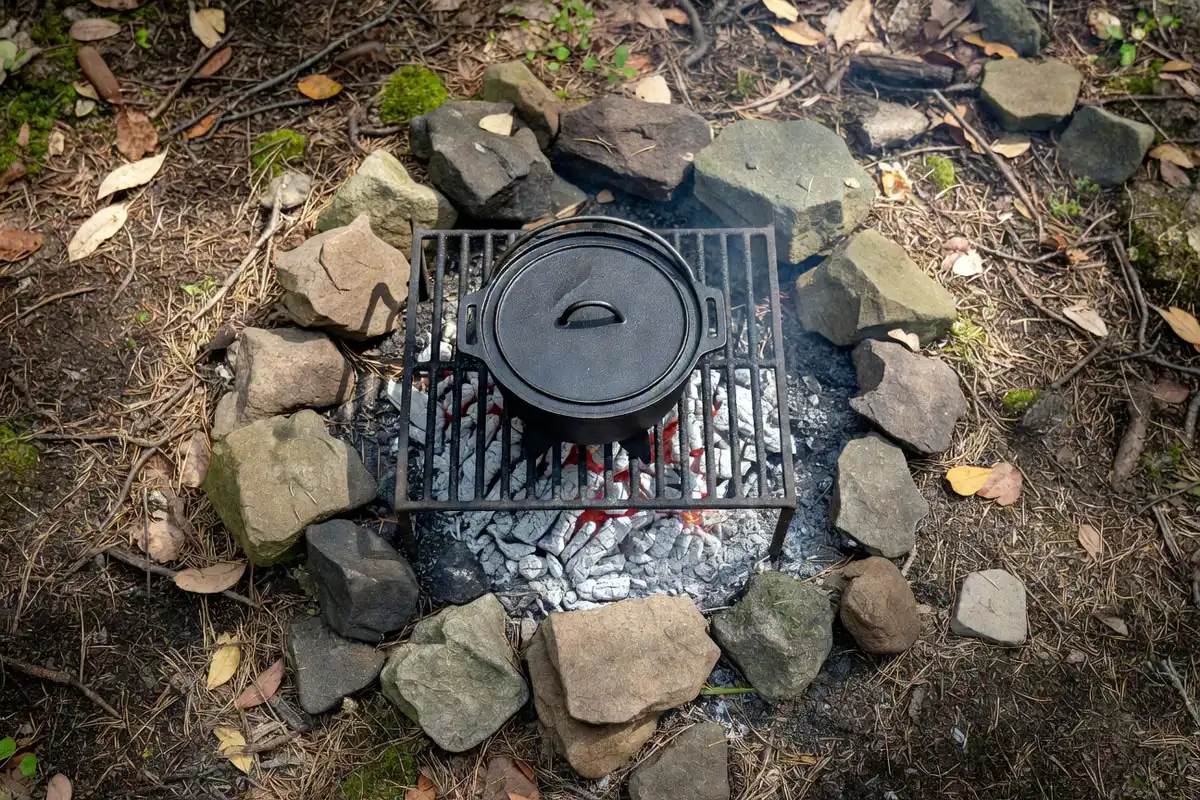
A cast iron Dutch oven distributes heat evenly and eliminates hot spots. A 5 to 8 quart Dutch oven with legs works best because the legs lift the pot above direct coal contact.
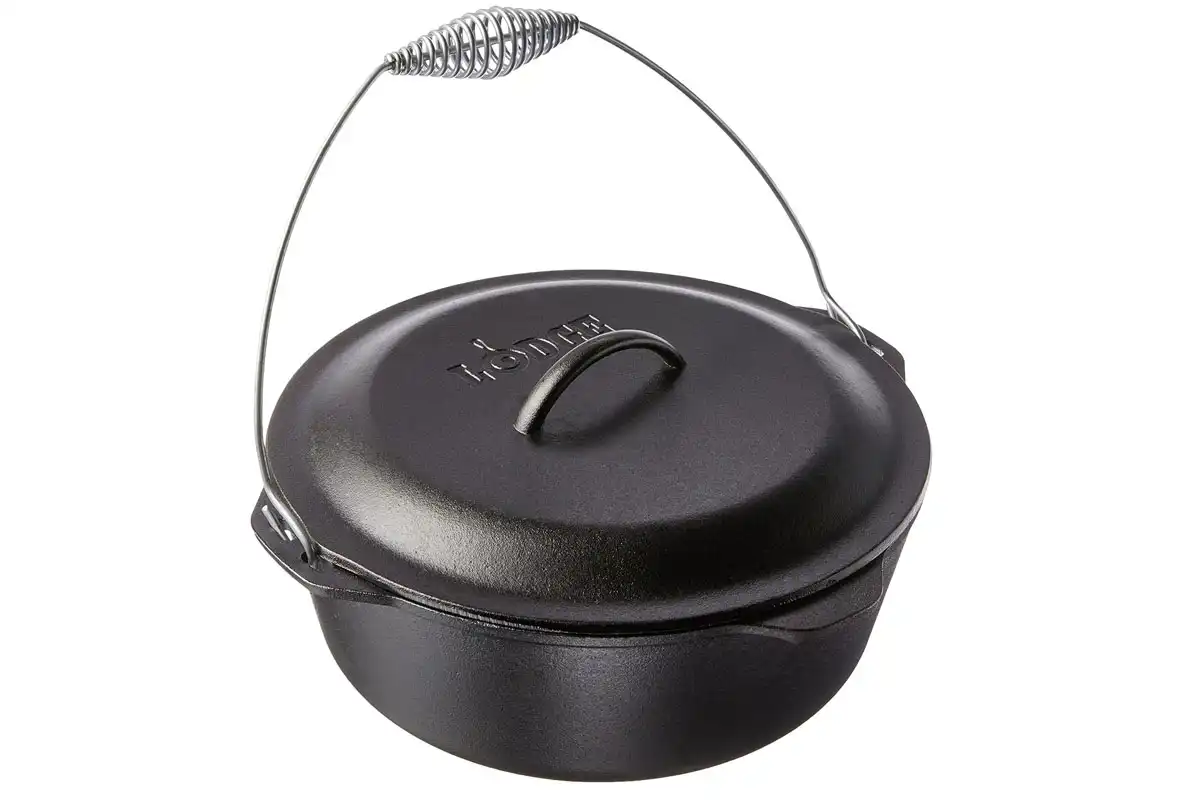
Cast iron withstands temperatures above 1,000°F without warping. Avoid dual-metal pots like copper-bottomed aluminum. Campfire heat can break the bond between metals and cause spills.
No Dutch oven? A heavy stainless steel stock pot on a grill grate works fine. The grate creates distance between pot and coals. I covered more on gear selection in my campfire cooking kit selection guide.
How to Build a Cooking Fire for Soup
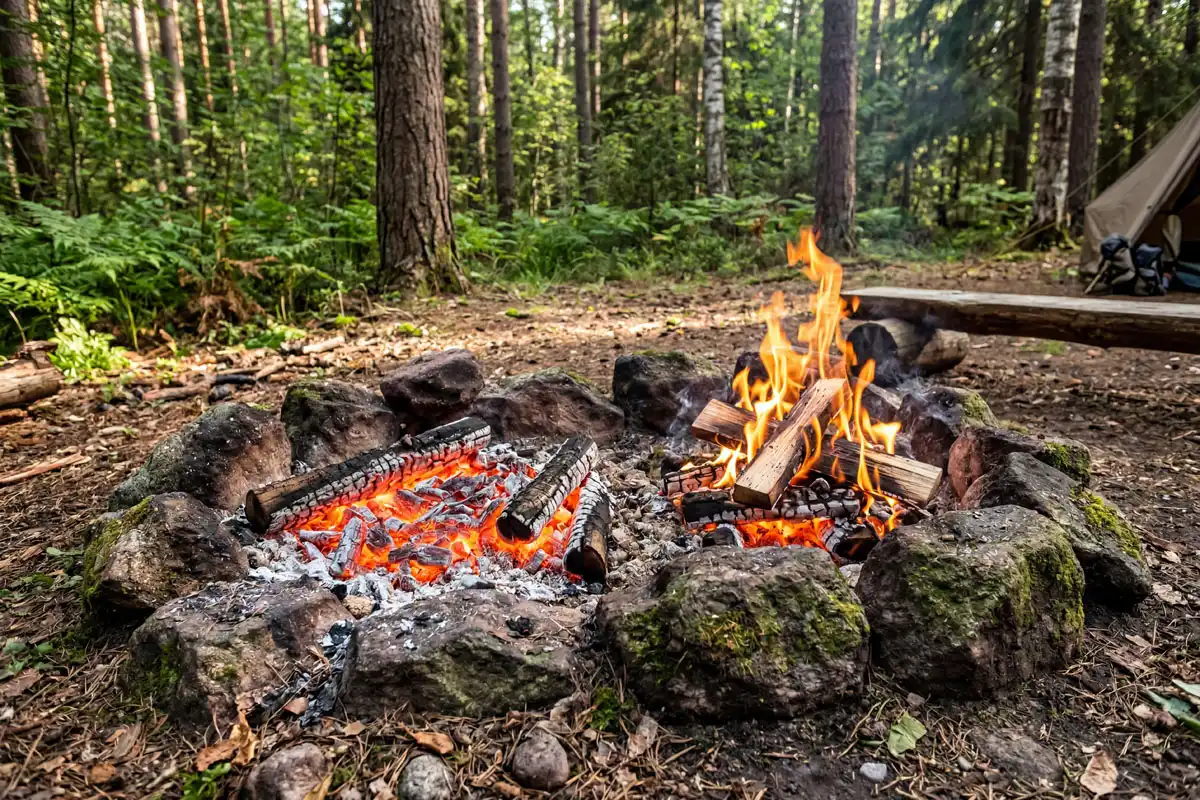
Soup needs low, steady heat. Hot coals deliver that. Open flames do not.
Start your fire 45 to 60 minutes before cooking. Build a teepee fire and let logs burn down to glowing coals at least 3 to 4 inches deep.
Create two heat zones. Push a thick pile of coals to one side for cooking. Keep a small fire burning on the other side to generate fresh coals as needed.
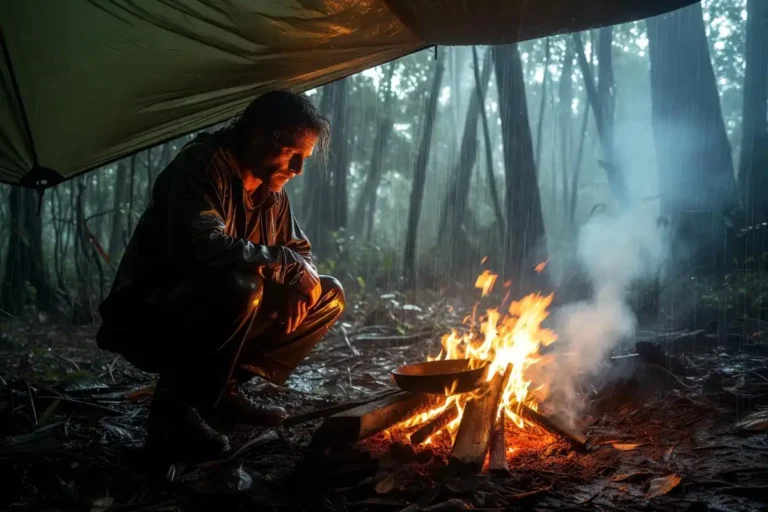
Use the hand test. Hold your palm 6 inches above the coals. If you hold it 4 to 5 seconds before pulling away, the heat is right for soup. I covered fire building in more detail in my article on starting a campfire for cooking in wet conditions.
Step-by-Step: How to Cook Soup Without Scorching
Step 1: Prep at home. Chop vegetables, cube meat, and measure spices before you leave. The USDA recommends cooking poultry to 165°F and beef to 145°F minimum.
Step 2: Wait for coals. Light the fire 45 minutes early. No large flames when you start cooking.
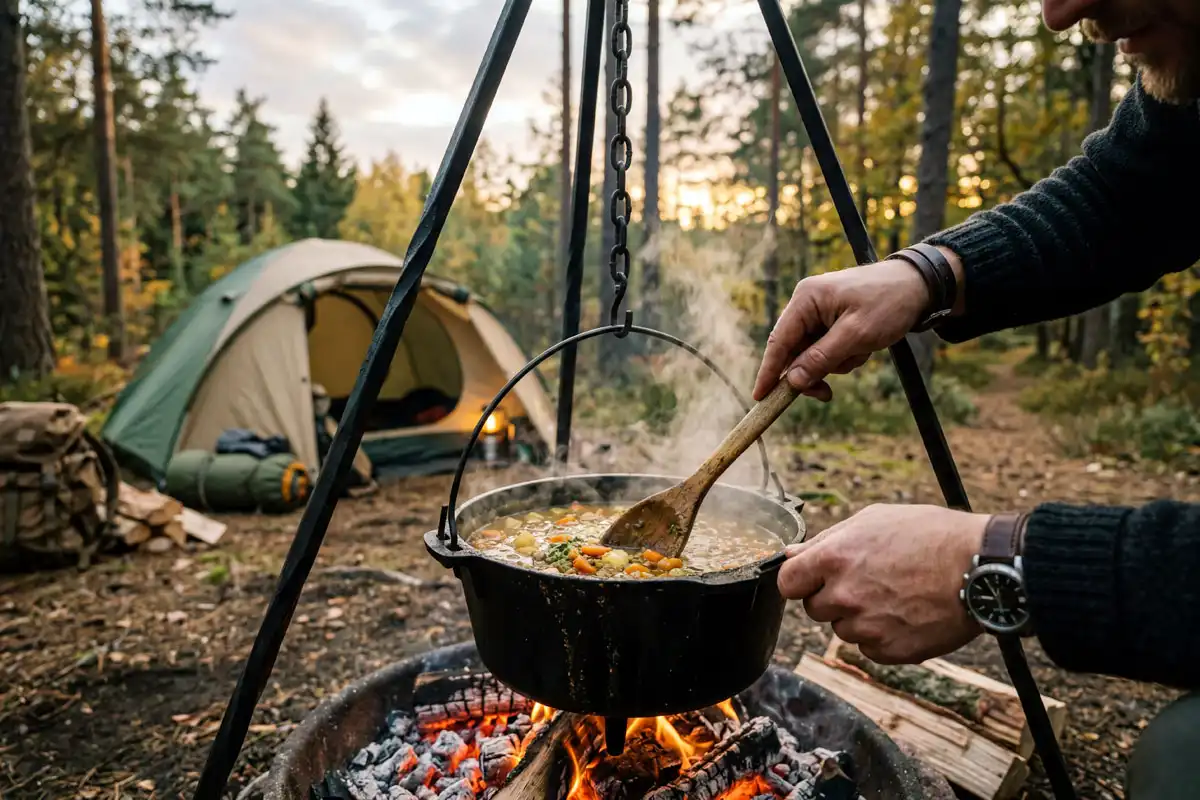
Step 3: Set up your cooking surface. Place a grill grate over coals or hang your pot from a tripod, 6 to 8 inches above the heat.
Step 4: Heat oil first. A tablespoon of oil creates a barrier between food and pot. Warm it for 1 minute before adding anything.
Step 5: Sauté aromatics. Cook onions, garlic, and celery for 3 to 4 minutes. They release moisture that prevents the pot bottom from drying out.
Step 6: Add liquid before starches. Pour broth or water in first. Cover all solid ingredients by at least 2 inches.
Step 7: Bring to a gentle simmer. Watch for small bubbles at the edges. A rolling boil evaporates liquid too fast.
Step 8: Add remaining ingredients. Drop in vegetables, meat, and starches after the simmer starts. Stir after each addition.
Step 9: Stir every 2 to 3 minutes. Scrape the bottom with a long-handled spoon each time. This lifts food before it sticks.
Step 10: Adjust heat as needed. If the soup bubbles too hard, move the pot to the grate edge or raise the tripod chain. I wrote more about this in my piece on regulating campfire heat for cooking.
Common Mistakes That Cause Scorching
Cooking over flames, not coals. Flames produce unpredictable, high heat. Always wait for the fire to burn down.
Not enough liquid. As liquid evaporates, the bottom dries out. Check every 10 to 15 minutes and top off with water.
Stirring too little. Thick soups need stirring every 2 to 3 minutes. Thin broth soups need it every 5 minutes.
Wrong pot. Thin aluminum creates hot spots. Cast iron or heavy steel handles campfire heat better.
Walking away. Campfire heat shifts constantly. Stay near the pot. If you step away, pull the pot off the coals first. I covered similar tips in my article on cooking rice over a campfire without burning it.
What to Do if Soup Starts to Scorch
Remove the pot from heat immediately. Do not scrape the burnt layer. Pour the good soup into a clean pot, leaving the scorched bits behind.
If the burnt taste has spread, drop a peeled raw potato into the pot for 10 to 15 minutes. It absorbs some of the smoky flavor. According to Colorado State University Extension, a small splash of lemon juice or vinegar also helps mask residual burnt taste.
Safety Tips for Campfire Soup Cooking
Keep water or sand near the fire ring. Wear heat-resistant leather or aramid-fiber gloves when handling hot pots. Use a long-handled spoon so your hands stay away from the coals.
Never leave a cooking fire unattended. Position the pot handle away from the fire to avoid accidental burns. I shared more fire safety habits in my article on staying safe while solo camping.
Use a food thermometer to confirm soup reaches at least 165°F before serving, especially with poultry.
FAQs on Cook Soup Over a Campfire

Can you cook soup directly over campfire flames?
No. Flames exceed 600°F and scorch soup fast. Cook over hot coals instead. Coals provide steady, lower heat that keeps soup at a safe simmer.
What size Dutch oven works for campfire soup?
A 5 to 8 quart cast iron Dutch oven fits most camping groups. Choose one with legs and a tight-fitting lid for best heat control over coals.
How long does campfire soup take?
Broth-based soups with pre-cut vegetables cook in about 30 minutes. Thick soups with raw meat or root vegetables need 45 to 60 minutes over steady coals.
Do you need to stir campfire soup constantly?
Not constantly, but frequently. Stir thick soups every 2 to 3 minutes and broth soups every 5 minutes. Scrape the bottom each time to lift settling food.
Can you use a regular kitchen pot on a campfire?
A heavy stainless steel pot works on a grill grate. Avoid thin aluminum, nonstick, or dual-metal pots. Campfire heat damages coatings and warps thin metal.
Conclusion
Cooking soup over a campfire without scorching comes down to three habits: cook over coals instead of flames, use a thick-walled pot like a cast iron Dutch oven, and stir every few minutes. Build your fire early, create heat zones, and keep enough liquid in the pot.
These steps work for any soup recipe, whether you are making a quick broth or a thick stew at the campsite. I also wrote about preparing one-pot camping meals that feed four if you want more campfire cooking ideas.