How to Dry Wet Camping Gear Quickly at the Campsite

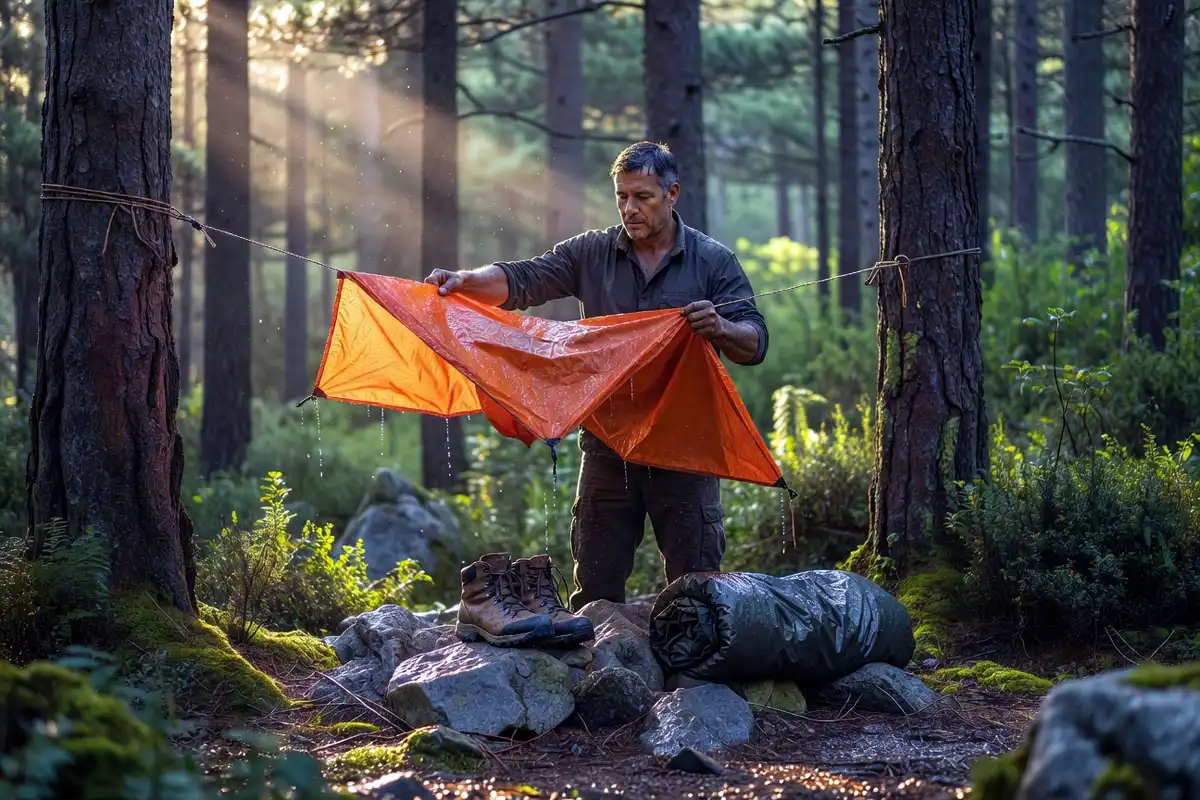
To dry wet camping gear quickly at the campsite, spread it out in direct airflow and sunlight immediately after the rain stops so it dries faster. This guide covers every item you carry at camp, from tent fabric to sleeping bags to hiking boots, and gives you a clear order of steps to work through so nothing stays damp long enough to grow mold or mildew.
Shake off standing water first, then hang or drape each item separately in direct sun and wind. Synthetic fabrics dry within 1 to 3 hours in good conditions. Down insulation takes 4 to 6 hours and needs regular fluffing. Boots dry overnight when packed with dry newspaper. Never pack gear while it still feels cold or clammy to the touch.
Why Wet Gear Needs Immediate Attention
Damp fabric holds moisture for hours after rain. That moisture degrades waterproof coatings over time, causes down clusters to clump, and creates the right conditions for mildew inside 24 hours.
Tents lose their durable water repellent (DWR) finish faster when stored wet. Sleeping bags with wet insulation lose their thermal rating until fully dry. Wet boots soften the leather midsole and produce blisters on the next hike.
Speed matters. The faster you act, the less damage accumulates.
What Slows Gear Down from Drying
Three conditions slow drying: low airflow, high humidity, and packed or bunched fabric.
A tent stuffed back into its sack holds moisture against itself. A sleeping bag rolled tight traps vapor inside the fill. Boots laced shut trap heat and prevent air circulation inside the liner.
Humidity above 80% reduces evaporation even in direct sun. On overcast days with still air, drying time doubles compared to a sunny, breezy day.
Step-by-Step: How to Dry Wet Camping Gear at the Campsite
Step 1: Prioritize by Drying Time
Some items take longer than others. Start with the slowest-drying pieces first.
Order of priority:
- Down sleeping bag or quilt (longest drying time)
- Tent body and rainfly
- Hiking boots and trail runners
- Base layers and synthetic insulation
- Rain jacket and pants
- Small items: gloves, hats, gaiters
Step 2: Shake Off Water and Wring Out Fabric
Lift the tent rainfly and shake it firmly to remove pooled water. Wring out wet synthetic clothing by hand. Pat boot liners with a dry cloth to pull surface moisture out.
Do not wring down garments or sleeping bags. Wringing breaks the down clusters. Gently squeeze, then hang.
Step 3: Set Up a Drying Line Between Trees
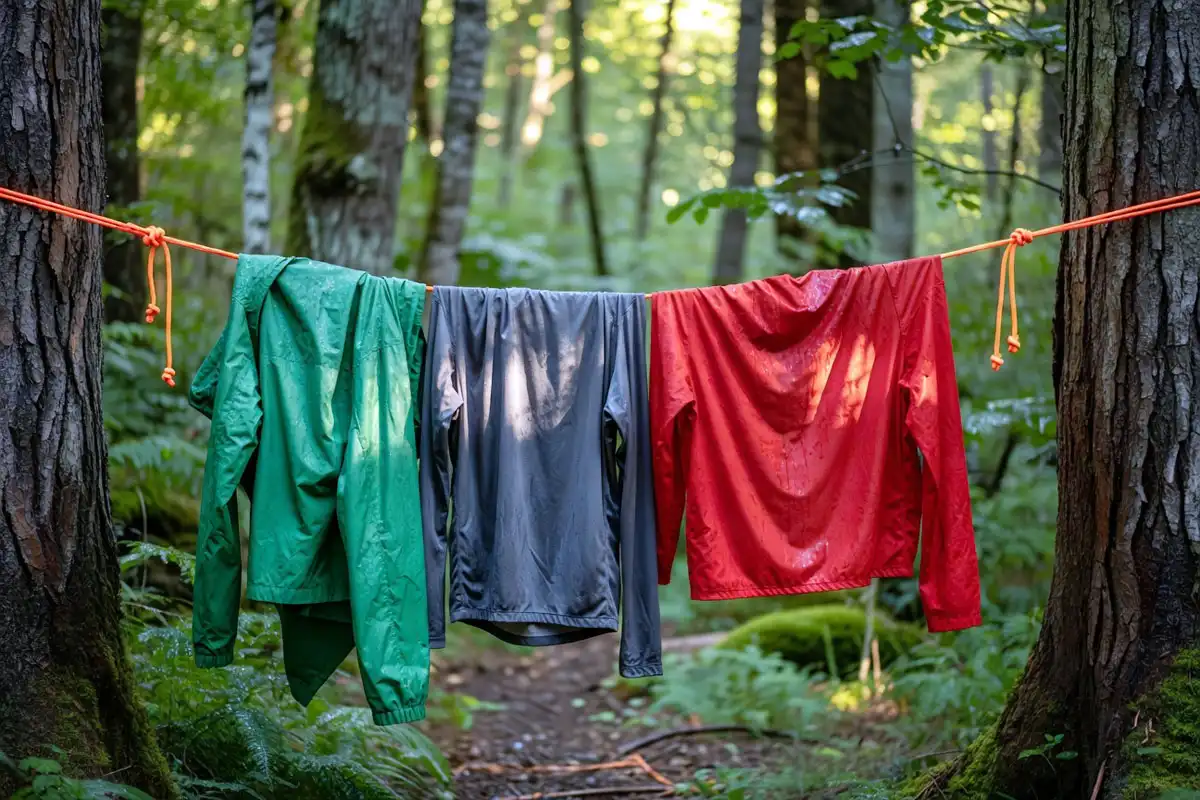
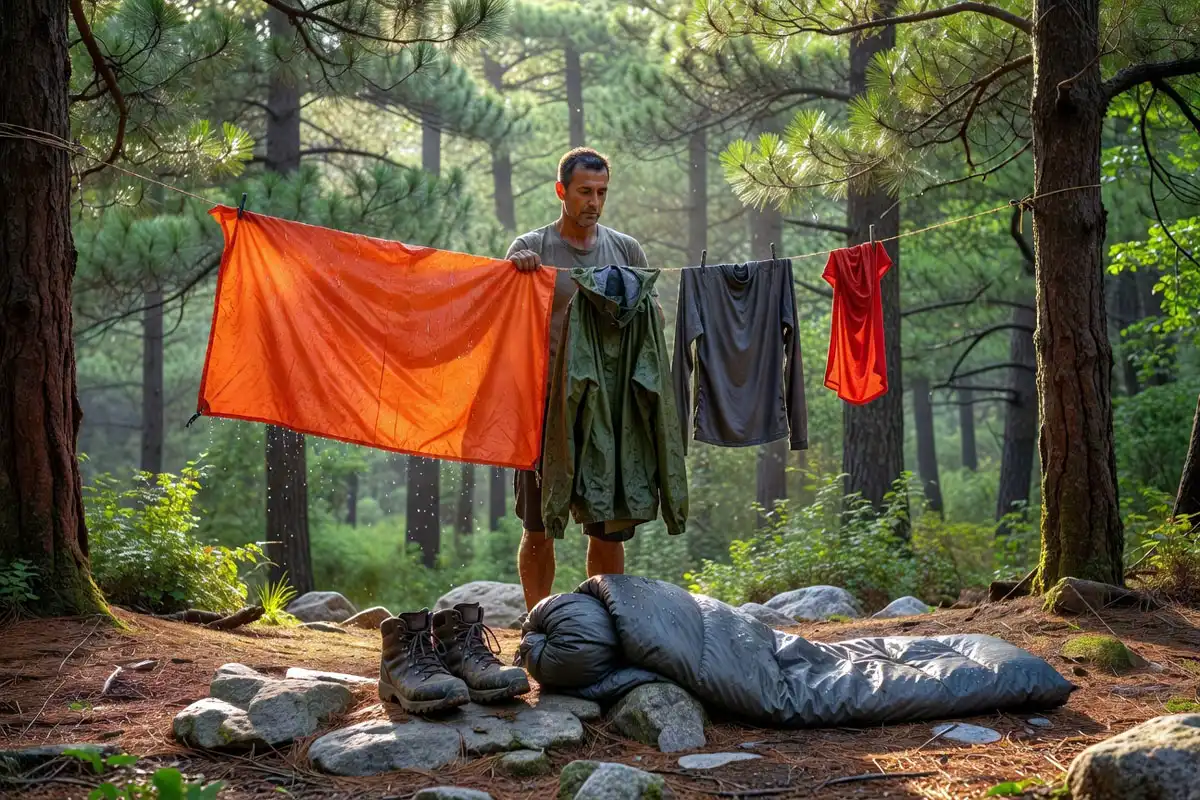
A 550 paracord line between two trees works well. Set it at shoulder height so fabric hangs freely without touching the ground.
Drape clothing over the line without folding. Fold lines trap moisture. A single layer of fabric dries in roughly half the time of a folded double layer.
Step 4: Open Zippers and Loosen All Closures
Open every zipper on the tent body, sleeping bag, and pack pockets. Open jacket collar snaps and boot lace eyelets. Air circulates into the interior only when closures stay open.
Turn clothing and sleeping bags inside out halfway through drying. The side that rests against skin often holds more body salt and moisture.
Step 5: Position Gear in Direct Sunlight
UV radiation from direct sunlight accelerates evaporation and kills surface bacteria. Place the tent fly flat on a dry rock or grass, or drape it over shrubs. Rotate the fly every 30 to 45 minutes so both sides receive sun.
If you rely on a tarp as part of your tent setup, dry it separately before packing it.
Step 6: Dry Boots Using Newspaper or Dry Grass
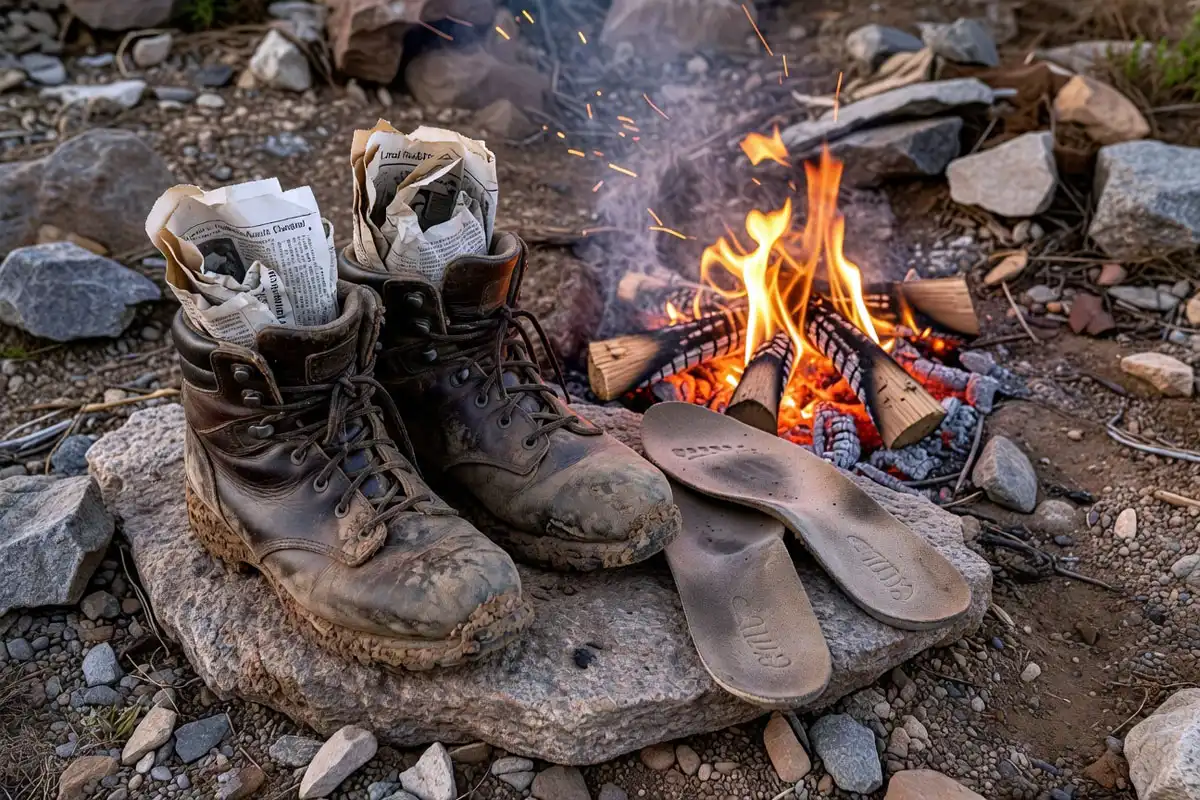
Remove insoles and laces. Stuff the boot with crumpled dry newspaper or dry grass. The paper absorbs interior moisture and allows the boot shell to breathe.
Replace the newspaper every 2 hours. Leather boots need 6 to 8 hours to dry fully. Synthetic trail runners dry in 3 to 4 hours.
Do not dry boots directly on fire embers or hot stones. Heat above 60°C (140°F) degrades EVA foam midsoles and weakens adhesive seams.
Step 7: Fluff Down Items Every 30 Minutes
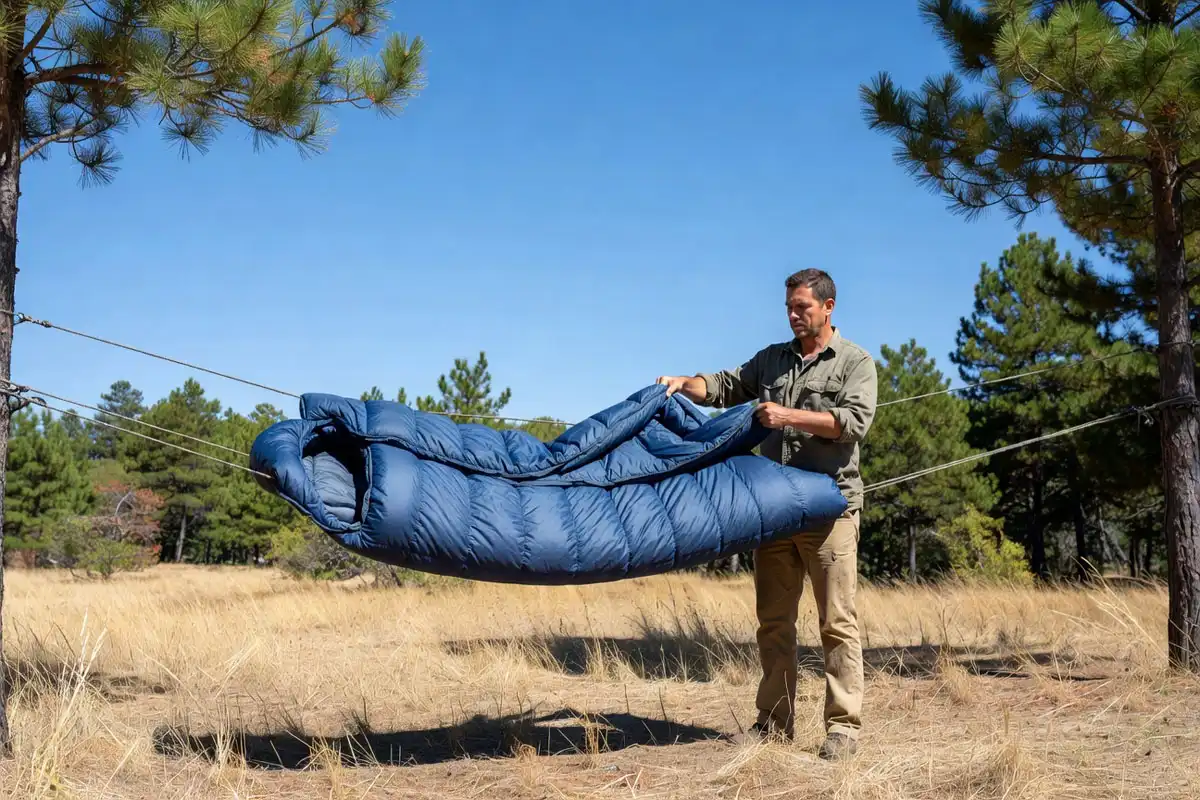
Down sleeping bags and jackets need manual fluffing while they dry. Wet down clusters compress and stick together. Pulling the fabric and reshaping the baffles every 30 minutes separates the clusters and restores loft.
I covered this in more detail in an earlier article on keeping bedding dry in humid weather, which also applies here.
Step 8: Check for Dry Before Packing
Press the back of your hand against every surface before packing. Damp fabric feels noticeably cooler than dry fabric against skin. Pay attention to seams, corners of the tent, and the footbox of a sleeping bag. These areas hold moisture longer.
How to Dry Specific Gear Items
Tent
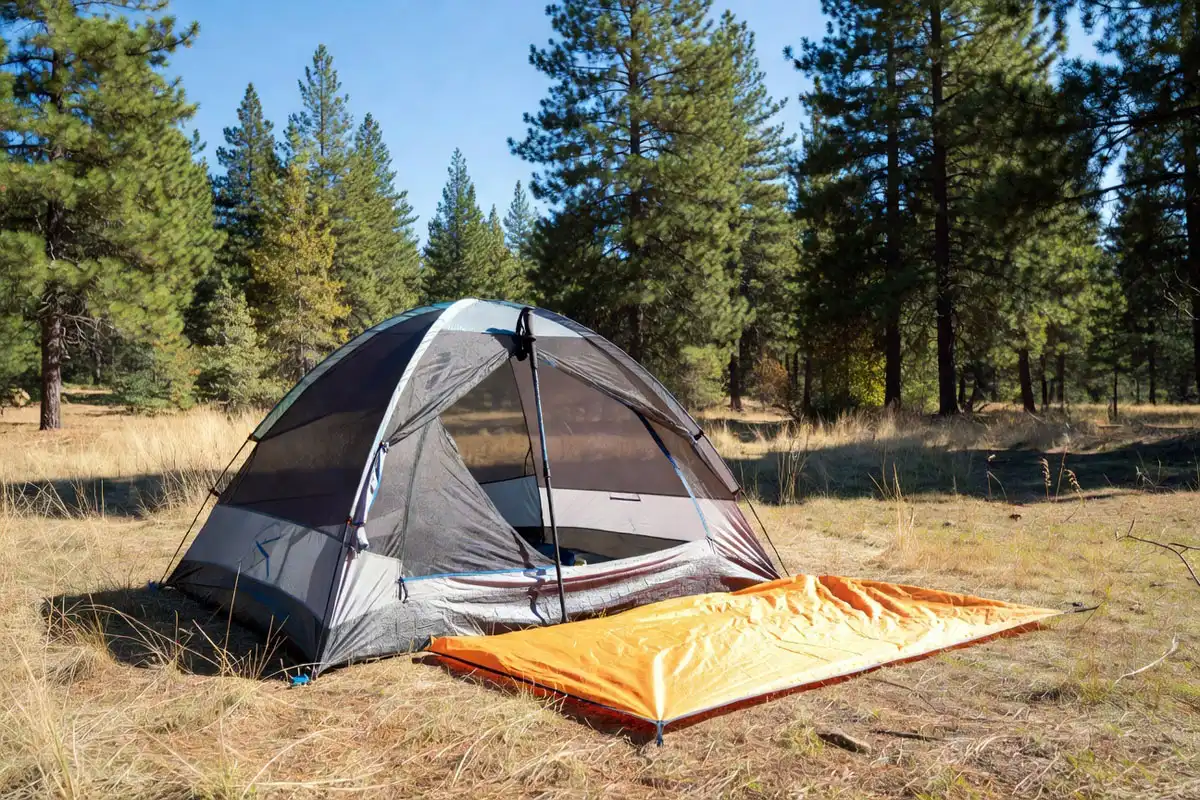
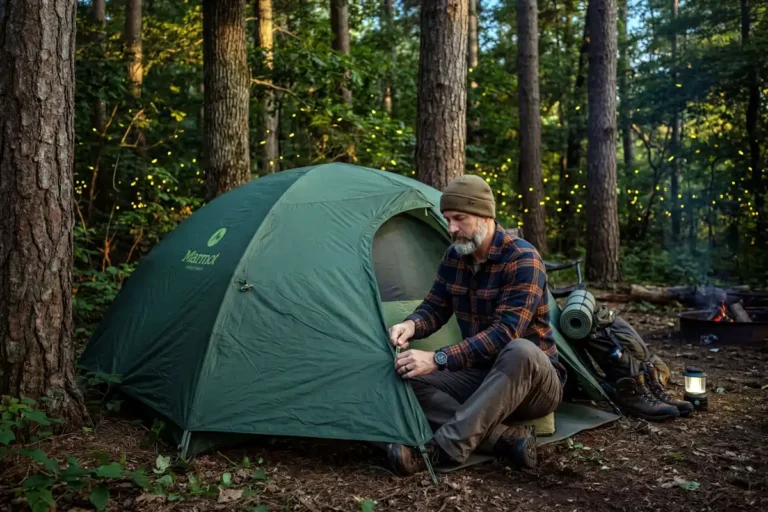
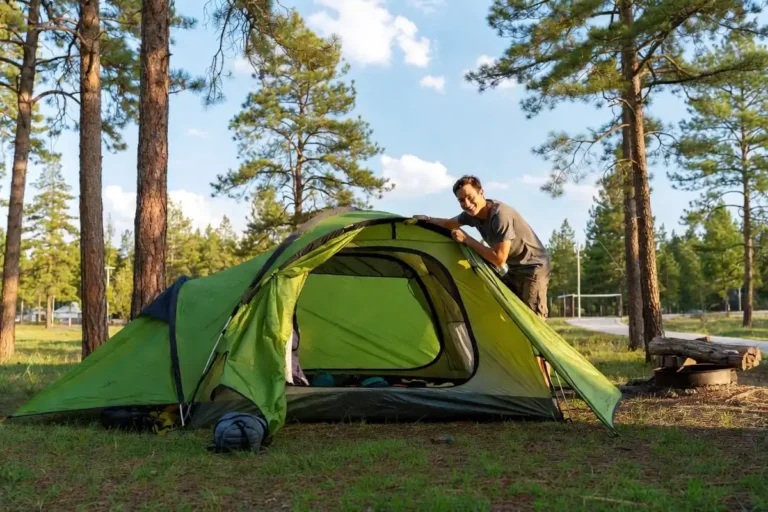
Stake the rainfly to the ground with its own poles or lay it flat on a raised surface. Prop the inner tent body open using a trekking pole through the apex. Airflow through both vents speeds drying.
If you want to improve airflow inside your shelter during damp conditions, the approach I described in ventilating a tent in cold weather applies here too.
Sleeping Bag
Hang the sleeping bag lengthwise over two paracord lines spaced 60 cm apart. This distributes the weight evenly and prevents the fill from compacting in the foot section. Synthetic fill bags dry in 2 to 3 hours in sun. Down bags need 4 to 6 hours minimum.
Rain Jacket and Pants
Turn the jacket inside out. Hang it on a line with the sleeves extended outward, not draped at the sides. This exposes the lining to air. Rain pants dry faster when hung from the waistband with legs open.
For tips on staying dry during wet trail days, I wrote an article on hiking in rain without overheating that covers layering and moisture management on the trail.
Backpack
Empty all pockets and turn them inside out. Open the main compartment fully and prop it open with a water bottle or stuff sack. Hang the pack from its haul loop so the base faces down, allowing any water trapped inside to drain.
Frame packs take 4 to 5 hours to dry fully because of the foam back panel.
Drying Gear When There Is No Sun
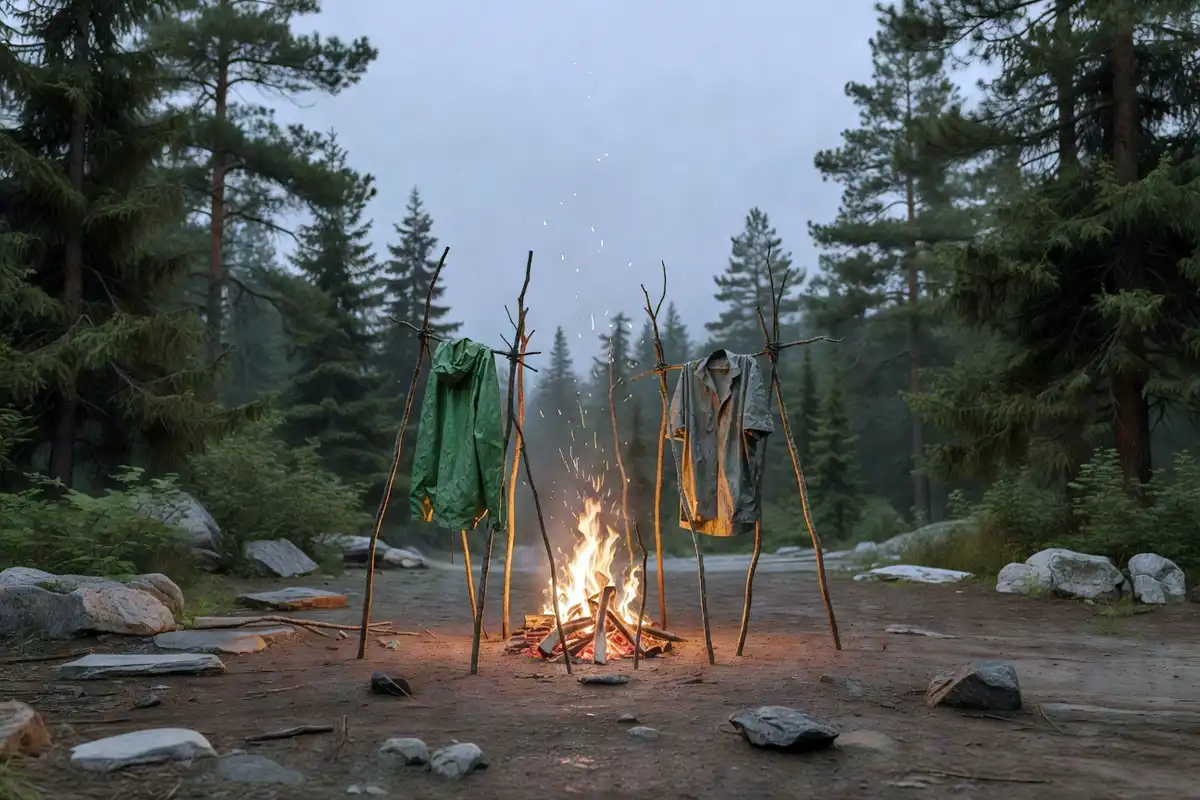
Rain that stops in the afternoon often leaves a cloudy, still sky. You can still speed up drying with three techniques.
Use wind. Hang gear on the windward side of your campsite. Even light wind at 10 km/h accelerates evaporation significantly compared to still air.
Use camp heat. Position gear near the campfire at a safe distance of at least 1 metre. Radiant heat dries fabric without direct flame contact. Rotate items every 15 minutes.
Use your body heat. Slightly damp base layers dry fastest when worn against skin. Your body temperature drives off the remaining moisture within 30 to 60 minutes of light activity.
If the campsite sits on wet or poorly draining ground, keep your gear off the surface. I covered what ground conditions do to tent materials in an article about ground cloth options for wet soil.
Common Drying Mistakes to Avoid
Packing gear too quickly. A tent that feels dry on the outer shell often holds moisture in the seam tape and floor. Give it an extra 20 minutes after it appears dry.
Drying over flames. Direct flame exposure melts nylon, compromises DWR coatings, and weakens taped seams.
Folding gear on the line. A folded double layer takes twice as long to dry. Spread single layers across the full line length.
Ignoring tent poles. Hollow aluminum pole sections trap water inside. Tilt each section vertically and tap the end against your palm to drain them.
Skipping boot insoles. Wet insoles left inside boots block airflow and cause boots to smell. Remove and dry them separately every time.
How to Prevent Gear from Getting Soaked in the First Place
Prevention reduces drying time at the end of the day.
- Store the sleeping bag inside a dry sack inside your pack. A 20L dry sack keeps it dry in heavy rain.
- Use a pack rain cover on the trail. Pack covers keep the main compartment dry in moderate rain.
- Pitch the tent with the rainfly fully tensioned. A slack fly touches the inner body and transfers condensation through the mesh.
- Apply DWR spray to the tent fly and rain jacket each season. DWR causes water to bead and run off instead of saturating the fabric.
FAQs on Drying Wet Camping Gear at the Campsite

How long does it take to dry a wet tent at camp?
A wet tent dries in 1 to 2 hours in direct sun with light wind. On overcast, humid days without wind, it takes 4 to 6 hours. Thick floor material and taped seams hold moisture longest.
Can you dry a sleeping bag over a campfire?
No. Position a sleeping bag at least 1 metre from the fire for radiant heat only. Direct flame contact melts synthetic fill and scorches down baffles. High heat also damages DWR coatings permanently.
What absorbs moisture from wet camping gear fastest?
Dry newspaper absorbs moisture from boot interiors faster than any camp alternative. For clothing, cotton dry towels pull surface moisture off quickly before hanging. Silica gel packets inside packed gear absorb residual moisture during storage.
Does wet camping gear grow mold quickly?
Mold begins to develop on damp fabric within 24 to 48 hours in warm conditions above 20°C. Storing gear wet, even for one or two nights, produces musty odors that require a full machine wash to remove from synthetic items.
Is it safe to pack slightly damp gear for the drive home?
No. Even slightly damp gear produces mold during a long car ride or storage. Lay all gear flat in the trunk with windows cracked during transport, then air it out fully at home before storing.
Final Thoughts
Wet gear dries quickly when you work through a clear order: start with the slowest items, open every zipper, hang pieces separately in sun and airflow, and check by touch before packing. The whole process at a campsite takes 2 to 4 hours on a fair day.
The habits that save the most time are the preventive ones: a dry sack for your sleeping bag, a tensioned rainfly before sleep, and fresh DWR coating each season. Those three steps keep drying sessions short even after heavy rain.