How to Hike Uphill Without Losing Energy Too Fast

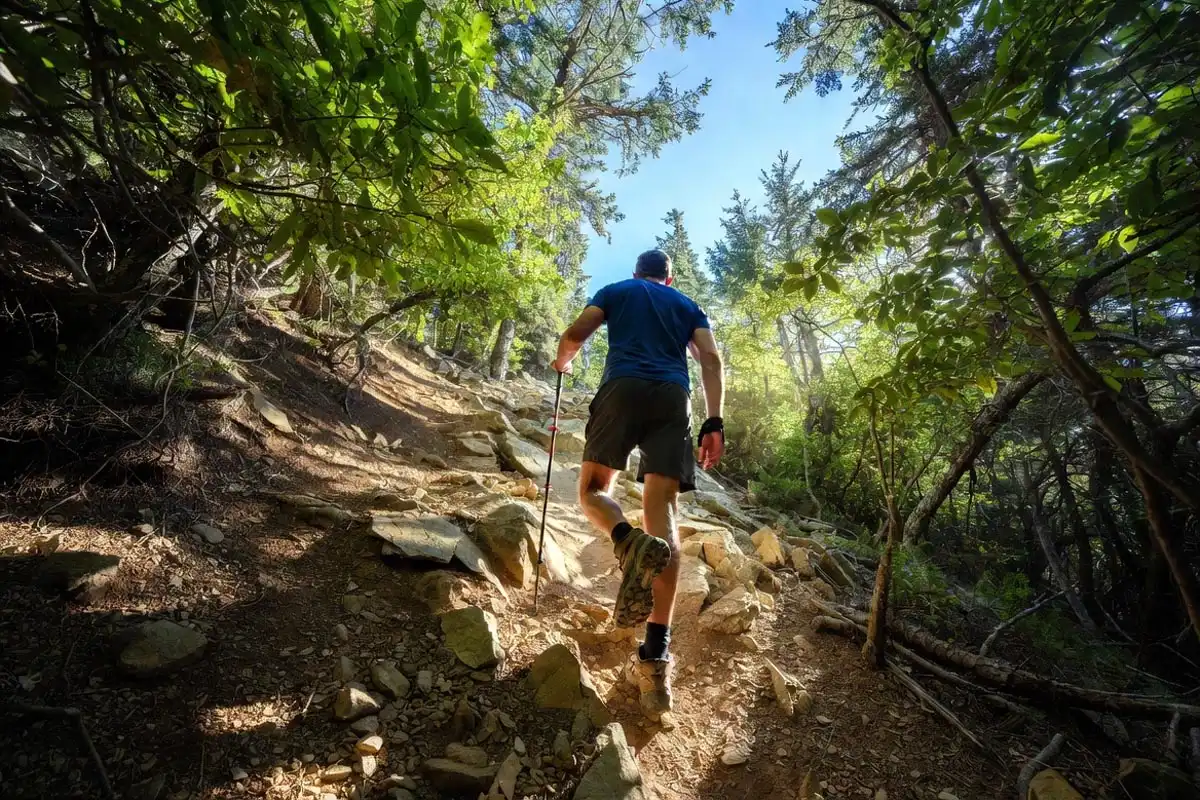
To hike uphill without losing energy too fast, remember that climbing burns energy faster than flat terrain because your leg muscles work directly against gravity with every step forward. This guide covers pacing, breathing mechanics, foot placement, nutrition timing, and gear selection to help you climb efficiently. Whether you’re on a gradual forest trail or a steep switchback, these techniques apply at every fitness level and pack weight.
Shorten your stride, slow your pace to a conversational breathing rate, and plant your full foot flat on the slope. Take a 5-minute rest every 45 to 60 minutes. Eat a small snack every 90 minutes and drink water before thirst arrives. These five adjustments cut energy loss on steep ascents by keeping your heart rate and muscles working at a sustainable output.
Why Uphill Hiking Drains Energy So Fast
Climbing steep terrain forces your quadriceps, glutes, and calves to contract harder and longer than on flat ground. Your cardiovascular system responds by raising your heart rate to deliver more oxygen to working muscles.
The steeper the grade, the faster your glycogen stores deplete. Glycogen is the primary fuel your muscles use during high-intensity effort. Once stores drop, your legs feel heavy and your pace falls apart.
Two additional factors speed up fatigue: a heavy pack shifts your center of gravity backward, and poor foot placement forces your muscles to stabilize an uneven load with every step.
Learn more: Eat Before and During a Long Day Hike
What Happens to Your Body on a Steep Climb
Your heart rate climbs first. Above roughly 75% of your maximum heart rate, your body shifts from primarily burning fat to burning carbohydrates. Carbohydrates burn faster and run out sooner.
Your breathing rate increases next. When you breathe too fast or too shallow, carbon dioxide builds up and your muscles receive less usable oxygen per breath.
Your pace then collapses if you started too fast. Most hikers lose the most energy in the first 15 minutes of a climb by pushing too hard before their cardiovascular system adjusts.
How to Prepare Before You Start Climbing
Preparation reduces energy loss before the first step uphill.
Check the elevation profile. A trail gaining 300 meters over 3 kilometers demands a different starting pace than a trail gaining 300 meters over 1 kilometer. I always check the topographic profile the night before using a mapping app.
Eat a moderate meal 60 to 90 minutes before the climb. A meal combining complex carbohydrates with protein provides a steady fuel release. Examples include oatmeal with nuts or whole-grain bread with eggs.
Hydrate before you start. Drink 500 ml of water in the 30 minutes before the ascent. Dehydration reduces muscular endurance and raises perceived effort on uphill terrain.
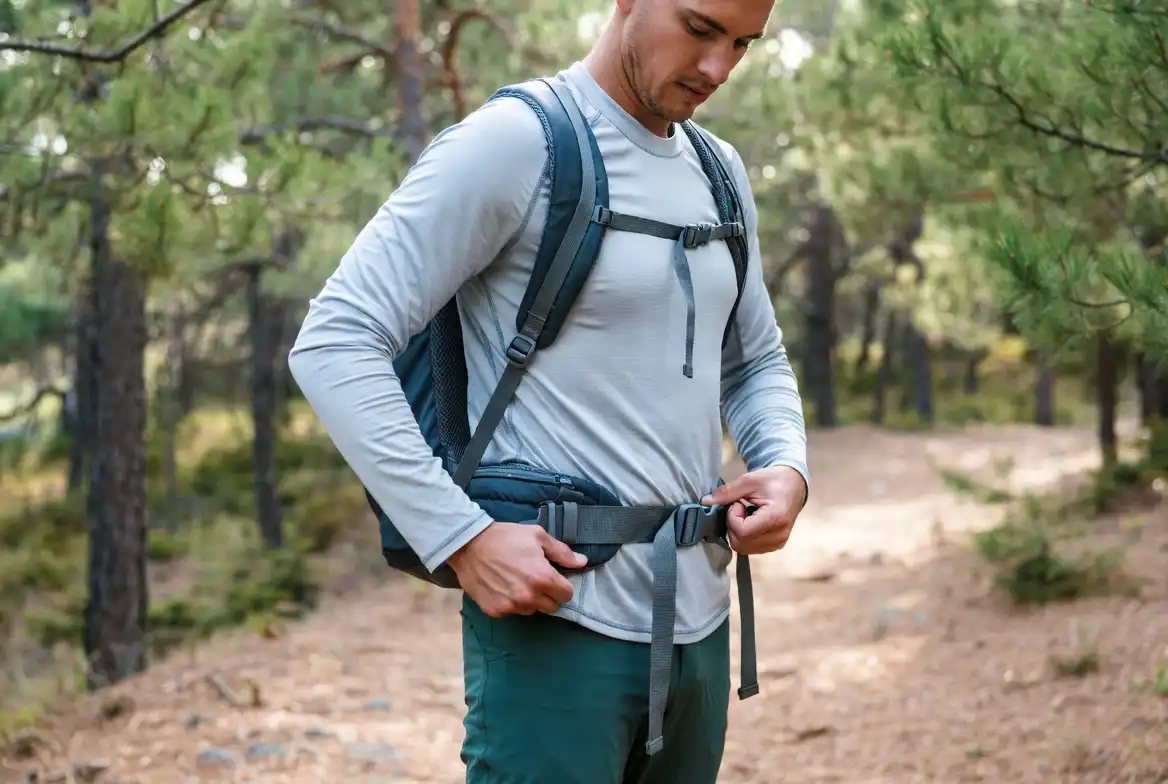
Adjust your pack. Pull shoulder straps and hip belt snug so the pack’s weight sits on your hips, not your shoulders. A hip-transferred load reduces spinal compression and frees your breathing muscles.
If you plan a full day out, I covered how to structure your preparation in my guide on planning a day hike to avoid getting lost, which pairs well with the energy strategy below.
Step-by-Step: How to Hike Uphill Without Running Out of Energy
Step 1: Slow Down Before You Think You Need To
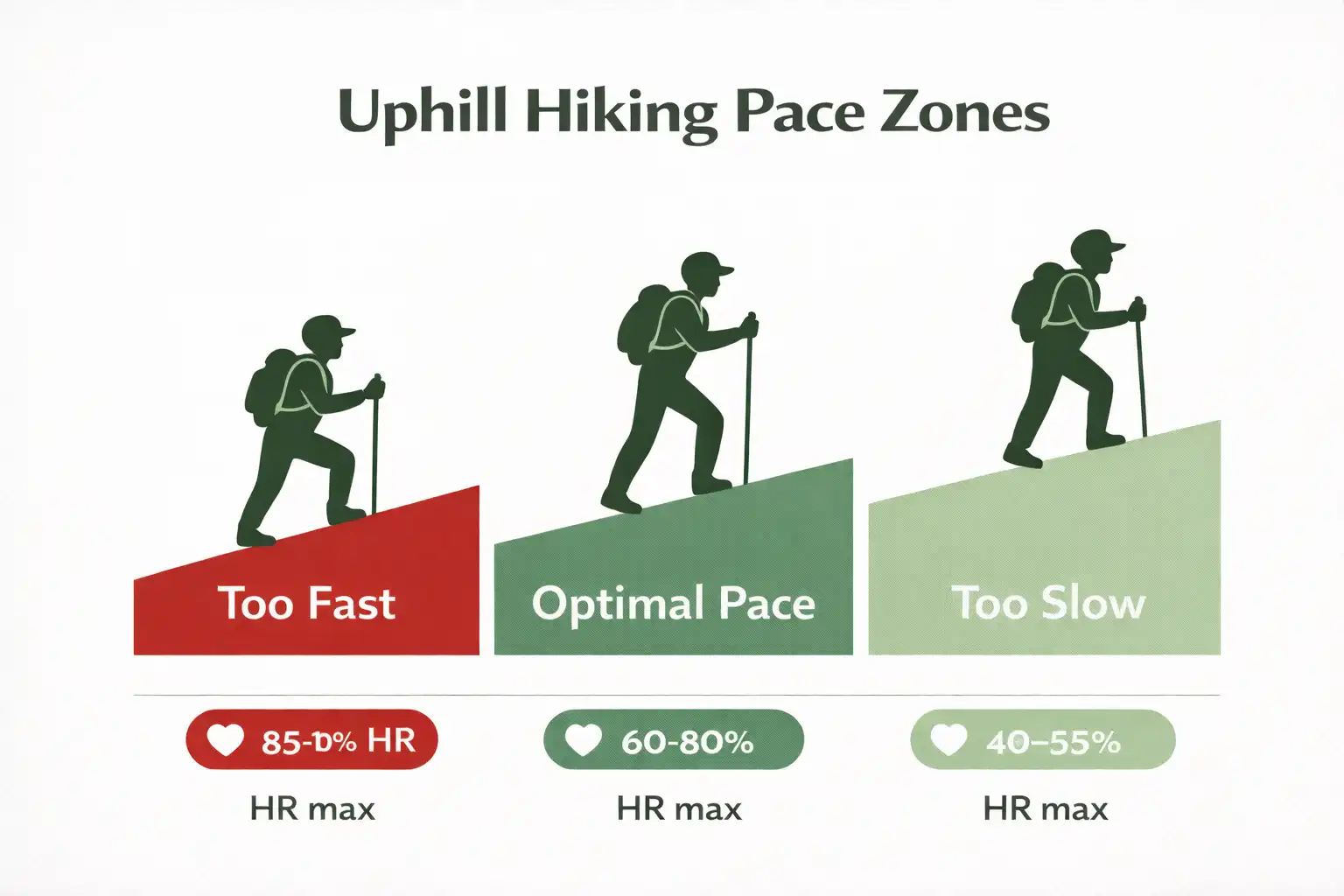
The most common mistake is starting an ascent at your flat-terrain pace. Your cardiovascular system takes 8 to 12 minutes to reach a stable output. If you push hard in that window, you create an oxygen debt that costs you for the next hour.
Drop your pace by 30% as soon as the trail tilts upward. You should be able to speak a short sentence without gasping.
Step 2: Shorten Your Stride
Long strides on steep terrain lift your knee higher than necessary and extend your hip flexors past their efficient range. This wastes energy on every step.
Shorten your stride so your foot lands close to your body’s center. Shorter, quicker steps maintain forward momentum with less muscular effort per stride than long, reaching steps.
Step 3: Plant Your Whole Foot, Not Just Your Toe
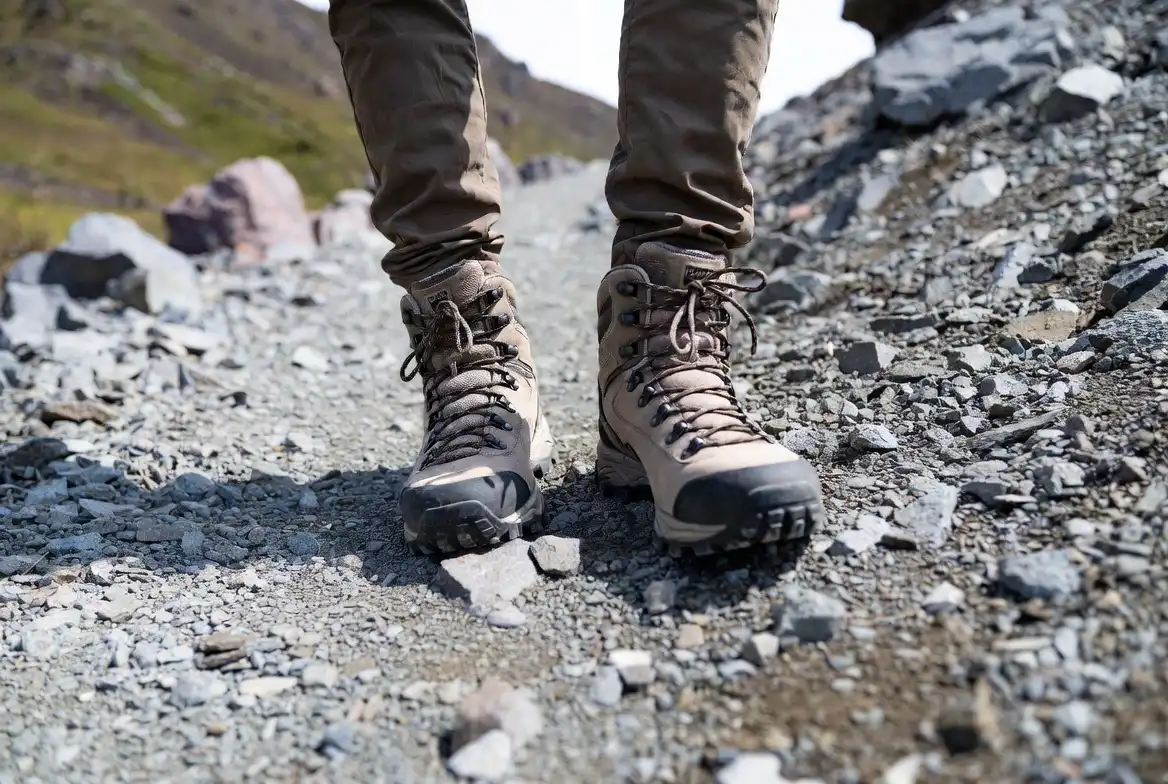
On a moderate incline, place your entire foot flat on the ground. When you walk on your toes on steep terrain, your calf muscles bear the full load of every step. They fatigue within minutes.
A flat-foot placement distributes the load across your calf, quad, and glute. This spreads the work across three large muscle groups instead of one.
On very steep ground above 30 degrees, angle your feet outward in a herringbone pattern. This shortens the Achilles demand and gives your calf a partial rest on each step.
Step 4: Control Your Breathing
Breathe in for 2 to 3 steps, then out for 2 to 3 steps. This rhythmic breathing pattern matches oxygen delivery to foot strike and prevents the shallow, rapid panting that causes carbon dioxide buildup.
Exhale fully. Many hikers inhale well but exhale short. A complete exhale removes carbon dioxide and creates space for a deeper intake on the next breath.
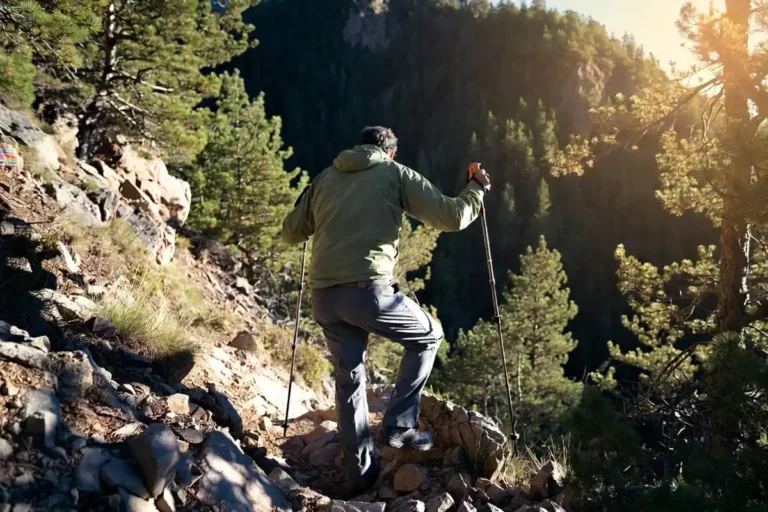
Step 5: Use Trekking Poles Correctly
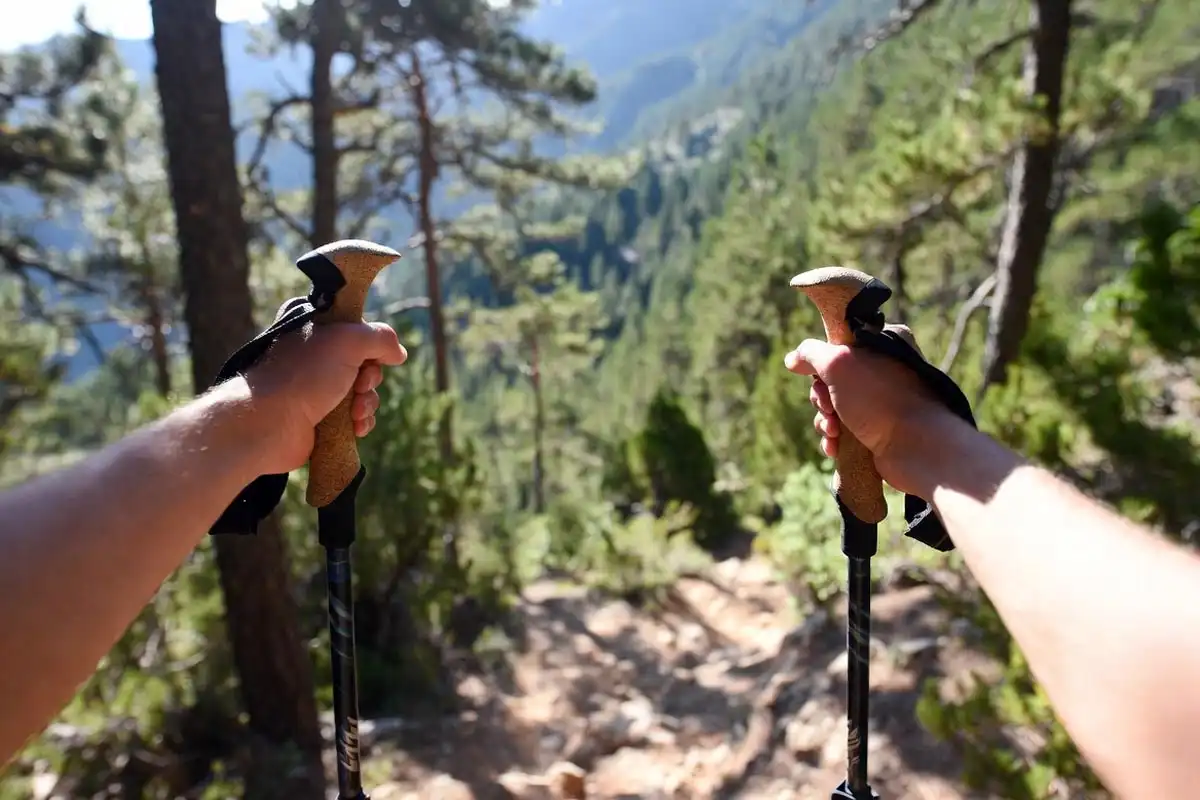
Trekking poles transfer 20 to 25% of uphill load from your legs to your arms and upper body. That transfer reduces quad and calf fatigue on long climbs.
Plant each pole at a slight backward angle as your opposite foot steps forward. Pushing through the pole as you pass it provides forward drive rather than just balance.
Extend your pole grips by 5 to 10 cm when climbing to keep your wrist angle neutral. A bent wrist under load reduces power transfer and strains the forearm.
Step 6: Take Structured Rest Stops
Rest before you need to, not after. A 5-minute stop every 45 to 60 minutes lets your heart rate drop, clears lactic acid from your muscles, and restores your breathing rhythm.
Sit or stand in a stable position. Leaning forward with hands on knees opens your diaphragm and speeds breathing recovery faster than standing upright.
Do not sit for longer than 10 minutes on a cold or windy day. Your core temperature drops quickly and your muscles stiffen, making the restart harder.
How to Fuel and Hydrate During the Climb
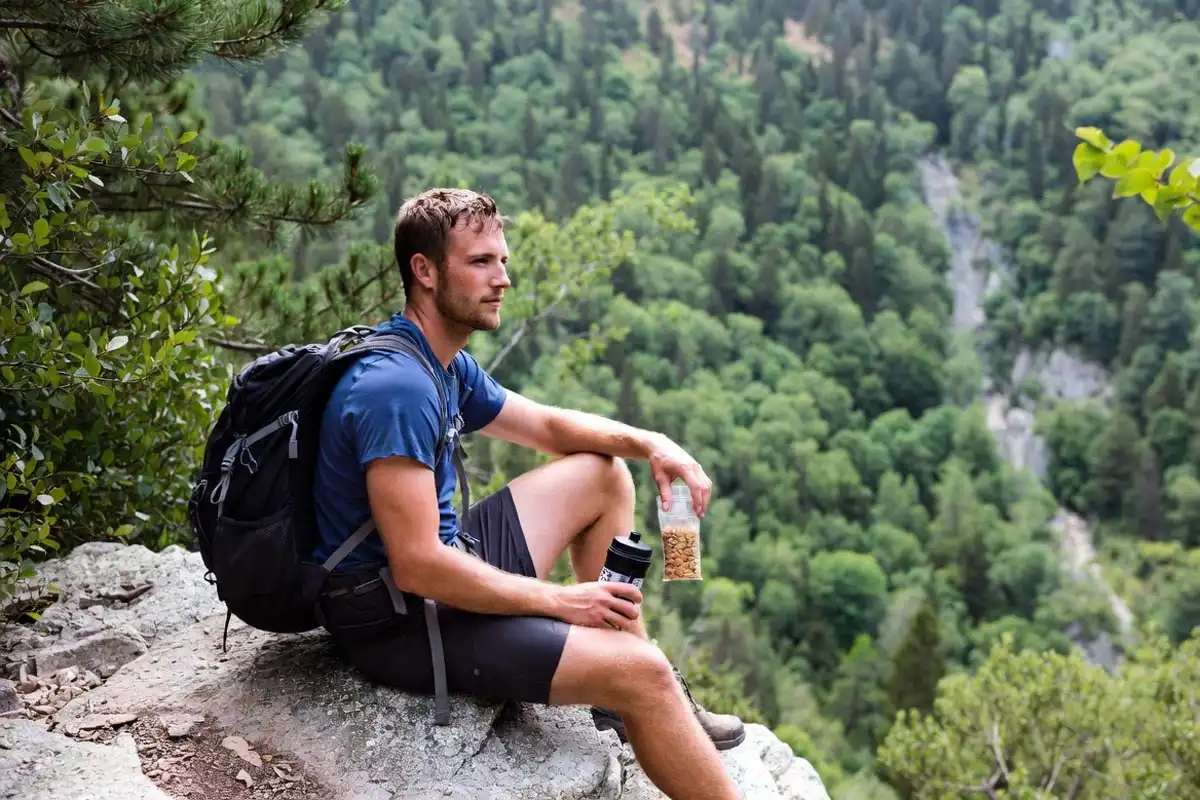
Energy bonking on an uphill hike happens when blood sugar drops too low and glycogen stores run out. Both are preventable with regular, small inputs.
Eat every 75 to 90 minutes on active climbs. Choose foods that release energy quickly, including trail mix, energy bars, dates, or banana slices. Avoid large meals during a climb. A large meal redirects blood flow to your gut and away from your working muscles.
Drink 150 to 200 ml of water every 20 to 30 minutes. On warm days or humid trails, increase to 250 ml. You lose water through breathing and sweat faster on ascents than on flat ground.
I covered exact water quantities for different trip lengths in my earlier piece on how much water to bring camping for each camper, which includes a table for different temperatures and pack weights.
Add electrolytes on climbs over 2 hours. Sweat removes sodium, potassium, and magnesium. Low sodium triggers cramps in the calves and hamstrings, which are already under heavy load on steep terrain. Electrolyte tablets or sports drink powder dissolve in your water bottle and replace what sweat removes.
What Gear Reduces Energy Loss on Steep Terrain
Footwear
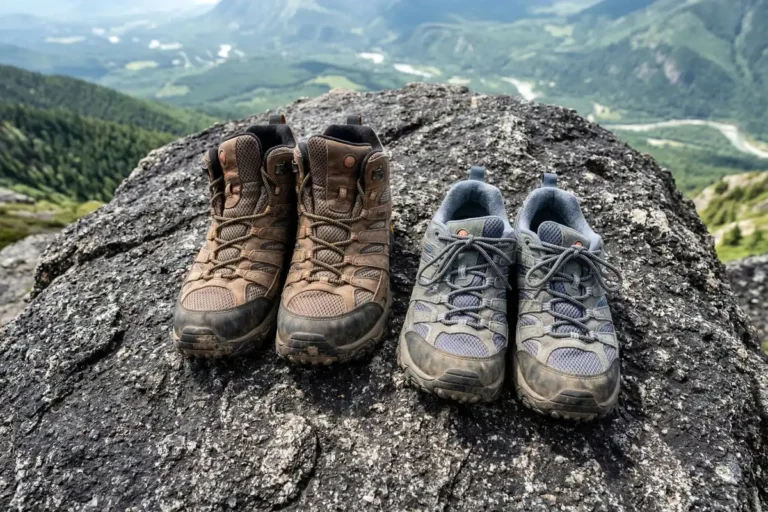
A hiking boot with a stiff midsole transfers your push-off force directly into the ground. A soft-soled trail runner compresses under load and absorbs energy with every step. On trails above 15 degrees of incline, a stiff midsole delivers measurably better efficiency.
Ankle support matters on loose or rocky slopes. A mid-cut or high-cut boot reduces ankle roll on uneven footing, preventing the small stabilizing muscle contractions that drain energy over hours.
Pack Weight
Every additional kilogram of pack weight increases energy expenditure on a steep climb by approximately 10% above baseline. Audit your pack before steep routes and remove non-essential items.
Carry your heaviest items closest to your back and as high as your shoulder blades. This placement keeps your center of gravity aligned with your spine and reduces the backward lean that overloads your lower back and hip flexors.
Trekking Poles
Covered in Step 5 above. Poles with cork or foam grips absorb sweat and reduce hand fatigue on long ascents. Avoid poles with plastic handles on warm-day climbs.
Common Mistakes That Drain Energy on Uphill Hikes
Starting too fast. The most frequent energy mistake. Your body needs time to calibrate oxygen delivery. Start slow and resist the urge to match faster hikers at the trailhead.
Looking up at the summit. Constant upward gazing extends your neck and compresses your airway slightly. Keep your gaze 3 to 5 meters ahead on the trail, not at the top.
Holding your breath on hard sections. Some hikers instinctively hold their breath when pushing through a steep burst. This builds carbon dioxide rapidly. Keep breathing even when the terrain gets steep.
Skipping snacks because you feel okay. Hunger is a lagging indicator of low blood sugar. By the time you feel hungry on a climb, your energy output has already dropped. Eat on schedule, not on feeling.
Locking your knees at rest. Standing with locked knees during breaks cuts blood flow through the popliteal artery behind the knee. Keep a slight bend to maintain circulation.
Safety on Steep Uphill Trails
Know your personal heart rate limits. A sustained heart rate above 85% of your maximum is unsustainable for most hikers. If you cannot speak two sentences without stopping to breathe, you are working above a safe aerobic threshold. Slow down immediately.
Watch for heat exhaustion symptoms on warm climbs. Headache, dizziness, nausea, and stopping sweating on a hot day all signal a need to stop, move to shade, and hydrate. On trails exposed to direct sun, I always wear a brimmed hat and carry extra water. I discussed this risk in detail in my article on how to hike safely in extreme heat.
Tell someone your route and expected return time. On remote uphill trails, a twisted ankle on descent happens when you are already fatigued from the climb. A filed trip plan ensures someone knows where to look if you do not return.
Carry a basic first aid kit. Blisters develop faster on steep terrain because foot pressure increases with every step against the incline. Treat hot spots before they blister. I wrote a practical guide on treating minor cuts and blisters at camp that covers the exact steps.
Turn back if your legs stop responding. Heavy, uncoordinated legs signal neuromuscular fatigue. This state increases the risk of a fall, especially on loose or wet rock. A descent from 80% of the way up is always safer than a fall at the summit.
FAQs about Hike Uphill Without Losing Energy Too Fast

How slow should I hike uphill to save energy?
Slow enough to hold a short conversation without pausing for breath. This conversational pace keeps your heart rate below 75% of maximum and your body burning a mix of fat and carbohydrates. A pace that forces you to stop speaking mid-sentence is too fast for a sustained climb.
Should I use trekking poles for uphill hiking?
Yes. Poles transfer 20 to 25% of leg load to your arms on steep terrain. This reduces quad and calf fatigue significantly over a 2-plus hour ascent. Plant them at a backward angle and push through each pole as you step past it.
Why do my legs burn on uphill hikes even when I go slow?
Lactic acid accumulates when your muscles demand more oxygen than your cardiovascular system delivers. This happens when the grade exceeds your current fitness level. Structured rest stops every 45 minutes allow lactic acid to clear. Consistent uphill training over 6 to 8 weeks improves your lactate threshold and reduces the burning sensation.
How do I breathe correctly when hiking uphill?
Breathe in for 2 to 3 steps, then out for 2 to 3 steps. Exhale completely. A full exhale removes carbon dioxide and creates space for a deeper breath. Breathe through both your nose and mouth on steep sections to maximize air intake.
What should I eat before a long uphill hike?
Eat a meal with complex carbohydrates and moderate protein 60 to 90 minutes before the climb. Good options include oatmeal, whole-grain toast with eggs, or rice with beans. Avoid high-fat meals within 2 hours of the climb because fat slows gastric emptying and delays energy availability.
Conclusion
Uphill hiking demands more from your body than most trail conditions, but the energy cost drops significantly with the right technique. Shorten your stride, breathe rhythmically, plant your full foot, fuel on schedule, and rest before your legs demand it. These adjustments keep your muscles and cardiovascular system working at a sustainable pace rather than burning through your reserves in the first hour.
The summit comes easier when you treat the ascent as a system, not a test of willpower.