How to Keep Bug Net Off Head and Face While Sleeping

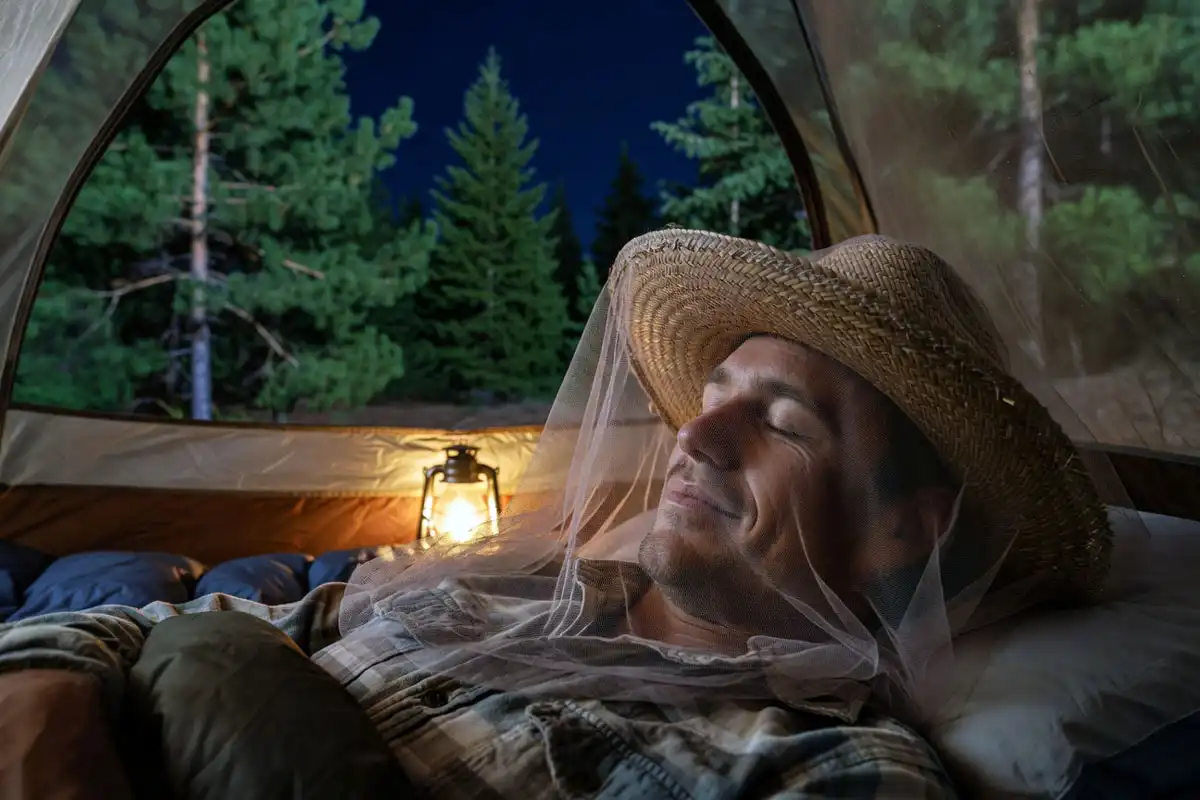
A bug net (or bug head net) keeps insects away, but it works best when the mesh stays off your head and face so you can breathe and rest comfortably while sleeping. This guide covers the main methods campers use to create clearance between the netting and your face while sleeping, so you stay protected without feeling suffocated.
Place a wide-brim hat on your head before pulling the head net over it. The brim acts as a frame that holds the mesh away from your nose and mouth. If you’re not wearing a hat, a small internal wire hoop or a rigid net with a built-in wire frame does the same job.
Why Does a Bug Net Touch Your Face While Sleeping?

Most head nets are designed for use while sitting or standing. When you lie down, gravity pulls the mesh against your forehead, nose, and cheeks. That contact creates two problems.
First, mosquitoes and no-see-ums can bite through thin mesh if it presses against your skin. Second, the sensation is uncomfortable enough to disrupt sleep.
The fix isn’t the net itself. It’s the structure underneath it.
Learn: Way to start camping in the wild
When Do You Actually Need a Bug Net for Sleeping?
You need a bug head net for sleeping in these situations:
- Camping in open shelters, hammocks, or lean-tos without full insect screens
- Sleeping with a tent door open in high-humidity or dense-forest environments
- Camping near standing water where mosquito pressure is heavy
- Traveling to regions where mosquito-borne illness is a concern
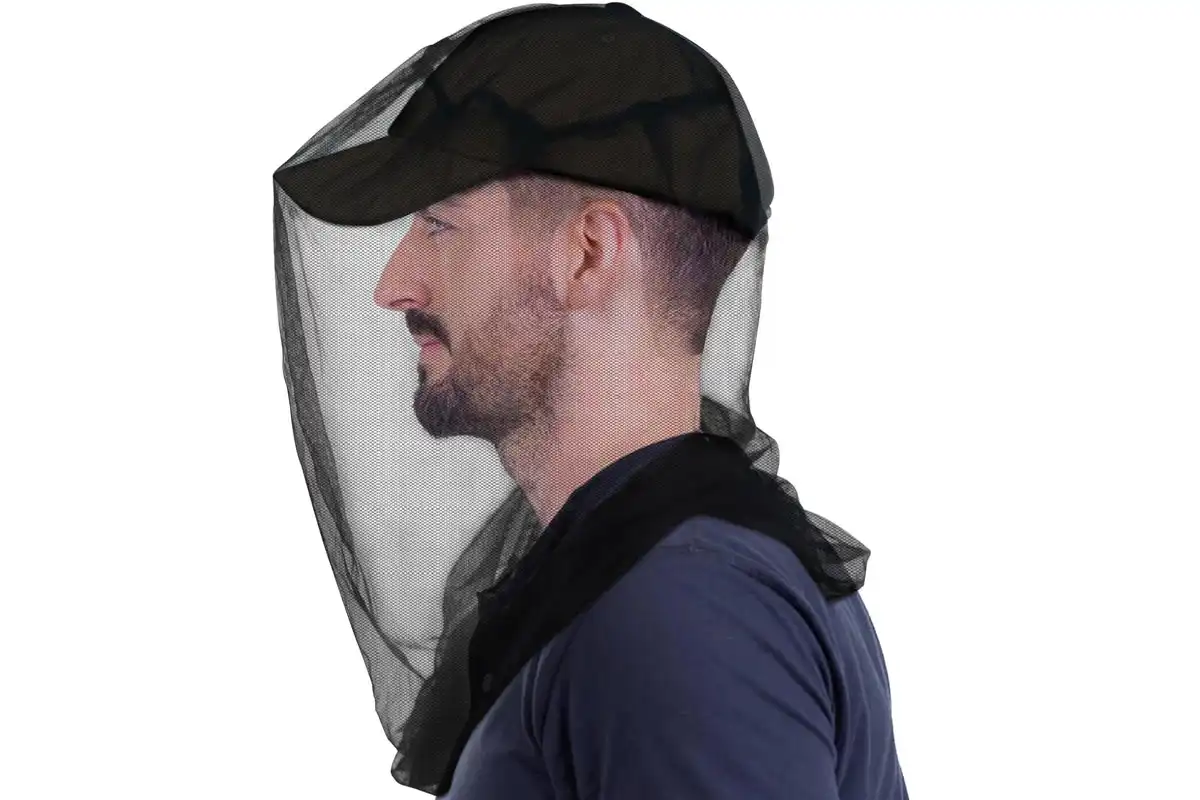
If you sleep in a fully enclosed tent with intact mesh panels, a head net is usually unnecessary. I covered insect control inside the tent in my earlier article on keeping insects out of your tent at night.
Types of Bug Nets Designed for Sleeping
Bug nets for sleeping come in three main forms. Knowing which type you have determines the correct setup method.
Pyramid nets suspend from a single overhead point and flare outward to the base. They need enough ceiling or branch height to keep the sloping sides away from your face. Example below of a pyramid bug net from Sea to Summit brand.
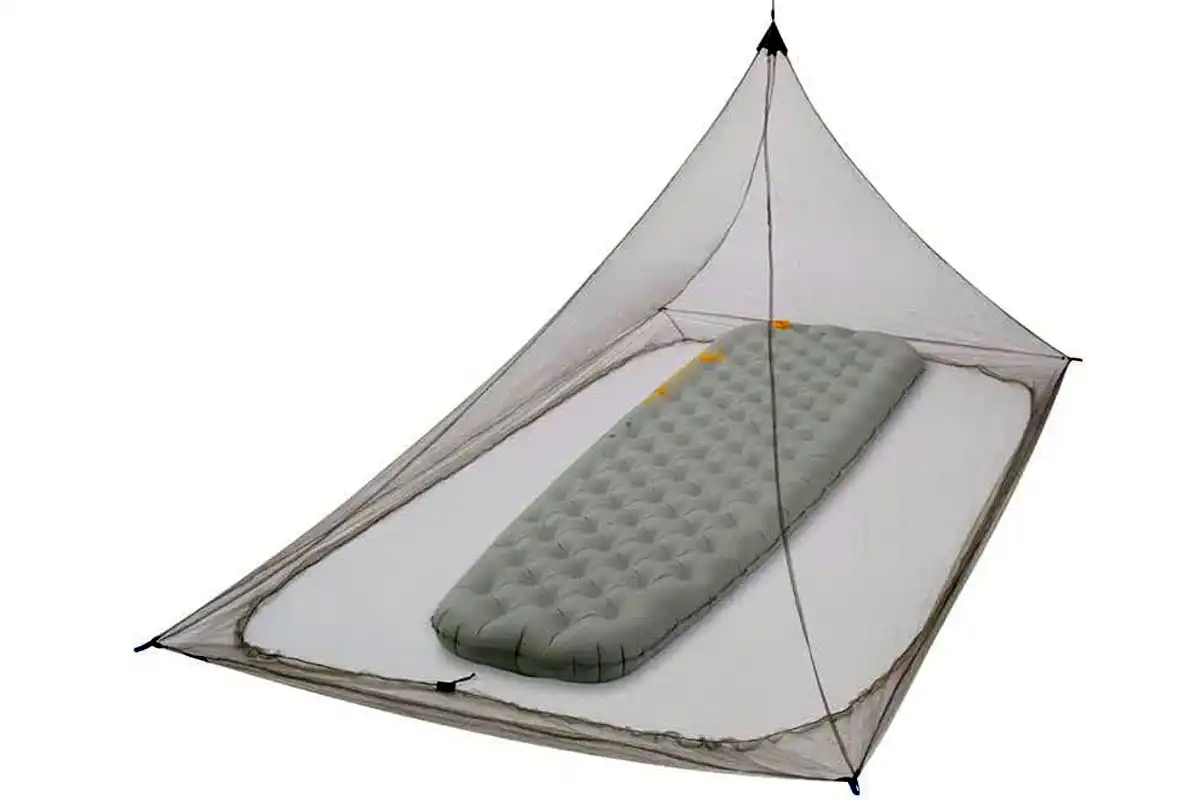
Hoop or bell nets use a rigid ring built into the net to hold the shape open. The hoop does the work automatically. These are the easiest type to keep off your face with minimal rigging.
Flat panel nets hang from multiple anchor points along the top edge. They need a ridgeline or taut horizontal cord. Without that support, they sag quickly.
How to Keep a Bug Net Off Your Head and Face While Sleeping
Step 1: Choose the Right Type of Head Net
Not all head nets are the same. For sleeping, look for one of these two designs.
Wire-frame head nets include a built-in stiff hoop that holds the mesh away from your face on its own. Coghlan’s and Sea to Summit both make versions with this feature.
Cone-style head nets flare out naturally and rely on a hat brim or collar tension to maintain shape.
Flat-style nets without any frame structure are harder to manage while sleeping. They work well while hiking, but they collapse against your face when you rest your head.
Step 2: Pair the Net With a Wide-Brim Hat

This is the most reliable method. A wide-brim hat with a brim of at least 2.5 inches keeps the mesh away from your nose and cheeks.
Put the hat on your head. Pull the head net over the hat, allowing the brim to hold the front section of mesh forward. Cinch the net around your neck or collar.
When you lie on your back, the brim creates an arch over your face. Side sleeping collapses one side of the brim, so roll slightly toward your back if you feel the net touching your cheek.
Step 3: Use a Rigid Internal Hoop or Insert
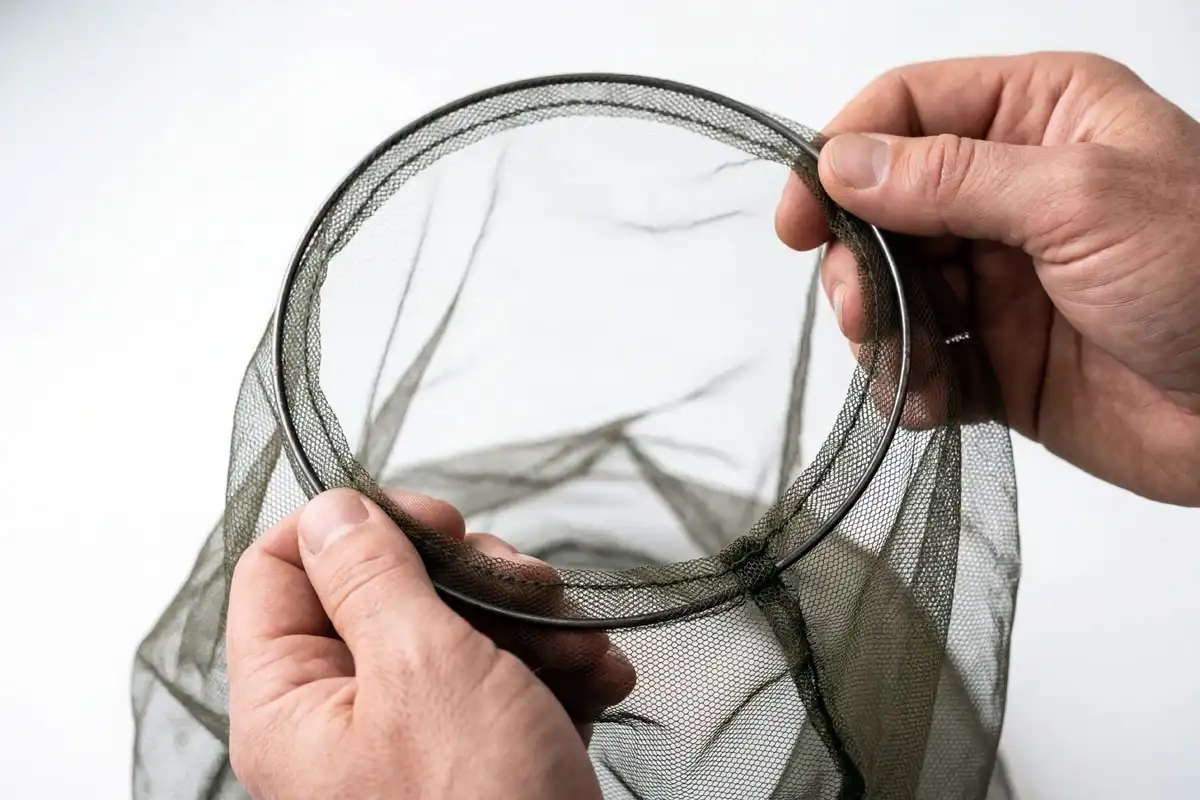
If you prefer sleeping without a hat, a small wire or plastic hoop insert holds the net open. Some head nets include this insert. You can also bend lightweight galvanized wire into a rough circle and thread it into the hem of the net.
The hoop sits on the crown of your head, and the net drapes outward from that point.
Step 4: Adjust Your Sleeping Position
Back sleeping is the best position for wearing a head net. It keeps your face pointing upward, so the net hangs above your nose rather than pressing against it.
Side sleeping puts the net under tension on one side. If you need to sleep on your side, pull the hat brim toward the pillow side before lying down. This gives extra slack where the net would otherwise compress.
Step 5: Secure the Bottom of the Net
The net moves when you shift in your sleep. Cinch the drawstring or elastic at the base firmly around your collar or neck opening. This prevents the whole net from sliding forward and bunching against your face.
Some campers tuck the base of the net under their shirt collar for extra security.
Additional Methods That Work

Hammock ridgeline trick: If you sleep in a hammock, clip the top of the head net to the ridgeline with a small carabiner. The upward tension keeps the mesh lifted off your face.
Buff or neck gaiter base: Wrap a lightweight buff around your neck, then cinch the head net over it. This creates a stable anchor point and prevents the net from riding up.
Integrated bivy or sleeping bag hood: Some sleeping bags include a built-in bug net hood. These are engineered to maintain clearance and are the most comfortable option for multi-night trips. If you deal with insects regularly on trail, this design eliminates the hat method entirely.
Mistakes That Cause the Net to Press Against Your Face
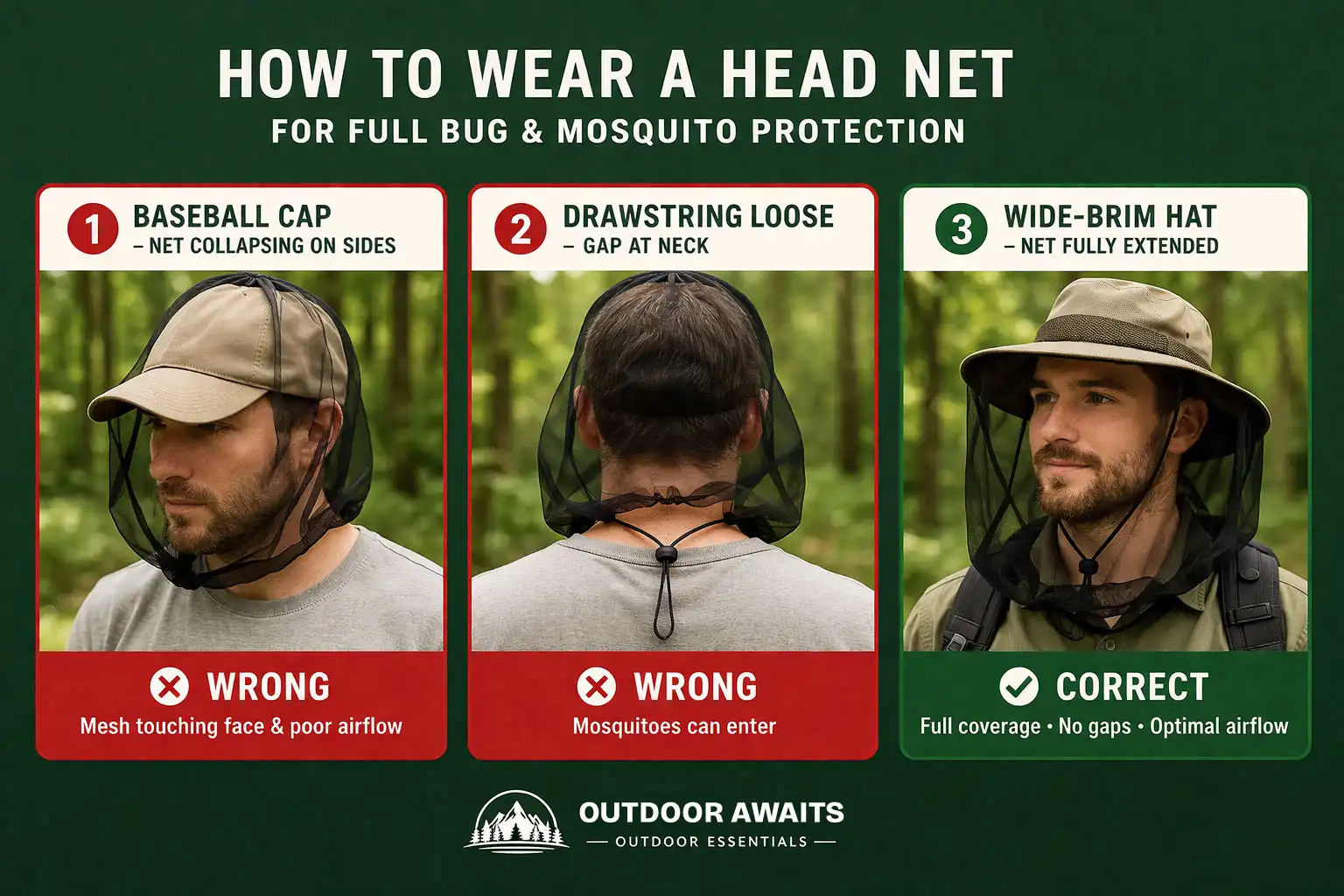
Using a net without any frame or hat: The mesh collapses immediately when you lie down. Always pair the net with a structure.
Cinching the base too loosely: A loose base lets the whole net shift toward your face during the night. Tighten the drawstring before sleeping.
Choosing a net that is too small: A net with a short drop from crown to collar leaves no room for the hat brim. Check the net’s drop measurement before buying. Most sleeping-use nets need at least a 10-inch drop.
Wearing a cap instead of a wide-brim hat: Baseball caps have a brim only on the front. The sides and back of the net still press in. Switch to a full wide-brim hat or a sun hat.
I’ve seen this mistake derail many a night’s sleep on trail. Getting bitten through the net is frustrating when the fix is a simple hat swap.
Safety Notes
In areas where mosquito-borne diseases are a risk, such as regions with malaria or dengue, head net integrity matters. Check the mesh for holes before each trip. The CDC recommends using nets with openings no larger than 1.5 mm to block no-see-ums and sandflies, not just mosquitoes.
DEET-based repellent applied to the outside of the net increases protection further. Do not apply repellent directly to skin that will be in contact with the net fabric.
For broader personal safety while camping alone, I discussed related precautions in my article on staying safe while solo camping.
How to Care for Your Head Net
- Rinse with cold water after each trip. Soap degrades some mesh coatings.
- Store loosely, not compressed in a tight stuff sack. Compression deforms the wire frame.
- Inspect mesh seams after storage. Small tears at the seams are the most common failure point.
- Replace a net with any hole larger than 1 mm. Insects find small gaps quickly.
FAQs on Keep Bug Net off Head and Face While Sleeping

Can mosquitoes bite through a head net while sleeping?
Yes, if the mesh presses against your skin. Mosquitoes bite through contact points. Keeping the net off your face using a hat brim or wire frame eliminates this risk entirely.
What is the best hat brim width to use under a head net?
A brim of 2.5 to 3 inches works well for most head nets. Wider brims provide more clearance but can feel awkward on a pillow. A simple straw or nylon sun hat works better than a structured hiking hat.
Do head nets work for no-see-ums?
Standard head nets block mosquitoes but not no-see-ums. For no-see-ums, you need a net rated at 20 denier or finer with openings below 0.6 mm. These finer nets reduce airflow slightly but are necessary in coastal and wetland environments.
How do I stop a head net from sliding off during sleep?
Anchor the base with a drawstring cinched around your collar, or tuck it under a buff. Clipping the crown to a ridgeline or tent loop with a carabiner prevents forward slide on back sleepers.
Is a head net better than insect repellent for sleeping?
Both serve different purposes. Repellent deters insects from landing. A head net blocks physical contact. Using both together provides the strongest protection, especially in high-density mosquito environments or during peak biting hours at dusk and dawn.
Final Thoughts
Keeping a bug net off your face while sleeping comes down to one core idea: the net needs a frame. A wide-brim hat is the simplest and most accessible option most campers already carry. Wire-frame nets or built-in hoop inserts work well when a hat is not practical.
Pick the right net for lying down, secure the base firmly, and adjust your sleeping position to reduce contact. Those three steps handle most problems.