How to Make a Foil Packet Meal Over Campfire Coals

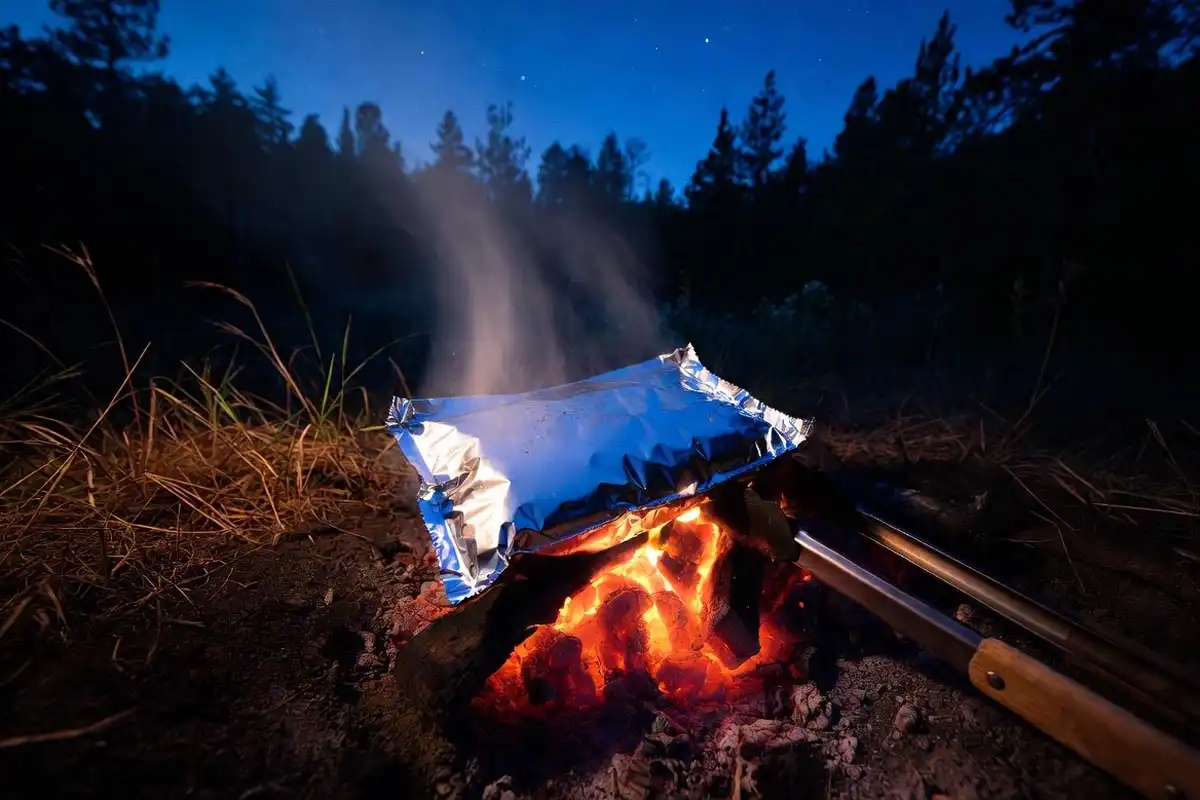
A foil packet meal cooks directly over campfire coals by sealing raw ingredients inside double-layered heavy-duty foil, where trapped steam does the actual cooking. This guide covers everything from reading your coal bed to assembling, placing, flipping, and safely opening a foil packet, so you produce a complete hot meal with no pots, no stove, and almost no cleanup. Whether you cook chicken thighs, salmon, or mixed vegetables, the same core method applies. I’ve used this technique on dozens of trips through the Chittagong Hill Tracts and forest campsites across Bangladesh.
Place sealed double-layer foil packets seam-side up on a bed of glowing coals with no visible flames. Cook for 15–25 minutes depending on protein, flip once at the halfway mark, and open one corner first to release steam before eating. Add 1–2 tablespoons of oil or butter inside every packet and leave a fist-sized air gap so steam builds and circulates evenly.
What Is a Foil Packet Meal?
A foil packet meal is a cooking method where raw ingredients seal inside folded aluminum foil and cook using radiant heat and trapped steam from campfire coals. The sealed pocket generates its own moisture, which cooks food faster and more evenly than dry heat alone.
Foil packet meals work for camping because they need no pots or pans, produce minimal waste, and cook individual portions separately. Each packet functions as its own cooking vessel.
Know more: Start a Campfire for Cooking in Wet Conditions
What You Need
Foil and Tools
- Heavy-duty aluminum foil (18-inch wide roll) — standard foil tears over live coals
- Long-handled tongs (at least 12 inches) — for placing, flipping, and removing packets safely
- Heat-resistant gloves — for adjusting packets near the coal bed
- Instant-read thermometer — removes guesswork with raw meat
- Small brush or spoon — for oiling the foil before layering ingredients
For your campfire cooking setup, I covered the full compact campfire cooking kit if you want to build a reliable kit before your next trip.
Ingredients That Work Well Together
Foil packets cook most reliably when ingredients finish at roughly the same time. Good combinations include:
- Boneless chicken thigh + thin potato slices + bell pepper
- Salmon fillet + asparagus + lemon slices
- Pre-cooked sausage slices + onion + zucchini
- Beaten eggs + cheese + diced vegetables (breakfast packet)
Cut dense ingredients (carrots, potatoes) into thinner slices than softer ones (zucchini, peppers). This balances cook times within the same packet.
When Is the Fire Ready?
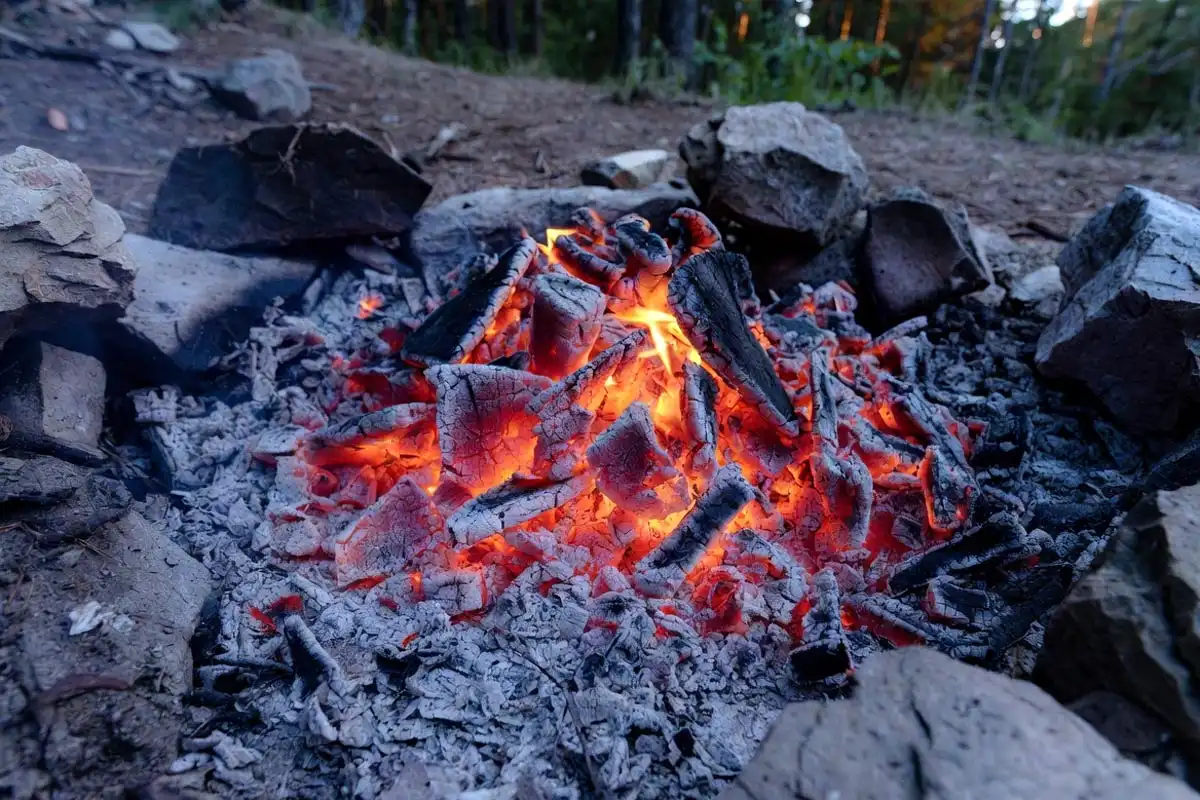
Open flames burn food and cause uneven heat. Foil packets need a coal bed, not active fire.
The fire is ready when:
- Flames die down to glowing orange and red embers
- Coals glow consistently with a thin layer of white ash forming on top
- No large yellow or blue flames remain visible
This typically takes 30–45 minutes from ignition with a standard wood campfire. I wrote a article on regulate heat on a campfire for cooking in full detail if you need help reading and managing coal temperature before you start cooking.
How to Assemble a Foil Packet (Step-by-Step)
Step 1 — Tear Two Sheets of Foil
Cut two sheets of heavy-duty foil, each about 18 inches long. Stack them with the shiny side facing inward. The shiny side reflects heat back onto the food, which improves cooking from below.
Step 2 — Oil the Center
Add 1–2 tablespoons of olive oil or butter to the center of the foil. This prevents the bottom layer of ingredients from scorching on the foil surface.
Step 3 — Layer Ingredients in the Correct Order
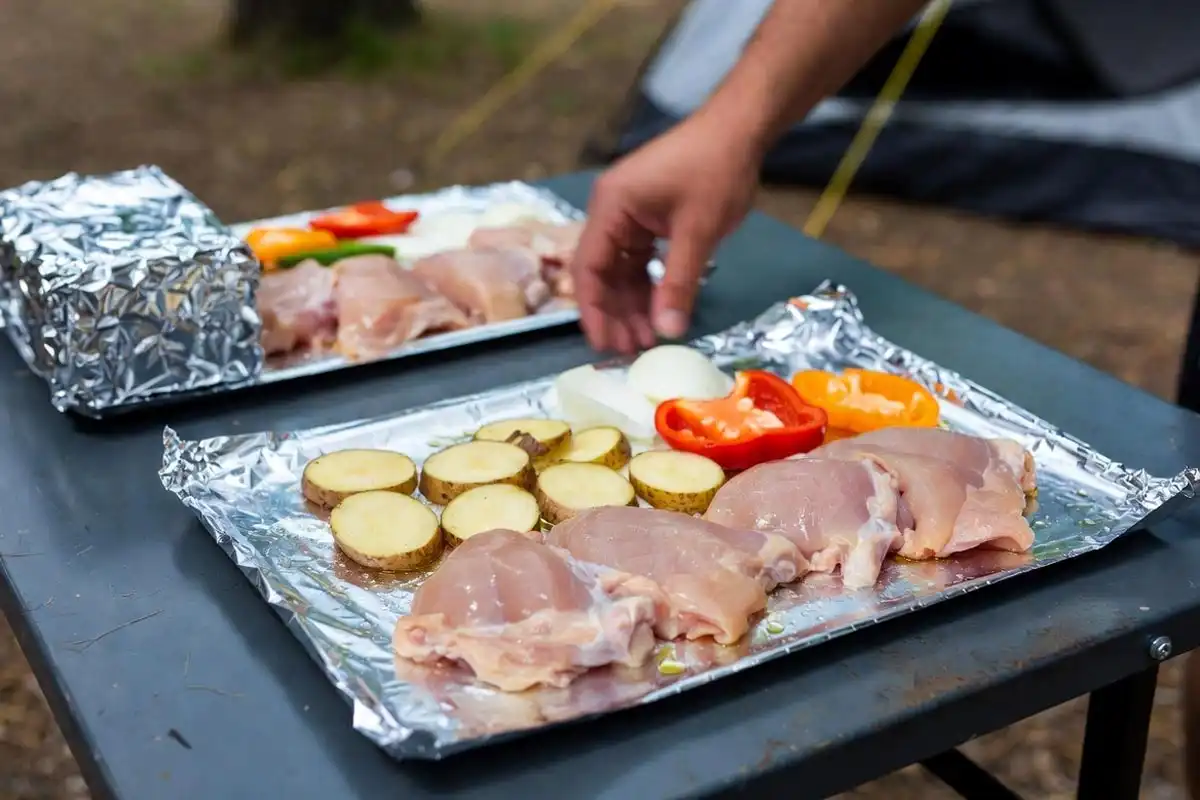
Place ingredients in this sequence, centered on the foil:
- Dense ingredients first (potato slices, raw meat, thick carrots)
- Medium ingredients next (onion, bell pepper, corn)
- Soft ingredients on top (spinach, cherry tomatoes, shredded cheese)
- Seasoning last (salt, pepper, garlic, dry herbs)
Keep the ingredient pile centered with at least 2 inches of foil clear on each side for folding.
Step 4 — Seal the Packet
Bring the two long edges of foil up and fold them together tightly, rolling down in 1-inch folds. Fold the short ends up and roll them inward the same way. Leave a fist-sized air pocket inside. That air gap lets steam build and circulate rather than compress the food flat.
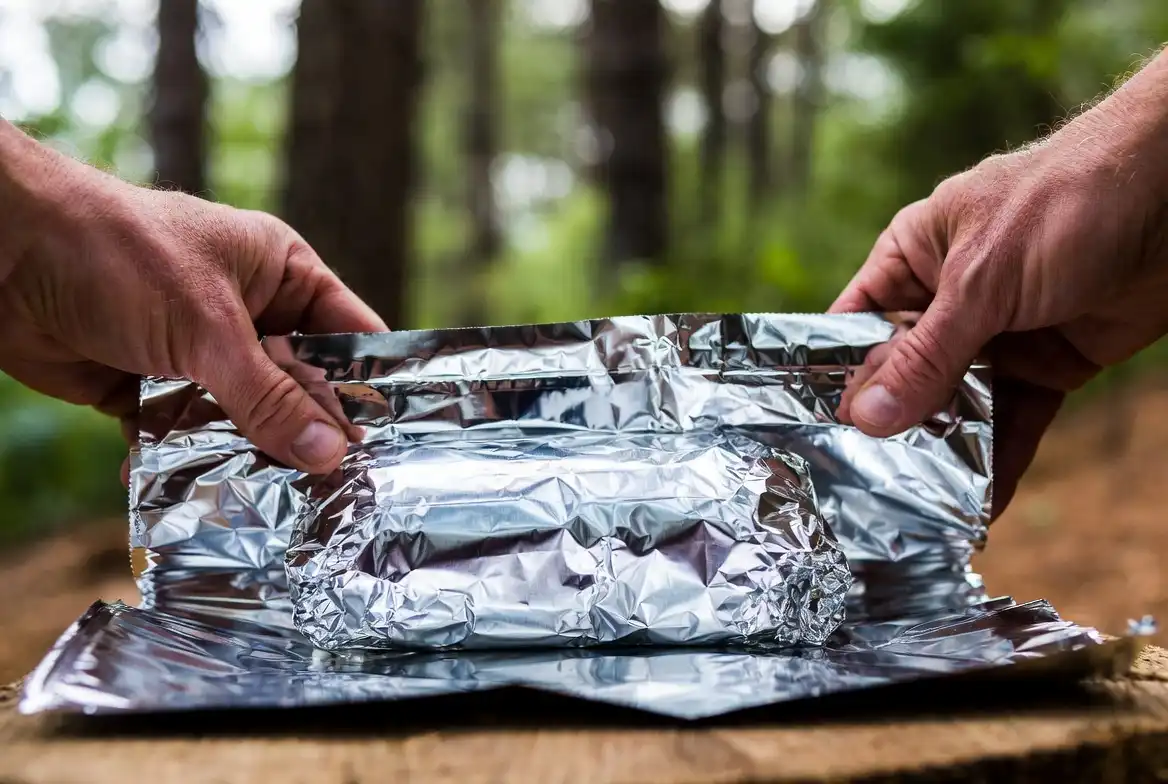
A tight seal prevents coal ash from entering the packet and keeps moisture locked in during cooking.
Also learn: Cook Eggs at Camp Without a Pan Using Simple Tools
How to Cook the Foil Packet Over Coals
Placing the Packet
Use tongs to clear a flat area in the coal bed. Place the packet seam-side up directly on the coals. Seam-side up keeps the folded edges from opening under direct heat.
For thick proteins like chicken thighs or beef chunks, position the packet so the sides receive heat from surrounding coals, not just the bottom.
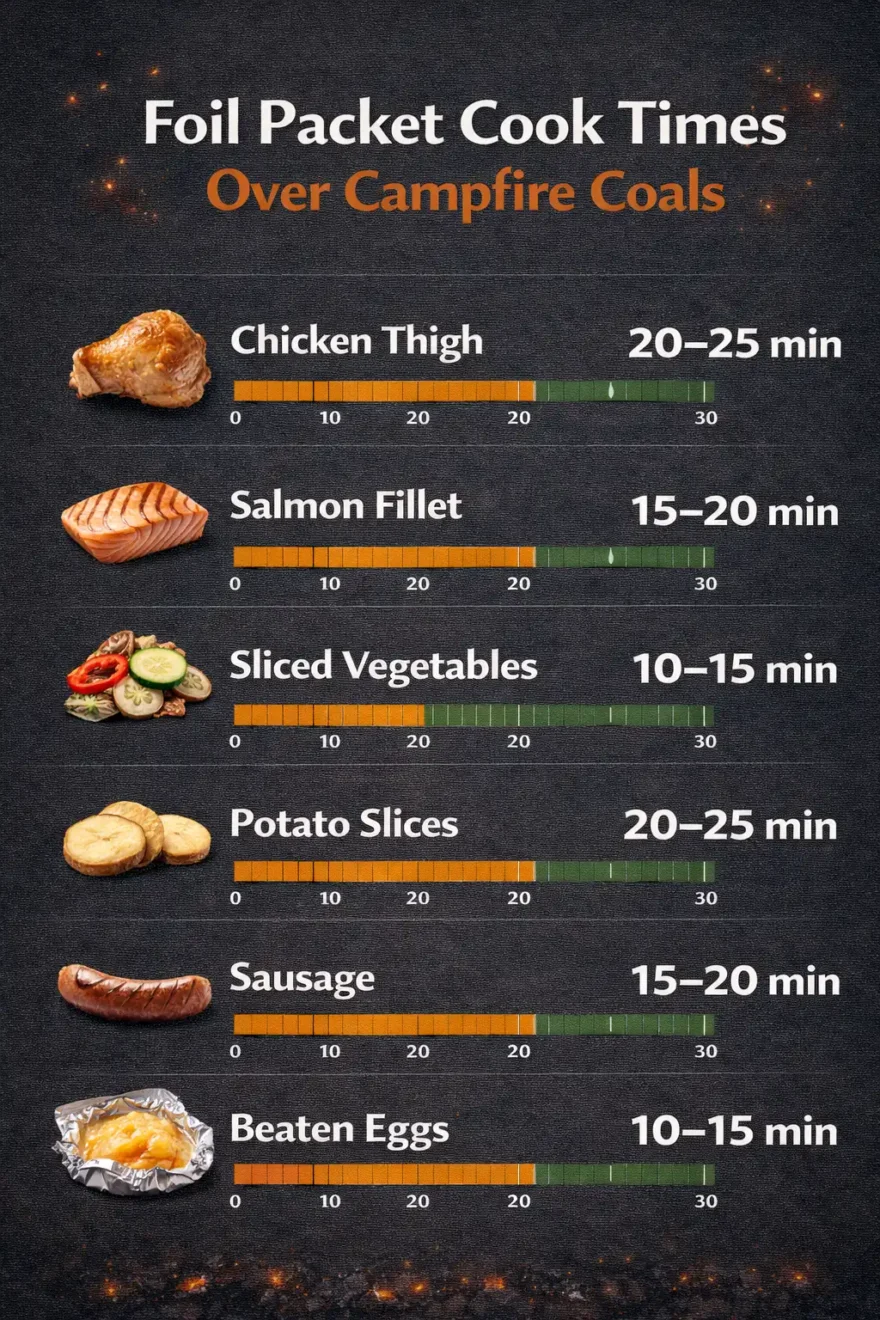
Cooking Times by Ingredient
| Ingredient | Approx. Cook Time |
|---|---|
| Thinly sliced vegetables only | 10–15 minutes |
| Fish fillet (1 inch thick) | 12–18 minutes |
| Boneless chicken thigh | 20–25 minutes |
| Potato slices (1/4 inch thick) | 20–30 minutes |
| Pre-cooked sausage, sliced | 10–15 minutes |
| Beaten eggs + vegetables | 12–15 minutes |
Flip the packet once at the halfway point using long-handled tongs.
How to Check Doneness
After the estimated time, use tongs to move the packet onto a flat log or rock away from the coals. Open one corner slowly. Steam exits at high temperature, so keep your face back for the first few seconds.
Check for doneness:
- Vegetables: soft when pressed with a fork
- Chicken: internal temperature of 165°F (74°C)
- Fish: flesh separates into flakes with a fork
- Potatoes: fork inserts without resistance
If anything is undercooked, reseal the packet and return it to the coals for 5-minute increments.
Tested Foil Packet Combinations
These combinations cook reliably at the times stated above:
Simple veggie packet: Zucchini + corn + mushrooms + olive oil + garlic powder. 15 minutes. No flip needed for all-vegetable packets.
Chicken and potato: Boneless thigh + 1/4-inch potato slices + onion + butter + smoked paprika. 22–25 minutes. Flip at 12 minutes.
Campfire salmon: Salmon fillet + lemon slices + asparagus + butter. 15 minutes. No flip needed — fish breaks apart when flipped.
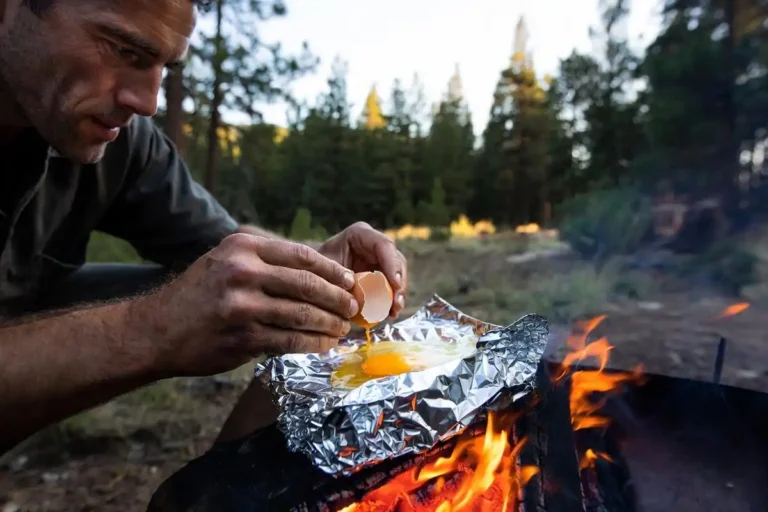
Breakfast packet: Beaten eggs + shredded cheese + diced peppers + pre-cooked sausage. 12–15 minutes on moderate coals.
For more ideas on what cooks well directly on coals, I put together a full article on foods you can cook directly on campfire coals that pairs well with this method.
Common Mistakes to Avoid
Using single-layer foil. Standard foil tears over direct coals and lets ash inside. Always double-layer, and use heavy-duty foil when available.
Placing packets on active flames. Flames char the outside before the center cooks. Wait for a stable coal bed with no open fire.
Overfilling the packet. Too much food collapses the air gap and prevents steam from circulating. Fill no more than 2 cups of ingredients per packet.
Skipping oil or butter. Dry packets scorch the bottom layer against the foil. Fat adds moisture and prevents sticking.
Opening the packet too quickly. Pressurized steam inside a hot packet causes burns. Open one corner first and let steam vent for 10 seconds before fully opening.
Uneven ingredient sizes. Large chunks stay raw while small ones overcook. Keep all cuts at 1/2 inch or thinner for uniform results.
Food Safety at the Coal
Raw chicken reaches safe temperature at 165°F (74°C). Pork and ground meat reach safe temperature at 160°F (71°C). A compact instant-read thermometer fits in any camp kit and removes guesswork entirely.
Keep raw meat packets separate from vegetable-only packets during assembly. Use different utensils when handling raw protein and sealed packets.
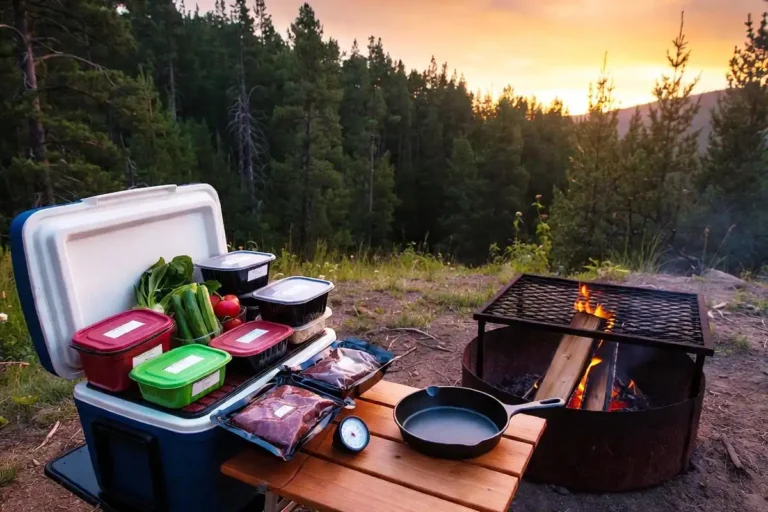
Store raw proteins in sealed bags at the bottom of your cooler. Cook them within 2 days if stored with ice. If ambient temperature exceeds 90°F (32°C), cook them on day one.
I wrote about cook meat over a campfire safely in more detail if you want a full breakdown of safe meat handling at camp.
Troubleshooting Foil Packet Problems
Food burns on the bottom but stays raw on top. Coals are too hot. Move the packet to the edge of the coal bed or elevate it on a flat rock 1 inch above the direct coals.
Packet leaks juice onto the coals. The seal has opened. Use tongs to refold the loose ends and continue cooking.
Edges cook faster than the center. The packet is too wide and thin. Fold it into a more compact, taller shape before placing on coals.
Food tastes like ash. Coal ash entered through a tear in the foil. Double-layering prevents this. Also avoid placing packets directly on thick white-ash powder, which sticks to the foil and can penetrate small gaps.
FAQs about Make a Foil Packet Meal Over Campfire Coals

Can you use regular foil instead of heavy-duty?
Standard foil tears over direct coals. Use heavy-duty foil and double-layer every packet. If heavy-duty is unavailable, use three to four layers of standard foil.
How do you know when campfire coals are hot enough for foil packets?
Hold your hand 6 inches above the coal bed. If you pull it away after 3–4 seconds, the coals are at medium-high heat and ready. Consistent orange glow with white ash forming on top confirms the fire is at the right stage.
Can you assemble foil packets ahead of time?
Yes. Assemble packets at home and refrigerate them flat for up to 24 hours. Transport them in a cooler. Do not pre-assemble packets containing raw meat beyond 24 hours before cooking.
Do foil packets work on a camp grill grate?
Yes. A grate set over coals gives more distance from direct heat, which reduces burning risk. Add 3–5 minutes to the standard cook time since heat is less concentrated than direct coal contact.
Conclusion
Foil packet meals produce a complete cooked dinner with minimal gear, no pots, and almost no cleanup. The method works reliably once you read the coal bed correctly, double-layer your foil, and cut ingredients to similar sizes. A stable coal bed, a sealed air pocket, and a halfway flip cover most of what can go wrong.
Long tongs, a roll of heavy-duty foil, and patience waiting for the flames to die down are the three things that determine how the meal turns out. Get those right and the campfire handles the rest.