How to Pack Eggs for Camping Without Breaking: 5 Reliable Methods

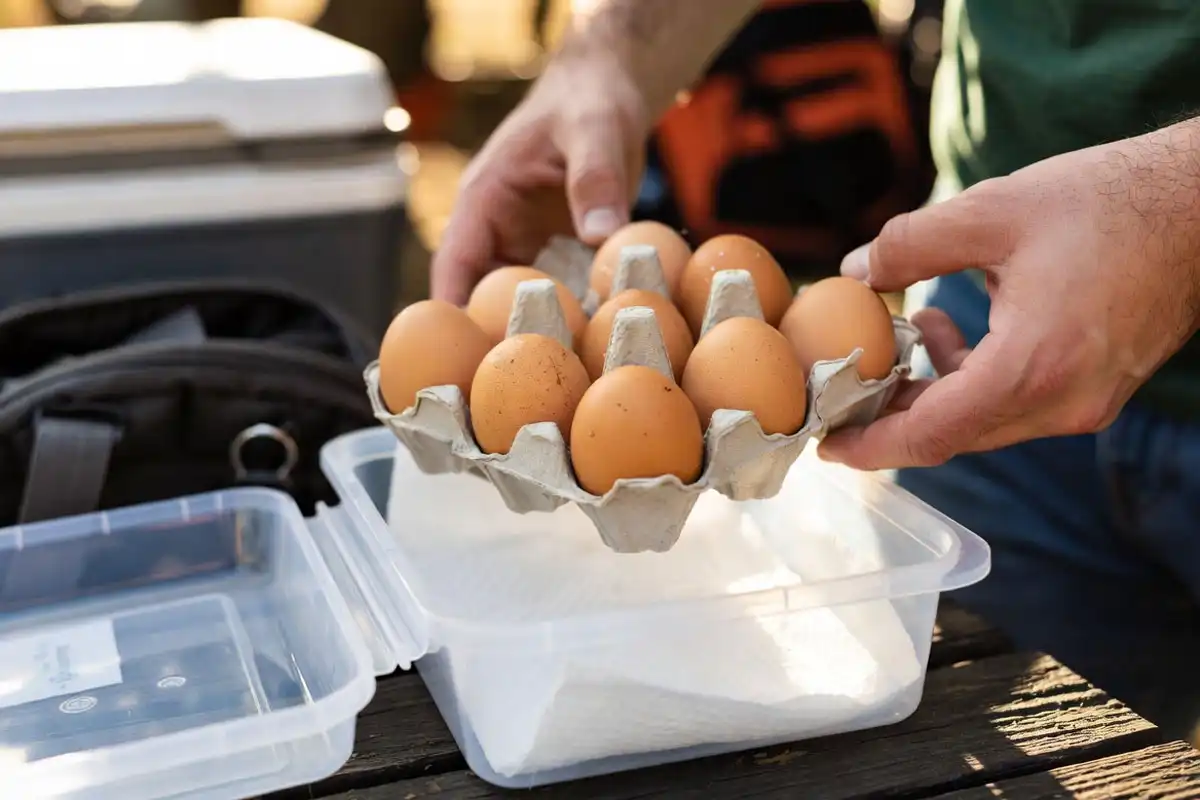
Pack eggs for camping without breaking by using a rigid carrier, padding the gaps, and storing the eggs flat under light pressure. This guide walks through egg selection, packing methods for car camping and backpacking, cooler placement, and safe backups like hard-boiled or pre-cracked eggs. I use the same routine before every trip: check shells, brace the carton, then lock it inside a hard container. You will leave camp with whole eggs and clean gear, not a sticky food bag.
Use a rigid egg carrier or a carton inside a hard food container. Fill empty space with paper towel, a bandana, or foam so eggs do not rattle. Pack the container flat, mid-pack, with soft gear under and over it. In a cooler, keep the carton above meltwater and away from loose ice.
Watch the video about 8-egg carrier pack setup:
What breaks eggs during camping?
Eggs crack when a hard edge presses one small spot on the shell. Vibration then turns that first hairline crack into a leak.
Most broken eggs come from two problems.
- Point pressure: a stove, water bottle, or pot rests on one egg.
- Rattle: eggs bounce inside a carton during a drive or a hike.
Good packing spreads pressure across the carton and stops movement inside the container.
Which egg-packing method fits your trip?
The trip type sets the packing method.
Car camping and RV trips: A full carton rides well when a hard box blocks crushing.
Motorbike travel: A small rigid carrier (6 eggs) rides better than a full carton.
Backpacking: A rigid carrier (2 to 6 eggs) or pre-cracked eggs in a bottle saves space and resists impact.
If you cook most meals over a fire or stove, browse the camp cooking guides for more meal and setup ideas.
When do you buy and pack eggs?
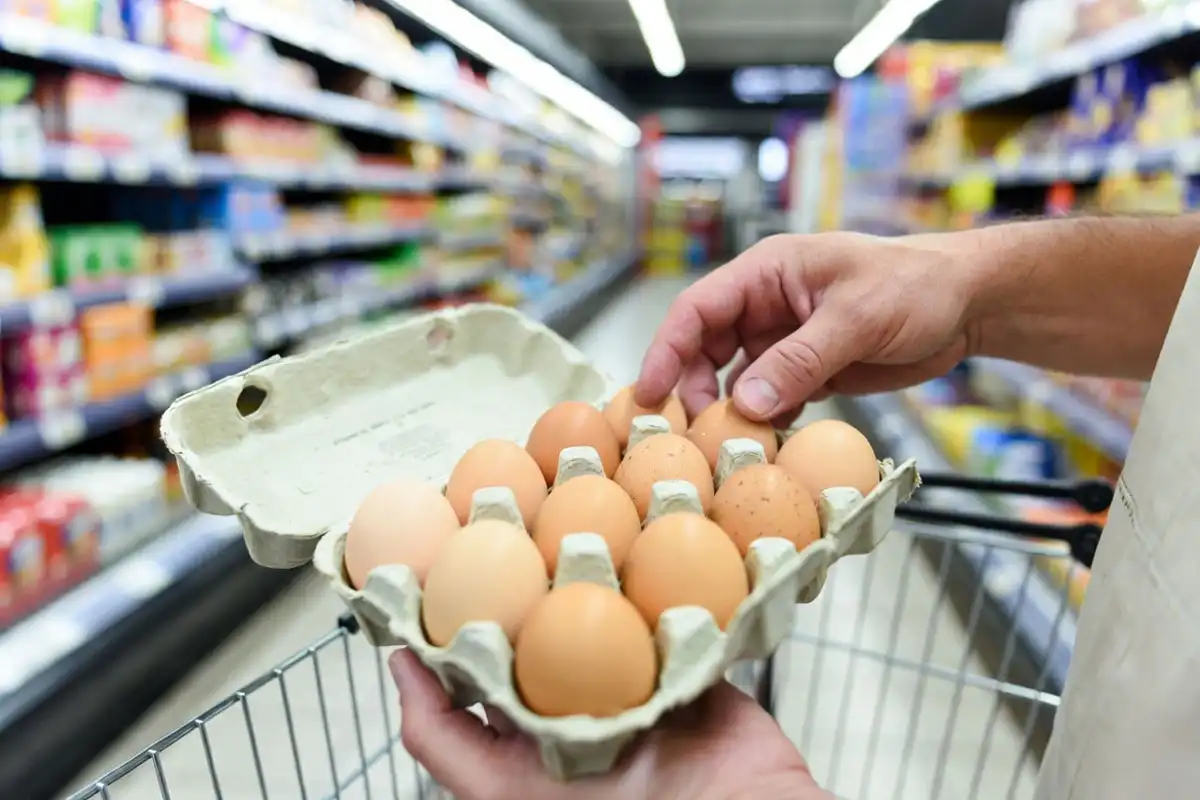
Pack eggs late in your prep so they spend less time getting bumped.
- Buy eggs at your last grocery stop.
- Open the carton and check every shell before you pay.
- Pack eggs after you load heavy gear, not before.
If you start with cold eggs, keep them cold from store to campsite. Heat inside a parked car warms food fast. When you pack eggs in a cooler, add a little extra water to bring camping for safe handwashing and simple dish cleanup after breakfast.
Where do eggs go in a backpack or cooler?
Eggs travel best when the container stays flat and stable.
Backpack placement
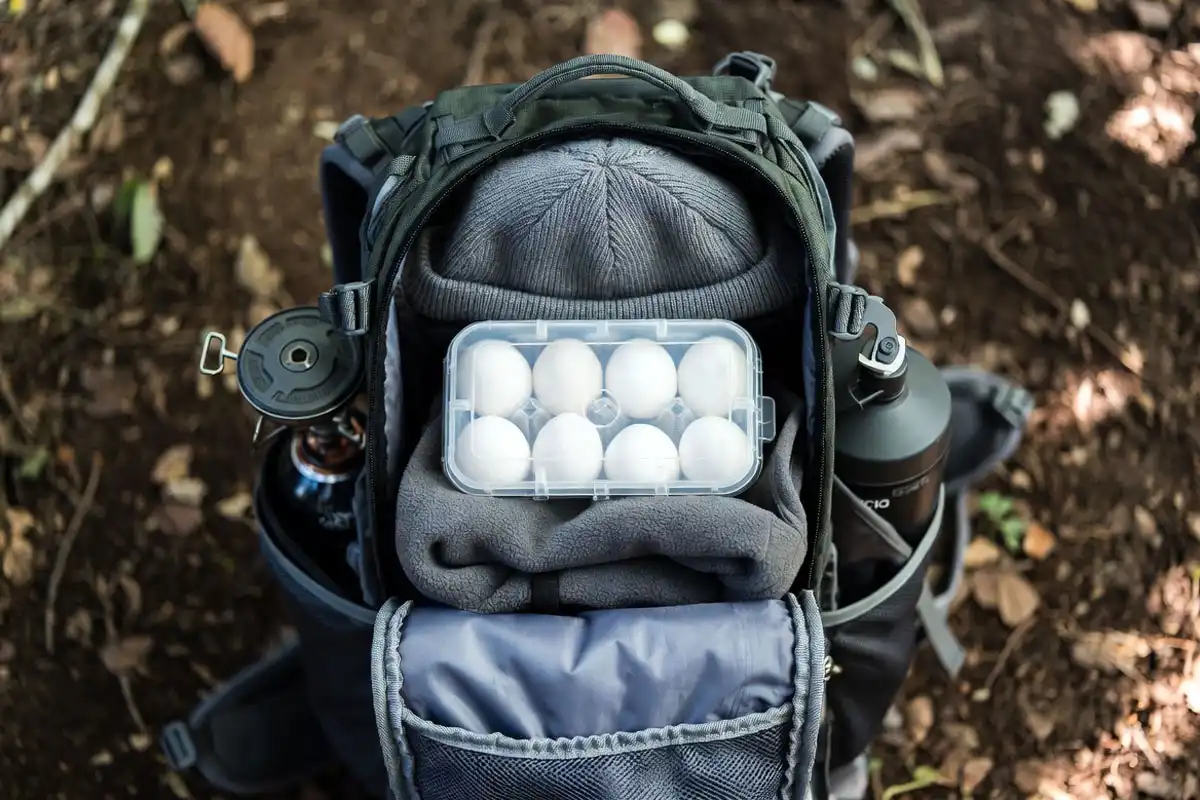
Place eggs in the middle of the pack, close to your back panel. That zone moves less than the top lid and side pockets.
Build a soft cradle.
- Put a folded jacket or fleece under the egg container.
- Put another soft layer on top.
- Keep hard gear, cook kits, and water bottles away from the egg container walls.
Cooler placement
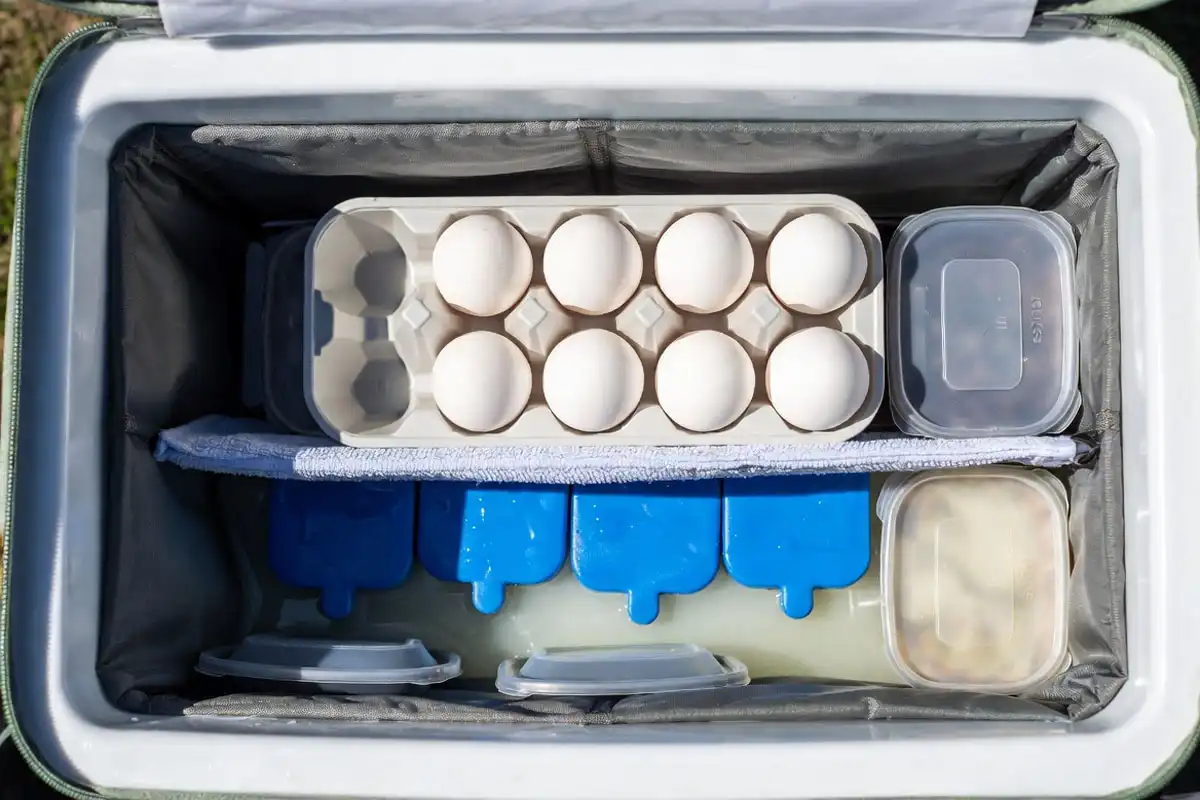
Place eggs on a flat spot inside the cooler where heavy food does not crush them.
- Keep eggs in their carton or carrier.
- Put the carton inside a dry bag or zip bag to block meltwater.
- Set the carton next to ice or gel packs, with a thin towel buffer so shells do not touch ice.
Gear that protects eggs
Rigid walls stop crushing. Padding stops rattle.
These items protect eggs well.
- Plastic egg carrier (2, 6, or 12 eggs): individual cups reduce impact.
- Hard food container with a locking lid: a carton fits inside with padding.
- Small cook pot with a lid: the pot works as a hard shell in a backpack.
- Paper towel or a bandana: the fabric fills gaps and cushions.
If you need a compact cook setup that doubles as a protective shell, see my campfire cooking kit recommendations.
Method 1: Carton inside a hard box
This method protects a 12-egg carton during car camping.
- Keep eggs in the original carton.
- Add a folded paper towel on top of the eggs.
- Close the carton and secure it with 2 rubber bands or 1 wrap of tape.
- Place the carton inside a hard food container or small plastic bin.
- Fill extra space with a bandana so the carton does not slide.
- Store the box flat, high in your gear stack.
Check the carton once after the first 30 minutes of driving. Tighten padding if you hear movement.
Method 2: Plastic egg carrier for backpacking
This method protects eggs during hiking because the carrier resists bending.
- Place 1 small square of paper towel in each egg cup.
- Set each egg into its cup.
- Close the carrier until every latch locks.
- Wrap the carrier in a soft layer, like a beanie or spare socks.
- Place it mid-pack, close to your back panel.
Keep the carrier flat. Side-loading compresses shells.
Method 3: Pre-crack eggs into a leakproof bottle
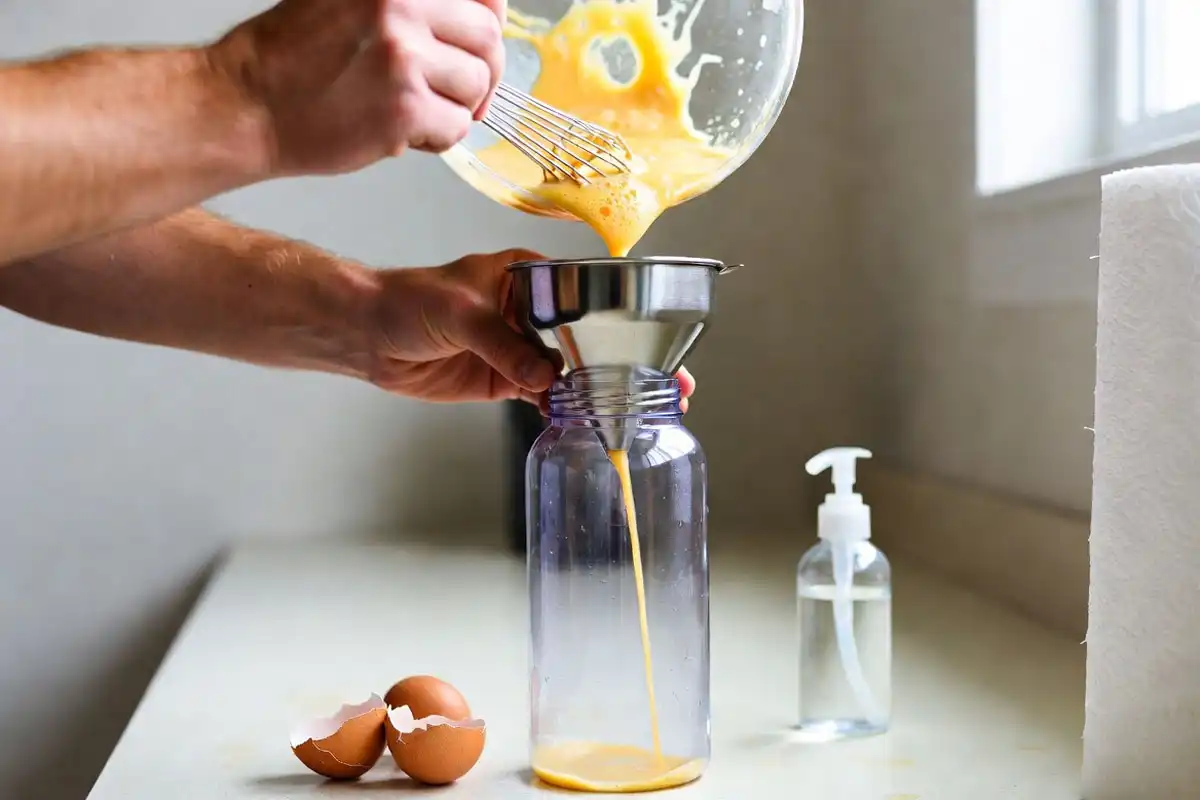
This method removes shell breakage risk and speeds up breakfast.
- Wash hands and set out a clean bottle with a tight lid.
- Crack eggs into the bottle at home, not at camp.
- Close the lid and place the bottle inside a zip bag.
- Store the bottle on ice in your cooler.
- Cook the eggs the same day.
Treat liquid egg like other raw foods. Store it cold and cook it fast.
Backup options when you want zero shell risk
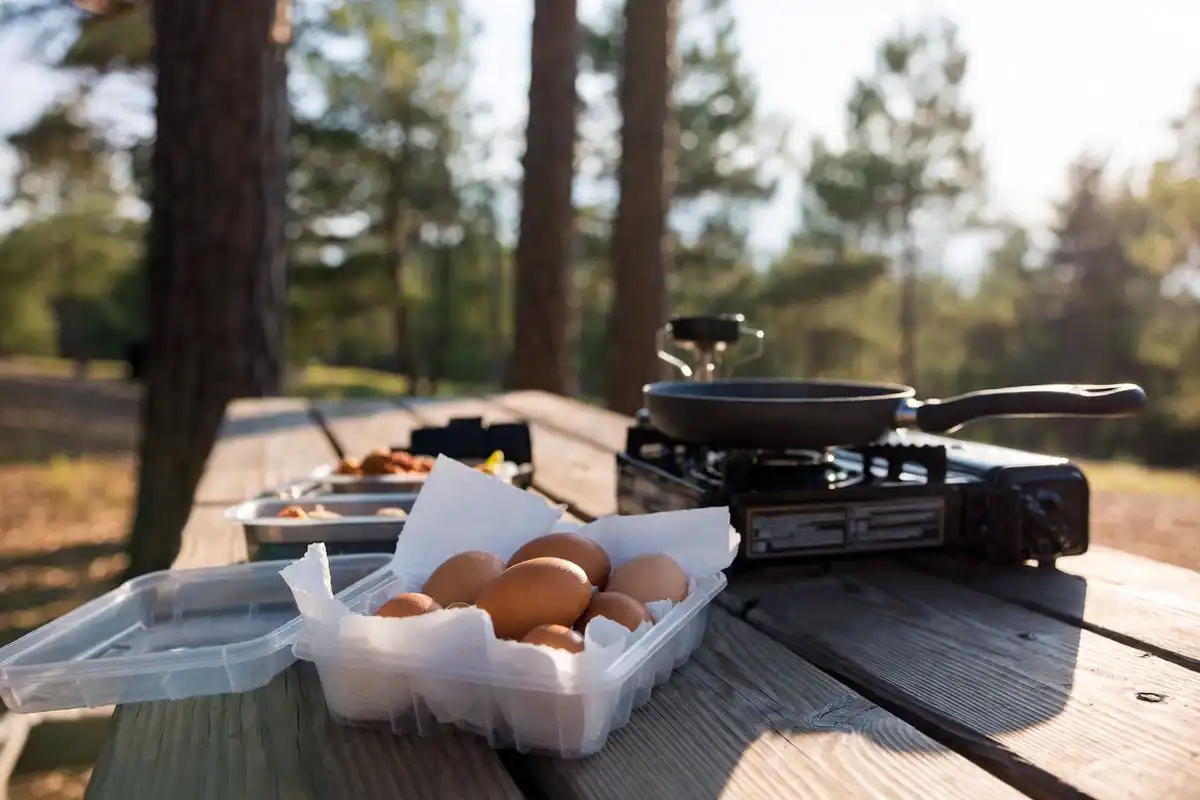
Eggs still break on rough roads and steep trails. These backups keep breakfast on the menu.
Hard-boiled eggs: Boil at home, cool fast, and pack unpeeled eggs in a rigid container.
Powdered eggs: Pack a sealed pouch and add water at camp.
Pasteurized liquid eggs: Pack the carton in a cooler and pour into the pan.
Backups pair well with longer trips or hot weather.
Food safety rules for camping eggs
Egg safety depends on how eggs get processed where you live. In the United States, producers wash and refrigerate eggs. Many European countries sell eggs unwashed and store them at room temperature in shops.
Follow the rules that match your eggs.
If your eggs start refrigerated
Keep eggs cold at 40°F (4°C) or colder during transport and storage. FoodSafety.gov lists 40°F as the cold holding target and lists “Discard cracked eggs” as a safety step.
Use an insulated cooler with ice or frozen gel packs. The FDA recommends a cooler for transporting cooked eggs and egg dishes. It also recommends keeping the cooler out of hotter areas like a trunk.
Cooking temperatures and time limits
Cook eggs until whites and yolks firm. Cook egg dishes without meat or poultry to 160°F (71°C). Refrigerate cooked eggs and egg dishes within 2 hours, or within 1 hour above 90°F (32°C).
Clean hands and clean tools
Raw egg residue spreads Salmonella onto knives, cups, and cutting boards. Wash hands and tools with soap and safe water after contact with raw eggs.
For more on camp hygiene and risk control, read the safety skills section.
Troubleshooting: what to do if eggs crack
Cracked eggs create two problems: leaks in your pack and higher food risk.
Use this process.
- Put the cracked egg in a separate bag right away.
- Discard cracked eggs if you lose cold storage. FoodSafety.gov lists “Discard cracked eggs” as a safe step.
- Wipe the carrier and your hands with soap and water.
If you find a leak inside a cooler, keep the meltwater away from other food containers. Drain, wipe, and re-ice.
Common mistakes that crack eggs
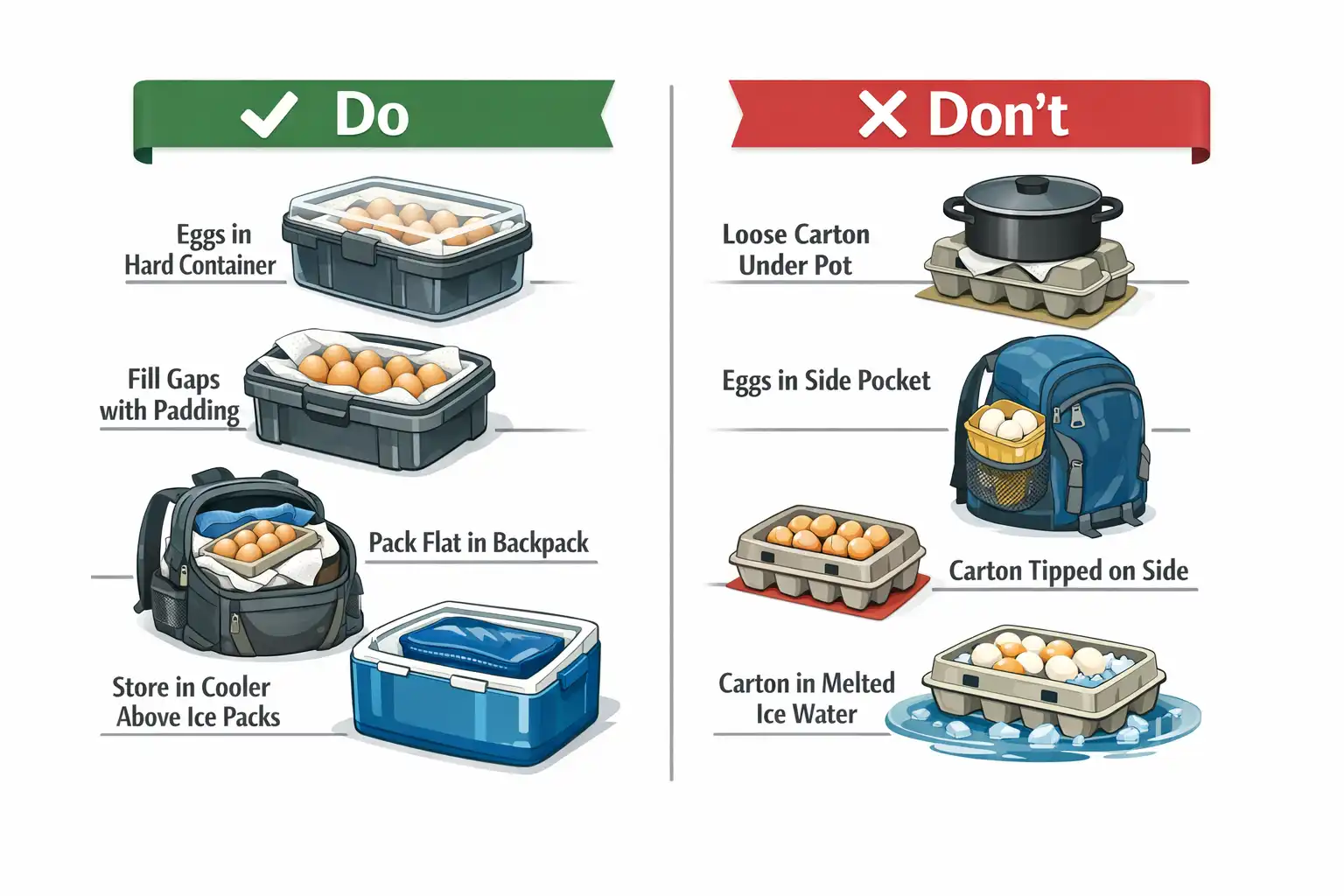
These habits break eggs fast.
- Packing eggs in an outside pocket.
- Stacking a stove or pot on top of a carton.
- Leaving headspace inside the box so the carton slides.
- Letting eggs sit in meltwater.
- Tossing a carton into the back of a truck without a hard shell around it.
Safety notes for wildlife and cleanup
Eggs smell strong to animals.
- Store eggs with the rest of your food in a locked vehicle, bear box, or bear canister.
- Keep raw egg spills away from lakes and streams.
- Pack out shell fragments and used paper towels in a sealed bag.
Conclusion
Whole eggs in camp come from rigid walls, padded gaps, and a flat, stable packing spot. Pick a method that matches your trip. Protect the carton inside a hard box for car camping. Carry a small egg carrier or a pre-cracked bottle for backpacking. Keep refrigerated eggs cold, keep tools clean, and toss cracked eggs before they ruin your meal plan.