How to Pack Light for a Two-Week Outdoor Adventure Trip Abroad

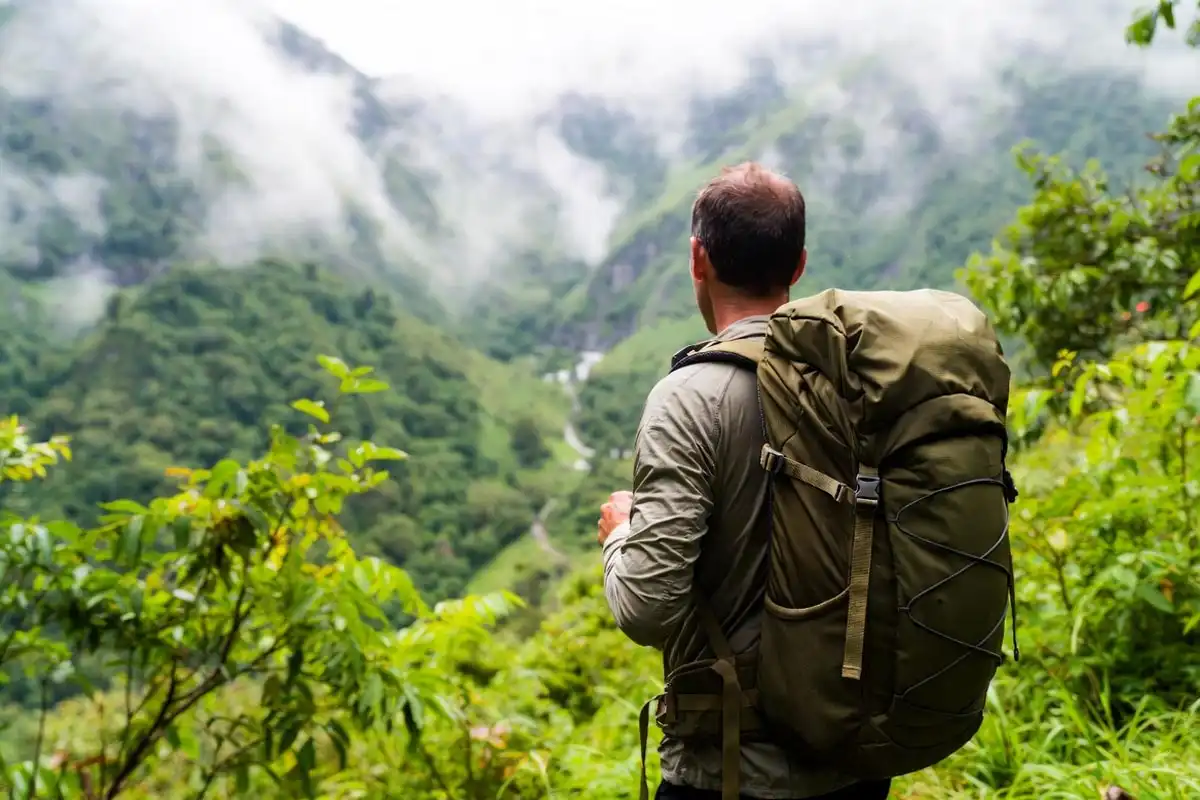
If you want to pack light for a two-week outdoor adventure trip abroad, begin with a single carry-on-sized backpack and gear that earns its weight by doing more than one job. This guide covers bag selection, clothing strategy, gear categories, a step-by-step packing process, and the most common mistakes I see travelers make before an international outdoor trip.
Use a 40-50L backpack and stay under 10 kg fully loaded. Bring 3-4 base clothing items in moisture-wicking or merino wool fabric that you wash and rewear. Apply the two-use rule: keep an item only if it serves two functions. Check airline carry-on dimensions before departure. Two weeks requires smarter clothing rotation, not more gear.
What Does Packing Light Actually Mean for Two Weeks?
Packing light means carrying only what you use every single day. For a two-week international outdoor trip, the target weight sits between 7-10 kg, including the pack itself.
The one-bag approach defines this: everything fits in a single carry-on-compliant backpack. You check no luggage and pay no baggage fees.
Two weeks does not require more gear than one week. It requires a clothing rotation system and access to laundry every 3-4 days.
What Bag Should You Choose?
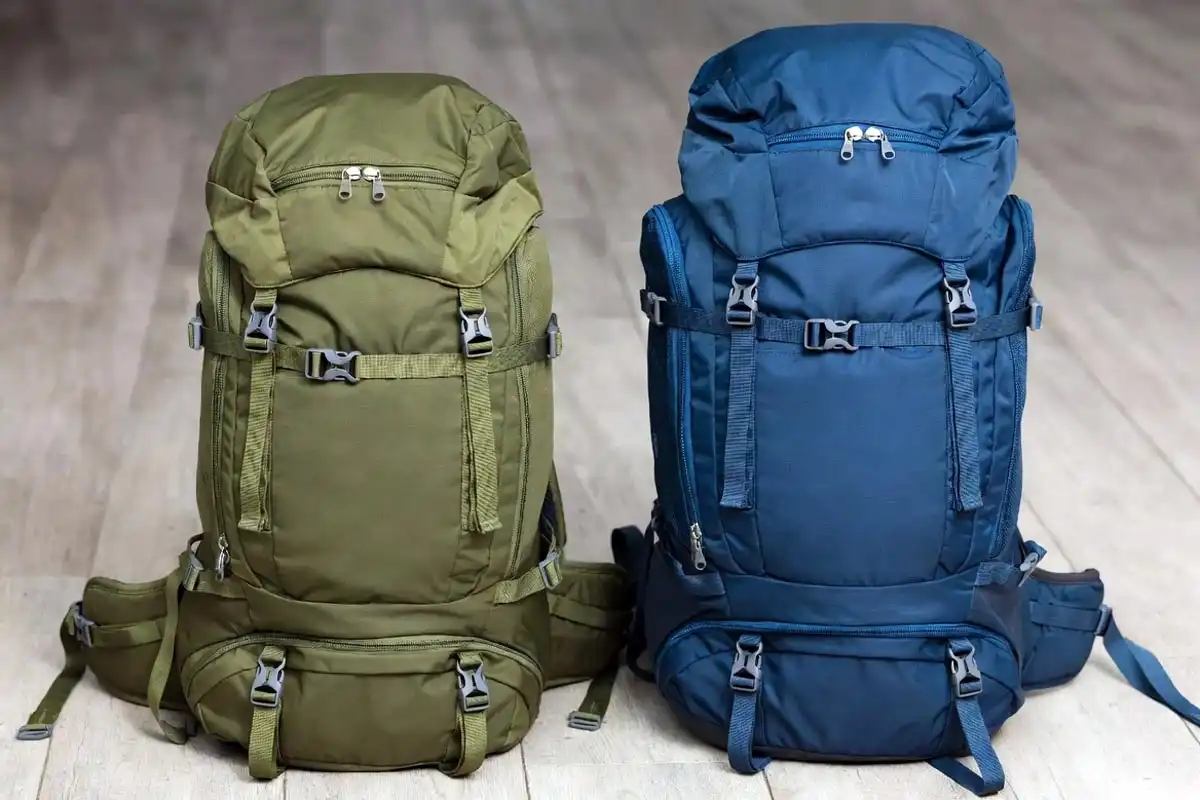
A 40-50L travel backpack works for most two-week outdoor trips. It fits airline overhead bins and carries enough gear for varied terrain.
Key features to look for in a pack:
- Clamshell or panel-loading opening for easier access
- Hip belt and sternum strap for load transfer
- External attachment points for trekking poles or wet gear
- Empty weight under 1.2 kg
The Osprey Farpoint 40 weighs 1.1 kg and fits most airline carry-on limits. The Deuter AViANT Access 50 suits hikers who need slightly more capacity.
I always weigh an empty bag before buying it. A heavy empty bag reduces usable payload before a single item goes in.
Most airlines set carry-on limits at 7-10 kg and dimensions around 55 x 40 x 20 cm. Check your specific airline before packing.
What Clothing System Works for Two Weeks Abroad?
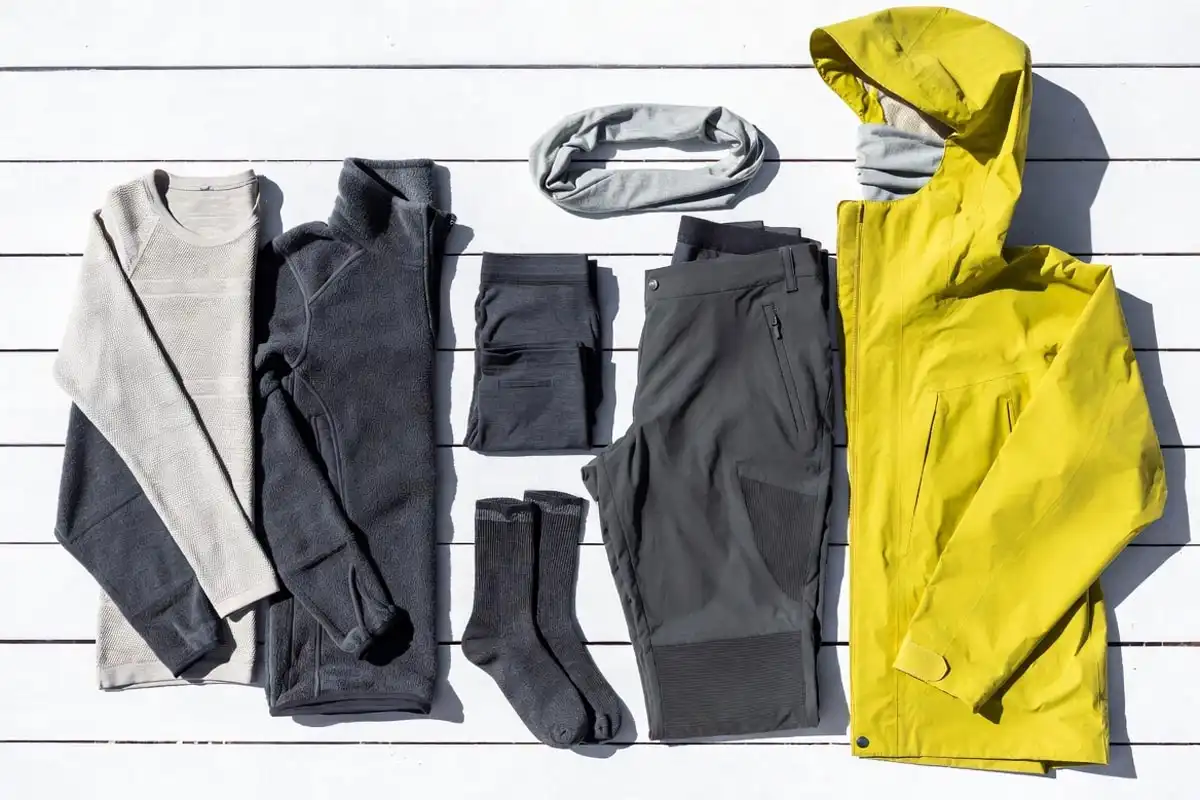
A 3-layer clothing system covers most outdoor conditions with the fewest items. Each layer adds or removes insulation based on temperature.
Base layer: 2 moisture-wicking or merino wool shirts, 1 pair of hiking pants, 2 pairs of merino wool socks, 2 pairs of moisture-wicking underwear. Merino wool resists odor and dries fast, so you rewear it 2-3 times between washes.
Mid layer: 1 fleece or lightweight down jacket. A 700-fill down jacket compresses to fist size and adds 10-15°C of warmth.
Outer layer: 1 waterproof rain jacket with taped seams. A 2.5-layer shell weighs 300-500g and packs into its own pocket.
Add 1 casual top and 1 pair of lightweight pants for town days and rest stops. That totals 9-10 clothing items for two full weeks.
Which Footwear Should You Bring?
Bring two pairs of footwear, not three. One pair of mid-cut hiking boots and one pair of camp sandals or trail runners covers all terrain without excess weight.
I covered boot preparation in detail in my guide on breaking in new hiking boots. Wearing unbroken boots abroad causes blisters within the first two days on trail.
Mid-cut boots deliver ankle support on rocky and uneven surfaces. Trail runners save 200-400g per pair but offer less protection on technical ground.
Sandals serve as camp shoes, shower footwear, and casual town shoes. They weigh 200-350g and compress flat in a pack.
What Shelter and Sleep Gear Do You Need?
The shelter system you bring depends on your accommodation plan.
For mixed camping and guesthouses: Pack a 3-season sleeping bag rated to 5°C, a lightweight inflatable sleeping pad (400-500g), and a small emergency bivy or tarp.
For hostels and guesthouses only: A silk sleeping bag liner weighing 150g replaces a full sleeping bag. Most budget accommodation provides blankets.
A sleeping bag liner doubles as a light sheet in warm climates. It adds 5-8°C of warmth inside a sleeping bag in cold conditions.
How Do You Manage Water and Food Abroad?
Carry a 1-liter water bottle with a built-in filter for backcountry days. A Sawyer Squeeze or LifeStraw bottle removes bacteria and protozoa from most natural water sources.
For food, plan on purchasing local provisions daily at markets or shops. Pack two days of emergency rations, including energy bars and instant oatmeal, to cover delays and remote stretches.
I covered filtration methods and water treatment options in depth in my guide on making camp water safer.
What Documents and Gear Do You Need for International Travel?
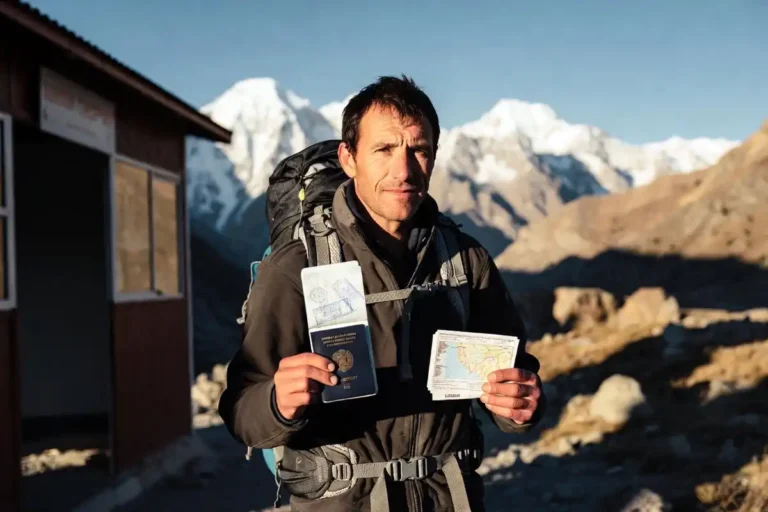
International outdoor trips require more than a passport. Keep all documents in a waterproof pouch stored against the back panel of your pack. Carry digital copies on your phone and one cloud backup.
Core document checklist:
- Passport and paper copies
- Travel insurance card and policy number
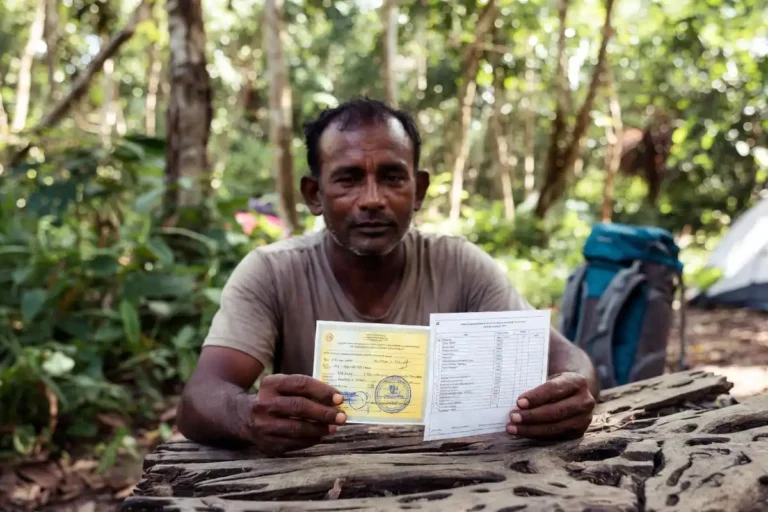
- Vaccination records if the destination requires them
- Trail permits for restricted areas
I put together a full breakdown of documents and gear required for international hiking travel that covers visas, permits, and destination-specific requirements.
Why Does Travel Insurance Matter for Outdoor Trips?
Travel insurance covers medical evacuation, trip cancellation, and gear loss on outdoor adventures. Standard policies often exclude activities above 4,000m or technical climbing without specific add-ons.
Medical evacuation from a remote trail abroad costs between $10,000-$100,000 USD without coverage. That figure alone justifies the cost of a good policy.
I covered what policies cover and exclude in my article on travel insurance for outdoor and adventure activities. Read the exclusions section of any policy before you purchase it.
How Do You Pack Light Step by Step?
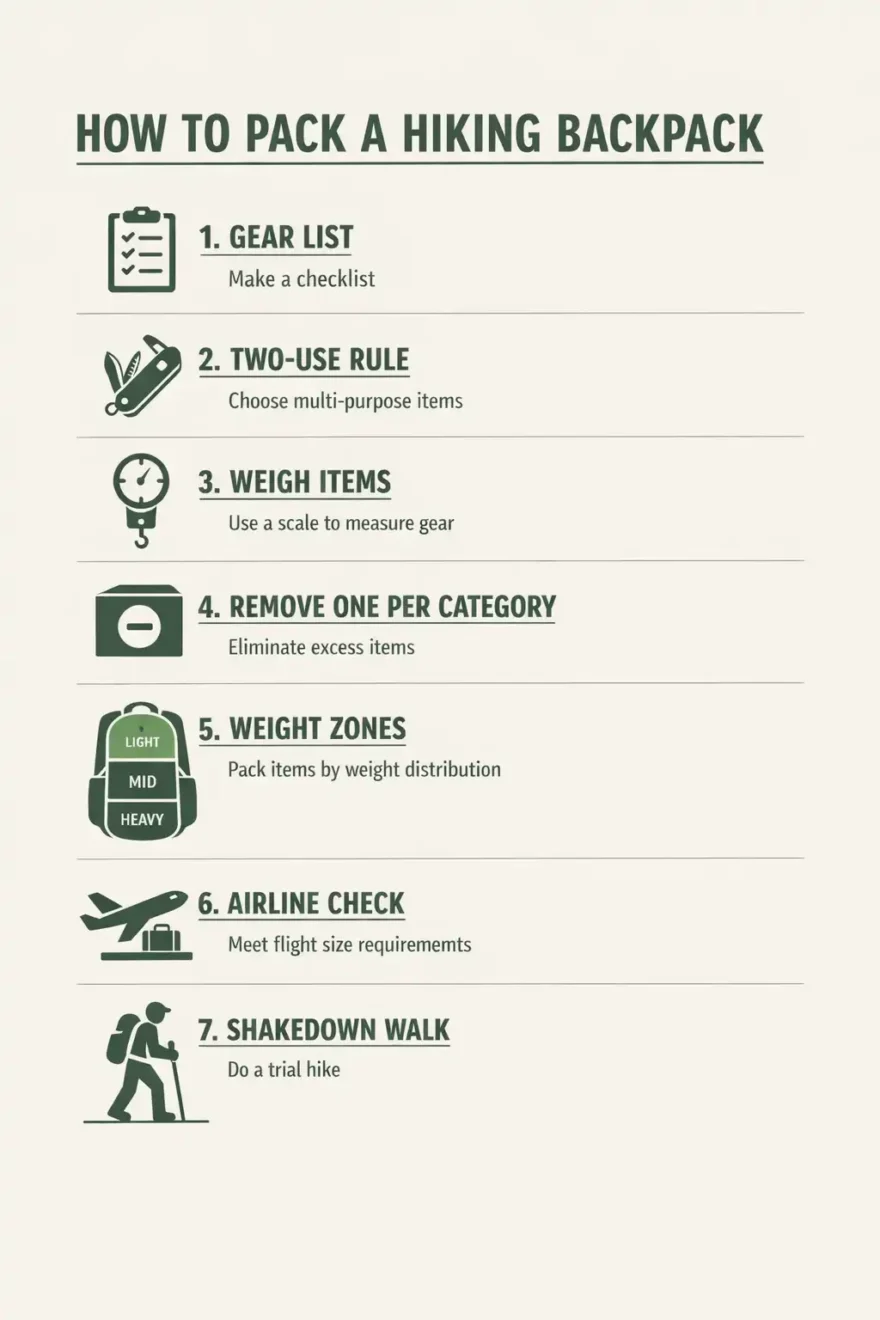
This is the exact process I follow before every international outdoor trip.
Step 1: Write your gear list by category
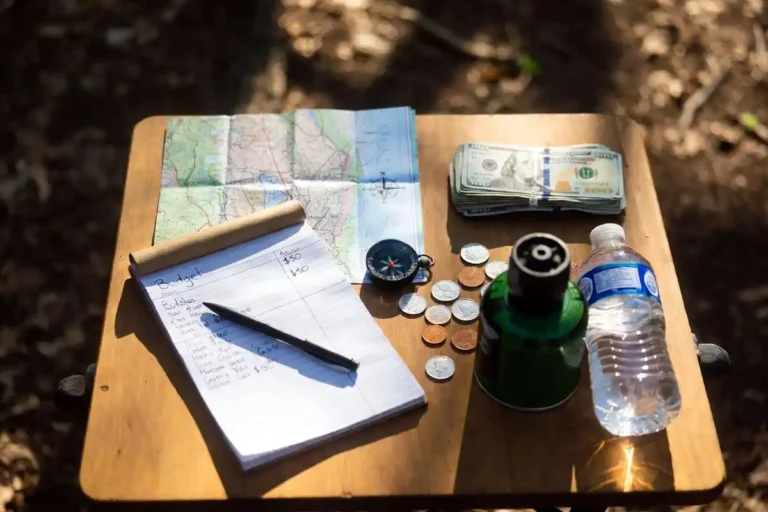
List every item under these categories: clothing, footwear, shelter and sleep, water and food, safety, electronics, and documents. No item enters the pack without a list entry.
Step 2: Apply the two-use rule
Keep each item only if it serves two purposes. A rain jacket also works as a wind layer. Trekking poles double as tent poles for ultralight shelters. A merino buff covers your neck, face, and head.
Step 3: Weigh every item
Weigh each item on a kitchen scale before packing it. Any single item over 500g receives a second review. Ask: does this item justify its weight?
Step 4: Lay everything out, then remove one item from each category
Spread all gear on a flat surface. Look at every item. Remove the least essential piece from each category. This step alone cuts 1-2 kg on most pack lists.
Step 5: Pack using weight zones
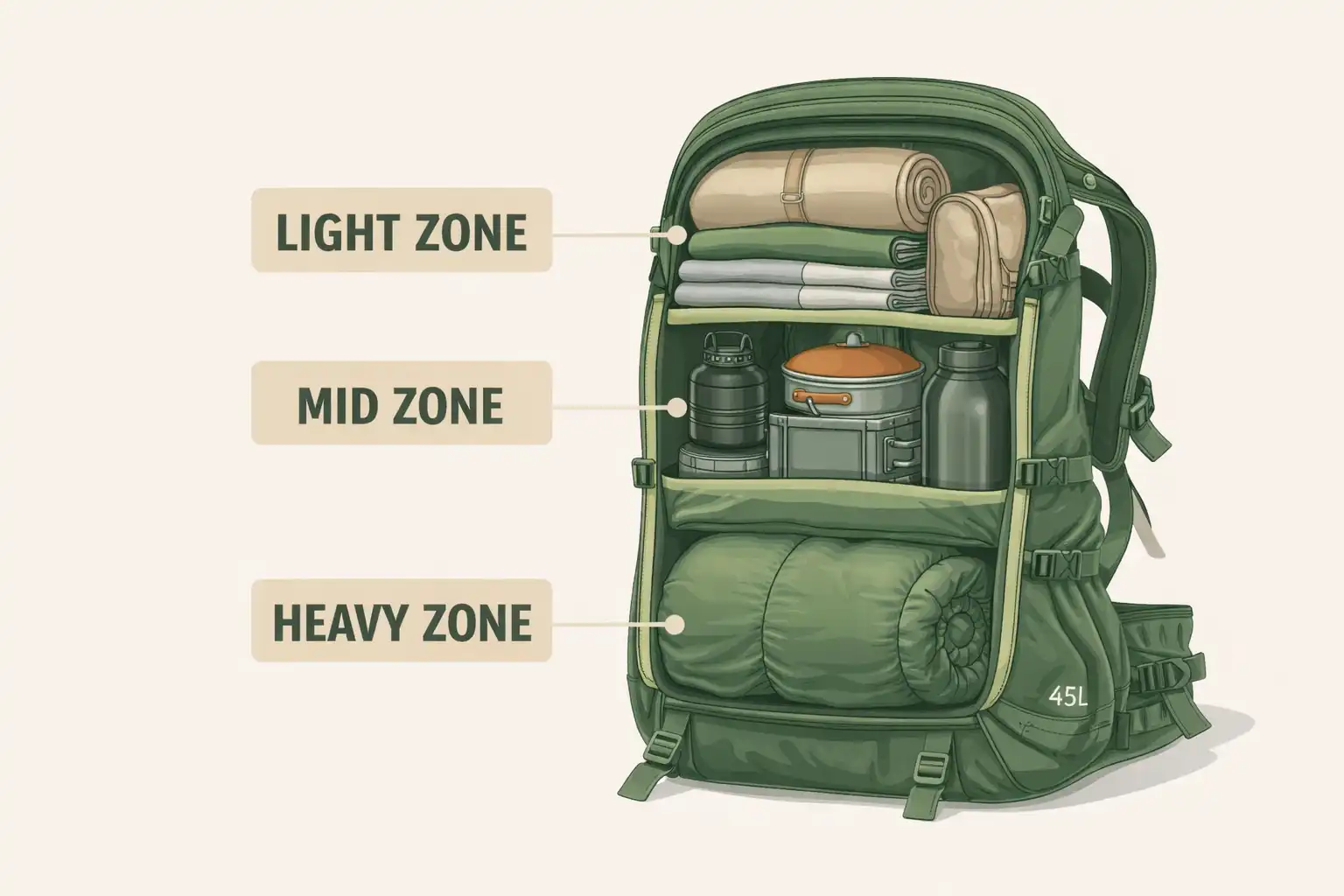
Place your sleeping bag at the bottom. Layer clothing in the middle. Position the heaviest gear, including water, food, and electronics, between your shoulder blades. Light items fill the top and outer pockets. This distribution keeps the load close to your center of gravity.
Step 6: Check airline carry-on rules
Confirm dimensions and weight limits for every airline on your itinerary before your departure day. My separate guide on what camping gear you can’t take on air plane covers TSA rules and international airline restrictions for outdoor equipment.
Step 7: Do a shakedown walk
Walk 30 minutes with the fully loaded pack before your departure day. Adjust the hip belt and shoulder straps. Note any discomfort points. Remove anything that feels excessive during the walk.
What Are the Most Common Packing Mistakes?
Packing for worst-case weather only. Most travelers over-pack cold-weather gear. Check historical climate data for your destination month, not just the extreme forecast.
Bringing full-size toiletries. Transfer liquids into 30-50ml containers. Shampoo, sunscreen, and toothpaste together weigh under 200g in travel sizes.
Ignoring weight distribution. Bottom-heavy packs strain lower back muscles within two hours on trail. Place heavy items at mid-pack height, close to the back panel.
Not planning laundry. Two weeks with 3-4 base clothing items works only if you wash every 3-4 days. Merino wool and synthetic fabrics dry overnight when hung properly.
Packing items available at your destination. Sunscreen, bottled water, snacks, and basic toiletries cost less in most outdoor destinations than at home. Buy them on arrival and save the weight.
What Safety Items Should You Pack?
Safety gear earns its weight on every trip. These items cover the most common outdoor emergencies.
Compact first aid kit: Blister patches, antiseptic wipes, pain relief tablets, compression bandages, and tweezers. A compact kit weighs 150-200g.
Emergency items: A whistle, a headlamp with spare batteries, an emergency mylar blanket, and a folding knife or multi-tool.
Navigation: Download offline maps on Maps.me or Gaia GPS before you leave. Carry a physical trail map for remote areas without reliable phone signal.
Communication: A local SIM card delivers data access in most countries. For remote backcountry routes, a personal locator beacon sends a distress signal without cell coverage.
FAQs about Pack Light for a Two-Week Outdoor Adventure Trip Abroad

How heavy should a two-week backpack be?
A two-week outdoor travel pack should weigh 7-10 kg fully loaded, including one day of food and water. Pack weight above 15 kg increases injury risk on longer hikes.
Can you do two weeks with just a carry-on?
Yes. A 40-45L backpack within airline carry-on dimensions carries two weeks of outdoor gear when you apply a clothing rotation system and remove non-essential items.
What is the lightest sleeping bag for international travel?
A 3-season sleeping bag from Sea to Summit or Western Mountaineering weighs 600-900g and compresses to 3-4 liters. A silk liner weighing 150g works in warm climates consistently above 20°C.
Do you need trekking poles for a two-week trip?
Trekking poles reduce knee load on descents and improve balance on uneven terrain. They add 400-600g to your pack but reduce injury risk on multi-day routes. Use collapsible carbon poles to save weight.
Should you ship gear ahead instead of carrying it?
Shipping gear ahead works for fixed-destination base camp trips. For multi-stop routes, shipping creates delivery delays and potential customs complications. Carry everything in one pack when your route covers three or more destinations.
Conclusion
Packing light for two weeks abroad follows one rule: every item earns its place or stays home. A 40-50L pack, a 3-layer clothing system, and gear that serves two functions covers most outdoor trips without excess weight.
Start with a written gear list, apply the two-use rule, weigh everything, and complete a shakedown walk before departure. Those four steps prevent the most common packing mistakes before your trip even starts.