How to Plan a 2-Night Camping Checklist That Prevents Forgetting Essentials

A 2-night camping checklist keeps forgotten gear from ruining a trip by organizing every essential into categories before you pack. This guide covers the full planning process, from reading your trip conditions to walking out with a complete kit, so you arrive at camp with everything you actually need and nothing you’ll regret leaving behind.
A 2-night camping checklist covers 7 categories: shelter and sleep, clothing layers, water, food and cooking gear, lighting and navigation, first aid, and personal items. Build the list 7 days before your trip by category. Run a physical check the night before departure, laying each item on the floor before packing it.
What Does a 2-Night Camping Checklist Actually Cover?
A 2-night checklist covers every item a camper needs to sleep safely, eat adequately, stay dry, and handle minor emergencies across two nights outdoors.
One night requires basic gear. Two nights require full meal planning, a complete sleep system, reliable water access, and a tested first aid kit.
The checklist organizes these needs into 7 categories so nothing gets overlooked during packing.
When Should You Start Building Your List?
Start 7 days before your departure date.
This window gives you time to buy missing gear, test equipment, charge devices, and sort food portions. Waiting until the evening before increases the chance of missing critical items.
If you plan to fly to your destination, the packing process changes significantly. I covered the key differences in my article on packing for a camping trip by car versus by flight, which handles what gear airlines restrict.
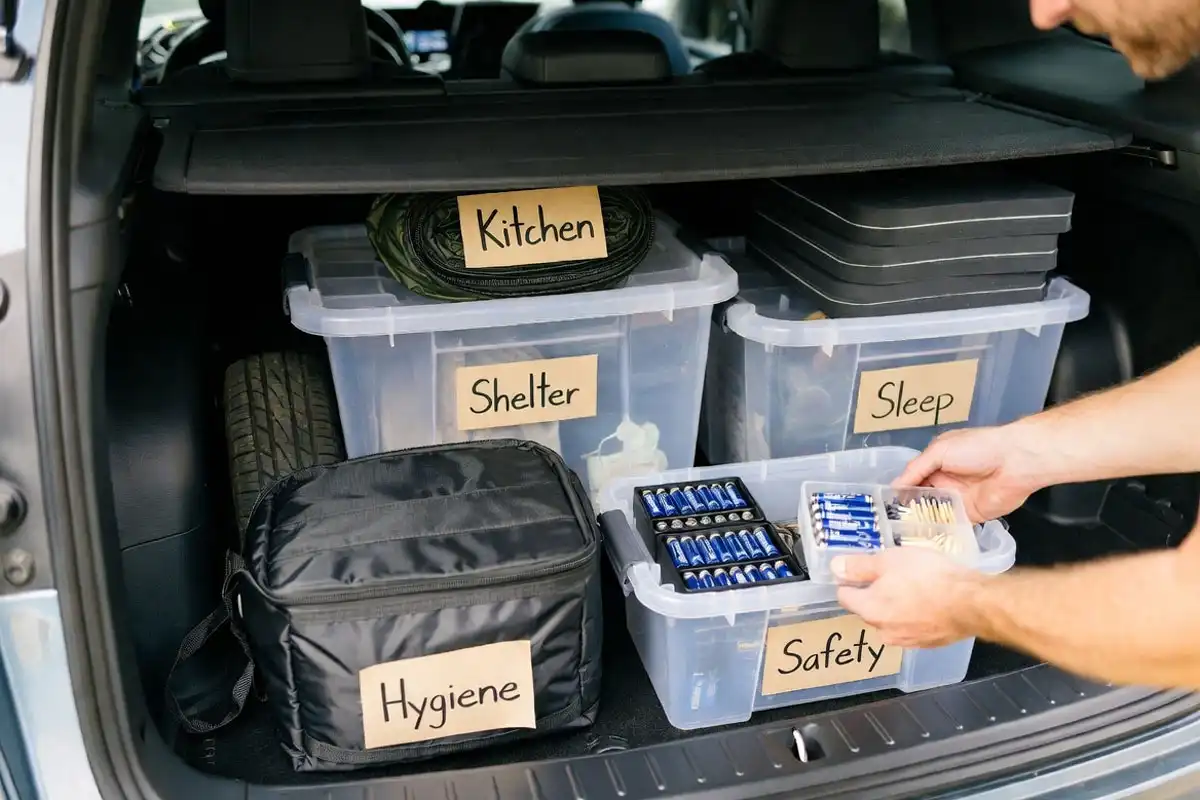
How to Build Your 2-Night Camping Checklist (Step by Step)
Step 1: Shelter and Sleep System
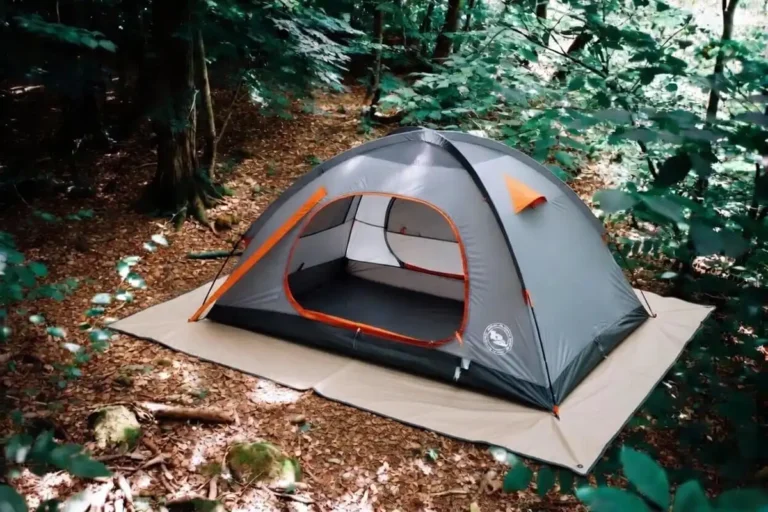
Your shelter category covers 4 core items: tent, ground sheet or footprint, sleeping bag, and sleeping pad.
Choose a tent rated for the conditions you expect. A 3-season tent handles temperatures down to approximately 0°C (32°F). A sleeping bag rated 5°C below the forecast low keeps you warm through the coldest overnight hours.
A sleeping pad provides insulation between your body and cold ground. Foam pads deliver R-values of 2 to 4. Inflatable pads reach R-values of 4 to 7.
Pack tent stakes and a small repair kit. Stakes fail on rocky or frozen ground, and a spare set weighs almost nothing.
Shelter checklist:
- Tent with poles and rainfly
- Ground sheet or footprint
- Sleeping bag (temperature-rated)
- Sleeping pad (foam or inflatable)
- Tent stakes (standard + spares)
- Tent repair tape
Step 2: Clothing and Layers
Pack 3 clothing layers for a 2-night trip: a moisture-wicking base layer, an insulating mid-layer, and a waterproof outer shell.
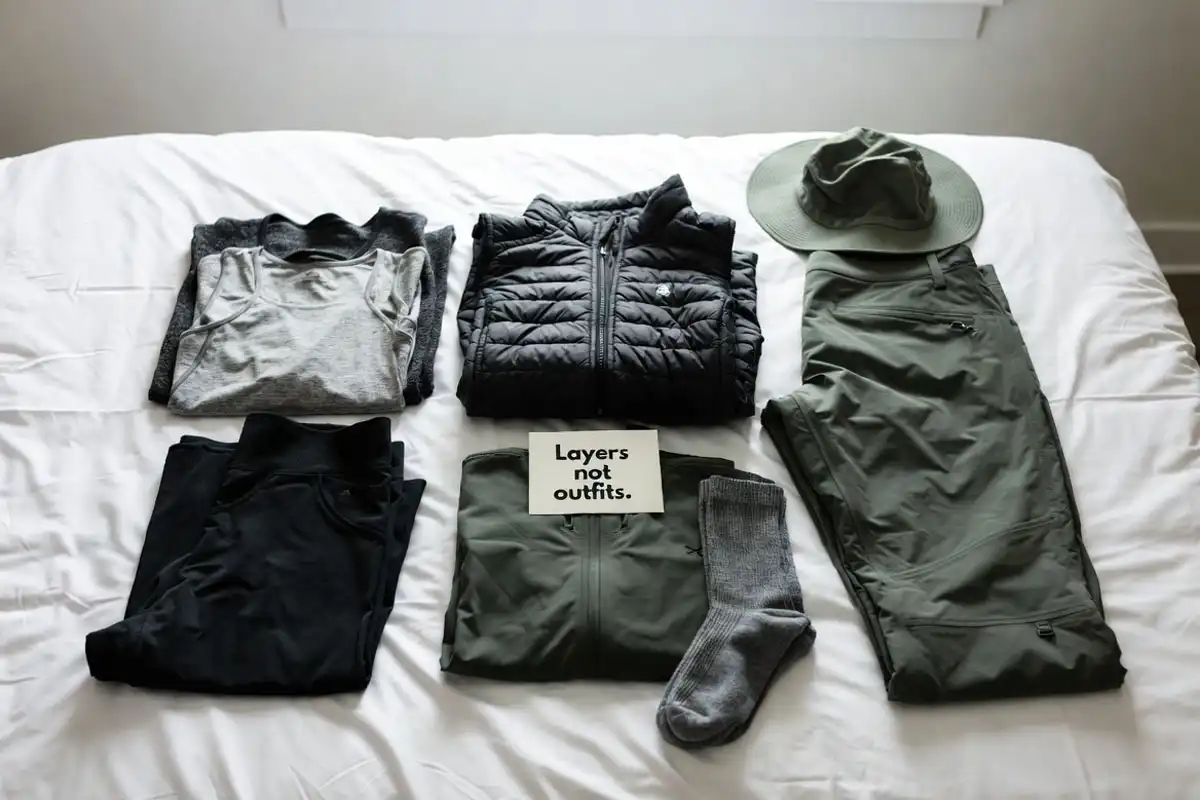
Base layer fabrics include merino wool and synthetic polyester. Both move sweat away from skin. Cotton holds moisture and raises the risk of hypothermia in cold or wet conditions.
Bring 2 pairs of hiking socks per day of active movement plus 1 dedicated camp sock pair for sleeping. Wet feet cause blisters faster than any other friction source.
Pack a warm hat, gloves, and a rain cover for your pack even in warm forecasts. Weather at camp rarely matches the forecast exactly.
Clothing checklist:
- Moisture-wicking base layer (top and bottom)
- Insulating mid-layer (fleece or down jacket)
- Waterproof outer shell (jacket and pants)
- 4 to 6 pairs of hiking socks
- 1 pair of camp socks
- Warm hat and gloves
- Rain cover for backpack
Step 3: Water and Hydration
Water is the highest-priority item on any camping checklist.
A 70 kg adult needs approximately 2 liters per day under normal activity. Add 0.5 liters per hour of active hiking in heat or high altitude. I covered the full calculation in my guide on how much water to bring camping per person.
Carry a backup purification method alongside any water you pack in. Options include iodine tablets (treat in 30 minutes), squeeze filters (0.1 micron pore size removes most pathogens), and UV pens (effective in clear water in 60 seconds).
Water checklist:
- Water bottles or reservoir (minimum 2 liters capacity per person)
- Backup water filter or purification tablets
- UV pen (optional but lightweight)
- Knowledge of water sources at your campsite
Step 4: Food and Cooking Gear
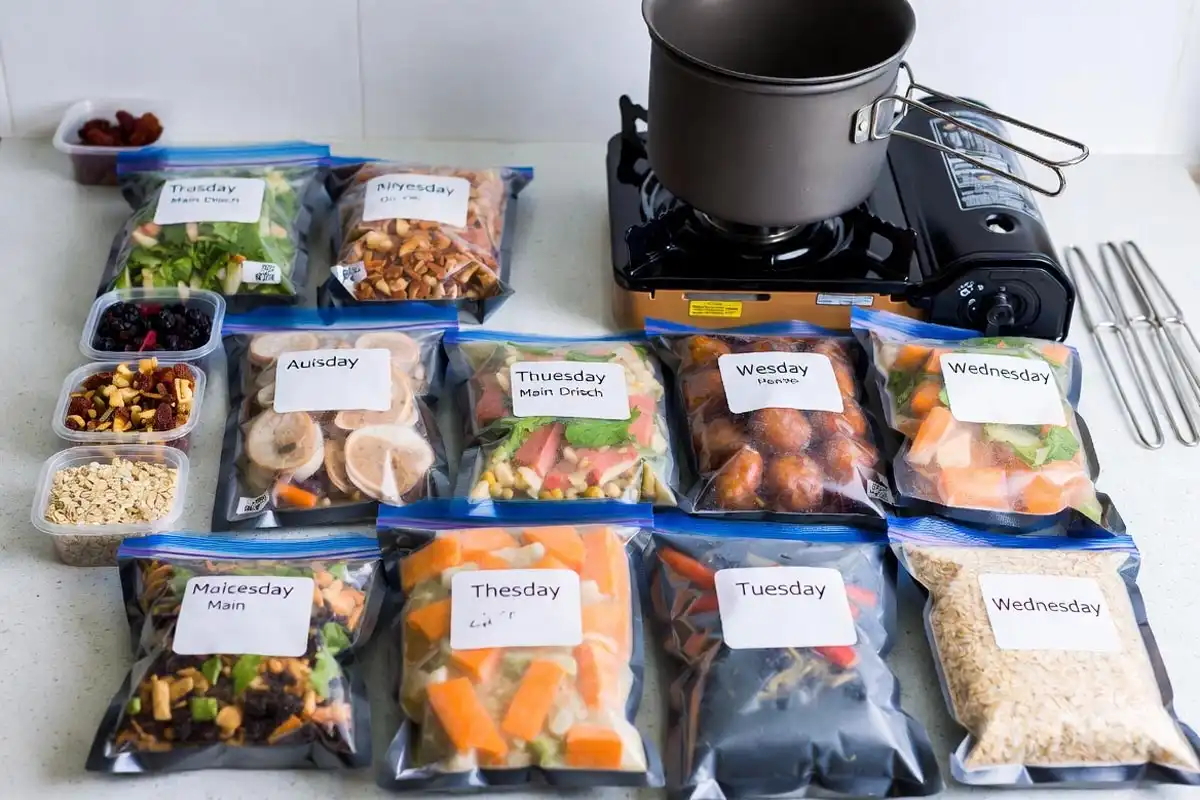
Plan 3 meals plus 2 snacks per person per day.
For a 2-night trip with 3 days of eating, that equals 9 meals and 6 snack portions per person. Organize food into labeled bags by meal to prevent digging through your pack at camp.
Calorie density matters when weight is a factor. Foods that deliver 100 or more calories per 28 g include nuts, dried fruit, hard cheese, peanut butter, and instant grain mixes.
Your cooking kit needs 4 minimum items: a stove or fire grate, fuel or fire starters, a cook pot, and a utensil set. I wrote a complete breakdown of what a campfire cooking kit needs if you prefer cooking over open flame.
Food and cooking checklist:
- Pre-portioned meals by day (labeled)
- Snacks (2 per day per person)
- Camp stove and fuel canister (or fire grate)
- Lighter and backup matches (waterproof)
- Cook pot with lid
- Eating utensils and camp mug
- Cutting board and knife
- Biodegradable dish soap and sponge
- Bear bag or canister for food storage
Step 5: Lighting and Navigation
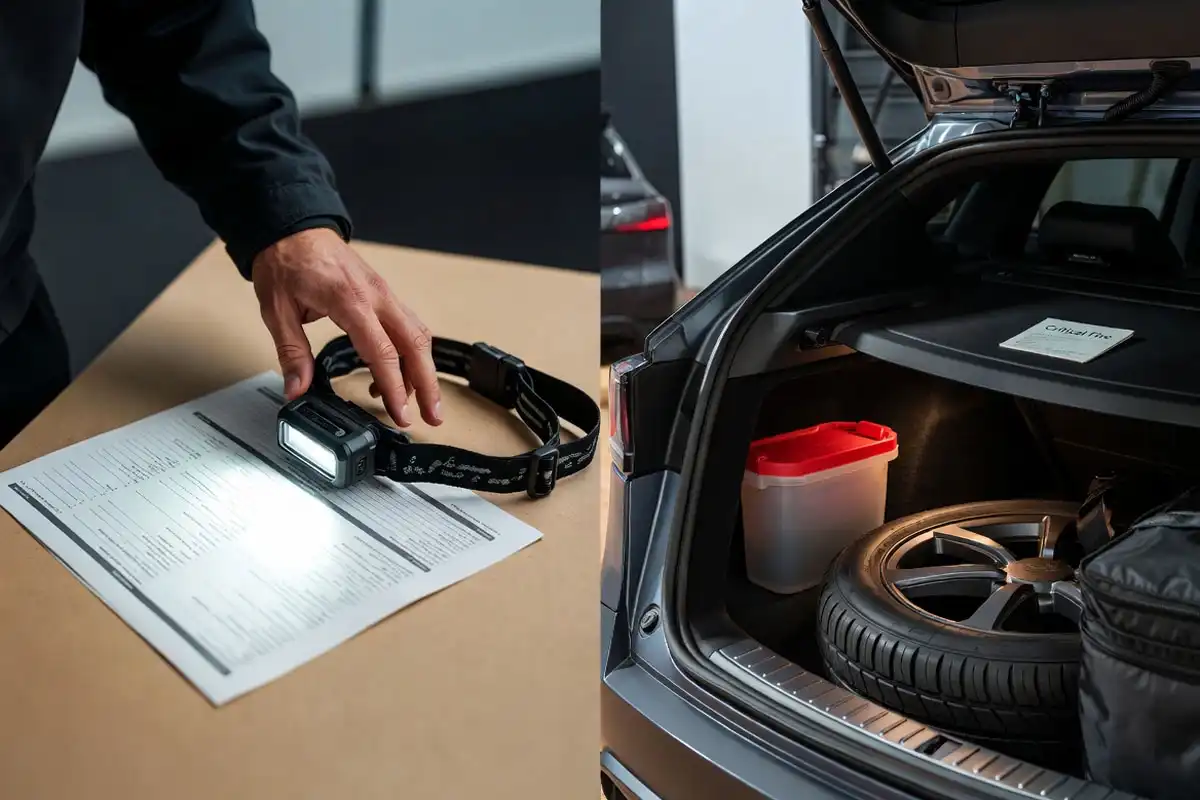
Pack 2 light sources per person: a headlamp as primary and a backup lantern or flashlight.
Headlamps free both hands for cooking, setting up camp in the dark, and night hiking. A model with at least 200 lumens handles most camp tasks. A red-light mode protects night vision when moving around camp after dark.
Navigation tools include a paper topographic map and a compass as a backup to your phone GPS. Phone batteries drain 30 to 40% faster in temperatures below 0°C.
Lighting and navigation checklist:
- Headlamp with spare batteries
- Backup lantern or flashlight
- Paper topographic map of your area
- Compass (baseplate style)
- Charged phone with offline maps downloaded
- Power bank (10,000 mAh handles 2 to 3 full phone charges)
Step 6: First Aid and Safety
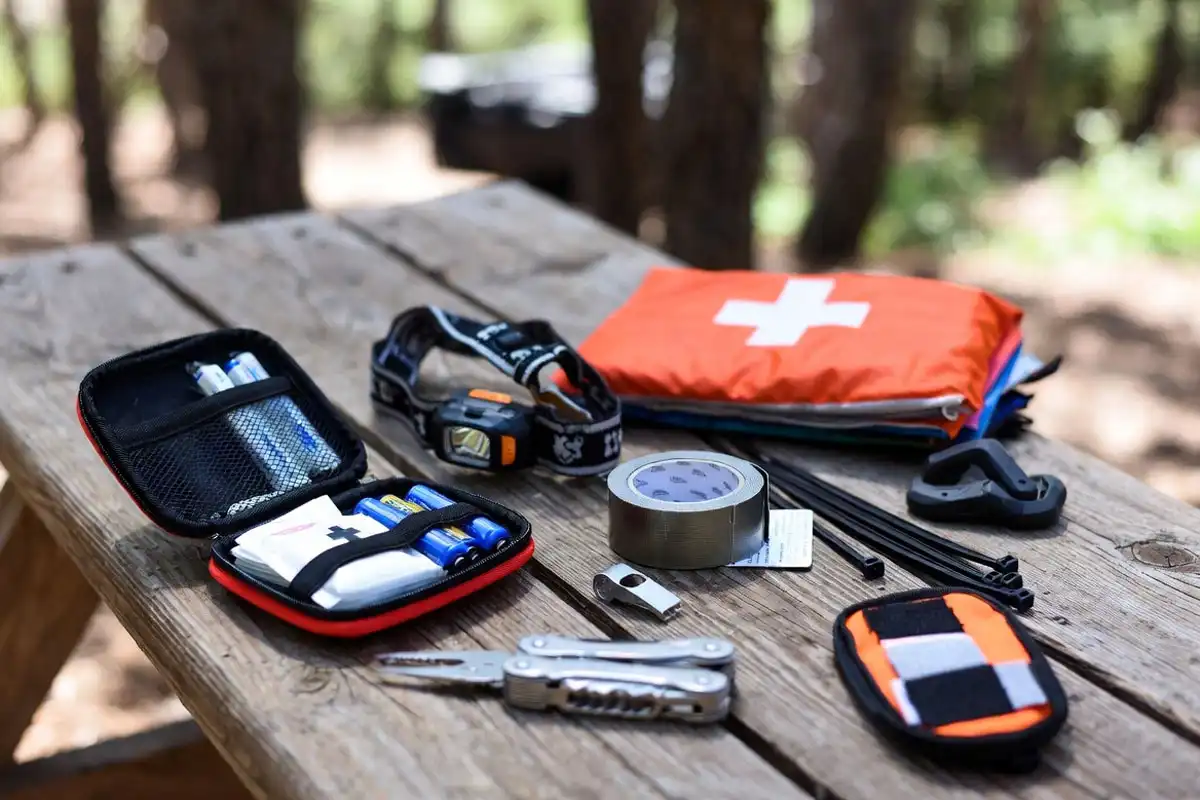
A 2-night trip requires a first aid kit that covers cuts, blisters, sprains, allergic reactions, and insect stings.
The kit includes: adhesive bandages in assorted sizes, gauze pads, medical tape, blister pads, antiseptic wipes, antihistamine tablets, pain relief tablets, an elastic bandage, and tweezers.
I covered how to treat cuts and blisters at camp in detail in my article on treating minor cuts and blisters, which pairs directly with this section.
For remote or solo trips, add a personal locator beacon (PLB) or satellite communicator. A whistle and a fire starter belong in every safety kit regardless of distance from help.
Safety checklist:
- Adhesive bandages (assorted)
- Gauze pads and medical tape
- Blister pads (moleskin or gel)
- Antiseptic wipes
- Antihistamine and pain relief tablets
- Elastic bandage
- Tweezers and small scissors
- Whistle
- Fire starter (lighter, matches, ferro rod)
- PLB or satellite communicator (remote trips)
Step 7: Personal and Hygiene Items
Personal items cover 7 essentials: sunscreen (SPF 30 or higher), insect repellent, biodegradable soap, a trowel for cat-hole digging, toilet paper, hand sanitizer, and a small microfiber towel.
Pack all toiletries in a zip-lock bag to keep them dry and contained. Store food-scented items including lip balm and toothpaste in your bear canister or hung food bag, not in your tent.
Personal and hygiene checklist:
- Sunscreen (SPF 30+)
- Insect repellent (DEET or picaridin)
- Biodegradable soap
- Toothbrush and toothpaste
- Microfiber towel
- Toilet paper and trowel (for leave-no-trace burial)
- Hand sanitizer
- Menstrual supplies if needed
- Prescription medications in original containers
- Identification and emergency contact card
What Packing Mistakes Do Campers Make Most Often?
Overpacking clothing: Two nights require 2 base layers and 1 insulation layer. Extra clothing adds weight without improving warmth or comfort.
Skipping a backup light source: Headlamp batteries fail at the worst time. A secondary light costs little and prevents real problems in total darkness.
Underestimating water needs: Most campers pack 1 liter and run short by day 2. Carry a filter and identify water sources at your campsite before you arrive.
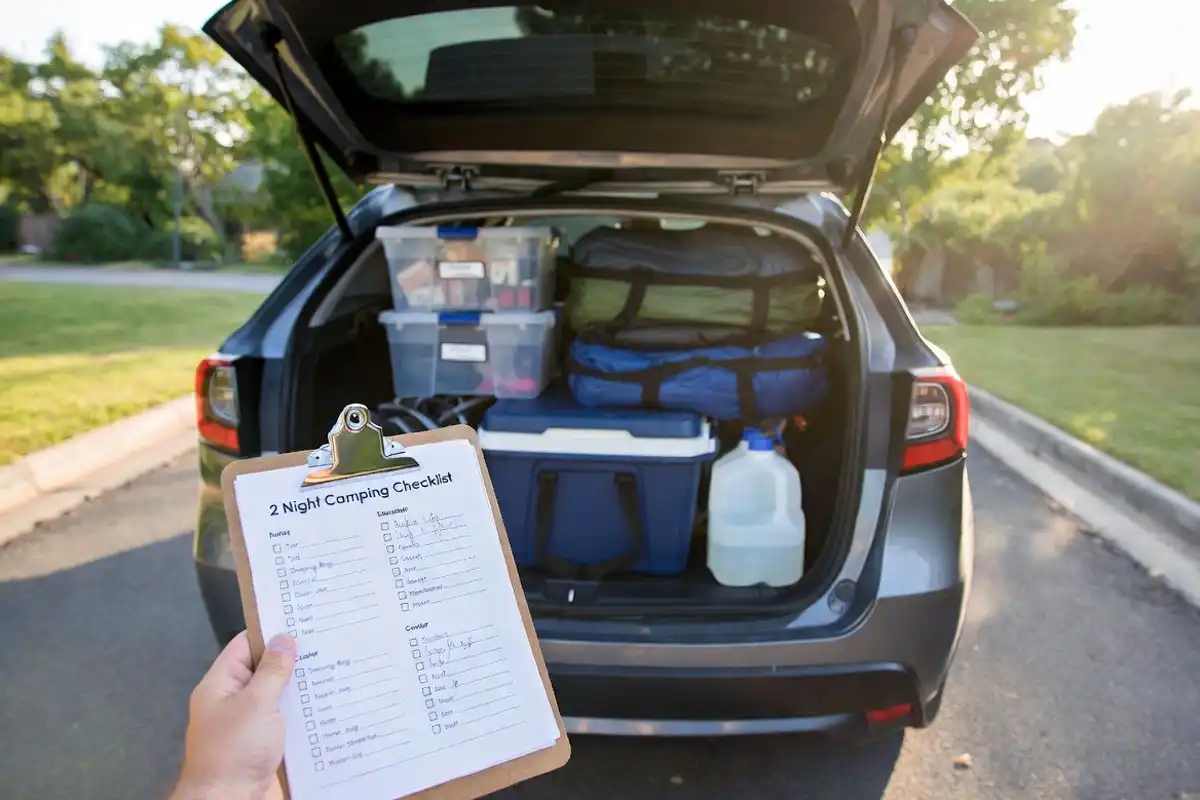
Leaving the checklist as a phone-only file: Phone screens crack and batteries die. A printed checklist works without power and takes 30 seconds to prepare.
Not testing gear before departure: Tent poles crack, stove igniters fail, and sleeping pad valves leak. A 20-minute gear test at home prevents a cold, difficult night at camp.
FAQs about Plan a 2-Night Camping Checklist

How long does packing for a 2-night camping trip take?
Packing takes 60 to 90 minutes with a pre-built checklist. First-time campers need 2 to 3 hours to gather and organize all 7 categories. Starting 7 days out and building by category removes the time pressure entirely.
What is the most forgotten camping item?
Campers most frequently forget a headlamp or spare batteries, followed by toilet paper, a can opener, and camp chair. Adding these items to a dedicated “easy to forget” section at the bottom of your checklist prevents repeat omissions.
How much food should I pack for 2 nights and 3 days?
Pack 3 meals and 2 snacks per person per day. That equals 9 meals and 6 snack portions per person for a standard 2-night trip. Choose foods that deliver 100 or more calories per 28 g to keep pack weight manageable.
Do I need a permit for a 2-night camping trip?
Permit requirements depend on the location. National parks and designated wilderness areas in the US, Canada, and Australia require overnight permits at most sites. Check the land management agency website for your specific destination before you book.
The Night-Before Final Check
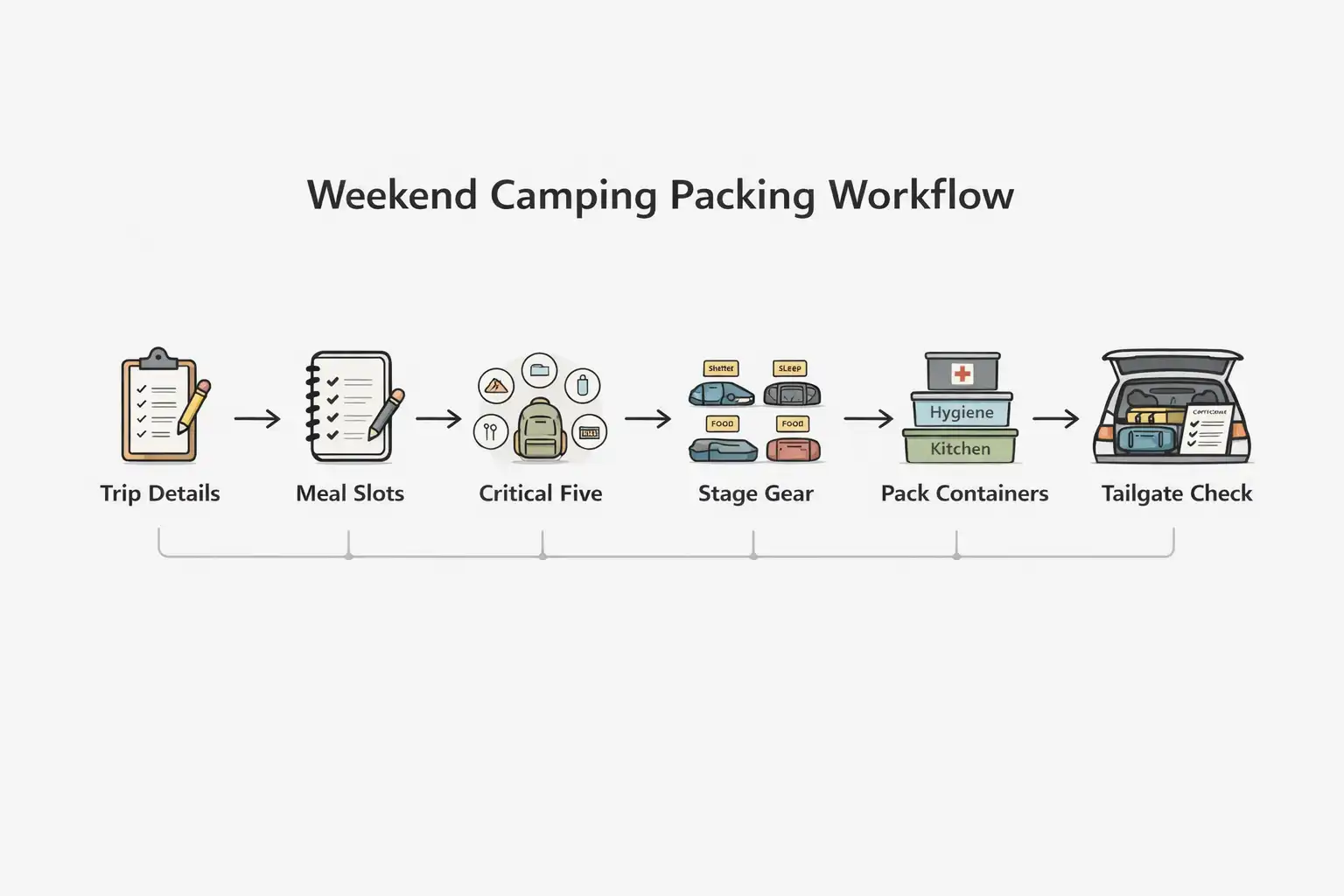
Run through this 5-step routine the evening before you leave.
- Lay every item from your checklist on the floor and confirm each one physically before placing it in your pack.
- Pack heavy items (tent, food bag, water) close to your back and at mid-height to keep the load balanced.
- Place items you need first (rain jacket, snacks, map, headlamp) in the top lid or an outer pocket.
- Check your stove fuel level and test the igniter.
- Charge your headlamp, GPS device, and phone to 100%.
This routine takes 15 minutes and eliminates the most common packing failures before you’re too far from home to fix them.
Final Words
A solid checklist removes the panic of “I forgot that” before you’re two hours from the nearest town. A 2-night camping checklist prevents forgotten essentials by organizing gear into six categories, assigning quantities, and cross-checking the night before you leave.
The system works because it treats packing as a structured process instead of a memory exercise. Build the list once, refine it after each trip, and it gets faster every time you use it.