How to Prevent Food Poisoning While Camping

To prevent food poisoning while camping, control temperature, keep raw and cooked food separate, and wash your hands before every meal. Without a refrigerator, running water, or a clean kitchen counter, food safety depends entirely on your habits. This guide covers safe food storage, proper cooking temperatures, water safety for food prep, and the handling mistakes that cause most campsite illnesses, so you can eat confidently on every trip.
Keep cold foods below 40°F (4°C) in a well-packed cooler, cook meat to safe internal temperatures, separate raw proteins from ready-to-eat food, use clean or treated water for all food prep, and wash your hands before touching anything you will eat. Those five habits prevent the majority of campsite food poisoning cases.
What Causes Food Poisoning at Camp?
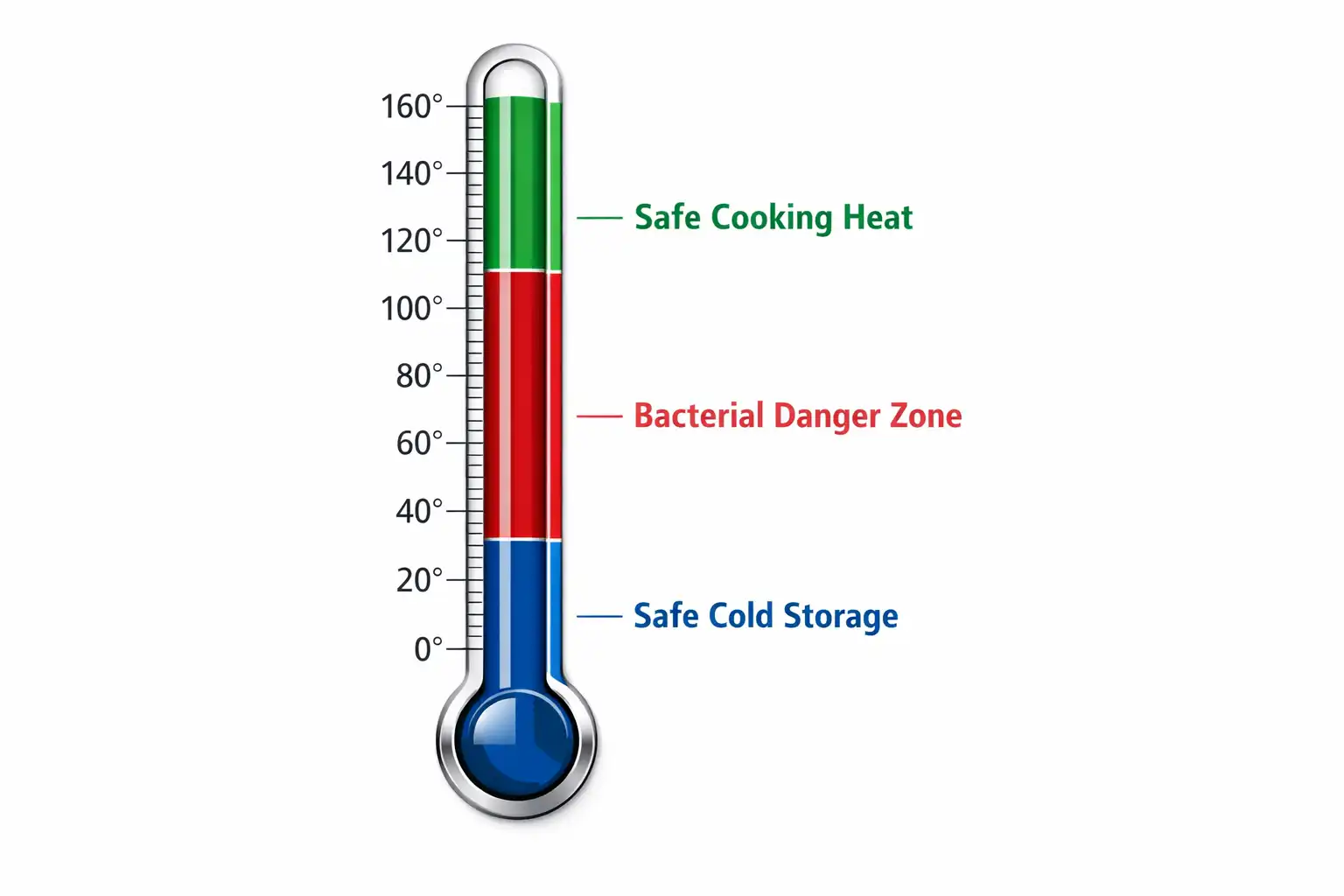
Food poisoning at camp comes from bacteria growing in food that reaches unsafe temperatures. Common culprits include Salmonella, E. coli, Listeria, and Campylobacter. These bacteria thrive between 40°F and 140°F (4°C and 60°C), a range the USDA calls the “danger zone.”
At camp, food sits in that danger zone more often than at home. Coolers warm up, hands stay dirty longer, and cross-contamination happens easily on shared surfaces.
Which Foods Carry the Highest Risk?
Some foods spoil faster and carry more bacterial risk than others. The highest-risk foods at camp include:
- Raw chicken, ground beef, and pork
- Eggs stored outside the shell
- Soft cheeses and dairy products
- Pre-cooked meats packed for convenience
- Cut fruits and leafy greens
Dry, shelf-stable foods, such as rice, oats, nuts, and crackers, carry far less risk. Planning meals around these for the first day helps reduce pressure on cooler management.
How to Prevent Food Poisoning While Camping
Step 1: Pack Your Cooler Correctly
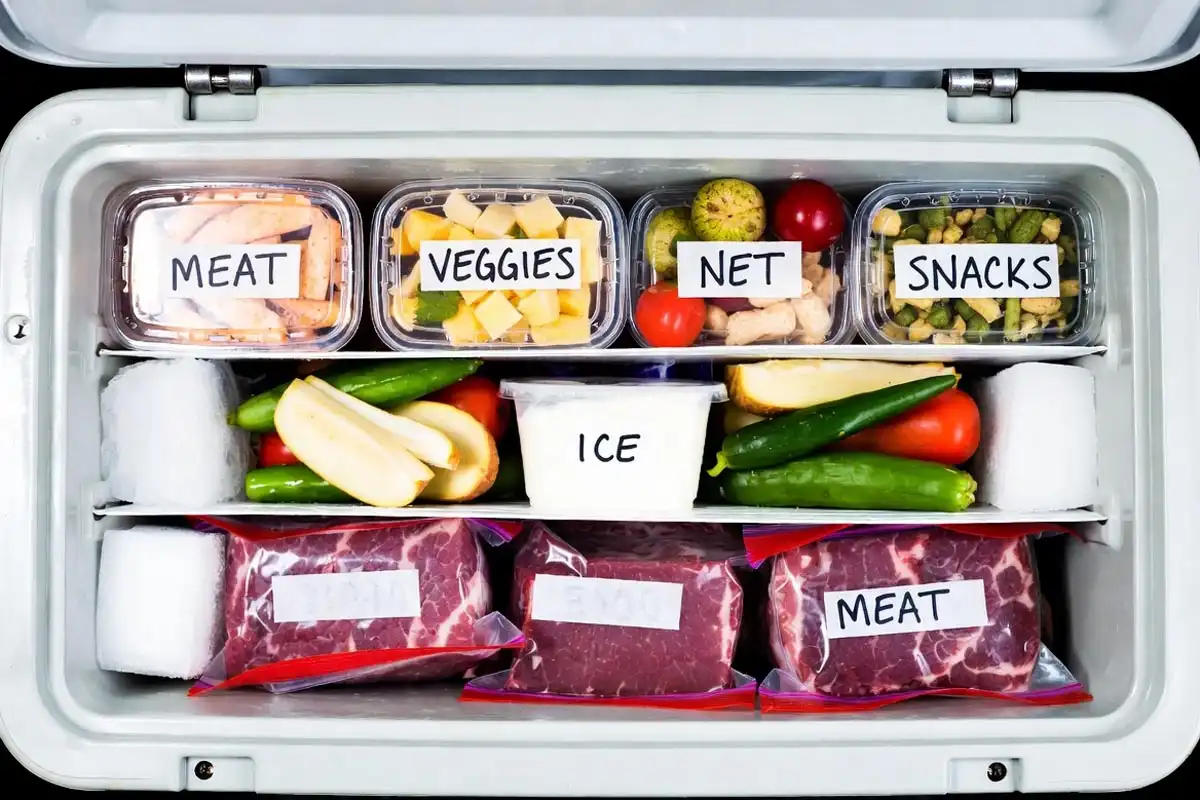
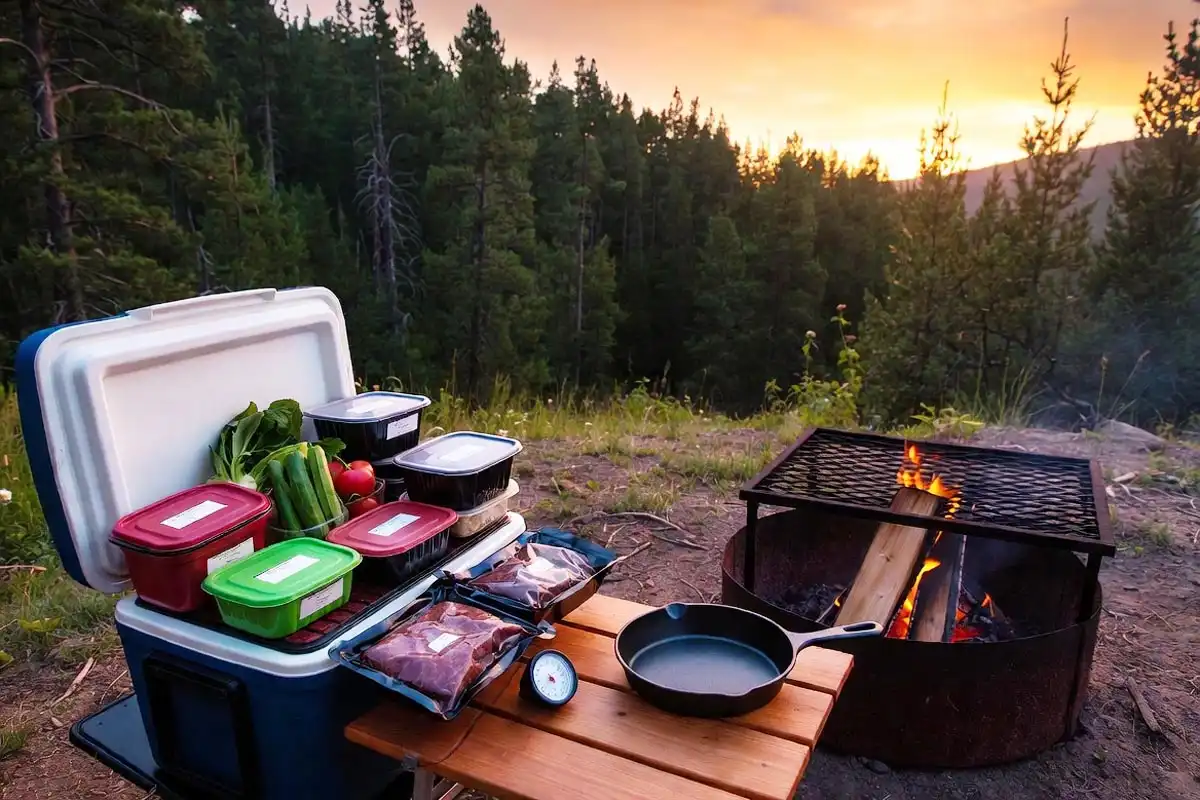
A poorly packed cooler warms up within hours. Block ice lasts longer than cubed ice. Pre-chill the cooler the night before. Pack raw meat at the bottom in sealed bags to prevent drips onto other food.
Keep the cooler temperature at or below 40°F (4°C). Check it with an inexpensive cooler thermometer. Open the cooler as few times as possible to slow ice melt.
Step 2: Separate Raw Proteins from Everything Else
Raw meat, poultry, and seafood carry bacteria that transfer easily to other foods. Use dedicated bags or containers for raw proteins. Never place raw chicken on the same surface as vegetables or bread.
Bring separate cutting boards if space allows. Even color-coding your bags helps when working in low light.
Step 3: Cook Food to Safe Internal Temperatures
Heat kills bacteria when the food reaches the right temperature throughout, not just on the surface. Use a pocket meat thermometer at camp. Safe minimum internal temperatures per USDA guidance:
- Whole poultry (chicken, turkey): 165°F (74°C)
- Ground beef, pork, lamb: 160°F (71°C)
- Whole cuts of beef, pork, lamb: 145°F (63°C)
- Fish and seafood: 145°F (63°C)
I covered fire and temperature control in detail in how to cook meat over a campfire safely, which pairs directly with this guide.
Step 4: Wash Your Hands Before Every Meal
Dirty hands transfer bacteria faster than almost any other route. At camp, set up a simple handwashing station with a water container, biodegradable soap, and a small towel. Wash before handling food and after handling raw meat, touching garbage, or using the bathroom.
Hand sanitizer helps when water is limited, but soap and water cleans more effectively for food prep.
Step 5: Use Clean Water for All Food Prep
Unsafe water introduces pathogens directly into your food. Use water you have treated or confirmed safe for washing produce, rinsing utensils, and cooking. I covered water treatment methods in depth in how to purify water in the forest, and there is a more camp-specific breakdown in how to make camp water safer.
Never assume stream or lake water is safe for food prep without treating it first.
Step 6: Handle and Store Leftovers Safely
Cooked food left out for more than two hours enters the bacterial danger zone. At camp in temperatures above 90°F (32°C), that window drops to one hour. Cool leftovers quickly and get them back into the cooler.
Reheat leftovers to at least 165°F (74°C) before eating. Discard anything you are uncertain about. A wasted meal costs nothing compared to a night spent sick in a tent.
Common Mistakes That Lead to Camp Food Poisoning
Overpacking the cooler. A cooler packed too tightly does not circulate cold air. Use ice generously and leave some airflow between food items.
Thawing meat outside the cooler. Thawing raw meat at ambient temperature allows bacteria to multiply rapidly. Thaw in the cooler overnight instead.
Rinsing raw chicken. Rinsing raw chicken spreads bacteria to surrounding surfaces. Skip the rinse and rely on heat to kill bacteria during cooking.
Using the same utensils. Tongs that flip raw chicken should not plate cooked chicken. Bring a second set or wash and dry them between uses.
Forgetting to clean the campfire cooking kit. Grease and food residue on grates and cookware harbor bacteria. I wrote specifically about campfire cooking tools, including how to clean them properly in the field.
What to Do If Food Poisoning Occurs at Camp
Symptoms, which include nausea, vomiting, diarrhea, and stomach cramps, typically appear within 6 to 48 hours of eating contaminated food. Most cases resolve with rest and fluid replacement.
Keep the affected person hydrated. Small sips of clean water every few minutes prevent dehydration. Avoid solid food until symptoms ease.
Evacuate if the person cannot keep fluids down for more than 12 hours, shows signs of severe dehydration, runs a high fever, or has blood in vomit or stool. Those are signs that require medical attention.
FAQs about Prevent Food Poisoning While Camping

How long can food stay in a cooler before it becomes unsafe?
Cold food stays safe in a properly packed cooler for about two to four days if the cooler temperature stays at or below 40°F (4°C). Check with a thermometer and replenish ice before it fully melts.
Can I eat food that has been left out overnight at camp?
No. Food left out at camp temperatures for more than two hours should be discarded. Overnight exposure allows bacteria to multiply to levels that cause illness even after reheating.
Is it safe to eat food cooked over a campfire?
Yes, provided you cook it to the correct internal temperature. Fire heat alone does not guarantee safety. Charred outside and raw inside is a common campfire cooking mistake. Use a meat thermometer to confirm.
What are the safest foods to bring camping?
Shelf-stable and dry foods carry the least risk: instant oats, nut butter, crackers, dried fruit, canned goods, and hard cheeses. These require no refrigeration and tolerate camp conditions well.
Does altitude affect food safety while camping?
Altitude lowers the boiling point of water, which affects cooking times but does not change safe internal temperature targets for meat. At high elevation, water boils below 212°F (100°C), so boiling alone may not fully pasteurize water. Use a filter or chemical treatment alongside boiling at elevations above 6,500 feet (2,000 meters).
Final Thoughts
Food poisoning at camp is preventable. Control temperature, separate raw and cooked foods, cook to safe internal temperatures, and use treated water for prep. Those steps, applied consistently, cover the overwhelming majority of risk.
A thermometer, a well-organized cooler, and clean hands cost almost nothing but protect every meal on the trail.