How to Regulate Heat on a Campfire for Cooking in 7 Practical Steps

To regulate heat on a campfire for cooking, you need steady control so food cooks evenly without burning. This guide covers how campfire heat zones work, how to build the right fire for cooking, and how to raise or lower heat at each stage of a meal. I’ve spent years cooking over open fire in the forests of Rangamati, and these methods work whether you’re simmering a stew, boiling water, or grilling over coals.
To regulate heat on a campfire for cooking, let the fire burn down 30 to 45 minutes until hot coals form. Move food toward the center for high heat and toward the outer edge for low heat. Raise the cooking grate to reduce heat; lower it to increase heat. Spread coals flat for even cooking across the pan.
What Are the Heat Zones of a Campfire?
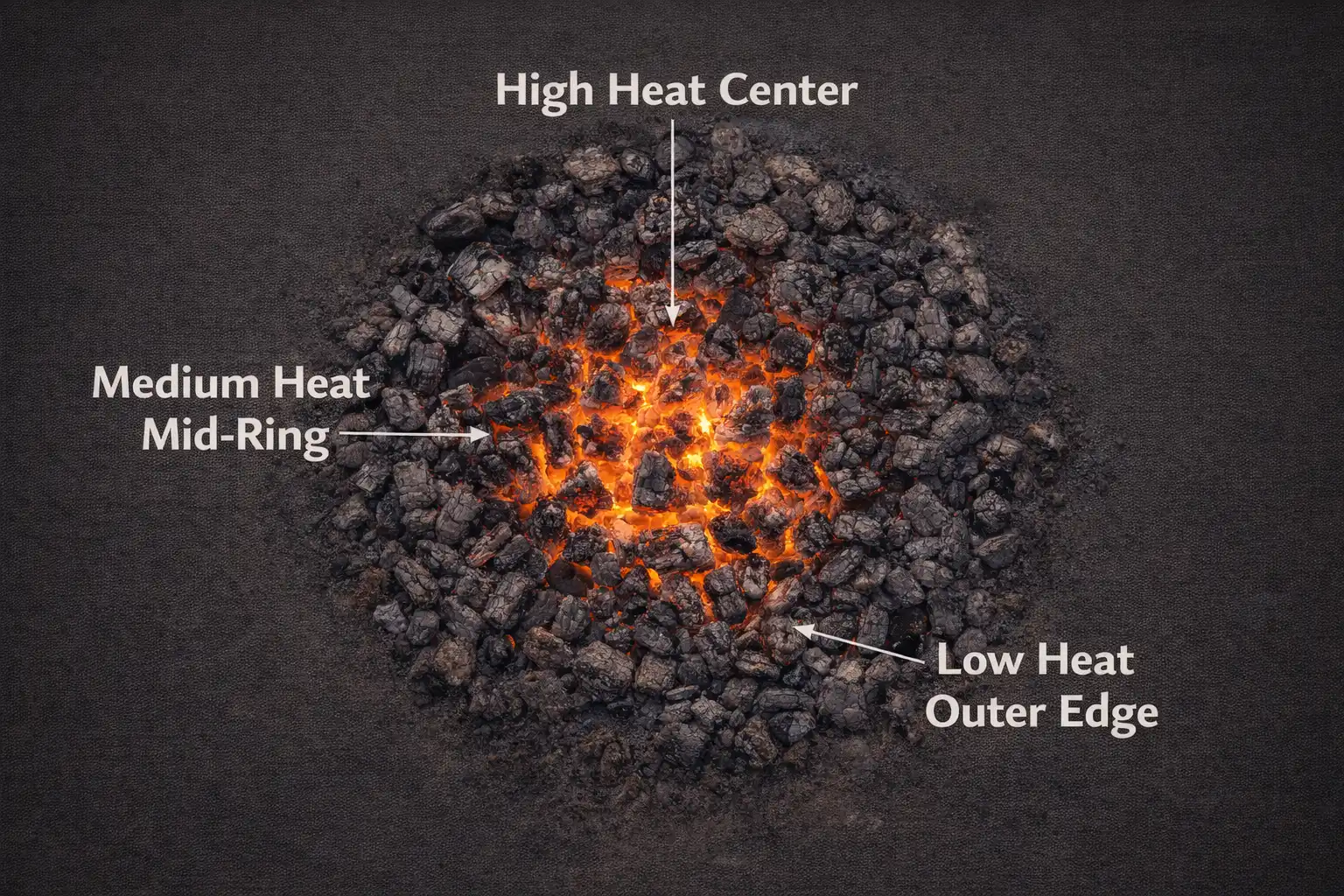
A campfire produces three distinct cooking zones: high heat, medium heat, and low heat.
The flame zone sits directly above burning wood. It delivers intense, uneven heat and works only for boiling water or quick searing.
The coal zone forms after wood burns down to glowing embers. Coals deliver steady heat and work for most campfire cooking, including frying, baking in a Dutch oven, and simmering.
The outer zone sits 6 to 10 inches from the coal bed. It provides gentle warmth for keeping food warm or for slow cooking without the risk of scorching.
What Wood Works Best for a Cooking Fire?
Wood type directly affects how well you control campfire heat.
Hardwoods, which include oak, hickory, and maple, produce dense coals that hold heat longer and burn more evenly. Softwoods like pine burn fast, produce large flames, and leave thin, unstable coals that cool quickly.
Use seasoned or dry hardwood for cooking. Green or wet wood produces steam and inconsistent heat, making it harder to hold a steady temperature under your cookware.
How to Build a Campfire for Cooking
A cooking fire needs a coal bed, not tall flames. These steps get the fire ready before food goes on.
Step 1: Start with a small, structured fire Build a log-cabin or crisscross pattern using dry hardwood. This structure allows airflow and helps the wood burn down to coals evenly.
Step 2: Keep the fire size manageable A fire roughly 18 inches wide produces enough coals for most camp meals. A larger fire takes longer to settle and produces more heat than a single pot or pan needs.
Step 3: Let the fire burn down fully Wait 30 to 45 minutes after lighting before cooking. Coals are ready when they develop a consistent white-gray ash coating and flames disappear.
Step 4: Rake the coals flat Use a stick or camp shovel to spread coals into an even layer. This eliminates hot spots that scorch food on one side of the pan.
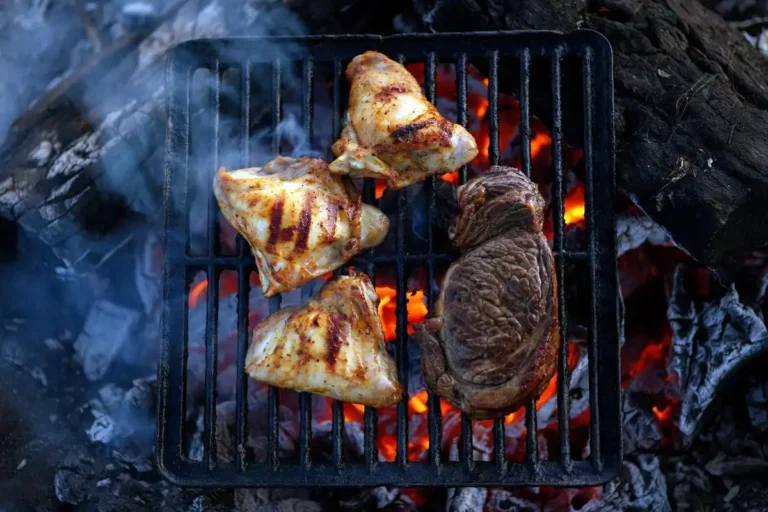
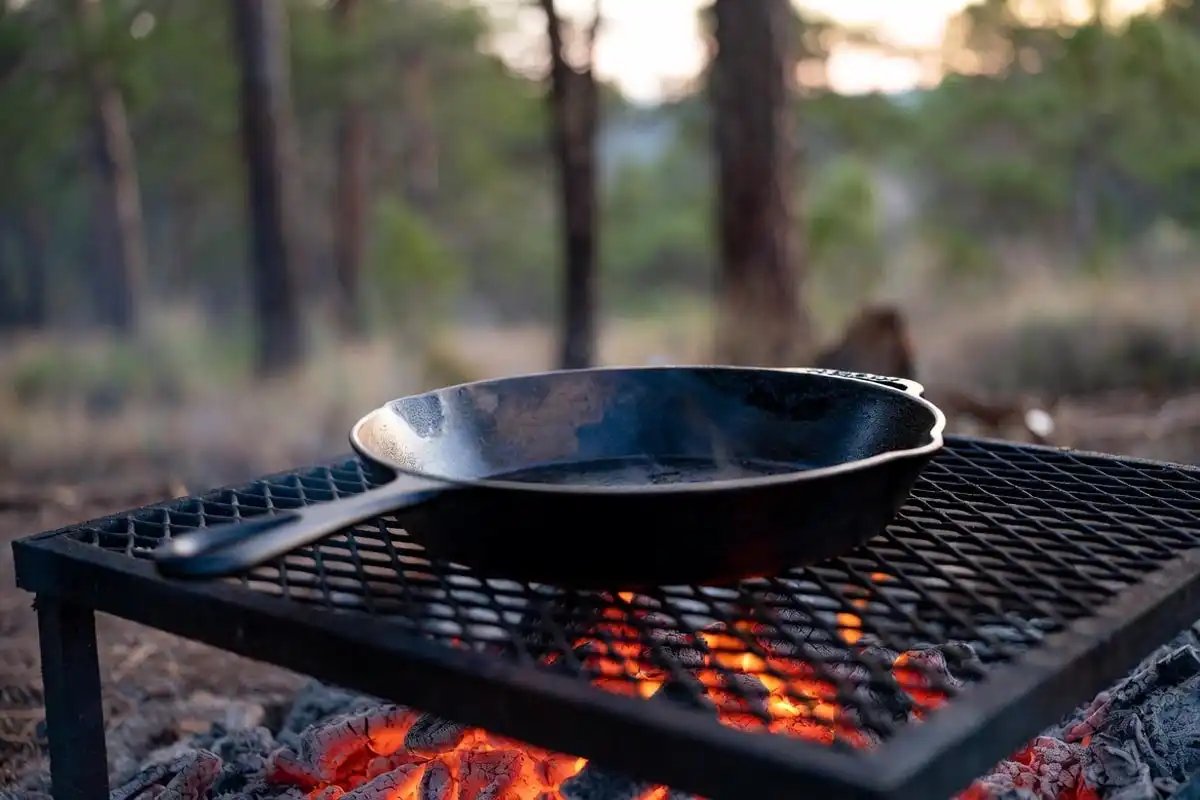
Step 5: Position the cooking grate Place a cooking grate 4 to 6 inches above the coals for medium heat. Set it higher for lower heat. Lower it to increase heat output.
If you’re assembling a camp kitchen setup, I covered what equipment helps most in my article on campfire cooking kits and gear that hold up over open fire.
Step-by-Step: How to Regulate Heat on a Campfire
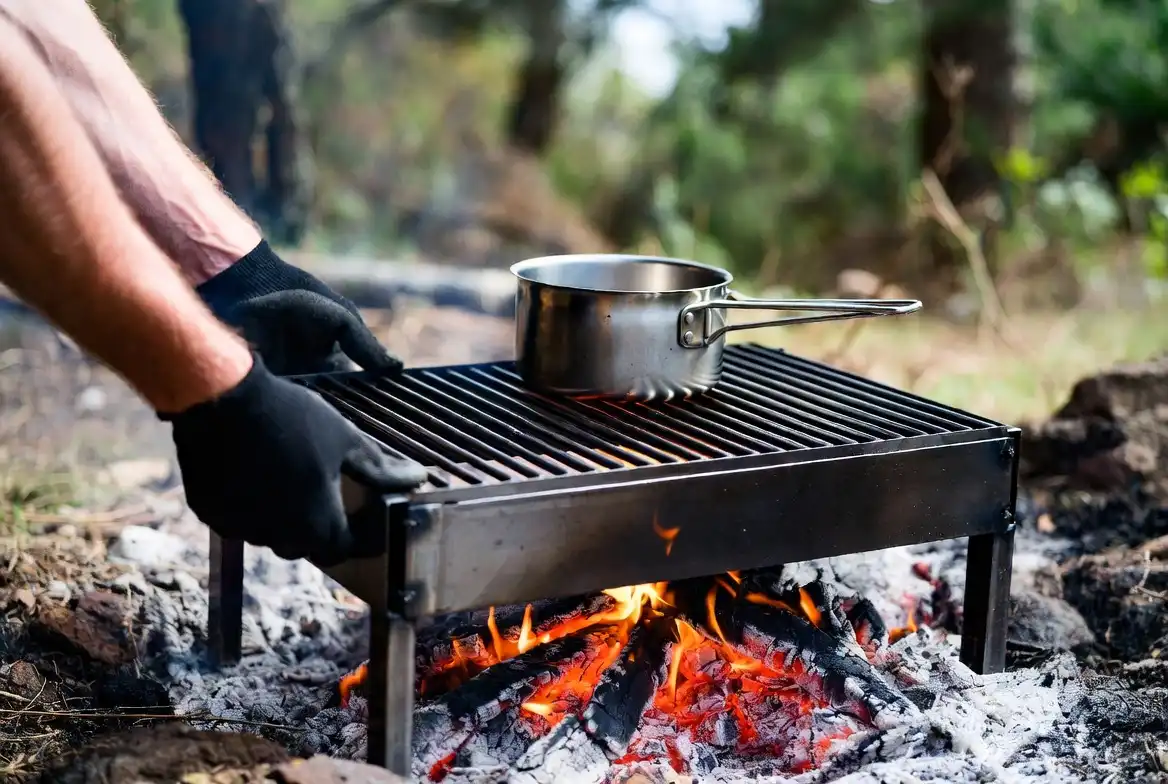
These are the six main methods I use to control campfire cooking temperature.
1. Move food closer to or farther from coals Shifting a pot toward the center of the coal bed increases heat. Moving it toward the outer edge reduces heat within seconds.
2. Raise or lower the grate height A grate at 3 to 4 inches above coals delivers high heat. A grate at 7 to 8 inches delivers low to medium heat. This is the fastest adjustment you can make without touching the fire.
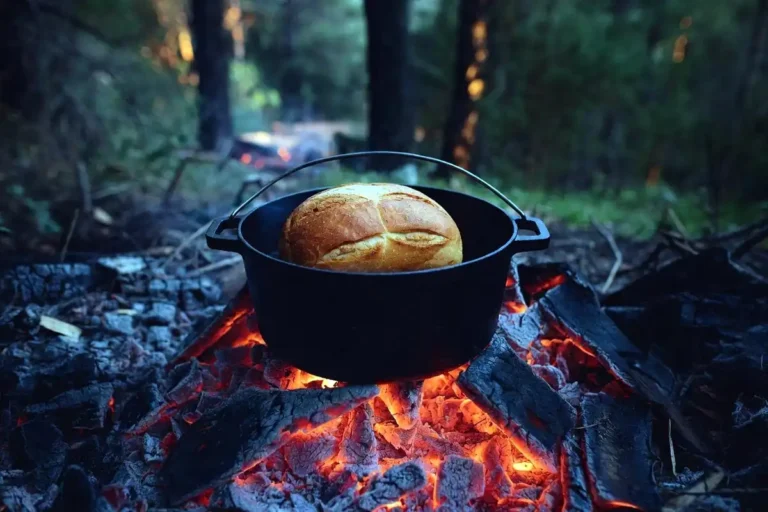
3. Add or remove coals beneath the pot Scoop live coals under a Dutch oven using tongs to raise the temperature. Remove coals to lower it. This method provides the most precise control for baking or slow cooking.
4. Spread coals to reduce intensity Raking coals outward into a wider, thinner layer lowers the heat output. Pushing them back together concentrates heat.
5. Add fresh wood to increase heat One dry hardwood log placed at the edge of the fire produces additional coals over 15 to 20 minutes. Avoid placing wood directly under the cookware, as flames create uneven heat.
6. Use a lid to trap heat A tight-fitting lid on a pot traps steam and raises the internal cooking temperature without requiring a larger fire. This works well for rice, beans, and soups.
For specific guidance on cooking grains without burning, my article on cooking rice over a campfire without scorching the bottom walks through the exact coal and lid setup.
How to Match Heat Level to Each Food Type
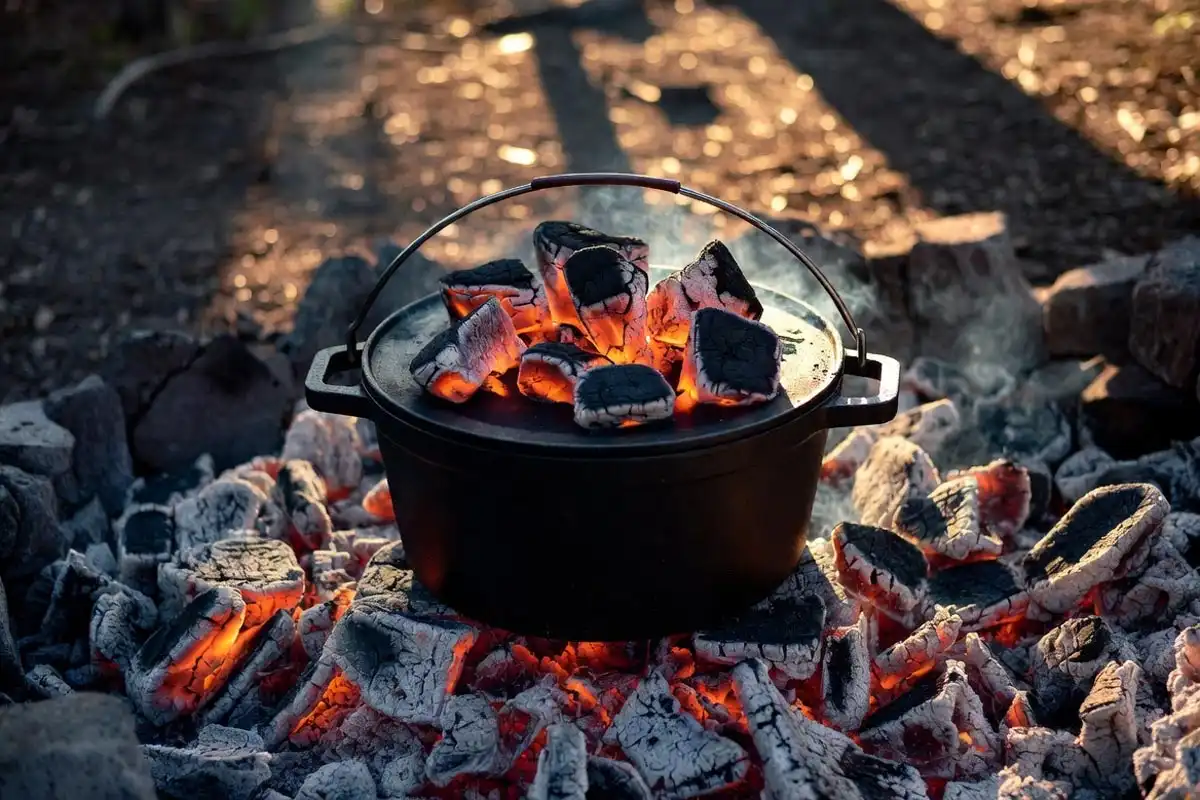
Different foods need different heat zones. Here is a practical breakdown.
High heat (above fresh, glowing coals or near open flame): Use for boiling water, searing meat quickly, or bringing a pot to a rolling boil. A quality kettle placed directly over coals reaches boiling point faster than over fluctuating flame, which is why choosing the right kettle designed for open-fire use matters for efficiency.
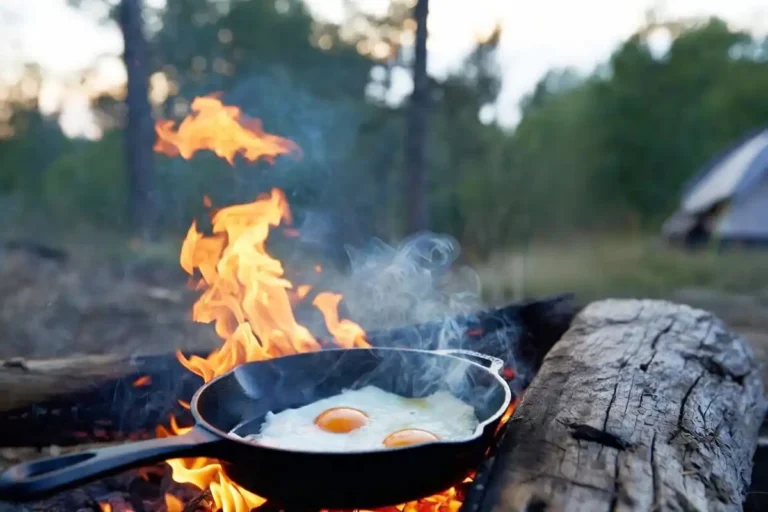
Medium heat (settled coal bed): Use for frying eggs, cooking pancakes, sautéing vegetables, and most skillet meals.
Low heat (outer coal edge): Use for simmering soups, slow-cooking stews, reheating leftovers, and melting butter.
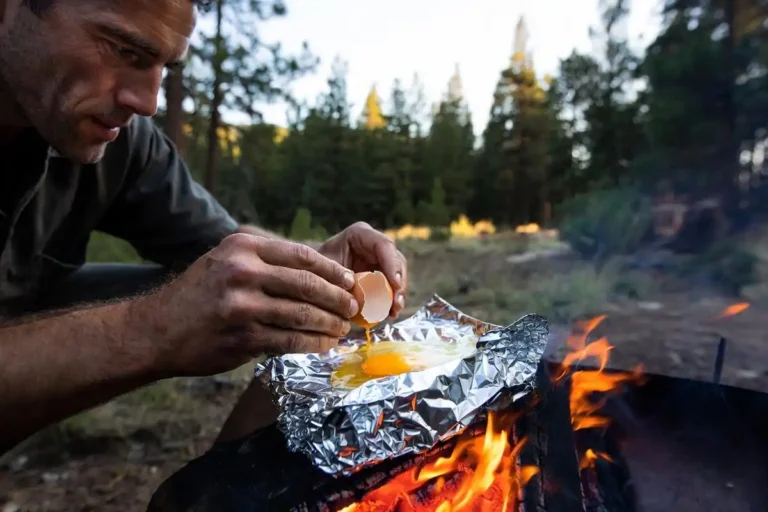
Direct coal cooking: Wrap root vegetables, corn, and potatoes in foil and place them directly on or inside hot coals. I covered which foods cook well using this method in my piece on what you can cook directly on campfire coals.
Common Mistakes That Make Heat Control Harder
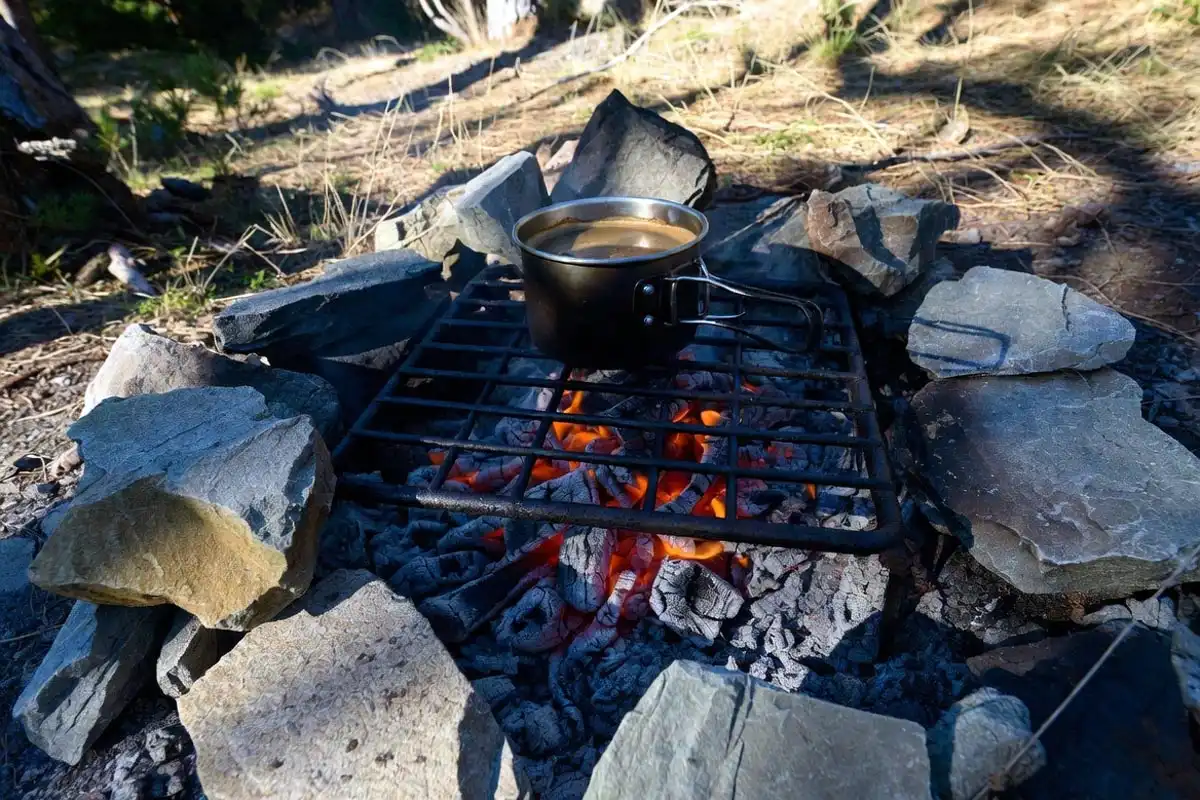
Cooking over open flames Flames fluctuate and produce uneven heat. Food placed over active flame burns on the outside before cooking through. Always wait for the coal stage.
Starting with too much wood A large fire takes longer to produce coals and wastes fuel. A compact fire using 4 to 6 logs of hardwood produces a solid coal bed in less time.
Ignoring wind direction Wind pushes heat to one side of the cookware. Position the fire against a rock face or natural windbreak. A ring of stones around the fire also helps direct heat upward and stabilizes the coal bed.
Skipping the coal-spreading step Uneven coal piles create hot spots. A flat, spread layer is the single biggest factor in consistent heat distribution.
Safety Rules for Campfire Cooking
- Keep a bucket of water within reach at all times while the fire is active.
- Use long-handled cookware and heat-resistant gloves when adjusting pots near hot coals.
- Never leave a cooking fire unattended, even briefly.
- Extinguish all coals completely before leaving the campsite. Pour water, stir the ash, and pour water again until the bed is cool to the touch.
- Set up the cooking fire at least 10 feet from tents, dry grass, and tree branches.
FAQs about Regulate Heat on a Campfire for Cooking

How do I lower campfire heat quickly without moving the grate?
Move the cookware to the outer edge of the coal bed. Spreading the coals apart with a stick also decreases heat output within two to three minutes.
How do I know when coals are ready for cooking?
Coals are ready when they develop a consistent white-gray ash coating and produce no open flames. This stage typically occurs 30 to 45 minutes after lighting the fire.
Does a Dutch oven work for campfire baking?
Yes. A cast-iron Dutch oven placed on coals with additional coals on the lid produces a consistent oven-like temperature. Use roughly 10 coals on top and 7 beneath for a 10-inch Dutch oven.
Why does my food keep burning on the bottom?
The grate sits too close to the coals, or the coal bed is uneven. Raise the grate by 2 to 3 inches and rake the coals into a flat layer before cooking.
Can I use a campfire grate and a tripod at the same time?
Yes. A tripod suspends a pot at adjustable heights above the fire and works well alongside a grate set to one side for a second item at a different heat level.
Conclusion
Regulating campfire heat comes down to reading the fire and working with its stages. Let wood burn to a solid coal bed, spread the coals flat, and use grate height and pot position to control temperature. These adjustments require no special equipment and produce consistent results across every type of camp meal.