How to Start Camping in 2026: A Complete Beginner Guide

Any beginner can start camping successfully with a bit of basic preparation and a simple plan. Your first camping trip does not need expensive gear or advanced skills. This guide covers everything a first time camping newcomer needs to know: how to choose a campsite, what gear to bring, how to set up camp, what to cook, how to stay safe, and which common mistakes to skip. Camping for beginners starts here.
In short, to start camping safely, pick a developed campground within 1–2 hours of home and reserve your site in advance. Pack five essentials: tent, sleeping bag, sleeping pad, headlamp, and a basic cooking kit. Test all gear at home before leaving. Arrive before dark. Keep your first trip to one or two nights.
What Is Camping and What Type of Camping Should a Beginner Start With?
Camping is an outdoor activity where people sleep and live outside at a natural site, typically in a tent, cabin, or vehicle.
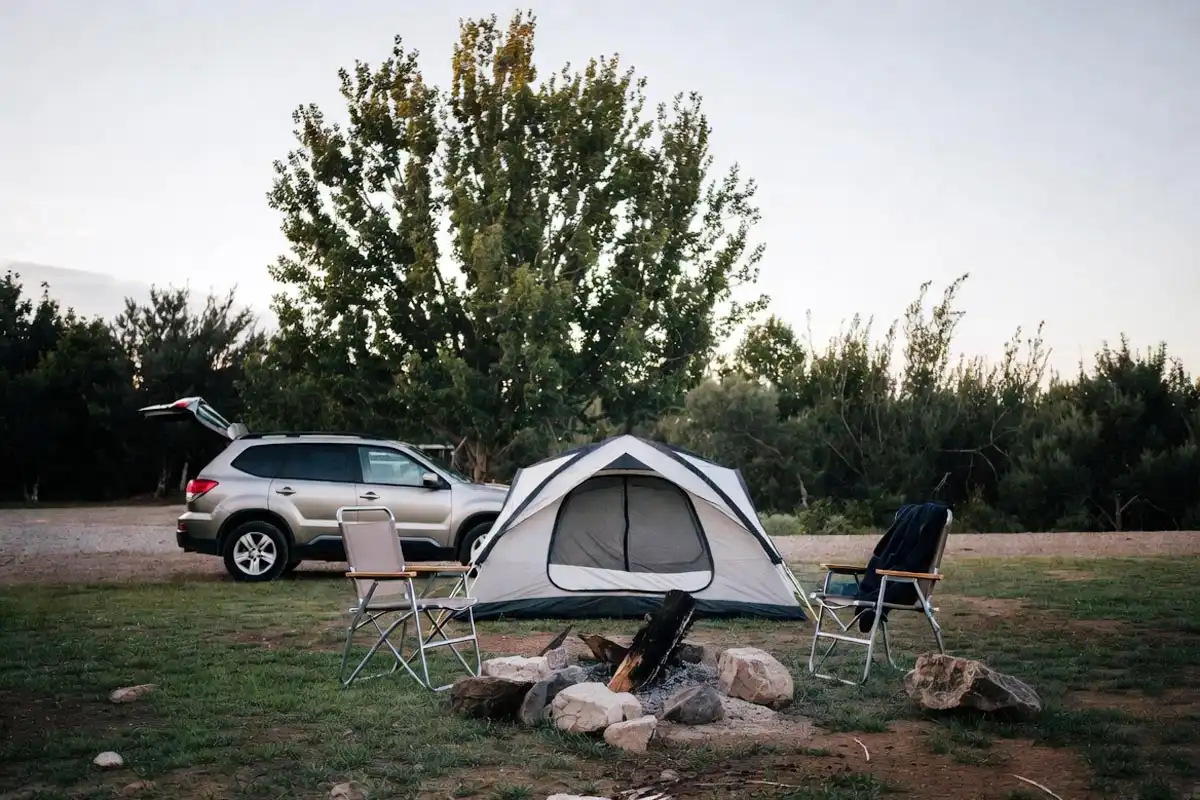
The main types of camping include car camping, tent camping, backpacking, RV camping, and glamping.
For first-timers, car camping or tent camping for beginners at an established campground works best. You park close to your site, carry gear a short distance, and access restrooms and water on foot. Frontcountry camping keeps the conditions controlled and the risks low.
Backpacking and dispersed camping require navigation skills, water sourcing experience, and heavier planning. Save those for after your first few trips.
When Is the Best Time to Start Camping for the First Time?
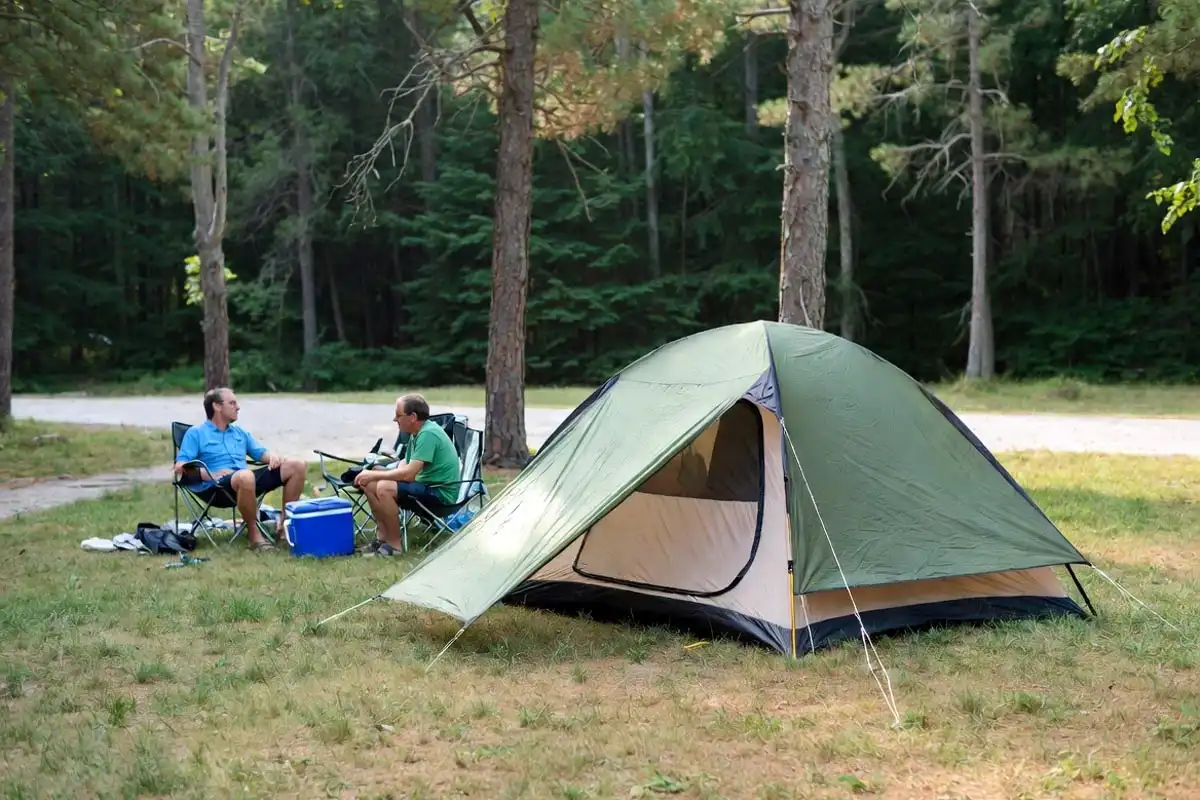
Summer camping provides the easiest conditions for beginners. Campgrounds operate at full capacity, weather stays predictable, and long daylight hours give plenty of time to set up camp.
Spring and fall represent a viable camping season, but nighttime temperatures drop sharply. Both require a warmer sleeping bag and extra insulated layers.
The best time to go camping for your first trip is a 1–2 night weekend camping trip, not a week-long commitment. A short stay lets you test your gear and routine before scaling up.
National parks and state parks both have on-site staff during summer, which gives beginners a useful safety net.
How to Choose Your First Campsite
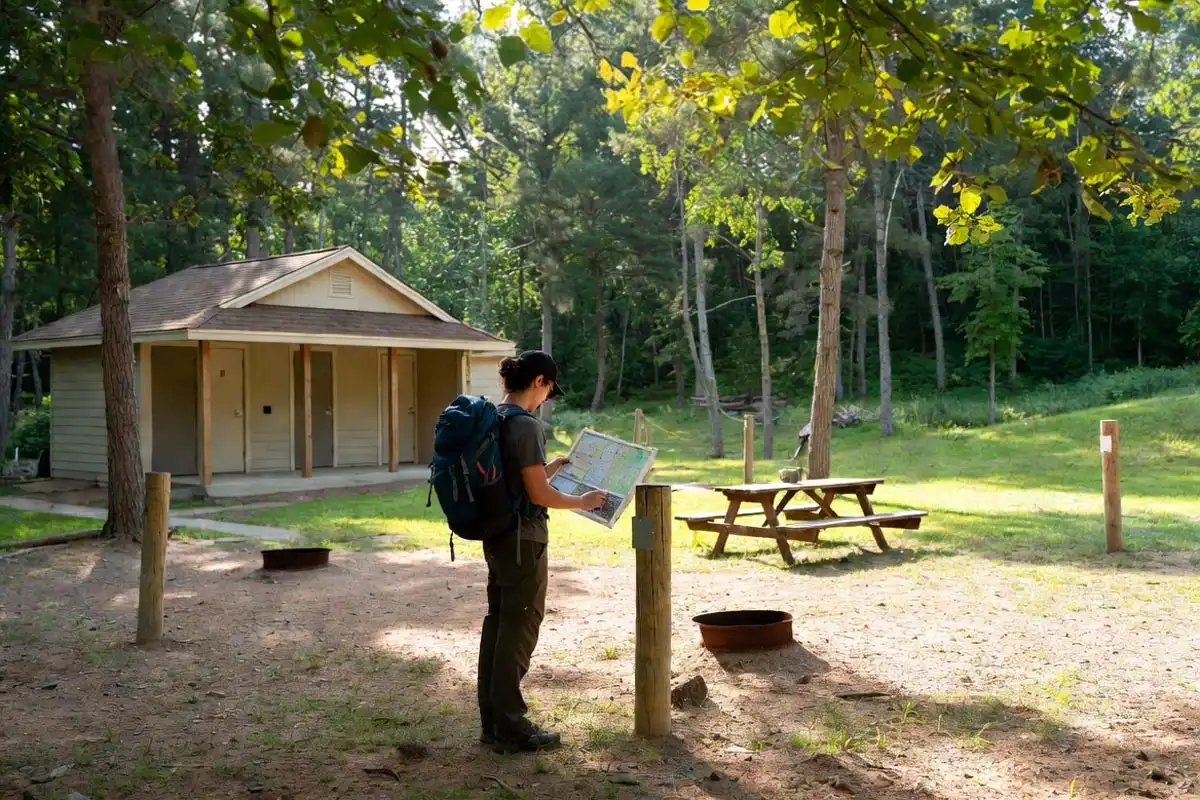
Step 1: Stay close to home. Choose a site within 1–2 hours. If something goes wrong, leaving is quick.
Step 2: Pick a developed campground. A frontcountry camping site with restrooms, potable water, and fire rings removes most complications for first-timers.
Step 3: Reserve in advance. Book through Recreation.gov or Hipcamp. Popular state park campground sites fill weeks ahead. Avoid first-come, first-served sites on your first trip. The uncertainty adds stress you do not need.
Step 4: Choose a flat, shaded site near the bathrooms. Shade keeps the tent cooler during the day and reduces direct heat on your gear.
Avoid backcountry and dispersed camping entirely on your first outing. Neither provides the support infrastructure beginners need.
Knowing how to choose a campsite in advance prevents most setup problems. I also covered what to do when you get there after sunset in an earlier post on arriving at a campsite late.
What Gear Do You Need to Start Camping?
Camping gear for beginners falls into five categories: shelter, sleep system, lighting, cooking, and safety.
Borrow or rent gear for your first trip before buying. Preferences change once you have one night under your belt.
Here is what to pack camping across those five categories of essential camping equipment:
|
Category |
Items |
|---|---|
|
Shelter |
|
|
Sleep |
|
|
Lighting |
|
|
Cooking |
Camp stove, pot, pan, utensils, cooler |
|
Safety/Hygiene |
A comfortable folding outdoor chair belongs in the car camping kit too. After a full day outside, a quality seat at the campfire matters more than you expect. The best camping chairs range widely in support and weight. I reviewed options specifically for comfort in a detailed look at the best camping chair for lower back pain.
Tent
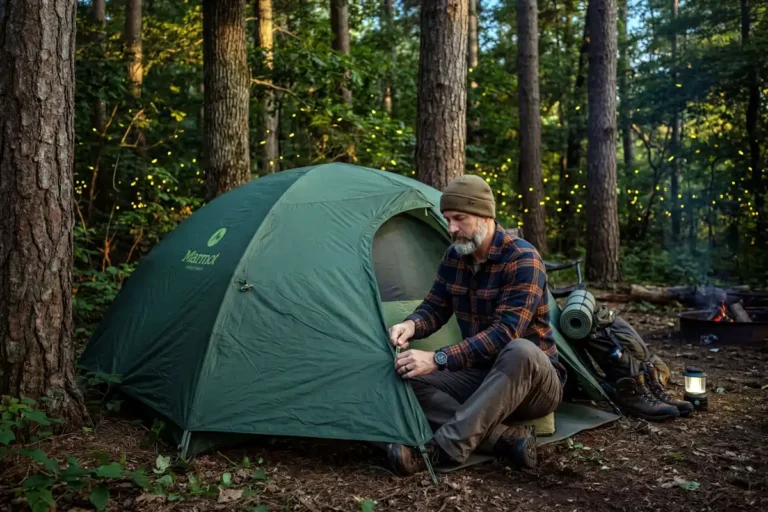
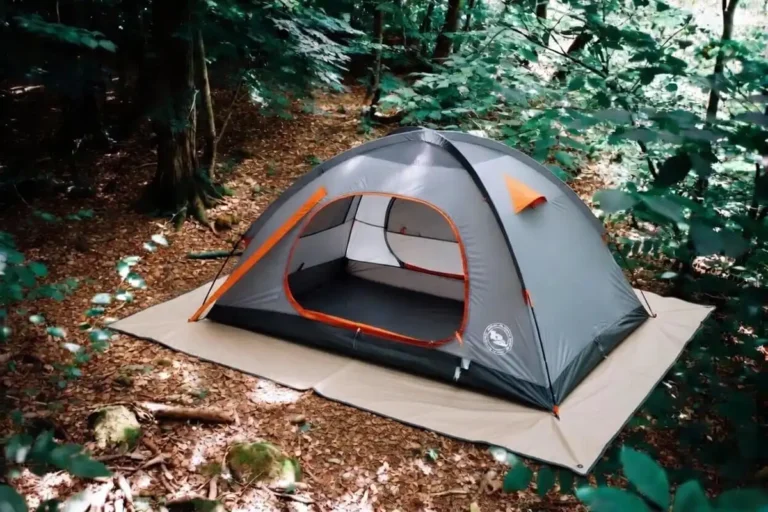
A freestanding tent with a dome tent design suits most tent camping for beginners setups. Buy one size larger than your group count. A 3-person tent gives two adults comfortable space plus room for gear.
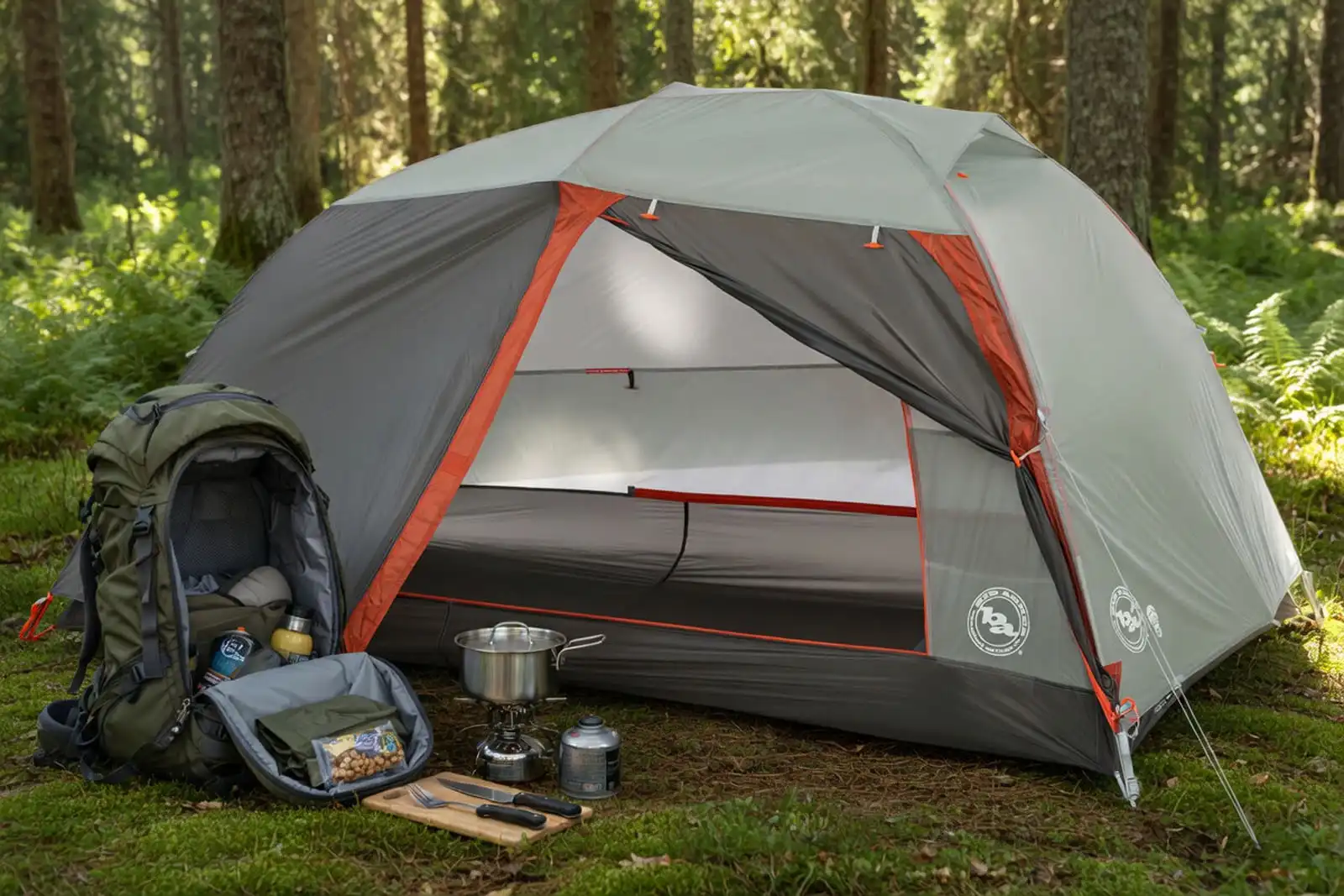
Check for a 3-season tent rating, an included rainfly, and a tent setup time under 10 minutes. Color-coded poles speed assembly significantly.
Avoid ultralight backpacking tents for car camping. They sacrifice livable interior space to reduce weight you do not need to save at a parking lot campground.
I put together a detailed comparison in a article on the best camping tent for 2 people if you want side-by-side options.
Sleeping Bag and Sleeping Pad
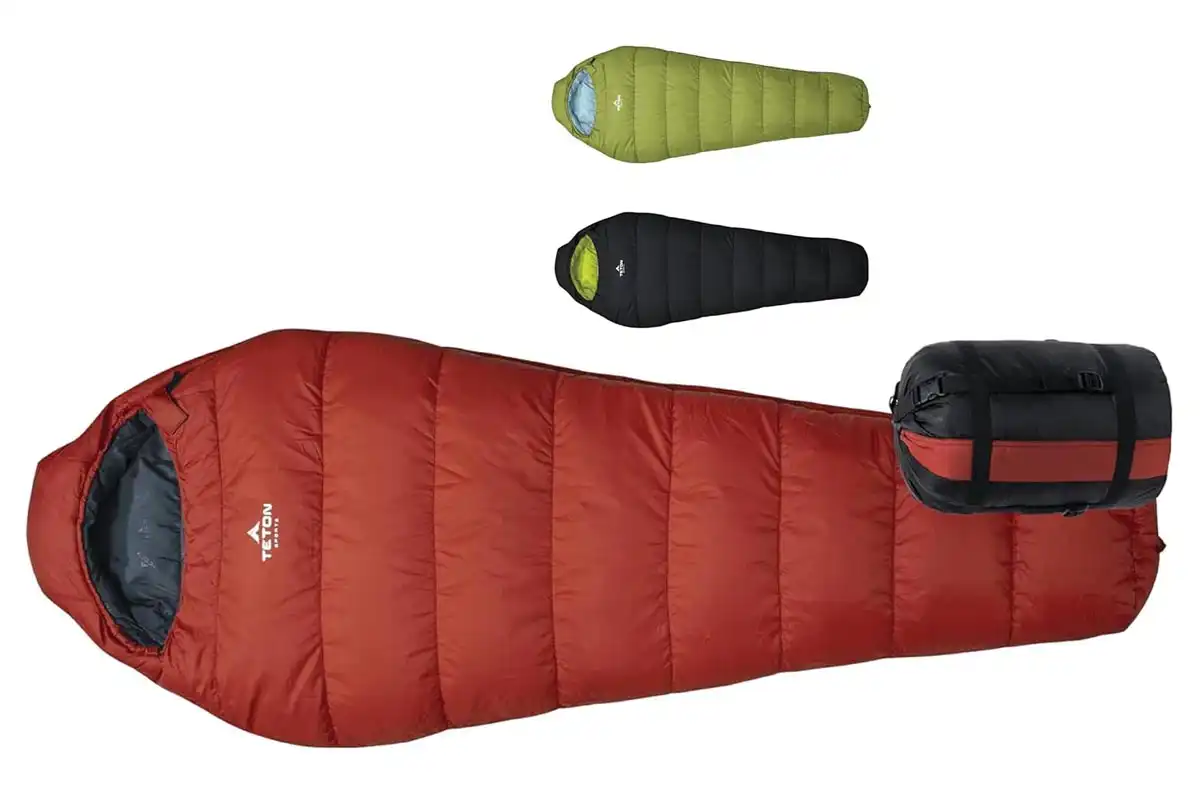
A sleeping bag temperature rating 10–15°F below your expected nighttime low provides an adequate warmth buffer. A 3-season sleeping bag rated to 20°F covers most summer and early fall trips.
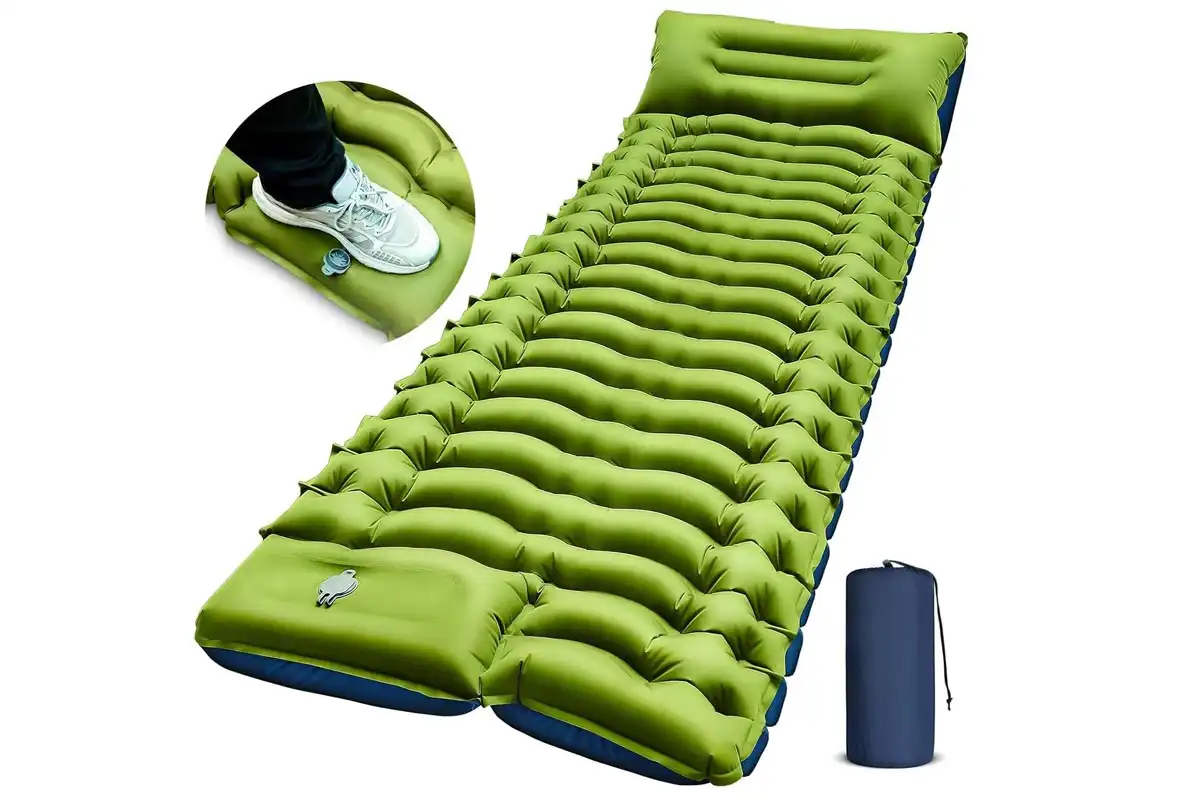
A sleeping pad insulates you from the ground, not just cushions you. Cold ground pulls heat from your body faster than cold air does.
Sleeping pad R-value measures insulation strength. Higher R-value means better insulation. For summer camping, R-2 or above works. For spring and fall, aim for R-3 or higher to stay warm camping through cold nights.
Cooking and Food Supplies: How to Plan Your Camping Meals
Camp cooking for beginners starts with the simplest setup available.
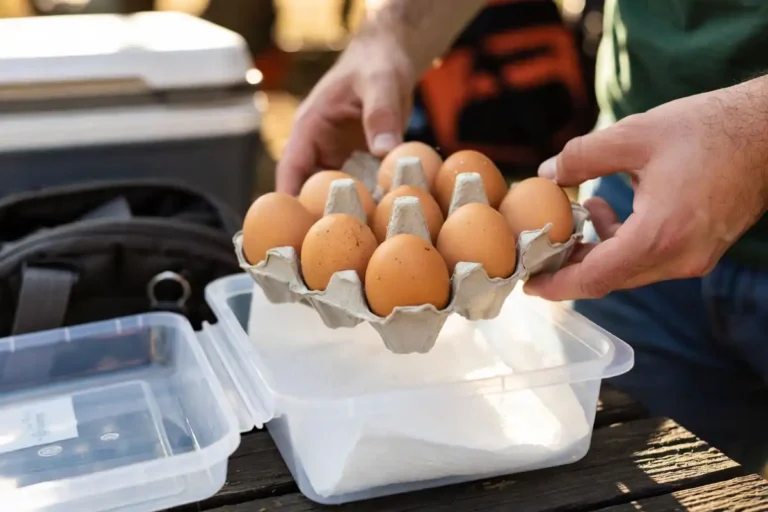
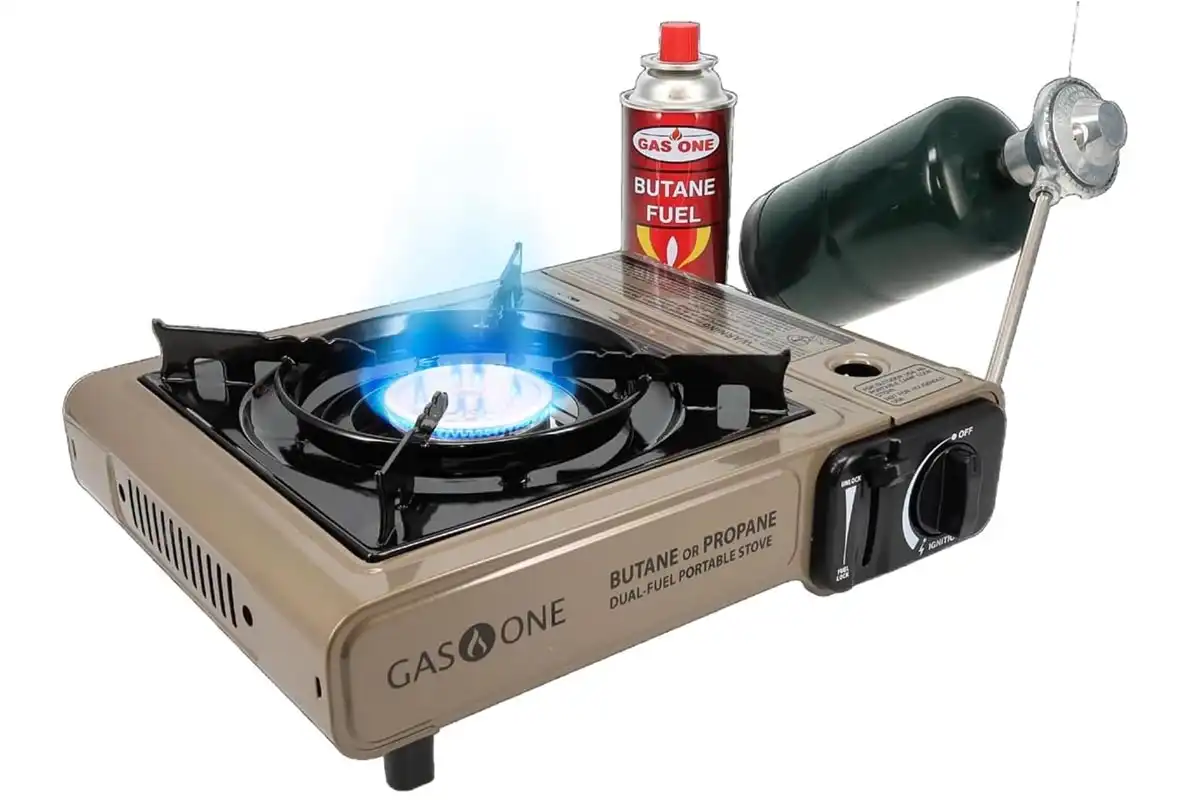
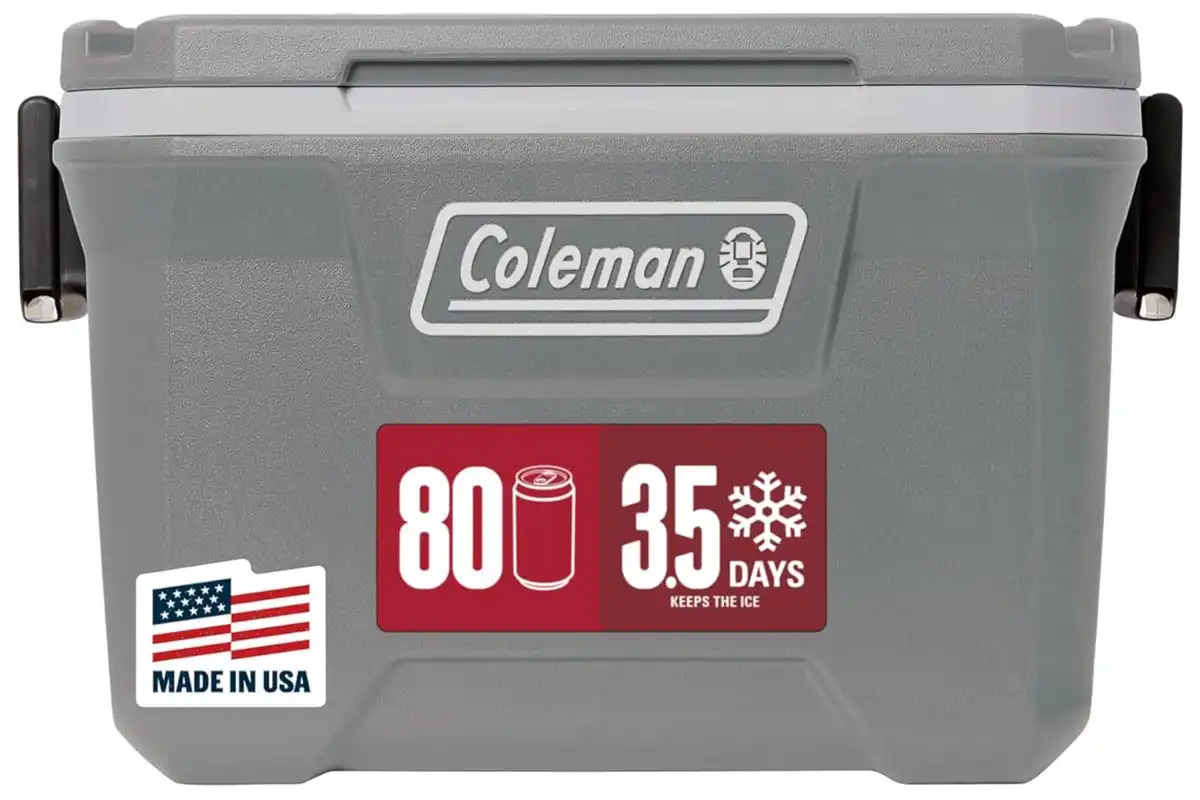
A propane camp stove with push-button ignition is the easiest option for first-timers. Pair it with a pot, a pan, a utensil set, and biodegradable soap. Pack a cooler with ice for perishables.
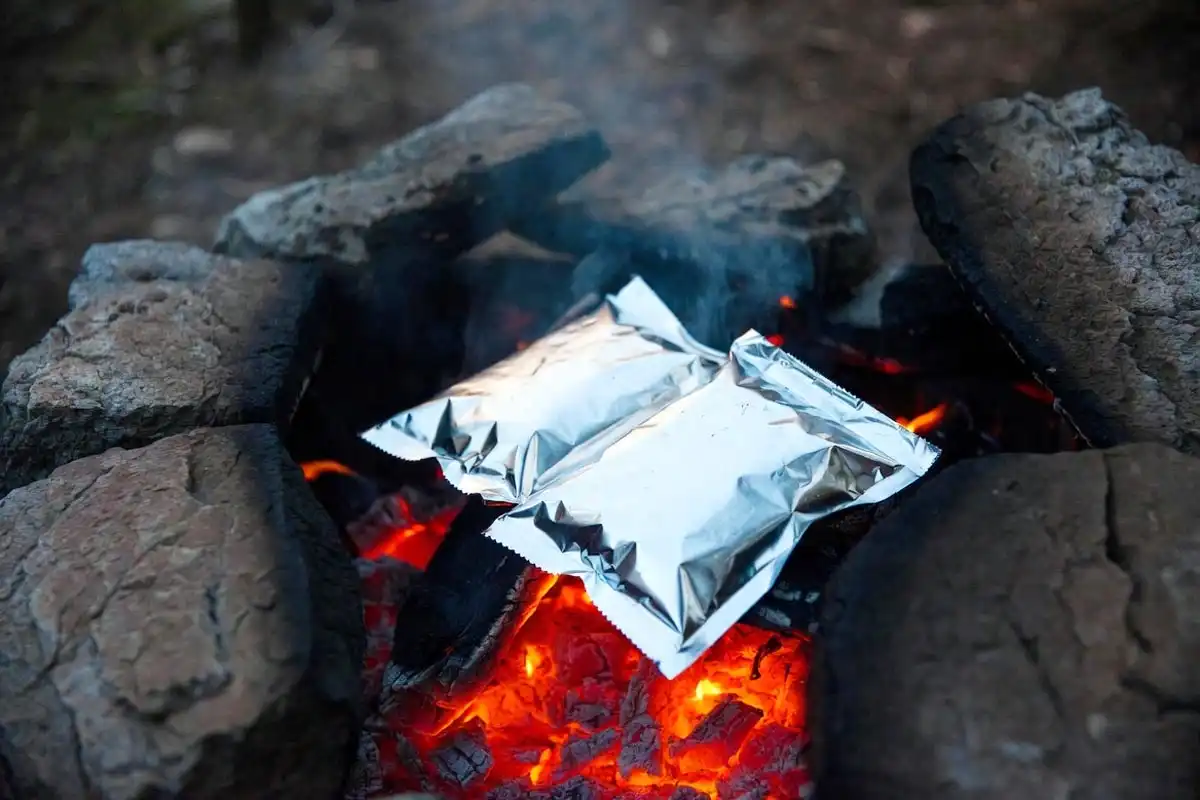
Easy camp meals for your first trip include foil packet dinners, hotdogs over the fire, oatmeal for breakfast, and granola bars for snacks. Prep food at home before leaving: chop vegetables, marinate meat, pre-portion ingredients. Less prep at the campsite means less mess.
Plan exact camping food for beginners meal by meal: pack lunch from home, cook dinner over the fire, and keep breakfast quick and one-pot.
In bear country, use a bear canister or the campground’s provided storage locker for all food storage camping overnight. Most developed campgrounds supply lockers at each site.
I wrote about campfire cooking set for cooking over a campfire in one of my articles. If you want to keep your packing list lightweight and you enjoy campfire cooking, then those kits are the best choice for you.
Also, I wrote a detailed cooking guide in an article on making a foil packet meal over campfire coals.
How to Start Camping: Your First Trip Planning Workflow
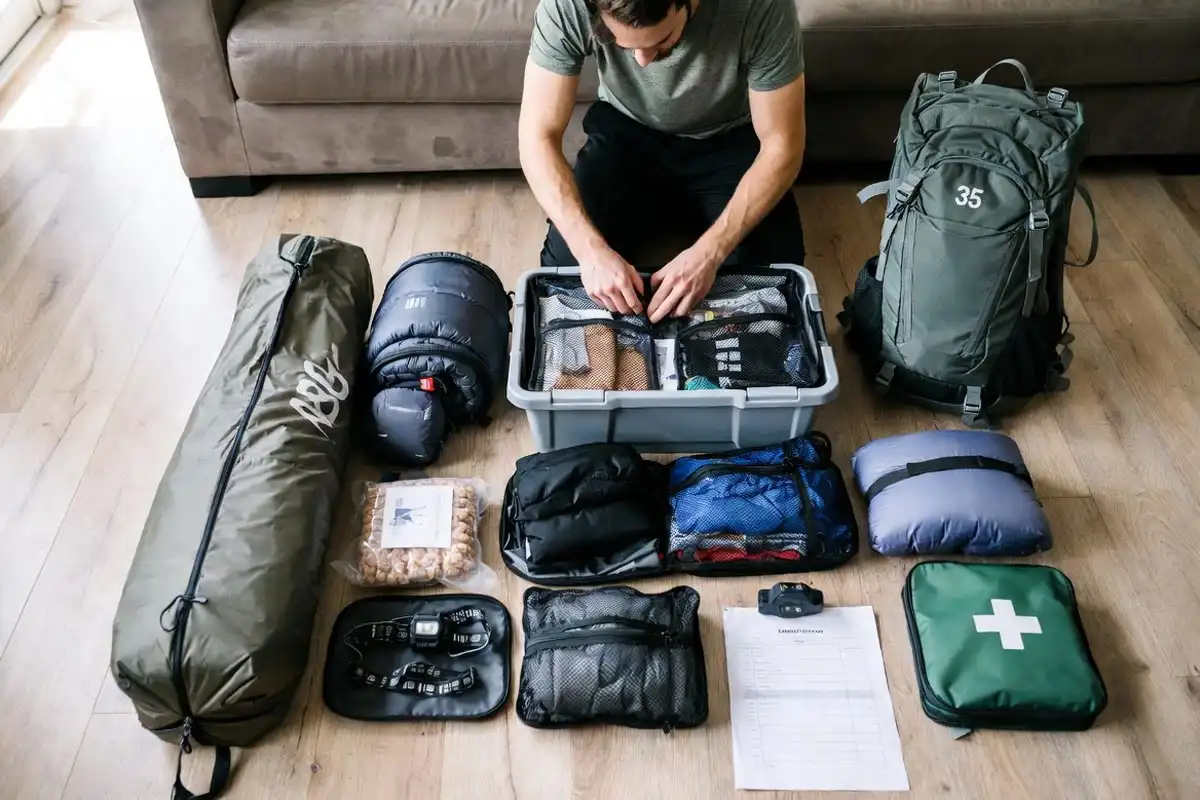
This is the core step-by-step process from planning to your first morning at camp.
1. Pick a date and destination. Choose a weekend 3–4 weeks out. That gives enough time to reserve a site and gather gear.
2. Reserve the campsite. Book through Recreation.gov, Reserve America, or your state park system. Confirm the site includes a restroom, water spigot, and fire pit.
3. Build a gear and food checklist. Use the five categories above. Add a clothing layer for cold nights.
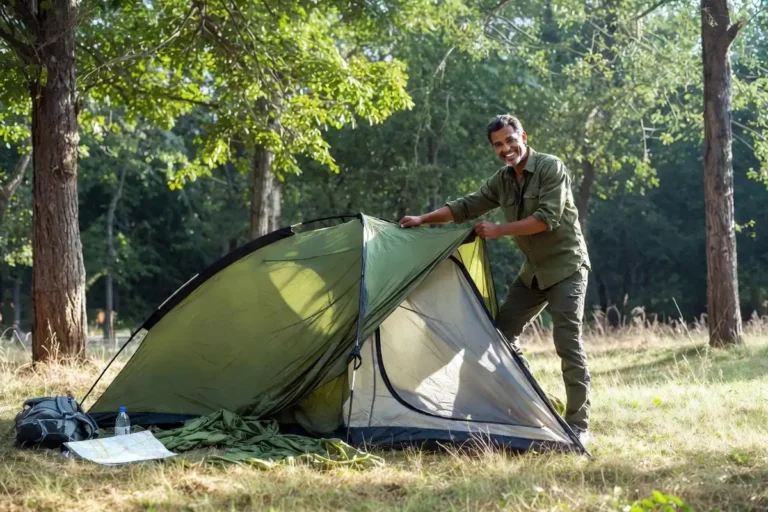
4. Test all gear at home. Pitch the tent in your backyard. Light the camp stove. Identify broken poles, missing stakes, or empty fuel canisters before you leave home.
5. Pack by category. Use bags or bins: food together, shelter together, sleep system together, clothing together. Organized packing saves time at the campsite setup stage.
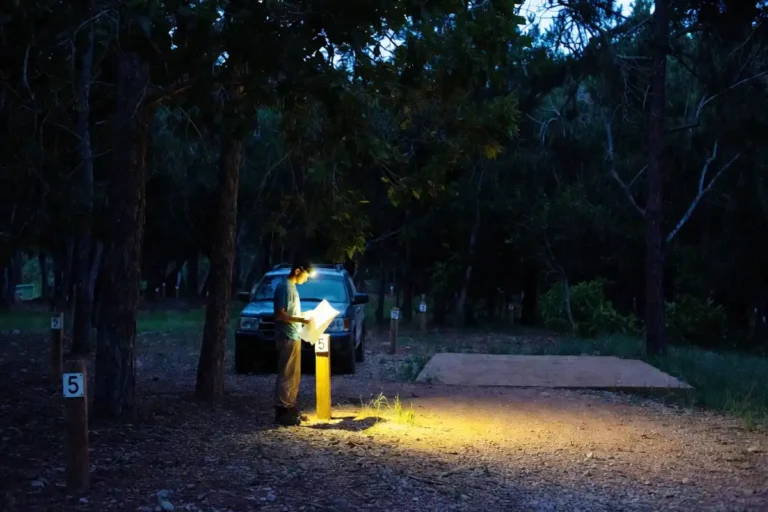
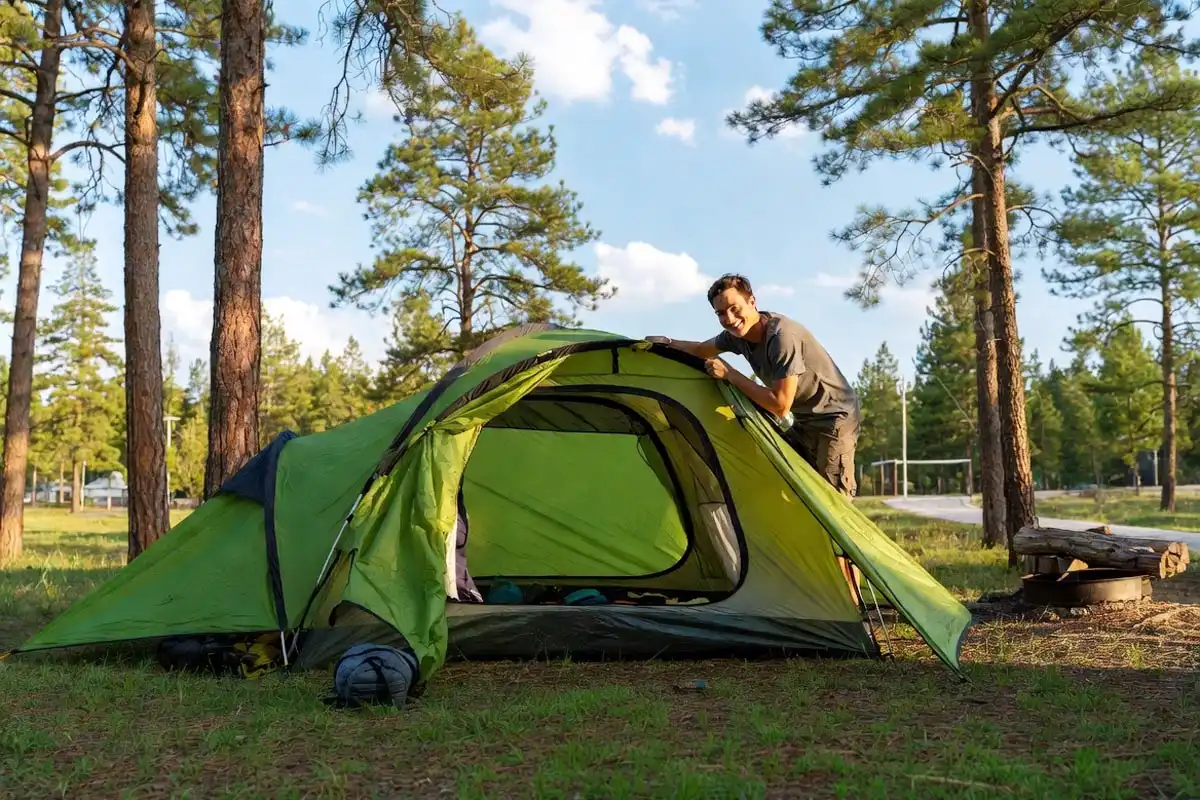
6. Arrive before dark. Setting up camp in daylight takes roughly 20–30 minutes. In the dark, it takes longer and increases the chance of a mistake.
7. Set up the tent first. Identify flat ground away from the fire ring. If you end up on difficult terrain, I covered the options in an earlier post on pitching a tent on rocky or sandy ground.
8. Build the fire or start the stove. Follow priorities: sleeping area first, then dinner, then fire.
This first camping trip checklist workflow removes guesswork and keeps the trip enjoyable from the first hour.
What to Eat on Your First Camping Trip
Camping food for beginners works best when you plan exact meals in advance and prep as much as possible at home.
Easy campfire meals for day one include foil packet chicken with vegetables, hotdogs on skewers, and instant rice. For breakfast, oatmeal with dried fruit cooks in one pot in under five minutes.
Pack granola bars, trail mix, and jerky for lunch and snacks. These require no refrigeration and provide reliable energy on the trail.
Plan specific meals for each day. Vague packing leads to either wasted food or shortages at meal time.
Many camp cooking sites at developed campgrounds provide grill grates over fire pits. Use them for foil packet meals and grilling rather than building a full cooking fire each time.
How to Start a Campfire Safely
A campfire starts with three components in sequence: tinder, kindling, and firewood.
Tinder includes dry leaves, newspaper, or commercial fire starters. Kindling means small dry sticks, roughly pencil thickness. Firewood logs go on last once the kindling catches and holds a flame.
Teepee method: Stack kindling in a cone over the tinder. Light the tinder at the base. Flame travels up naturally toward the larger fuel.
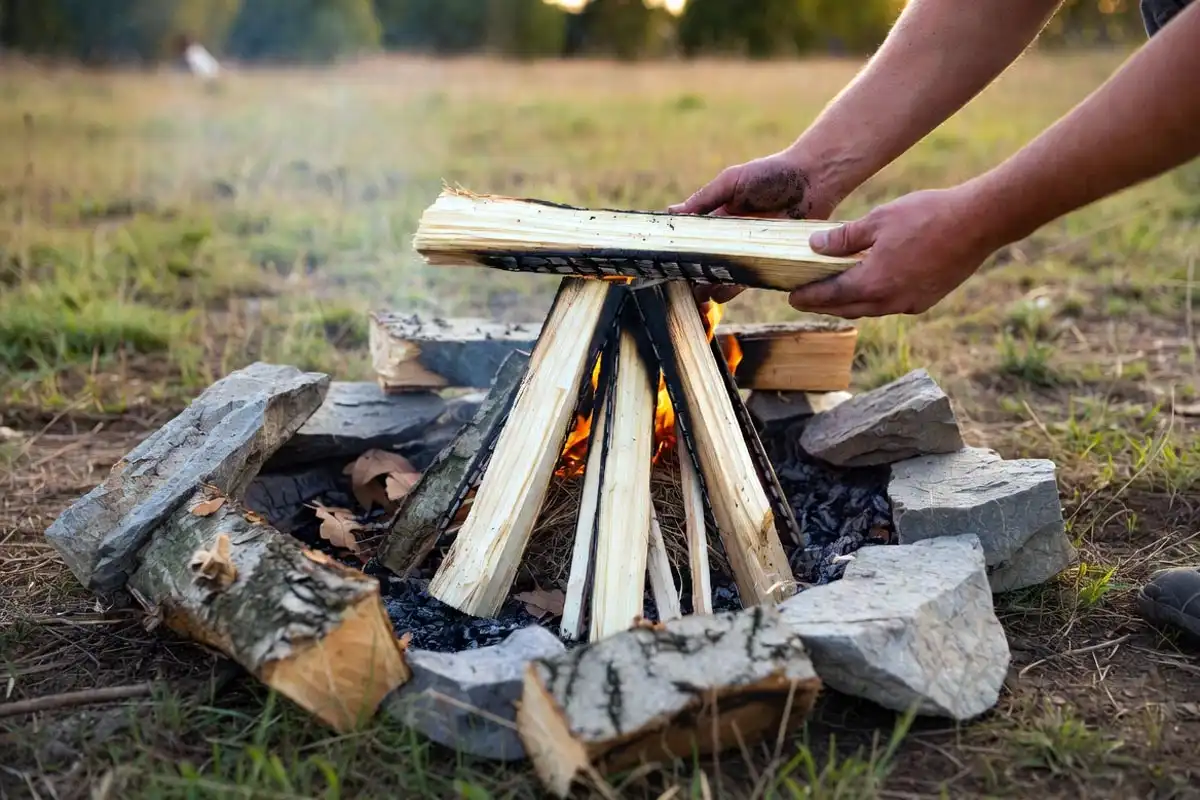
Log cabin method: Stack small logs in a square around the tinder, then add kindling inside the square. This method produces longer-lasting coals, which suits campfire cooking well.
Check fire restrictions before lighting anything. Many parks ban open fires during dry periods. Always use the designated fire ring.
Campfire safety rule: never leave a fire unattended. Douse it with water, stir the ash thoroughly, and confirm it is cool to touch before sleeping or leaving camp. Violating campfire rules carries fines at most parks.
Beginner Camping Safety Tips
Camping safety tips break into five areas every first-timer needs to address.
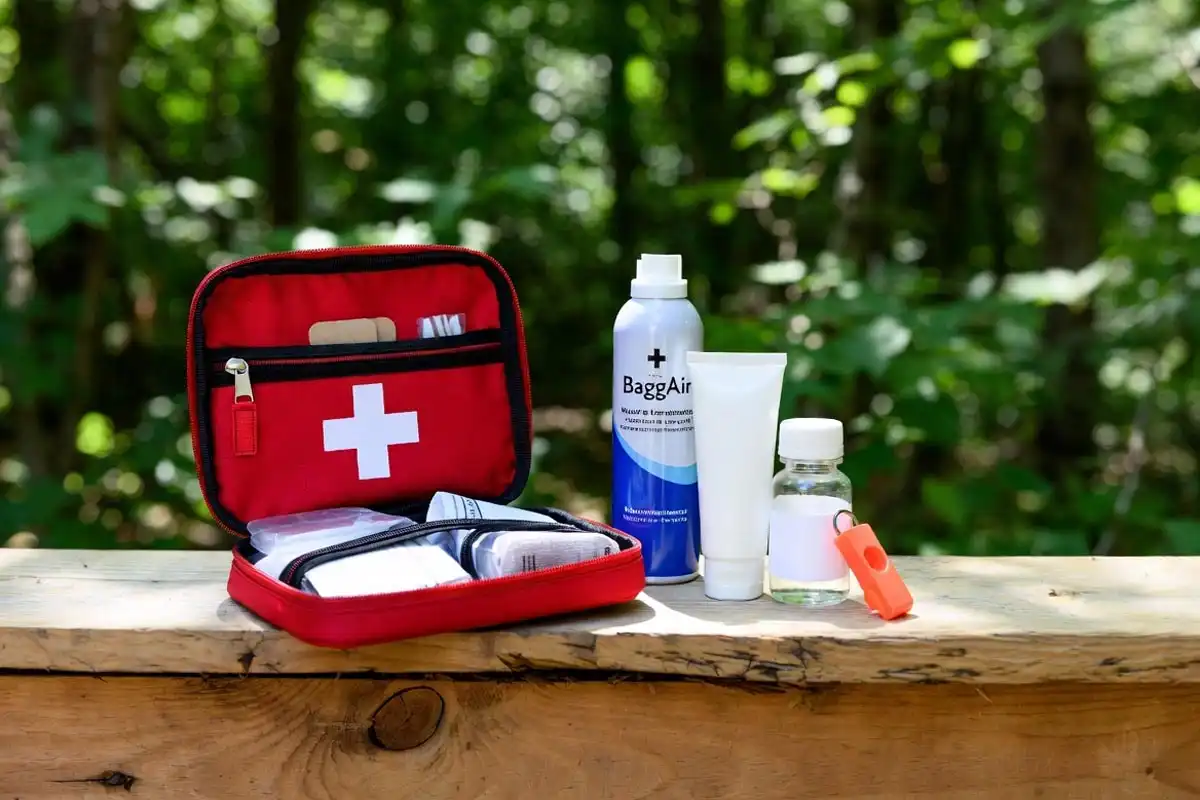
1. First aid kit. Carry a compact kit and know the basics: blister treatment, wound cleaning, and bandaging. I covered the specifics in a post on treating minor cuts and blisters at camp.
2. Weather awareness. Check the forecast the night before and the morning you depart. Pack one extra insulating layer regardless of expected temperatures.
3. Wildlife and food storage. Never leave food out overnight. In bear canister areas, store all food and scented items in the provided container or locker. Campsite safety depends on this habit.
4. Water purification. Know your campground’s water source. Developed campgrounds provide potable water at spigots. Carry a filter or purification tablets as a backup for water purification camping emergencies.
5. Share your plans. Tell a friend or family member your campsite name, location, and expected return date before you leave home.
Common Beginner Camping Mistakes to Avoid
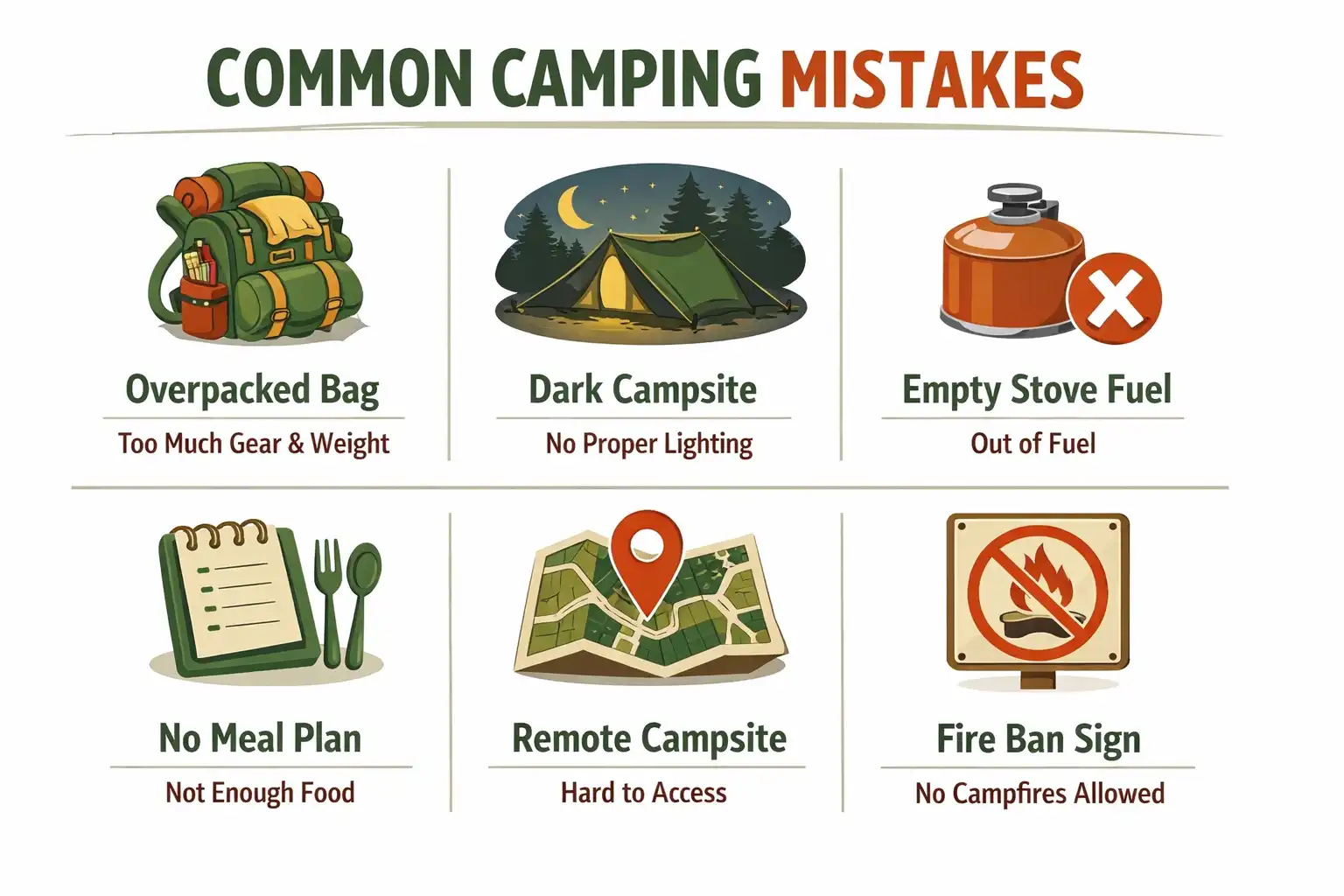
Beginner camping mistakes are predictable and preventable.
1. Overpacking. Bring gear for your actual trip duration, not every possible scenario. Clutter at camp slows everything down.
2. Skipping the gear test. Pitch the tent and light the stove at home before you go. Finding a broken pole or an empty fuel canister at dark is avoidable.
3. Arriving after dark. Terrain that looks fine in a photo can have uneven ground, tree roots, or ant mounds you only see in daylight. Arrive with two hours of light remaining.
4. No meal plan. “We’ll figure it out” leads to forgotten ingredients and wasted food. Plan specific meals with exact quantities.
5. Choosing a remote site first. Camping tips for first timers consistently point to developed campgrounds for the first two or three trips. Backcountry camping adds navigation, water sourcing, and weather exposure on top of skills you have not built yet.
6. Ignoring fire and weather restrictions. Check the park website the day before you depart. This is the most consistent item on any list of what not to do camping and the easiest one to fix.
Leave No Trace: Camping Responsibly from Day One
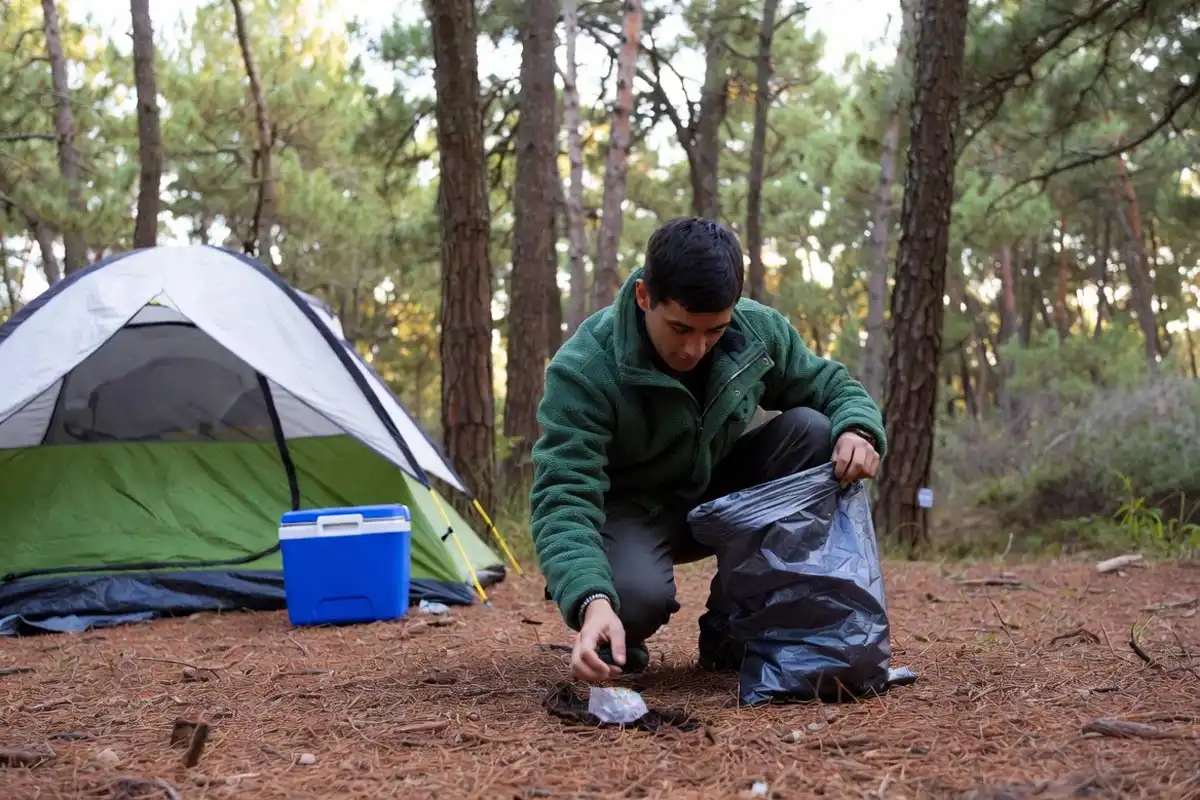
Leave No Trace principles provide a clear framework for protecting public lands and the access campers depend on.
The 7 LNT principles cover planning ahead, traveling on durable surfaces, disposing of waste properly, leaving what you find, minimizing campfire impacts, respecting wildlife, and being considerate of other visitors.
For beginners, three principles apply most directly: pack out trash (everything you bring in leaves with you), stay on designated paths, and leave your campsite exactly as you found it.
Responsible camping protects land access for future visitors. When sites sustain repeated damage, land managers close them or impose stricter use limits. Following camping rules for beginners from your first trip builds habits that carry forward automatically, and it keeps the environmental impact of your visits low.
Campsite etiquette also means keeping noise down at night and respecting neighboring campers’ space. Small habits add up on shared public land.
FAQs on How to Go Camping for the First Time

What do I need for my first camping trip?
Pack a tent, sleeping bag, sleeping pad, headlamp, and a basic cooking kit. Add a first aid kit, bug spray, and enough food and water for your trip duration.
How much does it cost to go camping for the first time?
A developed campground site costs $20–$50 per night. Borrowing or renting gear keeps startup costs low. Buying a basic beginner tent and sleeping bag typically runs $100–$200 combined.
What is the best time of year to start camping?
Summer provides the easiest conditions for beginners. Weather stays predictable, campgrounds operate fully, and long daylight hours give you more time to set up and settle in.
Do I need any experience to go camping alone?
No prior experience is required for a developed campground. Choose a site with restrooms, water, and on-site staff for your first solo trip to keep conditions manageable.
How do I keep food safe while camping?
Store perishables in a cooler with ice. Never leave food out overnight. In bear country, use a bear canister or the campground’s provided storage locker for all food and scented items.
Do I need to book a campsite in advance?
Yes, especially for summer weekends. Popular state park and national park sites fill weeks ahead. Book through Recreation.gov or your state park reservation system as early as possible.
Is camping safe for solo beginners?
Yes, at a developed campground with other campers nearby. Tell someone your location and return date before leaving, carry a first aid kit, and check the weather forecast the night before.
Final Thoughts on Trip planning
Starting camping does not require perfect conditions or a fully stocked gear room.
Pick a campsite close to home, reserve it in advance, and borrow or rent gear for your first camping trip. Plan simple meals, test your tent at home, and arrive before dark. Follow the fire rules and pack out everything you bring.
A beginners guide to camping for the first time consistently leads to the same advice: start small, keep it simple, and go. Your first night will have a few rough edges. That is part of learning. The second trip is always smoother because you know what to expect.
Beginner camping builds confidence one night at a time. Pick a date, book a site, and get outside.