What Vaccinations and Health Precautions Apply Before Camping Abroad

Camping abroad requires specific vaccinations and health preparations that vary by destination and planned activity type, because different health precautions apply depending on where and how you’re camping. This guide covers the core vaccines travel medicine doctors recommend, the non-vaccine precautions that reduce your risk in the field, the medications to pack, and the health records you need to carry. Whether you camp in Southeast Asia, sub-Saharan Africa, or South America, the same preparation framework applies and starts well before departure day.
Before camping abroad, confirm routine vaccinations are current (hepatitis A, typhoid, Tdap), add destination-specific vaccines (yellow fever, rabies, Japanese encephalitis) based on your region and activities, and visit a travel medicine clinic at least 6 to 8 weeks before departure. Non-vaccine precautions include malaria prophylaxis, DEET-based insect repellent, water purification, and a prescribed field pharmacy. Carry your International Certificate of Vaccination (yellow card) and a printed medication list.
Which Vaccines Do You Need Before Camping Abroad?
The vaccines you need depend on two factors: your destination country and your planned activities in the field.
A travel medicine physician assesses your risk based on both and recommends the right combination. Camping in remote areas increases exposure to insects, contaminated water, and wild animals compared to standard hotel-based tourism.
Three categories apply: routine vaccines, recommended vaccines, and required vaccines.
Know more: Pack Light for a Two-Week Outdoor Adventure Trip Abroad
What Routine Vaccines Should You Confirm First?
Routine vaccines protect against diseases that spread easily in any travel context, not just tropical destinations.
Confirm these are current before any international camping trip:
- Tetanus-diphtheria-pertussis (Tdap): Campers sustain cuts and scrapes regularly. Tdap boosters last 10 years.
- Hepatitis A: The virus spreads through contaminated food and water. Remote camp kitchens and local markets increase exposure.
- Typhoid: Typhoid fever spreads through contaminated water and food. Oral and injectable forms are available.
- Measles-mumps-rubella (MMR): Confirm two doses if you were born after 1957.
- COVID-19: Entry requirements vary by country. Confirm current requirements with your destination’s embassy before booking.
Which Destination-Specific Vaccines Apply?
Destination-specific vaccines protect against diseases that circulate in particular regions.
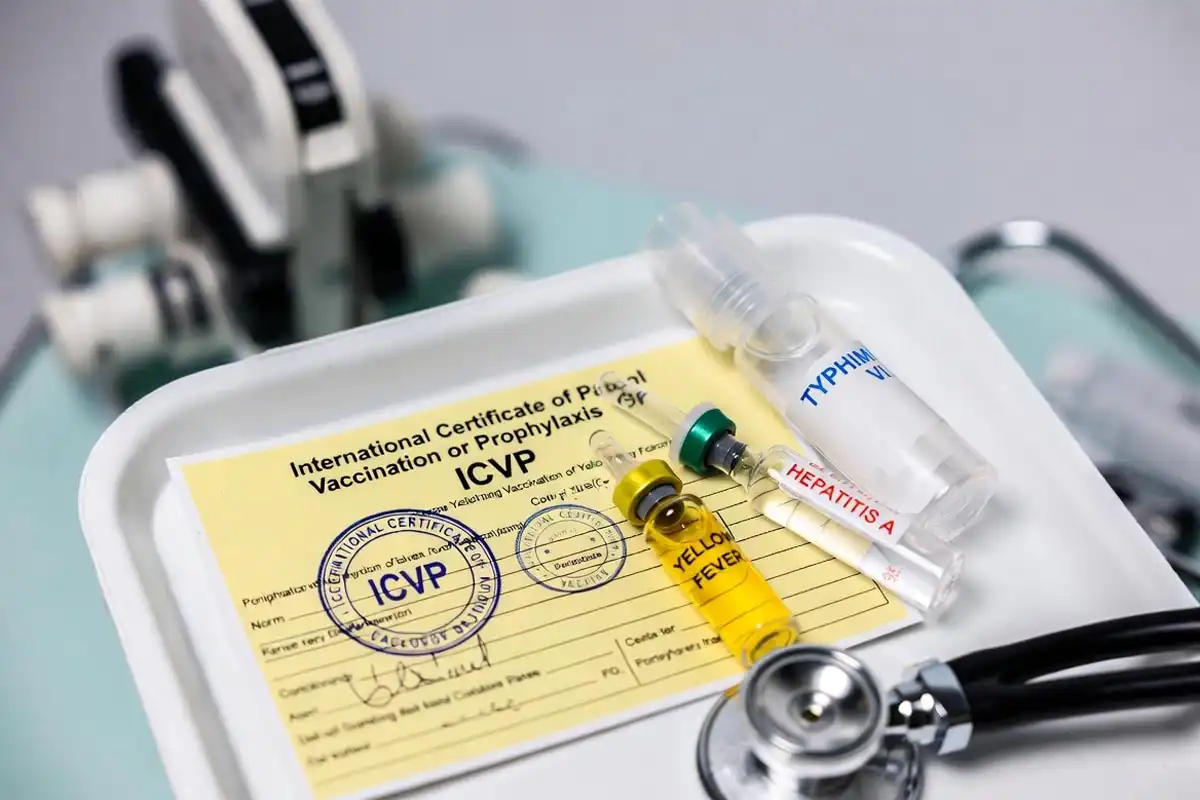
Yellow fever is required by law for entry into many countries in sub-Saharan Africa and South America. The vaccine produces immunity in around 10 days and lasts a lifetime for most recipients.
Rabies pre-exposure vaccination applies to campers spending extended time in Asia, Africa, or Latin America where contact with bats, dogs, and primates is possible. Pre-exposure vaccination does not eliminate the need for post-exposure treatment, but it reduces urgency and simplifies the treatment protocol.
Japanese encephalitis applies to rural and agricultural areas across Asia, particularly during monsoon season. The vaccine series requires at least two doses.
Meningococcal vaccine applies to the “meningitis belt” of sub-Saharan Africa and to Saudi Arabia during Hajj season.
Cholera (Dukoral) applies to campers traveling to areas with active outbreaks or weak sanitation infrastructure.
When Should You Visit a Travel Medicine Clinic?
Visit a travel medicine clinic at least 6 to 8 weeks before departure.
Some vaccine series require multiple doses spaced weeks apart. Yellow fever requires 10 days to produce immunity. Japanese encephalitis requires at least two doses over 28 days. Starting early gives you time to complete every course before you leave.
The clinic also reviews your personal medical history, current medications, and any conditions that affect which vaccines are appropriate for you.
I covered the full checklist of documents needed for international outdoor trips in my earlier article on documents and gear you need for international travel, which includes where to store your yellow card safely in the field.
What Non-Vaccine Health Precautions Apply?
Non-vaccine precautions reduce risk from threats that no vaccine currently covers.
Malaria prevention: Malaria spreads through Anopheles mosquito bites in tropical and subtropical regions of Africa, Asia, and the Americas. A travel physician prescribes the appropriate antimalarial based on your destination’s resistance patterns. The three main options are atovaquone-proguanil (Malarone), doxycycline, and mefloquine.
Insect protection: Use insect repellent containing DEET at 20 to 30% concentration on exposed skin. Permethrin-treated clothing repels mosquitoes, ticks, and other biting insects. Ticks transmit Lyme disease, tick-borne encephalitis, and other pathogens in forested regions of Europe and Asia.
Water safety: Waterborne pathogens cause traveler’s diarrhea, giardia, and hepatitis A in untreated sources. I covered the full purification process in my article on purify water in the camp, and I also wrote a shorter field guide on ways to make camp water safer that works well when you’re moving quickly.
Sun and altitude protection: Apply broad-spectrum sunscreen (SPF 30 or higher) daily in high-altitude or desert environments. Acute mountain sickness (AMS) develops above 2,500 meters. Ascend no faster than 300 to 500 meters of sleeping altitude per day above 3,000 meters. Acetazolamide (Diamox) reduces AMS risk when a physician prescribes it in advance.
What Medications Should You Pack for Camping Abroad?
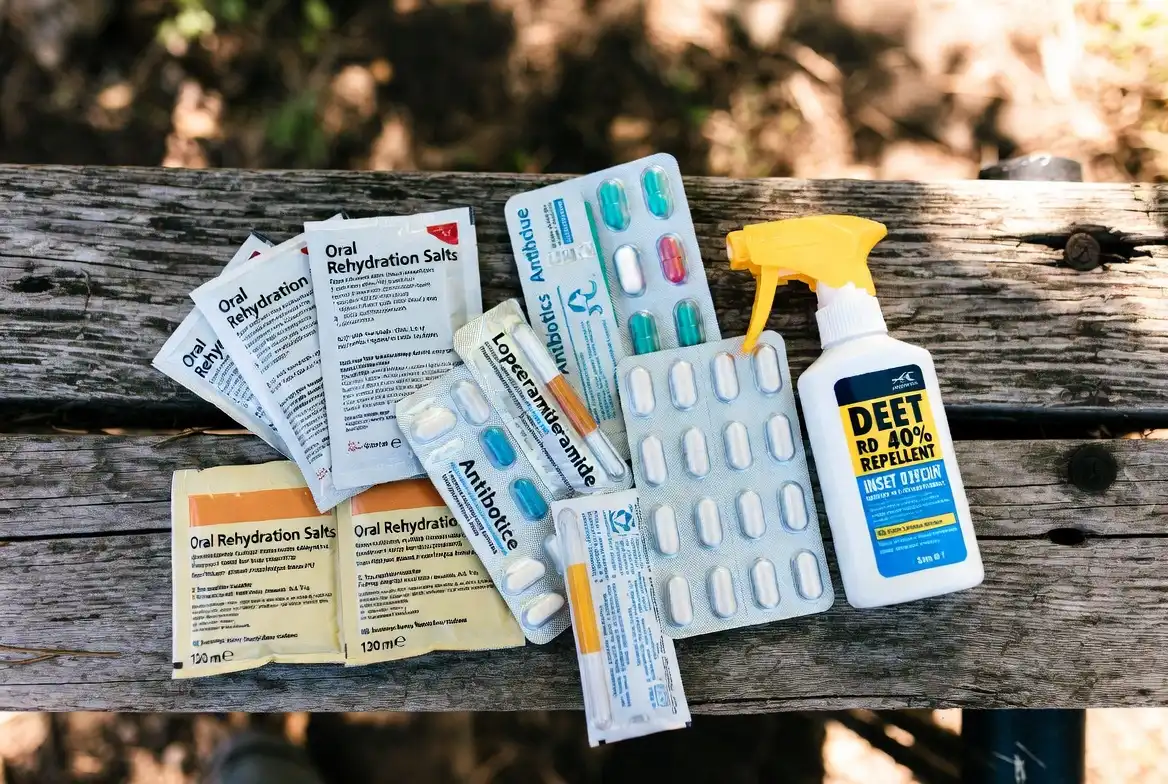
Pack a field pharmacy that covers the most likely conditions in remote areas.
Core medications to include:
- Oral rehydration salts (ORS): Replace fluids and electrolytes lost to traveler’s diarrhea.
- Ciprofloxacin or azithromycin: Treat bacterial traveler’s diarrhea. Carry only with a prescription.
- Loperamide: Controls diarrhea symptoms during transit or long travel days.
- Prescribed antimalarial course: Based on your physician’s recommendation.
- Antihistamine: Manages allergic reactions, insect bites, and rashes.
- Ibuprofen and acetaminophen: Treat pain, fever, and inflammation.
- Epinephrine auto-injector: Required if you carry a known allergy to stings or specific foods.
I covered minor wound care and blister treatment in my article on treat minor cuts and blisters, which pairs well with the field pharmacy above.
What Health Documents Do You Need to Carry?
Carry physical copies of your vaccination records and complete medical history.
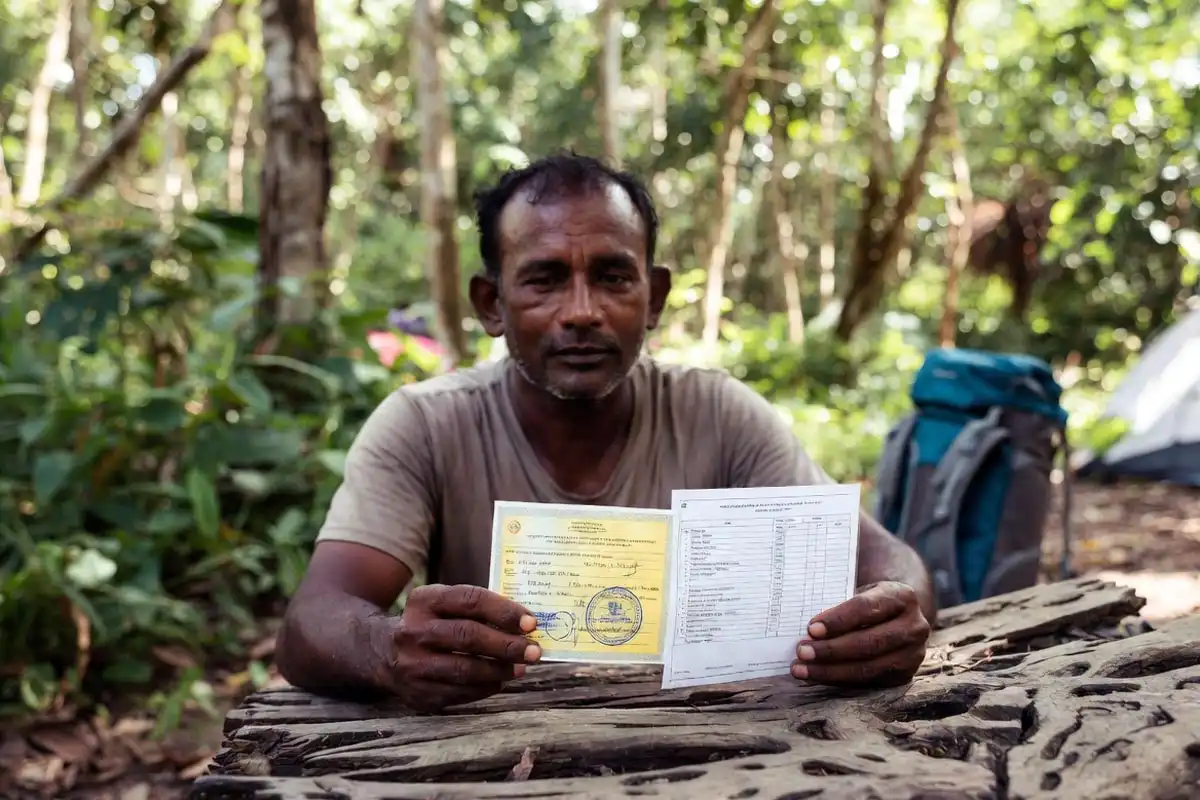
The International Certificate of Vaccination or Prophylaxis (ICVP), commonly called the yellow card, provides official proof of yellow fever vaccination. Many countries require it at the border. Without it, authorities deny entry or administer the vaccine on arrival at airport cost.
Carry a printed medication list with generic names (not brand names), dosages, and your prescribing physician’s contact information. Keep digital backups in a secure cloud folder you can access from your phone without Wi-Fi.
Your travel insurance policy documents belong in the same folder. I reviewed adventure-specific coverage details in my earlier article on what travel insurance covers for outdoor adventure activities. Medical evacuation from a remote camp can cost tens of thousands of dollars without a policy that explicitly includes backcountry coverage.
What Mistakes Do Campers Make With Pre-Trip Health Prep?
The most common mistake is starting too late. Walking into a clinic two weeks before departure means you cannot complete multi-dose vaccine series.
A second mistake is skipping destination research and treating all countries the same. Yellow fever requirements in Kenya differ from those in Thailand. A travel medicine physician pulls current requirements for your exact itinerary, not a general region.
A third mistake is carrying medications without confirmed prescriptions. Several antimalarials and antibiotics require a licensed prescription to dispense legally and to use safely.
FAQs about What Vaccinations and Health Precautions Apply Before Camping Abroad

How far in advance should I get vaccinated before camping abroad?
Schedule a travel medicine appointment at least 6 to 8 weeks before departure. Some vaccines require a series of doses spaced 2 to 4 weeks apart, and yellow fever takes 10 days to become effective. Starting early gives complete protection before arrival.
Do I need vaccines for camping in Europe?
Western Europe requires fewer additional vaccines. Confirm routine vaccines are current (Tdap, MMR, hepatitis A). For Eastern and Central Europe with forested camping areas, tick-borne encephalitis vaccine applies if you plan extended time in woodland.
Is malaria prevention always necessary when camping abroad?
Malaria prevention applies only to destinations where the disease is endemic, which include Africa, South and Southeast Asia, and parts of Latin America. A travel medicine physician confirms your specific destination’s transmission risk and prescribes the appropriate prophylactic medication.
Can I use DEET repellent on children while camping abroad?
DEET at concentrations of 10 to 30% is safe for children over 2 months of age, according to the American Academy of Pediatrics. Apply it only to exposed skin and avoid the hands and face. Reapply after swimming or heavy sweating.
What is the yellow card and where do I get it?
The yellow card is the International Certificate of Vaccination or Prophylaxis (ICVP). Travel medicine clinics, public health departments, and designated yellow fever vaccination centers issue it when you receive the yellow fever vaccine. Some countries refuse entry without it.
Final Checklist Before You Leave
Health preparation for camping abroad covers three layers: vaccines, non-vaccine precautions, and a field pharmacy.
Start the process at a travel medicine clinic 6 to 8 weeks before departure. Carry your yellow card, prescriptions, and a printed medication list in your pack alongside digital backups. Preparation that happens before the trip removes most preventable health risks before your tent goes up.