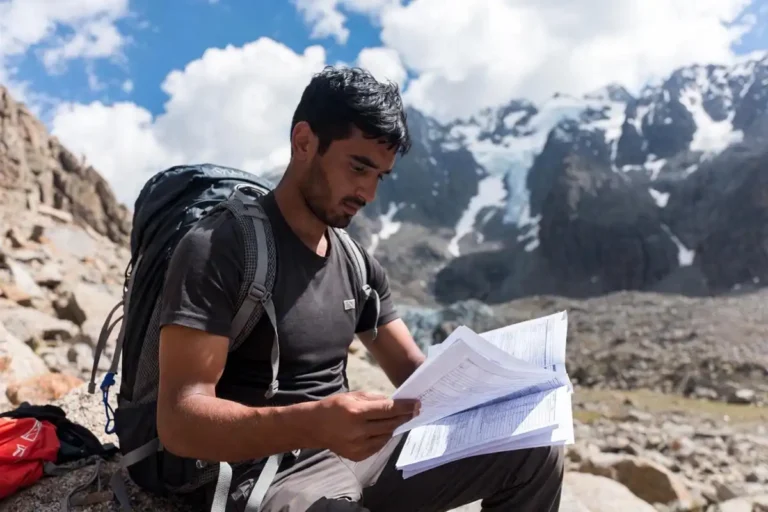
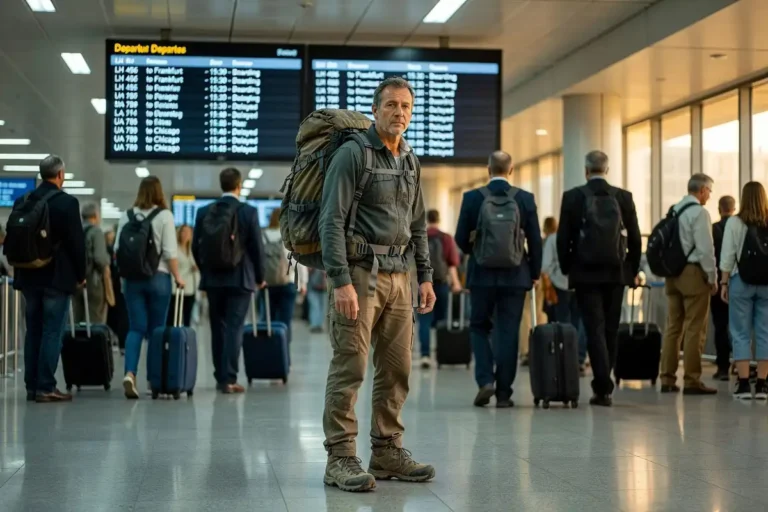
What Documents and Gear Do You Need for International Hiking Travel

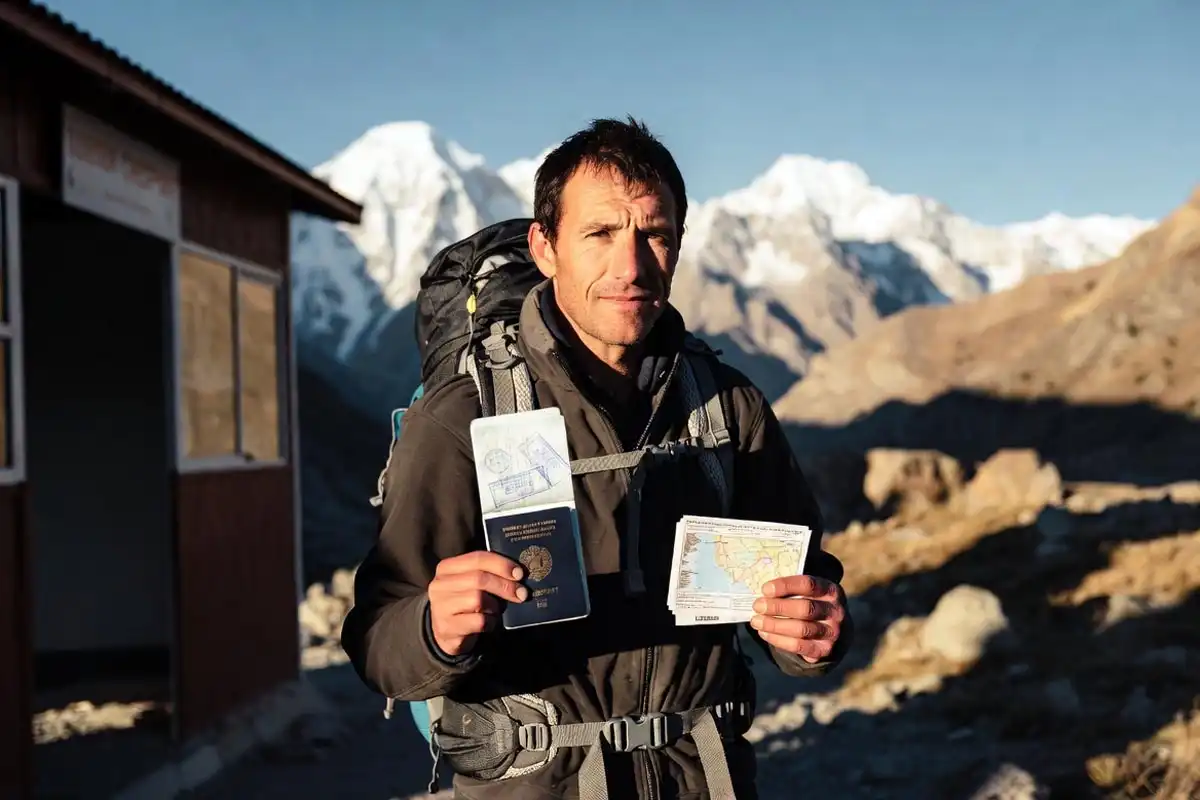
For international hiking travel, the documents and gear you need include a valid passport, destination-specific visa or entry authorization, travel insurance with adventure activity coverage, trail permits, and core backcountry gear suited to the terrain. This guide covers every document category and gear item a hiker needs before crossing a border. I’ve organized it as a working pre-departure checklist, from the paperwork that gets you into the country to the equipment that keeps you safe on the trail.
International hiking travel requires two categories of preparation: documents and gear. Documents include a passport valid for at least 6 months beyond your travel dates, entry visa or electronic authorization, travel insurance with adventure coverage, trail permits, and emergency contact records. Gear includes a weather-appropriate layering system, navigation tools, shelter, water treatment, first aid supplies, and footwear broken in before the trip.
What Travel Documents Do You Need?
Passport and Entry Requirements
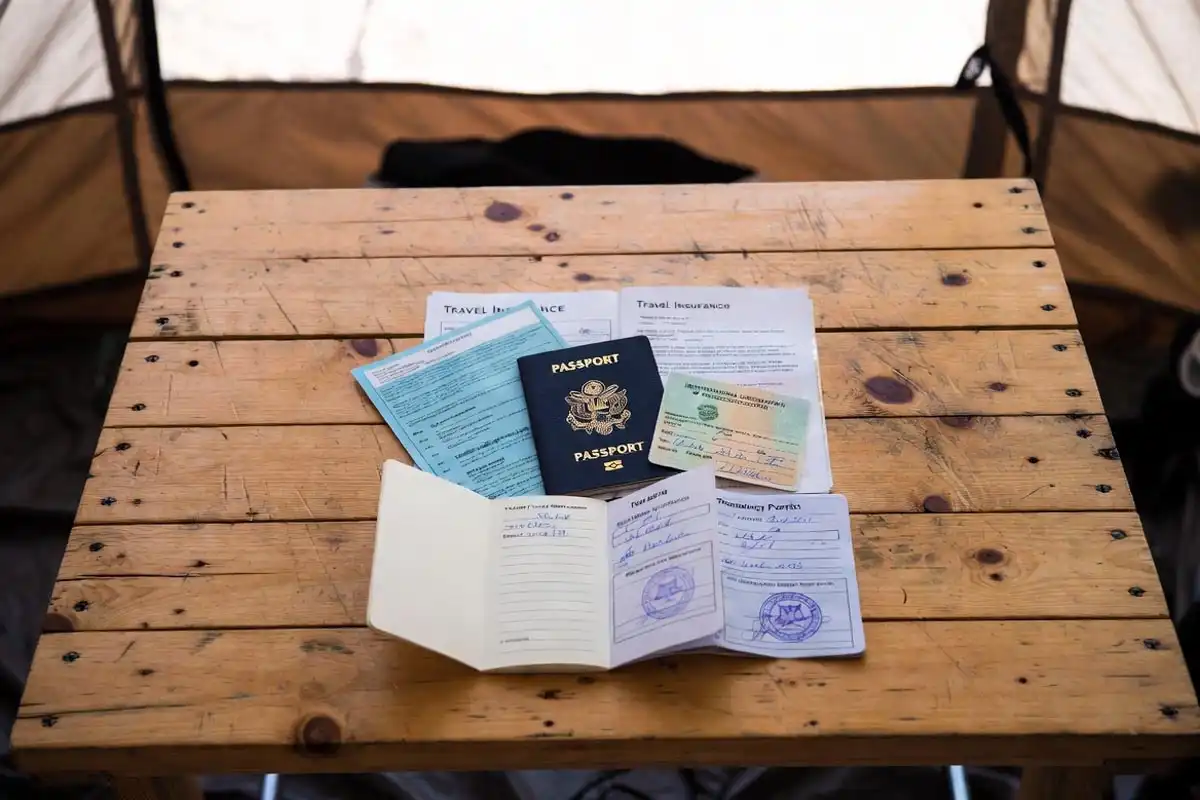
Your passport is the single most important document. Most countries require at least 6 months of validity beyond your planned departure date. Check your passport expiry date first, before booking anything.
Entry requirements vary by nationality and destination:
- Visa on arrival — available in countries like Nepal and Indonesia for many nationalities
- E-visa or electronic travel authorization — required for countries including Sri Lanka, India, and the USA (ESTA for visa-waiver nationals)
- Pre-approved visa — required for countries including China, Russia, and Bhutan; apply 4 to 12 weeks in advance
- Visa-free entry — applies within the Schengen Area for EU passport holders, and under bilateral agreements
Always check your destination country’s official immigration website or your own government’s travel advisory portal. Entry rules change.
Travel Insurance Documentation
Travel insurance is a document requirement on some trails, not just a personal choice. Nepal’s Annapurna and Everest regions require proof of insurance coverage to receive a trekking permit.
Your policy needs to cover:
- High-altitude hiking or trekking (many standard policies exclude this above 3,000 m or 4,000 m)
- Emergency evacuation and helicopter rescue
- Medical treatment abroad
- Trip cancellation and gear loss
Carry a printed copy of your policy with emergency contact numbers. Save a digital copy in your email.
Trail Permits and National Park Passes
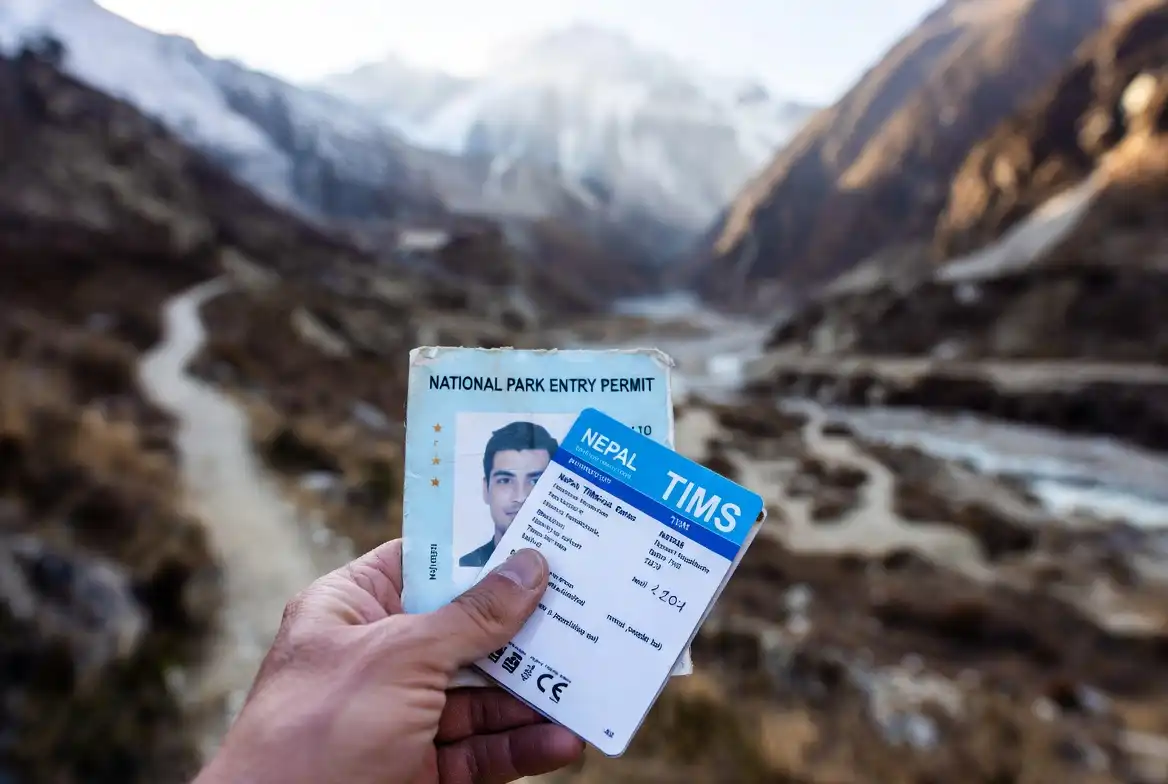
Many international hiking destinations require paid trekking permits or park entry passes. These are separate from your visa.
| Destination | Permit Required |
|---|---|
| Nepal (Annapurna, Everest) | TIMS card + Conservation Area/National Park permit |
| Patagonia, Chile (Torres del Paine) | Paid entry pass; booking required in peak season |
| Peru (Inca Trail) | Limited daily quota permit, books out months ahead |
| New Zealand (Milford, Routeburn) | Great Walks booking and hut pass |
| Bhutan (all trekking) | Minimum Daily Tariff package, arranged through licensed operator |
Research permits at least 3 to 6 months before popular trail start dates. Some quotas sell out within hours of opening.
Emergency and Support Documents
Carry physical copies of these documents separate from originals:
- Passport bio-data page (stored separately from your passport)
- Travel insurance policy with emergency claim number
- Vaccination certificates (yellow fever is required entry to several countries; some ask for COVID-19 records)
- Emergency contact list with international dialing codes
- Blood type and critical medical information on a small card
- Trail permit receipts and booking confirmations
I also email scanned copies to a trusted person at home. If your bag is stolen, you can replace documents faster with proof on file.
I covered gear packing strategies for air travel in detail in an earlier article on what you can’t fly with in your camping gear, which is worth reading before you pack your hiking kit for a flight.
Also know: Cancel or Reschedule a Campsite Reservation
What Gear Do You Need for International Hiking?
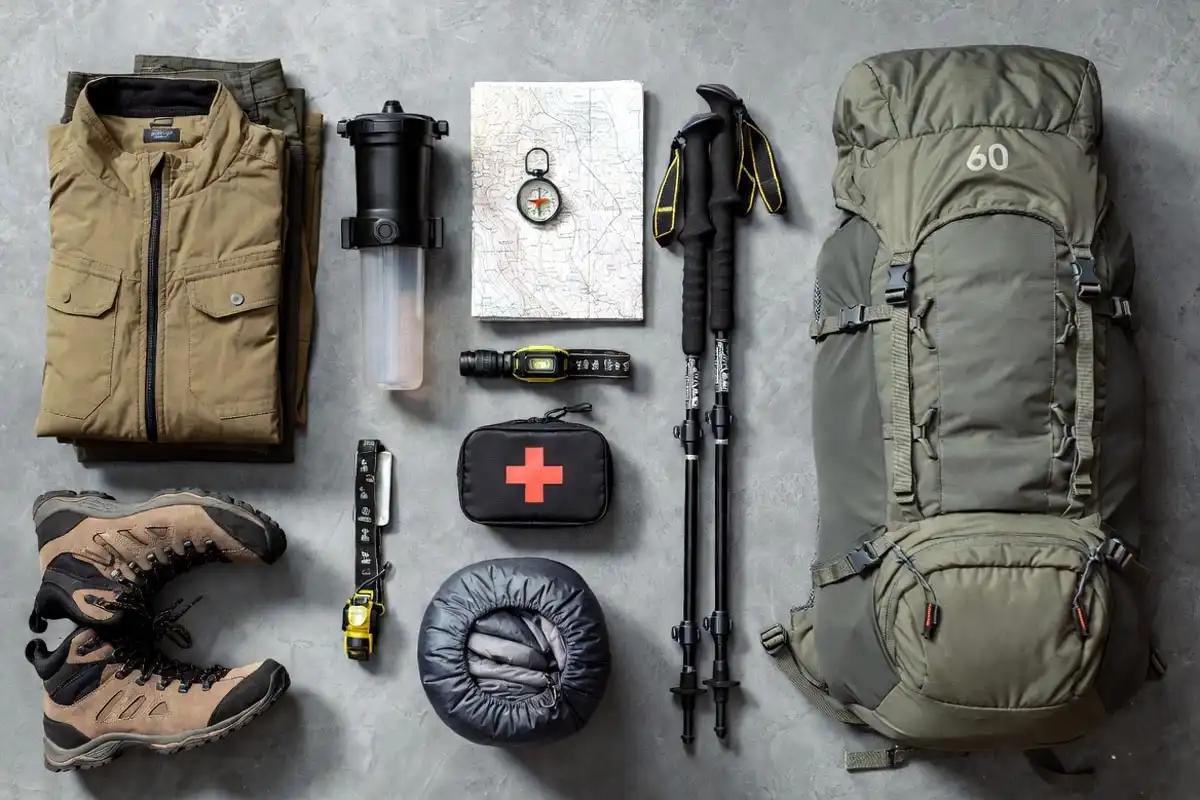
Footwear and Lower-Body Gear
Your boots carry you the whole way. For multi-day international trails, use mid-cut or high-cut waterproof hiking boots with ankle support. Break them in for at least 40 to 60 km before departure. New boots on a long trail overseas produce blisters on day two.
Pack:
- Hiking boots (broken in, waterproof)
- Camp sandals or lightweight shoes for evenings
- 3 to 4 pairs of moisture-wicking merino or synthetic hiking socks
- Gaiters for wet, muddy, or snowy terrain
I wrote a full guide on break in new hiking boots if your boots are still stiff.
Clothing and Layering System
International hiking takes you through variable weather. A 3-layer system handles most conditions:
- Base layer — moisture-wicking merino or synthetic top and bottom
- Mid layer — fleece or down jacket for insulation
- Outer layer — waterproof and windproof rain jacket and trousers
Additional clothing items:
- 2 to 3 hiking shirts (quick-dry synthetic or merino)
- Convertible hiking trousers
- Sun hat and warm beanie
- Lightweight gloves
- Buff or neck gaiter
Pack clothes that dry quickly. Cotton retains moisture and increases hypothermia risk at elevation.
Shelter and Sleep System
For hut-to-hut trails, a sleeping bag liner may suffice. For backcountry and camping routes, you need a full sleep system:
- Tent or tarp rated for the local conditions (3-season for most destinations; 4-season for high alpine)
- Sleeping bag rated 5 to 10°C below the coldest expected night temperature
- Sleeping pad with adequate insulation value (R-value 2 minimum for summer, R-value 4+ for cold climates)
Navigation Tools
Phones fail. Batteries drain faster in cold weather. Carry:
- Offline maps downloaded before departure (Maps.me or Gaia GPS)
- Paper topographic map of the trail area
- Compass (and know how to use it)
- GPS device for remote or poorly marked trails
I covered offline navigation methods in my earlier article on navigate without GPS in forest, which applies equally to mountain environments.
Water Treatment and Hydration
International trail water sources carry bacteria, protozoa, and viruses that water from local mountain streams at home does not always carry. Treatment is not optional.
Carry at least two methods:
- Water filter (removes bacteria and protozoa; not viruses)
- Chemical treatment such as iodine tablets or chlorine drops (covers viruses)
- Or a SteriPen UV purifier paired with a pre-filter
Carry at least 2 liters of water capacity, whether in bottles or a hydration bladder.
First Aid Kit
A trail first aid kit for international hiking covers more scenarios than a day-hike kit. Include:
- Blister treatment (moleskin, hydrocolloid dressings)
- Wound care (antiseptic wipes, gauze, medical tape, closure strips)
- Elastic bandage for sprains
- Pain relief (ibuprofen, paracetamol)
- Antihistamine for insect stings and allergic reactions
- Altitude sickness medication (acetazolamide/Diamox if trekking above 3,500 m — consult a doctor before travel)
- Oral rehydration salts
- Prescription medications with a 2-week buffer supply
I carry a small additional kit for treating minor cuts and blisters at camp that I’ve refined over years of trail camping.
Pack and Load Management
For multi-day international hiking, a 50 to 70-liter pack carries a full kit. For day hikes from a base, a 20 to 30-liter daypack works.
Key gear to add to the main pack:
- Headlamp with spare batteries
- Multi-tool or knife
- Waterproof pack cover or liner
- Trekking poles (reduces knee stress by 25% on downhill sections, per studies on load-bearing biomechanics)
- Portable power bank (10,000 mAh minimum)
- Universal travel adapter
- Lightweight camp towel
- Sun protection — sunscreen SPF 50+, UV-blocking sunglasses, sun hat
- Insect repellent (DEET 20%+ for tropical destinations)
Common Mistakes to Avoid
Not checking permit availability early enough. Inca Trail permits sell out 6 months ahead. Some Great Walks in New Zealand close within 24 hours of opening.
Assuming your travel insurance covers hiking. Standard policies exclude activities above certain altitudes or classify trekking as a hazardous sport. Read the exclusions section, not just the summary.
Packing untested gear. New boots, a new pack, and a new tent used together for the first time overseas produces problems. Test each item before departure.
Ignoring vaccination requirements. Yellow fever vaccination is a legal entry requirement in several African and South American countries. Some destinations ask for proof at the border, not just at customs.
Flying with restricted gear. Fuel canisters, certain knives, and flares do not travel by air. I covered the full list in my article on what you can’t fly with in camping gear.
Safety Considerations
Register your trip with your country’s foreign affairs or consulate office before departure. This allows emergency services to contact you if conditions deteriorate or political situations change.
Share your full itinerary, including trail name, start and end points, daily check-in plan, and expected return date, with someone at home.
Carry a personal locator beacon (PLB) or satellite communicator (Garmin inReach or SPOT) on remote routes where mobile coverage does not reach. These devices generate a distress signal that reaches emergency response coordinators worldwide.
Knowing the best season for your destination is also a safety decision, not just a comfort one. Monsoon or winter conditions on an international trail increase objective hazard significantly.
Frequently Asked Questions

Do I need a separate visa for hiking in national parks?
No. Your country visa covers national park entry in most destinations. National parks and trail areas charge a separate entry fee or permit, but this is independent of your immigration visa.
How far in advance do I need to apply for trekking permits?
It varies. Popular trails like Peru’s Inca Trail require permits 4 to 6 months ahead. Less-restricted trails in Nepal process permits on arrival or within 1 to 2 days. Research your specific trail.
Is travel insurance mandatory for international hiking?
It is mandatory on some trails, such as Nepal’s Annapurna and Everest circuits, where rangers check proof of coverage at permit checkpoints. Even where it is not mandatory, international emergency evacuation costs can exceed $50,000 USD without coverage.
What vaccinations do I need for international hiking travel?
Standard recommendations include hepatitis A, typhoid, and tetanus updates for most developing-country destinations. Add yellow fever for sub-Saharan Africa and parts of South America. Add rabies if trekking in remote areas far from medical care. Consult a travel medicine clinic 6 to 8 weeks before departure.
Can I rent gear at international hiking destinations?
Yes. Major trekking hubs like Kathmandu, Cusco, and Queenstown provide gear rental for tents, sleeping bags, trekking poles, and boots. Quality varies. Footwear rental carries blister and fit risk. Bring your own boots and rent heavier items locally to reduce pack weight on the flight.
Conclusion
International hiking travel produces a specific document and gear checklist that differs from a local weekend trip. Get the passport, entry authorization, permits, and insurance sorted before you touch gear.
Once documents are confirmed, build your kit around the terrain, season, and trail length. Test everything before you fly. The preparation you do at home determines how well the trail goes.