What Food Can You Cook Directly on Campfire Coals: Camper Should Know

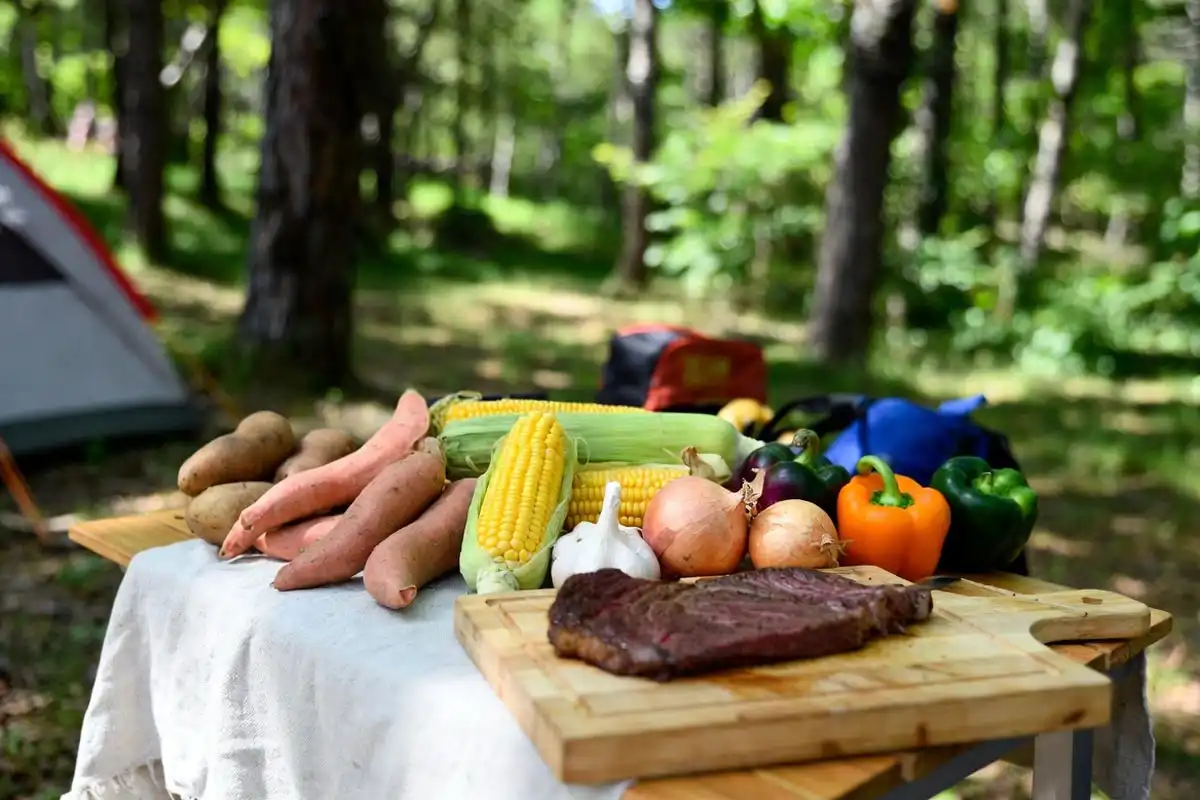
You can cook food directly on the campfire coals, including potatoes, sweet potatoes, corn in the husk, whole garlic, onions, bell peppers, bananas, and even steak. These foods tolerate high, direct heat without foil and develop a smoky, caramelized flavor that no pan produces. Prep matters: most items need dry skin or natural wrapping to protect the interior. Cook time ranges from 8 minutes (thin vegetables) to 45 minutes (large potatoes).
Cooking directly on coals is one of the oldest methods I use when I want real fire flavor with minimal gear. You bury food in or lay it on hot embers, and the dry radiant heat does the rest. This guide covers which foods work on coals, how to prep and time each one, what to avoid, and how to stay safe at the fire.
What Does “Cooking on Coals” Actually Mean?
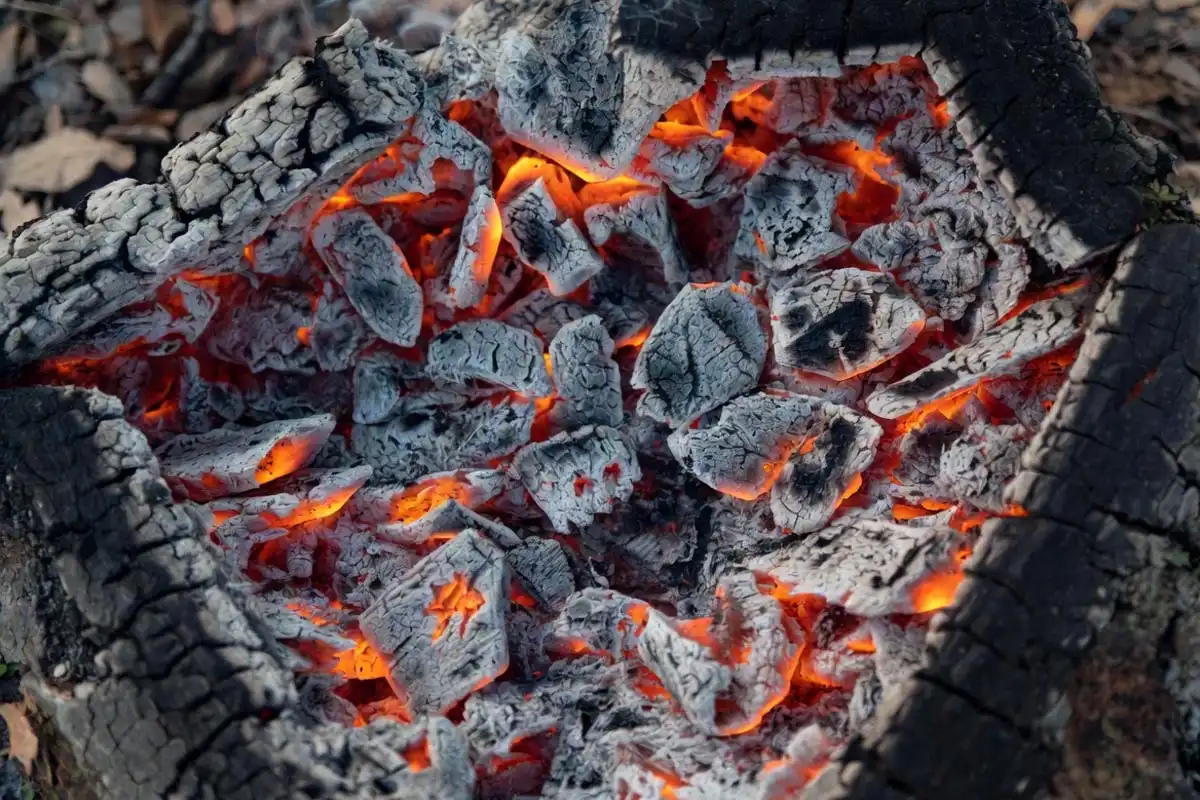
Coal cooking uses the bed of glowing embers left after a wood fire burns down, not the open flames. Flames produce inconsistent heat and deposit unburned gases on food. Coals deliver steady, even radiant heat between 500°F and 700°F (260°C to 370°C).
You place food directly onto or into the ember bed. The exterior chars slightly, which seals moisture inside. The ash layer on coals also insulates food and prevents burning if you manage timing correctly.
Wait until the fire burns to a grey-white ash crust before cooking. Orange-glowing coals with no visible flame are ready.
Learn more: How to Cook Rice Over a Campfire
Which Foods Cook Directly on Campfire Coals?
Potatoes and Sweet Potatoes
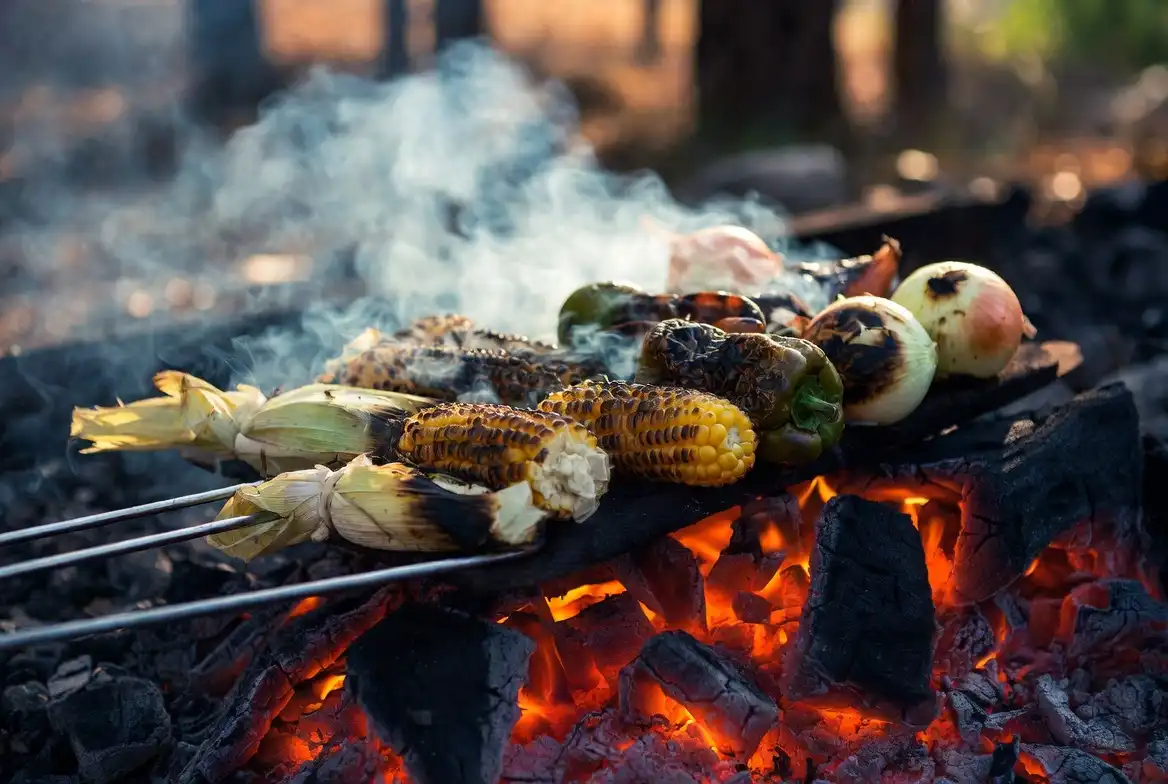
Potatoes cook directly on coals without any foil. The thick skin acts as a natural wrapper. Scrub the skin, dry it, and place the potato onto the coal bed. Rotate it every 10 minutes. A medium potato takes 35 to 45 minutes. It is done when a skewer slides through the center with no resistance.
Sweet potatoes follow the same method and finish slightly faster, around 25 to 35 minutes, because the flesh is denser in natural sugars and softens at lower internal temperatures.
Corn on the Cob
Corn in its husk cooks well on coals. The husk steams the kernels from inside and chars on the outside without burning the corn. Soak the cob in water for 15 minutes before placing it on the embers. Turn every 5 minutes. It finishes in 15 to 20 minutes when the outer husk is blackened and peels back easily.
If the husk is already removed, wrap the cob tightly in a single layer of wet leaves or place it directly on coals for just 8 to 10 minutes, turning frequently.
Whole Onions and Garlic
Whole onions cook unpeeled directly on coals. The outer layers char and protect the interior. Place onions cut-side down on the embers. They take 20 to 30 minutes depending on size. The interior turns soft and sweet.
A whole garlic head placed cut-side down on coals roasts in 20 minutes. The cloves soften and develop a mild, spreadable texture.
Bell Peppers and Tomatoes
Bell peppers blister and soften in 10 to 15 minutes on coals. Place them directly on the embers and turn with tongs every 3 to 4 minutes. The charred skin peels away to reveal smoky, tender flesh.
Tomatoes cook faster, around 8 to 12 minutes. The skin blackens and the interior becomes jammy. Use firm tomatoes, not soft ones, or they collapse on the grate.
Steak (The Caveman Method)
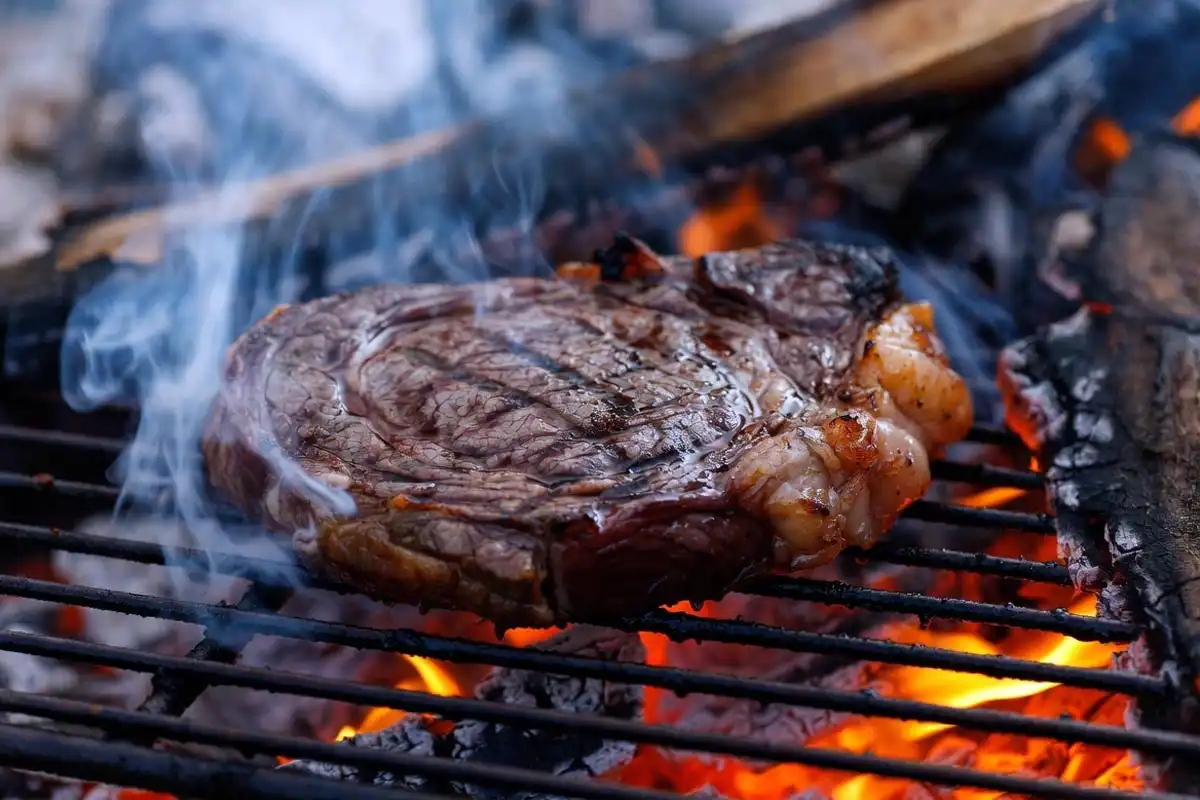
Thick-cut steaks, at least 1 inch (2.5 cm), cook directly on hot coals using the caveman or ember method. Blow or fan off any loose ash from the coal surface before placing the steak directly on the embers.
The coal crust sears the exterior in 3 to 4 minutes per side. The ash wipes off the finished steak cleanly and does not affect flavor. This works for ribeye, strip, and sirloin. Thinner cuts overcook before developing a proper crust.
Flatbread and Dough
Flatbread dough cooks on coals when pressed into a thin disc and placed on the coal surface. Flip it after 2 to 3 minutes. The bread chars slightly and cooks through in 5 to 6 minutes total. Ash falls off when you tap the bread. This is one of the most reliable no-gear meals I rely on during extended trips.
Bananas
Unpeeled bananas roast on coals in 8 to 10 minutes. Place them directly on the embers. The skin turns black and the interior softens into a warm, sweet pulp. Split the cooked banana lengthwise and eat it from the skin with a spoon.
Beets
Beets cook well directly on coals because their dense flesh handles high heat without becoming mushy. Bury medium beets in the ember bed for 40 to 50 minutes. The outer skin chars and peels away to reveal cooked beet underneath.
Apples
Whole apples with the core removed and stuffed with brown sugar or dried fruit cook on coals in 20 to 25 minutes. Place them upright in a shallow depression in the ember bed. They are done when the skin wrinkles and the interior softens.
How to Cook on Campfire Coals: Step-by-Step
If you use a campfire cooking kit with long-handled tongs and a coal rake, this process becomes safer and more controlled.
Step 1: Build and burn your fire down Start your fire 45 to 60 minutes before you want to cook. Use hardwood logs. Let the fire burn until flames disappear and coals glow orange under a white ash crust.
Step 2: Rake the coal bed flat Use a stick or coal rake to spread embers into an even layer. A uniform bed delivers consistent heat across all food.
Step 3: Prep your food
- Dry all vegetables. Moisture on the skin causes steam bursts and uneven cooking.
- Rub potatoes and sweet potatoes lightly with oil to help the skin char evenly.
- Soak corn husks in water for 10 to 15 minutes before placing on coals.
- Pat steak dry with a cloth to improve the coal crust.
Step 4: Place food on the coal bed Set items directly on the embers. Use long-handled tongs. Keep hands at least 12 inches (30 cm) from the fire bed during placement.
Step 5: Rotate and monitor Rotate every 5 to 10 minutes depending on food size. Uneven rotation produces a charred side and an undercooked side. Use the tongs, not a fork, to avoid piercing and losing moisture.
Step 6: Test for doneness Insert a thin stick or skewer into the thickest point. No resistance means the food is cooked through. For steak, press the center: firm but slightly yielding indicates medium doneness.
Step 7: Remove, rest, and clean Lift food from coals and set it on a flat stone or clean surface for 2 to 3 minutes. This resting period redistributes internal heat. Wipe or brush off any ash before eating.
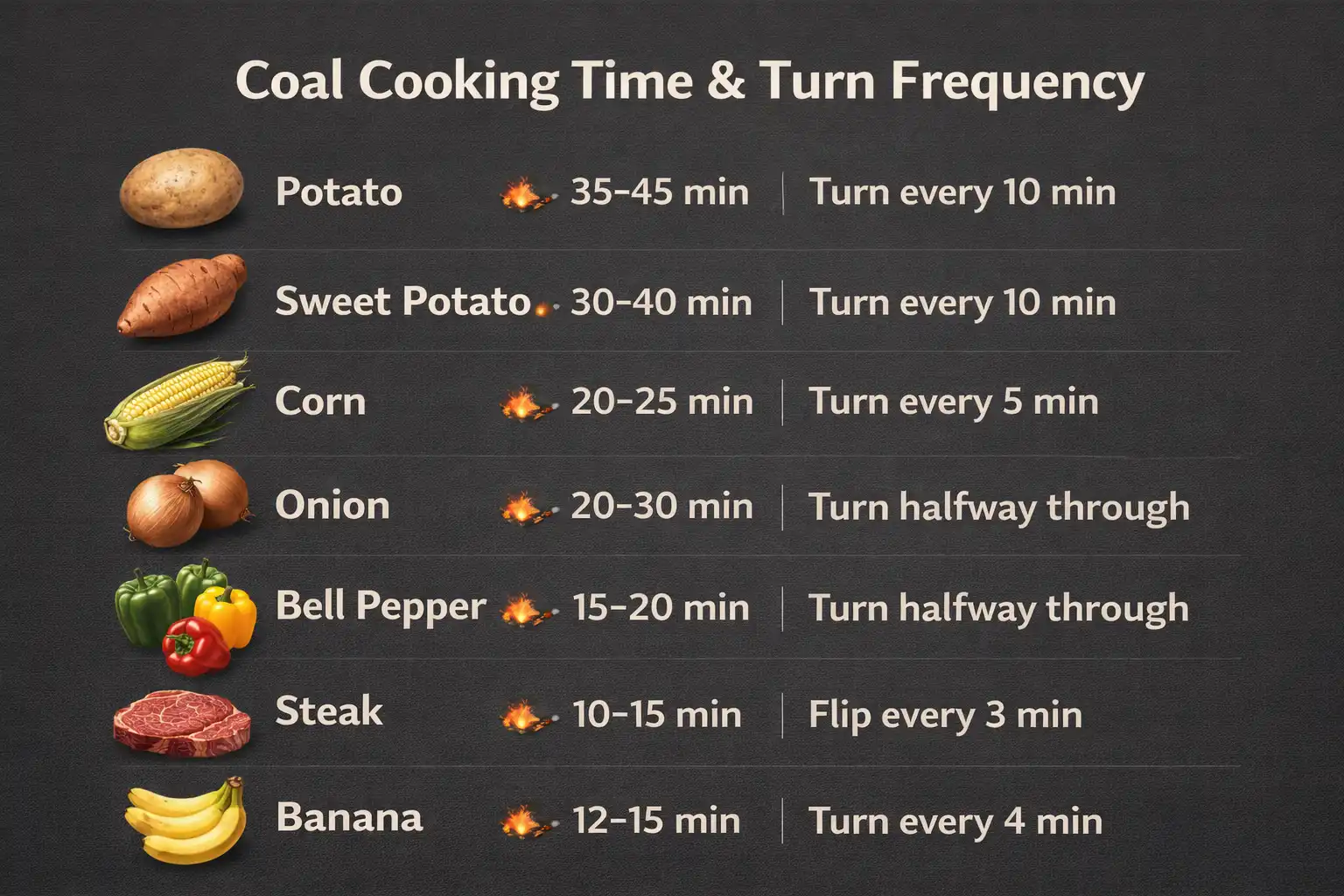
How Long Does Each Food Take on Coals?
| Food | Time on Coals | Turn Frequency |
|---|---|---|
| Potato (medium) | 35–45 min | Every 10 min |
| Sweet potato | 25–35 min | Every 10 min |
| Corn in husk | 15–20 min | Every 5 min |
| Whole onion | 20–30 min | Every 8 min |
| Garlic (head) | 18–22 min | Once at halfway |
| Bell pepper | 10–15 min | Every 3–4 min |
| Tomato (firm) | 8–12 min | Every 3 min |
| Steak (1 inch thick) | 6–8 min total | Once |
| Flatbread | 5–6 min total | Once |
| Banana | 8–10 min | None needed |
| Beet (medium) | 40–50 min | Every 10 min |
| Apple | 20–25 min | Every 5 min |
Common Mistakes to Avoid
Cooking on active flames instead of coals: Flames scorch the exterior without cooking the interior. Always wait for full coal formation before placing food.
Using softwood for the fire: Softwoods like pine produce resin-heavy smoke and uneven coals. Hardwoods such as oak, hickory, or cherry produce consistent, long-burning coal beds.
Placing wet food on hot coals: Excess moisture on the food surface causes steam and uneven charring. Dry all items before placing them on the coal bed.
Not rotating regularly: Irregular turning produces burnt sides and raw interiors. Set a timer and rotate on schedule.
Cutting food open too early: Cutting releases steam and stops the cooking process. Let food rest before checking.
Crowding the coal bed: Placing too many items close together drops the coal temperature. Leave at least 2 inches (5 cm) between items.
Safety at the Coal Bed
Burns from coal cooking occur from two sources: touching the coal surface and steam from food. I covered burn and blister first aid in detail in my guide on treating minor cuts and blisters at camp, but the key prevention steps are:
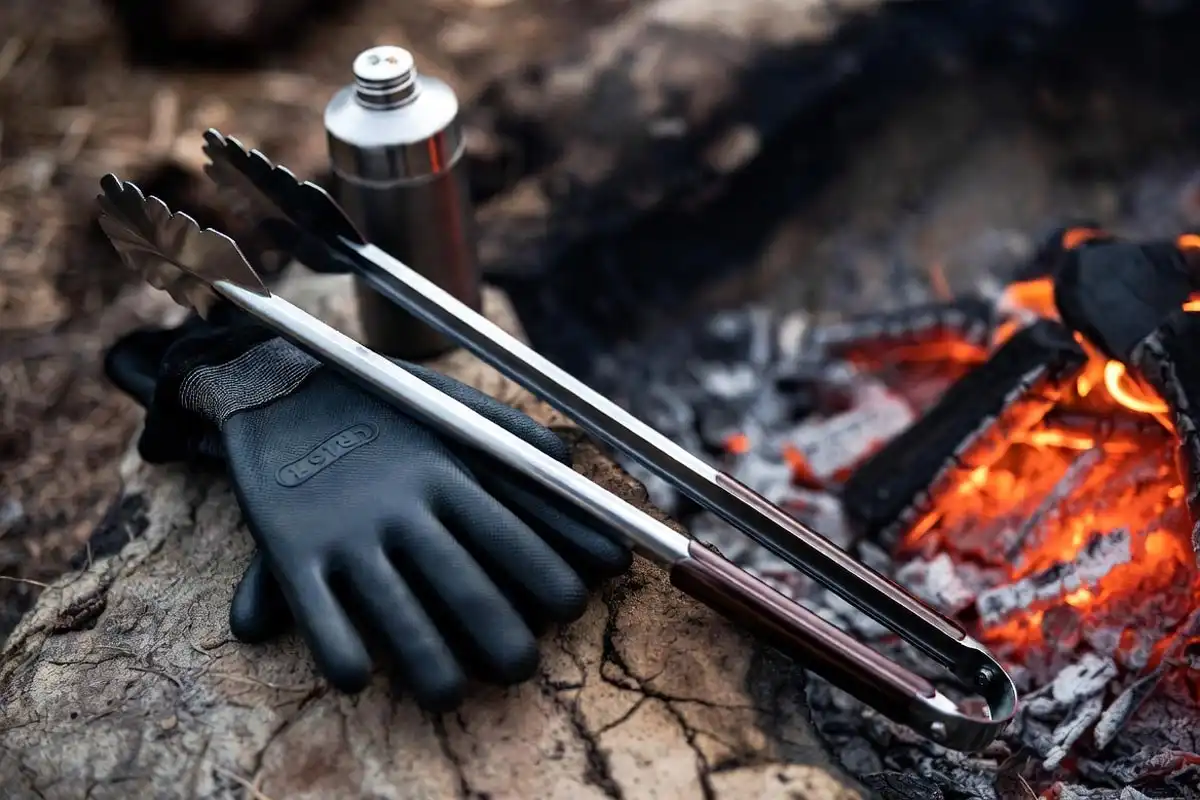
- Use long-handled tongs with at least 16 inches (40 cm) of reach.
- Wear heat-resistant gloves when adjusting items on the coal bed.
- Never blow on coals while food is on them. This sends hot ash and embers toward your face.
- Keep water nearby to douse runaway embers.
- Let coals cool fully before leaving camp. Coals retain heat for several hours after a fire appears extinguished.
- Never cook on coals inside an enclosed space. Carbon monoxide accumulates rapidly in tents, shelters, and vehicles.
FAQs about Food Can You Cook Directly on Campfire Coals

Can you cook meat directly on campfire coals without foil?
Yes. Thick-cut steaks and pork chops cook directly on hot coals using the caveman method. The ash brushes off cleanly after cooking and does not affect the flavor.
Does ash from the coals make food taste bad?
No. Grey-white ash from hardwood coals is mostly calcium carbonate and wipes off the food surface easily. It has no flavor impact when coals are fully burnt down.
Do you need to wrap food in foil before placing it on coals?
Not for most foods. Potatoes, corn in husks, onions, and steak all cook without foil. Use foil only when adding butter or seasoning that would burn on direct coals.
How do you know when coals are hot enough to cook?
Hold your hand 6 inches above the coal bed. If you pull away in under 3 seconds, the coals are ready. Look for a grey-white ash crust over an orange glow.
Conclusion
Coal cooking strips away complexity. No pots, no grates, no camp stove needed. The coal bed delivers intense dry heat that roasts, chars, and caramelizes food in ways that other methods do not replicate.
Potatoes, corn, whole vegetables, and even steak all cook directly on coals when you manage heat timing and rotation. The skill is patience: wait for a proper coal bed, rotate food consistently, and test before pulling.
Once you get comfortable with the timing, coal cooking becomes one of the fastest ways to produce a complete camp meal with the ingredients already in your pack.