What Ground Cloth Material Works Best Under a Tent on Wet Soil

Wet soil puts a tent floor under real pressure, and the wrong ground cloth material works against you by letting moisture seep upward, mud cling to seams, and cold dampness creep through by morning. This guide covers every ground cloth material that performs on wet ground, how each one holds up, and which setup works best for your tent type and trip length.
Polyethylene (poly tarps) and silnylon tarps work best under a tent on wet soil. Polyethylene blocks ground moisture with zero absorption and costs very little. Silnylon weighs less and packs smaller, making it better for backpacking. For car camping on consistently wet ground, a purpose-cut poly tarp trimmed 2 to 3 inches inside the tent perimeter gives the best waterproof barrier at the lowest cost.
What Is a Ground Cloth (and Why It Matters on Wet Soil)?
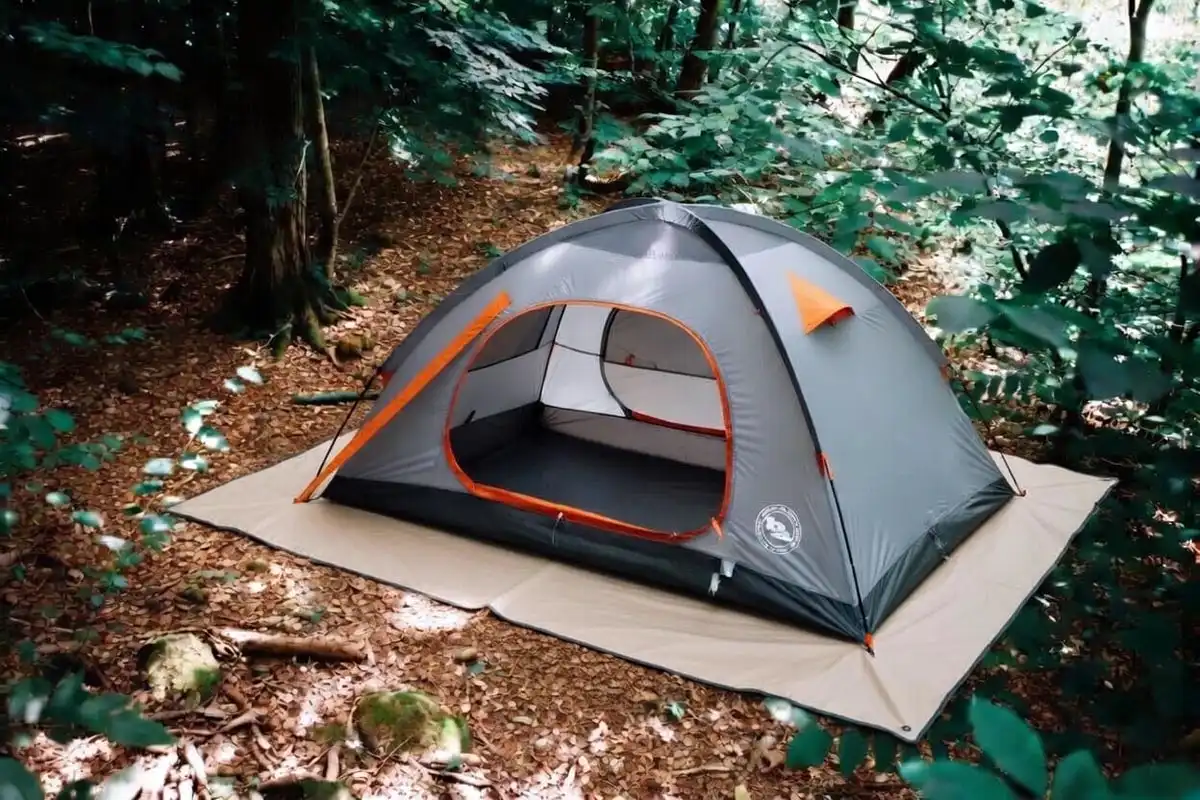
A ground cloth, also called a footprint or groundsheet, sits between the tent floor and the soil. On dry ground, it mainly protects against abrasion. On wet soil, it does a second and more important job: it blocks upward moisture migration.
Tent floors use coated nylon or polyester with a hydrostatic head rating between 1,500 mm and 5,000 mm. That sounds waterproof, but wet soil applies sustained pressure against the floor. Over hours, moisture finds microscopic paths through seams, valve holes, and thin-coated spots. A ground cloth intercepts that pressure before it reaches the tent floor.
Learn more: Beginner Camping Guide
Ground Cloth Materials Compared
Polyethylene Tarps
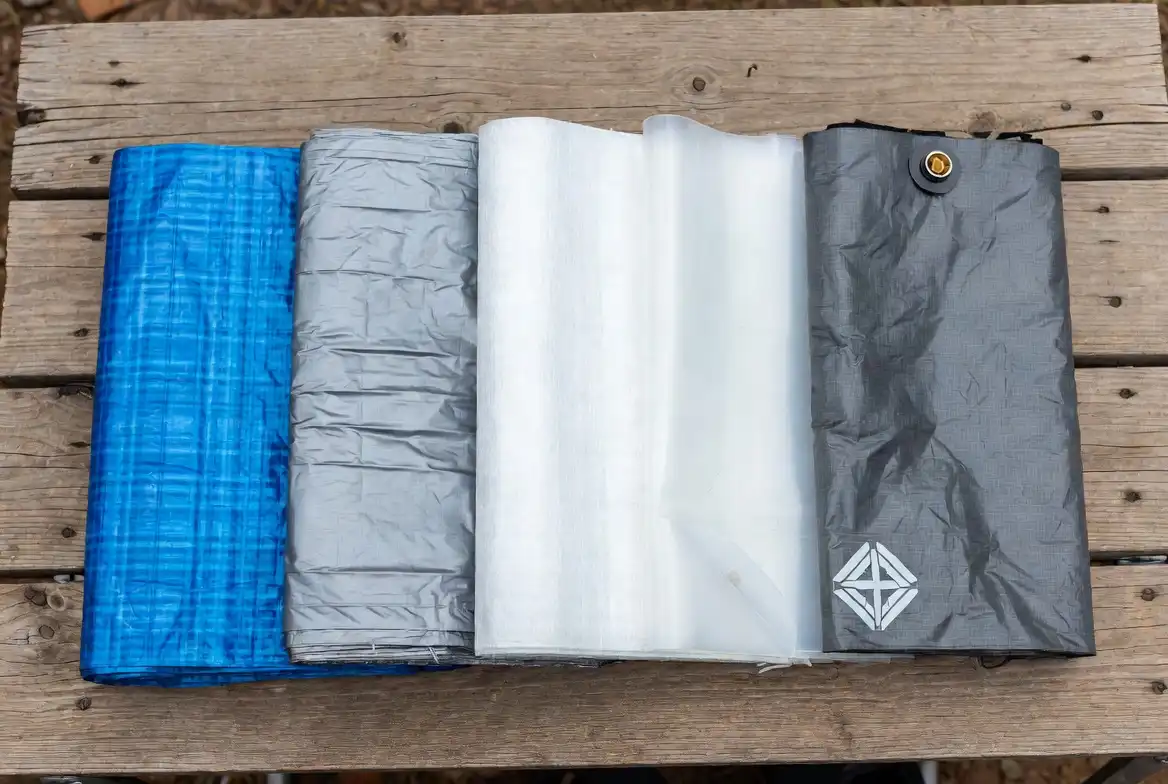
Polyethylene (PE) tarps block water completely. The material contains no absorbent fibers. Water pools on the surface rather than soaking through.
PE tarps are available in 2 mil, 3 mil, and 6 mil thicknesses. On wet soil, 3 mil provides enough puncture resistance without excessive weight. A 3 mil poly tarp cut to tent size weighs roughly 8 to 12 ounces for a two-person footprint.
The main weakness is condensation. PE does not breathe, so moisture from the ground stays trapped between the tarp and tent floor. Trim the tarp inside the tent perimeter to prevent rain from funneling underneath.
Best for: Car camping, base camps, budget setups.
Silnylon and Silpoly Tarps
Silnylon uses a nylon base coated on both sides with silicone. Silpoly substitutes polyester for the nylon base, which reduces stretch when wet. Both materials are nearly impermeable to liquid water under normal ground pressure.
A silnylon groundsheet for a two-person tent weighs 3 to 6 ounces, which is 50 to 70 percent lighter than a comparable PE tarp. Silpoly holds its shape better than silnylon in wet conditions because polyester absorbs less moisture than nylon.
Best for: Backpacking, multi-day hiking trips where pack weight matters.
I covered wet-ground tent setup in detail in an article on pitch a tent on rocky or sandy ground, which also applies to soft, saturated soil.
Tyvek Sheeting
Tyvek is a spun-bonded polyethylene fiber product used in house wrap. It blocks liquid water while allowing some vapor transmission, which reduces ground condensation buildup compared to pure PE.
Tyvek HomeWrap (the white construction type) weighs about 3 ounces per square yard. It resists punctures well and handles wet soil without absorbing moisture. Tyvek does not pack as small as silnylon, but it costs less.
One practical limitation: Tyvek tears along cut edges over time if those edges are not reinforced with tape or a seam sealer.
Best for: Campers who want a lightweight option without silnylon’s price.
Polycro (Polycryo)
Polycro is a transparent polyethylene copolymer film used in ultralight backpacking. It weighs 1 to 2 ounces for a full tent footprint, less than any other option.
The material blocks water effectively, but it punctures and tears more easily than Tyvek or silnylon. On wet soil with embedded rocks or sticks, Polycro degrades quickly. It works well for one or two uses, not for repeated trips to the same rough campsite.
Best for: Ultralight backpackers on maintained campsites with cleared tent pads.
Purpose-Made Tent Footprints
Tent manufacturers sell footprints cut to match specific tent floors. Most use a 70-denier nylon with a polyurethane coating. They weigh more than silnylon tarps of the same size and cost significantly more.
The fit advantage matters on wet ground because a custom footprint leaves no exposed edge to collect rainwater. Generic tarps require trimming to achieve the same result.
Best for: Campers who want a clean, no-trim solution and already own the matching tent.
How to Size a Ground Cloth for Wet Conditions
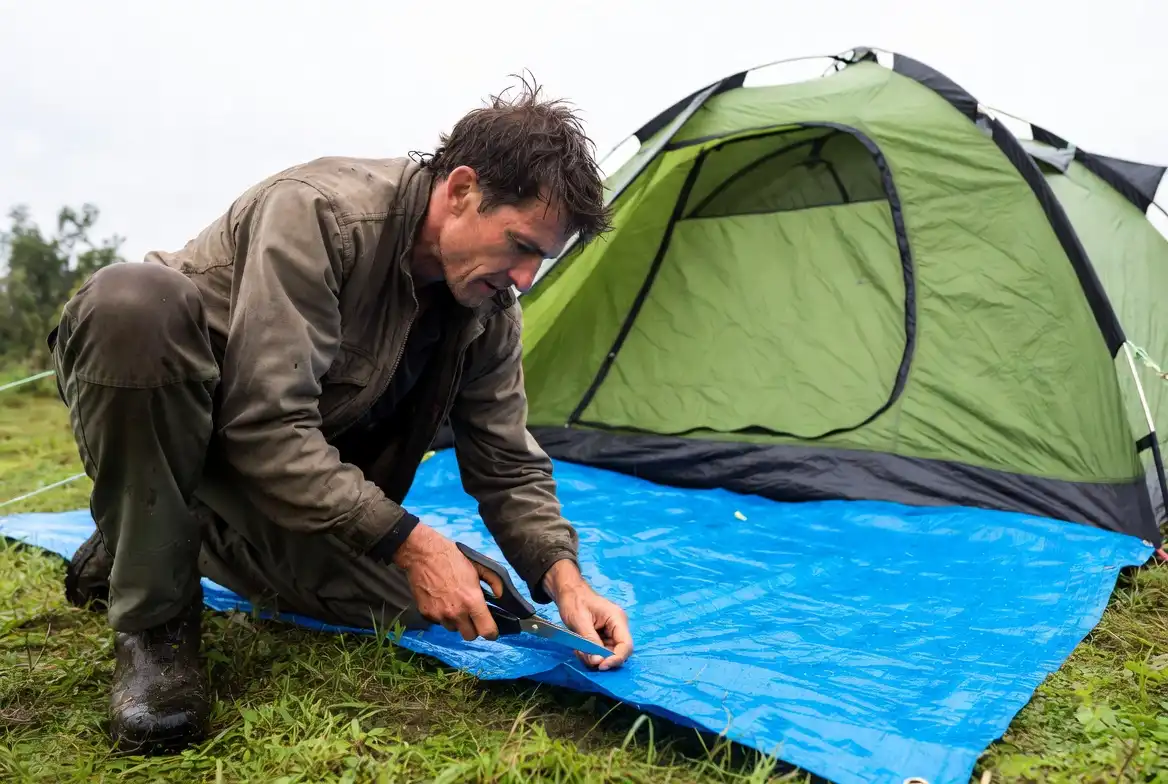
Sizing determines whether the ground cloth helps or hurts on wet soil.
- Measure the tent floor at its widest and longest points.
- Cut or fold the ground cloth 2 to 3 inches smaller on all sides.
- Check that no edge extends beyond the tent walls when the tent is pitched.
A ground cloth that extends past the tent perimeter collects rain and channels it directly under the floor. On wet soil, this creates a water pool beneath the tent rather than preventing one.
For tarps with grommets, fold the edges inward and tuck them under the tent rather than staking them out flat.
How to Set Up a Ground Cloth on Wet Soil
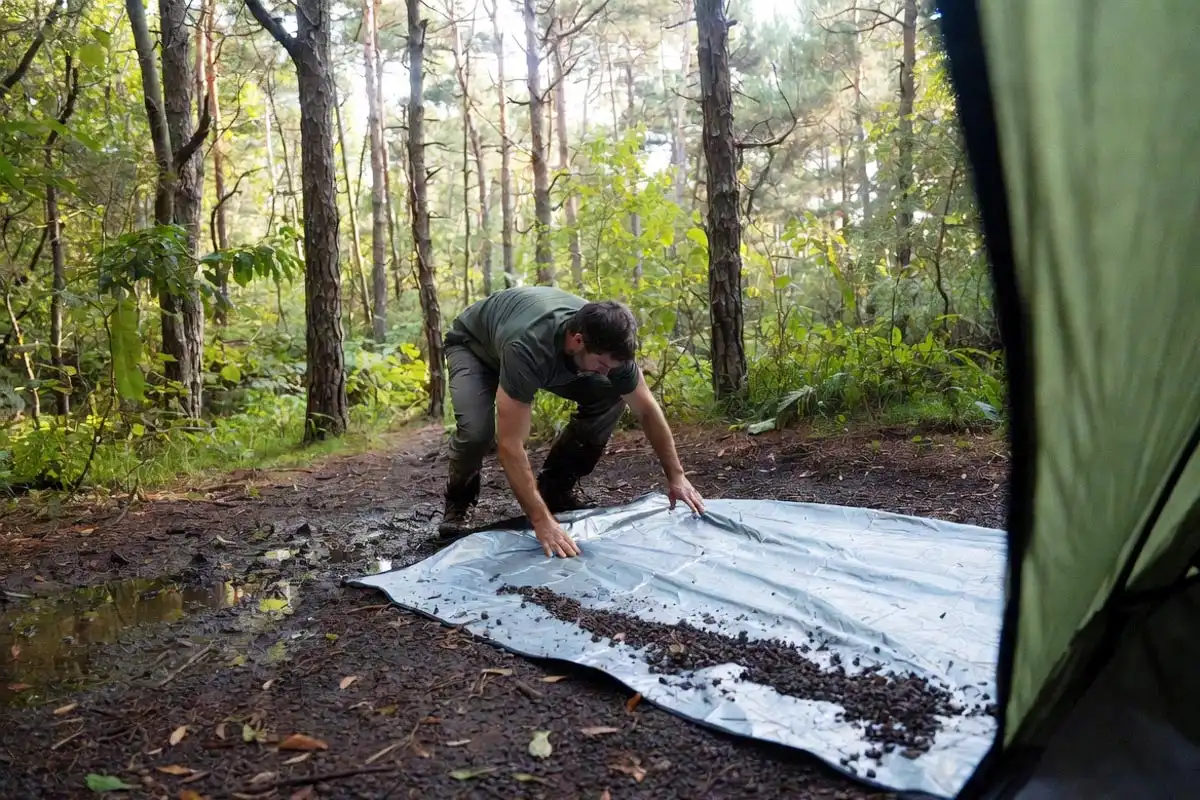
Step 1: Clear the ground. Remove sticks, stones, and pinecones. These puncture the ground cloth and create pressure points under the tent floor.
Step 2: Assess drainage. Choose a site with natural slope away from the tent. Even a 2-degree slope keeps pooling water from sitting under the groundsheet. I wrote a full breakdown of site selection in my guide on choose a campsite when you arrive late, including drainage evaluation.
Step 3: Lay the ground cloth flat. Smooth out wrinkles. Folds trap moisture and create pressure points.
Step 4: Pitch the tent directly over the cloth. Align the tent so all floor edges sit inside the ground cloth perimeter.
Step 5: Check edges after pitching. Walk the perimeter and tuck any exposed cloth edges inward.
Additional Wet-Ground Protection Layers
A ground cloth alone handles upward moisture. Two additions improve performance further.
Closed-cell foam sleeping pad: A closed-cell foam pad placed inside the tent adds a second insulating and moisture-blocking layer directly under your sleeping bag. It prevents cold transfer from the ground even when the tent floor reaches low temperatures. Foam pads like the Therm-a-Rest Z Lite use 12 to 20 mm of cross-linked polyethylene, which absorbs no water.
Seam sealer on tent floor seams: Ground moisture finds seams before it finds the coated floor panels. Apply silicone-based seam sealer to all interior floor seams before a wet-weather trip.
For other ways to manage moisture inside the tent at night, I covered this in an article on keep bedding dry in humid weather.
Common Mistakes on Wet Soil
Using a tarp that is too large. Any edge extending past the tent collects rain. This is the single most common wet-camping ground cloth mistake.
Skipping site assessment. A perfectly waterproof ground cloth cannot compensate for a depression that pools water. Flat low spots collect runoff from surrounding ground.
Leaving the ground cloth wet between uses. Polyurethane-coated materials degrade faster when stored damp. Dry the cloth fully before folding and storing.
Using a cotton or canvas drop cloth. Cotton absorbs water and holds it against the tent floor. Cotton has no place as a tent ground cloth on wet soil.
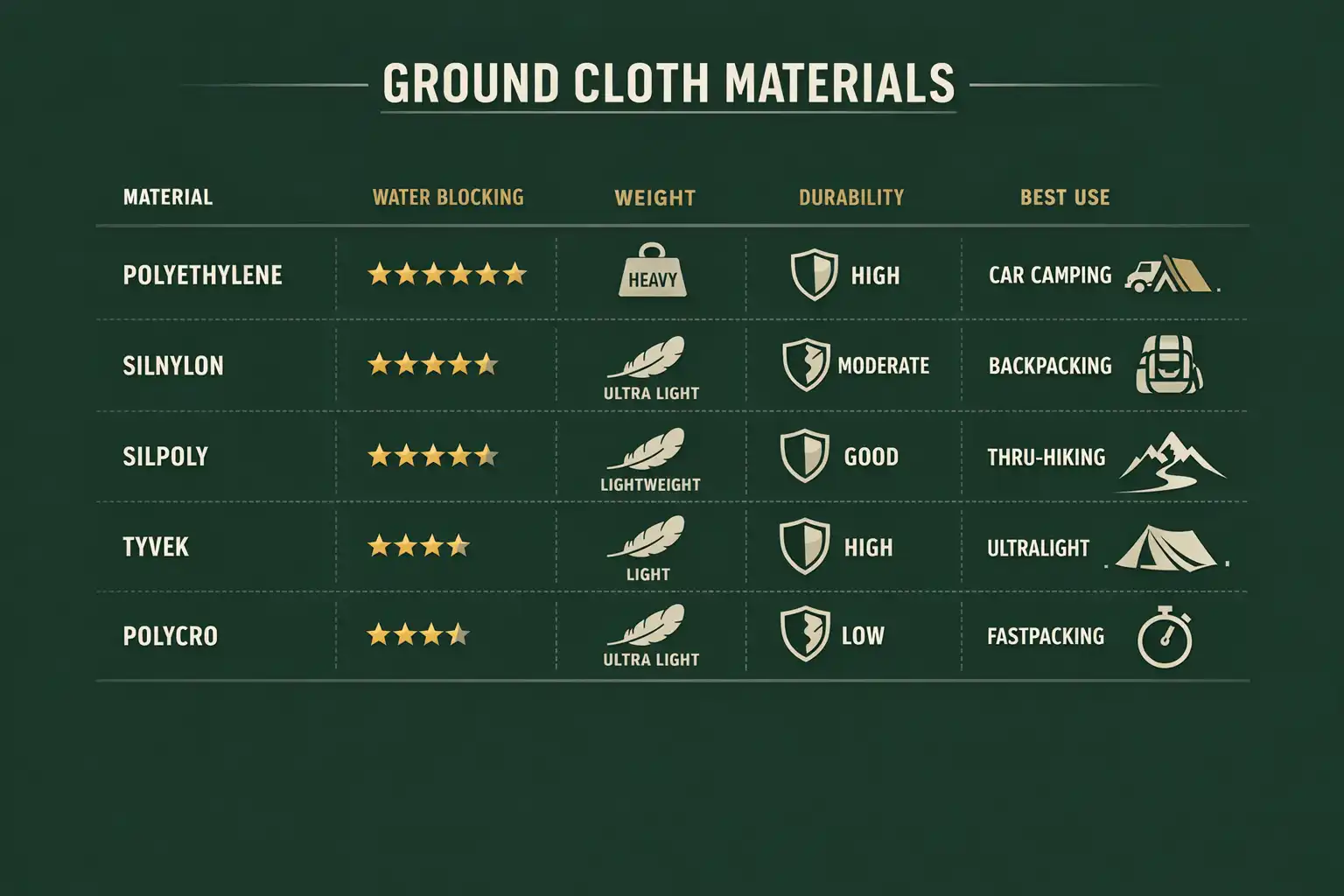
Material Comparison at a Glance
| Material | Water Blocking | Weight | Durability | Best Use |
|---|---|---|---|---|
| Polyethylene tarp | Excellent | Medium | High | Car camping |
| Silnylon | Excellent | Very light | Medium | Backpacking |
| Silpoly | Excellent | Very light | Medium-high | Backpacking |
| Tyvek | Very good | Light | High | Multi-use budget |
| Polycro | Good | Ultralight | Low | Ultralight, short trips |
| Tent footprint | Excellent | Medium | High | Matched tent fit |
FAQs about Ground Cloth Materials for Wet Soil

Can I use a regular blue tarp as a ground cloth on wet soil?
Yes. A standard blue poly tarp blocks ground moisture effectively. Cut it 2 to 3 inches smaller than the tent floor on all sides. The blue tarp’s weave is heavier and less packable than silnylon, but it performs well for car camping.
Does a ground cloth make condensation worse inside the tent?
A ground cloth adds a non-breathable layer beneath the tent, which can trap some ground vapor. Proper tent ventilation, not removing the ground cloth, solves this. Keep vents open and use a moisture-wicking sleeping pad layer inside.
How thick should a polyethylene tarp be for wet camping?
3 mil thickness provides the best balance between puncture resistance and weight. 2 mil tears more easily on rough ground. 6 mil is durable but adds noticeable weight and bulk.
Is silnylon or silpoly better under a tent on wet ground?
Silpoly performs slightly better on wet soil because polyester absorbs less moisture than nylon, so the material stays dimensionally stable and maintains its waterproof properties throughout the night.
Do I need a ground cloth if my tent has a bathtub floor?
Yes. A bathtub floor protects against sidewall moisture ingress, but sustained ground pressure on wet soil still stresses the floor coating over time. A ground cloth extends the life of the tent floor and adds an extra moisture barrier.
Conclusion
Polyethylene tarps and silnylon deliver the most reliable moisture protection under a tent on wet soil. PE suits car camping at low cost. Silnylon and silpoly suit backpacking where weight matters. Tyvek sits in the middle for multi-use durability without the price of branded footprints.
Whatever material you choose, trim it inside the tent perimeter, clear the ground first, and pick a site with natural drainage. The ground cloth handles upward moisture; site selection handles everything else.