What Size Tent Do You Need for Two People Plus Gear
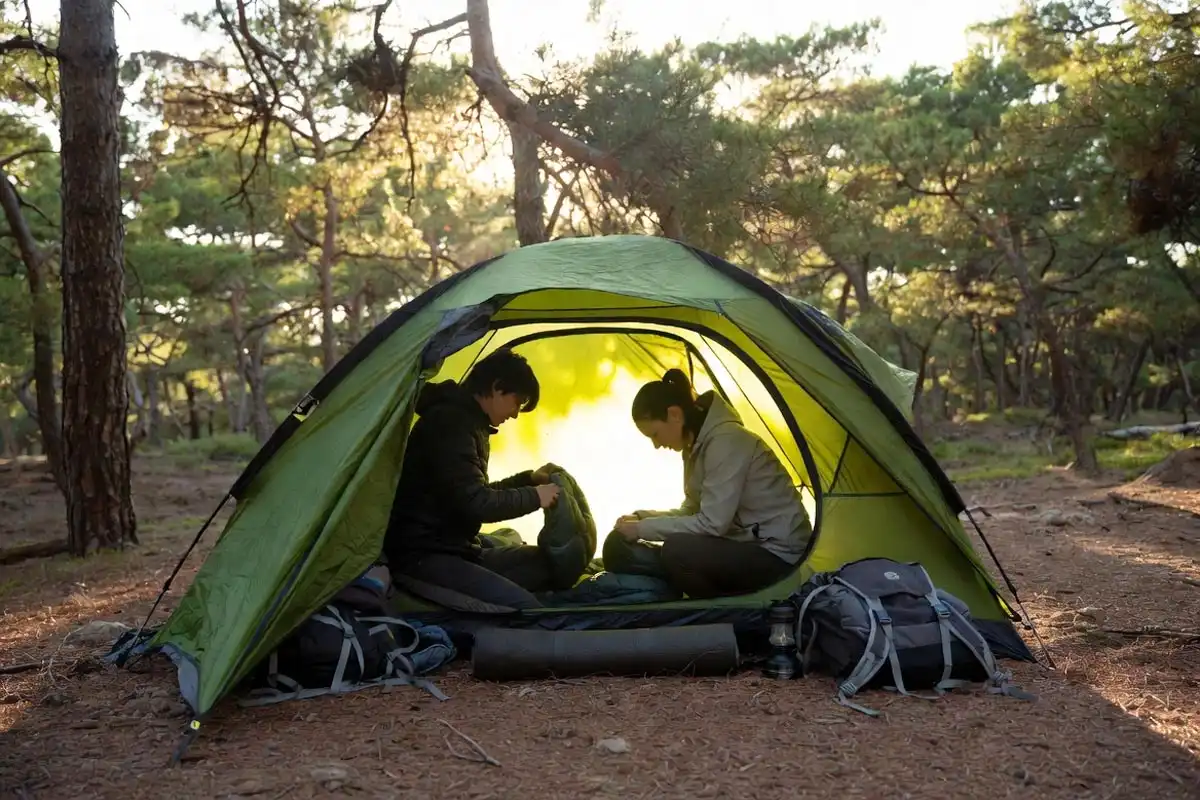
For two people plus gear, the tent size you usually need for real comfort is a 3-person tent. A standard 2-person tent delivers 28–35 sq ft of floor space, which holds two sleeping pads side by side but leaves almost no room for backpacks, boots, or wet clothing. This guide covers floor area requirements, vestibule use, how car camping differs from backpacking, and the exact tent features that make the biggest difference when space is tight.
For two people plus gear, a 3-person tent with at least one vestibule works best. It provides 40–55 sq ft of sleeping area and 10–20 sq ft of covered vestibule space for packs and boots. If you backpack and weight matters, choose a 2-person tent with 35+ sq ft of floor space and a dedicated vestibule.
What Do Tent Size Ratings Actually Mean?
Tent capacity ratings reflect sleeping bodies, not gear.
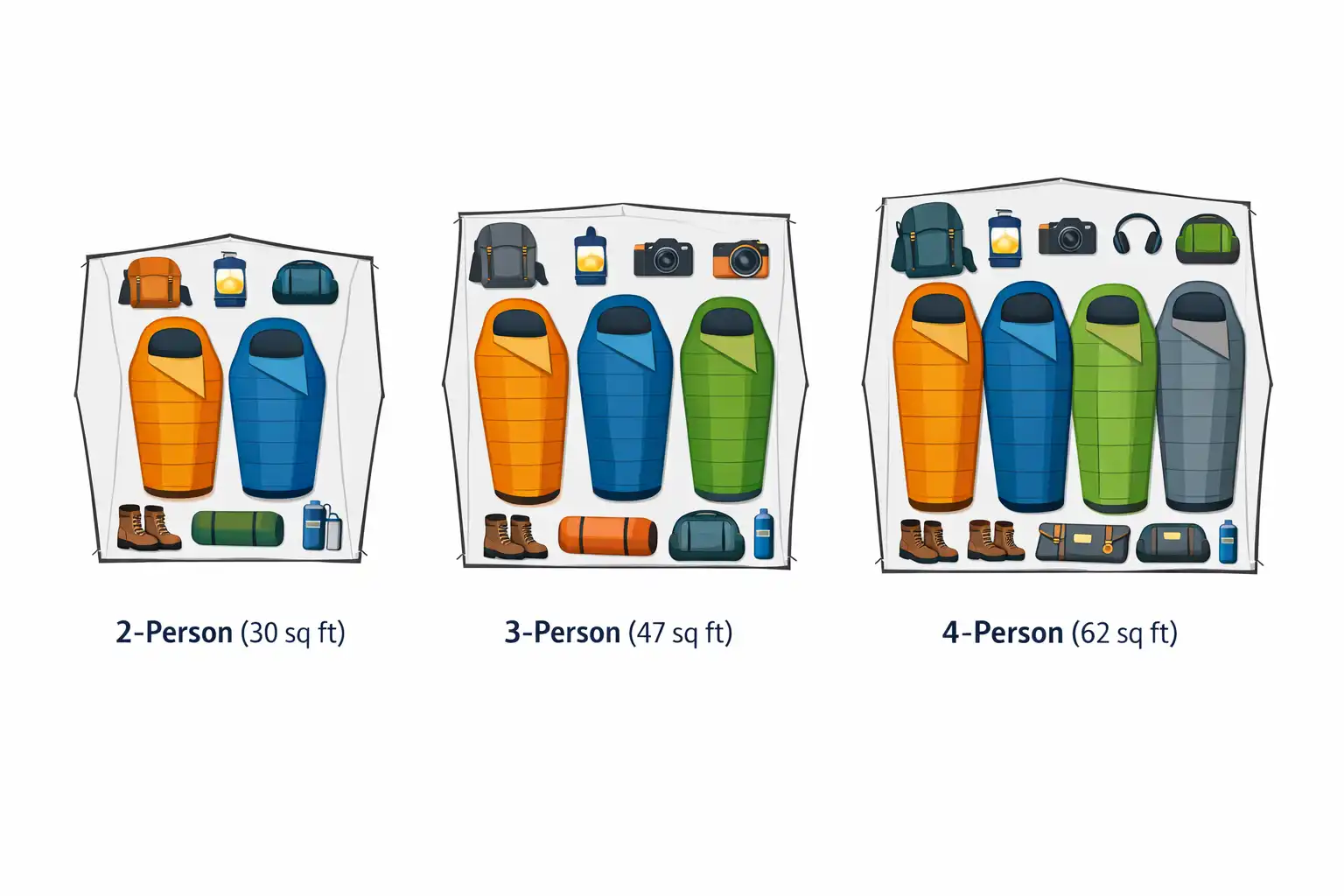
Manufacturers rate a 2-person tent to fit two adult sleeping bags laid flat, side by side, with minimal clearance. There is no allocated space for backpacks, camp shoes, a camera bag, or anything else you bring inside.
A 3-person rating adds roughly 10–20 sq ft more floor area. That extra space accommodates gear storage inside the tent body, or it gives two people room to sit up, move around, and change clothes without bumping into each other.
Think of the rating as a minimum, not a recommendation.
How Much Floor Space Do Two People Actually Need?
Two adults need at least 35–40 sq ft of floor space to sleep and store essential gear inside the tent.
A standard sleeping bag occupies about 15 sq ft of floor area. Two bags take up 30 sq ft. That leaves 5–10 sq ft in a typical 2-person tent — barely enough for one small daypack.
Here is a simple breakdown by tent size:
| Tent Rating | Typical Floor Area | Realistic Use for 2 People |
|---|---|---|
| 2-person | 28–35 sq ft | Tight fit, gear stays outside |
| 3-person | 40–55 sq ft | Comfortable sleep + gear inside |
| 4-person | 55–70 sq ft | Spacious; good for car camping |
For most camping trips, a 3-person tent hits the right balance between space and packability.
Where Does Your Gear Actually Go?
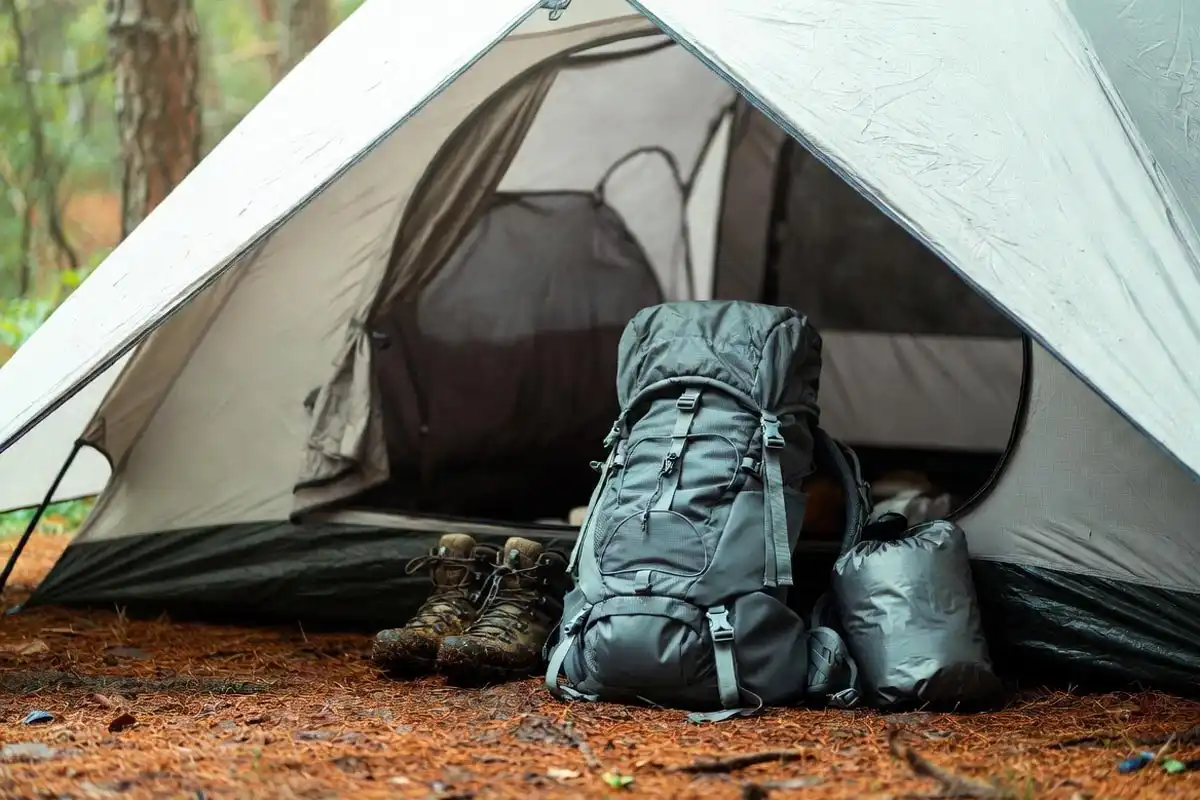
Gear storage splits between two locations: the vestibule and the tent interior.
Vestibule: A vestibule is a covered entry porch attached to the tent, sheltered by the rain fly. It keeps packs, muddy boots, and wet jackets outside the sleeping area but protected from rain. Most 3-person tents include one vestibule ranging from 10–20 sq ft. Some designs offer two vestibules, one per door, which works well when two people enter and exit independently.
Tent interior: Gear that stays inside the tent typically includes items you need overnight, like headlamps, a first aid kit, water bottles, and clothing layers. I also cover what goes into a solid two-night packing checklist if you want a full gear reference.
If the tent you choose has no vestibule, everything either lives inside the sleeping area or sits exposed to weather. A vestibule solves most storage problems without requiring a larger tent floor.
Which Tent Size Works Best for Two People With Gear?
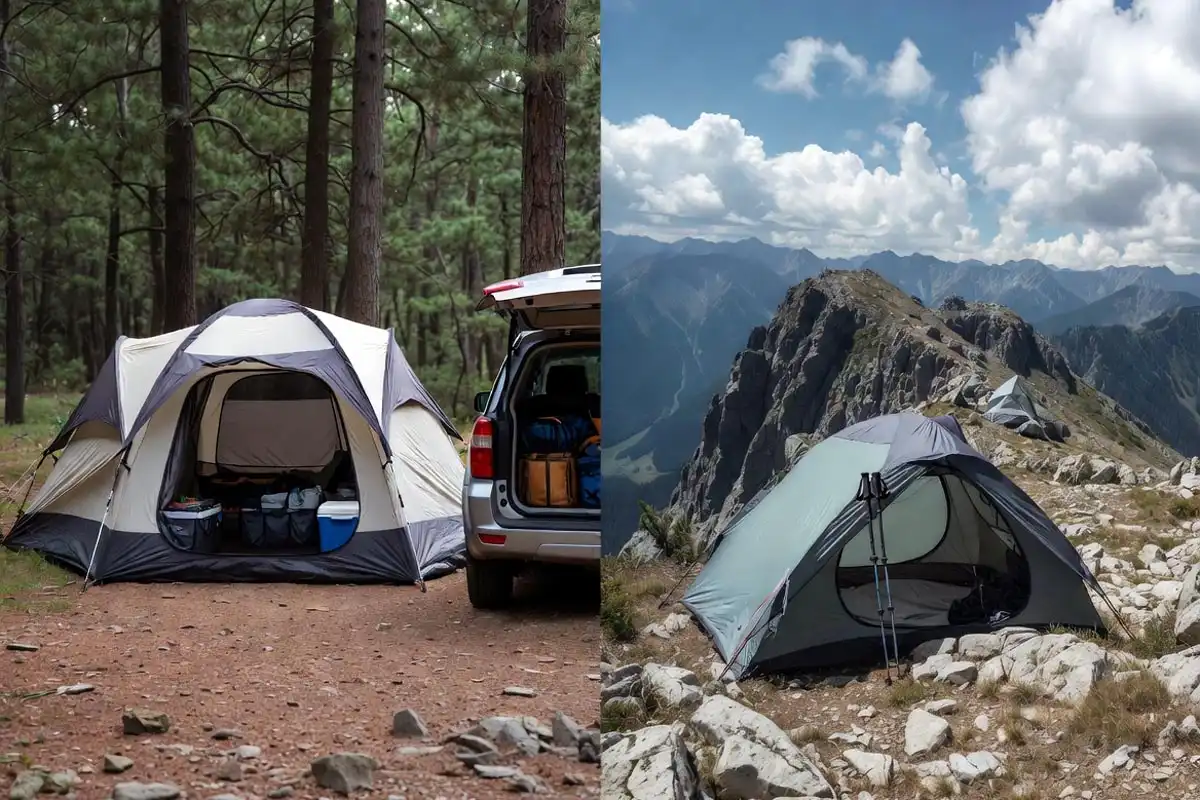
The right size depends on how you camp.
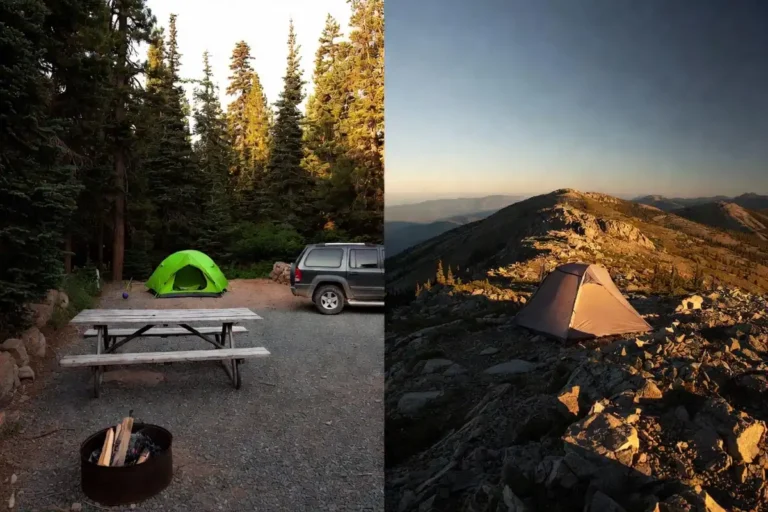
Car camping: Choose a 3-person or 4-person tent. Weight does not matter when you carry gear from a vehicle. A 4-person tent gives two people plenty of room to stand gear bags upright, spread out sleeping pads, and still move around comfortably.
Backpacking: Choose a 2-person tent with a large vestibule and at least 35 sq ft of floor area. Adding a full tent size increases pack weight by 1–2 lbs, which adds up on long routes. A well-designed 2-person backpacking tent with a generous vestibule handles gear storage without the weight penalty.
Three-season camping: A 3-person tent with a full-coverage rain fly and two vestibules handles rain, condensation, and overnight temperature shifts well for two adults.
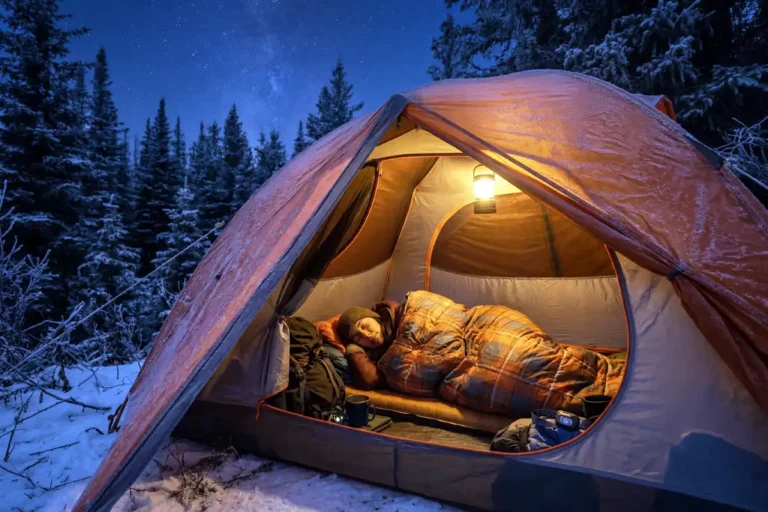
Winter camping: A 4-season 2-person tent or a sturdy 3-person tent rated for snow load protects better than standard designs. Geodesic pole structures handle wind and snow accumulation more effectively than standard dome designs.
What Tent Features Matter Beyond Floor Area?
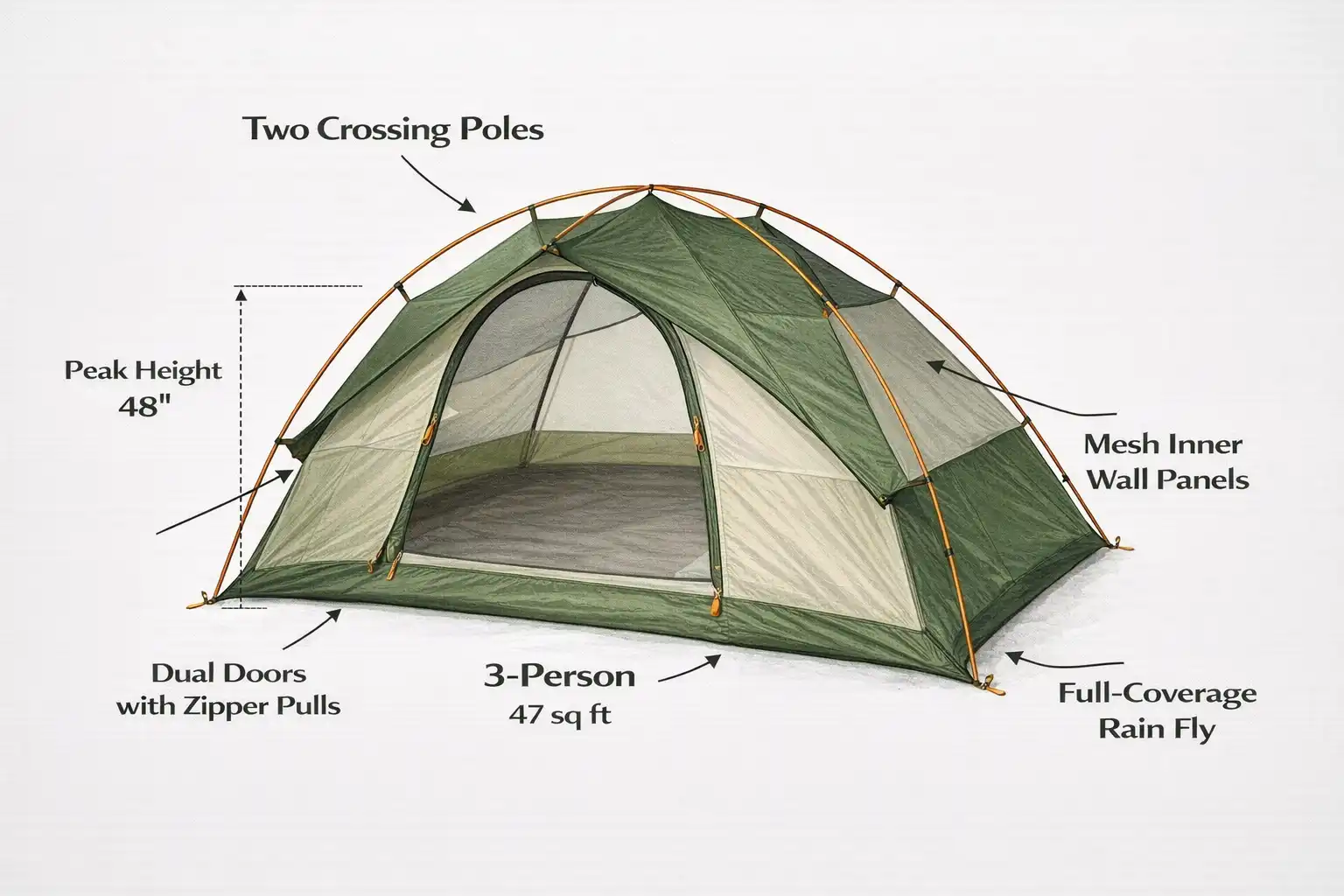
Floor area is the starting point. These four features determine how livable the tent actually is.
Peak height: A tent with 48 inches or more of peak height lets two adults sit upright. Below 42 inches, you spend time crouching.
Pole structure: Freestanding tents with two crossing poles set up on any surface, including rock or packed dirt. I covered pitching techniques for difficult ground in an earlier article on setting up a tent on rocky or sandy surfaces.
Door count: Two doors reduce the need to climb over a sleeping partner. For two people, this makes a noticeable difference in comfort and morning routines.
Rain fly coverage: A full-coverage rain fly that reaches close to the ground blocks wind-driven rain from entering the vestibule area and reduces condensation inside the tent body.
Should You Use a Footprint or Tarp Under the Tent?
A footprint or ground cloth extends tent floor life and reduces moisture from below.
A fitted footprint cuts to the exact tent shape. A tarp cut slightly smaller than the tent floor provides similar protection at lower cost. If the tarp extends past the tent edges, rain pools underneath it and channels water inward, which defeats the purpose.
I discussed tarp sizing in detail in my earlier article on choosing the right tarp size for your tent setup, which covers exact measurements for common tent shapes.
Common Mistakes When Choosing Tent Size for Two People
Buying to the exact person rating. A 2-person tent for two people means zero gear space inside. Going one size up costs little extra for car camping and solves the problem entirely.
Ignoring vestibule size. Two people produce significant gear volume. A vestibule smaller than 10 sq ft fills quickly and leaves packs exposed to weather.
Choosing a 4-person tent for backpacking. A 4-person tent typically weighs 6–9 lbs. For two backpackers, that splits to 3–4.5 lbs each in tent weight alone, before food, water, and clothing.
Overlooking condensation space. Two people sleeping in a small tent exhale moisture overnight. A tent with poor ventilation collects condensation on the inner walls, which drips onto sleeping bags. Mesh inner walls and adjustable vents reduce this significantly.
FAQs about Size of Tent Need for Two People Plus Gear

Is a 2-person tent big enough for 2 people and their gear?
A 2-person tent fits two sleeping bags but leaves almost no room for packs or gear inside. For two people with standard camping equipment, a 3-person tent or a 2-person tent with a large vestibule provides adequate storage space.
How many square feet does a tent need for 2 people with gear?
Two adults with gear need 40–50 sq ft of combined sleeping and storage space. A 3-person tent delivers this, especially when paired with a vestibule that handles pack and boot storage.
What is the best tent size for a couple camping with full packs?
A 3-person tent works best for most couples. It provides enough floor space for two sleeping pads plus gear, and the extra interior volume improves airflow and reduces condensation overnight.
Can you use a 2-person tent for car camping with gear?
You can, but it is uncomfortable. Car campers often bring more gear than backpackers. A 4-person tent gives two car campers enough space to stand gear upright, spread out fully, and store wet clothing away from sleeping areas.
Does a tent vestibule replace needing a larger tent?
A vestibule reduces the need for interior gear space, but it does not replace it completely. Items you need overnight, like water bottles, headlamps, and clothing layers, still belong inside the tent body. A vestibule handles bulkier items like backpacks and boots.
Conclusion
For two people with gear, a 3-person tent with at least one vestibule covers most camping situations. It provides enough floor area for two adults to sleep without crowding, and the vestibule handles pack storage without reducing sleeping space.
Car campers benefit from sizing up to a 4-person tent. Backpackers prioritize a spacious 2-person tent with a large vestibule to manage weight. The right tent size reduces friction at camp and improves sleep quality over a full trip.