What to Eat Before and During a Long Day Hike: 7 Smart Food Rules

Carbohydrates and protein eaten 1 to 2 hours before a long day hike give your muscles the sustained fuel they need on the trail. This guide covers exactly what to eat before you start, what to carry and consume during the hike, how often to snack, which foods to avoid, and the common mistakes that drain energy mid-route. Whether you plan an 8-mile loop or a full-day ridge walk, eating right at each stage shapes your pace, focus, and how your legs feel at the end.
Eat a carbohydrate-rich meal with moderate protein 1 to 2 hours before your hike. On the trail, eat a snack every 1.5 to 2 hours using portable, calorie-dense foods like trail mix, energy bars, jerky, and crackers. Avoid greasy or heavy meals before you start. Drink water consistently at each snack break. This pattern maintains energy, delays fatigue, and supports muscle recovery across a full day of hiking.
What Should You Eat Before a Long Day Hike?
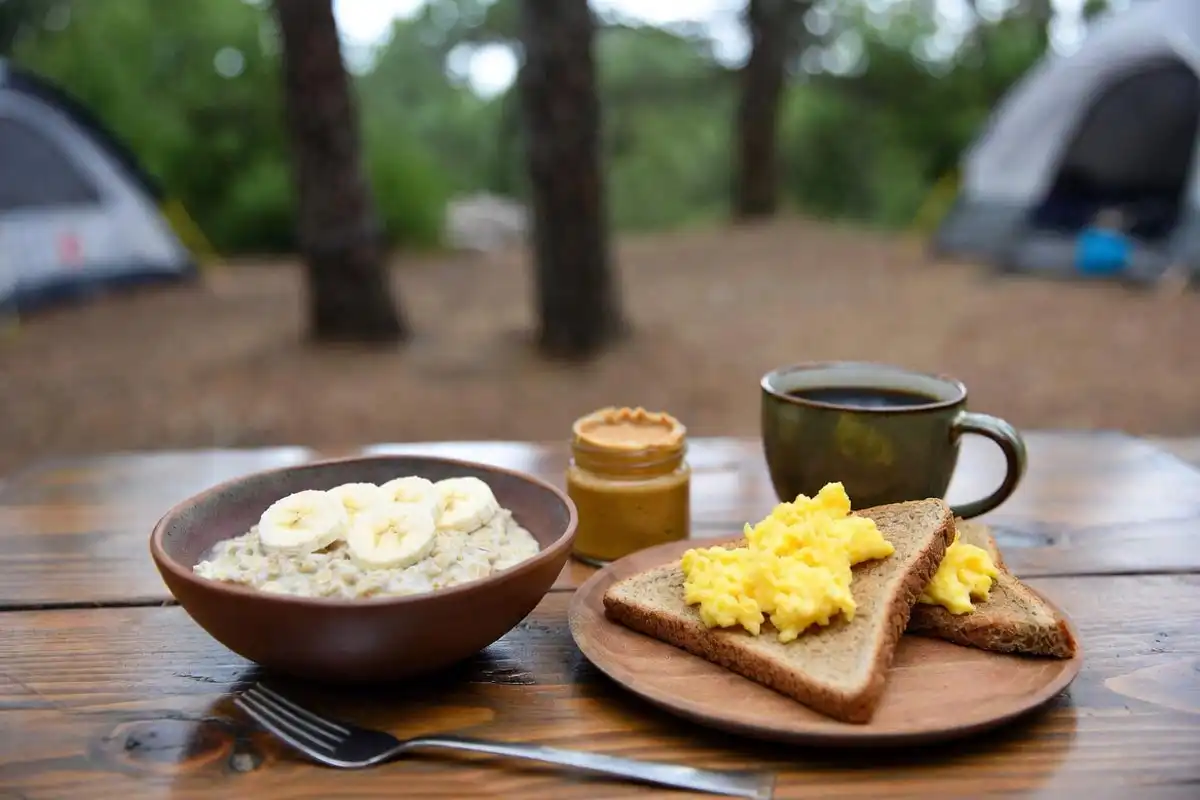
Your pre-hike meal needs three things: complex carbohydrates, moderate protein, and low fat. Complex carbs release glucose steadily over 2 to 3 hours. Protein supports muscle stability during sustained effort. Low fat speeds digestion and reduces stomach discomfort once you start moving hard.
Best pre-hike meals include:
- Oatmeal with banana and a tablespoon of nut butter
- Whole grain toast with two scrambled eggs
- Rice with grilled chicken and steamed vegetables
- Greek yogurt with granola and berries
Eat this meal 1 to 2 hours before you start. Eating within 30 minutes of departure increases the risk of cramping or nausea when your body shifts from digestion to exertion.
I covered water planning in detail in my article on water to bring per person, which applies directly to day hikes.
Learn more: Prevent Blisters on Your Feet While Hiking: 7 Proven Steps
When Should You Eat on the Trail?
Eat a snack every 1.5 to 2 hours during the hike, even when you do not feel hungry yet. Your body burns through stored glycogen faster on elevation gain and technical terrain. Waiting until you feel tired or lightheaded means your blood sugar has already dropped.
On a 6-hour hike, plan for 3 to 4 snack breaks. A single large lunch mid-hike does not replace consistent fueling spread across the full day.
What Foods Work Best During a Long Hike?
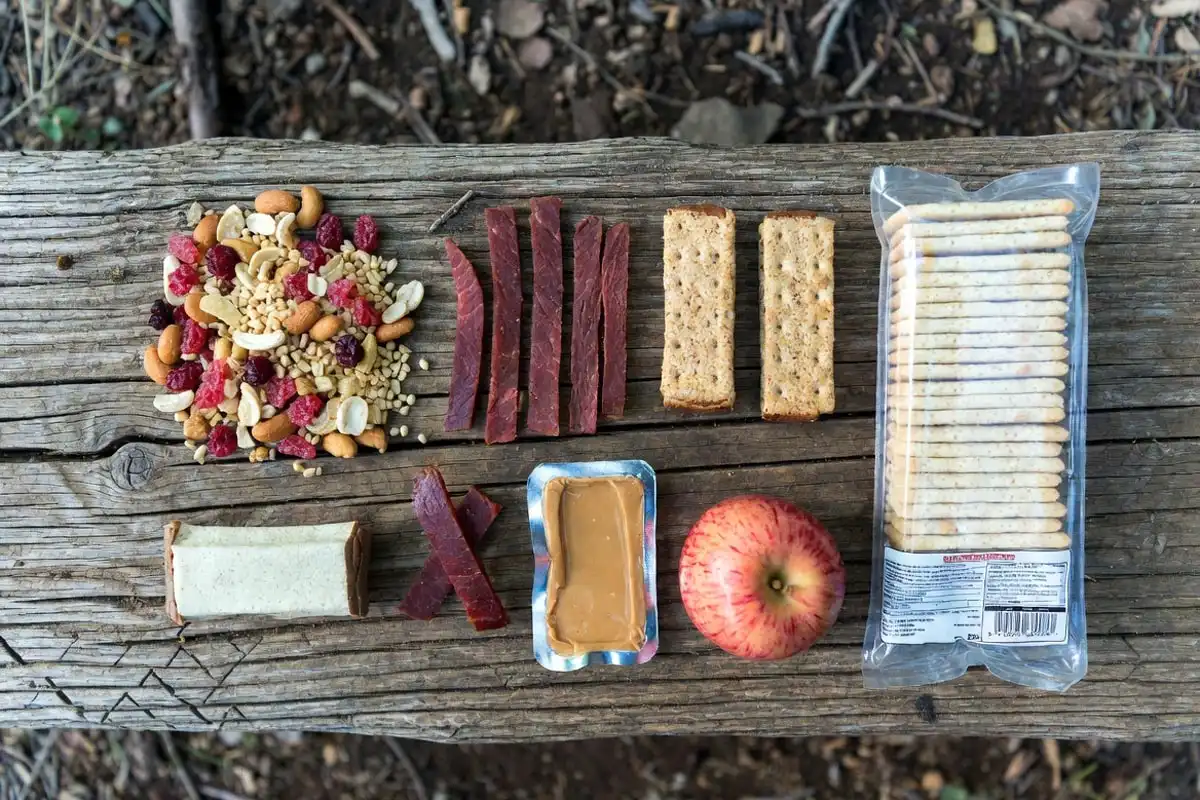
Trail snacks need three qualities: portable, calorie-dense, and easy to eat without stopping. The best options provide 150 to 250 calories per serving and combine simple carbs with protein or fat.
Top trail snacks:
- Trail mix (nuts, seeds, dried fruit, dark chocolate)
- Energy bars with 20 to 30g of carbohydrates per bar
- Beef or turkey jerky
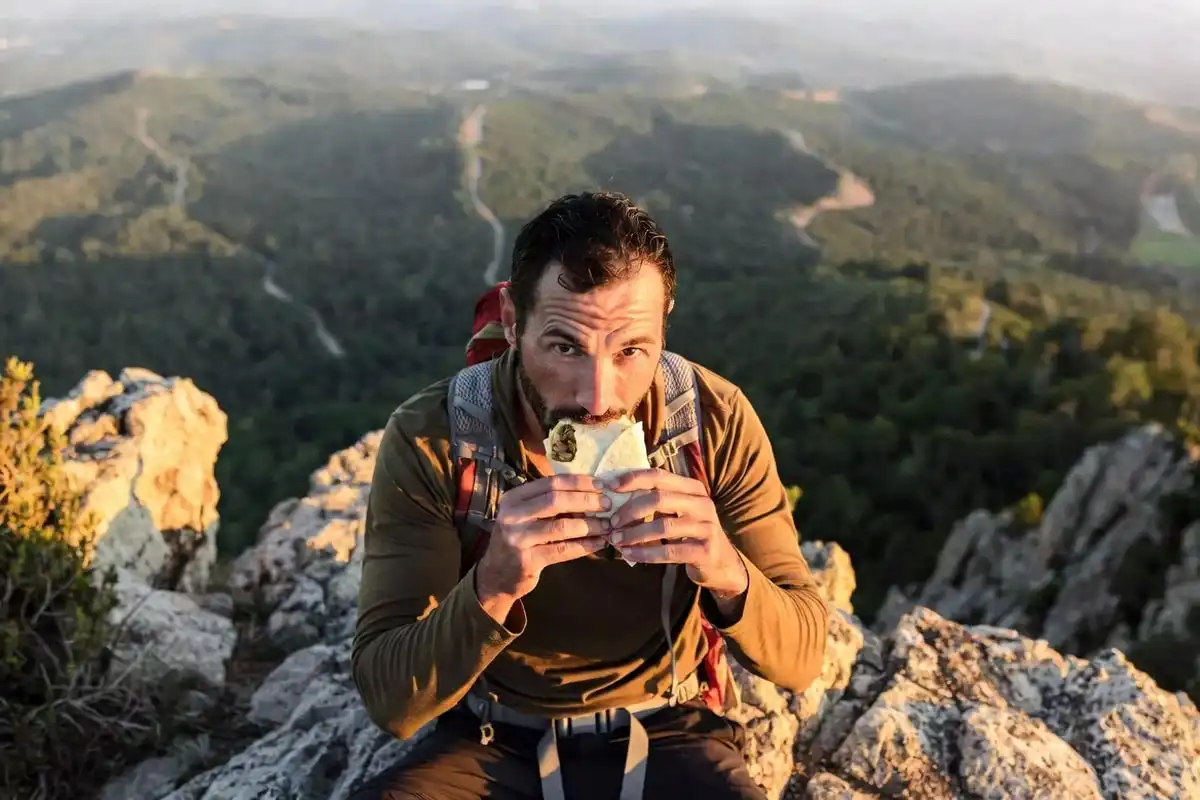
- Nut butter packets with crackers or a small wrap
- Apples and oranges (they travel well and provide natural sugars)
- Cold rice balls or small burritos for hikes over 8 hours
For hikes exceeding 8 hours, include one substantial mid-day meal: a wrap, sandwich, or rice dish with protein. I put together a full guide on plan a day hike to avoid getting lost, which includes how to build food and rest stops into your itinerary.
How Many Calories Do You Need on a Long Hike?
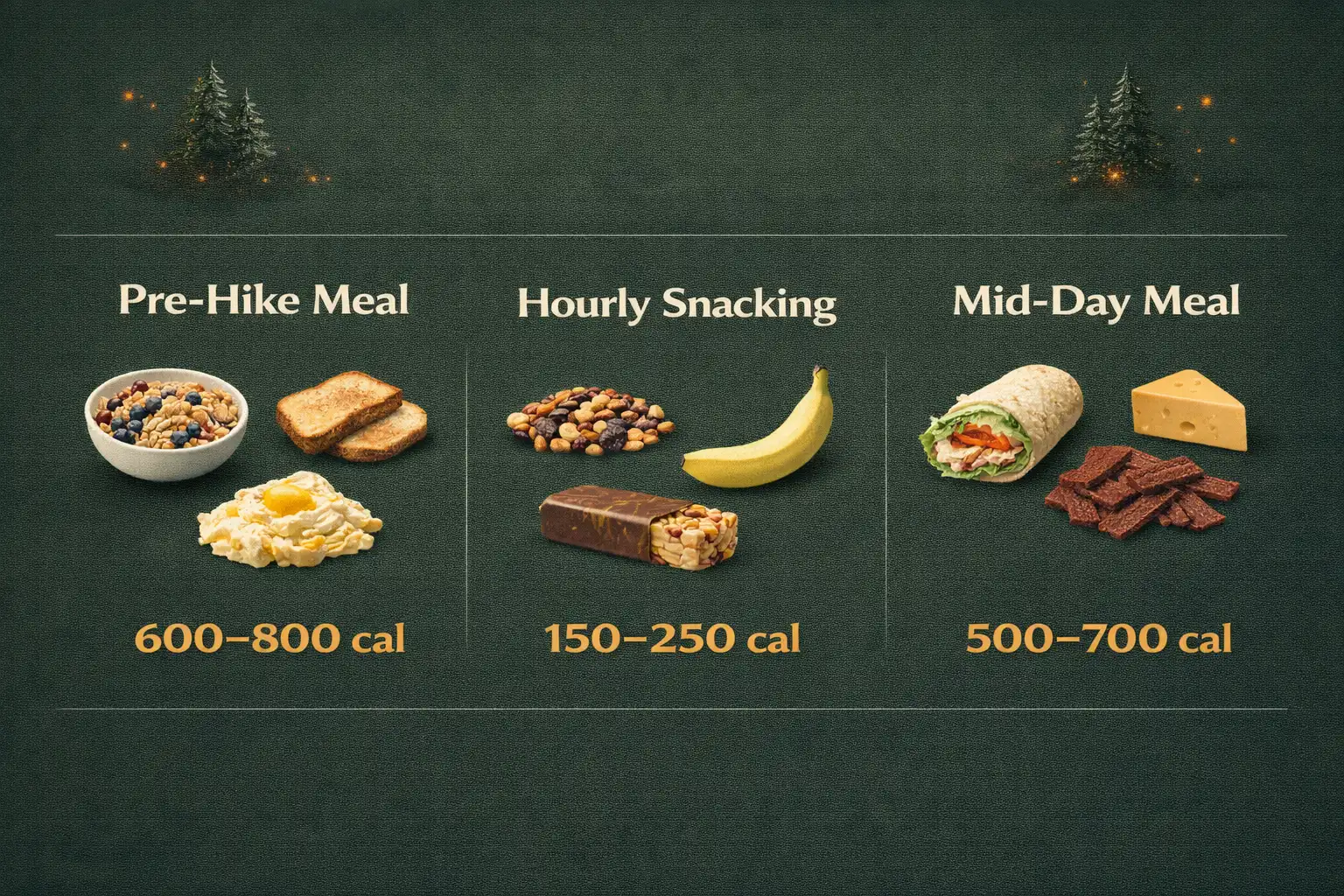
A moderately fit adult burns 400 to 600 calories per hour on a hike with meaningful elevation gain. A 6-hour hike with 2,000 feet of ascent burns 2,400 to 3,600 calories total.
Plan to consume 200 to 300 calories per hour while moving. You cannot fully replace what you burn in the field, but eating consistently prevents the energy crash that slows pace and affects decision-making on the trail.
What Foods Should You Avoid Before and During a Hike?
Certain foods slow digestion, spike and crash blood sugar, or cause stomach upset under physical exertion.
Avoid these before your hike:
- Greasy or fried foods: fat slows gastric emptying and causes discomfort during effort
- Spicy food: increases heartburn risk under exertion
- Large portions of red meat: takes 4 to 6 hours to digest fully
- Alcohol: dehydrates and impairs coordination
Avoid these on the trail:
- Candy or pure-sugar snacks: produce a quick spike followed by a crash within 30 to 60 minutes
- Processed salty snacks eaten alone: increase thirst without delivering sustained energy
- Mayonnaise-based salads or dairy-heavy items: spoil quickly in summer heat
On hot days, food safety matters as much as food choice. I covered heat-related hazards, including hydration and nutrition management, in my article on how to hike safely in extreme heat.
How Should You Hydrate Alongside Your Food?
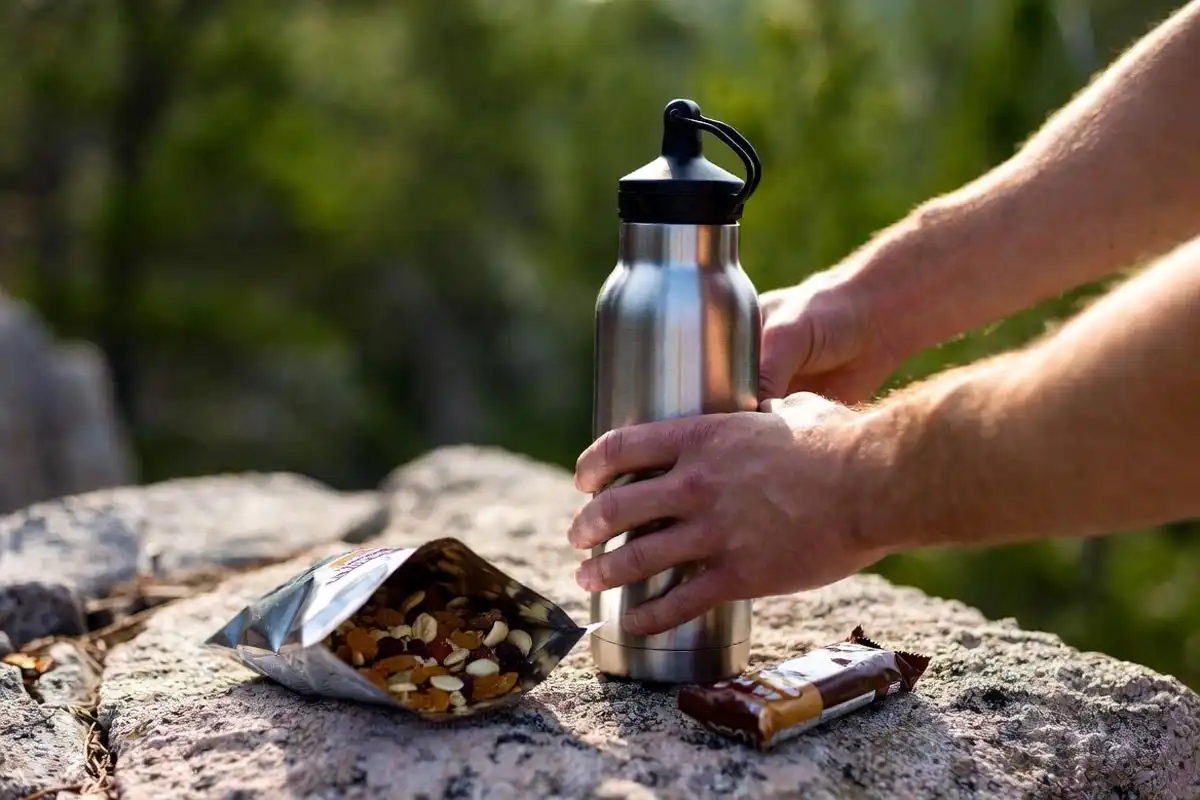
Eat and drink at the same time. Dry trail food eaten without water creates discomfort and slows digestion. Drink 150 to 250ml of water at each snack break.
Do not wait for thirst. The thirst signal arrives after your hydration level has already declined. On a 6-hour summer hike, carry at least 2 to 3 liters per person and identify refill points on the route if the terrain allows.
Salty snacks like nuts, jerky, and crackers replace sodium lost through sweat. On hikes exceeding 4 hours in heat, add an electrolyte tablet to one of your water bottles.
Common Mistakes Hikers Make With Trail Nutrition
Skipping breakfast. Starting a long hike fasted depletes glycogen within the first 1 to 2 hours. Fatigue and irritability arrive early, and pace drops noticeably before mid-morning.
Bringing only one large lunch. A single meal does not sustain energy across 6 to 10 hours of exertion. Spread calories across multiple small snack breaks instead.
Relying on caffeine. Coffee and caffeinated gels boost alertness briefly but accelerate dehydration and do not replace carbohydrate fuel.
Packing foods that need preparation. On a day hike, every minute spent cooking is a minute of rest lost. Pack ready-to-eat foods.
Overpacking heavy food. A well-planned 1,500-calorie food kit for a full-day hike weighs under 600g. Choose calorie-dense, lightweight options over high volume.
If you are planning the full logistics of a hike from gear to budget, my guide on plan an outdoor trip budget breaks down costs by category including food.
FAQs about Eat Before and During a Long Day Hike

Is it okay to hike on an empty stomach?
Short hikes under 2 hours on flat terrain are manageable fasted for most people. On a long day hike with elevation, starting without food depletes glycogen within 60 to 90 minutes and reduces endurance and focus noticeably.
How much food should I bring for a full-day hike?
Plan 200 to 300 calories per hour of hiking. For an 8-hour hike, carry 1,600 to 2,400 calories split across a pre-hike meal, 3 to 4 trail snacks, and one mid-day meal.
Are energy gels good for hiking?
Energy gels suit runners and cyclists because of rapid digestion, but most hikers do better with trail mix, bars, and whole foods. These provide longer-lasting fuel and better satiety at lower hiking intensities.
What is the best snack for long-distance hiking?
Trail mix combining nuts, dried fruit, seeds, and dark chocolate delivers fat, protein, and carbohydrates in one package. It needs no refrigeration and provides sustained energy over 2 to 3 hours.
Can I eat bananas on a hike?
Bananas provide fast-digesting carbohydrates and potassium, which supports muscle function during sustained effort. They bruise easily in a pack, so carry them in a hard container or eat one at the trailhead before starting.
Final Thoughts
Eating right on a long day hike takes some planning but no complexity. A solid carbohydrate-rich meal before you start, consistent snacking every 1.5 to 2 hours, and steady hydration throughout cover the basics for most hikers. Focus on portable, calorie-dense whole foods, avoid anything greasy or heavy before departure, and never skip breakfast when a long day awaits.
Good trail nutrition keeps your pace steady, your decisions clear, and your legs moving when the elevation demands more from you.