What You Can’t Fly With in Camping Gear: Complete TSA Guide
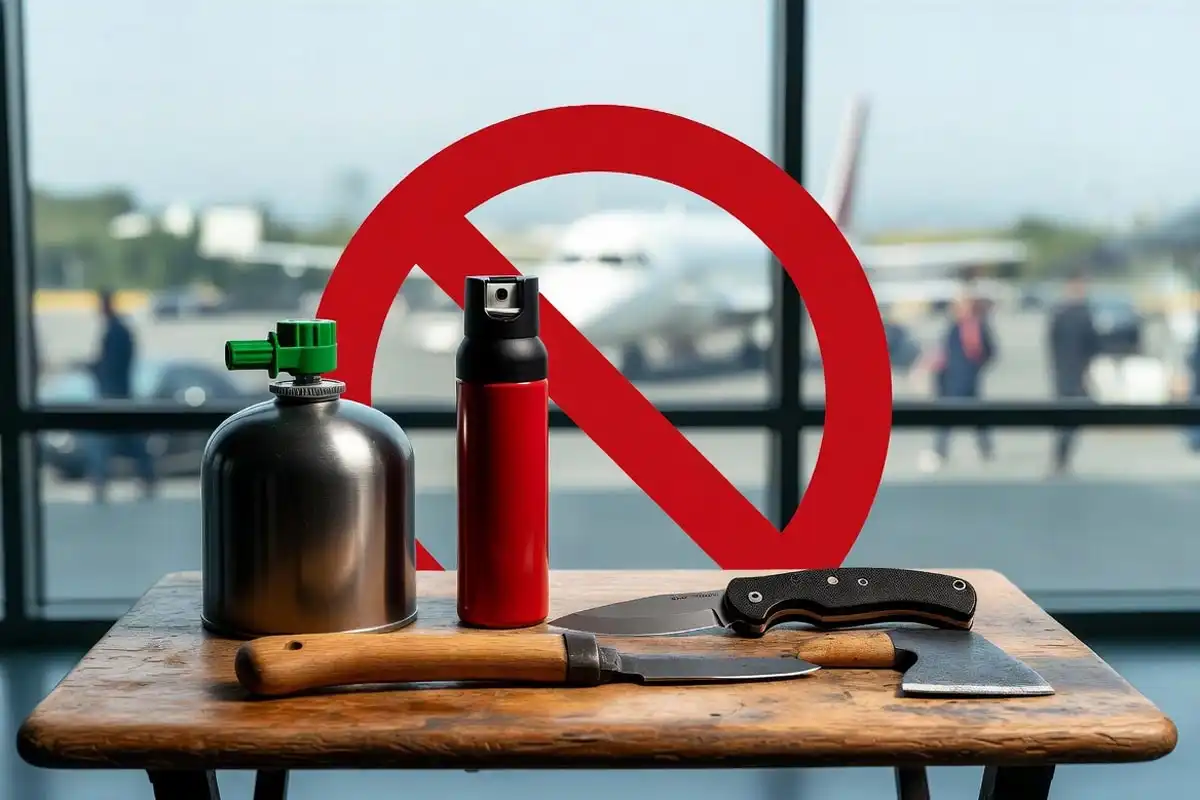
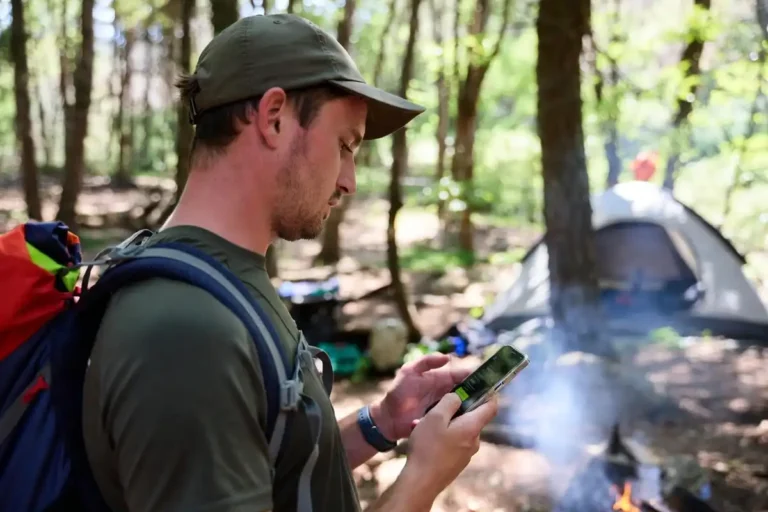
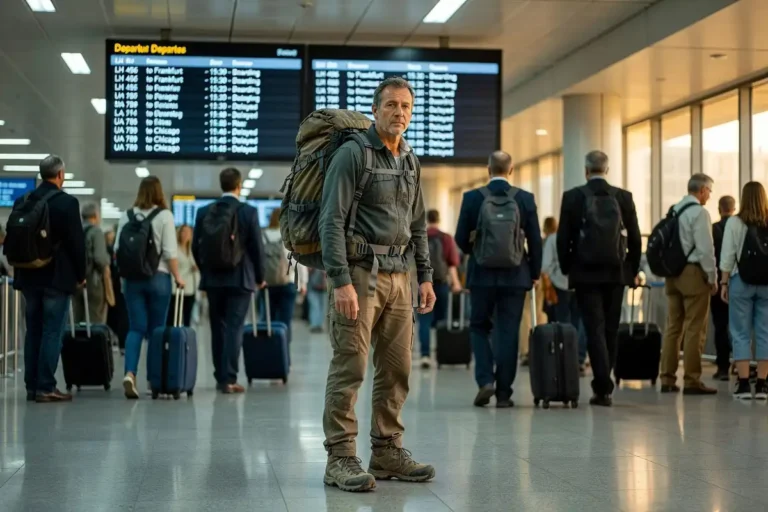
Many camping gear essentials, like fuel canisters, bear spray, and big knives, can’t fly in your carry-on under TSA rules. Flying to a camping destination adds a checkpoint most campers overlook: airport security. Fuel canisters, bear spray, and sharp cutting tools face strict restrictions under TSA and FAA rules, and the wrong item in the wrong bag means confiscation or a missed flight. This guide covers every restricted camping gear category, explains which bag each item belongs in, and gives you practical options so you arrive at camp with everything you need.
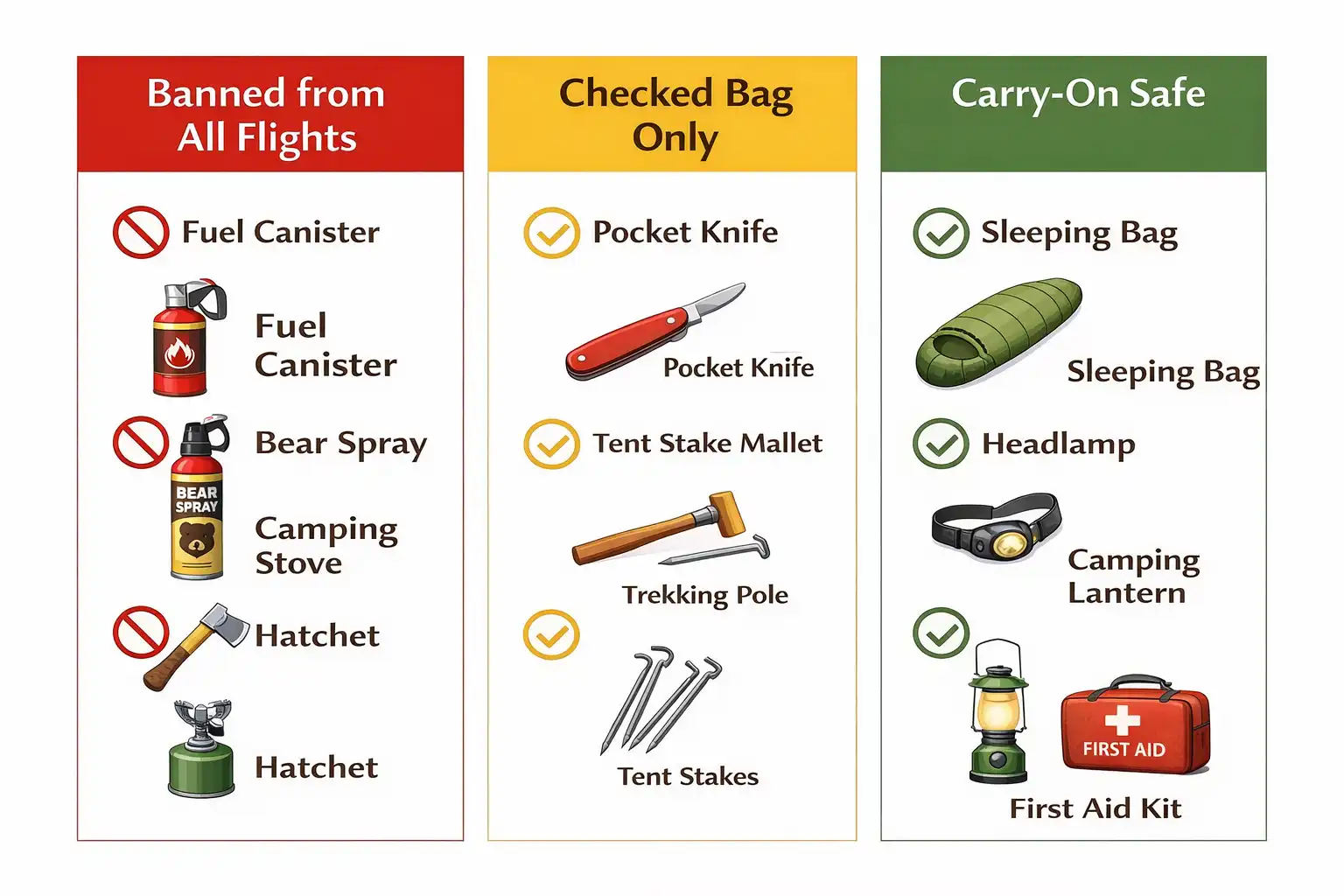
The TSA and FAA say propane, butane, and isobutane fuel canisters in your camping gear can’t fly on any flight, even if they’re empty. Bear spray is banned from every bag on commercial flights. Strike-anywhere matches and torch lighters are also fully banned. Knives, axes, hatchets, and camp stoves (cleaned and empty) travel in checked luggage only. Sleeping bags, tents, water filters, cookware, and headlamps pass through carry-on without restrictions.
What Camping Gear Is Banned from All Flights?
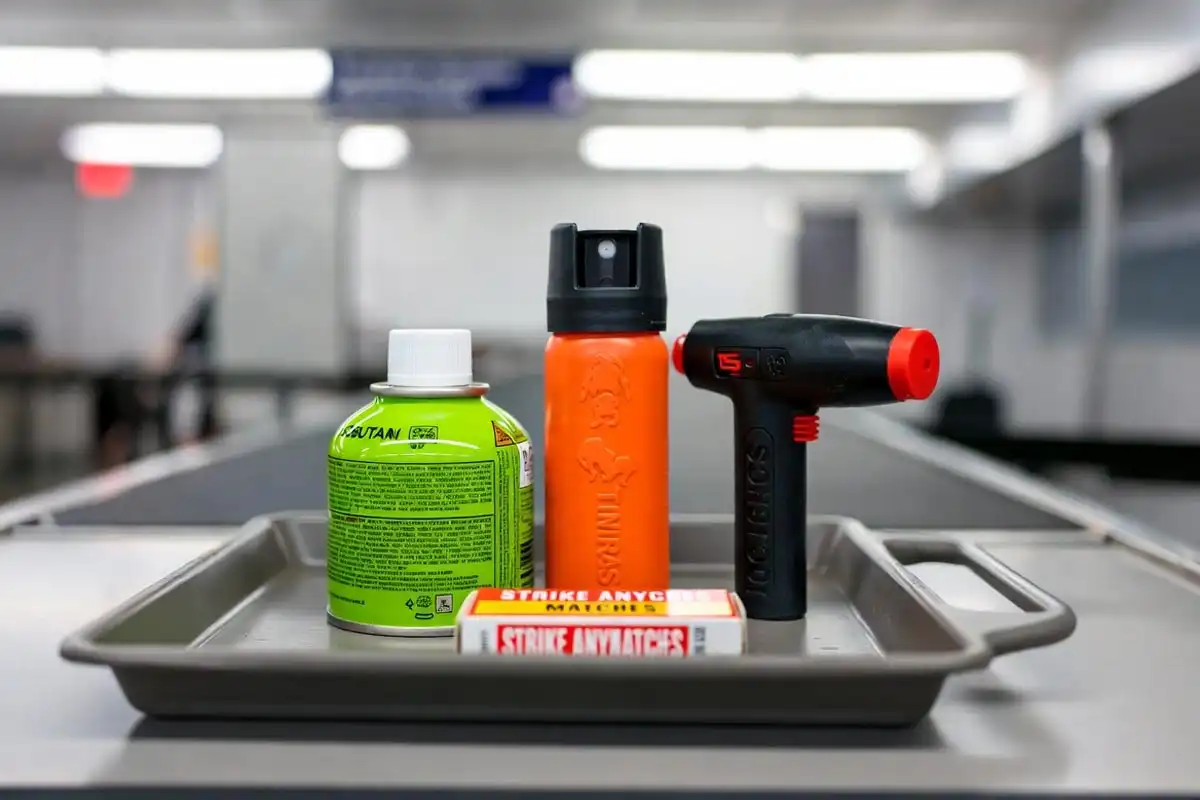
Some items cannot fly in any bag, carry-on or checked. The FAA classifies these as hazardous materials that present a fire or explosion risk in an aircraft cabin or cargo hold.
Fuel Canisters
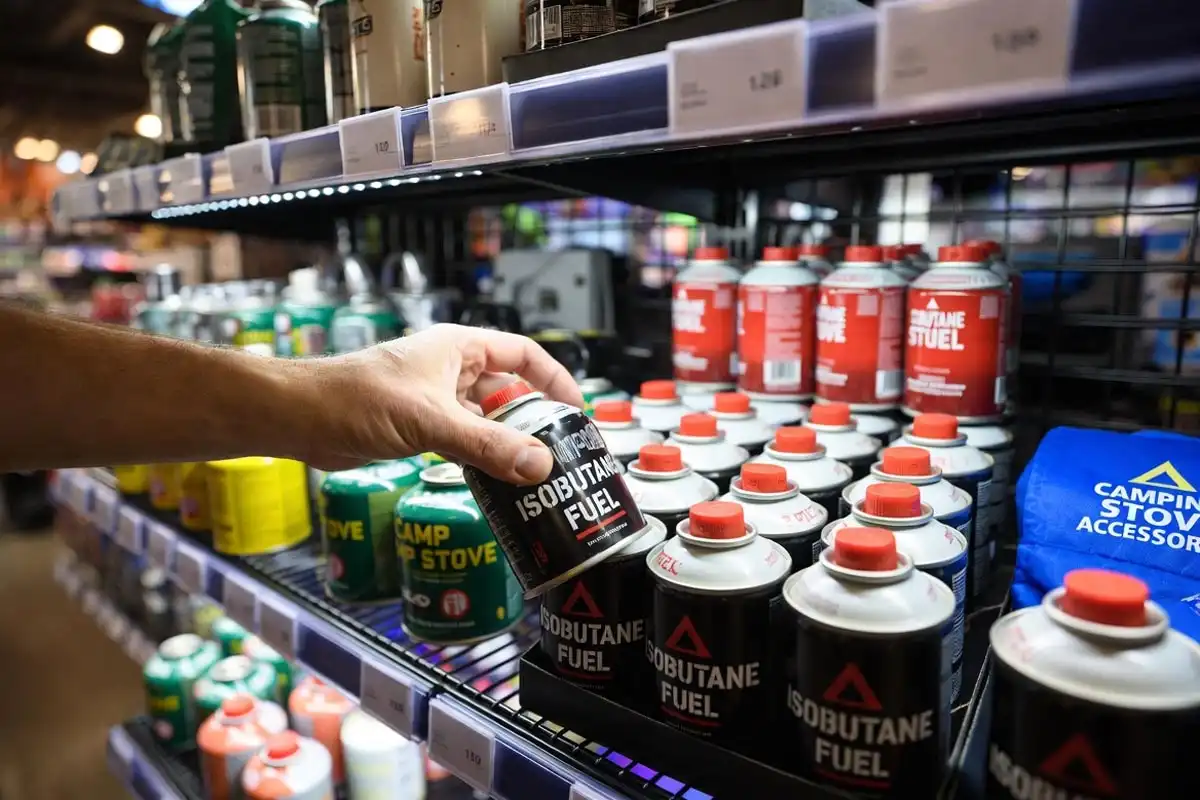
Propane, butane, and isobutane canisters are banned from all commercial flights. The ban covers full and empty canisters. Residual gas and fuel vapors remain inside an “empty” canister, which is enough for TSA officers to confiscate it at the checkpoint.
White gas, liquid camp fuel, and pressurized fuel cartridges fall under the same rule. No exceptions apply for any canister size.
Bear Spray
Bear spray contains 1 to 2 percent capsaicin in a pressurized aerosol can. The FAA classifies it as a hazardous irritant. It cannot travel in carry-on or checked bags on any commercial flight. This is one of the most commonly misunderstood rules I see at airports near trailheads.
If you rely on bear spray for backcountry safety, plan to buy it at your destination or ship it separately under hazmat regulations.
Strike-Anywhere Matches
Strike-anywhere matches ignite on any rough surface. The FAA bans them from carry-on and checked bags. One small book of safety matches is allowed in carry-on only. Safety matches require a specific striking surface and are treated as lower risk.
Torch and Jet Lighters
Torch lighters and jet lighters produce a concentrated, windproof flame. The DOT bans them from carry-on and checked luggage. A standard disposable lighter is allowed in carry-on only, one per passenger.
Learn more: Plan an Outdoor Trip Budget
What Camping Gear Requires Checked Luggage?
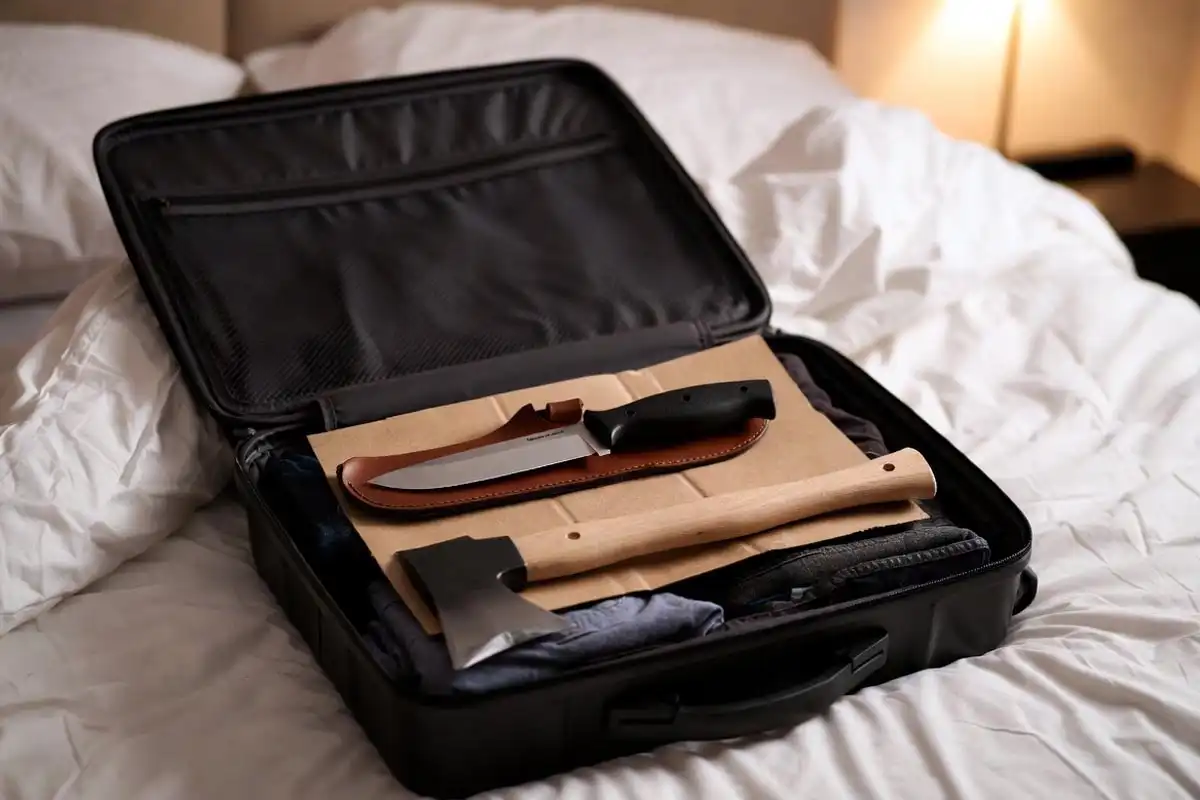
These items cannot enter the aircraft cabin but travel safely in the cargo hold with proper packaging.
Knives, Fixed-Blade Tools, and Multi-Tools with Blades
All knives are prohibited in carry-on bags. Fixed-blade knives, folding knives, hunting knives, and fillet knives go in checked luggage only. Multi-tools that include a blade also require checked luggage, even when the blade folds closed.
Wrap all sharp items in cardboard or a hard sheath. This protects baggage handlers and reduces the chance of inspection delays. I keep a dedicated knife roll specifically for checked travel.
Axes, Hatchets, and Machetes
Axes, hatchets, and machetes require checked luggage. Secure packaging that prevents blades from cutting through the bag walls is required. A padded hard case or tightly wrapped cardboard works well for short-handled tools.
Trekking Poles and Metal Tent Stakes
Trekking poles are banned from carry-on bags. They exceed acceptable length and function as potential impact tools under TSA classification. Metal tent stakes fall under the same rule. Pack both in checked luggage. Carbon fiber tent poles for a camping tent frame generally travel checked as well, though lightweight aluminum versions sometimes pass with gate agent discretion.
Camp Stoves (Empty and Cleaned)
A camp stove with zero fuel residue can travel in checked luggage. The stove needs full disassembly and cleaning so no fuel odor remains. TSA officers can still reject a stove they consider insufficiently cleaned, even after your best effort. Burn off residual fuel before packing, then wipe all components with a dry cloth.
What Camping Gear Flies Freely in Carry-On?
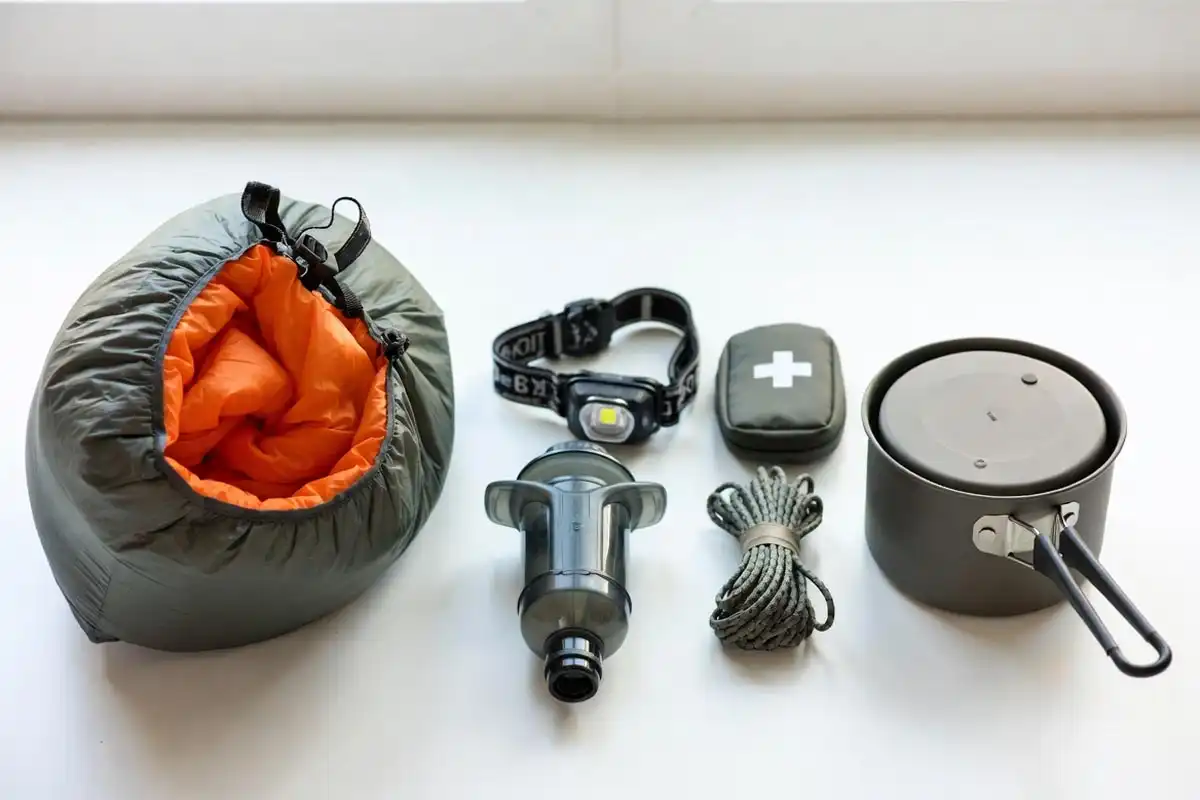
These items pass through TSA checkpoints without restrictions when packed properly.
No-issue carry-on items include:
- Sleeping bags and sleeping pads
- Tents and tent poles (confirm pole length with your airline)
- Headlamps and lanterns with batteries installed
- Water filters, pump purifiers, and UV purification wands
- First aid kits and medical supplies
- Rope, cordage, and paracord
- Dry bags and stuff sacks
- Camp towels and microfiber cloths
- Empty food containers and food-grade bear canisters
- Cookware (pots and pans) without fuel or ignition devices
I wrote about building a campfire cookware set that travels well, and most of that gear flies carry-on without a second look.
Lithium battery rules:
Lithium batteries under 100 watt-hours travel in carry-on. Airlines allow two lithium batteries between 100 and 160 watt-hours per passenger, in carry-on only. Batteries over 160 watt-hours are banned from all flights. Spare lithium batteries belong in carry-on, not checked bags, because the FAA requires access to batteries in case of a thermal event.
Do TSA Rules Differ from Airline Rules?
TSA sets the security checkpoint standard at US airports. Individual airlines add their own restrictions on top of TSA rules. An item that clears the TSA checkpoint can still be refused by your airline at the gate or check-in counter.
International flights follow each country’s aviation authority. The EU, Canada, and Australia each maintain separate restricted items lists. Rules for knives and cutting tools vary by destination country. Always check both the TSA website and your airline’s baggage page before packing.
What Can You Do Instead of Flying with Banned Gear?
Arriving at camp without fuel or key tools wastes the first day of a trip. These options prevent that.
Buy fuel at your destination. Major outdoor retailers near popular trailheads and national park gateway towns stock isobutane, propane, and butane canisters. Call ahead to confirm availability, especially for remote locations or off-season travel.
Ship gear in advance. UPS and FedEx accept fuel canisters and other hazmat items under specific shipper regulations. This requires proper labeling and a higher shipping cost, but it protects specialty equipment you depend on. Allow 5 to 7 business days for delivery.
Rent locally. Gateway towns near major campgrounds often provide camp stove and fuel rental. Renting a stove for a weekend costs less than a checked bag fee and avoids the confiscation risk entirely.
Reframe your water treatment plan. If you use chemical treatment tablets or a squeeze filter, those items fly carry-on with no restrictions. I covered how to purify water in the wild using methods that travel easily and work reliably without any pressurized equipment.
Common Mistakes Campers Make at Security
Packing an “empty” canister. A used isobutane canister smells like fuel and contains residual gas. TSA confiscates it regardless of how empty it appears. Never pack a used canister in any bag.
Overlooking a multi-tool blade. A multi-tool with scissors and a can opener often passes. One with a blade does not. Check every tool before packing.
Assuming checked bags accept everything. Checked luggage has its own banned items list. Bear spray and fuel canisters remain banned even in the cargo hold.
Carrying bear spray in checked luggage. This is a frequent mistake I see from first-time backcountry flyers. There are no exceptions for bear country travel.
Packing a small folding knife in a toiletry bag. Even a compact blade triggers a bag search and confiscation. All knives travel checked.
Not cleaning the camp stove. A stove that smells like fuel gets confiscated from checked luggage. Burn off residual fuel a day before travel.
Before any fly-in trip, I run through a full pre-trip camping checklist to catch gear conflicts before reaching the airport.
A Note on International Travel
Rules tighten further on international routes. Some airlines ban any camp stove parts, even cleaned ones, regardless of TSA clearance. Several countries restrict folding knives by blade length in checked luggage. Research the aviation authority rules for each country you transit through, not only your final destination.
Conclusion
The four items banned from every bag on commercial flights are fuel canisters (including empty ones), bear spray, strike-anywhere matches, and torch lighters. Knives, axes, trekking poles, and cleaned camp stoves go in checked luggage only. Sleeping bags, tents, cookware, water filters, and headlamps fly carry-on with no restrictions. The simplest approach for any fly-in camping trip: buy fuel at your destination, ship specialty gear in advance, or rent locally. Check both TSA and your airline before packing, because policies differ by carrier and by country.