Best Camping Chair for Bad Back 2026: 10 Firm, Supportive Picks

Are you looking for a comfortable camping chair that provides support for a bad back? In this guide, I’ll help you choose a camping chair that stays comfortable for long sitting and supports back pain, focusing on seat height, firm seat tension, and real lumbar support. I’ll also break down chair styles for car camping, tall campers, and easy-recline lounging, including what to look for in a lumbar support camping chair. I’ve dealt with back flare-ups around Kaptai, and a saggy chair can turn a peaceful evening into a stiff morning.
Pick a chair that keeps hips higher than knees, holds a taut seat, and contacts your lower back without pushing you forward. Start with a higher seat for easier standing, then add a small lumbar pillow if the back panel misses your curve. Set the chair on flat ground, keep feet planted, and change position every 20–30 minutes.
10 Best Camping Chairs for Back Support: Quick Comparison
| Preview |
#1
YETI Trailhead Collapsible Camp Chair
Superb Rating
Overall score: 95 of 100
List price: $300.00
|
#2
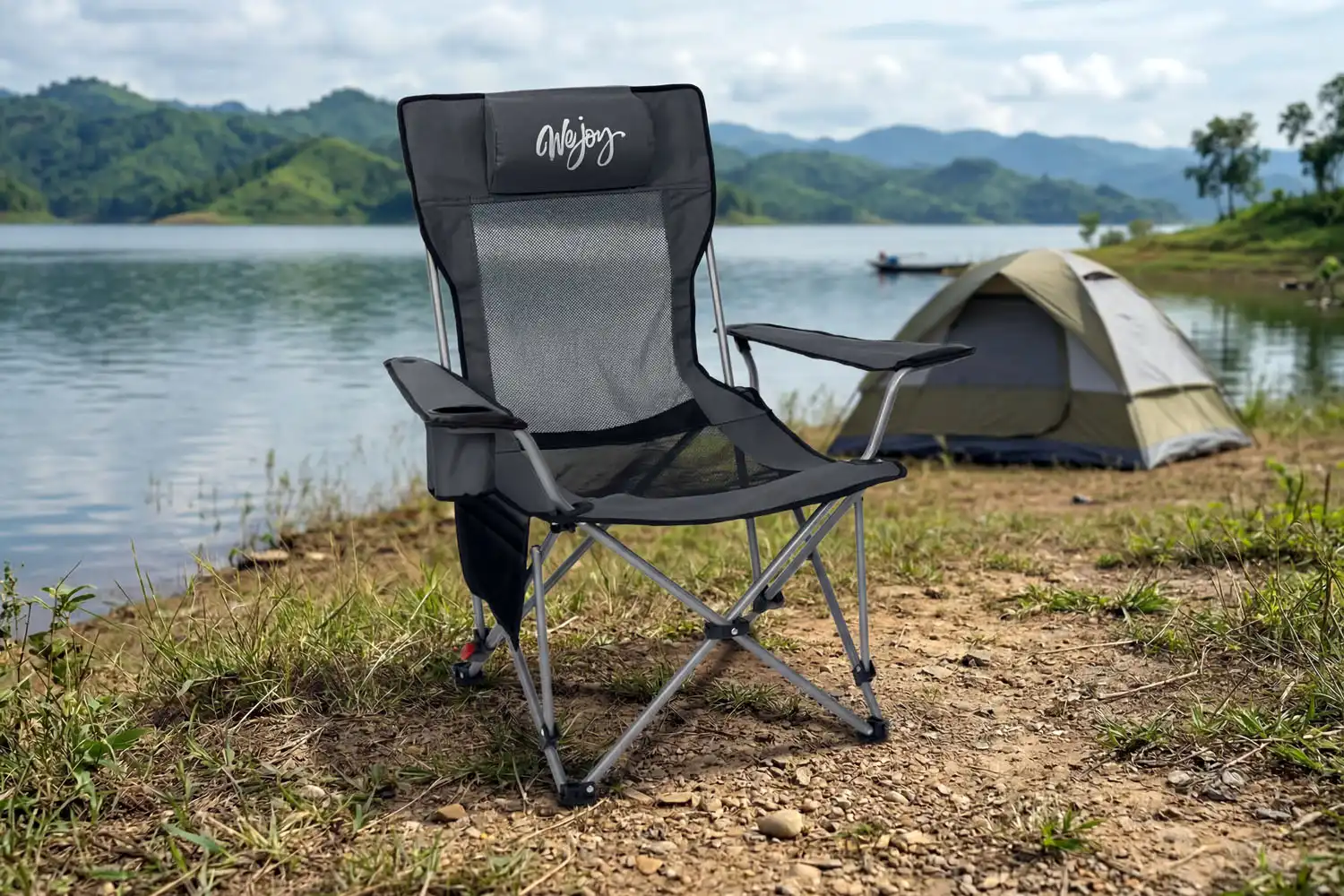
WEJOY 2-in-1 Reclining Camping Chair
Good Rating
Overall score: 89 of 100
List price: $69.98
|
#3
Overmont Camping Chair with Lumbar Support
Great Rating
Overall score: 91 of 100
List price: $83.99
|
#4
GCI OUTDOOR RoadTrip Rocker
Great Rating
Overall score: 94 of 100
List price: $90.00
|
#5
Portal Camping Chair with Lumbar Support
Great Rating
Overall score: 90 of 100
List price: $67.99
|
#6
ROCK CLOUD Folding Camping Chair
Good Rating
Overall score: 83 of 100
List price: $74.99
|
#7
FAIR WIND Oversized Fully Padded
Great Rating
Overall score: 90 of 100
List price: $59.99
|
#8
Timber Ridge Oversized Folding Camping Chair
Great Rating
Overall score: 94 of 100
List price: $67.99
|
#9
EVER ADVANCED Oversized Folding Camping Chair
Superb Rating
Overall score: 95 of 100
List price: $79.99
|
#10
Youtanic Oversized Portable Folding Camping Chair
Good Rating
Overall score: 84 of 100
List price: $69.99
|
|---|---|---|---|---|---|---|---|---|---|---|
| Item Name | YETI Trailhead Collapsible Camp Chair | WEJOY 2-in-1 Reclining Camping Chair | Overmont Camping Chair with Lumbar Support | GCI OUTDOOR RoadTrip Rocker | Portal Camping Chair with Lumbar Support | ROCK CLOUD Folding Camping Chair | FAIR WIND Oversized Fully Padded | Timber Ridge Oversized Folding Camping Chair | EVER ADVANCED Oversized Folding Camping Chair | Youtanic Oversized Portable Folding Camping Chair |
| Price |
$300.00 Listed
Check Price on Amazon
|
$69.98 Listed
Check Price on Amazon
|
$83.99 Listed
Check Price on Amazon
|
$90.00 Listed
Check Price on Amazon
|
$67.99 Listed
Check Price on Amazon
|
$74.99 Listed
Check Price on Amazon
|
$59.99 Listed
Check Price on Amazon
|
$67.99 Listed
Check Price on Amazon
|
$79.99 Listed
Check Price on Amazon
|
$69.99 Listed
Check Price on Amazon
|
| Overall Score |
Audience score
Calculated from Amazon global ratings percentages for YETI Trailhead Collapsible Camp Chair.
95 / 100 from 1,146 ratings
Weighted average: 4.8 / 5 stars
Amazon rating breakdown
5 star
89%
4 star
4%
3 star
3%
2 star
1%
1 star
3%
Score position
This product
|
Audience score
Calculated from Amazon global ratings percentages for WEJOY 2-in-1 Reclining Camping Chair.
89 / 100 from 110 ratings
Weighted average: 4.5 / 5 stars
Amazon rating breakdown
5 star
72%
4 star
15%
3 star
4%
2 star
5%
1 star
4%
Score position
This product
|
Audience score
Calculated from Amazon global ratings percentages for Overmont Camping Chair with Lumbar Support.
91 / 100 from 108 ratings
Weighted average: 4.5 / 5 stars
Amazon rating breakdown
5 star
76%
4 star
13%
3 star
3%
2 star
5%
1 star
3%
Score position
This product
|
Audience score
Calculated from Amazon global ratings percentages for GCI OUTDOOR RoadTrip Rocker.
94 / 100 from 18,828 ratings
Weighted average: 4.7 / 5 stars
Amazon rating breakdown
5 star
82%
4 star
12%
3 star
3%
2 star
1%
1 star
2%
Score position
This product
|
Audience score
Calculated from Amazon global ratings percentages for Portal Camping Chair with Lumbar Support.
90 / 100 from 518 ratings
Weighted average: 4.5 / 5 stars
Amazon rating breakdown
5 star
70%
4 star
17%
3 star
8%
2 star
3%
1 star
2%
Score position
This product
|
Audience score
Calculated from Amazon global ratings percentages for ROCK CLOUD Folding Camping Chair.
83 / 100 from 20 ratings
Weighted average: 4.2 / 5 stars
Amazon rating breakdown
5 star
59%
4 star
23%
3 star
0%
2 star
10%
1 star
8%
Score position
This product
|
Audience score
Calculated from Amazon global ratings percentages for FAIR WIND Oversized Fully Padded.
90 / 100 from 2,070 ratings
Weighted average: 4.5 / 5 stars
Amazon rating breakdown
5 star
74%
4 star
13%
3 star
7%
2 star
2%
1 star
4%
Score position
This product
|
Audience score
Calculated from Amazon global ratings percentages for Timber Ridge Oversized Folding Camping Chair.
94 / 100 from 78 ratings
Weighted average: 4.7 / 5 stars
Amazon rating breakdown
5 star
82%
4 star
10%
3 star
5%
2 star
0%
1 star
3%
Score position
This product
|
Audience score
Calculated from Amazon global ratings percentages for EVER ADVANCED Oversized Folding Camping Chair.
95 / 100 from 411 ratings
Weighted average: 4.8 / 5 stars
Amazon rating breakdown
5 star
83%
4 star
13%
3 star
3%
2 star
0%
1 star
1%
Score position
This product
|
Audience score
Calculated from Amazon global ratings percentages for Youtanic Oversized Portable Folding Camping Chair.
84 / 100 from 1,166 ratings
Weighted average: 4.2 / 5 stars
Amazon rating breakdown
5 star
67%
4 star
11%
3 star
8%
2 star
4%
1 star
10%
Score position
This product
|
| Lumbar Support | YesColor-Coded Tensioners on the Back. FlexGrid fabric conforms to body curvature passively. |
NoIt features an ergonomically designed 4-position adjustable backrest that provides excellent lumbar support. |
YesErgonomic High-Back. 27.6" backrest follows natural spine curve; flexible recline 90°–136° |
NoIt features a large backrest with a 23.8-inch height from the seat, providing good support for the upper back and shoulders. |
YesStrap-Adjust Lumbar. Side straps dial in lumbar contour; 26" wide backrest supports shoulders. |
YesLean-Back Activation. Built-in lumbar engages when you recline; foam-padded back and seat |
YesAdjustable Back Straps. Back straps let you tune tension; no dedicated lumbar pad. |
YesAdjustable Lumbar + Cushion. Contours to spine curve; padded cushion + hard armrests for easy rising. |
YesAdjustable Lumbar. Lumbar pad adjusts to fit individual spine curve; oversized 24.3" wide seat |
YesZoned Ergonomic Padding. Separate padding zones for head, back, waist, and hip; note low 12.6" seat |
| Back Height | 18 inches |
30.3 inches |
30 inches |
23.8 inches |
26 inches |
25 inches |
21 inches |
26.5 inches |
23 inches |
24.41 inches |
| Seat Height | 16.75 inches |
Total height 35.4 inches |
18 inches |
20 inches |
18 inches |
16 inches |
18.5 inches |
19 inches |
18 inches |
12.6 inches |
| Weight Capacity | 500 lbs |
300 lbs |
450 lbs |
250 lbs |
400 lbs |
265 lbs |
500 lbs |
500 lbs |
500 lbs |
400 lbs |
| Chair Weight | 13.3 lbs |
9.2 lbs |
14.8 lbs |
12.8 lbs |
13 lbs |
12.8 lbs |
11 lbs |
17 lbs |
16.8 lbs |
12.6 lbs |
| Frame | Alloy Steel |
Q195 Steel |
Aluminum |
Alloy Steel |
Alloy Steel |
Alloy Steel |
Alloy Steel |
Steel |
Alloy Steel |
Alloy Steel |
| Seat Fabric | FlexGrid Polyester |
600D Oxford + Cotton |
600D Polyester + Foam |
Breathable Mesh |
Polyester + Foam |
600D Cationic Oxford + Foam |
600D Ripstop Polyester + Sponge |
Foam-filled Polyester |
Fabric + Foam |
600D Oxford + Cotton |
What Makes a Camping Chair Good for a Bad Back?
A back-friendly chair supports posture instead of letting your hips roll backward. Outdoors, “support” means three simple outcomes: steady hips, contact at the low back, and a frame that stays planted when you shift.
When I compare chairs, I follow a repeatable process, the same approach I explain in my gear testing policy. A strong chair usually shares the same anatomy: ergonomic design, a firm seat, useful armrests, and enough structure to keep you upright when you relax.
A lot of people chasing the best outdoor camping chair focus on padding first. Padding helps, but posture usually starts with height, tension, and lumbar contact.
Seat height and “easy on the knees” entry/exit
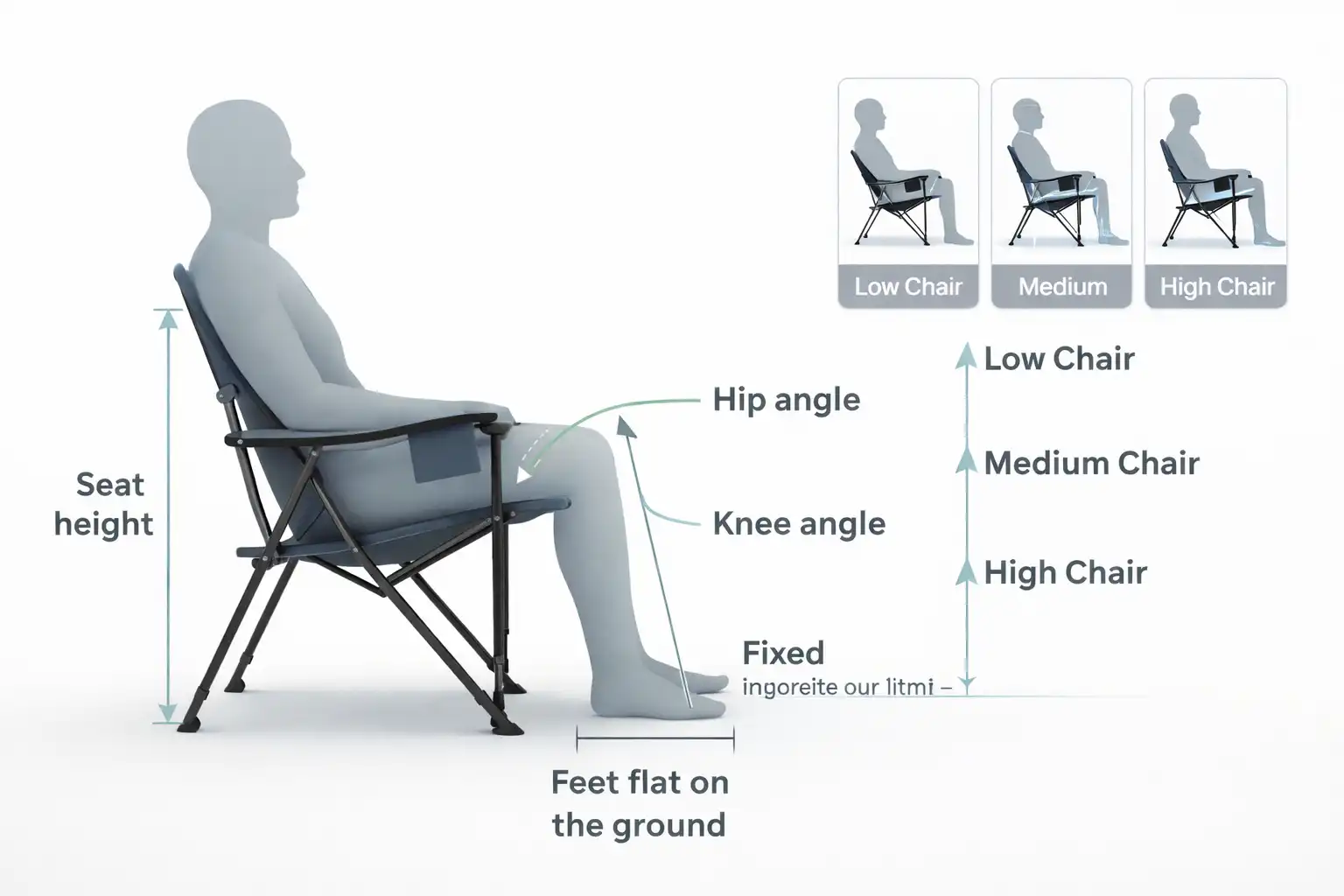
A chair that sits too low forces deep hip bend and makes standing harder. A high seat camping chair keeps your seat height closer to a normal sitting position, so your knee angle and hip angle stay comfortable.
Here’s the quick fit check I use:
- Feet rest flat.
- Hips sit level with, or slightly above, the knees.
- Standing up feels easy to get up, without a “push-off” struggle during getting in and out.
Tall campers often feel better in higher seats. If you also need a wider frame, my guide to roomier camp chair fits helps you avoid narrow seats that pinch posture.
Firm seat tension (less sag = less slouch)
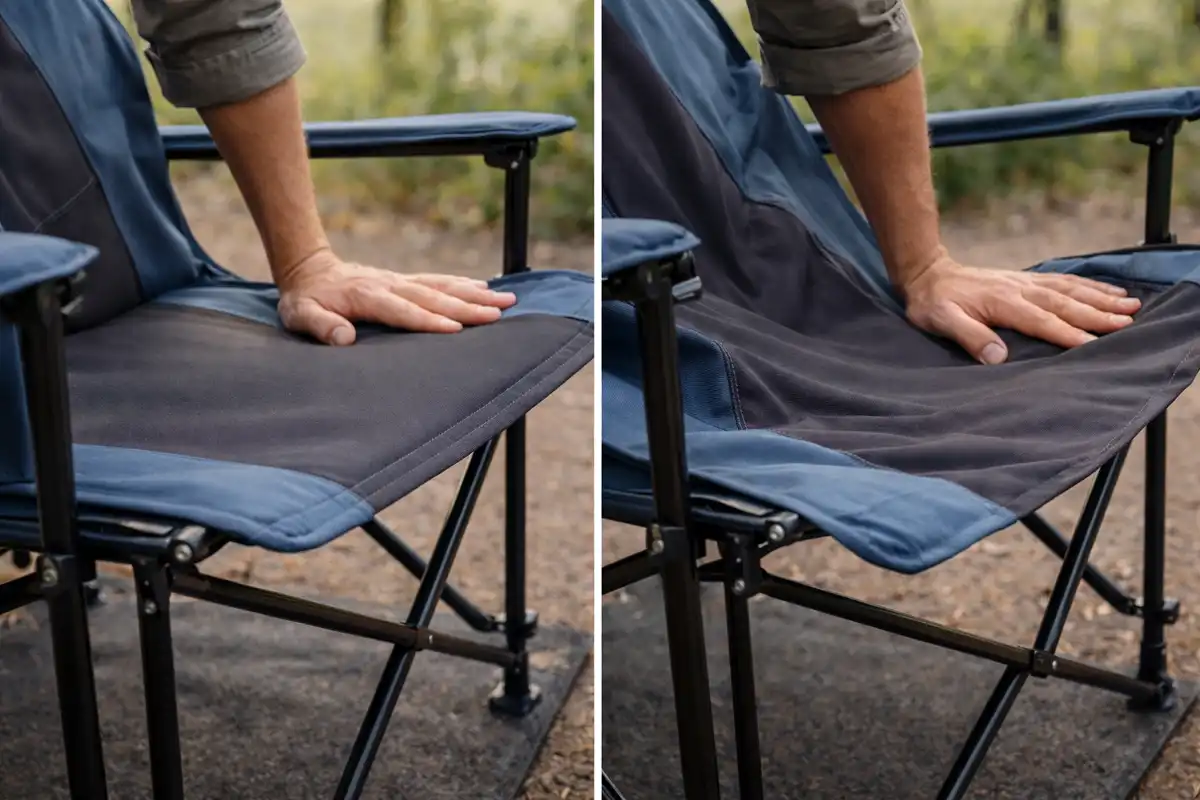
Sagging fabric turns a camp chair into a hammock. That hammock sag pulls hips forward and rounds the low back. Your back muscles then work harder to hold you up.
Look for strong seat tension. A supportive build often uses tensioned fabric, cross-bracing, and a supportive frame that resists twist. Some designs add a locking mechanism that reduces flex once you sit.
My quick test: sit down and notice the sink. If you drop deep and your pelvis rolls, the chair lacks a supportive seat and the “slouch effect” shows up fast.
Lumbar support (built-in vs adjustable)
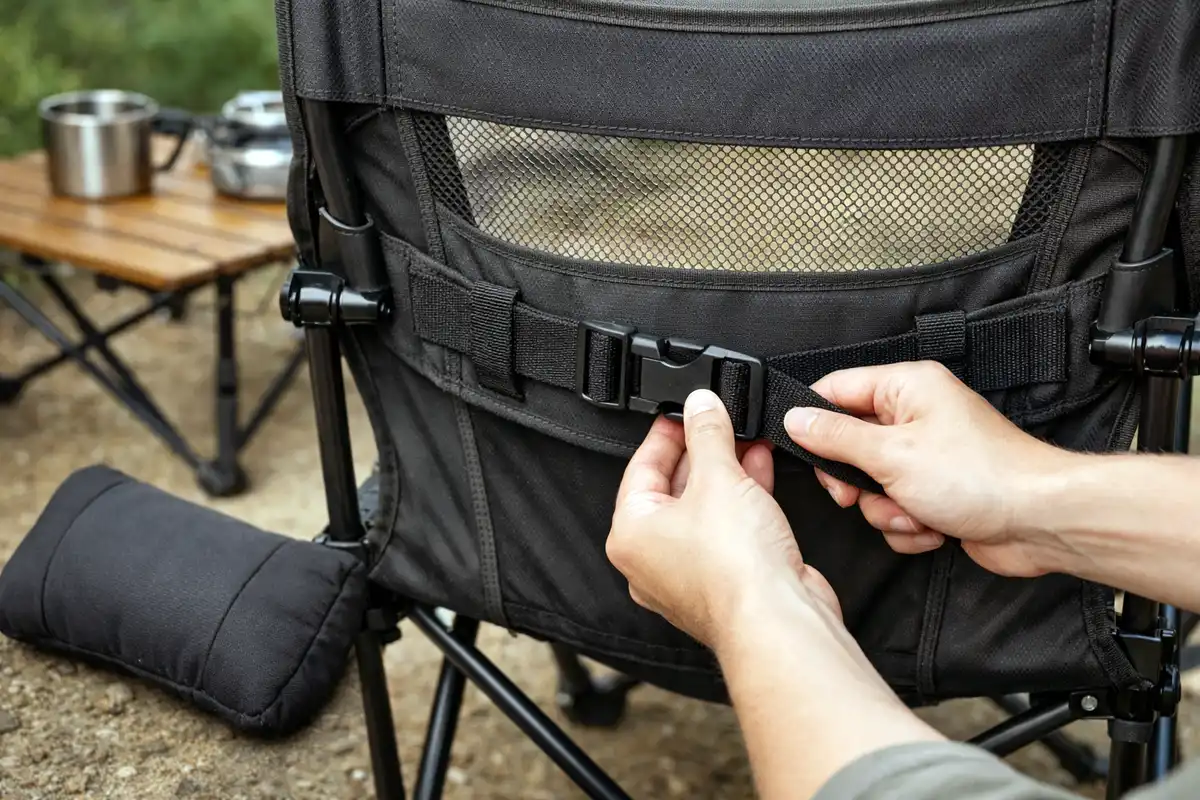
Lumbar support camping chair means the backrest contacts the natural curve in your lower back. That contact helps your spine stay stacked instead of collapsing into a C-shape.
There are two common styles:
- Built-in support: A fixed pad or bar adds lower back support in one spot. It fits best when the pad hits your curve cleanly.
- Adjustable support: A strap or panel changes height and tension. Look for adjustable lumbar features like a lumbar strap that tightens without digging in.
If the built-in support lands too high or too low, a small lumbar pillow often fixes the gap. The goal is simple: contact that feels neutral, not forced.
High backrest, head/neck support, and recline range
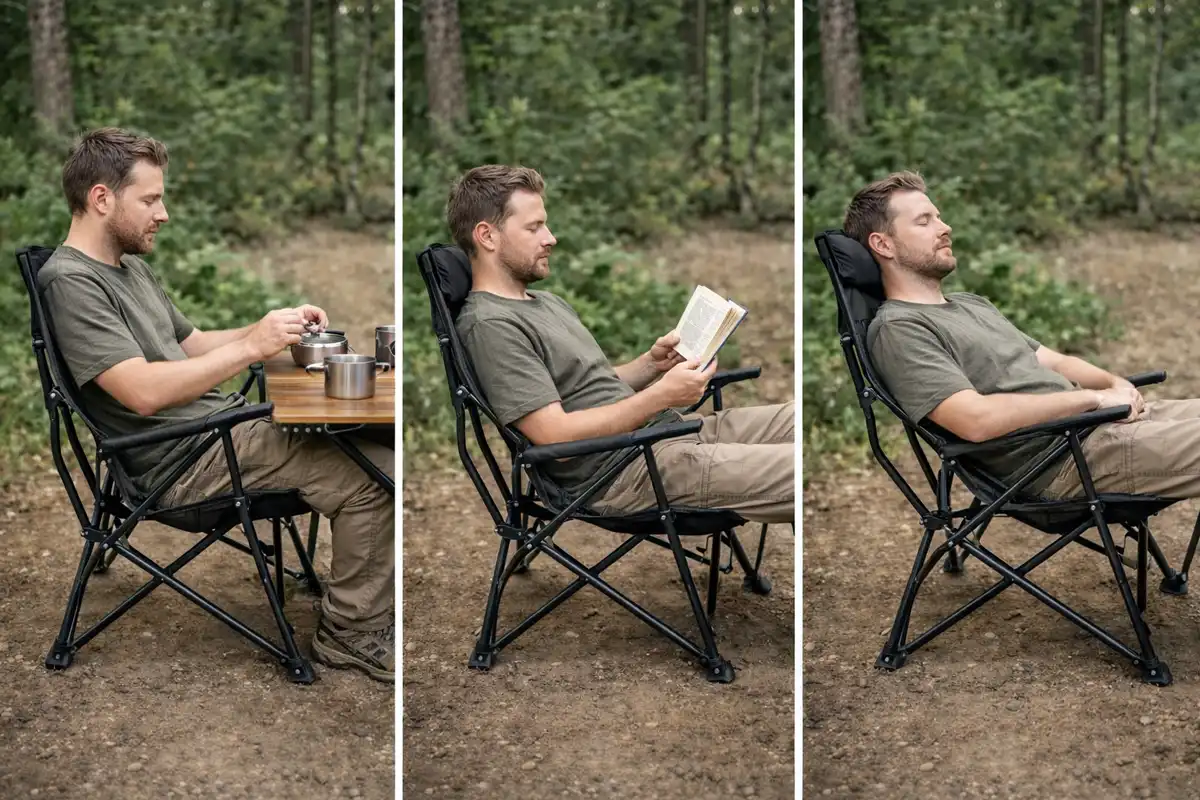
A high backrest supports your upper back and shoulders during long sits. Add a headrest and your neck relaxes instead of hovering.
Recline changes pressure. A mild recline angle spreads load across your back and thighs. Too much recline makes standing harder, especially after a meal or when your back feels stiff.
Different styles fit different bodies and camp routines:
- A reclining camp chair suits lounging, but often adds weight and bulk.
- A zero gravity chair shifts pressure for some backs, but it stays best for car camping.
- A rocking camp chair keeps micro-movement going, which helps some people avoid “locked” posture.
If you want an upright chair for meals and a bit of lounging, pick a recline range that adjusts in small steps, not one deep drop.
Stability on uneven ground (frame + feet)
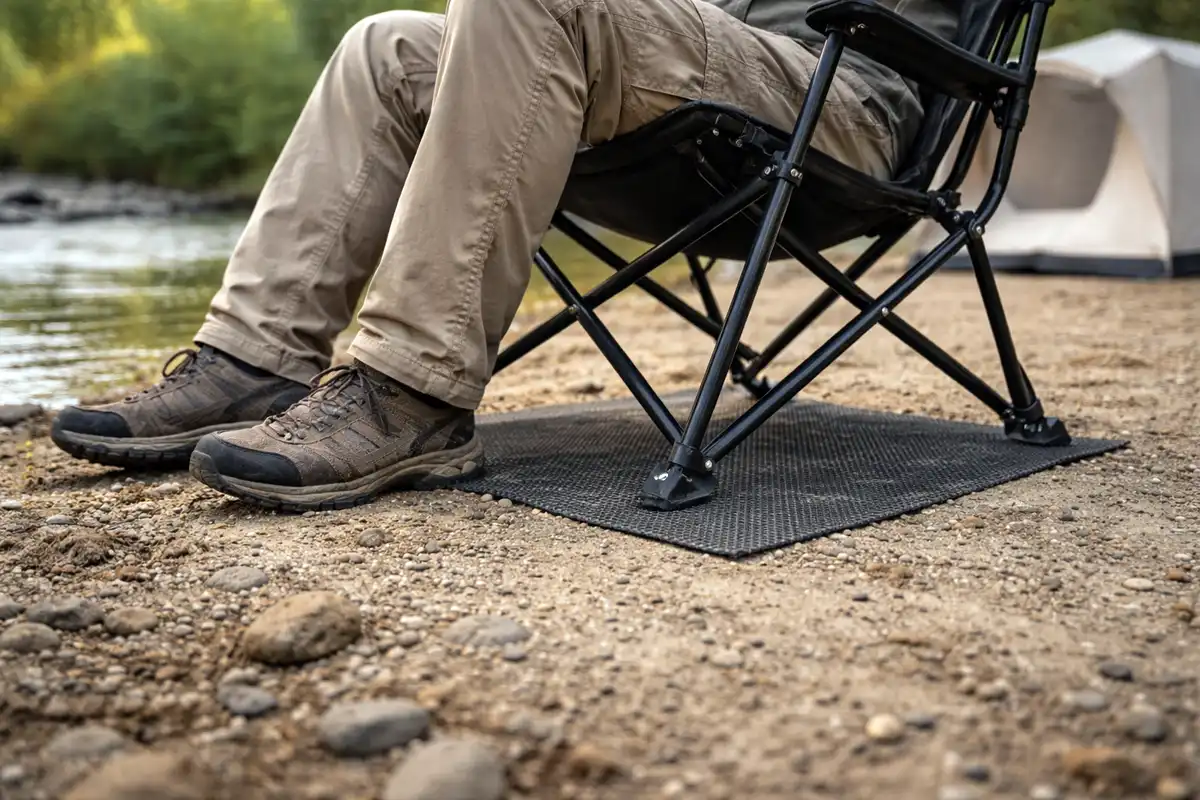
Wobble turns small posture shifts into strain. A chair that tips or twists forces you to brace with your back.
A stable build uses a stable frame, wide contact points, and wide feet that reduce sink in soft dirt. Many chairs use an aluminum/steel frame. Steel often feels more planted, while aluminum often cuts carry weight.
If your campsite has tricky ground, it also helps to learn quick placement tricks. My guide on setting up on rocky or sandy ground translates well to chair setup too.
One note from experience: some sports chair designs feel light and portable, but the narrow footprint can wobble on lumpy soil. Stability beats light carry when your back flares up.
The Best Camping Chairs for Bad Backs: Reviews
1. Portal Camping Chair with Lumbar Support for Adults
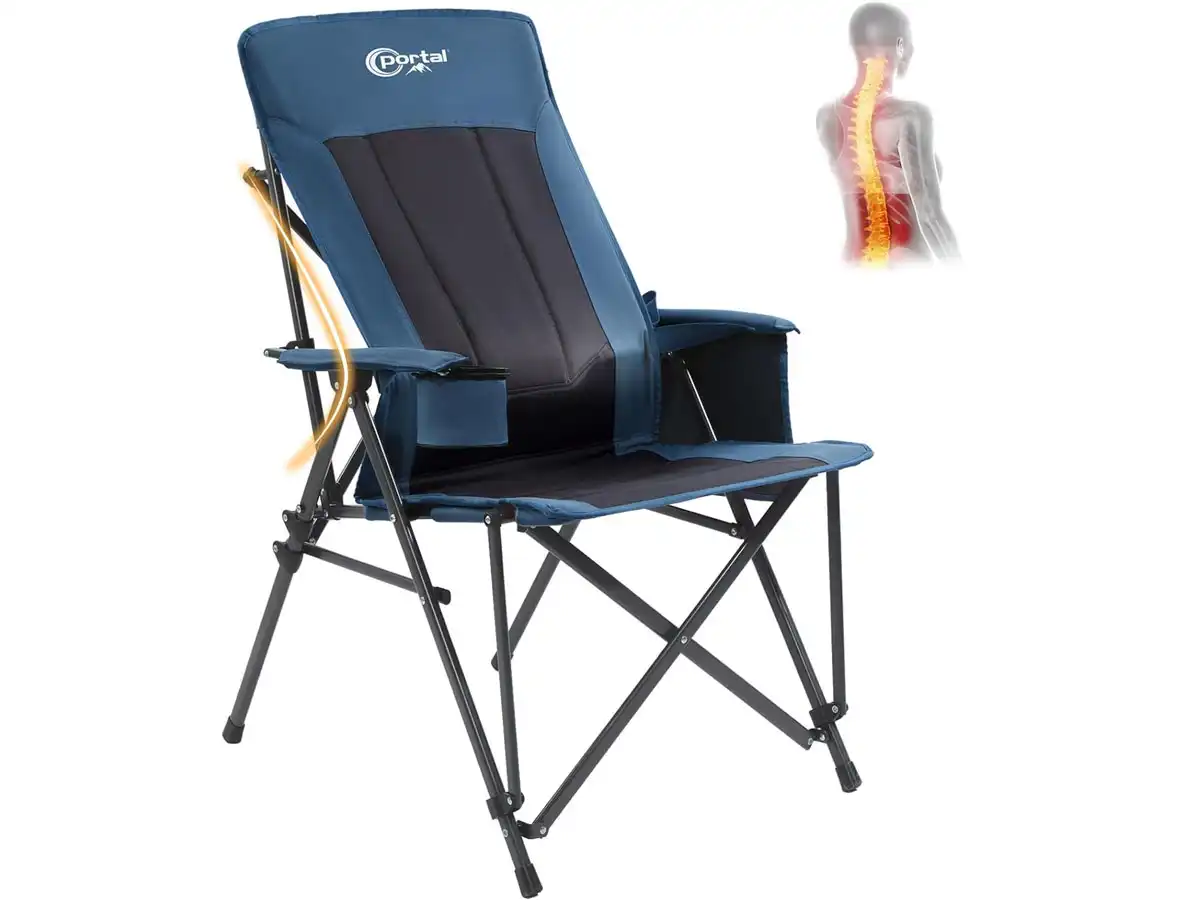
Portal builds a high-back camp chair that targets sore lower backs with side straps that adjust lumbar contact and hard armrests for easier sit-to-stand. The seat sits 20 inches off the ground, which keeps knees happier during long fireside sessions.
It uses an alloy steel frame, foam fill, and a tall back (listed as 26-inch high back support) that helps shoulders relax instead of hunching.
The chair rates to 400 lb and gives a 23-inch wide seat area, so both slim and bigger campers get room without hip squeeze. It weighs 13 lb, folds fast, and the built-in strap helps short carries.
If you camp on sand or soft soil, put a mat under the feet so the legs do not sink and tilt your posture.
Choose this if you want one chair that sits high, feels steady, and gives adjustable lumbar support that you can dial in.
2. ROCK CLOUD Folding Camping Chair with Storage Pocket and Side Table
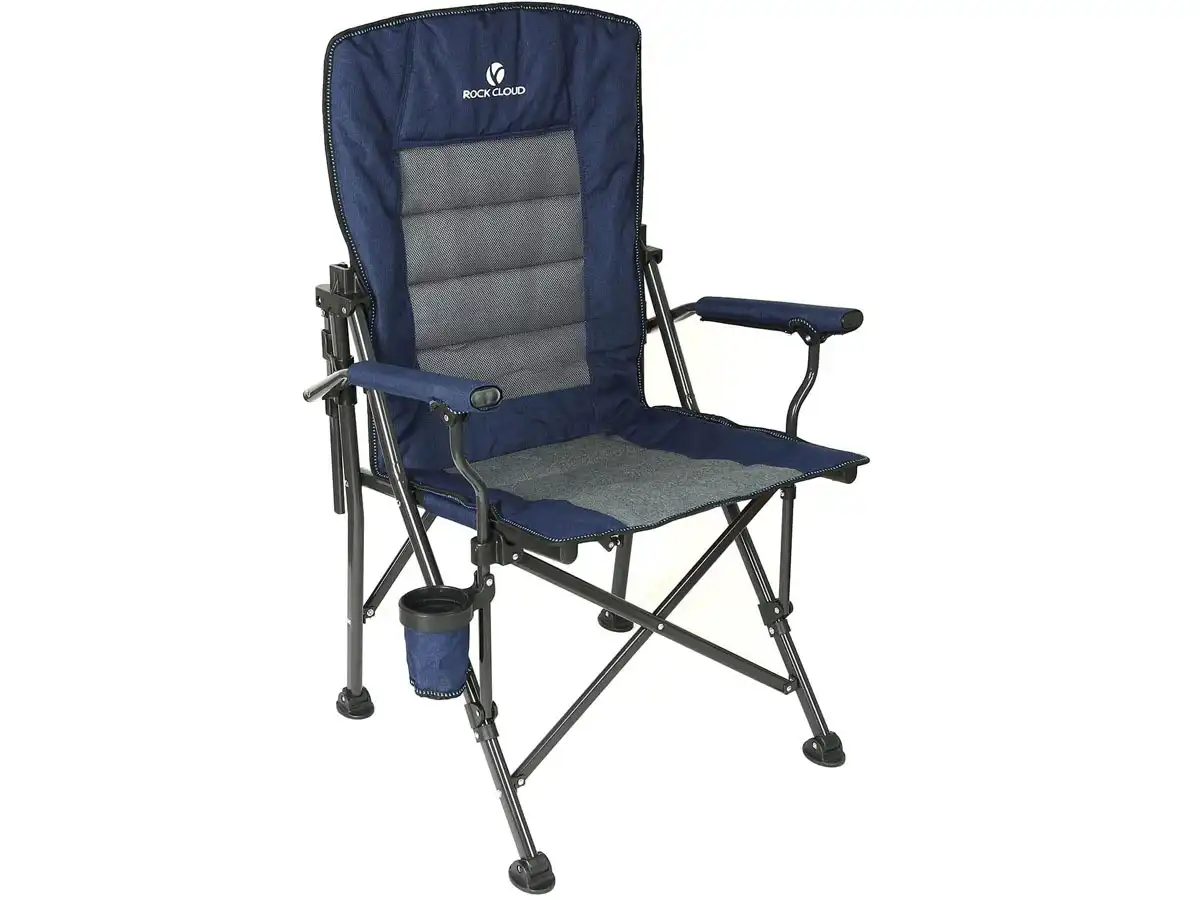
This folding outdoor chair focuses on practical back comfort: an adjustable lumbar structure, foam-filled seat and back, and a steel frame rated to 265 lbs. It lists a 16-inch seat height, which works for many adults but can feel low if your knees complain.
The fabric uses “600D cationic oxford” plus breathable mesh, which helps when humidity makes your back sweaty. It also folds shorter than similar chairs and comes in around 12.8 lb, so it is easy to toss in the trunk.
Where it falls short: armless designs make some people work harder when standing up.
It fits best when you want support and padding at a mid-range price, and you do not rely on armrests to rise.
3. FAIR WIND Oversized Fully Padded Camping Chair
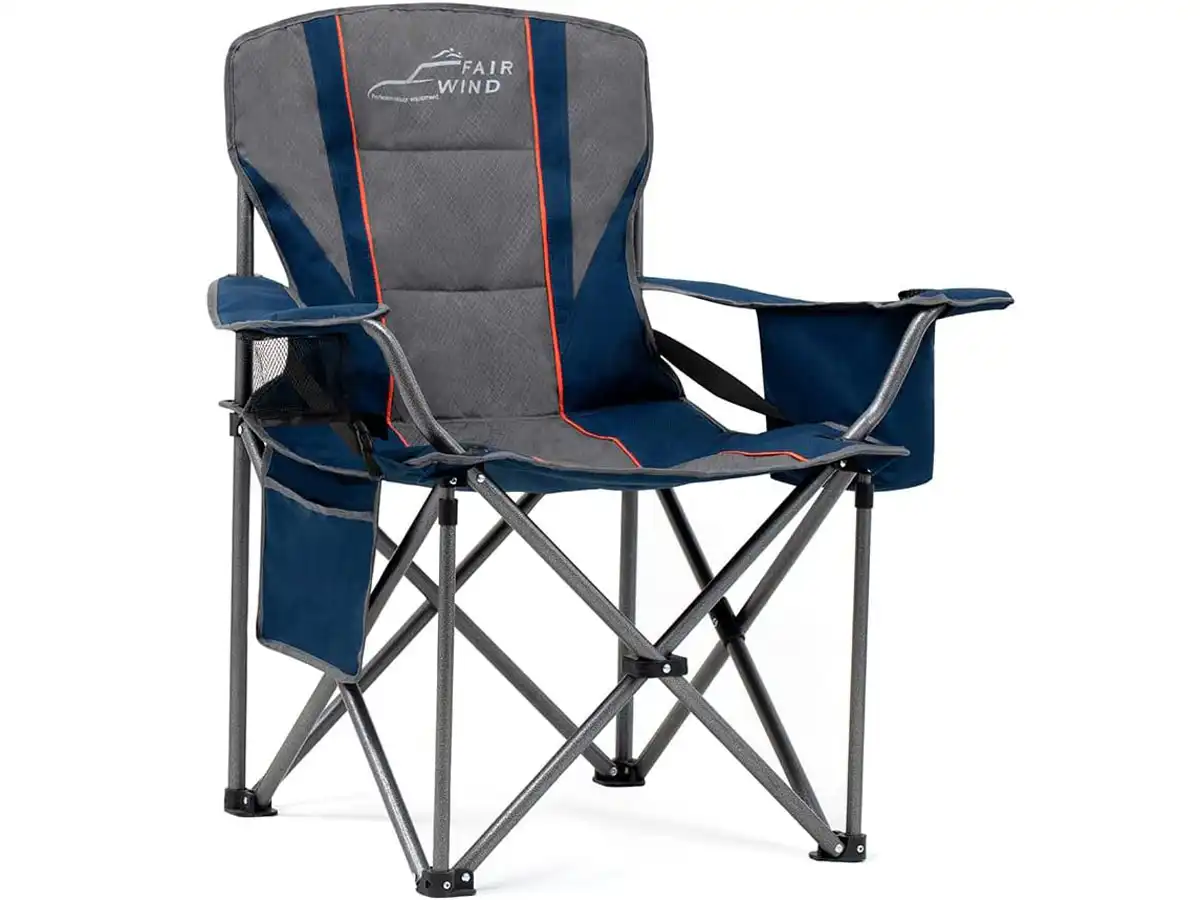
FAIR WIND’s oversized padded chair aims at comfort-per-dollar with a cross-braced alloy steel frame and a quad-layer 600D ripstop seat plus sponge cushion that spreads pressure across hips and thighs. Seat height is 18.5 inches, and the seat depth is 24.4 inches, so it suits taller campers or anyone who likes a deeper, loungier sit.
You provided a 450 lb rating, and the design backs that goal with a “heavy duty” steel tube build, front stabilizing legs, and an “extra stability” cross-braced structure that helps on uneven or rocky ground.
Storage is a real perk here: it includes a large insulated drink holder plus side pocket and cooler space, which keeps you from bending and twisting to reach items on the ground.
The downside for bad backs is that a deep seat can push behind the knees for shorter legs, so test it with feet flat before committing.
Go with this when you want thick padding, a solid frame, and a deeper seat that supports long sits without feeling flimsy.
4. WEJOY 2-in-1 Reclining Camping Chair with Footrest for Adults
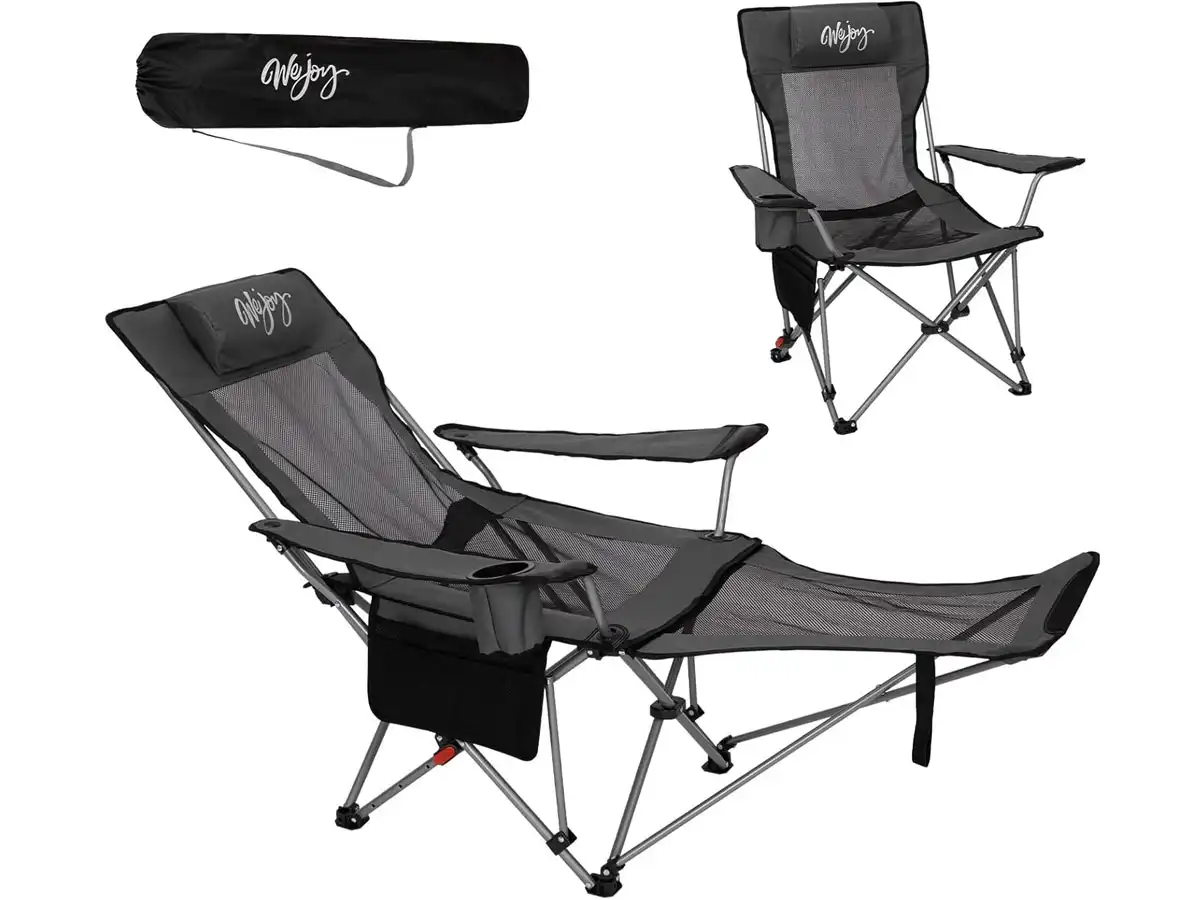
WEJOY makes a reclining camp chair with 4 backrest positions and a detachable footrest, so you can shift from upright chatting to laid-back pressure relief without changing seats. It uses 600D Oxford fabric with a PE coating, cotton-filled padding, and a metal frame with anti-slip foot covers plus a triangular support shape that helps it feel more planted when you lean back.
Your stated rating is 300 lb, which fits most campers, but I still treat recliners with respect: set your recline angle first, then sit down in control so the frame does not twist. The chair weighs 9.2 lb and packs small (listed folded size 18×21×90 cm) for easy car camping and beach days.
The seat depth runs 24.8 inches, so shorter campers may feel pressure behind the knees on long sits.
Pick this when your back feels best with a footrest and frequent angle changes, not one fixed posture.
5. Overmont Camping Chair with Lumbar Support for Adults
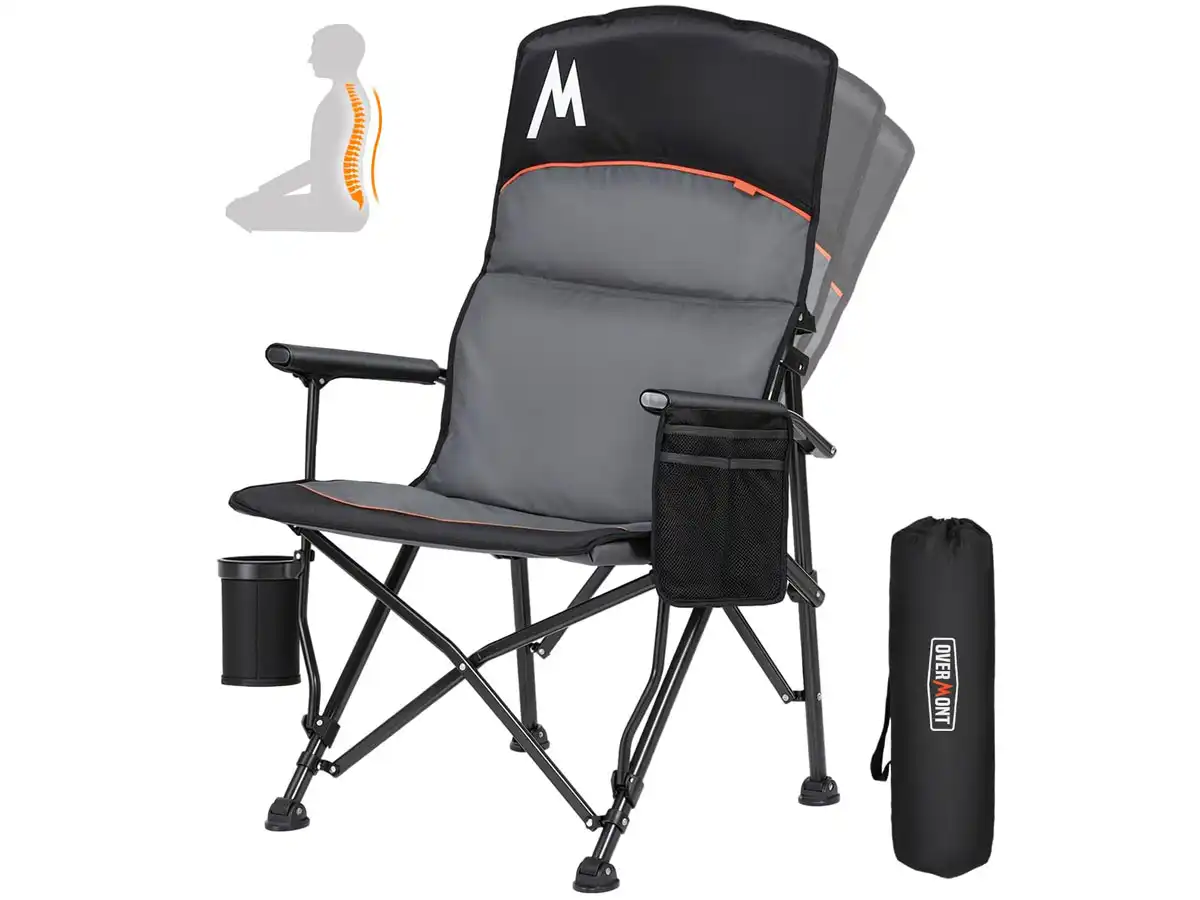
This one stands out because the backrest reclines smoothly from 90° to 136° without fixed locking positions, so your body can settle into a natural angle instead of fighting a click-stop. It uses an aluminum frame, a high-back build, and lists an 18-inch seat height with an 18-inch seat depth, plus a detachable pillow. Weight capacity is 450 lb, so it’s a strong choice if you want a sturdier build for back support.
Where it falls short: no lock means you need controlled movement, not sudden flops.
It fits best when you want a reclining back that adapts to your posture and you will confirm the true weight rating from the chair tag.
6. GCI OUTDOOR RoadTrip Rocker Camping Chair
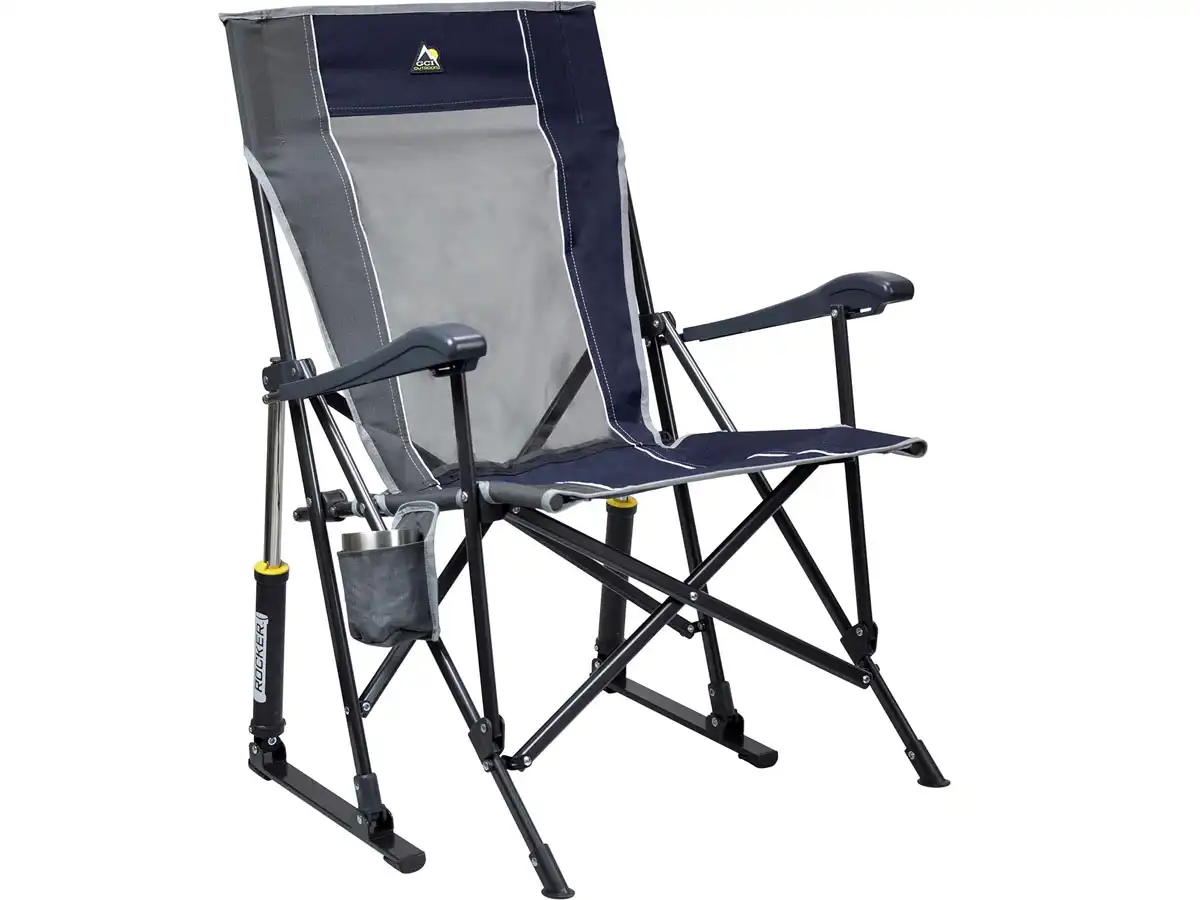
A rocker helps some backs because gentle movement prevents that stiff “frozen” posture. This chair uses a steel frame with Spring Action Rocking Technology, works on hard or soft ground, and includes a shoulder sling bag for carry.
The 20-inch seat height makes standing up easier than low loungers, and the listed weight is 12.8 lb with a 250 lb capacity. The mesh backing also improves airflow when the night stays warm.
Where it falls short: rocking takes space, and the capacity is lower than the big-and-tall models.
It fits best when you want a supportive sit with small movement to keep your back from tightening up at camp.
7. YETI Trailhead Collapsible Camp Chair
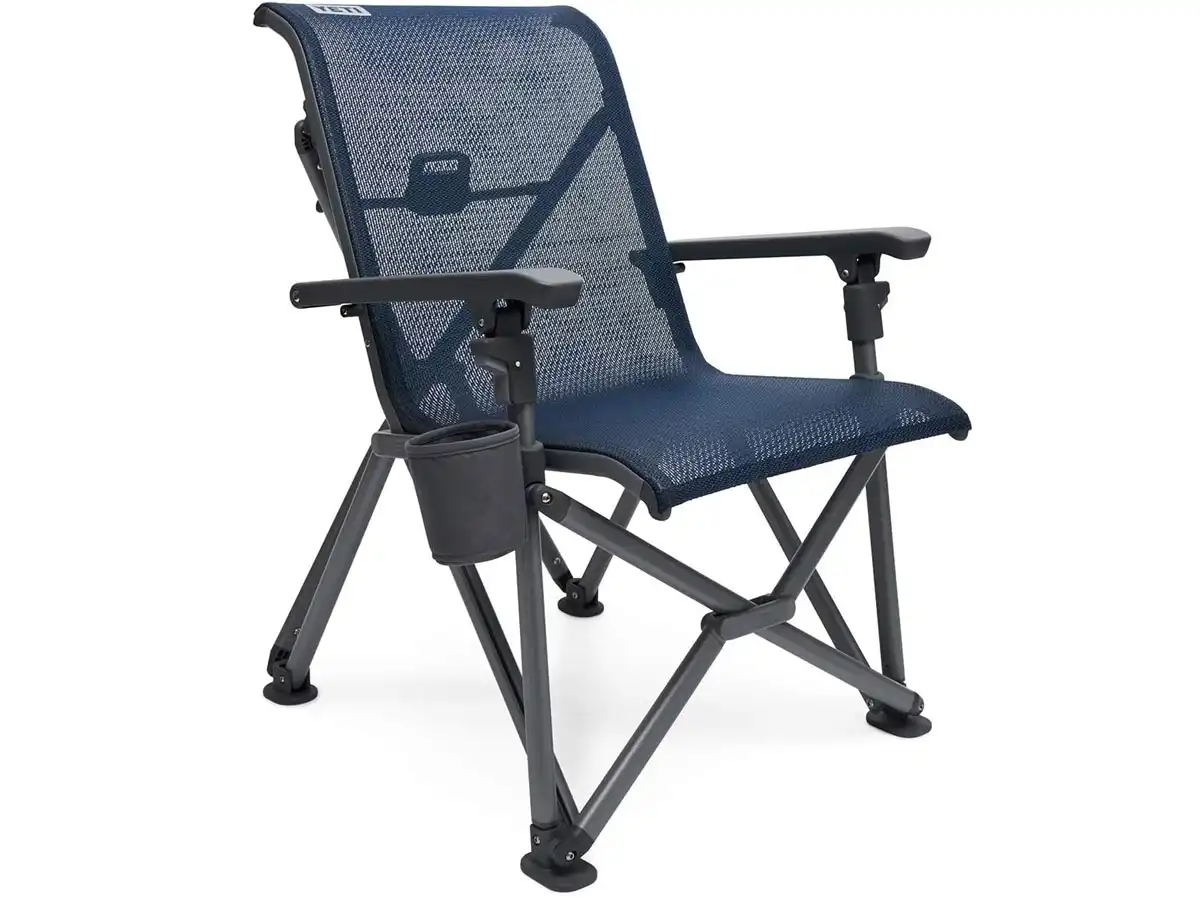
This is the premium pick and one of the closest options here to a best outdoor camping chair for durability-minded campers. It uses a steel frame and FlexGrid fabric that claims to conform to body curves and reduce pressure points. It lists a 16.75-inch seat height, carries at 13.3 lb, and supports up to 500 lb.
I also like that it includes a two-strap carry bag you can wear like a backpack, which makes a heavier chair feel easier on the walk in.
Where it falls short: price is the main hurdle, and seat height is not “high chair” territory for knee comfort.
It fits best when you want long-lasting build quality, strong weight support, and a carry system that feels tidy and hands-free.
8. Timber Ridge Oversized Folding Camping Chair
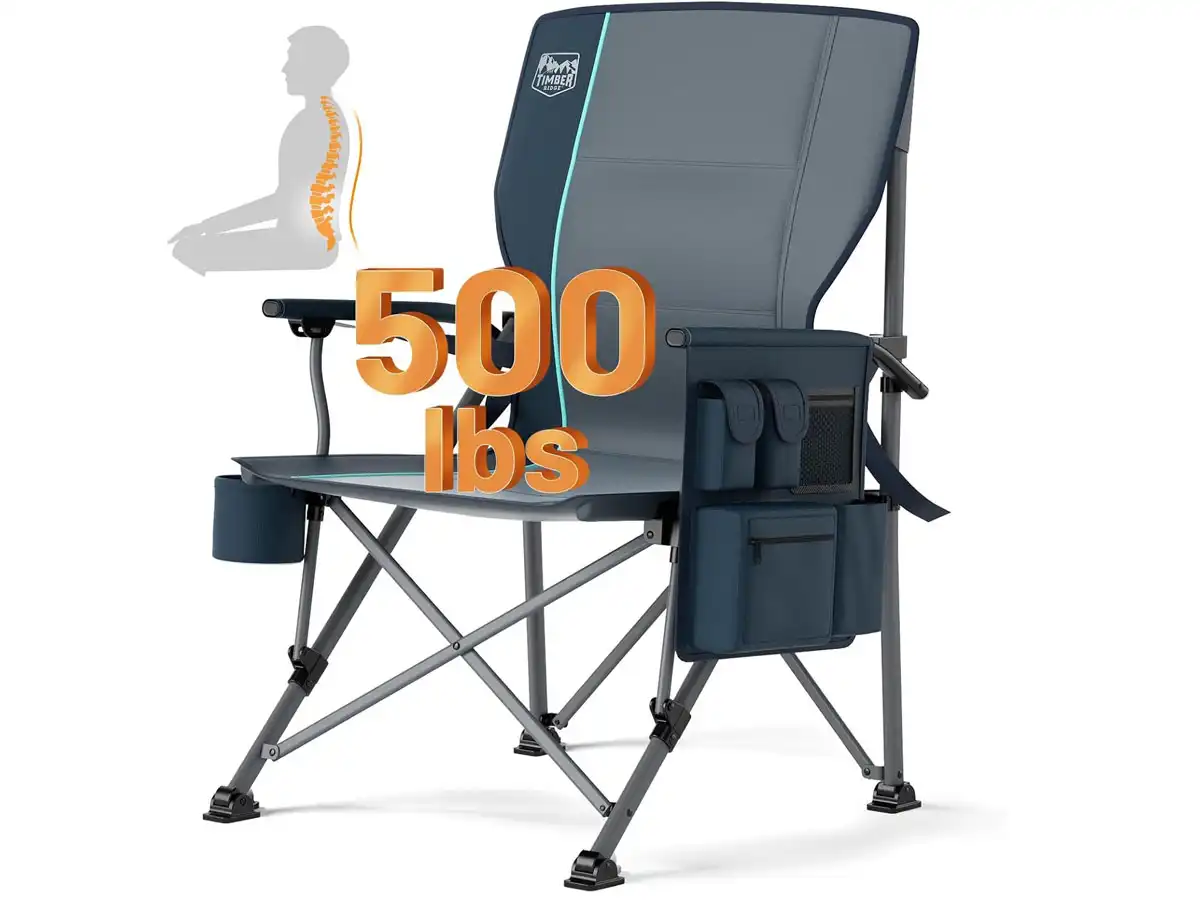
This is an oversized camping chair designed for back support and easy stand-ups. It lists adjustable lumbar support, hard armrests, and a steel build rated to 500 lb. Seat height is 19 inches, which helps knees, and the seating area is roomy (its 24 3/8-inch width and 19 3/4-inch depth).
The chair also packs extra storage, including a cooler pocket and side pockets, which keeps you from twisting your back to reach gear on the ground.
Where it falls short: at about 17 lb, it is car-camping friendly, not “carry far” friendly.
It fits best when you want a strong frame, higher seat height, and lumbar adjustability that supports heavier bodies without feeling tippy.
9. EVER ADVANCED Oversized Folding Camping Chair for Adults with Adjustable Lumbar Support
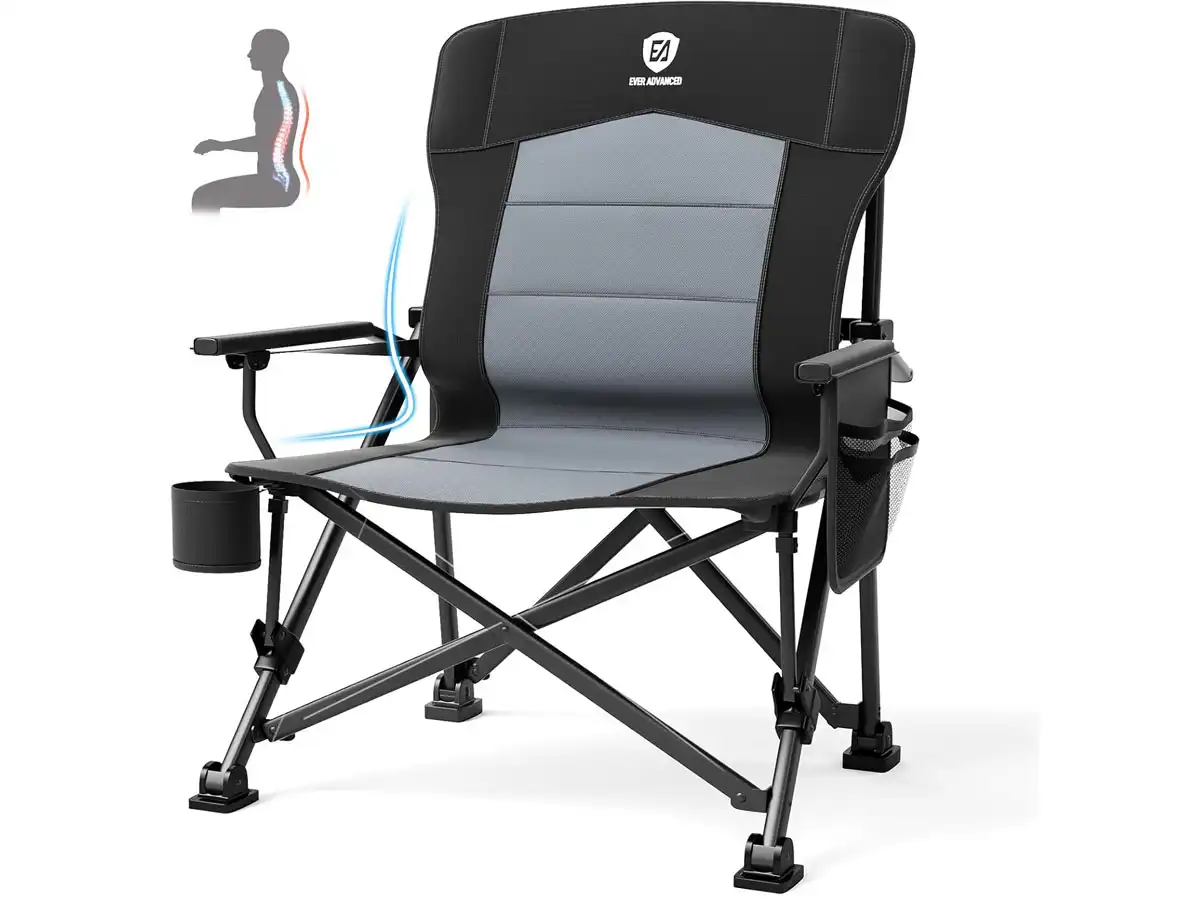
This chair targets bigger bodies with an oversized seat area and adjustable lumbar support, plus hard armrests that help you stand without wrenching your back. It lists a steel frame supporting up to 500 lb, and the overall size is 24.3 x 19.7 x 40 inches, which gives you room to shift positions and avoid pressure buildup. It also includes a cup holder and mesh pocket, so you can keep essentials close and reduce awkward leaning.
Where it falls short: it sits in the heavier class around 16.8 lb, so it lives in the trunk, not on a long walk.
It fits best when you want big-and-tall capacity with lumbar adjustment and armrests that make getting up feel safer.
10. Youtanic Oversized Portable Folding Camping Chair
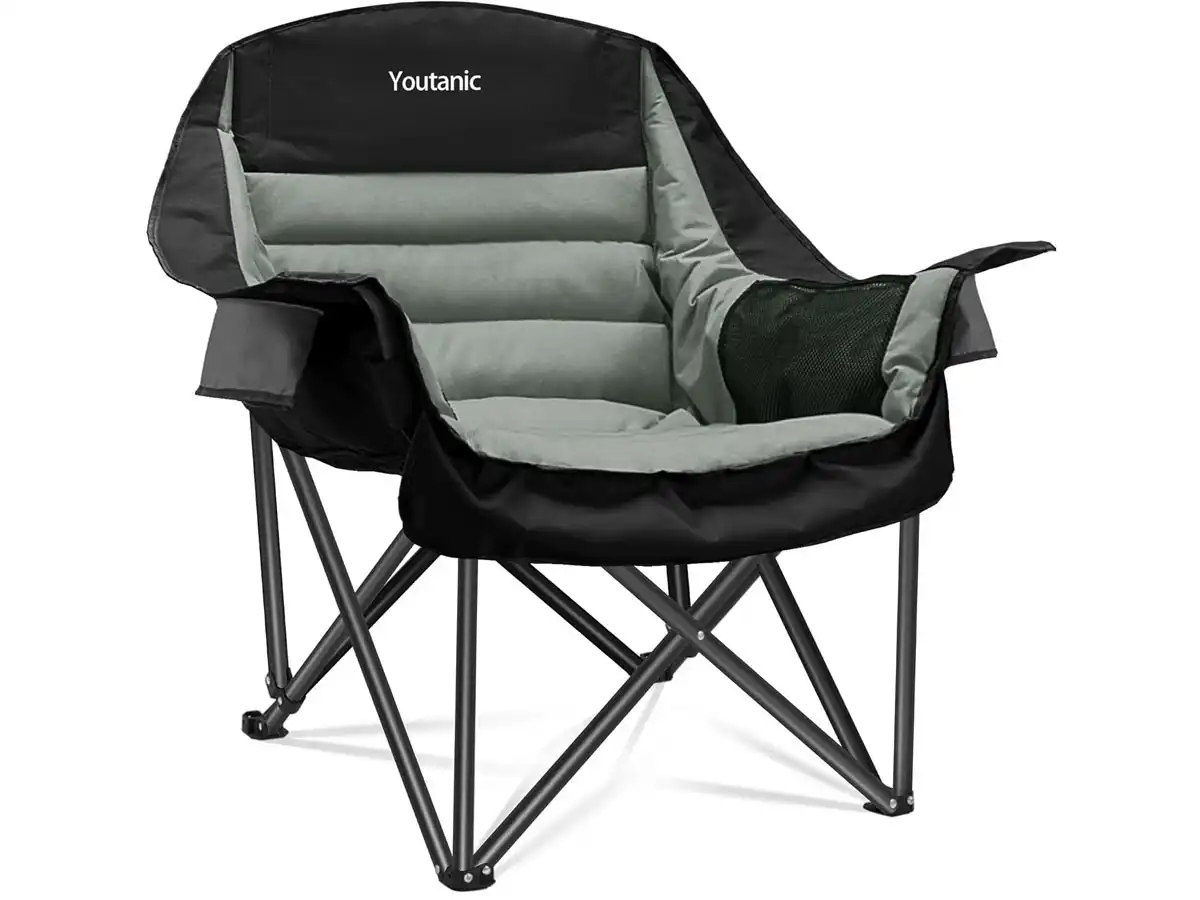
This chair leans into plush comfort, with high-loft padding in the headrest, backrest, armrests, and seat, plus a steel build rated to 400 lb and 600D tear-resistant Oxford fabric. The catch for bad backs is the 12.6-inch seat height.
Low seats often force deep hip bend and make standing harder, especially after a long sit. It also has two cup holders and side pockets, which is handy when you want to keep items within reach.
Where it falls short: the low seat height can punish knees and lower backs during repeated sit-stand cycles.
It fits best when you want a cushy lounge chair for short-to-medium sits and you are confident you can stand comfortably from a low seat.
How to Set Up Your Camping Chair for Maximum Support
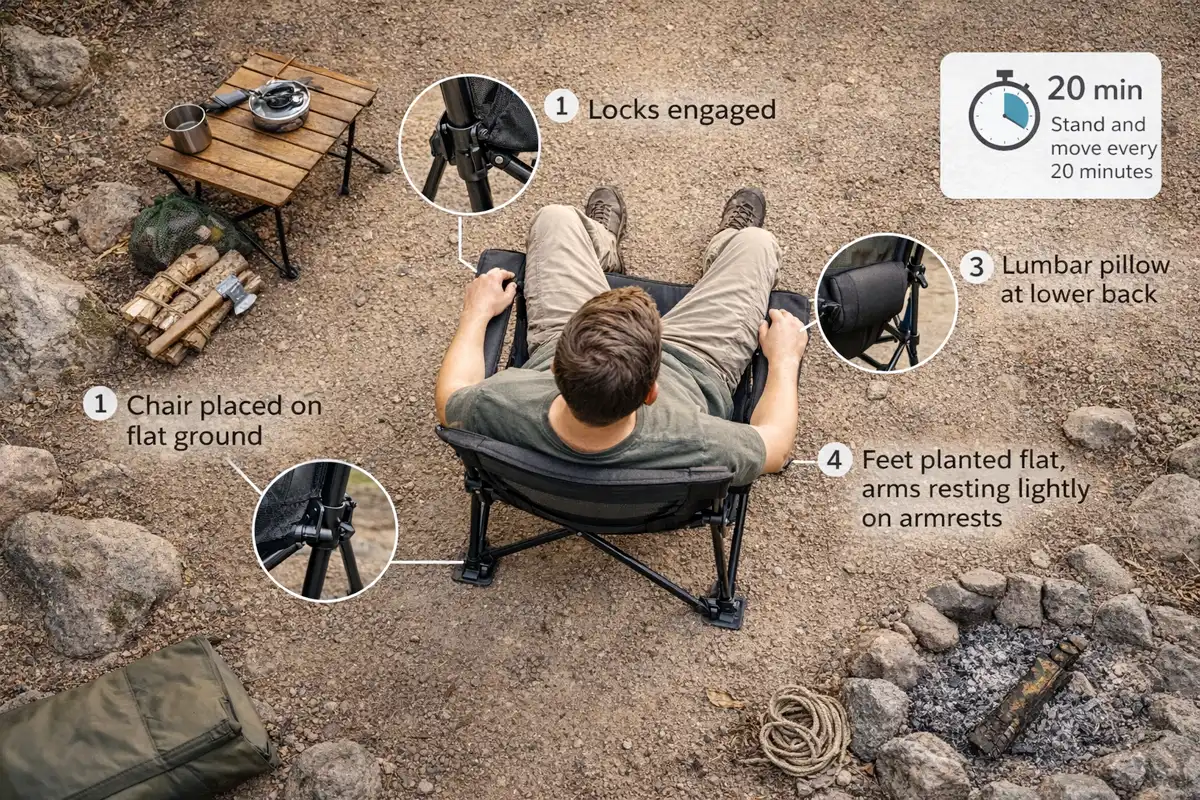
- Pick flat ground: Walk two steps and find the spot where the chair legs sit even.
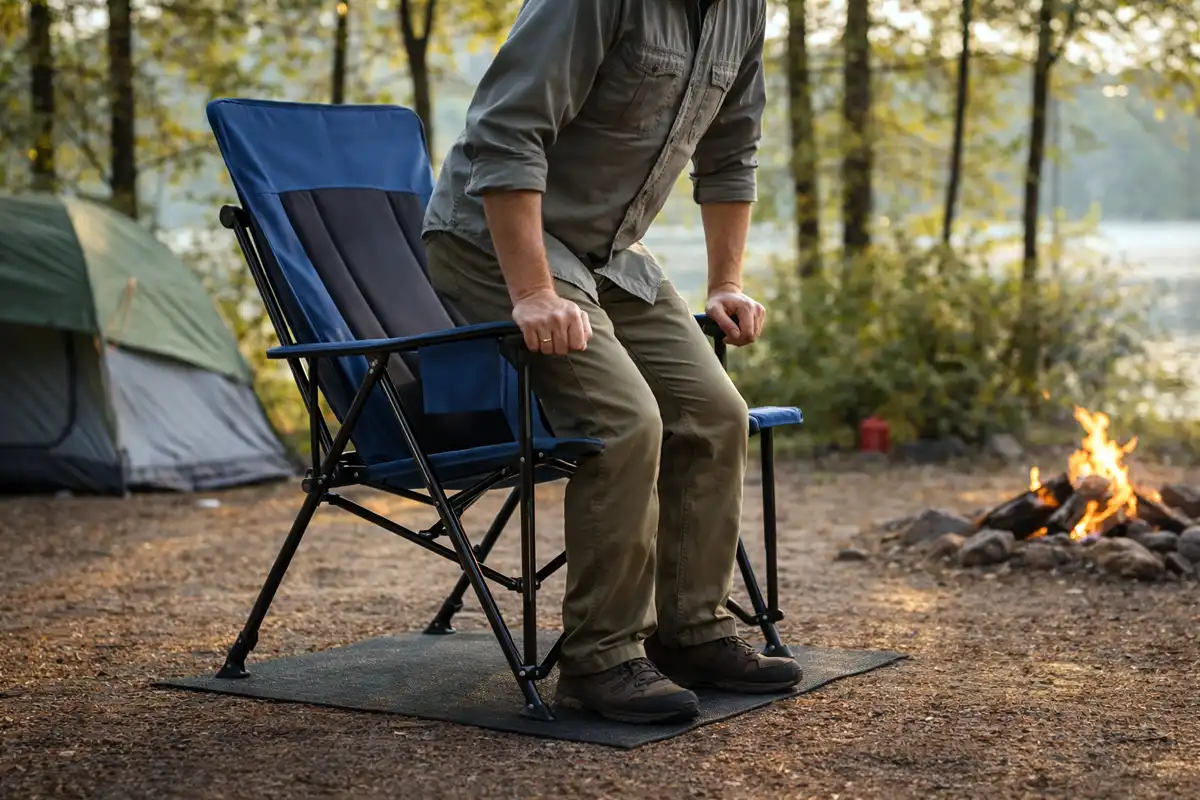
- Stop sinking: Place a small pad, board, or mat under feet on soft dirt so the frame stays level.
- Open fully and engage locks: Check hinges and braces so the frame holds shape before you sit.
- Set your foot position first: Plant both feet flat. Keep knees close to hip level.
- Adjust the backrest to your working angle: Use the recline control to adjust backrest until your ribs stack over hips.
- Add or adjust lumbar contact: Tighten straps or place a lumbar pillow where your low back curves inward.
- Use armrests to relax shoulders: Rest forearms lightly so the upper back stays calm and your posture stays tall.
- Move on a timer: Stand, take a short walk, and reset every 20–30 minutes.
Safety note: sharp, ongoing, or worsening pain deserves a chat with a licensed clinician, especially if it affects sleep, walking, or leg sensation. My job at camp is comfort and support, not diagnosis.
For campsite comfort routines, my late-arrival checklist in this campsite choosing guide helps you pick flatter ground fast.
Accessories That Make Almost Any Chair Feel Better
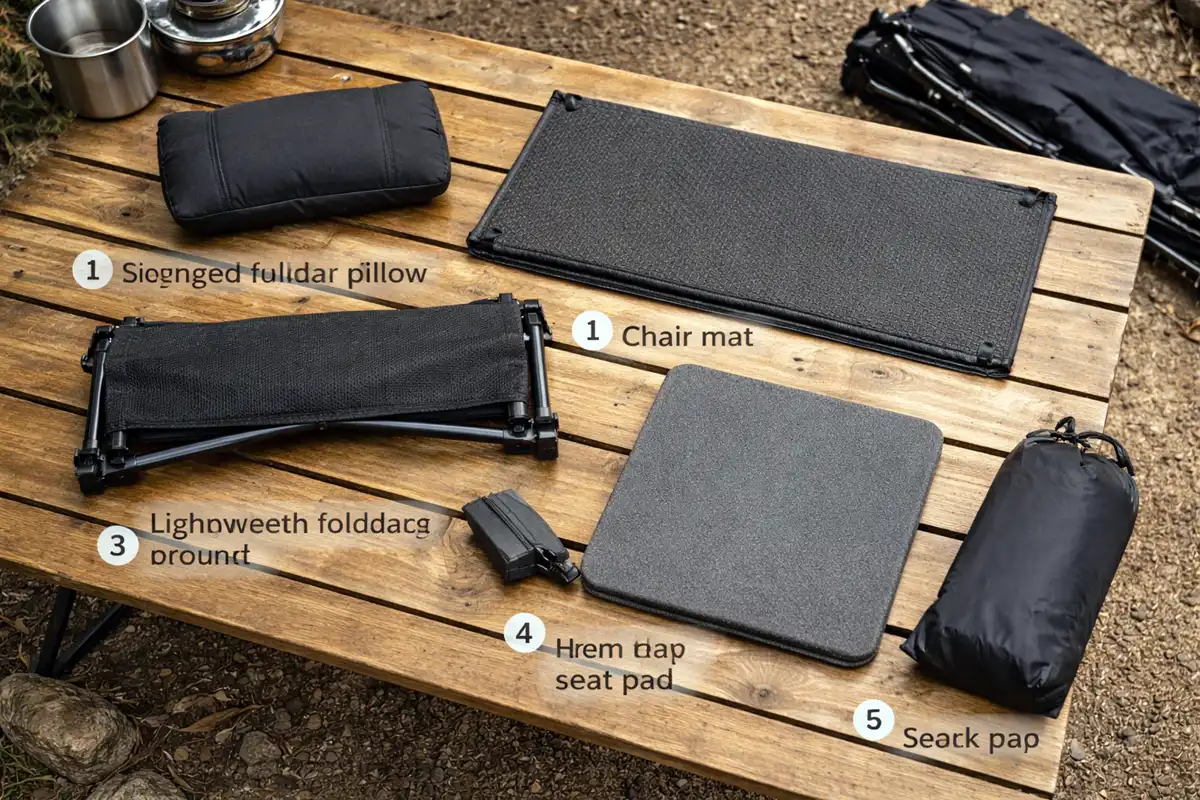
A few small add-ons change how a chair feels without buying a new one.
- Lumbar pillow: Fills the gap when the back panel misses your curve. Use a small one so it supports without over-arching.
- Footrest: Reduces thigh pressure and helps some people keep hips open during long sits.
- Chair mat: Spreads weight on sand or soft soil so the chair stays steady.
- A thin seat pad: Adds firmness if the fabric feels loose, or adds insulation on cold ground for better overall support.
If sitting stays rough even with add-ons, lounging on a supportive cot often helps. I cover cot choices in my guide on better rest with a supportive cot setup.
Care, Safety, and “Don’t Make Your Back Worse” Checks
A chair that loosens over time usually sags more, and sag often triggers slouching.
Before each trip, I run these quick checks:
- Confirm the weight limit and weight capacity match your body and gear use.
- Inspect the frame for bends, cracked paint, or stress marks at joints.
- Check stitching and fabric seams, especially at corners that hold body weight.
- Test hinges for smooth movement and solid stops, then tighten bolts when the design uses hardware.
- Place the chair for stability before sitting, especially on slopes or uneven soil.
- Avoid dropping into the chair. A controlled sit protects joints and reduces tip risk.
Cleaning and storage keep tension and fabric life consistent:
- Use mild soap and water for cleaning.
- Dry fully before storage, especially after rain or dew.
- Store out of direct sun to reduce UV damage.
- Favor quick-dry fabric when you camp in humid areas, because damp fabric stays limp longer.
- Treat this as basic maintenance, the same way you treat tent zippers and stove threads.
For general camp safety habits, my checklist on staying safe while camping solo includes routines that reduce slips and awkward lifts.
Alternatives if Chairs Still Hurt
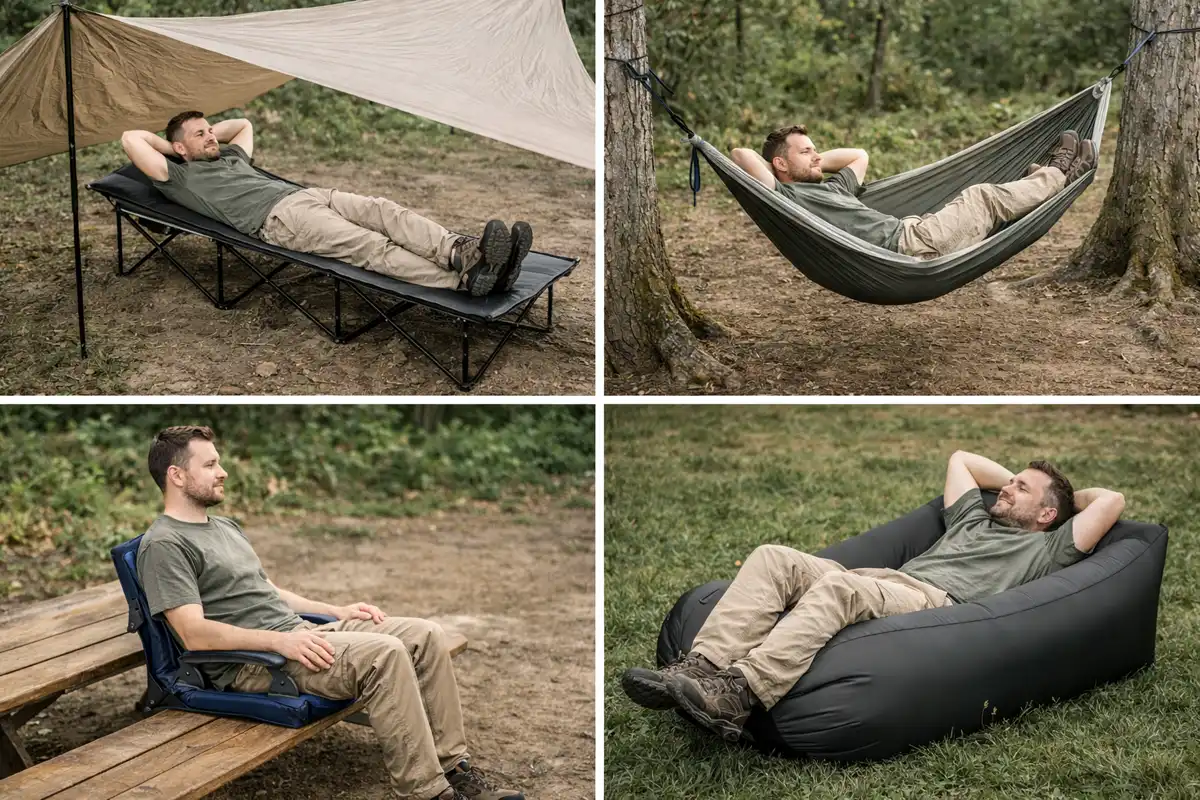
Some backs dislike any seated posture for long periods. These alternatives change body position and pressure points.
- Camping cot: Works as a flat lounging platform. Downsides include bulk and setup space.
- Hammock: Helps some people by spreading pressure. Downsides include a learning curve and limited use without trees or a stand.
- Stadium seat: Adds a firm back panel on a bench, log, or picnic table. Downsides include less cushioning under hips.
- Inflatable chair: Packs small and works on sand. Downsides include bounce and less structure for posture.
FAQs about Camping Chair for Back Support

Do I need a special camping chair if I have a bad back?
Are zero-gravity or reclining camping chairs good for back pain?
Is a low or high camping chair better for lower back pain?
How much does a good camping chair for a bad back usually cost?
What is the best camping chair for a bad back?
What features matter most for back pain: lumbar support, seat height, or padding?
Final Thoughts
A back-friendly camp seat starts with three checks: avoid sag, match the chair to your body, and confirm the frame feels stable. That combination delivers real back support even on uneven ground.
Then fine-tune comfort. Dial in seat height, add gentle lumbar support, and pick a comfortable camping chair style that fits your trip, upright for meals or reclined for relaxing. When possible, sit in a few chairs in-store and trust the one that holds you steady.