What Size Stuff Sack for a Sleeping Bag Fits Your Kit Best

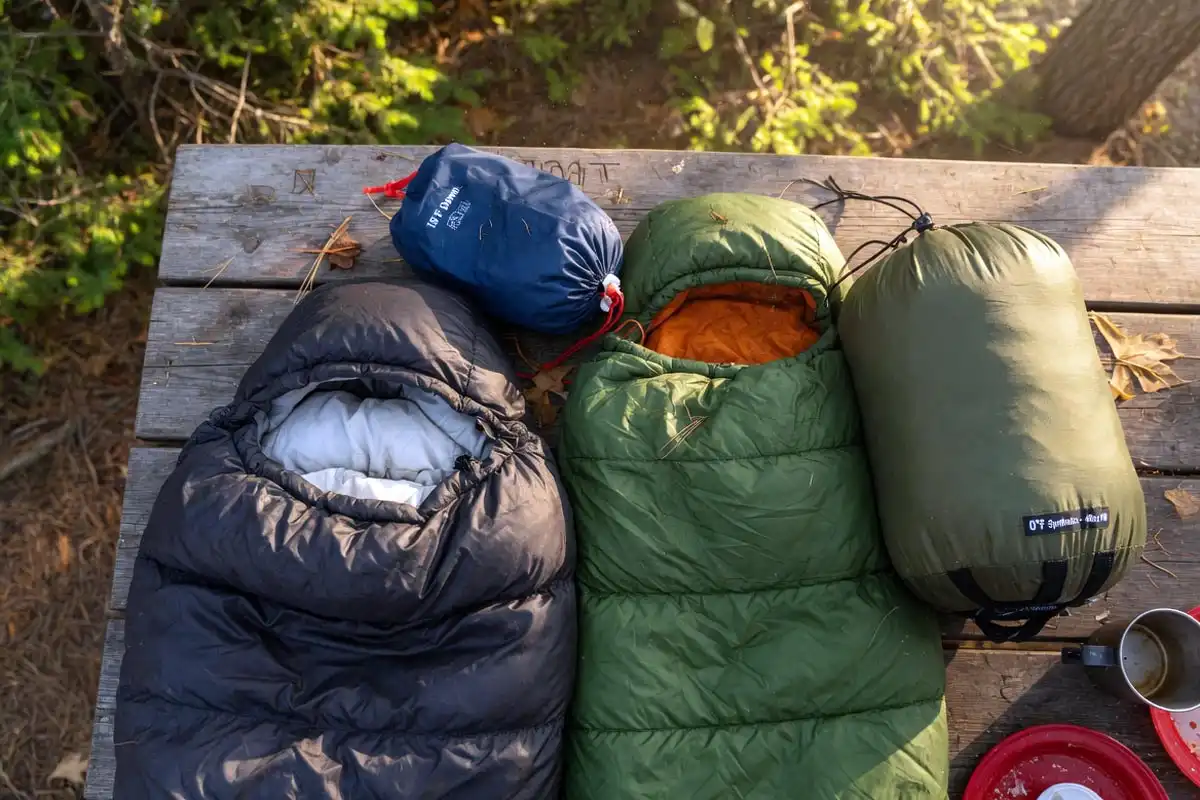
Most sleeping bag models pack down to a stuff sack in the 10–20 liter size range, with the exact volume changing based on the fill type and the insulation weight. This guide covers size ranges for down and synthetic bags, how to measure your bag at camp, when a compression sack makes more sense than a standard one, and common sizing mistakes to avoid. After reading, you will pick the right size confidently.
A 3-season down sleeping bag fits a 10 to 13 liter stuff sack. A 3-season synthetic bag needs 15 to 18 liters. Cold-weather bags rated below 0°F need 18 to 25 liters. Add 10 to 15 percent above your bag’s packed volume for an easy fit without forcing the insulation.
What Is a Stuff Sack?
A stuff sack is a lightweight storage bag that compresses a sleeping bag for transport. Two types exist: regular stuff sacks and compression stuff sacks. Regular sacks reduce volume by pushing air out during packing. Compression sacks use side straps or buckles to squeeze the bag further down. Each type suits different sleeping bag materials.
What Size Stuff Sack Does a Sleeping Bag Need?
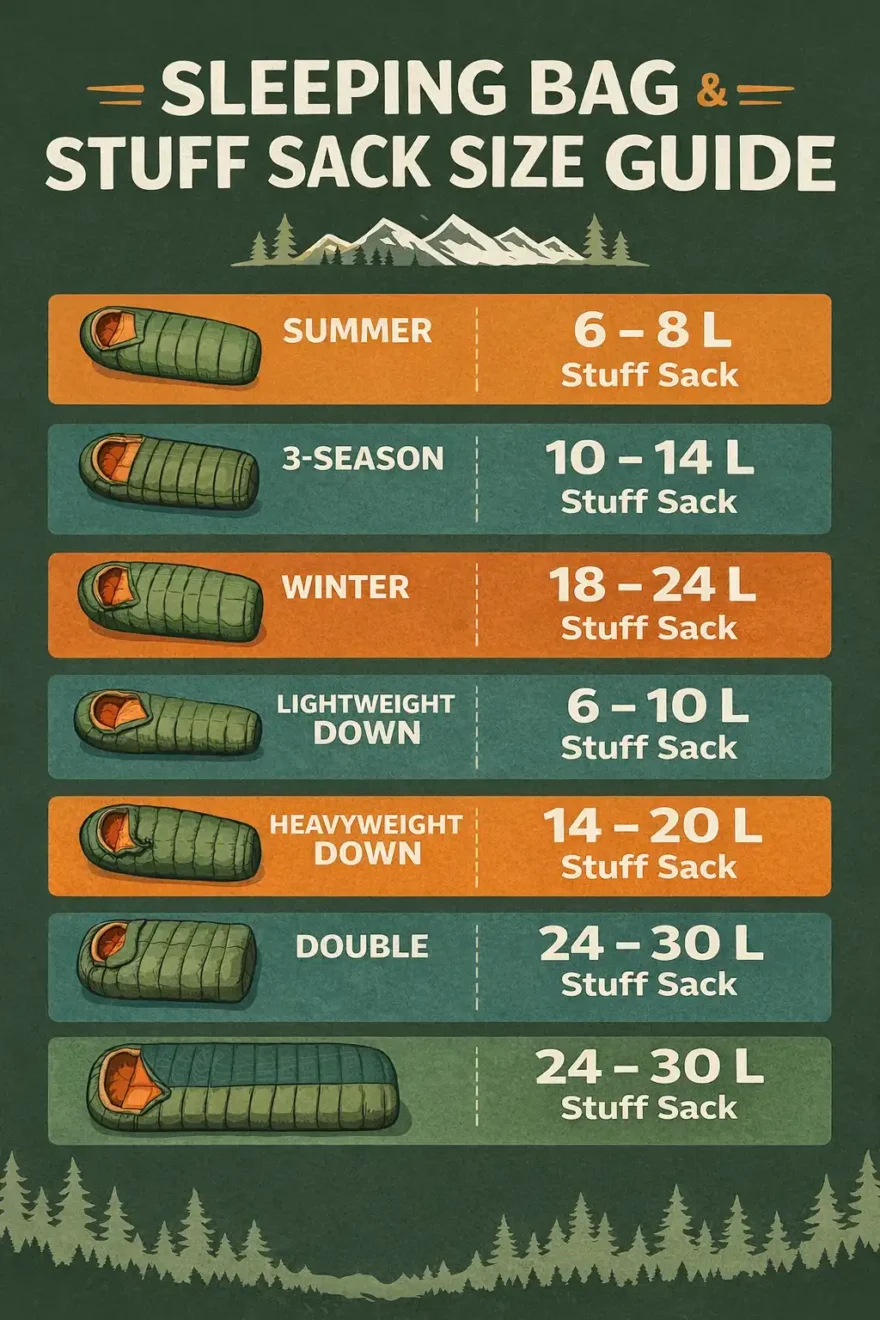
The correct size depends on three factors: insulation type, fill weight, and temperature rating. Down bags compress much tighter than synthetic ones. A synthetic bag at the same temperature rating needs roughly 30 to 50 percent more space.
Here is a practical reference chart:
|
Sleeping Bag Type |
Temperature Rating |
Recommended Stuff Sack Size |
|---|---|---|
|
Summer down |
40°F and above |
8 to 10 liters |
|
3-season down |
20°F |
10 to 13 liters |
|
3-season synthetic |
20°F |
15 to 18 liters |
|
Winter down |
0°F |
13 to 18 liters |
|
Winter synthetic |
0°F |
20 to 25 liters |
|
Expedition down |
Below 0°F |
15 to 20 liters |
|
Expedition synthetic |
Below 0°F |
22 to 28 liters |
Bag manufacturers list a packed volume on the product tag or spec sheet. Use that number as your starting point, then add 10 to 15 percent when choosing your sack size.
How Fill Type Affects Stuff Sack Size
Down Sleeping Bags
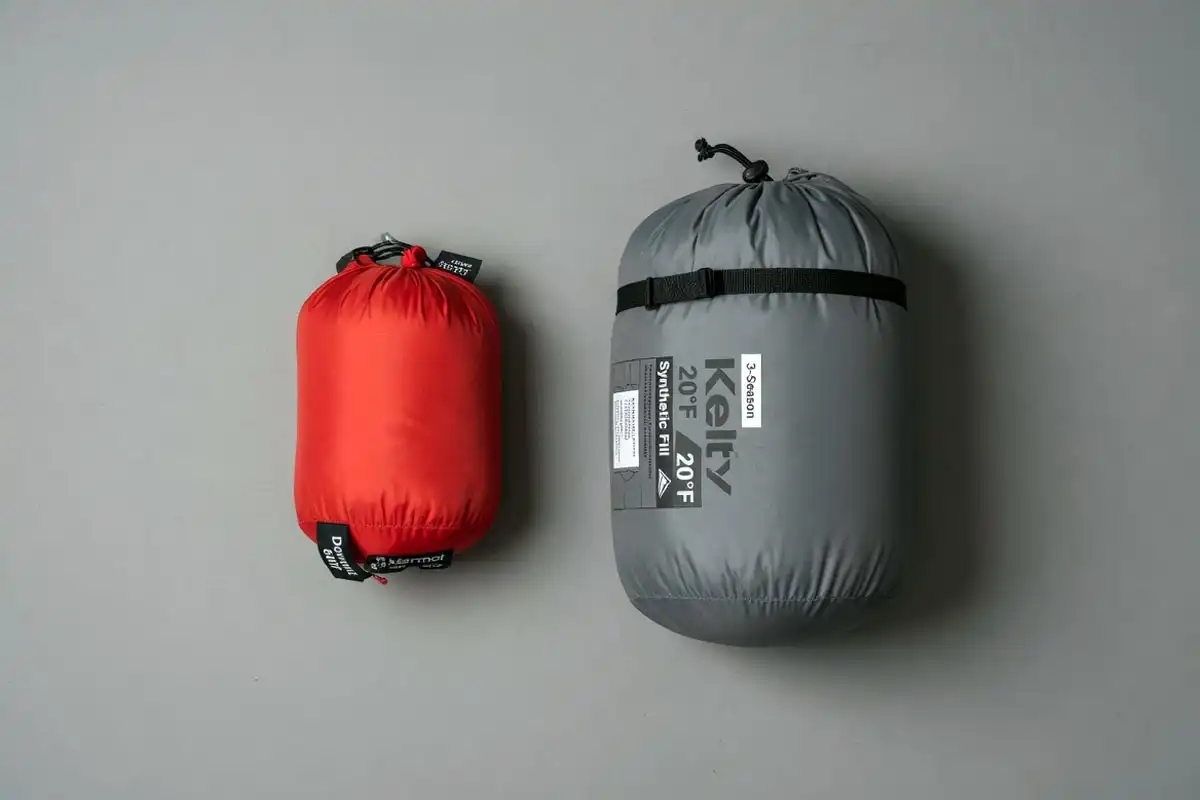
Down insulation uses clusters of waterfowl feathers. These clusters collapse and compress into a small, dense package. A 700-fill power down bag rated for 20°F packs into roughly 10 to 12 liters without any external straps. Higher fill power bags compress even smaller for the same warmth level.
If you carry a down bag on a multi-day trip, I wrote about choosing the right bag in my overview of the best lightweight sleeping bags for backpacking, where packed size plays a central role in selection.
Synthetic Sleeping Bags
Synthetic insulation uses polyester fibers woven into batting layers. These fibers resist tight compression because of their structure. Forcing a synthetic bag too small damages the fiber matrix and reduces warmth over time. Synthetic bags need a stuff sack that allows loose packing without strain.
Cold-weather synthetic bags carry heavier fill amounts. These bags need more internal volume, typically 20 to 25 liters, to pack without damage.
Compression Stuff Sacks vs Regular Stuff Sacks
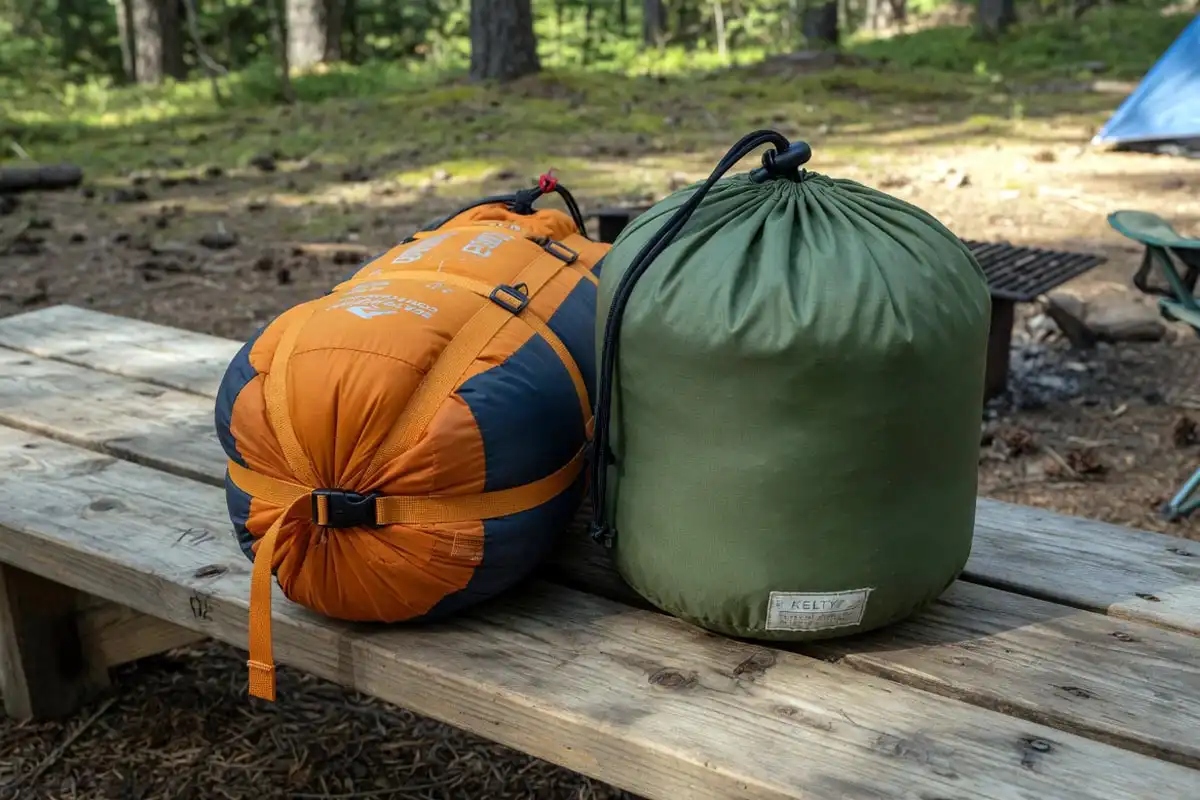
A regular stuff sack reduces sleeping bag volume by 30 to 40 percent. A compression stuff sack reduces it by 50 to 70 percent using external straps cinched down after packing.
Compression sacks work well for synthetic bags. The external pressure helps synthetic insulation pack tighter than it would on its own.
Down bags compress well without straps. Repeatedly compressing a down bag with a compression sack damages the fill clusters over time and shortens the bag’s lifespan. A standard stuff sack preserves down insulation better for long-term use.
I covered sleeping bag care in detail in my guide on washing a sleeping bag without ruining the insulation, where storage habits directly affect how long insulation performs.
| Feature | Regular Stuff Sack | Compression Stuff Sack |
|---|---|---|
| Volume reduction | 30 to 40% | 50 to 70% |
| Best for | Down bags | Synthetic bags |
| Pack time | Fast | Moderate |
| Insulation safety | High | Lower for down |
| Weight | Light | Slightly heavier |
How to Measure Your Sleeping Bag for a Stuff Sack
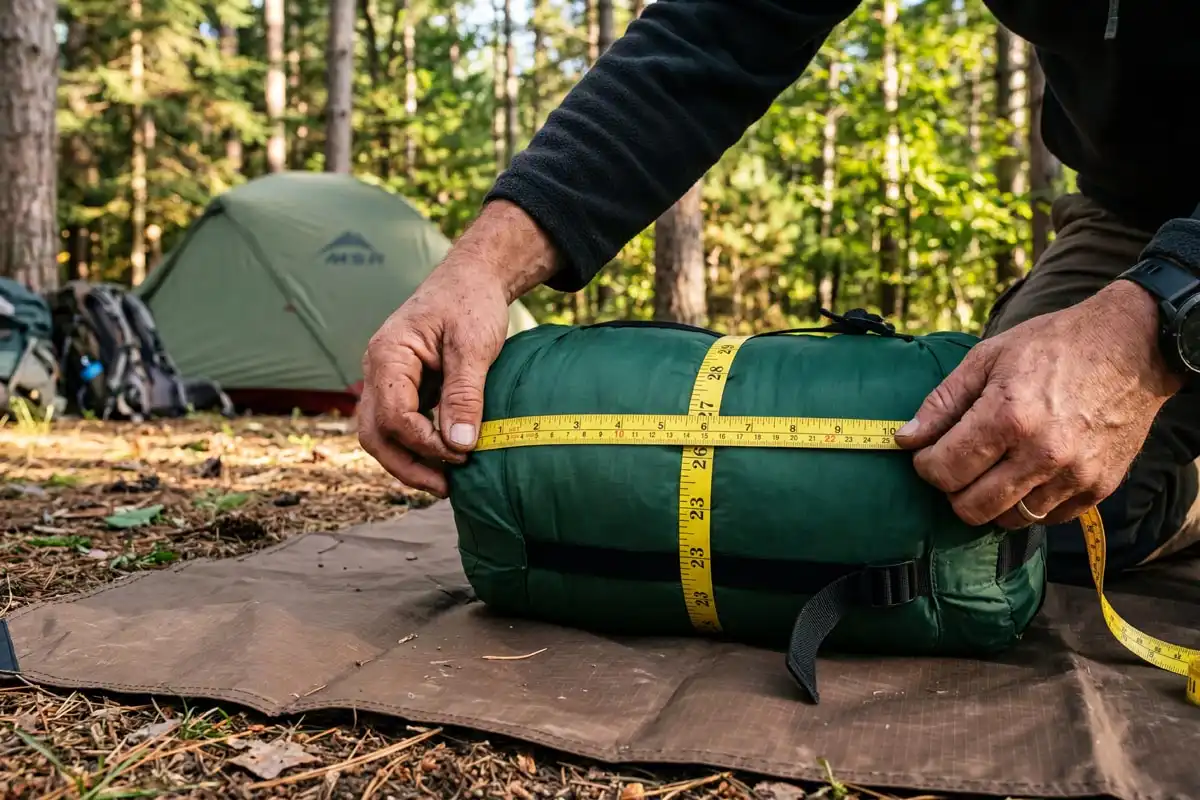
Use this process when you do not have a manufacturer spec sheet available.
Step 1: Loosely roll the bag Lay the sleeping bag flat on the ground. Roll it from the foot end toward the hood. Do not force or squeeze it. This produces a loose cylinder.
Step 2: Measure circumference and length Wrap a flexible tape measure around the widest point of the rolled cylinder. Note the circumference. Then measure the length from end to end.
Step 3: Calculate the volume Divide circumference by 6.28 to get the radius. Multiply radius squared by 3.14, then multiply that result by the length. Divide by 1,000 to convert cubic centimeters to liters.
Step 4: Add 10 to 15 percent A sack that exactly matches your calculated volume makes stuffing difficult in cold or wet conditions. A sack 10 to 15 percent larger than your result gives a manageable fit.
Also learn: Packing a Sleeping Bag in a Backpack
How Stuff Sack Size Affects Pack Organization
Sleeping bags go at the bottom of a backpack, below the hip belt level. A bulky 22-liter sack for a synthetic bag consumes the base of the pack. This compresses space for food, layers, and camp tools.
A well-sized stuff sack for a down bag, at 10 to 13 liters, leaves more room in the lower compartment. Proper pack balance reduces shoulder and hip fatigue on long days.
I covered how pack loading affects body strain in my guide on packing a hiking backpack so your shoulders don’t hurt, where sleeping bag placement is one of the first decisions.
According to the U.S. Forest Service’s backpacking gear guidance, keeping heavy and bulky items low and centered in the pack reduces trail fatigue and improves posture over long distances.
When to Use a Larger Stuff Sack
Use a larger sack when:
- You carry a synthetic bag that needs room to breathe when packed
- You camp in cold weather and use a heavily insulated bag
- You want to pack faster without fighting the bag into a tight space
- You plan multiple days on trail and need easy morning camp breakdown
Use a compression sack when:
- Backpack volume is limited and every liter counts
- You carry a synthetic bag and need to save space
- You do not plan to pack and unpack the bag repeatedly each day
Mistakes to Avoid When Choosing a Stuff Sack
Choosing a sack that is too small: Forcing insulation into a tight sack compresses fill unevenly. Uneven compression creates cold spots and degrades warmth over repeated use.
Using a compression sack on a down bag every trip: Repeated aggressive compression breaks down clusters in down insulation. This reduces loft, which directly reduces warmth. Use a standard stuff sack for daily packing with down.
Ignoring water resistance: Standard stuff sacks offer minimal moisture protection. In wet conditions, a sleeping bag inside a non-waterproof sack absorbs moisture through the fabric. Use a waterproof stuff sack or a dry bag liner when camping in rain or high humidity. I covered how humidity affects sleeping gear in my article on how to keep bedding dry in humid weather.
Choosing size by weight alone: A lighter sleeping bag does not always pack smaller. Check the manufacturer’s packed volume in the specifications, not only the listed weight.
Storing the bag long-term inside the stuff sack: A stuff sack is for transport, not storage. Leaving any sleeping bag compressed for weeks damages insulation permanently. Store it loosely in a large cotton or mesh storage sack at home.
The National Park Service’s wilderness camping guidelines note that proper gear care extends equipment life and reduces the need for frequent replacement, which matters both for your budget and your pack weight over many seasons.
FAQs on Stuff Sack Size for a Sleeping Bag

What size stuff sack fits a 0-degree sleeping bag?
Can I use any stuff sack for my sleeping bag?
Is a compression stuff sack better than a regular stuff sack?
How do I know if my stuff sack is too small?
Does the stuff sack size affect sleeping bag warmth?
Final Thoughts
The right stuff sack size protects your sleeping bag and keeps your pack organized. Down bags need 8 to 18 liters depending on their temperature rating. Synthetic bags need 15 to 25 liters. Add 10 to 15 percent to your bag’s compressed volume for a practical fit.
Use a regular sack for down and a compression sack for synthetic. Get the sizing right and your insulation will hold its loft, warmth, and shape for many seasons of use.