How Does a Sleeping Bag Keep You Warm? 5 Science-Backed Reasons

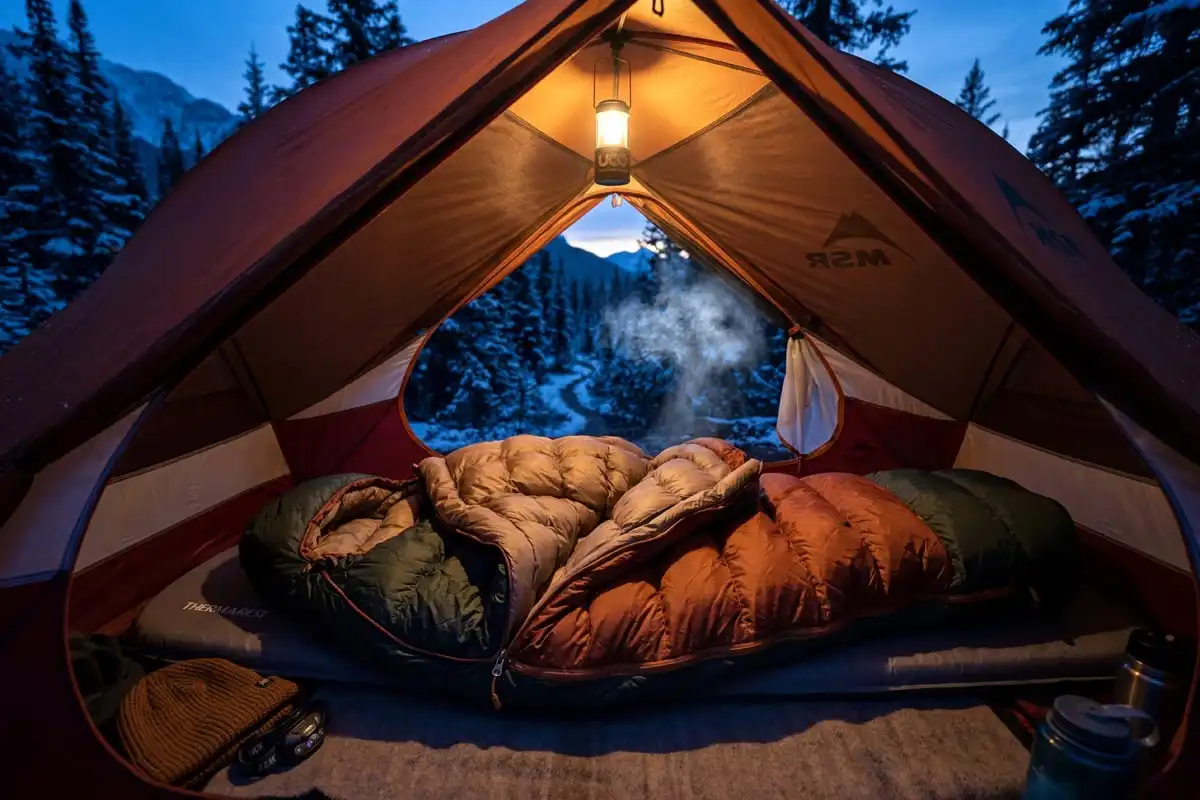
A sleeping bag keeps you warm by trapping the heat your body already makes and holding a layer of still air around you, which helps slow heat loss during a cold night. That is the basic idea, but a few different parts work together to make it happen. In this guide, I explain how the insulation works, which features help hold heat inside, and what you can do to sleep warmer in a tent or any other shelter.
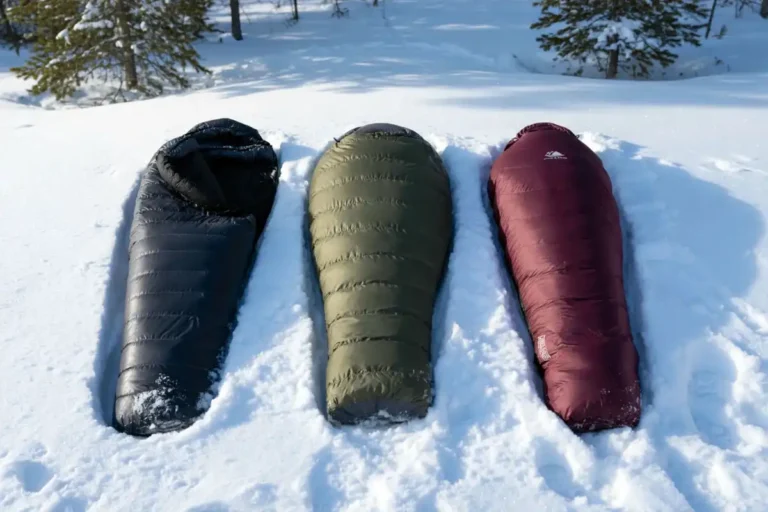
A sleeping bag keeps you warm by trapping a layer of still air around your body. Your body heat warms that air, and the insulation (down or synthetic fibers) stops it from escaping. The thicker the loft, the more heat the bag holds. A sleeping pad under the bag blocks heat loss into the cold ground.
How Does a Sleeping Bag Keep You Warm at Night?
A sleeping bag keeps you warm by reducing heat loss, not by generating heat. Your body gives off about 100 watts of warmth at rest. The insulation inside the bag traps that warmth inside tiny air pockets. Those pockets sit between you and the cold outside air.
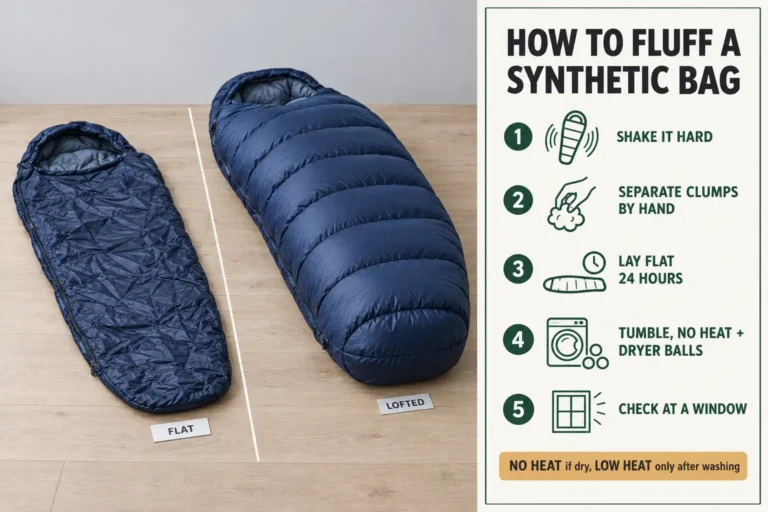
The more still air the bag holds, the better it insulates. A fluffy, lofted bag feels warmer than a thin, flat one at the same weight. The same insulation science applies to home walls, per the U.S. Department of Energy.
I always pair a cold-weather bag with a proper pad. Without the pad, the ground pulls heat out faster than the bag holds it. I cover full cold-sleep setups in my guide on staying warm in a tent when temperatures drop at night.
The Four Ways Your Body Loses Heat in a Tent
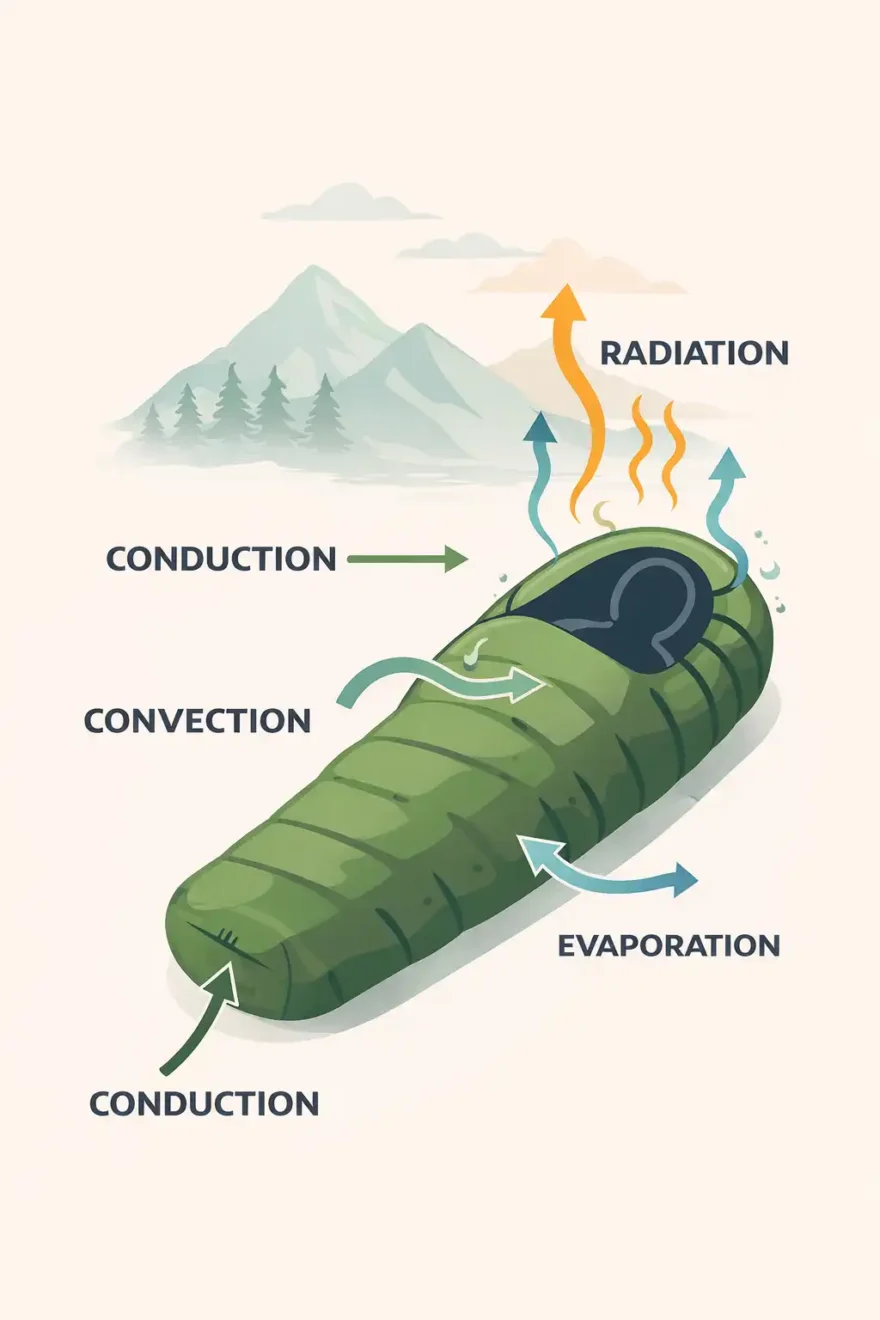
Your body loses heat through four paths. A sleeping bag blocks or slows each one.
- Conduction: heat flows from your skin into anything cooler that touches you, like the ground.
- Convection: moving air around your body carries warmth away. Still air inside the bag stops this.
- Radiation: body heat radiates out as infrared energy. The insulation absorbs and slows this.
- Evaporation: sweat cools the skin as it dries. A breathable shell lets moisture pass without soaking the fill.
A good bag covers all four paths at once.
The Main Parts of a Sleeping Bag That Hold Heat
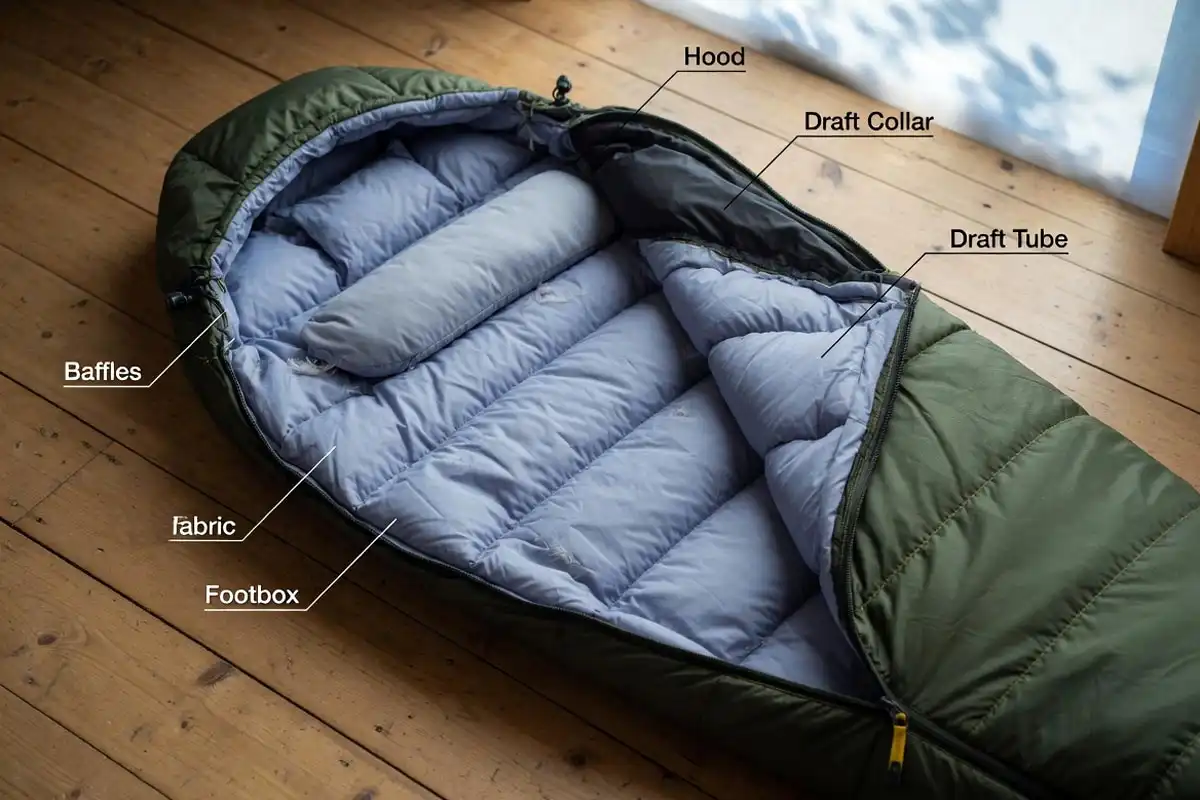
Every warm sleeping bag uses the same core parts:
- Shell fabric: blocks wind and light moisture.
- Insulation (fill): down feathers or synthetic fibers that create loft.
- Baffles: fabric walls that keep the fill evenly spread.
- Hood: seals around your head, where most heat escapes.
- Draft collar: a tube of insulation around your neck that stops warm air from leaking out.
- Draft tube: a strip of insulation behind the zipper.
- Footbox: a shaped section that traps warmth around your feet.
Missing any of these parts in cold weather creates cold spots fast.
Down vs Synthetic Insulation: Which Sleeping Bag Is Warmer?
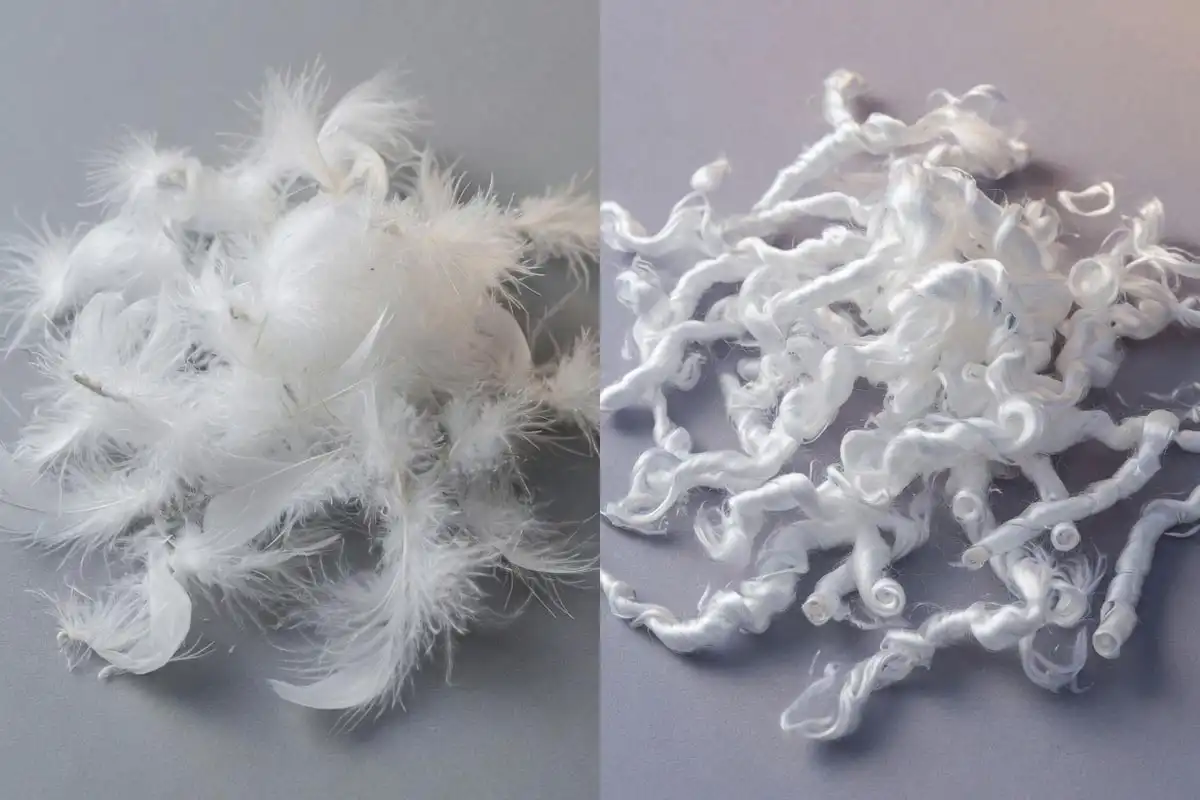
Down insulation is warmer per gram than synthetic. Quality down with 800 fill power holds more still air than any synthetic fiber of the same weight. A 20°F down bag often weighs 30 to 40 percent less than a same-rated synthetic bag.
Synthetic insulation keeps insulating when wet. Down collapses once soaked and loses most of its loft. In humid or rainy camps, synthetic wins on reliability. In dry cold, down wins on warmth-to-weight.
For help picking one, I wrote a full breakdown on the best sleeping bag options for cold weather.
Why Loft Matters More Than Weight
Loft is the thickness of the insulation once the bag is fluffed. More loft equals more trapped air, which equals more warmth. A 4-inch lofted bag holds more heat than a 2-inch lofted bag of the same weight.
Compression kills loft. Storing your bag stuffed for months flattens the fill. I keep mine in a large cotton storage sack at home and only compress it for the trail. Related reading on packing a sleeping bag the right way.
Why a Sleeping Pad Matters for Warmth
A sleeping pad blocks heat loss into the ground. The ground pulls heat through conduction faster than cold air does through convection. A bag on cold soil feels cold no matter the rating.
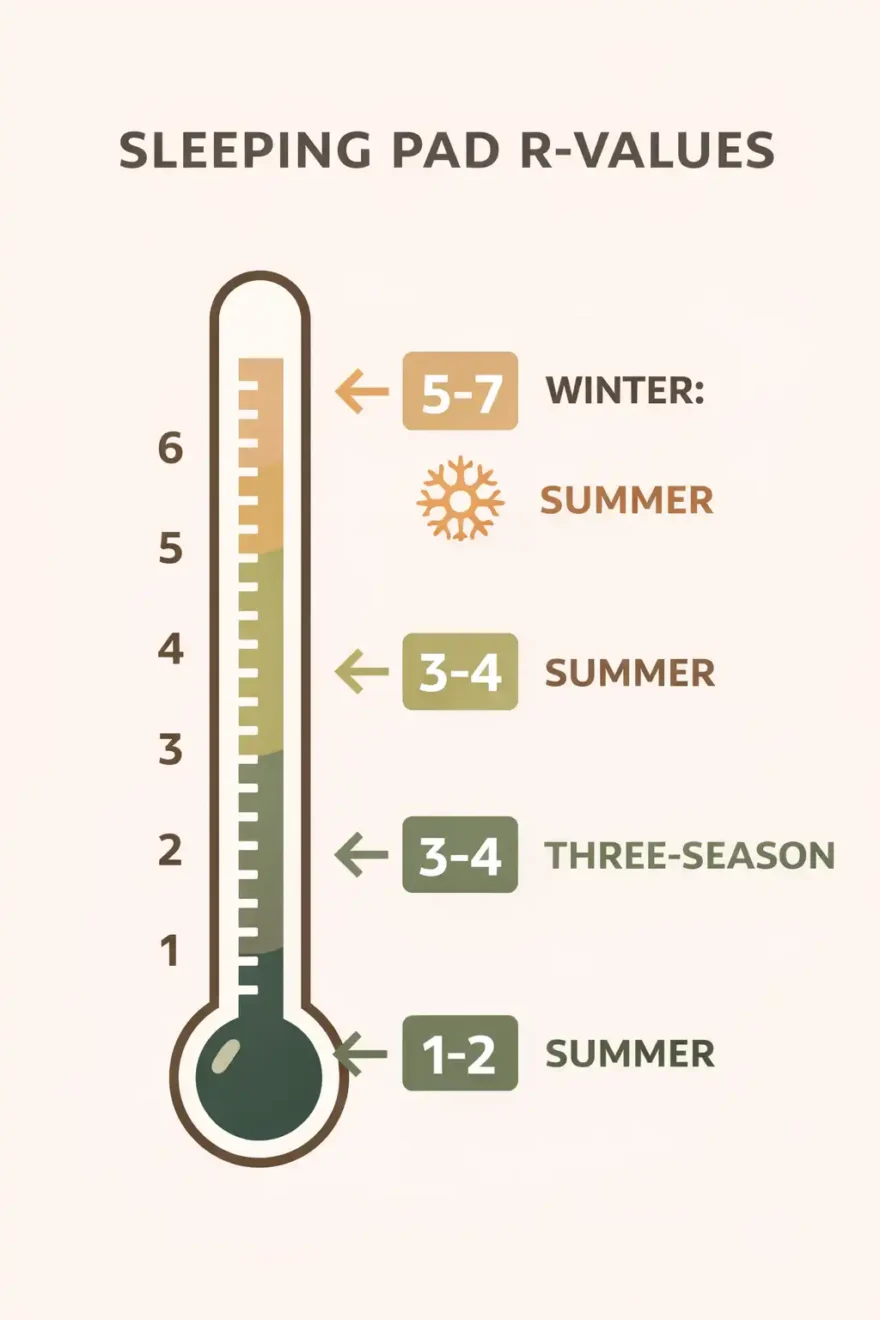
Pads use R-value to rate insulation. Higher R-value equals more insulation.
- R-value 1 to 2: summer only.
- R-value 3 to 4: three-season camping.
- R-value 5 and above: winter or snow.
For sub-freezing nights, I stack a closed-cell foam pad under an inflatable pad. Their R-values add together.
How to Read Sleeping Bag Temperature Ratings
Most quality bags follow the EN 13537 or ISO 23537 standard. These tests give three numbers:
- Comfort rating: the lowest temperature where a cold sleeper stays warm.
- Limit rating: the lowest temperature where a warm sleeper stays warm.
- Extreme rating: a survival-only number, not a comfort number.
I pick bags by the comfort rating, not the limit. For a planned 30°F night, I pick a bag with a 25°F comfort rating. That gives me a safety margin. For more on the thresholds, see my post on how cold is too cold to sleep in a tent without proper gear.
How to Make Your Sleeping Bag Warmer
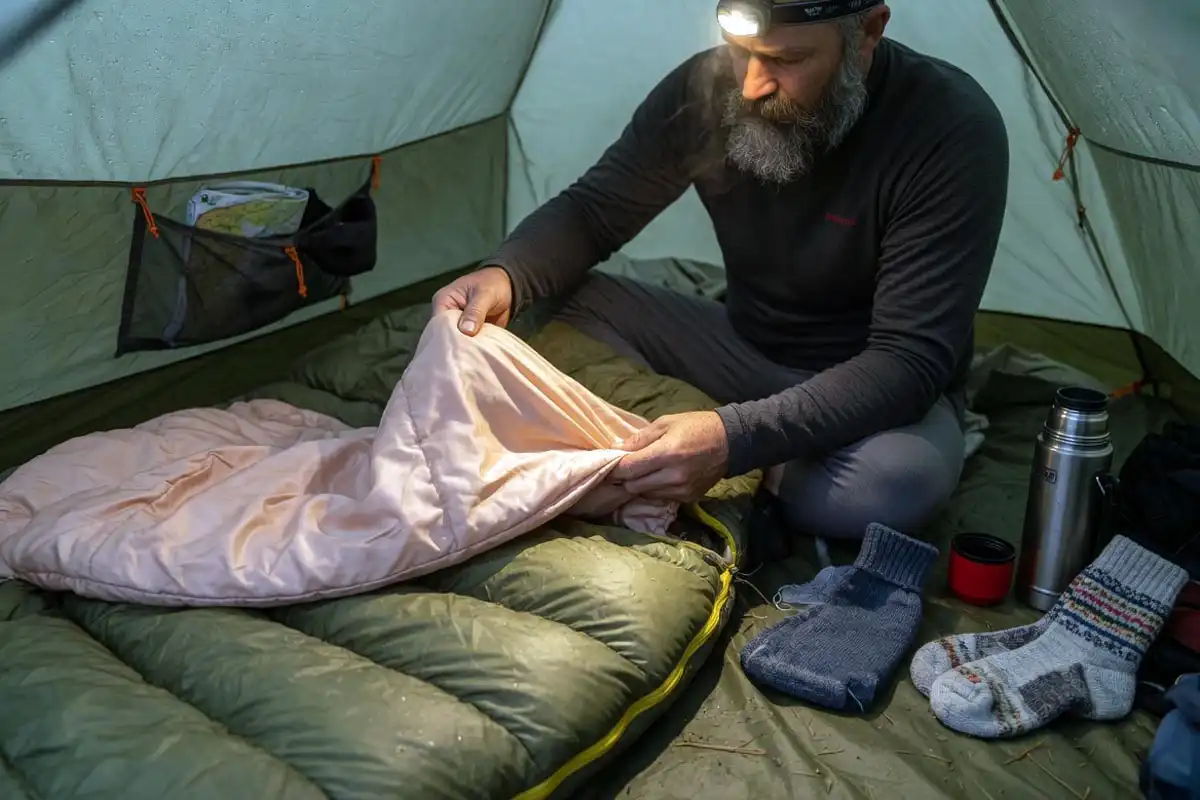
Small changes add real warmth. I use all of these on cold nights:
- Add a sleeping bag liner. A silk or fleece liner adds 5 to 15°F of warmth.
- Wear dry base layers. Clean merino or polyester wicks sweat and traps more air.
- Eat a snack before bed. Your body produces heat while digesting food.
- Drink warm water before sleep. Warm fluids raise core temperature.
- Fill a hard bottle with hot water. Place it in the footbox 20 minutes before bed.
- Close the hood and draft collar. Leave only your mouth and nose exposed.
- Vent the tent a little. Condensation soaks the shell and kills loft.
Good base layering starts on the trail. I cover that in my guide on layering clothes for cold wind on the trail.
Also learn: Staying Warm in a Sleeping Bag When Camping
Common Mistakes That Make a Sleeping Bag Feel Cold
Readers often tell me their bag feels cold. Nine times out of ten, one of these is the cause:
- Sleeping on bare ground with no pad or a summer pad.
- Wearing damp clothes inside the bag.
- Overdressing to the point of sweating, then freezing in wet layers.
- Breathing into the bag, which adds moisture to the fill.
- Storing the bag compressed, which flattens the loft.
- A dirty bag. Body oils and grime reduce loft.
A bag that lost loft regains most of it after a proper wash. See my guide on washing a sleeping bag without ruining the insulation.
Safety: Know the Signs of Cold Stress
A cold sleeping bag is not a minor problem. Violent shivering, confusion, slurred speech, and numb hands or feet signal early hypothermia. The CDC lists these as warning signs of cold-related illness.
Steps I take if I feel these signs:
- Add dry layers.
- Eat high-calorie food.
- Drink warm fluids.
- Move to a warmer shelter if possible.
- Call for help if symptoms worsen.
Never ignore shivering that will not stop. That is your body telling you the bag is failing.
FAQs about How Sleeping Bag Keep You Warm

Does a sleeping bag get warmer the longer you stay in it?
Is it warmer to sleep naked in a sleeping bag?
Why does my sleeping bag feel cold even though the rating says it should be warm?
Can you use two sleeping bags stacked for extra warmth?
How long does the warmth of a sleeping bag last?
Final Thoughts
A sleeping bag keeps you warm by trapping the heat your body already produces. The insulation, the shape, the hood, and the pad under you all work together as one system. Pick a bag with the right comfort rating for your coldest expected night. Add a pad with the right R-value. Keep your clothes dry. Stay fed and hydrated. That is the full setup for a warm night in any tent.