How to Stay Warm in a Sleeping Bag When Camping

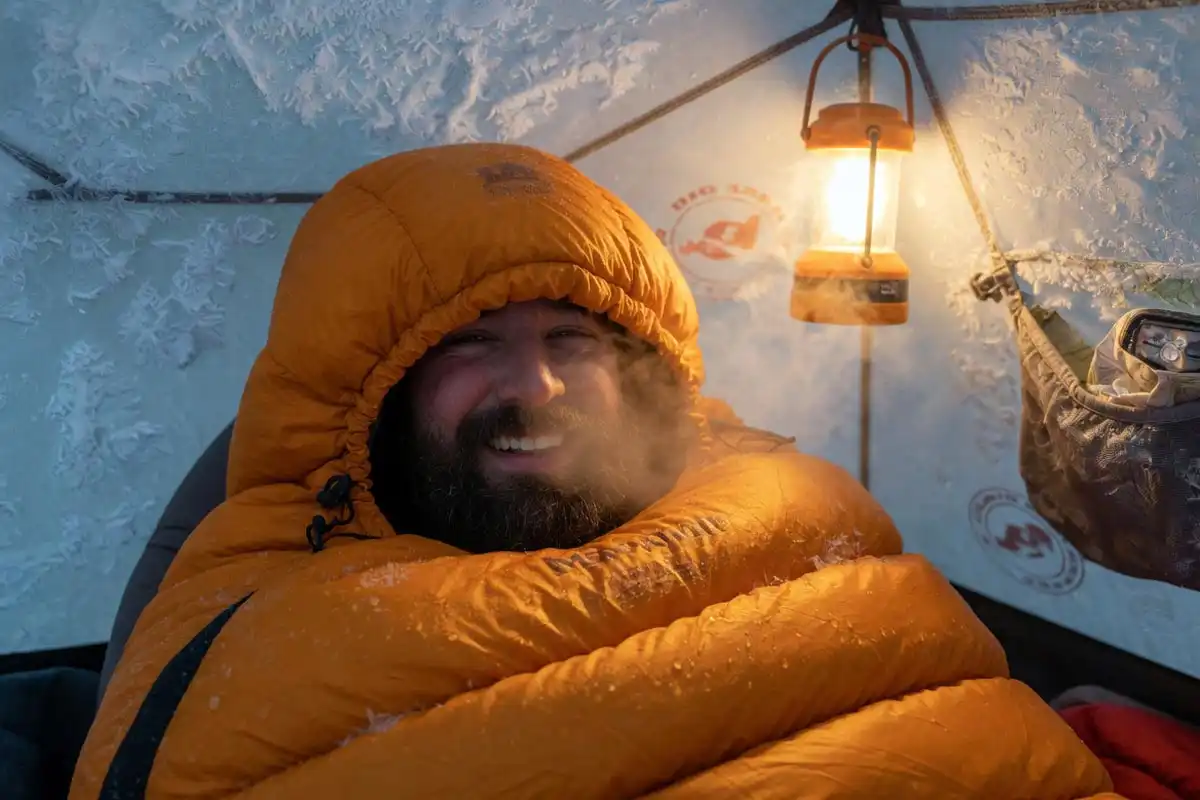
A warm sleeping bag starts with dry insulation, a closed hood, and a quality pad underneath your body. Your body heat stays trapped only when air cannot escape through gaps or damp fabric. This guide walks through pre-sleep prep, proper layering, campsite choice, and fixes for cold spots, so you sleep through the night without waking up shivering at 3 a.m.
To stay warm in a sleeping bag: eat a small warm snack before bed, change into dry base layers, use an insulated pad with an R-value matched to the temperature, cinch the hood around your head, fill empty space with clothing, and keep a warm water bottle near your core.
What Keeps a Sleeping Bag Warm
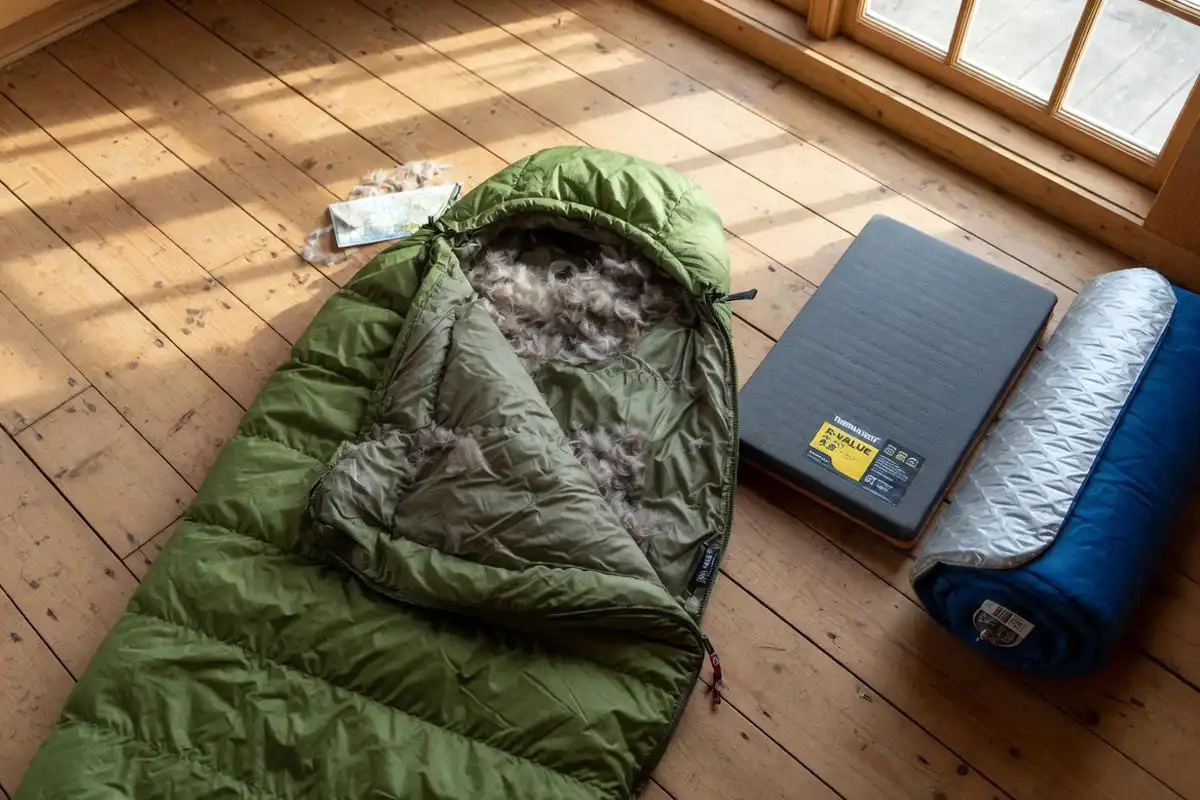
A sleeping bag traps still air inside its insulation. That still air holds your body heat against your skin. Down fill traps more heat per ounce. Synthetic fill holds heat when damp.
Three parts control warmth:
- Insulation loft (fluffier fill holds more air)
- Shell fabric (blocks wind, breathes moisture)
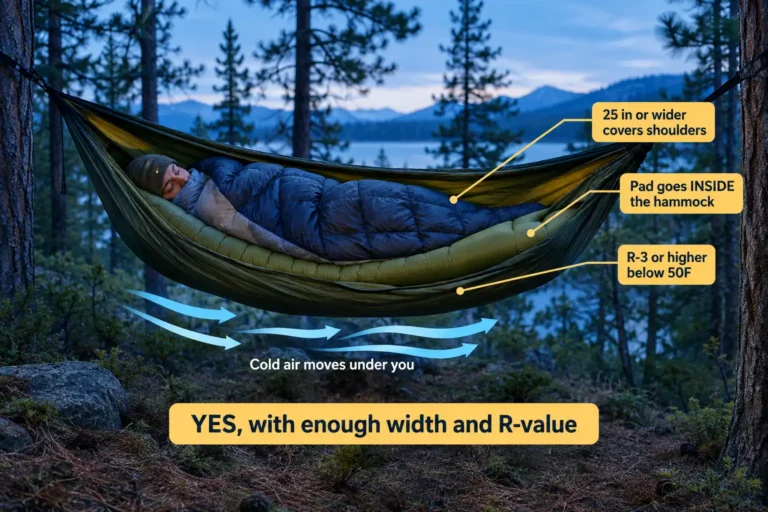
- Sleeping pad R-value (stops ground from pulling heat out)
The pad matters as much as the bag. A thin pad on frozen soil drains heat from your back within minutes.
When to Prep for a Cold Night
Start warmth prep one hour before sleep. Your body cools once you stop moving. A cold body cannot reheat inside a cold bag. I learned this after a November night near Kaptai Lake, where I climbed into my bag already cold and shivered for two hours.
Eat a small snack 30 minutes before bed. Nuts, a chocolate bar, or cheese give slow-burning calories. Do light jumping jacks for 30 seconds to raise your core temperature.
For a deeper look at tent temperature limits, I covered that in a separate post on cold tent thresholds.
Where to Pitch for Warmer Sleep
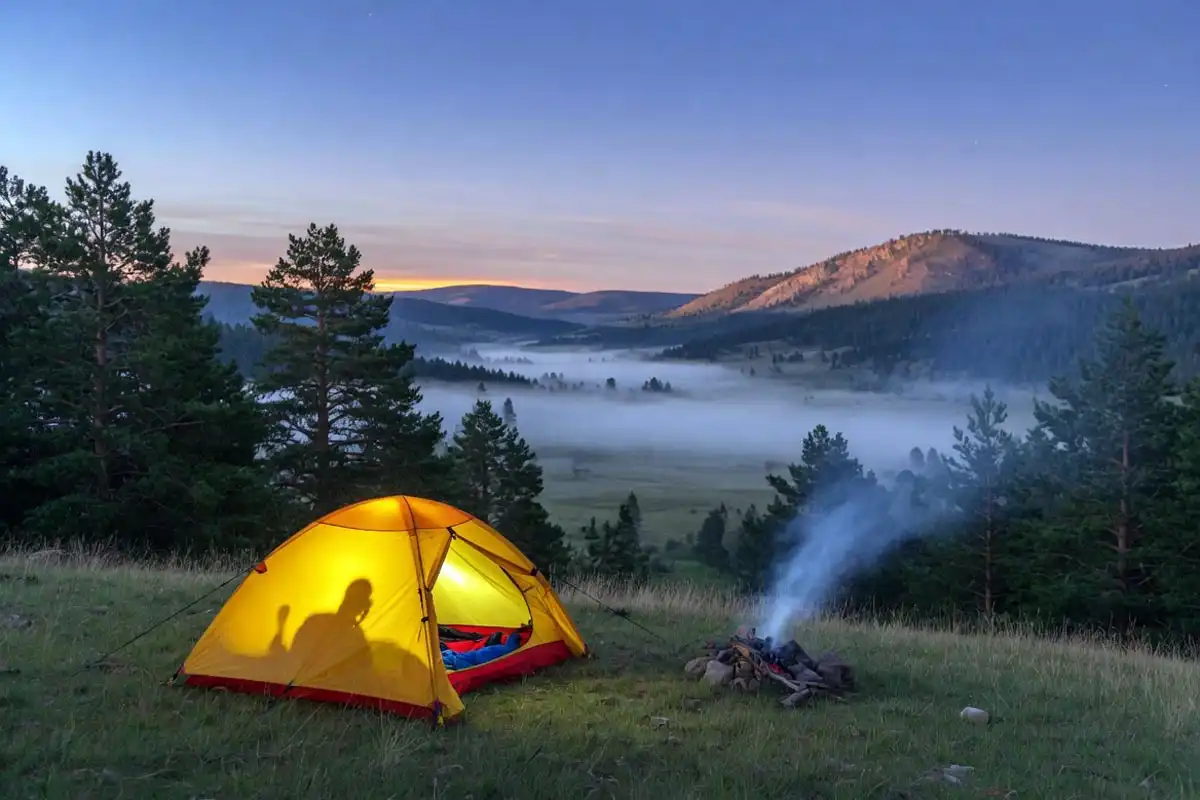
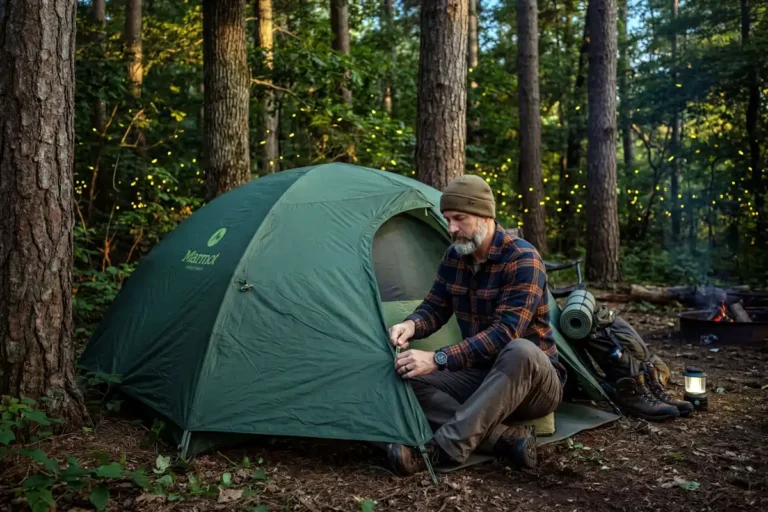
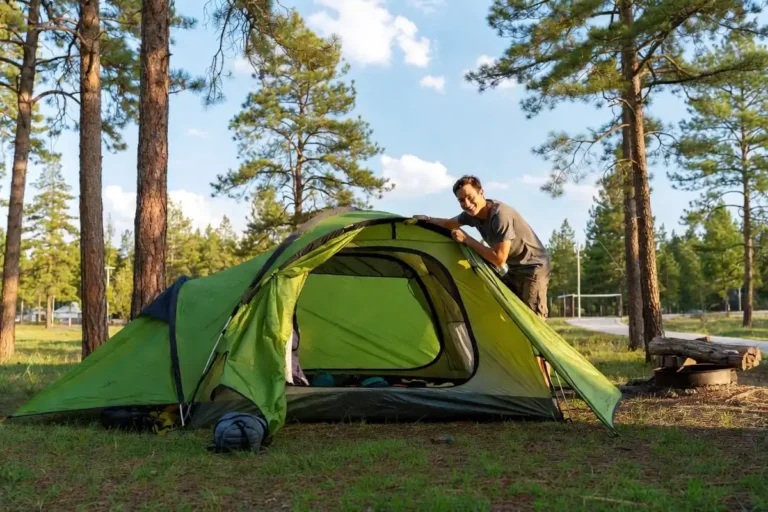
Campsite choice changes tent temperature by 5 to 10°F. Cold air sinks into valleys and streambeds at night. Ridge tops get wind but stay warmer than low pockets.
Pick a spot that:
- Sits 20 to 30 feet above the valley floor
- Blocks wind with trees or rocks on the windward side
- Drains water away from your pad
- Gets morning sun to warm your gear at dawn
Avoid dry creek beds, open meadows, and spots near water. Wet ground pulls heat through your pad.
How to Stay Warm in a Sleeping Bag: Step by Step
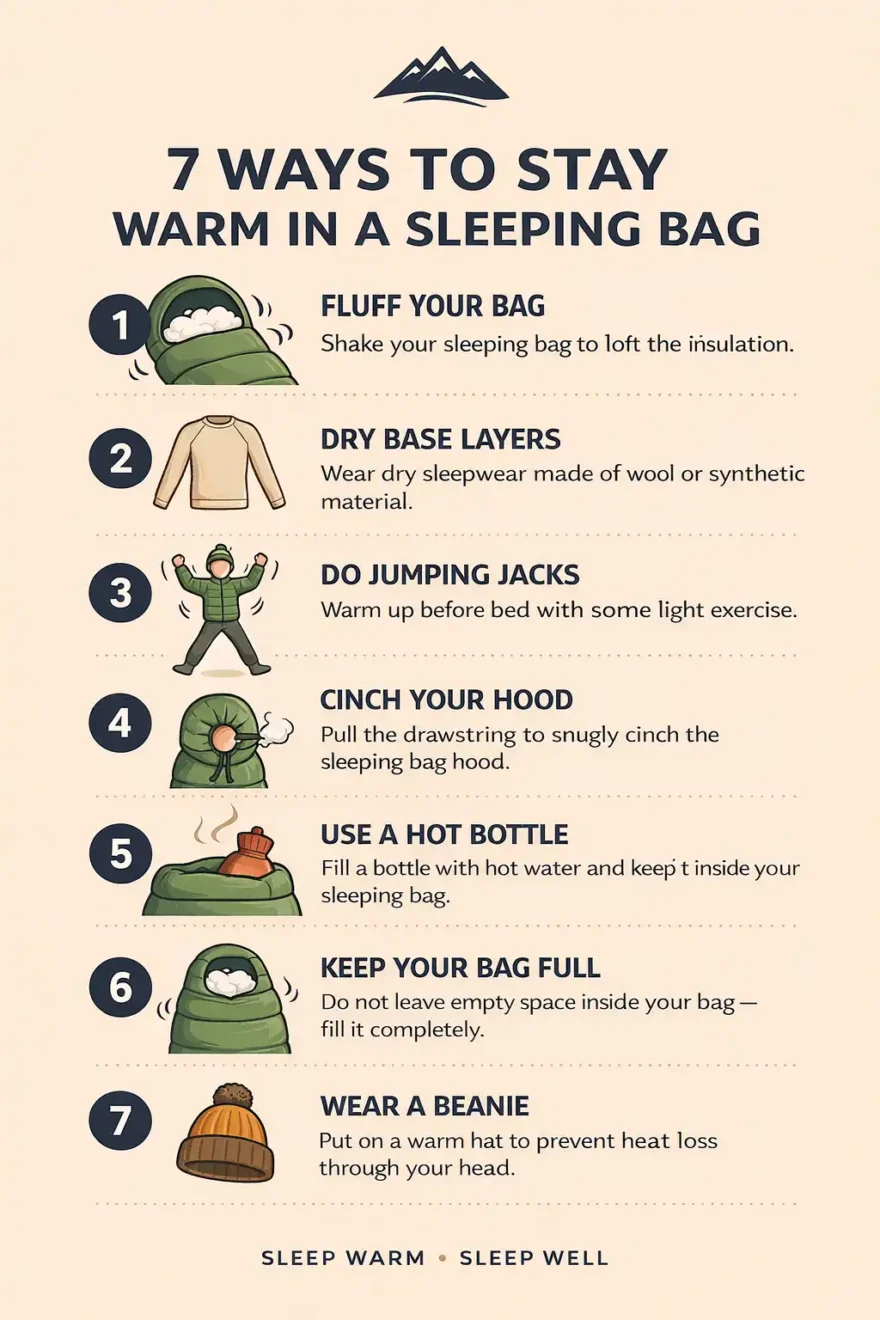
Follow these steps in order. Skipping one creates a cold spot.
Step 1: Check Your Gear Before Sunset
Unpack your bag one hour before bed. Compression kills loft, so an hour of fluff time restores insulation. Check the pad for punctures. A flat pad equals no insulation.
Step 2: Dry Out Everything Damp
Swap sweaty clothes for dry base layers. Merino wool or polyester wick moisture; cotton holds it and chills you. I keep a dedicated sleep outfit in a dry bag. For damp bedding rescue tips, I walked through that process in my post on keeping bedding dry.
Step 3: Warm Your Core First
Do 30 seconds of jumping jacks or push-ups outside the tent. Your core needs to feel warm before you seal inside the bag. Enter the bag warm, not cold.
Step 4: Layer Smart Inside the Bag
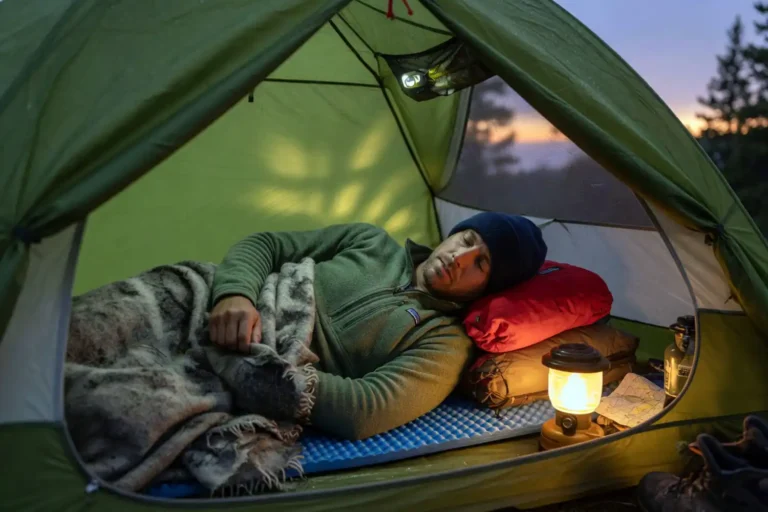
Wear a base layer top, long johns, wool socks, and a beanie. A beanie matters most. Your head radiates heat fast. Skip thick fleece inside the bag because thick clothing compresses bag insulation. For full cold weather layering logic, check my layering breakdown.
Step 5: Fill Empty Space
Pack extra clothing around your feet and knees. Empty air pockets require energy to heat. A half-empty bag runs 5 to 10°F colder than a filled one.
Step 6: Cinch the Hood
Pull the hood drawcord until only your nose and mouth show. Breathing into the bag soaks insulation with moisture, so keep your face out. The hood keeps 20 to 30% of body heat inside.
Step 7: Add a Hot Water Bottle
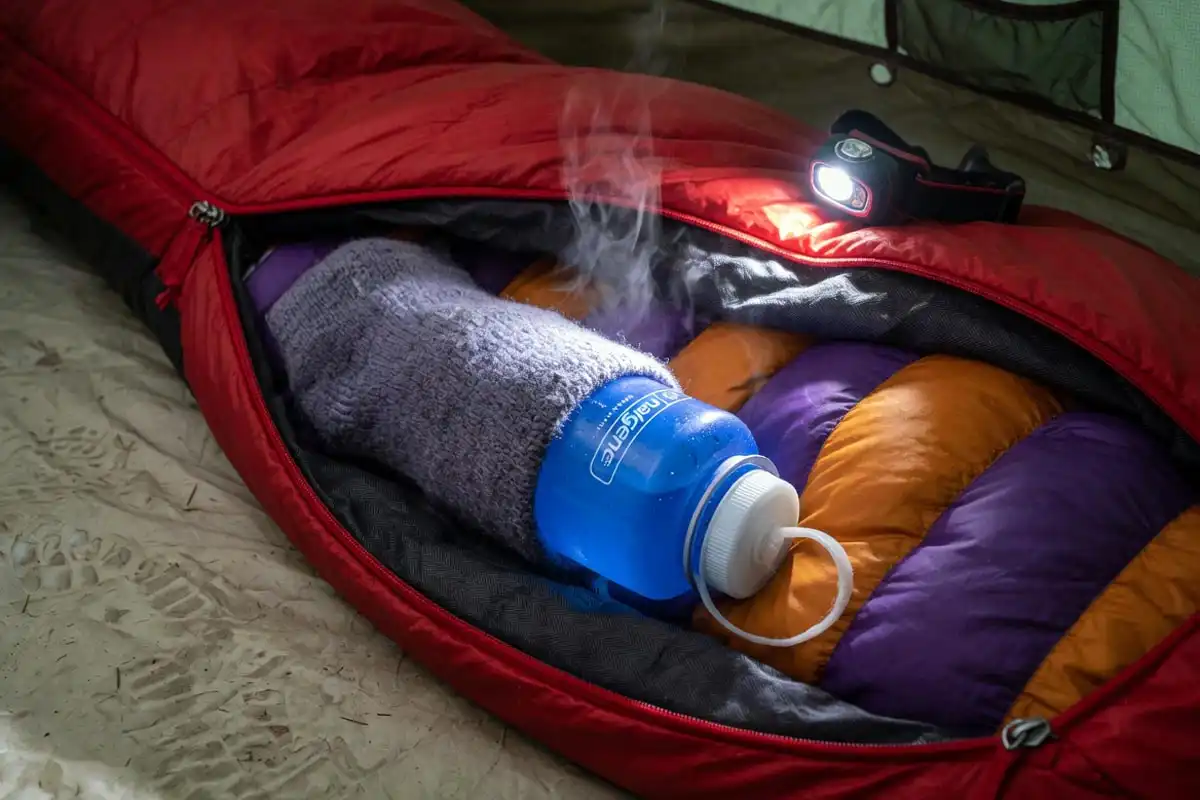
Fill a hard Nalgene with hot water. Wrap it in a sock. Place it near your core, groin, or inner thighs. These areas carry major arteries. One bottle gives 4 to 6 hours of added heat.
Solutions for Nights Below Freezing
When temperatures drop below 30°F, add these fixes:
- Pair a 20°F bag with a liner rated +15°F for a 5°F total rating
- Use two pads stacked (foam under inflatable) for combined R-value
- Eat a high-fat snack at 2 a.m. if you wake up cold
- Keep tomorrow’s clothes inside the bag so they warm up
A sleeping bag liner adds 5 to 25°F depending on fabric. Silk liners add 5°F; fleece liners add 10 to 15°F. For bag ratings in cold zones, I compared options in my review of cold weather sleeping bags.
Troubleshooting Cold Spots
Cold Feet
Cold feet point to a thin pad, poor blood flow, or damp socks. Fixes:
- Add a closed-cell foam pad under your feet
- Pack a dry jacket around your feet
- Change to fresh wool socks
Cold Back
Cold from below means pad failure. Check for leaks. Add insulation between pad and ground.
Cold Shoulders
Old bag, compressed fill, or open hood. Shake the bag to restore loft. Cinch the hood fully.
Damp Insulation
Down loses around 80% of its warmth when wet. Move the bag to open air in the morning. Pack only a fully dry bag.
Mistakes to Avoid
- Wearing too many layers inside the bag. Compression kills loft.
- Breathing into the bag. Moisture soaks the insulation.
- Sleeping on a thin summer pad in winter. The ground steals heat fast.
- Going to bed cold. A cold body cannot reheat inside a cold bag.
- Storing the bag compressed between trips. Long compression flattens insulation permanently.
- Skipping the beanie. An uncovered head loses heat fast.
Safety Notes
Watch for hypothermia signs: shivering that will not stop, slurred speech, stumbling, or confusion. The CDC lists these warning signs on its cold-weather safety page. If shivering stops but the person still feels cold, that points to severe hypothermia and needs fast action.
Never sleep in a wet bag in freezing weather. Wet down insulation gives near-zero protection. Change into dry clothes, warm up with another person’s body heat if available, and start a fire or get to shelter.
For a full response plan, I covered hypothermia steps in my safety guide.
Also check the forecast before you set up camp. The National Weather Service publishes a wind chill chart that lists how fast bare skin freezes at different temperature and wind combinations.
FAQs about Staying Warm in a Sleeping Bag

Does wearing more clothes inside a sleeping bag make you warmer?
Should I sleep naked in a sleeping bag?
Can I use a hot water bottle in a down sleeping bag?
Why do I still feel cold in a bag rated for the temperature?
How does a liner add warmth to a sleeping bag?
Final Thoughts
A warm night in a sleeping bag comes from small choices made before you climb in. Dry clothes, a warm meal, a fluffed bag, the right pad, and a cinched hood cover most cold-night problems. The rest gets solved by smart campsite placement and a hot water bottle near your core. Sleep warm, wake rested.