How Much Firewood to Bring for Camping: 7 Smart Packing Rules

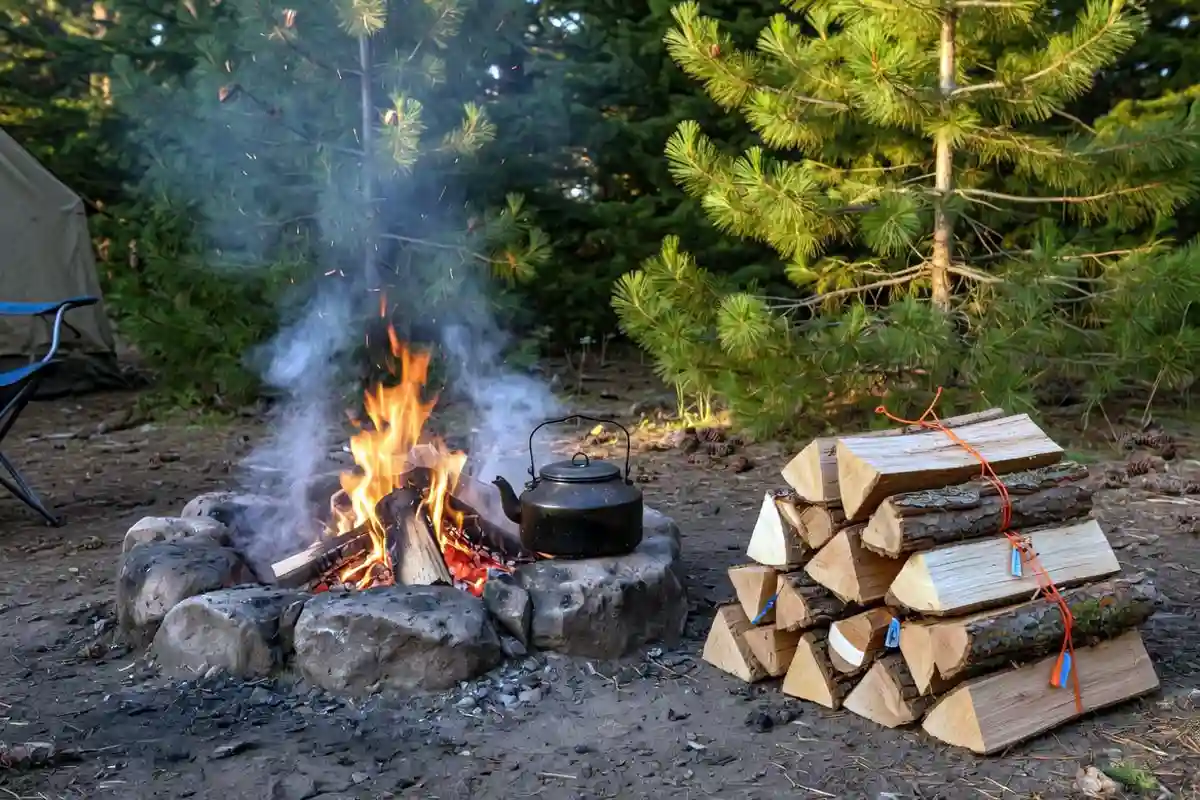
Firewood to bring for camping usually comes to about two to five bundles per night, depending on whether the fire is used for cooking, warmth, or both. This guide breaks down firewood amounts by trip length, group size, weather conditions, and fire purpose, so you pack the right load without hauling surplus wood or running short of fuel after dinner.
To pack the right amount of firewood for camping, bring two bundles per night for a short cooking fire and four to five bundles per night for a longer warming fire. A standard bundle holds about 0.75 cubic feet, which gives roughly two to three hours of steady burn in an open ring.
What Counts as a Bundle of Firewood
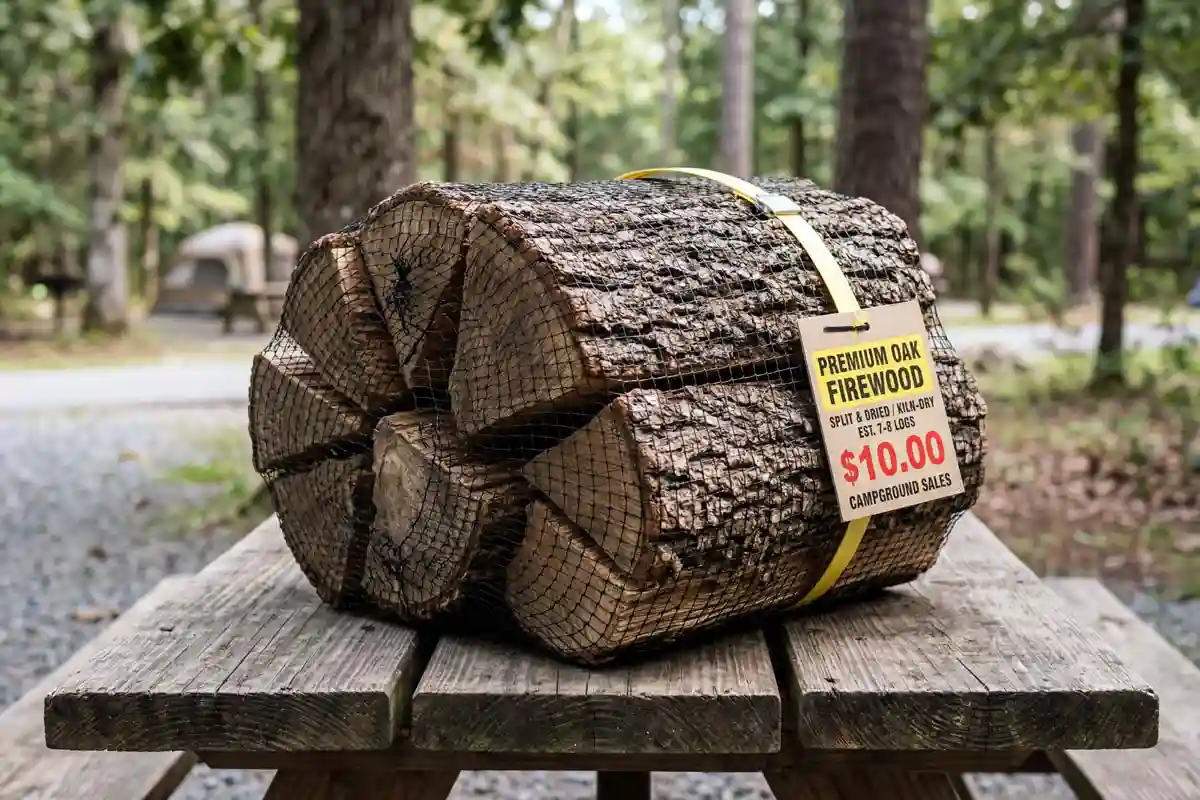
A standard firewood bundle holds about 0.75 cubic feet of split wood, which works out to 6 to 8 pieces depending on log thickness. One bundle burns for two to three hours in an open fire ring. Hardwoods like oak and maple burn longer and hotter. Softwoods like pine catch fast but finish quicker.
Bundle weight runs 15 to 20 pounds for dry hardwood. Campgrounds in the United States price bundles between $5 and $8 on average. Knowing bundle size keeps your packing math simple and your vehicle load honest.
How Much Firewood Per Night by Fire Type
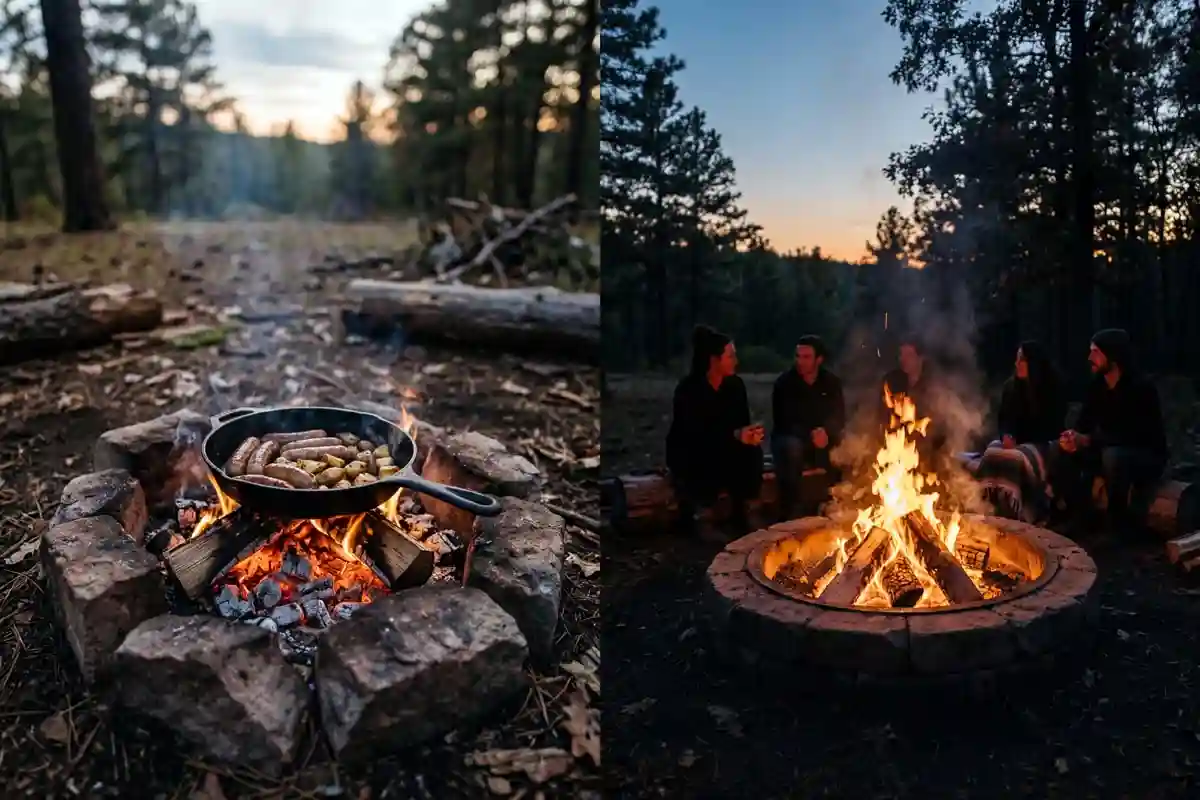
Cooking fires consume less wood than warming fires. Here is the breakdown I use on trips around Kaptai Lake and the Keokradong ridge:
- Cooking-only fire (about 1 hour active): 1 bundle
- Cooking plus short sit (2 to 3 hours): 2 to 3 bundles
- Full evening fire (4 to 5 hours): 4 to 5 bundles
- Extended fire until late night (6-plus hours): 6 to 7 bundles
If the fire handles both dinner prep and evening warmth, add one bundle to the cooking estimate. Starting a fire in wet ground conditions also raises wood use, because damp kindling takes longer to catch.
How Group Size and Trip Length Change Firewood Needs
Group size does not multiply wood use as much as people assume. Four campers share one fire, so wood burns at the fire’s pace, not the group’s. What changes is meal time. Larger groups cook longer, which adds one extra bundle per night for a group of four to six people.
For trip length, multiply nightly estimates by planned nights, then add a 20 percent buffer:
- 1 night solo: 2 to 3 bundles
- 2 nights for two campers: 6 to 8 bundles
- 3 nights for four campers: 12 to 15 bundles
When Weather Changes Your Firewood Load
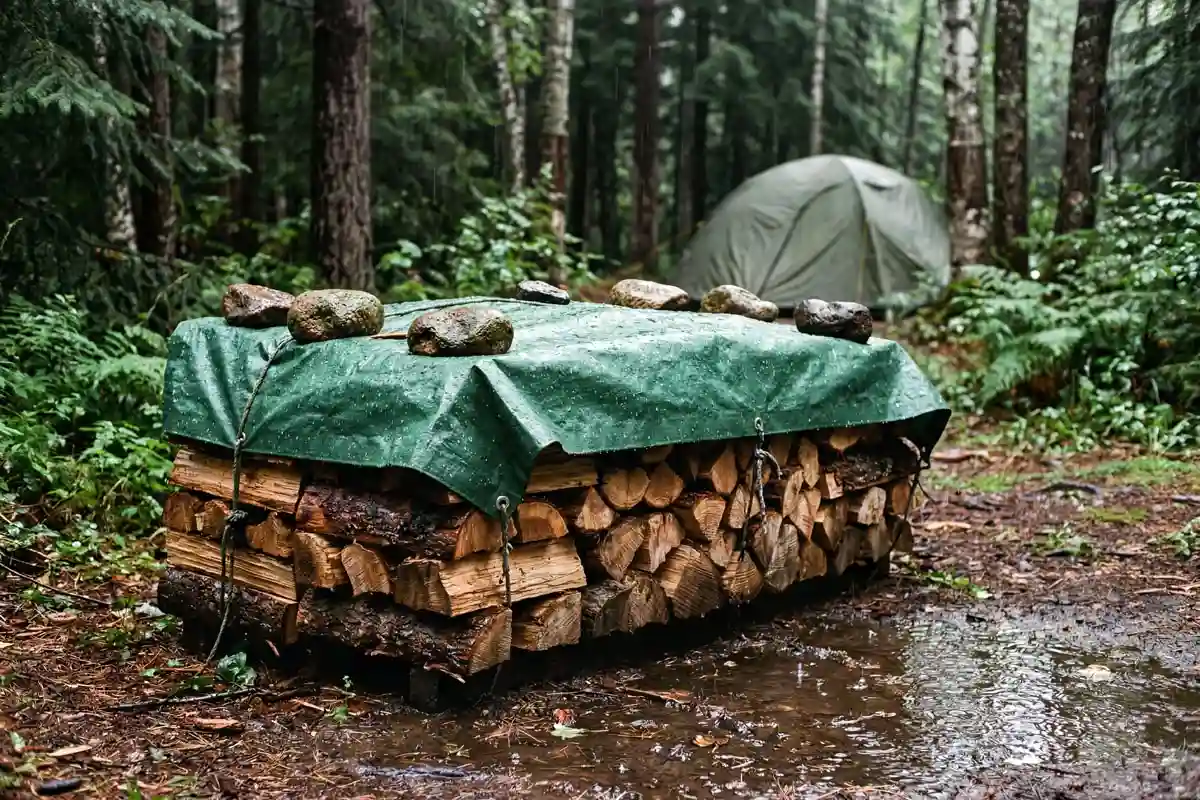
Cold nights push wood use up by 30 to 50 percent. A fire at 40°F / 4°C needs steady feeding to keep hands and toes warm. Rain soaks kindling, so pack dry tinder in a sealed bag and add one bundle of dry wood per wet night.
Wind pulls flames faster through the wood, which shortens burn time. In strong gusts, build a low fire in a sheltered ring and ration fuel. Summer nights often need only one or two bundles, since cooking is the main purpose.
Where to Source Firewood for Camping
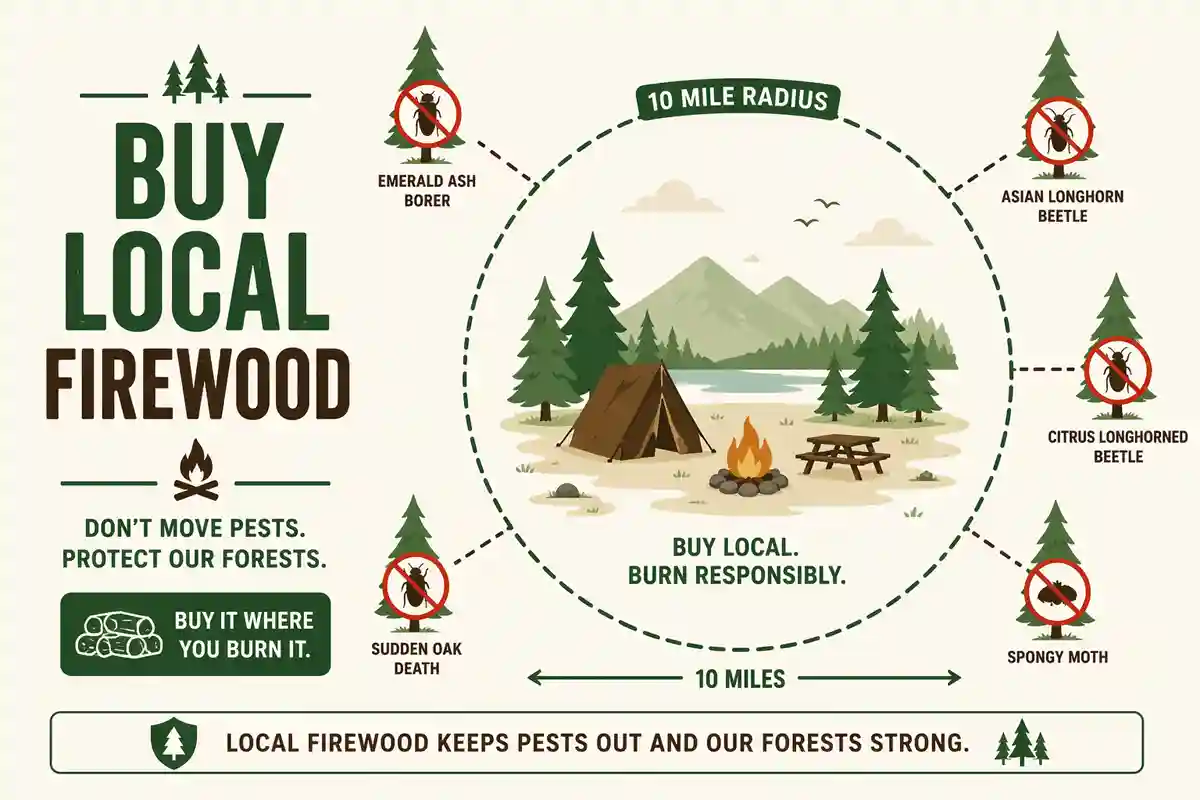
Buy firewood within 10 miles of your campsite. Moving firewood across regions spreads invasive pests like the emerald ash borer, which has killed tens of millions of trees in North America per USDA records. Many state parks ban outside firewood at the entrance gate.
Sourcing options:
- Campground host kiosks that sell bundles on-site
- Gas stations and general stores near park entrances
- Certified heat-treated firewood for long-distance trips
- Gathered deadwood where the land manager permits it
Gathering is allowed on some federal lands with a free-use permit. National parks often prohibit collection outright. Check the land agency page before you pack an axe or saw.
How to Estimate Firewood for Your Trip (Step by Step)
Step 1: Count planned fire hours per night. List cooking hours and sitting hours separately.
Step 2: Multiply total fire hours by 0.4 bundles per hour. A four-hour fire needs about 1.6 bundles, so round up to 2.
Step 3: Add one bundle per night if temperatures drop below 50°F / 10°C.
Step 4: Add half a bundle of kindling and small splits for each wet night.
Step 5: Add a 20 percent buffer for extended talks, cold snaps, or delayed starts.
A two-night trip with a four-hour nightly fire in cool weather works out this way: (2 bundles × 2 nights) + (1 bundle × 2 cold nights) + 20 percent buffer equals 7 to 8 bundles total.
Common Mistakes When Packing Firewood
- Bringing wood from home across state or county lines, which spreads tree pests
- Buying green or unseasoned wood that hisses and produces heavy smoke
- Skipping kindling, which stalls every fire start
- Stacking bundles in an open truck bed during rain without a tarp
- Underestimating cook time, which drains fuel before dinner finishes
Good heat control matters too. Regulating heat for campfire cooking saves wood, because you feed coals instead of open flames during cook time. When cooking meat over campfire coals, a steady coal bed uses half the wood of a flaming fire.
Safety Notes on Firewood Storage and Use
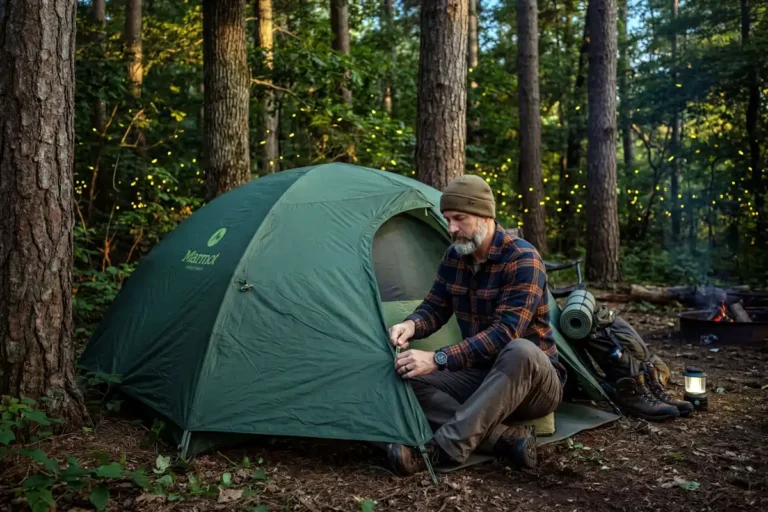
Store firewood 15 feet or more from your tent. Sparks travel on wind, and synthetic tent fabrics melt on contact. Cover the pile with a tarp if rain is in the forecast.
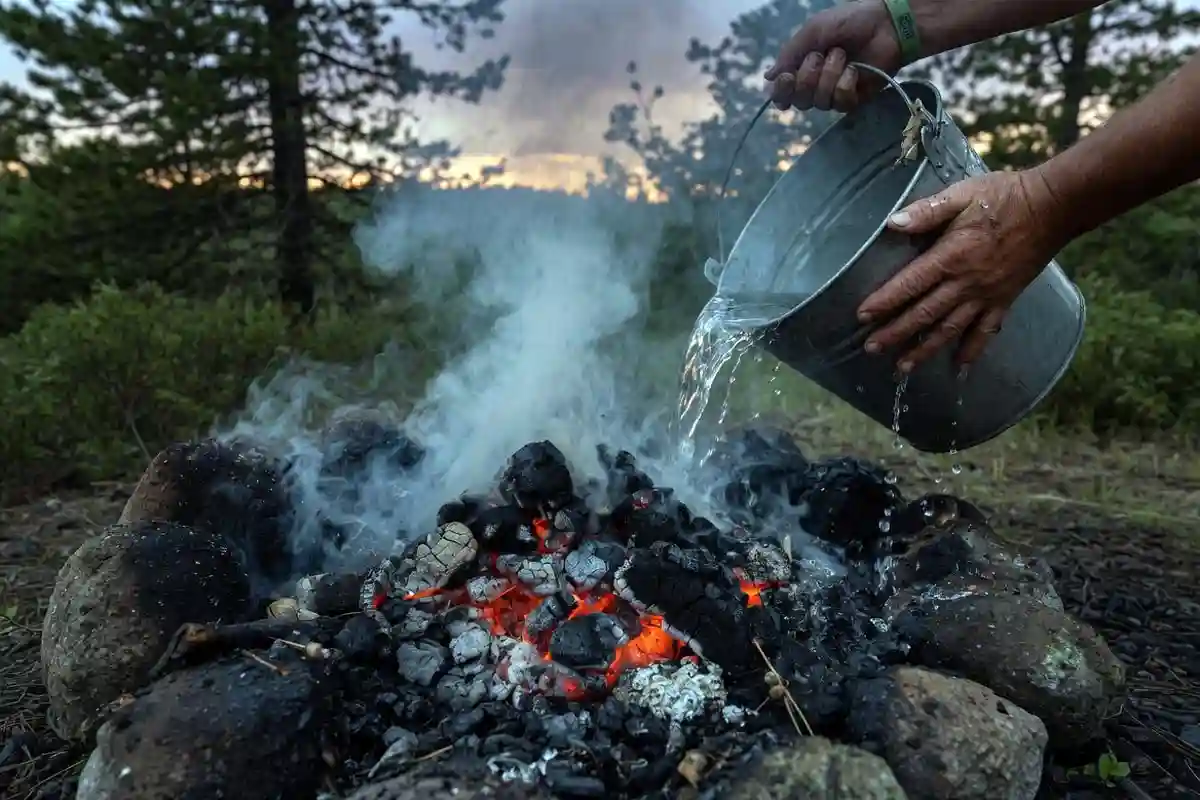
Burn only in the provided ring or a portable fire pan. The National Park Service requires full extinguishment before leaving camp or sleeping, which means cold-to-the-touch ash. Drown the fire with water, stir the coals, then drown again until no steam rises.
Never burn pressure-treated lumber, pallets with nails, or painted wood. These release toxic smoke. Keep a bucket of water or sand within arm’s reach of the fire ring at all times.
FAQs about Firewood to Bring for Camping

How many bundles of firewood equal a cord?
Is it cheaper to bring firewood from home?
How long does one bundle of firewood burn?
Can I gather firewood at the campsite?
How much kindling should I bring?
Final Words
Packing the right amount of firewood comes down to three factors: how long the fire burns, how cold it gets, and how wet the ground is. Two bundles handle a basic cooking fire, while four to five bundles cover a full evening of warmth. Buy local to protect forests from pests, and douse the fire until the ashes are cold before sleeping. With a little planning, you stay warm, eat well, and leave no trace behind.