How to Clean a Moldy Tent Without Destroying the Coating
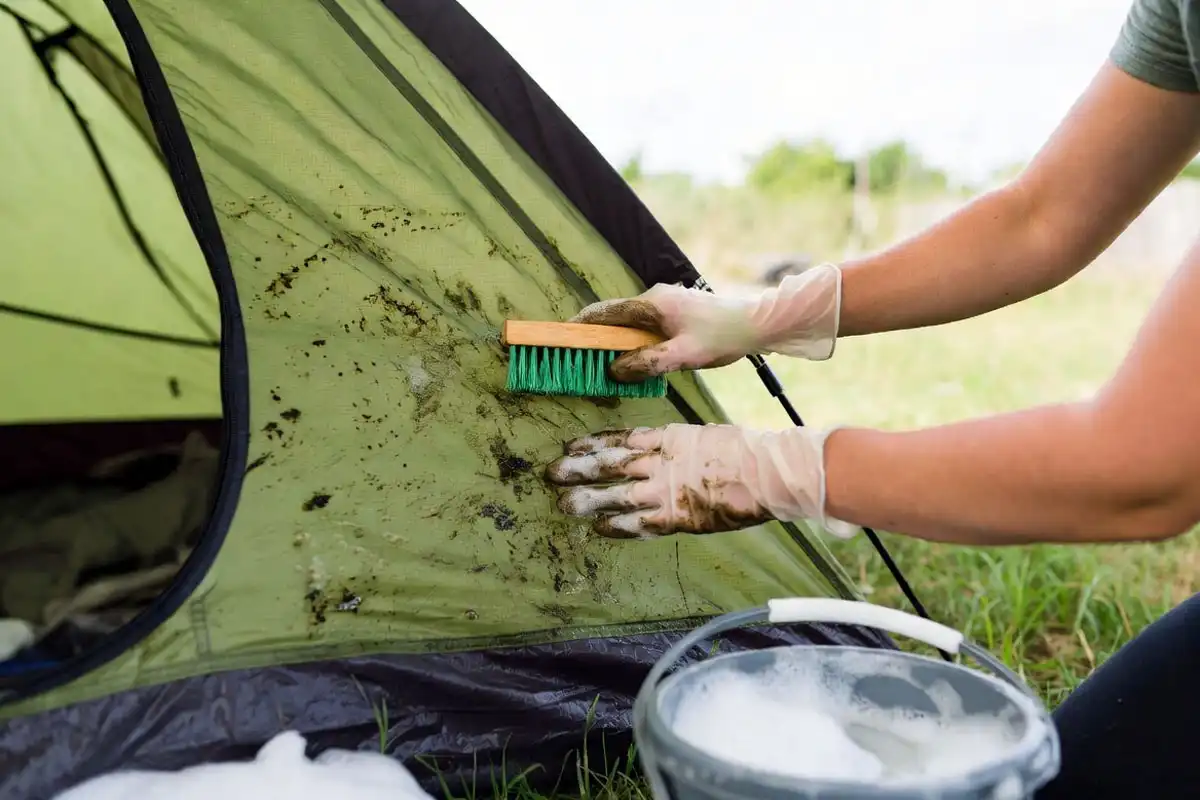
To clean a moldy tent without destroying the coating, it helps to know that mold starts growing on tent fabric when moisture stays trapped inside a packed tent for more than 24 to 48 hours. This guide covers the full cleaning process for mold, mildew, and musty odors, along with the exact steps to prevent regrowth. You will learn which cleaning solutions work, which ones damage tent coatings, and how to restore your tent safely.
To clean a moldy tent without damaging the coating, mix one cup of white distilled vinegar per gallon of warm water. Scrub the moldy areas with a soft-bristle brush, rinse 2 to 3 times with clean water, and air dry completely in shade before storing. Never use bleach or a washing machine on tent fabric.
What Makes a Tent Moldy, Musty, or Mildewed?
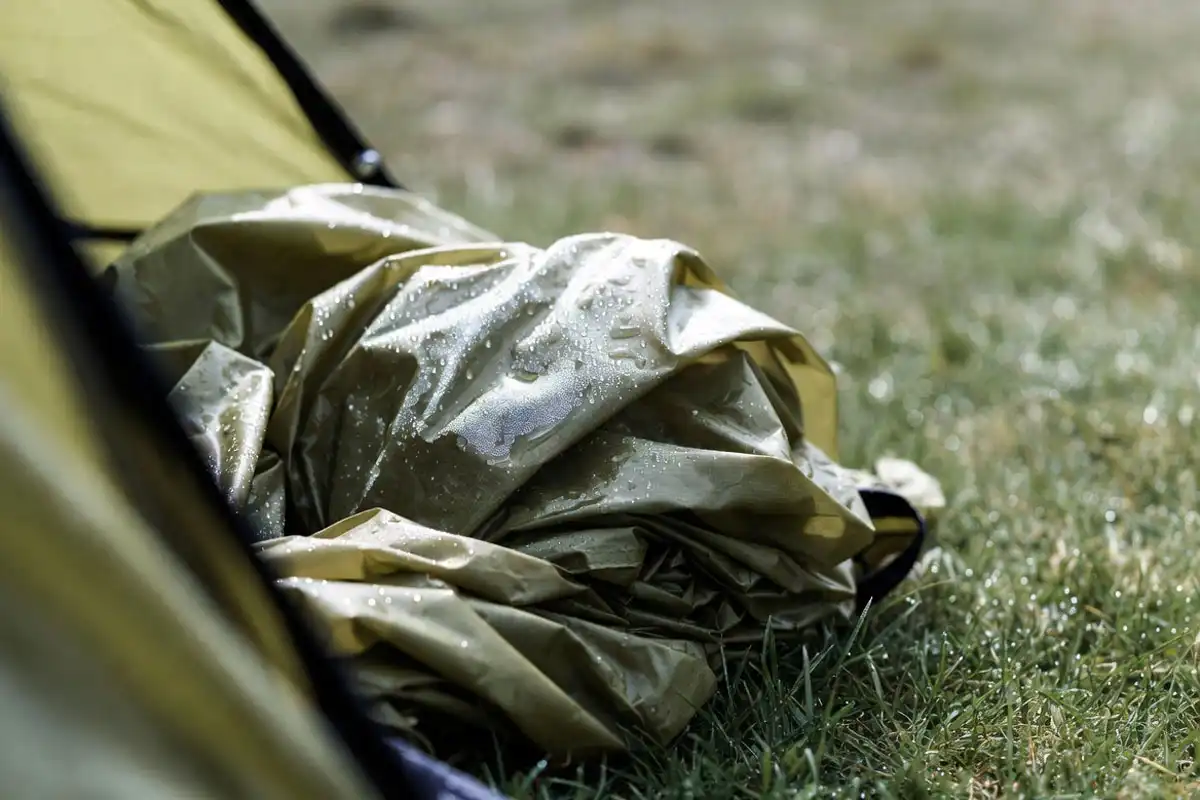
Moisture is the single trigger behind all three problems. When you pack a damp tent into a stuff sack, trapped water activates mold spores, mildew growth, and musty bacteria within 24 to 48 hours. Dirt, body oils, pollen, and food residue on the fabric speed up the process by feeding these organisms.
What Is Mold on a Tent?
Mold is a fungus that grows into fabric fibers. It appears as black, green, or dark brown spots that feel slightly raised or fuzzy. Mold weakens the tent’s nylon or polyester structure over time and produces a strong sour odor. Left untreated, mold eats through the fabric and creates holes. The CDC states that mold grows on any surface where moisture sits without airflow.
What Is Mildew on a Tent?
Mildew is a surface-level fungus that sits on top of the fabric. It appears as flat, powdery white or gray patches. Mildew causes a mild musty smell and wipes off more easily than mold. It does less structural damage, but it turns into deeper mold when left untreated in damp conditions.
What Does a Musty Tent Mean?
A musty smell without visible spots signals early-stage microbial growth inside the fabric weave. Bacteria and fungi release waste compounds that produce that stale, damp odor. A musty tent needs cleaning even if no mold or mildew is visible yet. The smell means moisture sat in the fabric long enough to start biological activity.
Mold vs. Mildew vs. Musty Smell
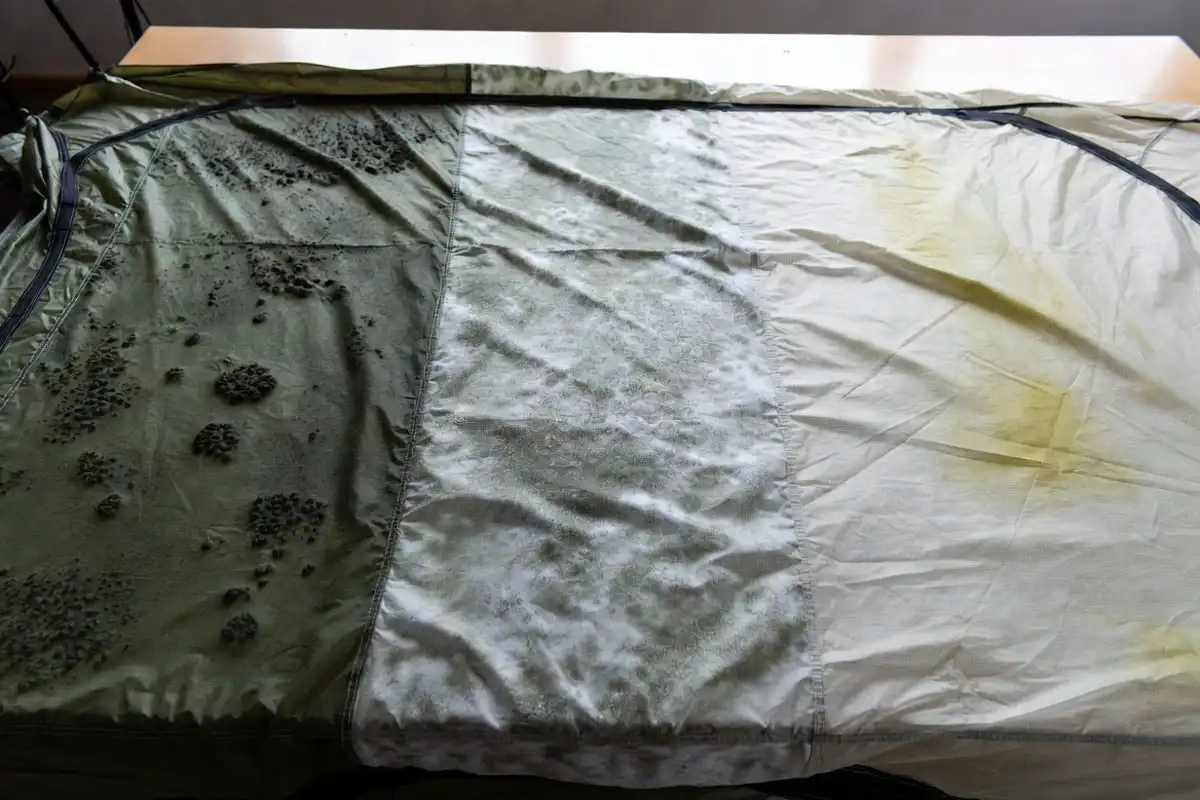
Mildew stays on the surface, wipes off with a damp cloth, and looks white or gray. Mold penetrates deeper, stains the fabric dark, and resists light wiping. A musty smell indicates hidden microbial activity with no visible patches yet. All three share the same root cause: trapped moisture on organic residue. The treatment intensity increases from musty (light wash) to mildew (vinegar wipe) to mold (full scrub and soak).
When Should You Clean a Moldy Tent?
Clean your tent as soon as you spot mold, mildew, or smell mustiness. Mold spores double their colony size rapidly in warm, humid conditions. Waiting a week turns a small patch into a fabric-wide problem.
Signs Your Tent Needs Cleaning Right Away
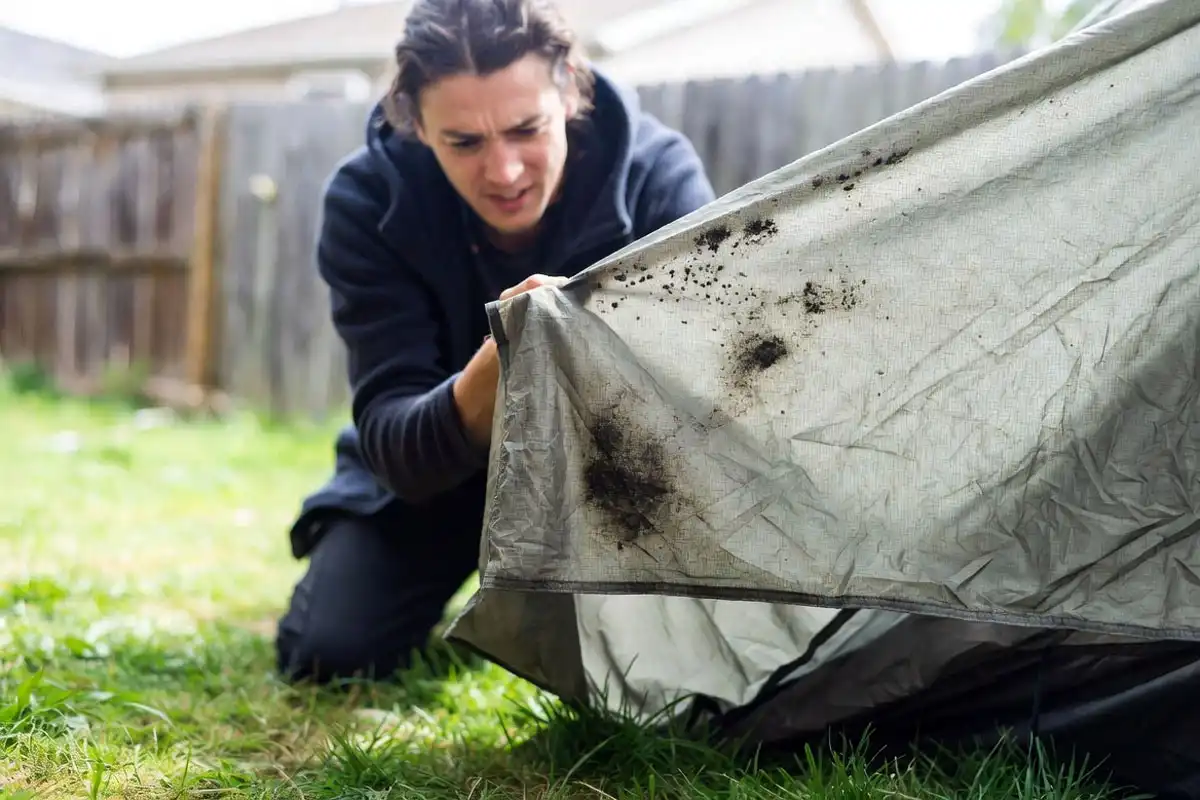
Dark spots on the rainfly, tent floor, or inner walls indicate active mold. White or gray powdery patches on fabric surfaces point to mildew. A sour or stale odor when you unpack the tent confirms microbial growth. Sticky or slimy texture on the tent floor is another clear sign. If you notice any of these, clean the tent before your next trip.
When a Musty Smell Means a Bigger Problem
A faint musty odor after unpacking usually means early-stage bacteria or mildew. But a strong chemical smell, similar to vomit or urine, signals polyurethane coating breakdown. This happens when the PU layer on the rainfly or tent floor starts to delaminate from prolonged moisture contact. Coating breakdown needs resealing, not cleaning alone. I explained the resealing process in my guide on waterproofing a tent with leaking seams.
Best Time to Clean a Tent
Clean on a dry, overcast day with low humidity. Shade protects tent coatings from UV damage during the hours the fabric stays wet. Avoid cleaning in direct midday sun, which dries cleaning solutions too fast and leaves residue. Late morning or early afternoon on a cloudy day gives the best balance of warmth and airflow for drying.
Where Does Mold Usually Grow on a Tent?
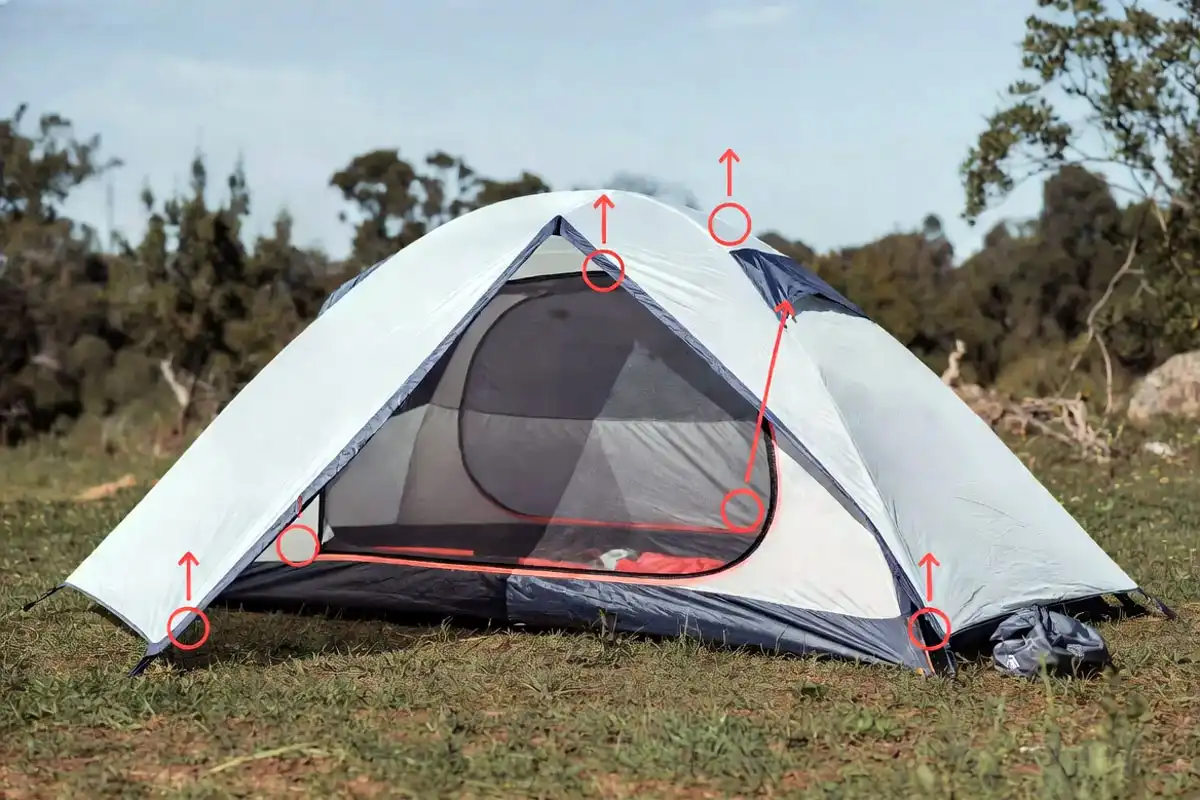
Mold targets areas where moisture collects and airflow stalls. Knowing the common spots helps you catch growth early and focus your cleaning effort.
Tent Fabric Panels
Tent walls, the roof, and the rainfly collect condensation overnight from breathing, body heat, and humidity. The rainfly traps the most moisture because it sits between the outer air and the tent body. Morning dew adds another layer of dampness to the exterior panels.
Tent Floor and Corners
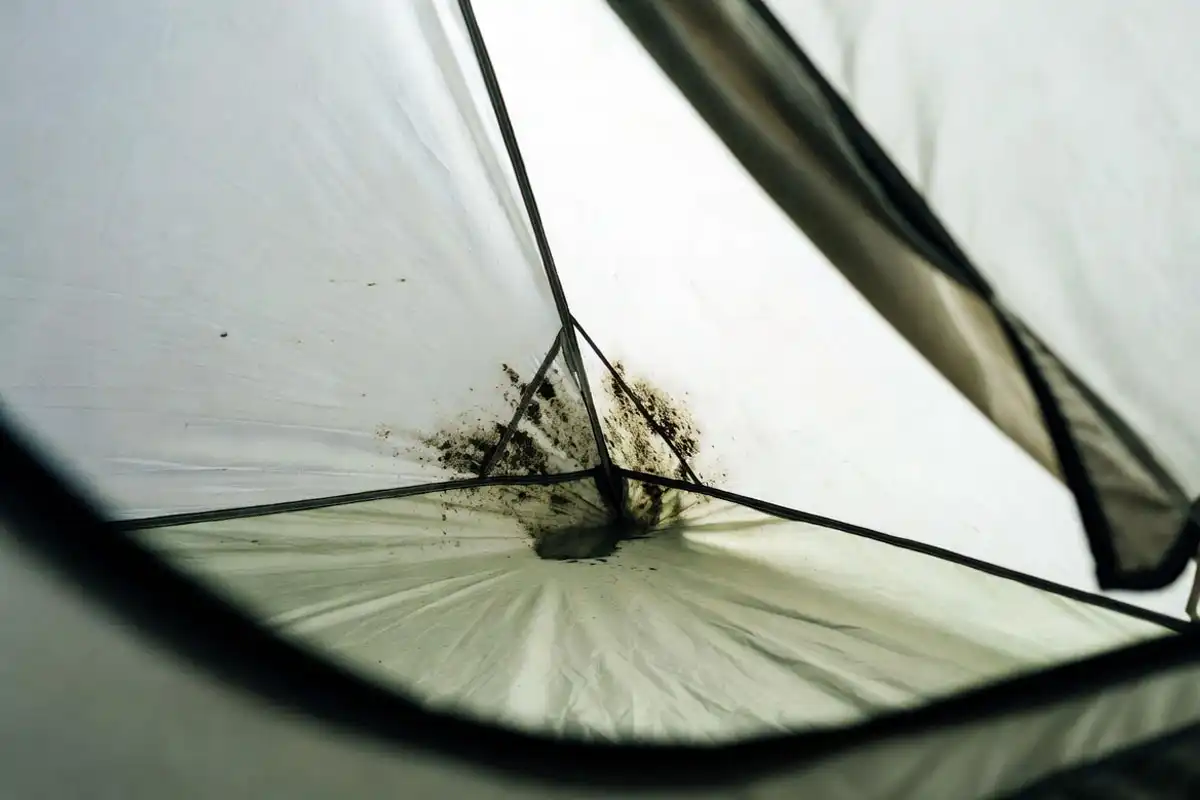
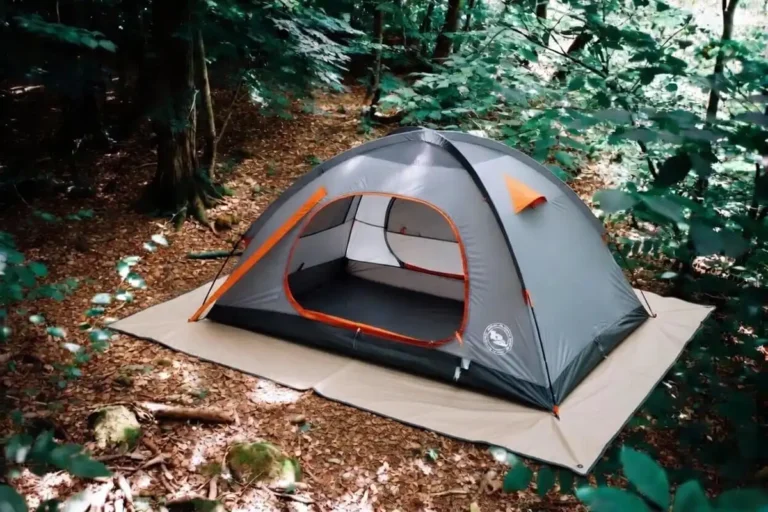
The tent floor sits directly on damp ground. Moisture seeps up through the bathtub-style floor, especially at the edges where the fabric folds upward. Corners trap standing water that does not evaporate easily. These low spots grow mold faster than any other part of the tent.
Seams, Zippers, and Mesh Areas
Stitched seams create tiny needle holes where water enters. Seam tape traps moisture underneath when it starts peeling. Zipper teeth collect dirt and moisture in their grooves. Mesh panels hold humidity against the surrounding fabric. Check all seam lines and zipper runs during your inspection.
Tent Bag, Footprint, and Stored Gear
Mold does not stop at the tent itself. The stuff sack absorbs moisture from the packed tent and becomes a breeding ground. Footprints and ground cloths folded into the same bag transfer dampness. I discussed the ground cloth material works best on wet soil in another article. Always dry your footprint, stakes bag, and stuff sack alongside the tent after every trip.
How to Clean a Moldy Tent Before It Ruins the Fabric
This step-by-step process works for nylon and polyester tents with polyurethane coatings. Canvas tents need a slightly different approach (covered below).
What You Need
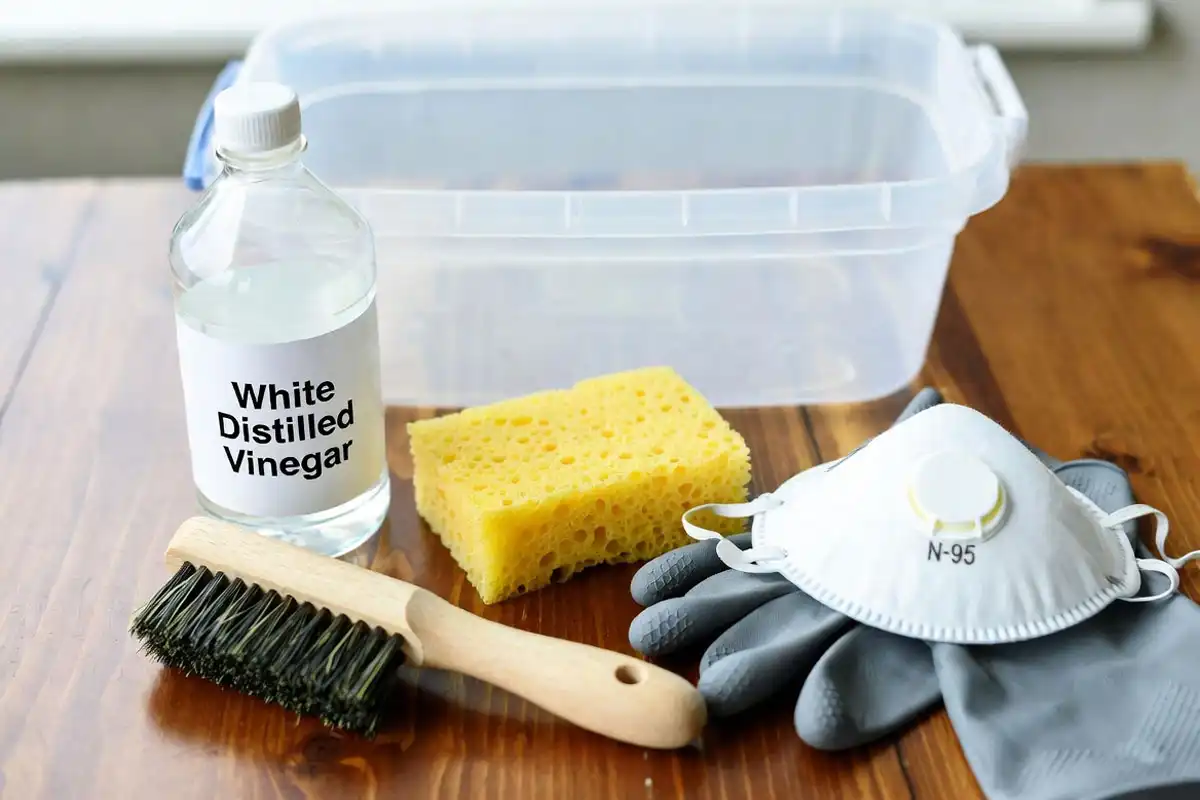
Gather these supplies before starting: white distilled vinegar, warm water, a non-detergent soap or tent-specific cleaner, a soft-bristle brush or sponge, a large tub or bathtub, rubber gloves, and an N-95 mask.
Step 1: Set Up the Tent Outdoors
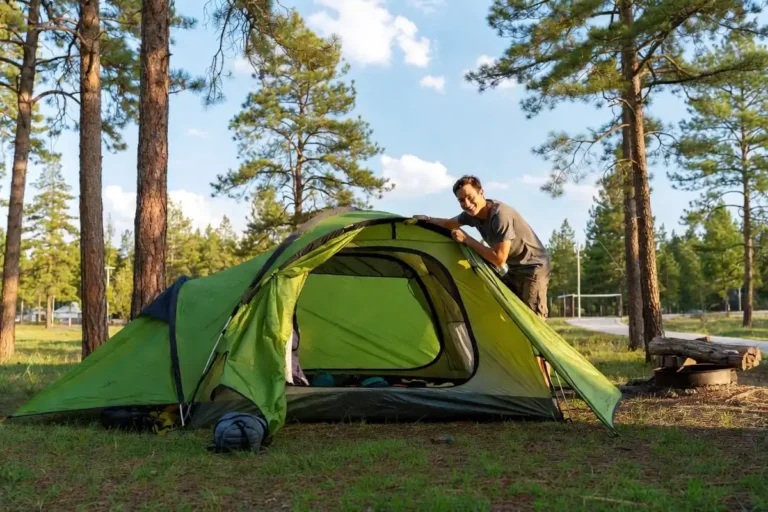
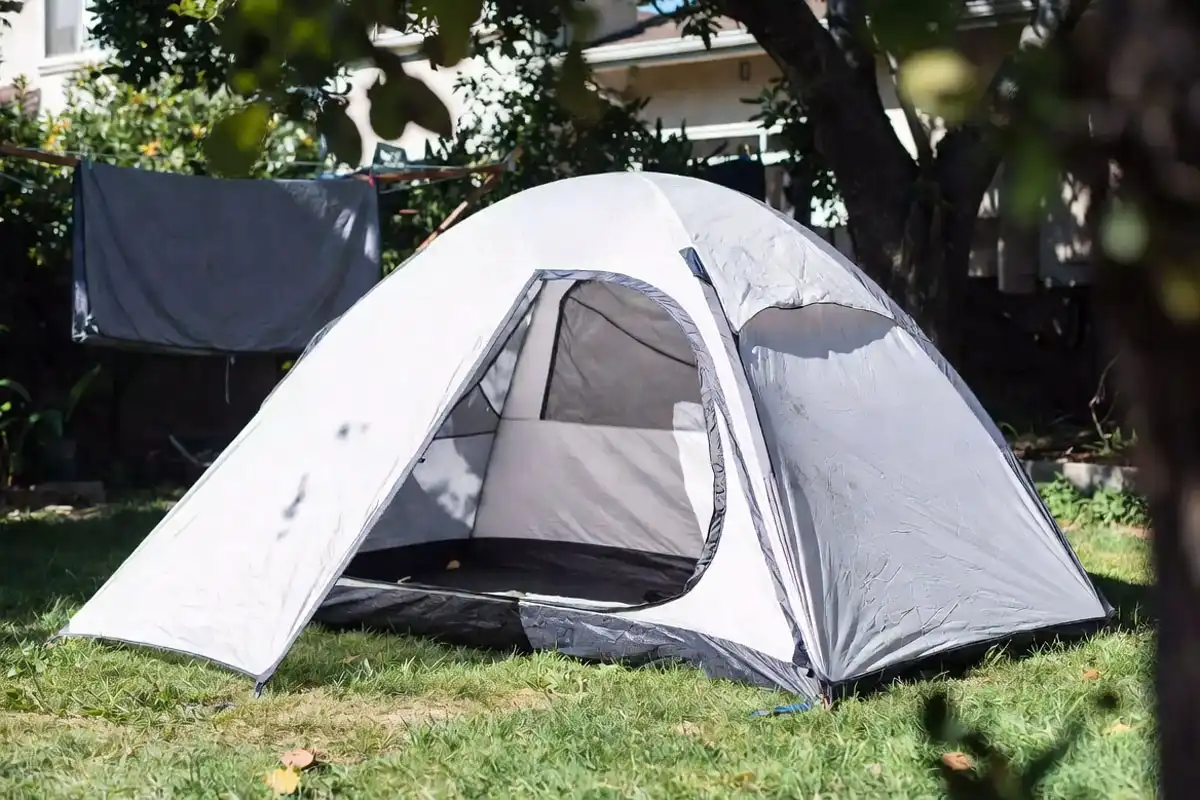
Pitch the tent fully in a shaded outdoor area. This stretches the fabric taut and exposes all surfaces for cleaning. Shade matters because direct UV light degrades nylon coatings during extended exposure.
Step 2: Brush Off Loose Spores
Put on your gloves and mask. Use a soft dry brush to sweep loose mold spores off the tent walls, floor, and rainfly. Work from top to bottom. This step removes surface-level growth before wet cleaning.
Step 3: Prepare the Cleaning Solution
Mix one cup of white distilled vinegar per gallon of warm water in your tub. For heavier mold, add a small amount of non-detergent soap (like Ivory soap) to the solution. Avoid dish soap with added fragrances or moisturizers. These leave residue on tent coatings.
Step 4: Scrub the Affected Areas
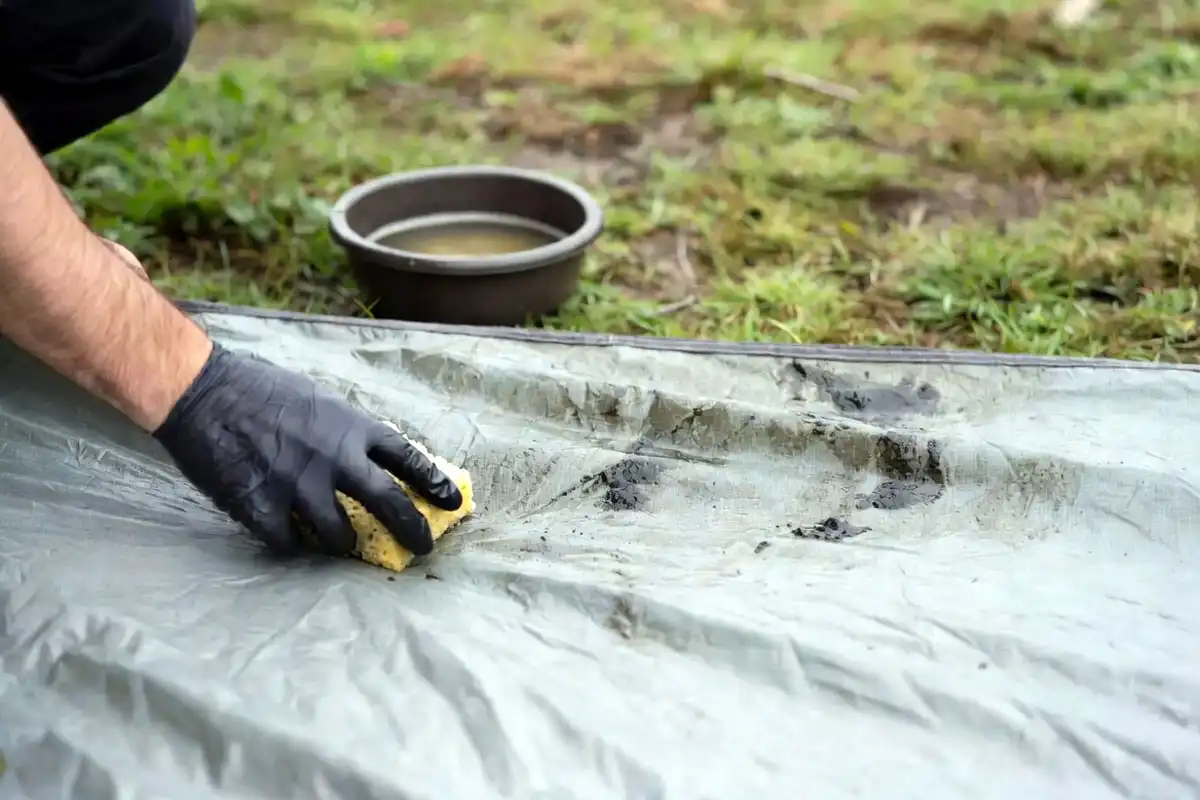
Dip your soft-bristle brush or sponge into the solution. Scrub moldy spots in small circular motions. Apply gentle pressure. Aggressive scrubbing strips the DWR (durable water repellent) finish and damages the polyurethane coating underneath.
For stubborn spots, apply undiluted vinegar directly to the mold. Let it sit for 5 to 10 minutes, then scrub again.
Step 5: Soak for Deep Cleaning
If mold covers large sections of the tent, submerge the entire tent in the vinegar-water solution. Soak for no longer than 5 minutes. Extended soaking breaks down the polyurethane coating through a process called hydrolysis. Keep all zippers open during the soak.
Step 6: Rinse Thoroughly
Drain the tub and refill with clean water. Rinse the tent 2 to 3 times until no soap or vinegar residue remains. Leftover cleaning solution attracts dirt and accelerates coating breakdown.
Step 7: Air Dry Completely
Hang the tent or set it up in a shaded, well-ventilated area. Let it dry completely. This step is non-negotiable. Even slightly damp fabric stored in a stuff sack restarts the mold cycle. Drying takes 4 to 8 hours depending on humidity and airflow. I covered more about handling wet gear in my article on drying wet camping gear at the campsite.
How to Clean Mildew From a Tent Safely
Mildew responds to lighter treatment than deep mold. Mix a few drops of non-detergent soap into a bowl of warm water. Wipe the mildew patches with a soft damp cloth or sponge dipped in the soapy water.
Rinse the area with clean water and dry it fully. For persistent mildew stains, a 50/50 mix of white vinegar and water works as a follow-up spray. Apply it, wait 5 minutes, then wipe clean.
Mildew on a rainfly often comes from poor ventilation during humid nights. I wrote about ventilate a tent in cold weather, which also helps reduce condensation buildup in humid conditions.
How to Remove a Musty Smell From a Tent
A musty smell lingers even after visible mold or mildew is gone. The odor comes from microbial waste embedded in the fabric fibers.
- Vinegar rinse: Soak the clean tent in a solution of one cup vinegar per gallon of water for 3 to 5 minutes. Do not rinse. Let the tent air dry. The vinegar smell fades as it dries and takes the musty odor with it.
- Enzyme cleaner: Products like MiraZyme or Revivex Odor Eliminator use microbes that consume odor-causing bacteria in fabric. Mix according to the product label, soak the tent for the recommended time (usually no more than 5 minutes), and air dry without rinsing.
- Baking soda treatment: Sprinkle baking soda over the dry tent fabric. Let it sit for 2 to 3 hours, then brush or shake it off. Baking soda absorbs trapped odors without affecting tent coatings.
Never use scented sprays, Febreze, or fabric softeners on tent fabric. These products clog the DWR finish and reduce waterproofing.
What About Canvas Tents?
Canvas tents need different care because the cotton fibers absorb more moisture and hold mold deeper. Use a specialized canvas cleaner or a mild vinegar-water solution (half a cup per gallon). Scrub gently with a soft bristle brush on a warm, sunny day. Sunlight helps kill active spores on cotton canvas.
After cleaning, let the tent dry fully and apply a canvas-specific reproofing treatment. Standard tent waterproofing sprays designed for nylon do not bond properly to canvas fibers.
How to Stop Mold, Mildew, and Musty Smell From Coming Back
Prevention takes less effort than cleaning. Follow these practices after every camping trip.
Dry your tent before packing. Shake off loose water and wipe down the tent floor and rainfly with a dry towel. If rain makes on-site drying impossible, set up the tent at home within 24 hours to air dry it fully. I talked about keeping bedding dry in humid weather in another article, and the same principle applies to tent fabric.
Store in a breathable bag. Use a cotton or mesh storage sack instead of a compressed stuff sack. A larger bag allows air circulation around the fabric. Store the tent in a cool, dry location away from direct sunlight.
Clean the tent after long trips. Dirt, pollen, and food residue feed mold. A quick wash after extended trips removes the organic matter mold needs to grow.
Ventilate while camping. Open vents and windows when the weather allows. Condensation from breathing and body heat adds moisture to tent walls overnight.
Remove debris before packing. Leaves, pine needles, and grass trap moisture against the fabric. Sweep the tent floor and shake the tent body before folding.
Things to Avoid When Cleaning a Moldy Tent
- Never machine wash a tent. The agitation cycle tears seams, damages zippers, and strips waterproof coatings.
- Never use bleach. Bleach destroys the polyurethane coating on nylon and polyester tents. It also weakens fabric fibers and fades colors.
- Never use a pressure washer. High-pressure water forces through the fabric weave and damages the DWR layer and seam tape.
- Never dry a tent in a clothes dryer. The heat melts synthetic fabric coatings and warps zipper tracks.
- Never store a tent wet. This single mistake causes more tent mold than any other factor.
Safety Notes
The EPA recommends wearing gloves and an N-95 respirator mask when cleaning mold. Mold spores irritate the nose, throat, eyes, and lungs. People with asthma or mold allergies face higher risk of respiratory reactions during cleanup.
Work outdoors in an open area. Indoor cleaning concentrates airborne spores. Wash your hands and forearms after handling moldy gear, and launder the clothes you wore during cleanup.
If mold covers more than a few square feet of tent fabric, or if the tent material tears when you scrub it, the structural damage may be too advanced. At that point, replacing the tent is the safer option. Check out my guide on choosing the right tent for two people if you need a replacement.
When to Reapply Waterproofing After Cleaning
Cleaning a moldy tent strips some of the DWR coating and can weaken the polyurethane layer. After the tent dries, test the waterproofing by spraying water on the rainfly. If water soaks in instead of beading up, the tent needs retreatment.
Apply a DWR spray to the rainfly exterior and a seam sealer along all stitched seams. I covered the full waterproofing process in my guide on waterproof a tent with leaking seams.
FAQs on Remove Mold From Tent Fabric

Can you save a tent that has black mold?
Small patches of black mold respond to vinegar scrubbing and thorough drying. Stains may remain even after the mold is dead. If black mold covers large areas or the fabric feels weak, replacement is safer.
Does vinegar kill mold on tent fabric?
White distilled vinegar kills most mold species on contact. Apply it undiluted to heavy mold spots or diluted (1 cup per gallon of water) for general cleaning. Air dry the tent without rinsing.
Is it safe to sleep in a tent that had mold?
A fully cleaned and dried tent with no remaining musty odor is safe. If the smell persists after cleaning, active mold spores may still be present. People with asthma or allergies face higher sensitivity to leftover spores.
How long does it take for mold to grow on a wet tent?
Mold spores begin colonizing damp tent fabric within 24 to 48 hours in warm conditions. Humid environments speed this timeline. Always dry your tent within a day of packing it wet.
Can you put a tent in the washing machine to remove mold?
No. Washing machines damage tent seams, zippers, and waterproof coatings. Hand wash the tent in a bathtub or large basin using the vinegar-water solution described above.
Final Words for Wash a Moldy Tent
Cleaning a moldy tent comes down to three things: vinegar-water solution, gentle scrubbing, and full air drying. The whole process takes a few hours, but it saves your tent from permanent damage.
Going forward, always dry your tent before storing it, and swap that tight stuff sack for a breathable bag. These two habits alone prevent most mold problems. Take care of your gear, and happy camping out there!