How to Find Firewood While Camping in 5 Smart Steps

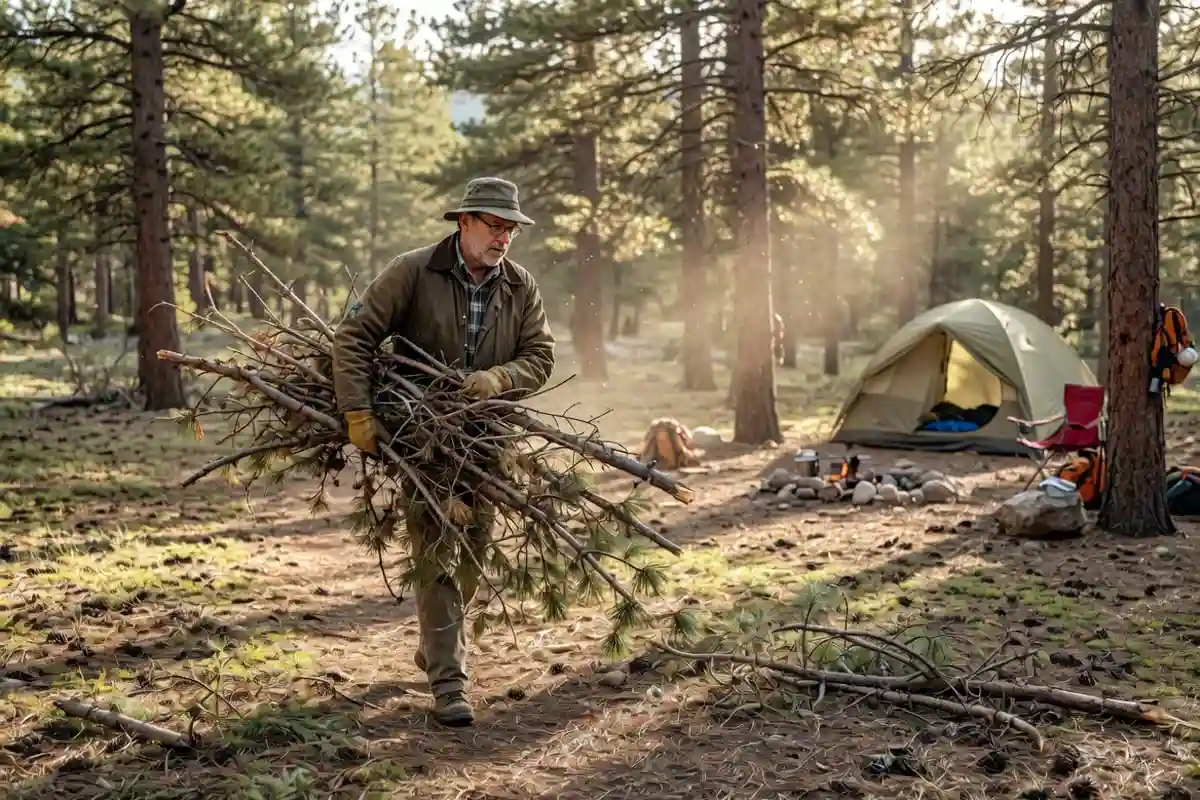
Good firewood is usually all around most forests once you know what to look for and how to find firewood while camping. On my camping trips in the Chittagong Hill Tracts, I rely on fallen dead branches, standing deadwood, and dry bark pieces for clean, steady burns. This guide walks through where to search, what to pick up, what to skip, and how to stay safe.
To find firewood while camping, collect dry, fallen deadwood within a short walk of your site, pick branches that snap cleanly with a sharp crack, and gather three sizes: tinder, kindling, and fuel logs. Never cut live trees. Check park firewood rules before you arrive, and don’t bring wood from home.
What Counts as Good Firewood?
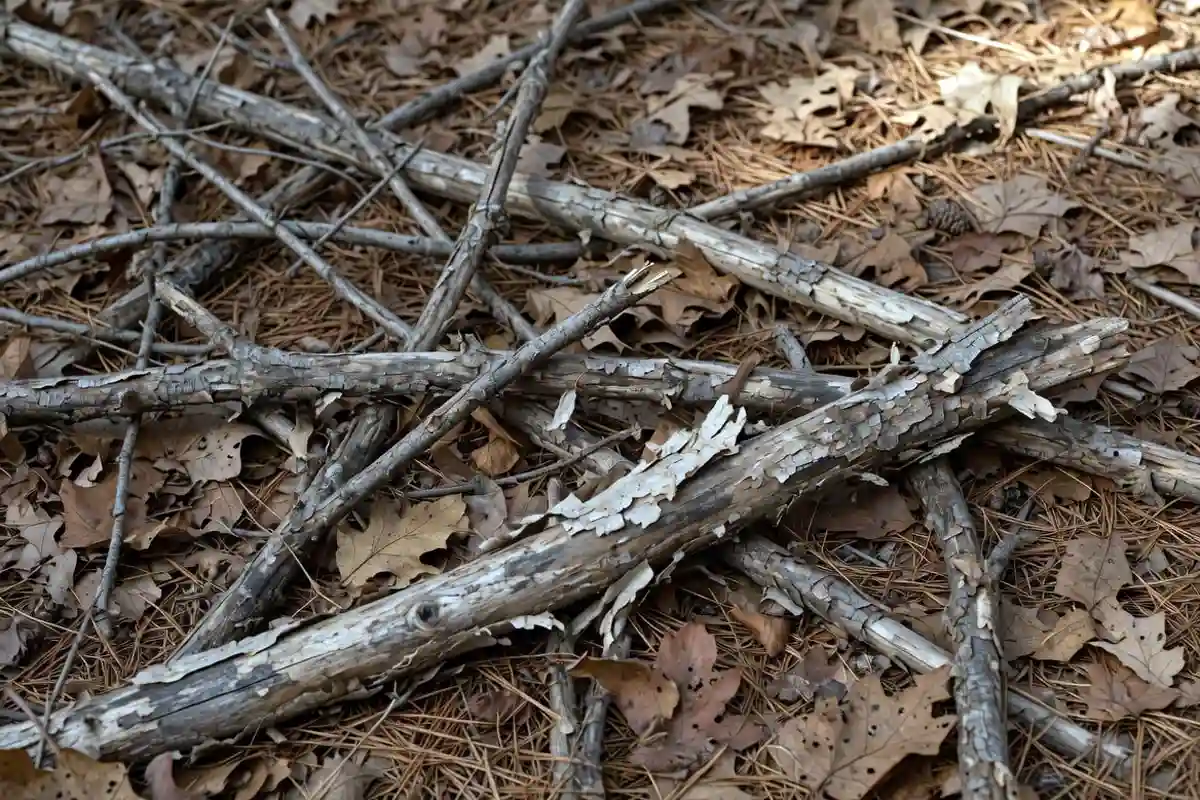
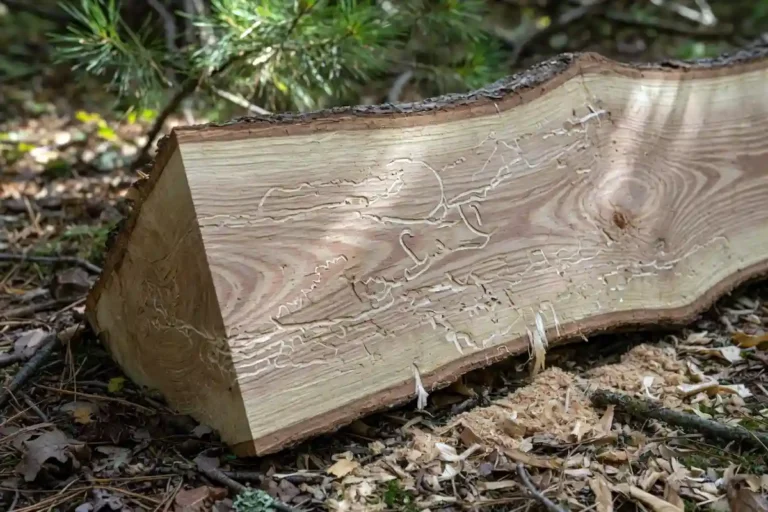
Good firewood is dead, dry, and breaks with a clean snap. Wet or green wood smokes heavily and burns poorly. Dead wood still attached to standing trees stays drier than wood lying on damp ground.
Three signs of burnable wood:
- Snaps cleanly with a sharp sound
- Feels light for its size
- Bark peels away with a gentle tug
Hardwoods like oak, ash, and hickory burn longer. Softwoods like pine catch fast and help start fires but burn out quicker.
When to Gather Firewood
Collect firewood in daylight, before sunset. Afternoon conditions give you the best wood quality. Rain softens bark and soaks the outer layers.
If a storm is coming, grab extra wood and stash it under your rainfly or tarp. I keep a small pile of tinder and kindling inside a dry sack so my fire starts fast the next morning. If you’re setting up camp after dark, scout wood the night before or carry a small emergency bundle.
Where to Look for Firewood
The best firewood hides in four places:
1. Fallen branches on the forest floor. Look past the immediate campsite. Dead branches close to popular sites are often gone by the time you arrive.
2. Standing deadwood. A dead branch still attached to a tree is often dry because it sits off the ground.
3. Under dense tree canopies. Thick cover keeps rain off. Wood beneath conifers and broadleaf canopies stays drier than wood in open meadows.
4. Higher ground. Ridges and slopes shed water faster than low spots. Avoid wood near streams or boggy areas.
Stay within 100 feet of your camp when you can. Travel far enough to find good wood, but keep track of your path back.
How to Find Firewood: Step-by-Step
Step 1: Check local rules
Before gathering, read the park or forest rules. Many US national parks prohibit cutting any wood, alive or dead. Some allow only wood already on the ground. According to the National Park Service guidance on firewood, moving firewood between regions spreads invasive pests that harm native trees.
Step 2: Scout the area
Walk a wide arc around camp. Note where dry wood is thick and where you’ll come back for more.
Step 3: Sort by size
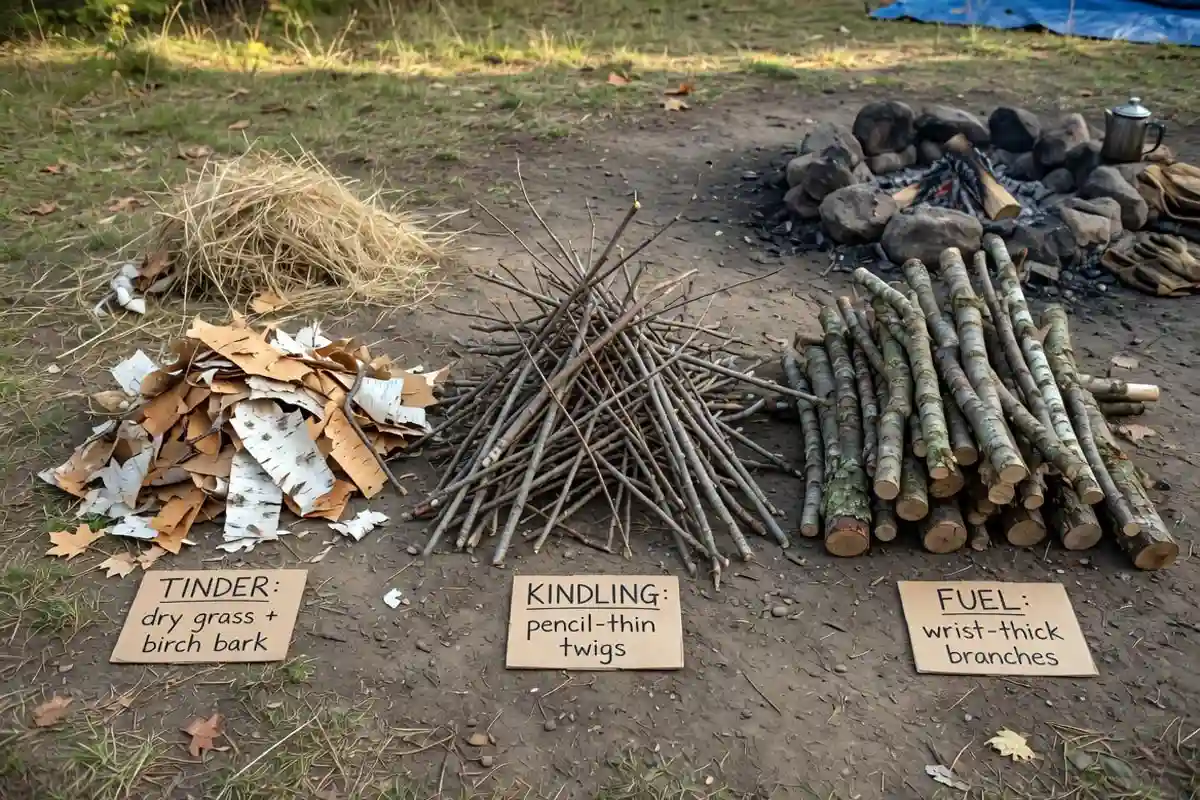
Collect three sizes:
- Tinder: dry grass, pine needles, birch bark, fine dry shavings
- Kindling: pencil-thin to finger-thick twigs
- Fuel wood: wrist-thick to arm-thick branches
Step 4: Test dryness
Snap each piece. A sharp crack means dry wood. A dull bend means wet or rotting wood.
Step 5: Stack and store
Stack wood under a tarp or near your fire ring. Keep tinder in a dry bag. Elevate the pile off wet ground using a log or two.
Solutions When Wood Is Wet
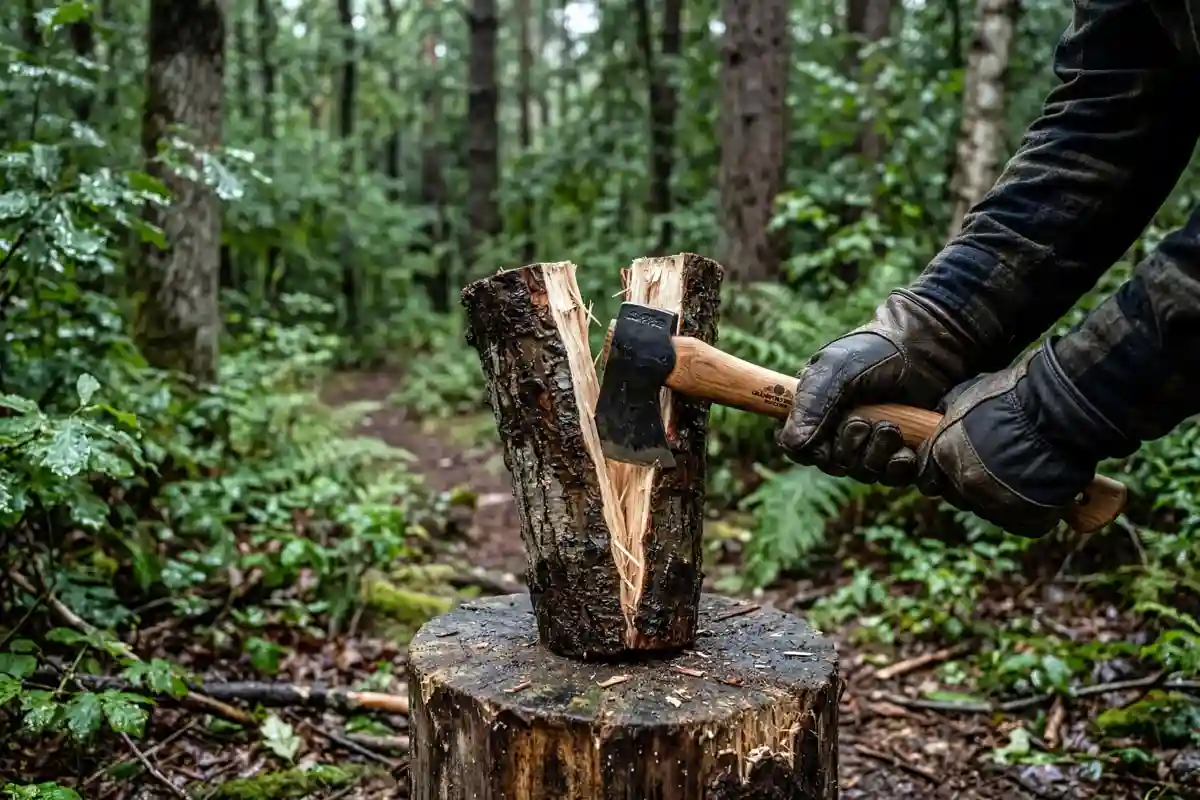
Wet weather doesn’t stop a fire if you know how to find dry wood inside wet wood.
Split logs with a hatchet. The inside, called the heartwood, often stays dry even after rain. Peel the outer bark and shave thin slivers for kindling.
Standing dead branches hold up better in rain. The outer layer gets wet, but the core stays burnable. Birch bark lights even when damp and is excellent as tinder. I covered more on this in my post about starting a fire in wet conditions.
Dry pine resin, called fatwood, burns hot and fast. Look for orange-colored wood at the base of old pine stumps.
Types of Wood to Collect
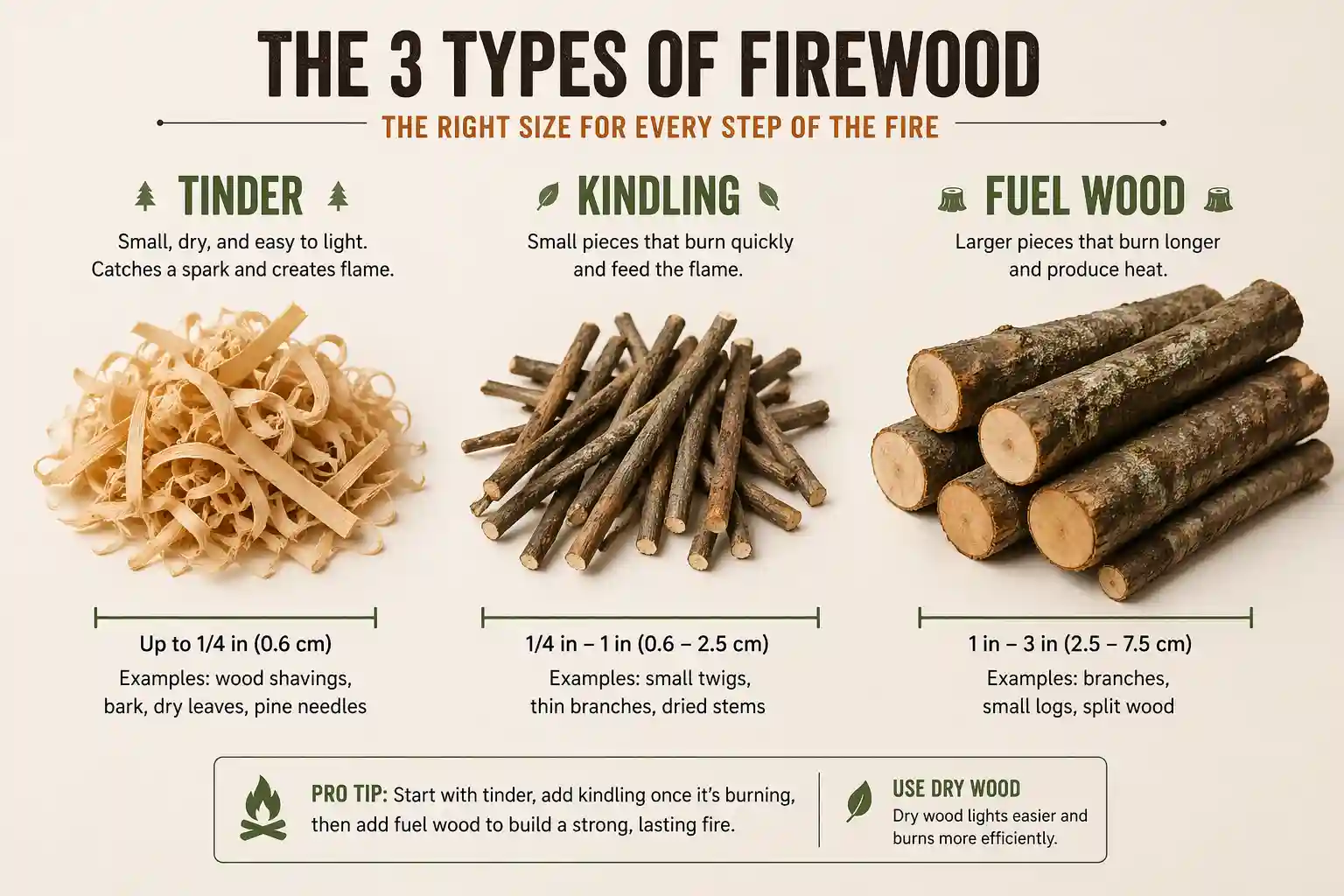
Match the wood to the job.
Tinder catches the first spark. Dry grass, pine needles, birch bark, dried moss, and cotton from seed pods work well. Gather a handful about the size of a tennis ball.
Kindling builds the flame. Break twigs the thickness of a pencil into 6-inch lengths. Gather at least two big handfuls.
Fuel wood keeps the fire going. Pick branches between 1 and 3 inches thick. A two-hour cook fire needs about 8 to 10 pieces roughly 18 inches long.
For cooking, denser woods like oak give steadier coals. This matters when you’re managing fire heat while cooking.
Mistakes to Avoid
Cutting live trees. Green wood doesn’t burn well and damages the forest. Park rangers fine this behavior.
Bringing wood from home. Moving firewood across regions spreads emerald ash borer, gypsy moth, and other pests. The US Environmental Protection Agency and forest agencies recommend buying firewood locally or gathering on-site where allowed.
Using rotten or punky wood. Soft, crumbly wood produces smoke and little heat. Stick with solid wood that snaps.
Burning painted, treated, or glued lumber. Construction scraps release toxic smoke. Avoid pallets, pressure-treated decking, and plywood.
Collecting poisonous plants. Never burn poison ivy, poison oak, or poison sumac. The smoke carries urushiol oil and irritates lungs and skin.
Gathering too little. A safe rule: collect twice what you think you need. Cold nights and wet weather burn through wood fast.
Safety Considerations
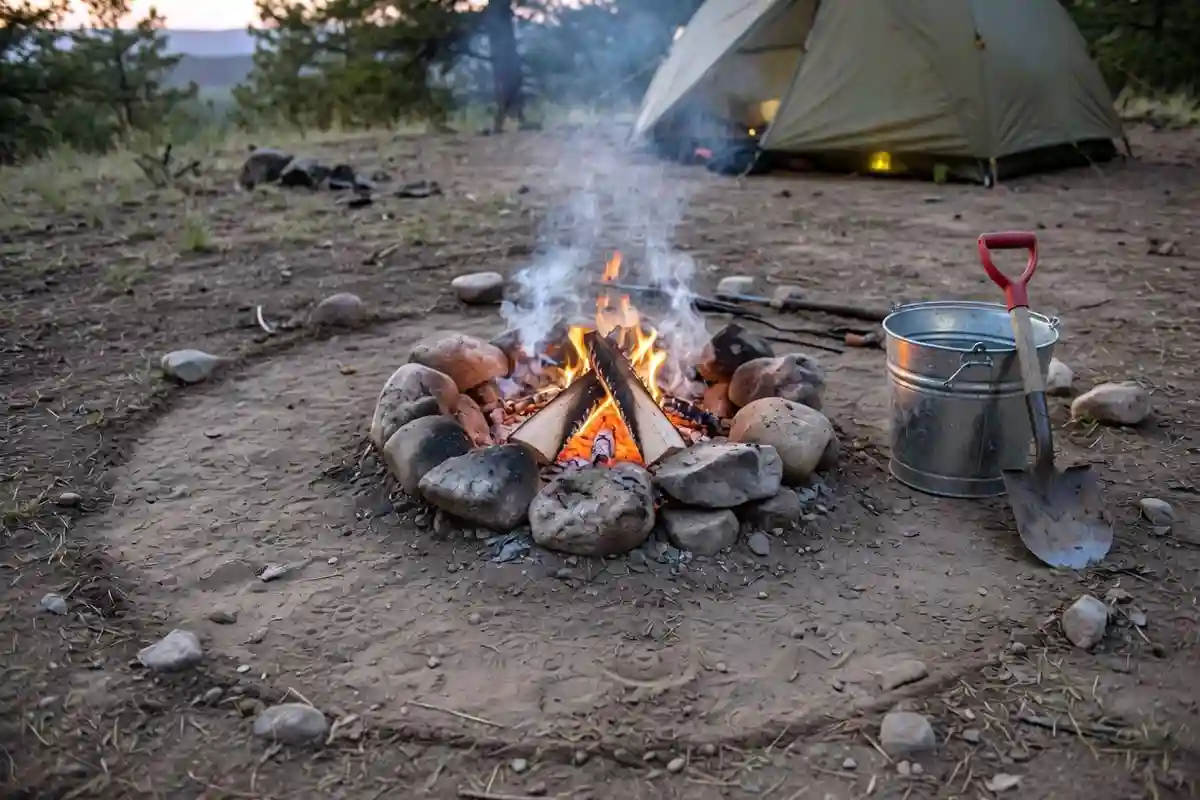
Check local fire bans before lighting anything. Dry seasons close fire use across many parks.
Build your fire ring on dirt or rock, never on roots or peat. Clear a 10-foot circle of leaves, needles, and dry debris around the fire.
Keep a gallon of water and a shovel within arm’s reach. Douse the fire fully before sleeping. Stir the ashes and soak again.
Wear gloves when collecting. Splinters, thorns, and insect bites are common. I carry a small first aid kit and scan wood for spiders and snakes before picking it up.
Respect Leave No Trace. Scatter unused wood before leaving. Dismantle any temporary fire rings in backcountry zones.
FAQs about Where to Find Firewood While Camping

Can I collect firewood in national parks?
How much firewood do I need per night?
What's the best wood for a campfire?
Is wet wood safe to burn?
Should I bring my own firewood from home?
Final Thoughts
Finding firewood is a skill you build over time. With practice, you’ll spot good wood in seconds, stay dry in bad weather, and keep your fire burning long into the night. Stick with dry, fallen deadwood. Gather tinder, kindling, and fuel in the right ratios. Check local rules, avoid live trees, and leave the site cleaner than you found it. That’s how a camper keeps both the fire and the forest alive.