How to Keep Food From Freezing When Winter Camping Below -5°C

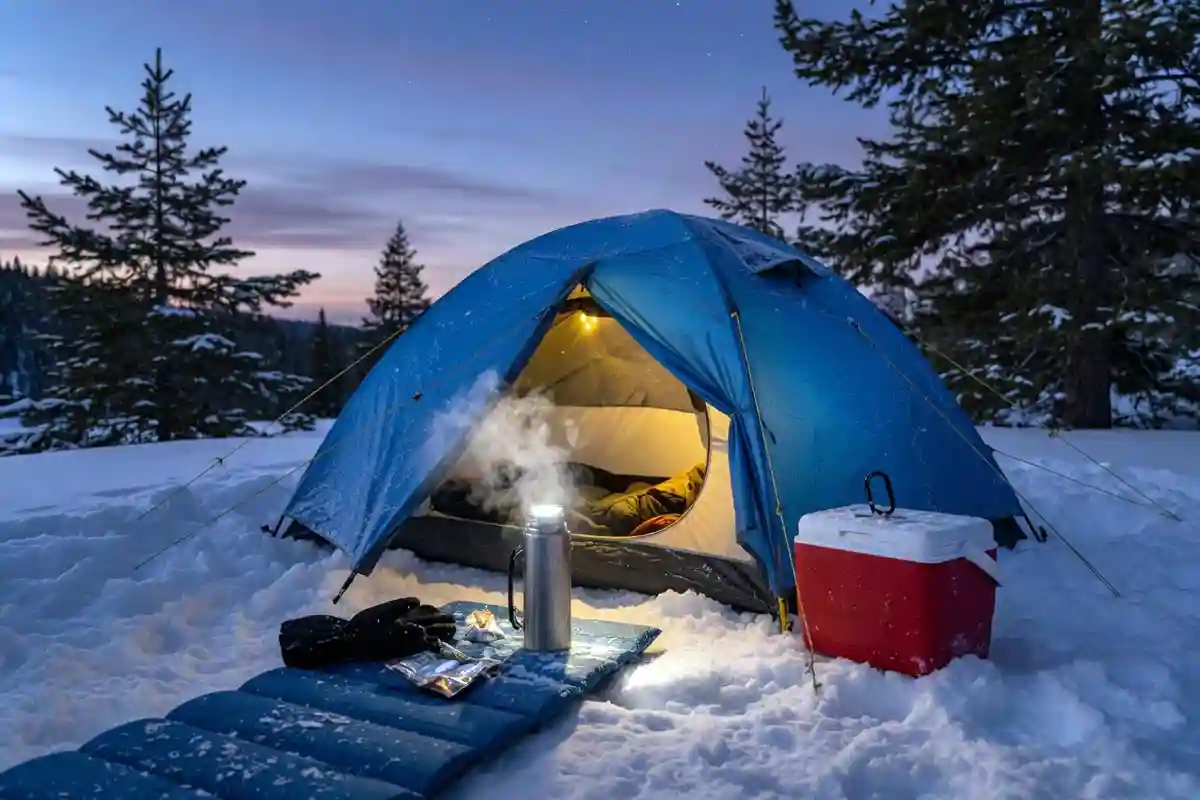
The best way to keep food from freezing during winter camping below -5°C comes down to insulation, body heat, and smart timing. This guide walks through where to store food at night, how to wrap and pack it, what to do with water and fuel, and the habits I rely on during cold trips in the Chittagong Hill Tracts and other freezing conditions.
To keep food from freezing when winter camping, store it inside an insulated cooler with hand warmers, bury it under your sleeping bag, or keep it close to your body at night. Use closed-cell foam wraps, vacuum bottles for liquids, and avoid leaving meals exposed to wind or bare snow.
What Happens to Food in Freezing Winter Camp Conditions
Cold air pulls heat out of food until water inside it turns to ice. Eggs crack. Canned goods split open. Cheese gets brittle. Fresh produce like tomatoes and lettuce break down at the cell level and turn to mush once thawed. Peanut butter hardens into a solid block no spoon will move.
The freezing point of most foods sits near 0°C (32°F). High-water foods freeze faster than oily or dry ones. Bread, tortillas, and dehydrated meals handle cold better than dairy, eggs, fruit, or canned soups.
When Food Is Most Likely to Freeze
Food freezes hardest between 2 a.m. and dawn, when air temperatures bottom out. Per the USDA’s cold food storage chart, food crosses into frozen territory once it sits at or below 0°C for several hours.
Risk rises sharply when:
- Night temperatures drop below -5°C (23°F)
- Wind chill strips warmth from coolers and packs
- Food sits on bare ground, snow, or in a vehicle overnight
- Hand warmers expire before sunrise
Daytime freezing is rare unless temperatures stay below -10°C. The real danger window is overnight.
Where to Store Food to Keep Food From Freezing When Winter Camping
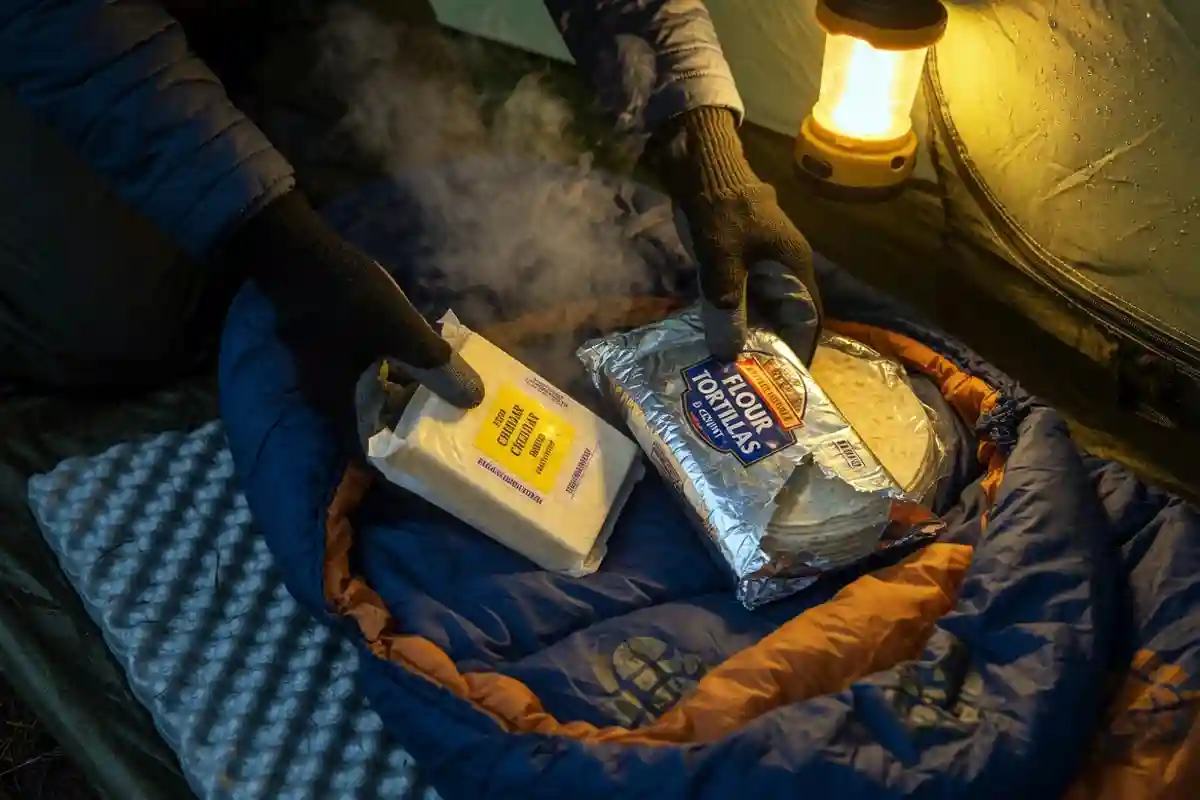
Location matters more than gear. Three spots work well in cold camps.
Inside your sleeping bag. Soft items like cheese, tortillas, and chocolate bars travel down by your feet. Body heat keeps them above freezing all night.
Inside an insulated cooler. A cooler works in reverse during winter. It blocks cold air the same way it blocks warm air. Add a hand warmer and the inside holds a few degrees above outside temperature.
Under or beside your sleeping pad. Dense foam insulates from the cold ground. Items placed between your pad and the tent floor stay warmer than items on bare floor. I covered the warm-weather side of this in my piece on keeping food cold without a cooler, and the same insulation principle reverses in winter.
Avoid storing food in a vestibule, bear bag, or vehicle when nights drop below -5°C. These spots match outside air within an hour.
How to Keep Food From Freezing When Winter Camping (Step-by-Step)
Here is the routine I follow on cold trips.
Step 1: Plan the menu around freeze-tolerant food. Pack hard cheeses, cured meats, nuts, dried fruit, dehydrated meals, oats, tortillas, and peanut butter. Skip soft fruit, fresh greens, soft cheese, and canned soups when nights drop below -5°C.
Step 2: Pre-warm food before bed. Hold cheese, eggs, or chocolate inside your jacket for 20 minutes before tucking it into your sleeping bag. Cold food drains warmth from the bag.
Step 3: Build an insulation layer. Wrap food in a wool sock, fleece, or closed-cell foam. Air gaps slow heat loss. A second layer of dry bag adds wind protection.
Step 4: Use hand warmers inside the cooler. A standard 10-hour hand warmer puts out around 50°C of surface heat. Place one under a tea towel inside a small cooler with eggs or canned goods. Replace before bed.

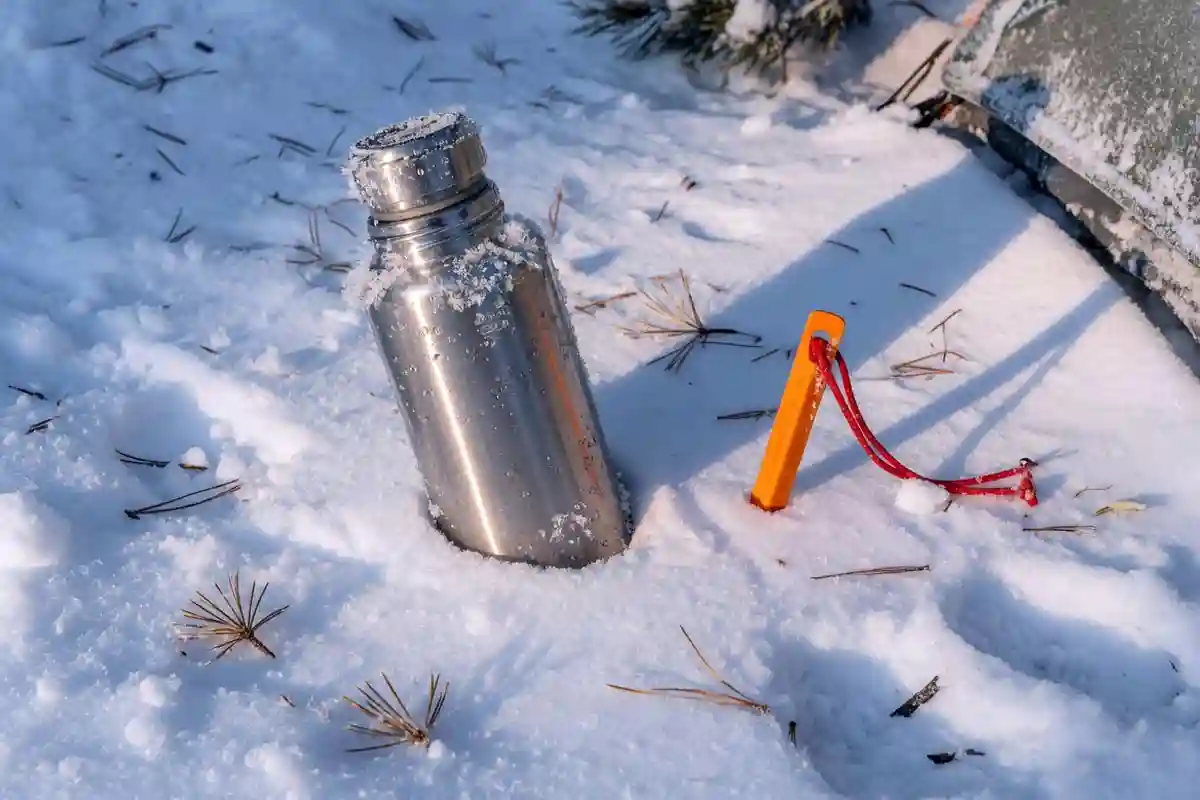
Step 5: Store liquids in vacuum bottles. Insulated steel bottles hold water and broth above freezing for 8 to 12 hours. Fill with hot water at dinner. By morning, the water runs cool but liquid.
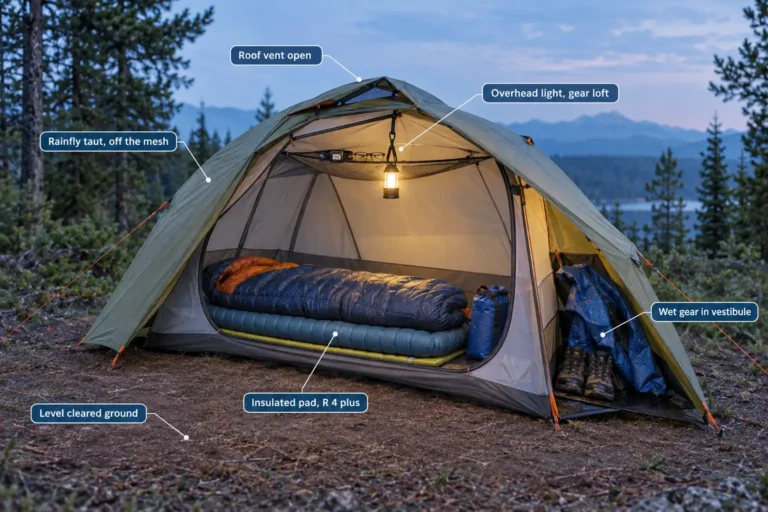
Step 6: Place the food bag inside the tent at night. Tuck wrapped food beside your sleeping pad, never on bare floor. Tent walls cut wind and trap a few degrees of body warmth. For a deeper look at overnight tent temperatures, see how cold a tent can really get.
Step 7: Insulate water bottles separately. Water freezes faster than most foods. Bury bottles upside down in snow if available, or wrap them in a wool sock and keep in the sleeping bag foot box.
Solutions for Specific Foods That Freeze Easily
| Food | Freeze Point | Best Storage |
|---|---|---|
| Eggs | -0.5°C | Sleeping bag, padded |
| Canned soup | -1°C | Cooler with hand warmer |
| Cheese | -1.5°C | Body pocket or bag |
| Water | 0°C | Vacuum bottle, inverted |
| Fresh produce | -0.5°C | Skip below -5°C |
| Chocolate | -3°C | Inner jacket pocket |
For eggs in particular, I covered the packing side in my egg packing guide, which pairs well with cold-weather routing.
Troubleshooting: Food Already Frozen at Camp
Frozen food is often salvageable if you act fast.
- Cheese: Thaw inside your jacket. Texture suffers, but flavor holds.
- Eggs: If the shell is cracked and contents leaked, discard. If intact, cook fully once thawed.
- Cans: A bulged can means freeze damage. Heat slowly in a pot of water before opening.
- Vegetables: Frozen lettuce and tomatoes turn to mush. Cook into soup or stew.
- Peanut butter: Warm the jar near the stove. Stir before scooping.
Never thaw food on a hot stove without water in the pot. The outside cooks while the inside stays frozen, which raises spoilage risk.
Mistakes to Avoid in Winter Food Storage
- Leaving food in a backpack outside the tent overnight
- Storing eggs without padding (they crack at -2°C)
- Using a soft cooler in below-zero conditions (no insulation value)
- Placing food directly on snow or frozen ground
- Forgetting hand warmers expire after 10 to 12 hours
- Mixing warm and frozen food in the same bag (condensation freezes both)
I covered broader food handling in safe food storage at camp, which applies to summer and winter trips.
Safety Notes for Winter Camp Food
Frozen and re-thawed food carries food poisoning risk if temperatures cross 4°C (40°F) during thaw. Per CDC food safety guidance, perishable food sitting between 4°C and 60°C for over two hours should be discarded.
Dairy and egg products are the highest risk. When in doubt, cook food thoroughly and eat it the same meal. Don’t refreeze thawed proteins. I went deeper on this topic in avoiding food poisoning at camp.
Carbon monoxide is another winter concern. Never run a stove inside a tent to warm food or hands. Use the vestibule with one wall open.
FAQs about Winter Camping Food Storage

Will food in a cooler freeze in winter?
Should I bring a cooler when winter camping?
How do you keep water from freezing in a tent?
Is frozen camping food safe to eat?
What food does not freeze easily when camping?
Final Verdict
Cold weather food storage is a small part of winter camping, but a missed step ruins breakfast. Pack freeze-tolerant food, build an insulation layer, use body heat at night, and keep liquids in vacuum bottles. After a few trips, the routine takes ten minutes at bedtime. Stay warm, eat well, and the cold becomes part of the trip rather than a problem to solve.