How to Find Water in the Wild When Your Supply Runs Out

Streams, springs, morning dew, and vegetation transpiration can all help you find water and provide drinkable options when your supply runs out in the wild. This guide covers how to read terrain, follow natural signs, collect from reliable sources, and treat what you find before drinking. I’ve used these methods across many years of camping in the forested hills of Rangamati, Bangladesh, and they hold up whether you are in dense jungle, open mountains, or a dry riverbed.
Move downhill, since water collects in valleys and low ground. Follow converging animal trails. Look for willows, cattails, or dense green vegetation. Listen for running water sounds. Collect morning dew with cloth. Dig 30–60 cm into the outer bend of a dry streambed. Always purify before drinking.
Where Does Water Collect in the Wild?
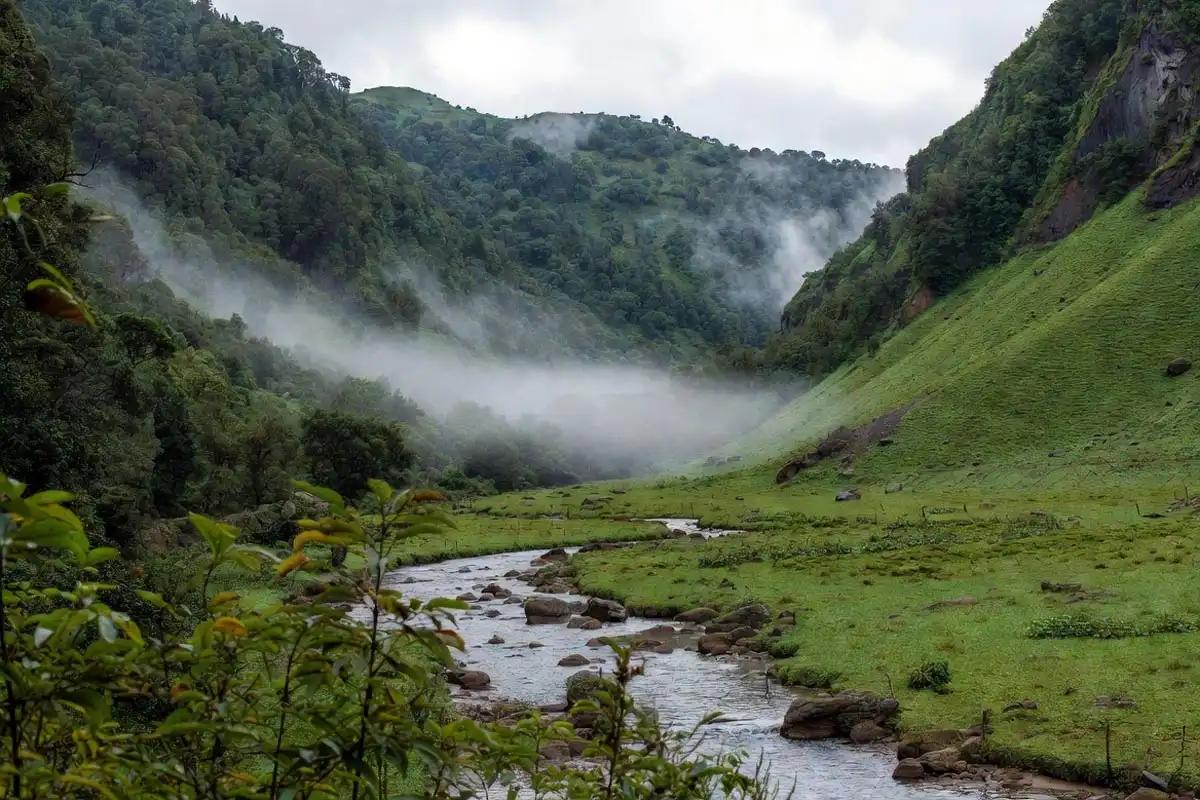
Water follows gravity. It settles in valleys, canyon floors, and low depressions.
Rocky terrain produces springs and seeps where groundwater pushes through cracks. Cliff bases collect runoff and hold moisture in crevices. Dry riverbeds often hold water below the surface, especially at bends.
Ridges and hilltops rarely hold water. If you are on high ground, move down.
What Signs Tell You Water Is Nearby?
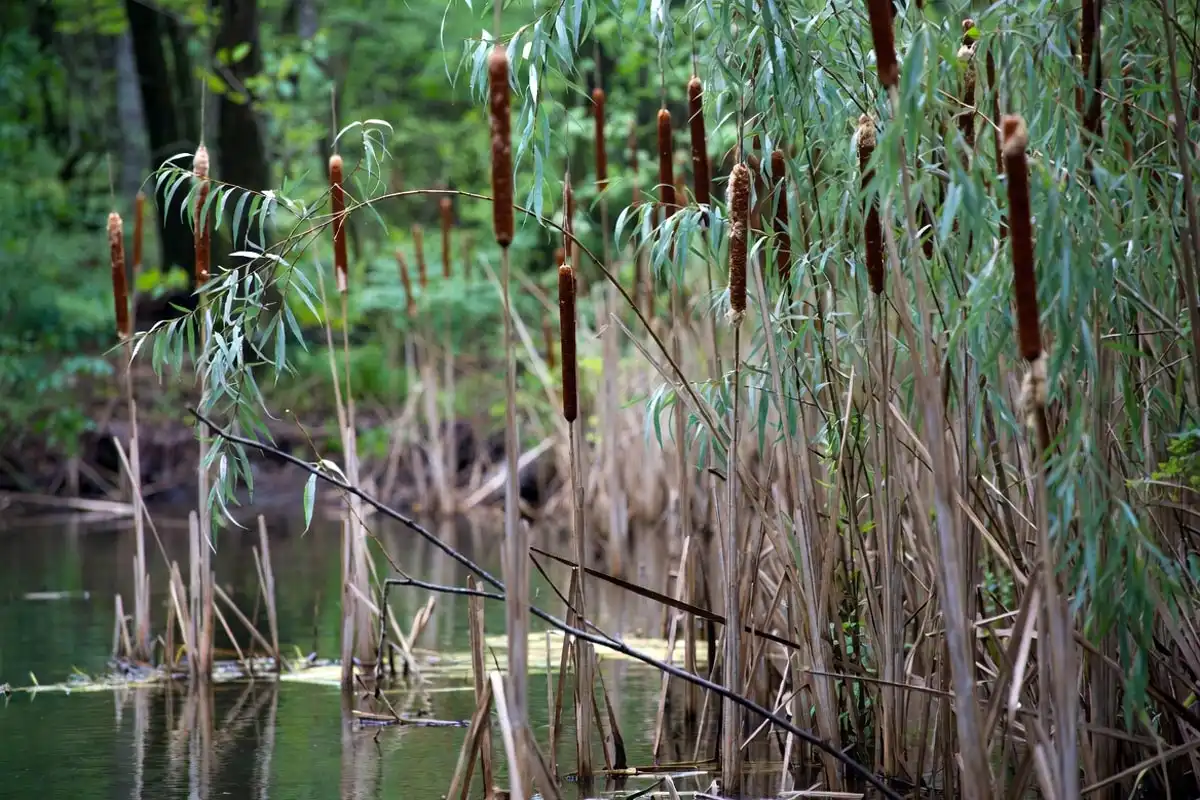
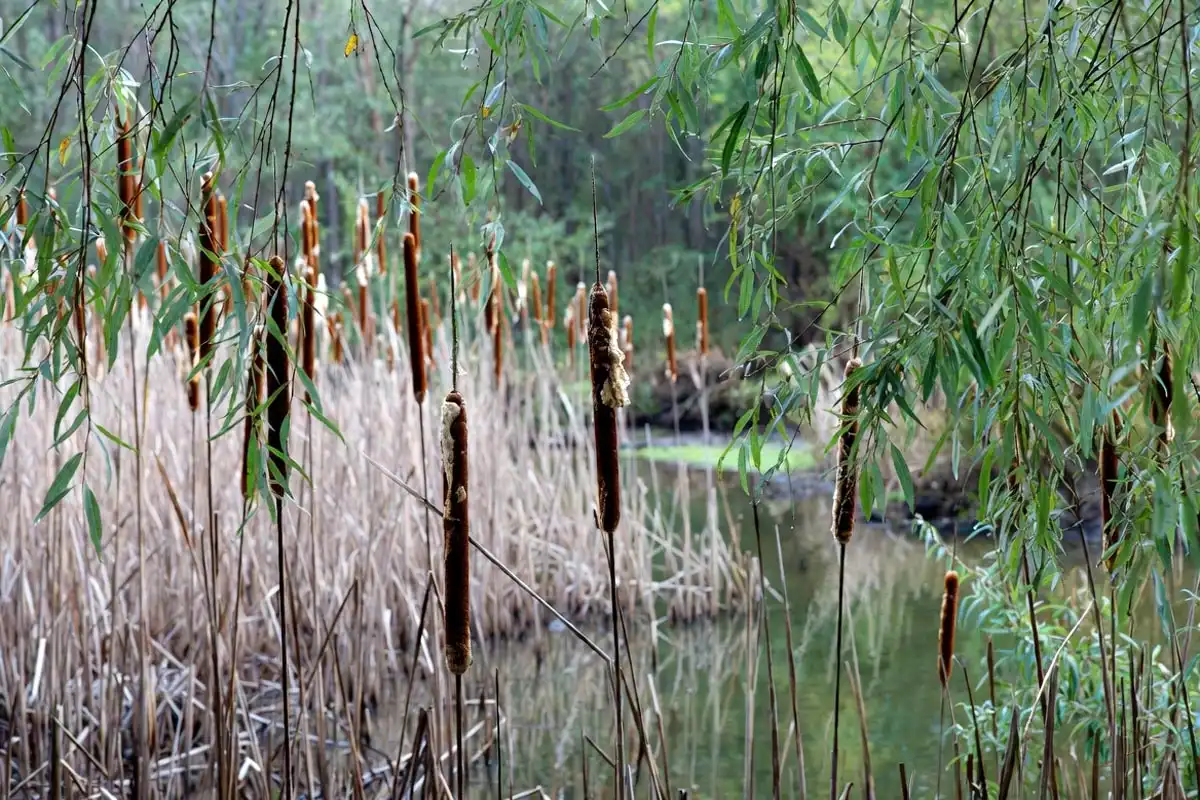
Vegetation: Willows, cottonwood, cattails, and reeds grow near water. A dense green patch in otherwise dry terrain points to underground moisture.
Animals and insects: Animal trails that converge and head downhill often lead to a water source. Bees stay within a few kilometers of water. Mosquitoes stay close to standing water.
Sound: Moving water carries sound through quiet forest. Stop and listen for 30 to 60 seconds, especially in valleys or near rock faces.
Terrain: The base of a cliff, the floor of a canyon, and the outer bend of a dry streambed all hold water longer than surrounding ground.
How to Find Water in the Wild
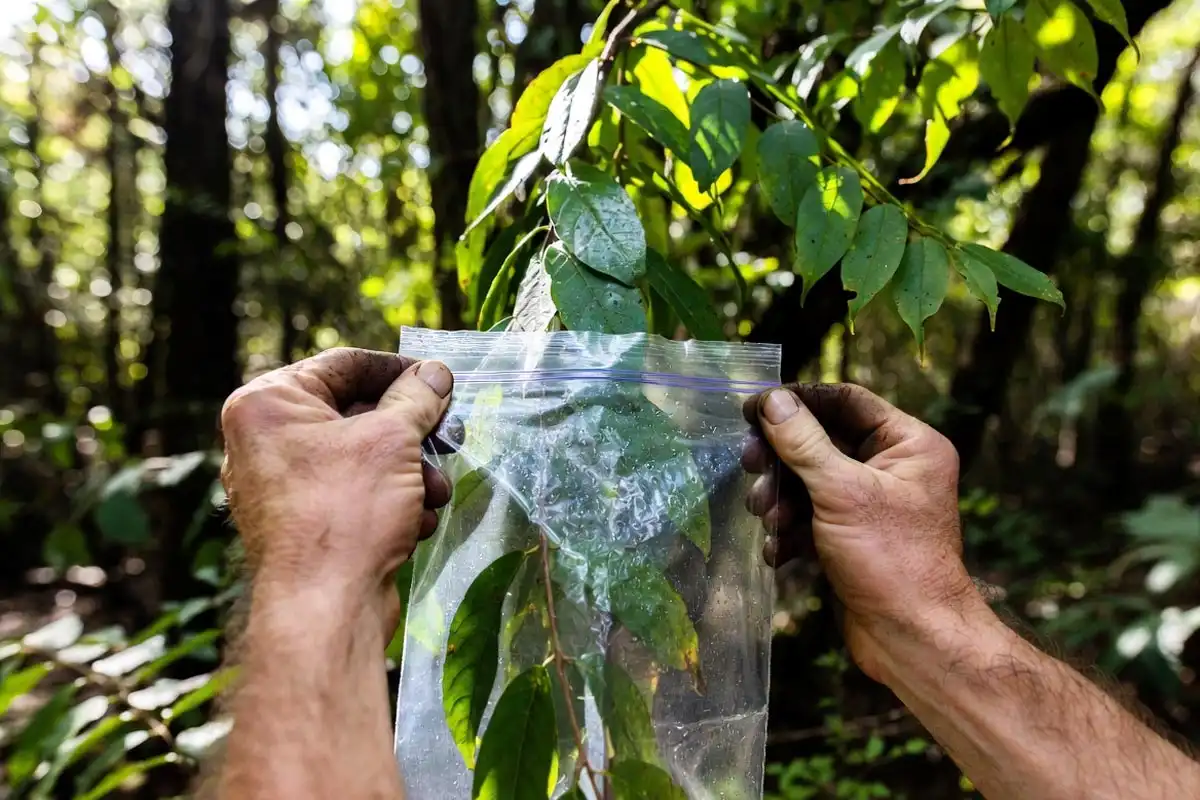
Follow this sequence when your supply runs low:
- Stop and rest. Reduce exertion to slow dehydration. Think before you move.
- Move downhill. Head toward valleys, ravines, and low terrain.
- Follow animal trails. Trails that converge and run downhill lead toward water.
- Listen actively. Stand still and listen for running or dripping water.
- Look for indicator plants. Willows, cattails, and dense green patches mark wet ground.
- Check cliff faces and rock walls. Mossy surfaces seep moisture. Crevices pool rainwater.
- Collect morning dew. Wrap absorbent cloth around your legs and walk through vegetation at dawn. Wring into a container. A cotton t-shirt dragged through heavy dew collects several hundred milliliters in 20 to 30 minutes.
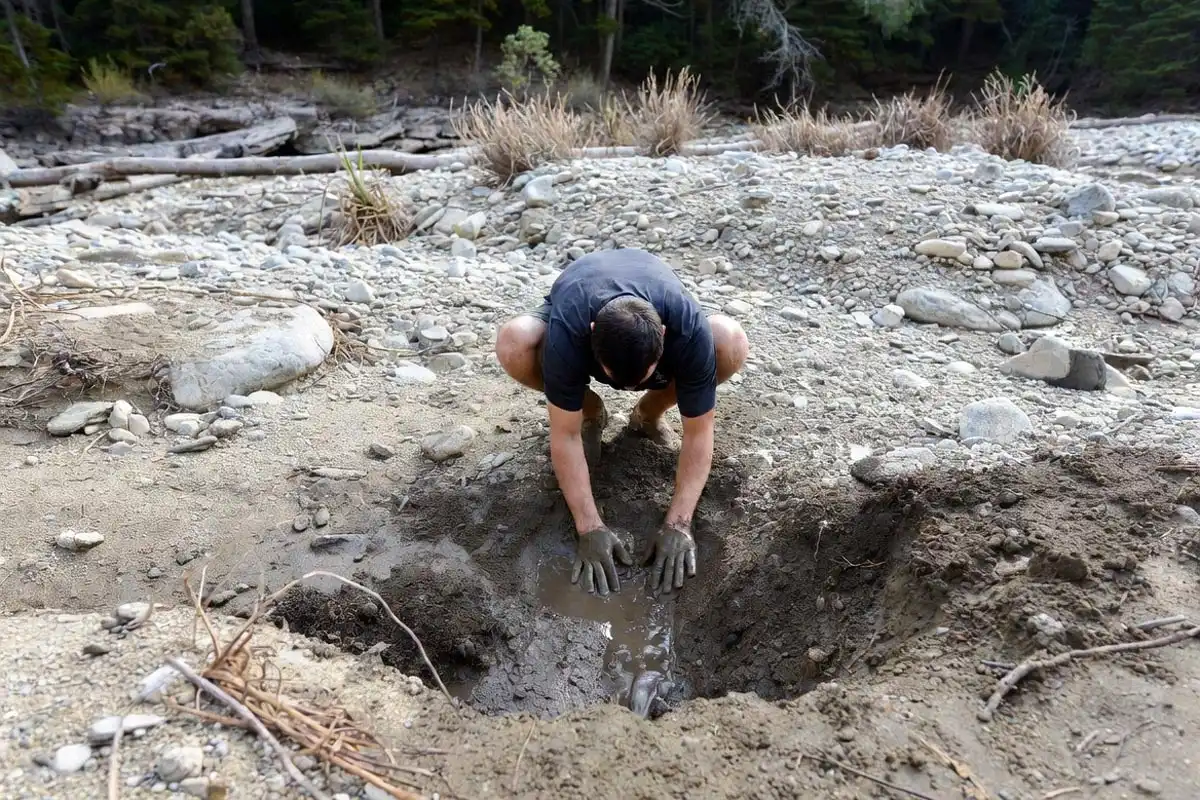
- Dig at dry streambed bends. Dig into the outer curve of a dry channel, 30 to 60 cm deep. Water seeps into the hole within minutes if moisture is present.
- Use a transpiration bag. Tie a clear plastic bag over a leafy branch in full sun. Moisture collects inside within a few hours.
- Purify before drinking. Boil for one minute, use a portable filter, or treat with purification tablets.
What Are the Most Reliable Water Sources in the Wild?
Moving streams and rivers carry fewer pathogens than stagnant pools. Fast-moving water over rocks is generally cleaner than slow water.
Springs and seeps produce groundwater filtered through rock or soil. These deliver some of the cleanest natural water available, though purification is still necessary.
Rainwater collected directly in a clean container or from natural rock basins is safe to drink without treatment. Avoid collecting from leaves with visible sap or sticky coatings.
Morning dew provides a consistent early source before the sun evaporates it. Collect from grass and broad leaves with cloth or clothing.
Snow and ice (in cold terrain) produce clean water when melted. Never eat snow directly. It lowers core body temperature faster than it hydrates.
I covered the full range of treatment methods in my article on purifying water in the wild, including boiling times, filter types, and tablet use.
How Do You Make Wild Water Safe to Drink?
Finding water and safely drinking it are two separate steps. Raw wild water carries bacteria, protozoa, and viruses.
Boiling destroys most biological pathogens. Bring water to a full rolling boil for one minute. At elevations above 2,000 meters, boil for three minutes.
Portable filters (LifeStraw, Sawyer Squeeze) remove protozoa and bacteria. They do not remove viruses. Use filters on moving water sources.
Purification tablets (iodine or chlorine dioxide) kill bacteria and viruses. Allow 30 minutes in clear water before drinking.
Best practice: Filter first, then treat with tablets. This covers the full range of biological contamination.
I also discussed safe water handling in my guide on making camp water safer, which covers storage and container hygiene.
What Mistakes Should You Avoid?
Drinking untreated water. Clear, fast-moving streams carry Giardia lamblia and Cryptosporidium. Both cause severe illness. Treat every source.
Choosing stagnant ponds over moving water. Still water with algae, odor, or an oily surface carries higher pathogen loads. Prioritize springs and streams.
Ignoring dew collection. Many campers skip dew because it seems too slow. It provides consistent morning hydration when other sources are distant.
Digging in the wrong spot. Dig the outer bend of dry channels, not the center. Moisture concentrates at bends where sediment accumulates.
Wandering randomly. Aimless movement burns energy and accelerates dehydration. Move with a clear direction: downhill, following trails or terrain features.
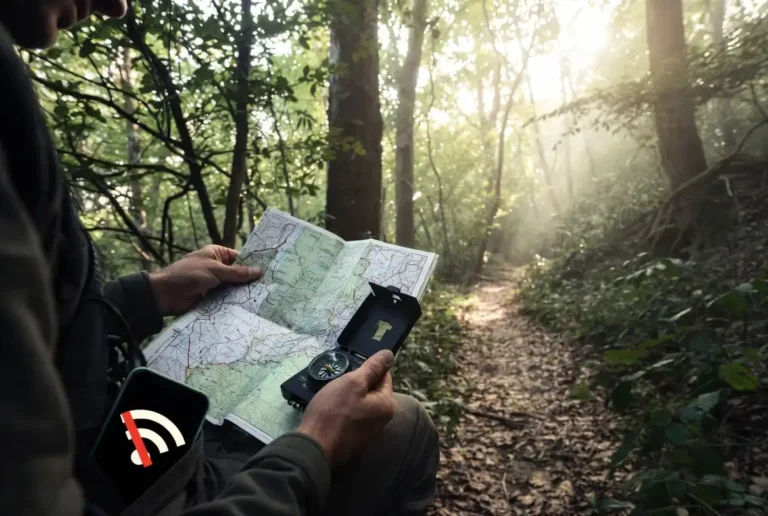
If you are also working without a phone or map, my guide on navigating in forest terrain covers terrain-reading and direction-finding that works alongside water search.
Safety Notes When Collecting Wild Water
Water near industrial sites, old mines, or agricultural fields can carry chemical contamination. Boiling and filtering do not remove heavy metals or pesticides.
Avoid any water with an oily sheen, unusual color, or strong chemical smell.
In areas with livestock, streams downstream of grazing land carry high E. coli concentrations. Prioritize springs or upstream sources in these environments.
Keep your collection container clean. A contaminated bottle re-contaminates treated water.
If you are lost and managing a water emergency simultaneously, read what to do when you get lost trail for a decision framework that covers priorities in order.
FAQs about Find Water in the Wild When Supply Runs Out

Can you drink rainwater collected from leaves?
Yes, in most cases. Rainwater collected from clean leaves or rock basins is safe without treatment. Avoid leaves with visible sap, resin, or sticky texture, as some plants produce compounds that irritate the digestive system.
How long can you survive without water in the wild?
The body survives roughly three days without water under moderate conditions. Heat and physical exertion reduce that window significantly. Judgment and coordination decline within hours of onset, which is why water search takes priority immediately.
Is it safe to drink from a fast-moving stream without treatment?
No. Fast-moving streams look clean but carry Giardia and Cryptosporidium. Both survive in cold, clear water. Always boil, filter, or treat with tablets before drinking any wild water source.
Does collecting water from a cactus work?
Some species, including the barrel cactus, produce pulp with limited moisture. The liquid is not pure water and causes nausea in large quantities. It delivers a small emergency supply but does not replace reliable collection and treatment methods.
What if I have no container to collect water?
Large leaves form natural cups for collecting rainwater or dew. Folded bark or a plastic bag from your gear works as a temporary vessel. Drinking directly from a seep or spring by cupping your hands reduces contamination risk compared to stagnant sources, though treatment is still necessary.
Final Thoughts
Finding water in the wild follows a reliable pattern: move downhill, read terrain and vegetation signs, use animal trails, and collect from the cleanest available source. Purification is non-negotiable regardless of how clear the water looks.
Carry purification tablets on every trip. They weigh almost nothing and eliminate the risk of drinking untreated water in an emergency.