How to Pick a Tent Color That Works Best in Different Conditions
Tent color affects interior temperature, visibility, sleep quality, and how well your shelter blends into the landscape. This guide covers how light, dark, and bright tent colors perform across hot, cold, and backcountry conditions so you pick the right one for your next trip.
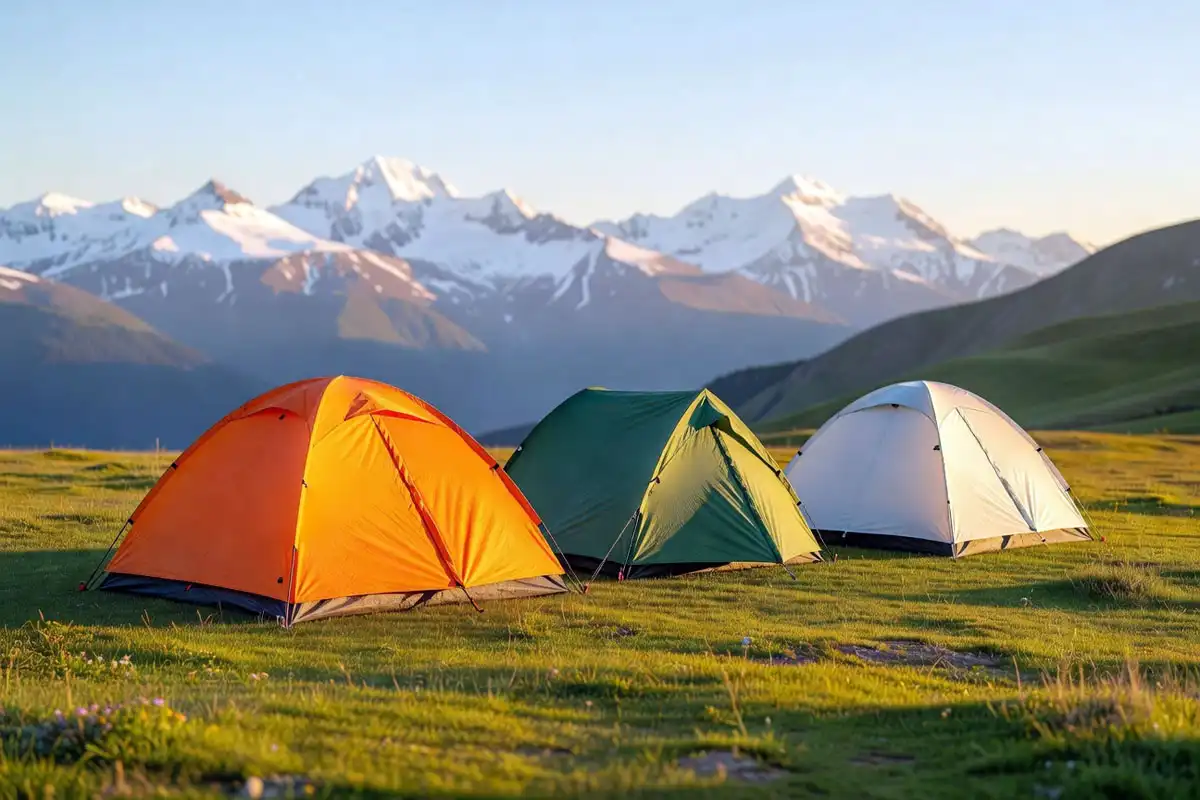
Light colors like white and tan reflect sunlight and keep a tent cooler in summer. Dark colors like green and navy absorb heat and add warmth in cold weather. Bright colors like orange and yellow improve visibility for safety in remote areas. Choose based on your camping climate, terrain, and whether you need to be seen or stay hidden.
Why Does Tent Color Matter?
Tent color controls how much solar energy your shelter absorbs or reflects. This directly changes the interior temperature during daytime hours.
Dark tent fabric absorbs more visible light wavelengths and converts them into heat. Light tent fabric reflects those wavelengths and stays cooler. The Exploratorium confirms that dark-colored materials absorb visible light faster and heat up quicker than light-colored ones.
Color also affects visibility. A bright orange tent stands out in a snowfield. A green tent disappears against trees. Both serve different purposes depending on where you camp.
How Do Light and Dark Tent Colors Affect Temperature?
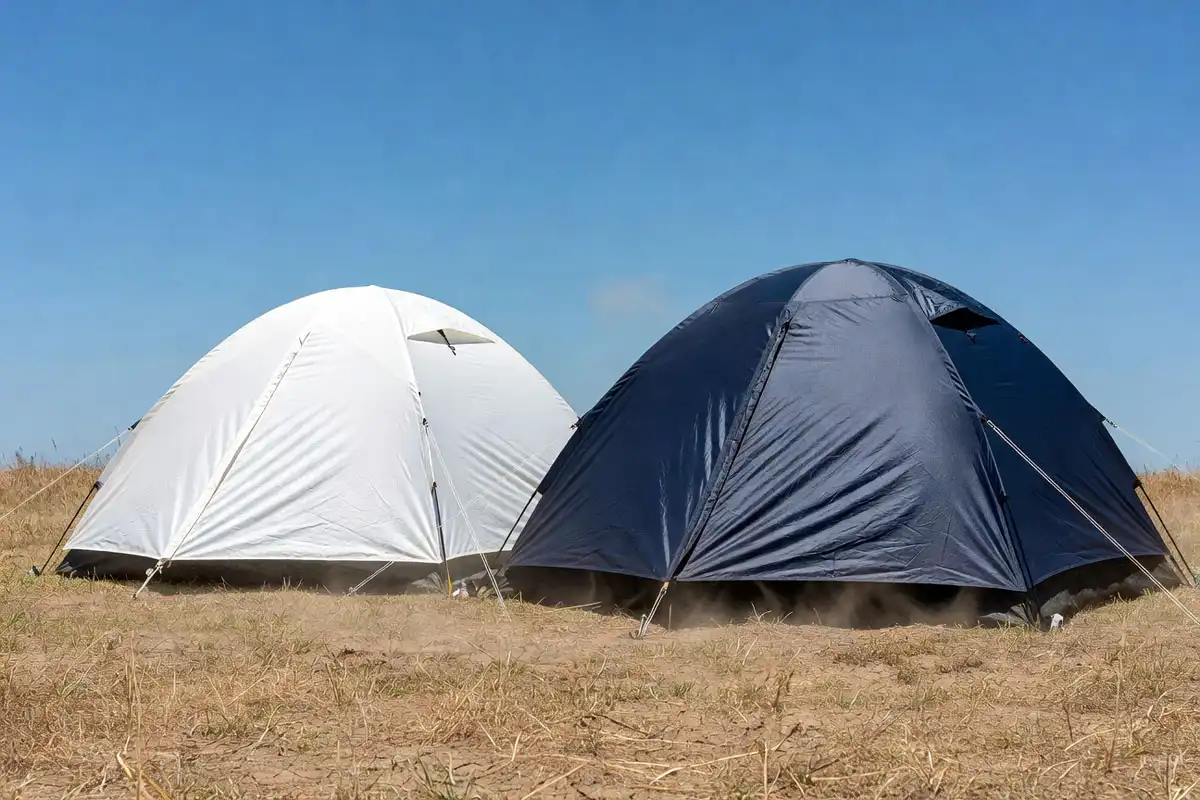
Light-colored tents reflect sunlight and reduce heat buildup. Dark-colored tents absorb sunlight and increase interior warmth.
When light hits a surface, the surface either absorbs that energy as heat or reflects it back. Tufts University’s engineering outreach program explains that darker colors absorb more sunlight than lighter colors, which is why darker surfaces warm up faster.
Common tent colors ranked from most heat absorption to least: black, dark blue, dark green, red, orange, yellow, and white. White reflects the widest range of light wavelengths.
The rainfly color matters too. A light-colored rainfly over a darker inner tent balances heat reflection with privacy.
What Tent Color Works Best in Hot Weather?
White, light grey, tan, and pale beige tents perform best in hot weather. These colors reflect sunlight and keep interior temperatures lower.
Tan or beige hides dirt better than pure white. White tents show every mud splash and grass mark quickly.
I wrote about hiking safely in extreme heat earlier. Tent color ties into that. Pair a light-colored tent with shade and good ventilation for the best summer results.
Light-colored tents also let in more natural daylight, which makes the interior feel brighter for organizing gear.
What Tent Color Works Best in Cold Weather?
Dark green, navy, dark brown, and black tents absorb more sunlight and generate extra warmth during cold-weather camping.
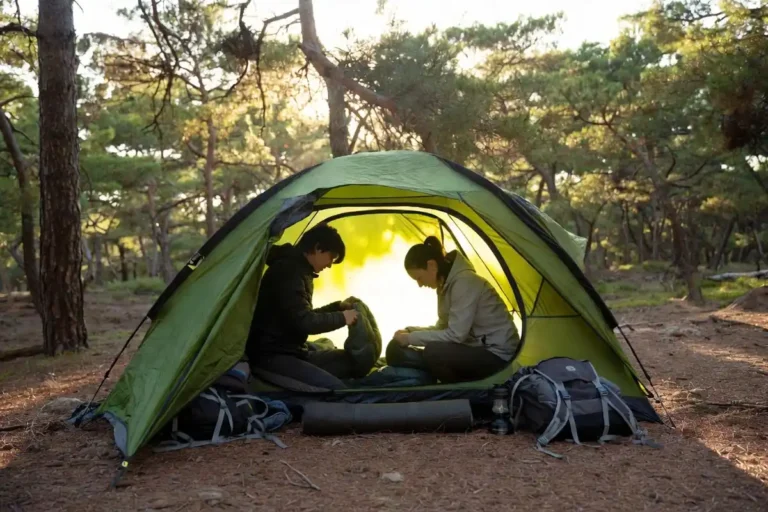
Dark colors also block more light. This helps you sleep longer on bright mornings when snow reflects sunlight from every direction.
Tent color alone does not solve cold-weather comfort. Insulation, sleeping bags, and layering matter more. But a darker tent gives a small thermal advantage during sunny hours. I covered staying warm in a tent when temperatures drop separately.
Pair a dark tent with proper cold-weather ventilation to reduce condensation buildup.
What Tent Color Works Best for Visibility and Safety?
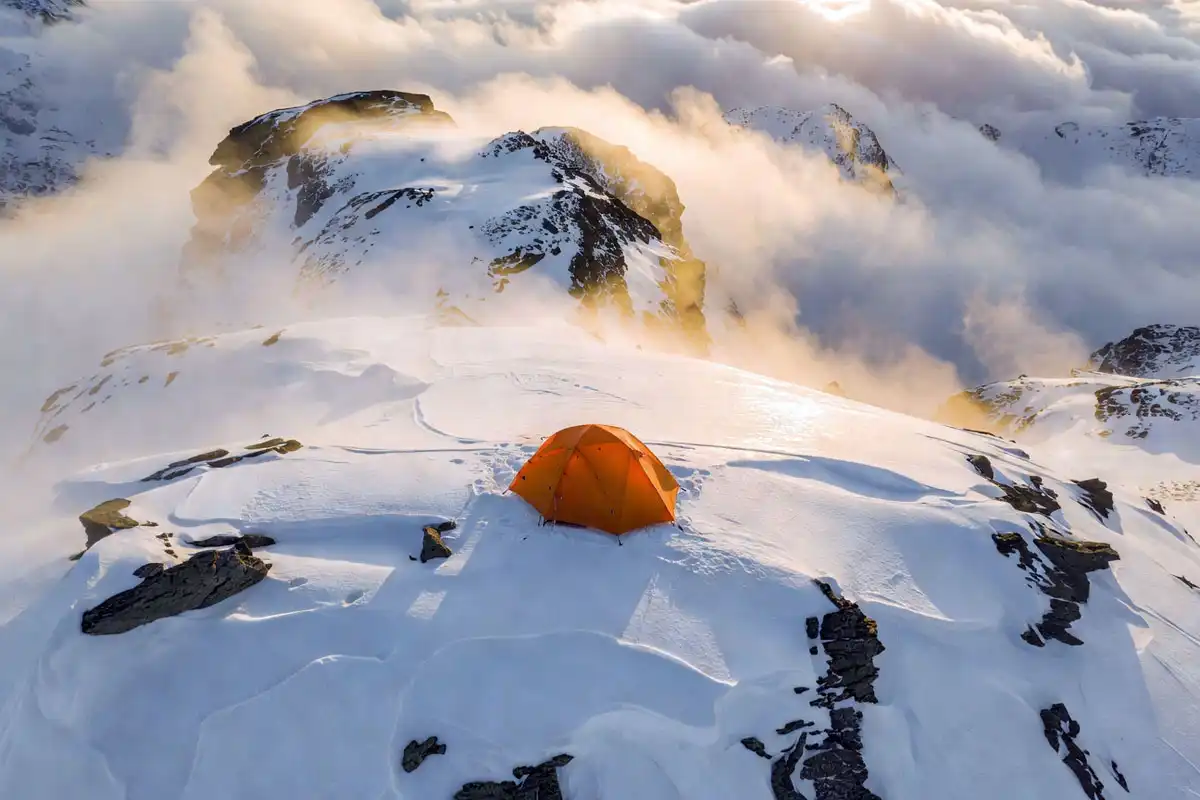
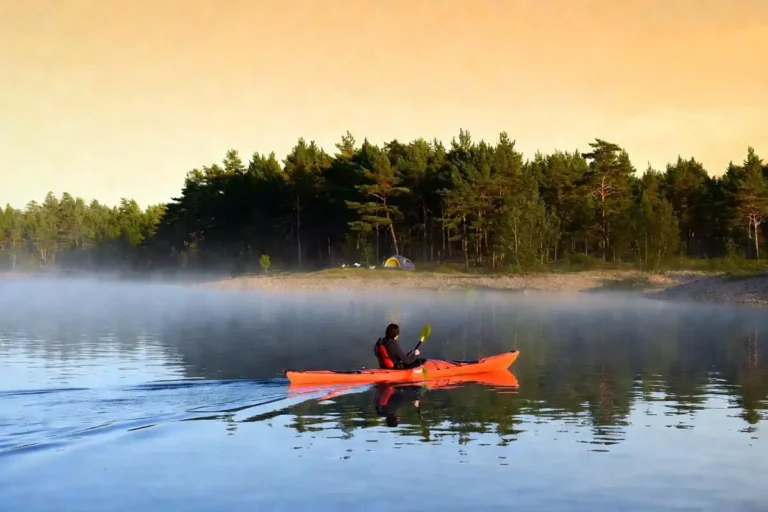
Bright orange, yellow, and red tents provide the highest visibility in emergencies and remote terrain.
Search and rescue teams spot bright tents faster against natural backgrounds. Orange contrasts sharply with green foliage, brown earth, white snow, and grey rock.
Mountaineering expeditions commonly use bright yellow or orange tents. These colors are visible from the air and across snowfields.
In crowded campgrounds or festivals, a distinctive bright color also helps you find your own tent among dozens of similar shelters.
What Tent Color Helps You Blend Into the Surroundings?
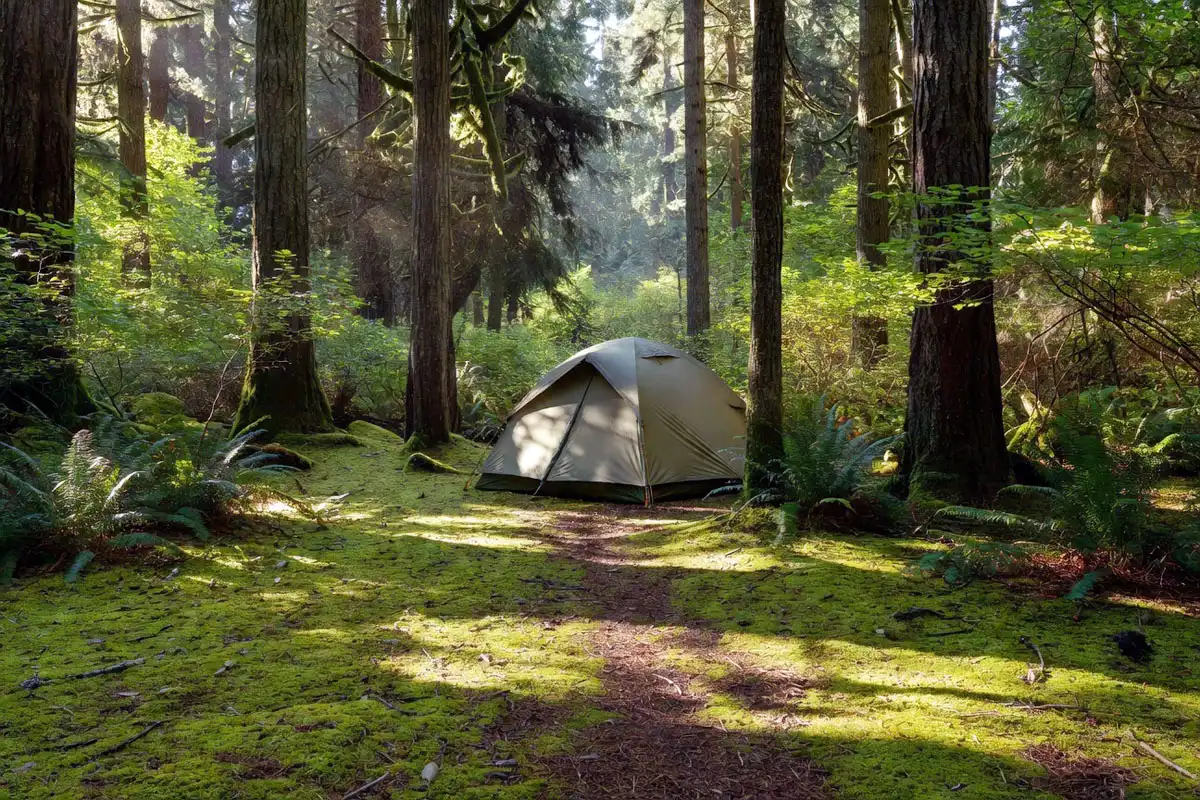
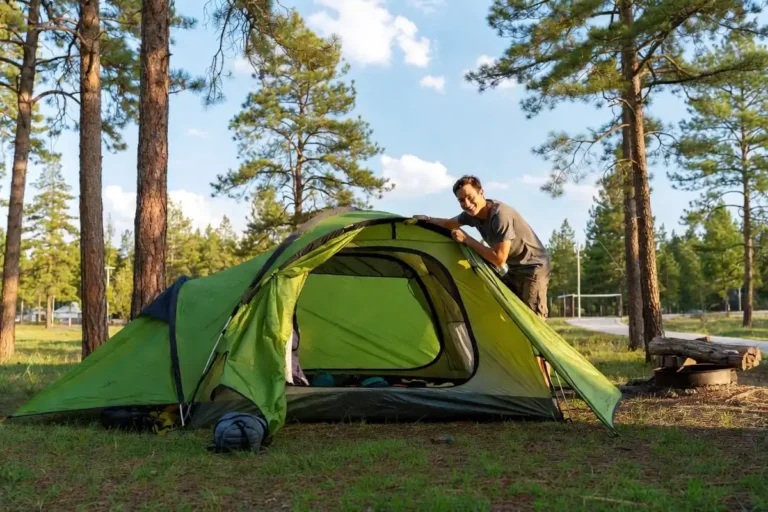
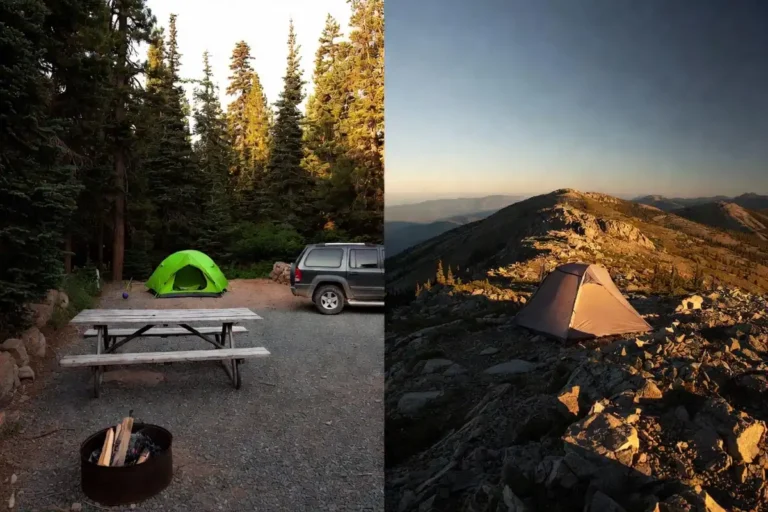
Olive green, dark brown, tan, and grey tents blend best with forests, deserts, and backcountry landscapes.
Some public lands expect campers to minimize visual impact. A neutral-colored tent respects other visitors and keeps your campsite discreet. Green works in forests. Brown and sand suit deserts. Grey fits rocky or coastal terrain.
If you plan to camp with dogs, a neutral tent draws less attention from wildlife and other campers.
One exception: near hunting zones, avoid camo, brown, and dark green. Hunters may not see a camouflaged tent. Use bright orange or attach an orange marker during hunting season.
How Does Tent Color Affect Insects and Wildlife?
Mosquitoes are drawn to darker shades, particularly dark blue and black. Bright colors like yellow and white attract flying insects such as bees, especially at night when the tent glows from interior lighting.
Muted green, grey, or tan strikes a balance. These tones do not attract mosquitoes as strongly and do not glow as brightly when lit from inside.
I covered keeping insects out of your tent at night in a separate article. Mesh screens and sealed zippers matter more than color for insect control.
Bears respond to food smells, not tent color. Store food away from your tent regardless of color.
How to Pick the Right Tent Color Step by Step
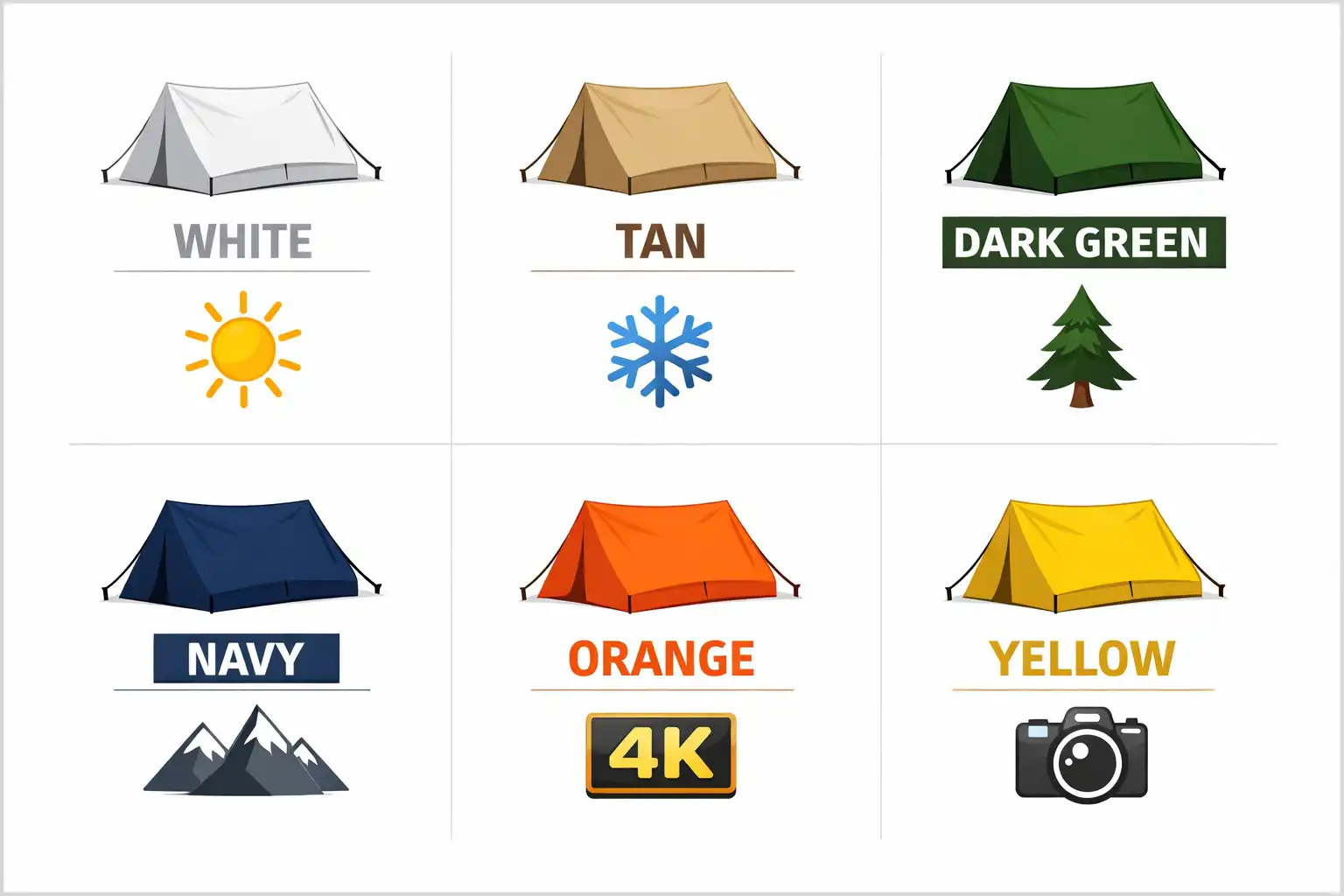
Step 1: Identify your primary camping climate. Hot conditions favor light colors. Cold conditions favor dark colors.
Step 2: Assess the terrain. Forest suits green or brown. Desert suits tan. Alpine and snow suit bright orange or yellow.
Step 3: Decide if visibility or stealth matters more. Remote backcountry needs visible colors. Dispersed camping needs neutral colors.
Step 4: Consider sleep habits. Light sleepers benefit from a dark tent that blocks morning sun.
Step 5: Check for hunting season overlap. Near active hunting zones, avoid dark camo colors. Use bright orange.
Step 6: Factor in insect pressure. Mosquito-heavy areas call for lighter, muted tones rather than deep dark shades.
Common Mistakes to Avoid
Ignoring the rainfly color. The rainfly faces the sun. A dark rainfly on a light tent still absorbs heat.
Using a dark tent in summer without shade. A dark tent in direct sun turns into an oven by midday.
Picking a bright tent for stealth camping. A neon tent in a quiet forest attracts unwanted attention.
Choosing white for dirty-ground camping. White shows every stain. Choose tan, grey, or olive instead.
FAQs on Pick a Tent Color

Does tent color affect temperature inside the tent?
Yes. Dark tents absorb more heat and warm up faster. Light tents reflect sunlight and stay cooler. The difference is most noticeable on sunny summer afternoons.
What is the best tent color for summer camping?
White, light grey, or tan. These colors reflect sunlight, reduce heat buildup, and keep the interior comfortable during hot daytime hours.
What tent color is easiest to spot in an emergency?
Bright orange or yellow. Search and rescue teams identify these colors fastest from the air and across open landscapes.
Do bright tents attract bears?
No. Bears respond to food odors and movement, not tent color. Store food in bear-proof containers away from your shelter.
Is a green tent better than a grey tent?
Green blends well in forests. Grey works better in rocky or coastal environments. Choose based on the terrain where you camp most.
Conclusion
Tent color is a functional decision that affects heat, visibility, sleep, and how well your shelter fits into the landscape. Light tents keep you cool. Dark tents add warmth and block light. Bright tents keep you safe in remote areas. Neutral tents keep you hidden.
Match the color to your camping climate, terrain, and safety needs. There is no single best color for every situation. Think about where you camp most often and let that guide your choice.