How to Pitch a Tent on Rocky or Sandy Ground: 9 Rock Solid Tricks

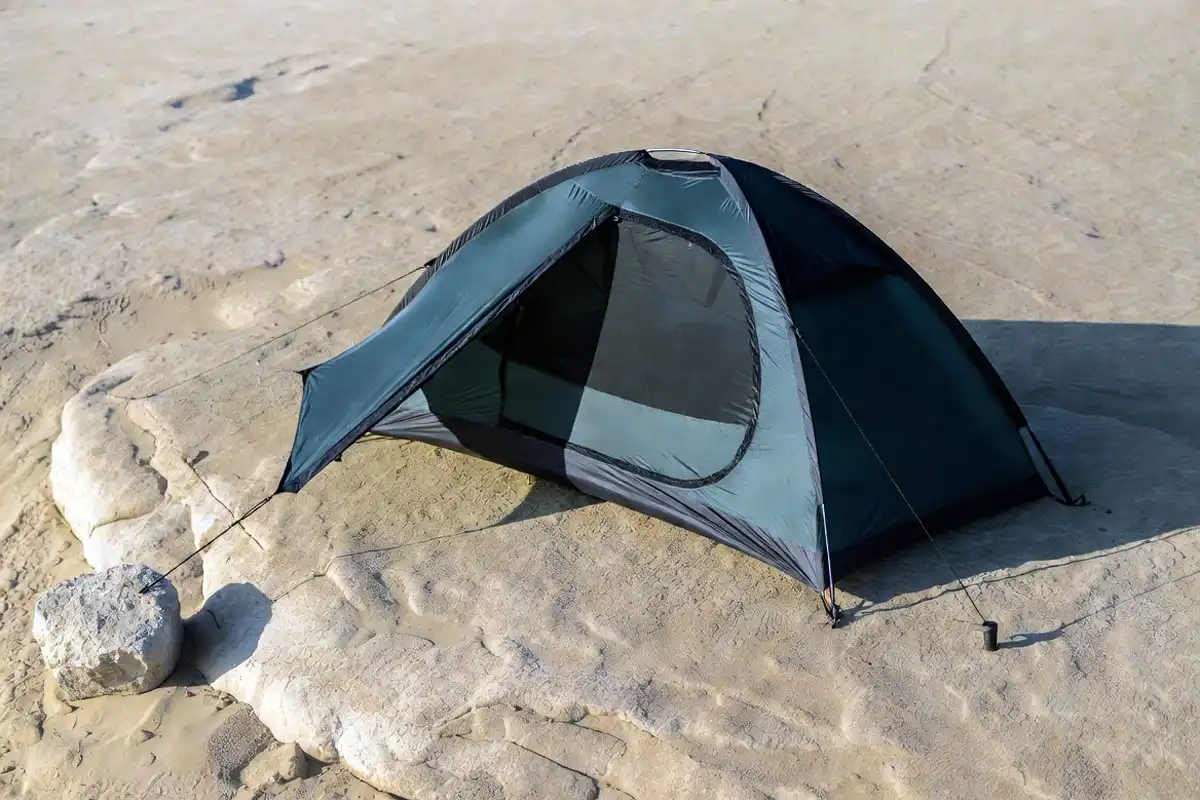
You pitch a tent on rocky or sandy ground by anchoring it with weight, tension, and smart placement instead of counting on standard stakes. This guide covers site selection plus the stakes and guylines that hold. It also walks through pitching on rock and loose sand, with fixes that keep a shelter quiet in wind. I use these methods when the soil resists stakes or swallows them. A secure anchor matters more than perfect ground.
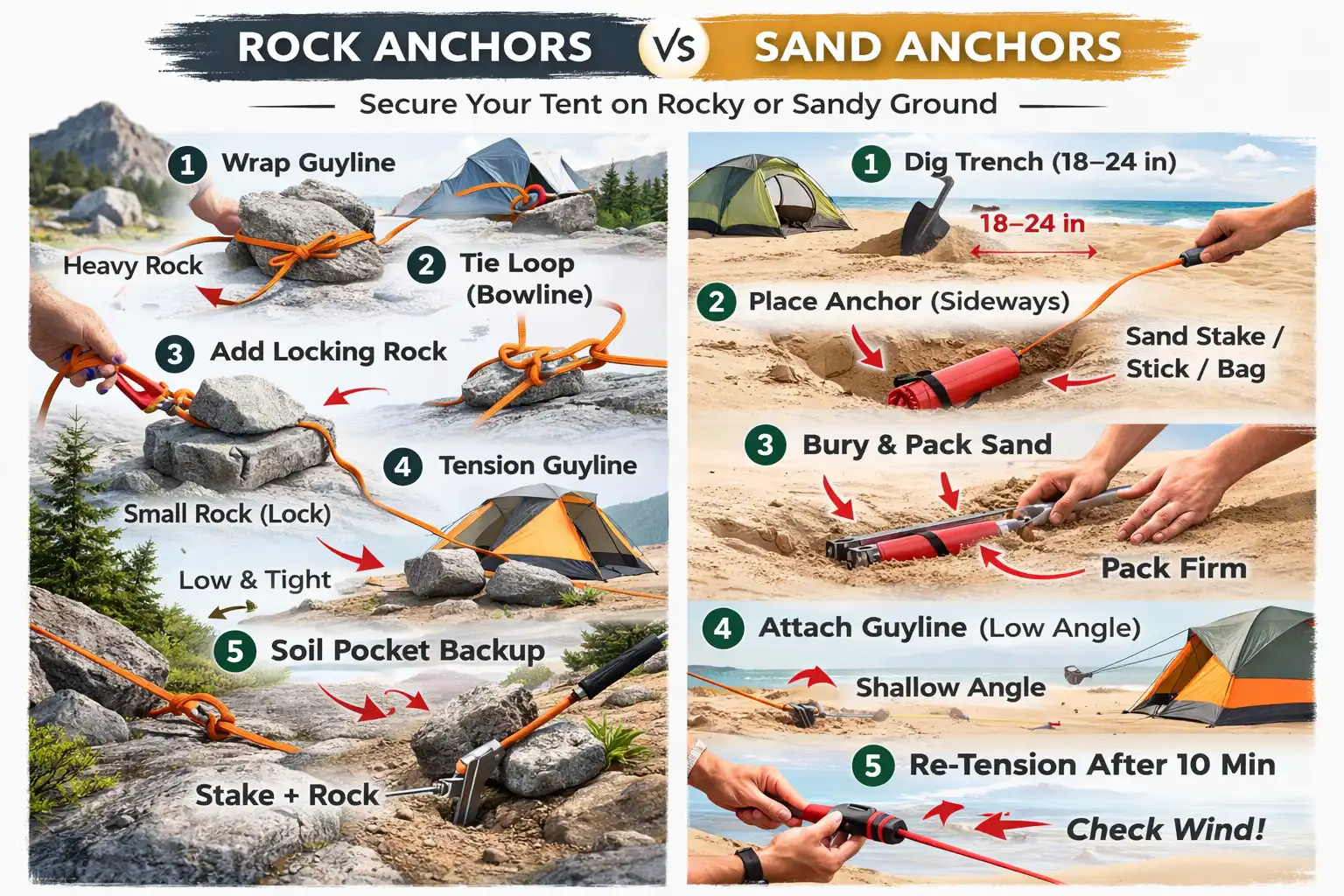
On rock, set the tent, then anchor each corner with guylines tied to heavy rocks. Trap the line under a rock edge for extra grip. On sand, bury a deadman anchor (sand stake, bag, or stick) until you hit firmer sand. Pack the sand hard, then tension the guylines again after a short wait.
What makes rocky and sandy ground hard for tents?
Rock blocks stake penetration, so a normal stake either bends or slides. Hard ground also abrades floors and guylines.
Loose sand releases stakes under load. Wind pulls a stake upward and the sand flows around it.
In both places, your tent stays up because guylines transfer force into anchors that do not move.
Read more: Tarp Size You Need for Your Tent Setup
When do you need these methods?
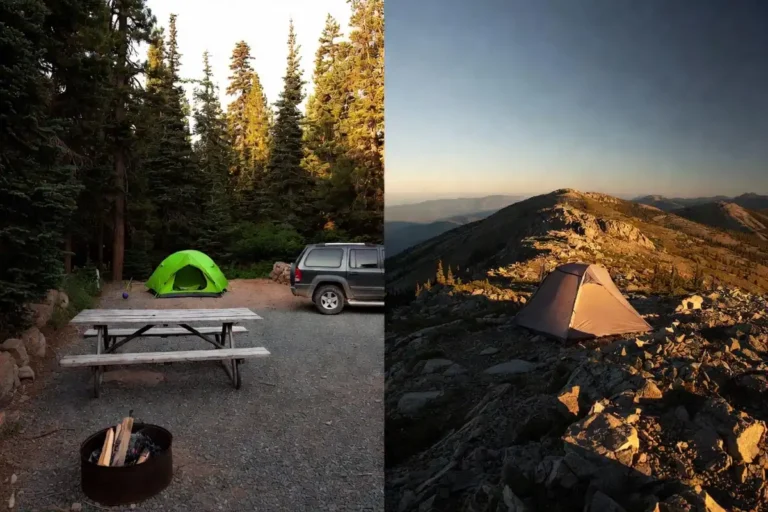
Use rock anchoring on granite slabs, alpine rock, riverbanks with thin soil, and established campsites with packed ground.
Use sand anchoring on beaches, dunes, desert washes, and sandy river bars.
If you want more skills for rough campsites, browse my camping guides for site selection and camp routines.
Where to place the tent on rock or sand
Pick the best micro-site before you touch a pole.
On rock:
- Choose a flat slab with small soil pockets nearby.
- Avoid ledges where a sleeping pad slides at night.
- Check above you for loose rock that could fall.
On sand:
- Camp above the high-tide line and away from fresh seaweed lines.
- Avoid low bowls that collect wind-blown sand.
- Stay out of dry creek beds that flood after rain.
Look for natural wind breaks like a berm, shrubs, or a large boulder. Wind protection reduces anchor load.
Know more: Stay Safe While Solo Camping: 9 Critical Checks
What gear makes pitching easier?
A few small items turn a frustrating setup into a stable shelter.
A tent that matches the ground
A freestanding tent holds shape without stakes, so you only anchor it for wind. A trekking-pole shelter needs solid anchors at each corner.
If you camp with pets, start with a tougher floor and a simple pitch. My tent picks for camping with dogs focus on durability and usable space.
Stakes and anchors
- For rock: extra guyline cord and a few longer guylines reach better anchor rocks.
- For sand: wide sand stakes or snow stakes grip better than thin pegs.
If you carry only standard stakes, you still get a solid hold by burying them sideways as deadman anchors.
Protection and small tools
A footprint or groundsheet reduces abrasion on stone and keeps sand off the floor. A small trowel speeds up deadman anchors.
For more kit ideas, see the gear section. For how I evaluate equipment, read my gear testing policy.
How to pitch a tent on rocky ground
These steps work best with a freestanding tent, but the anchors also support non-freestanding shelters.
Step 1: Clear and pad the contact points
Pick up sharp stones and pine cones. Smooth the sleeping area with your boot.
Lay a footprint if you have one. If you do not, place a spare shirt under the corners where rock rubs.
Step 2: Build the tent and set the right tension
Assemble poles and clip the inner. Add the fly.
Center the tent so each corner reaches an anchor rock without over-stretching straps.
Step 3: Anchor each corner with the rock lock method
This method uses friction and weight.
- Wrap a guyline or corner strap around a heavy rock.
- Tie a fixed loop, like a bowline, so the loop stays put.
- Set the rock on flat ground.
- Place a smaller locking rock on top of the line where it touches the big rock.
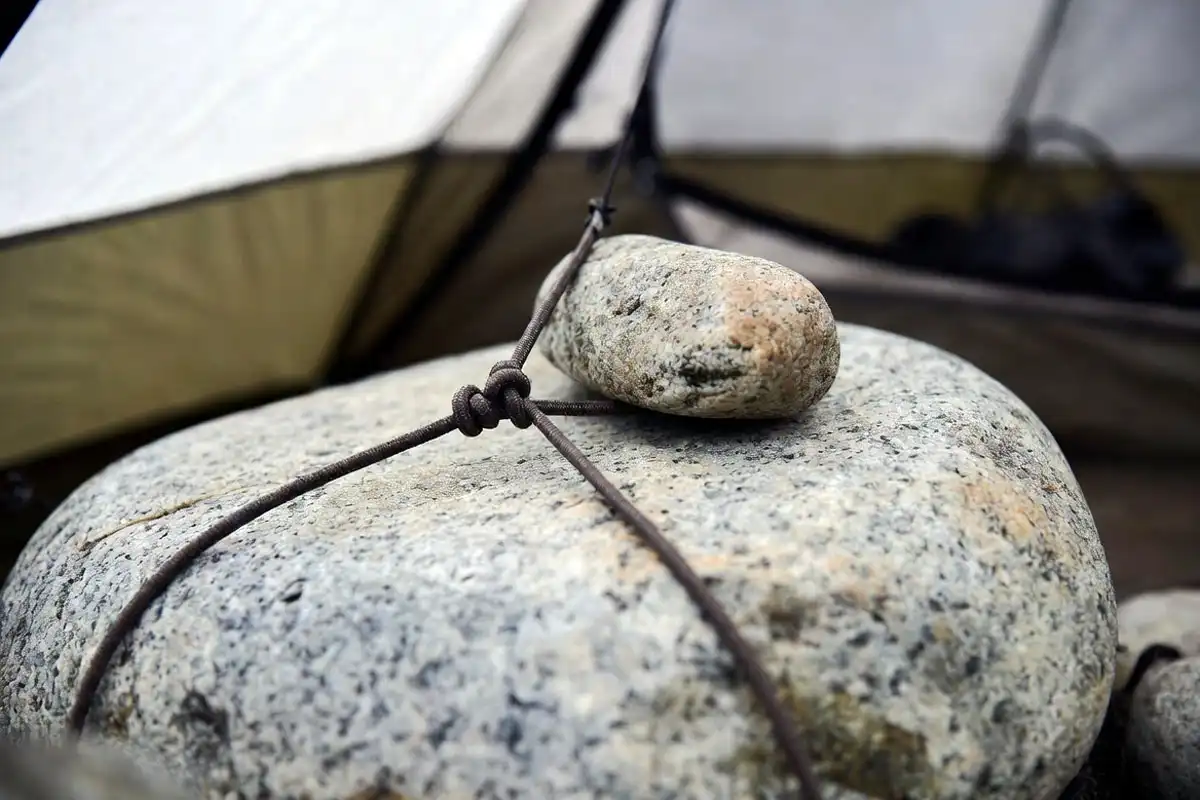
The small rock pinches the line. That pinch stops the line from walking under tension.
Step 4: Guy out the tent for wind
Attach guylines to the fly’s guy points. Run each line to a separate anchor rock.
Keep guylines low and straight. A low angle reduces lifting force on the anchor.
Tension the lines until the fly sheds wind without flapping. Recheck after the fabric relaxes.
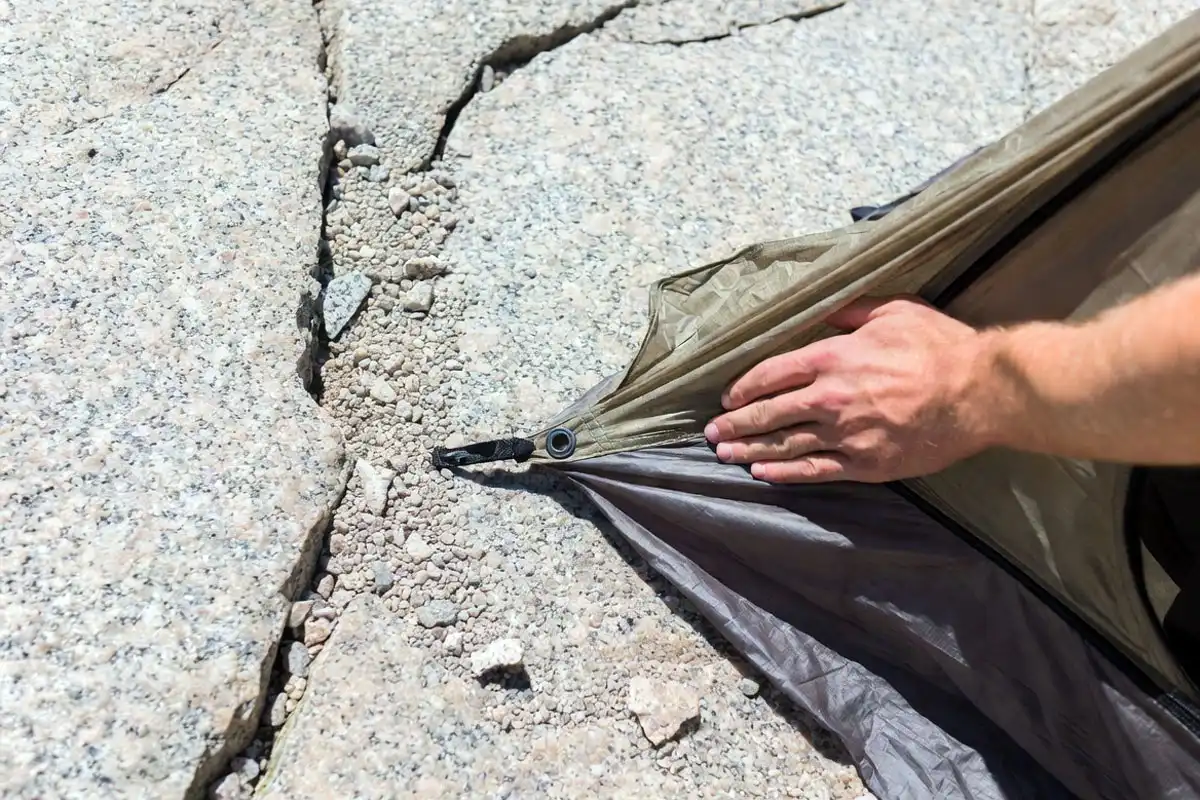
Step 5: Use soil pockets when you find them
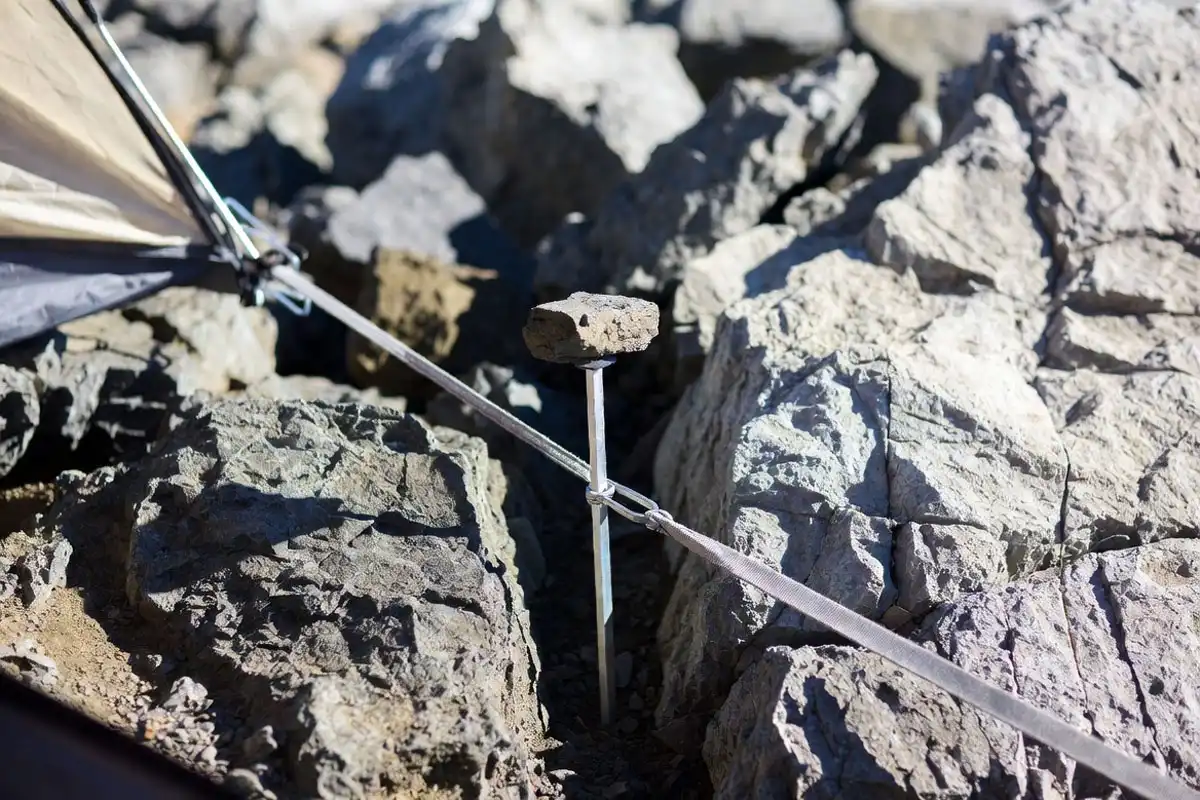
Some rocky sites have cracks with soil.
Push a stake into that soil pocket. Aim the stake away from the tent. Then back it up with a rock on the stake head.
Step 6: Do a tug test
Pull each guyline with your full body weight. The anchor stays put or you reset it now, not at 2 a.m.
How to pitch a tent on sandy ground
Sand holds well when you use the right anchor shape and compact the sand around it.
Step 1: Find the firmest sand
Walk the area and feel the sand with your feet.
Firm sand sits lower and packs tight. Loose dune sand shifts and eats anchors.
On a beach, pick a spot above the highest water mark and away from the tide path.
Step 2: Lay the tent and block blowing sand
Lay the footprint and tent body. Keep zippers closed while you work.
Use a little sand on the footprint corners so the fabric stays put.
Step 3: Use sand stakes when you have them
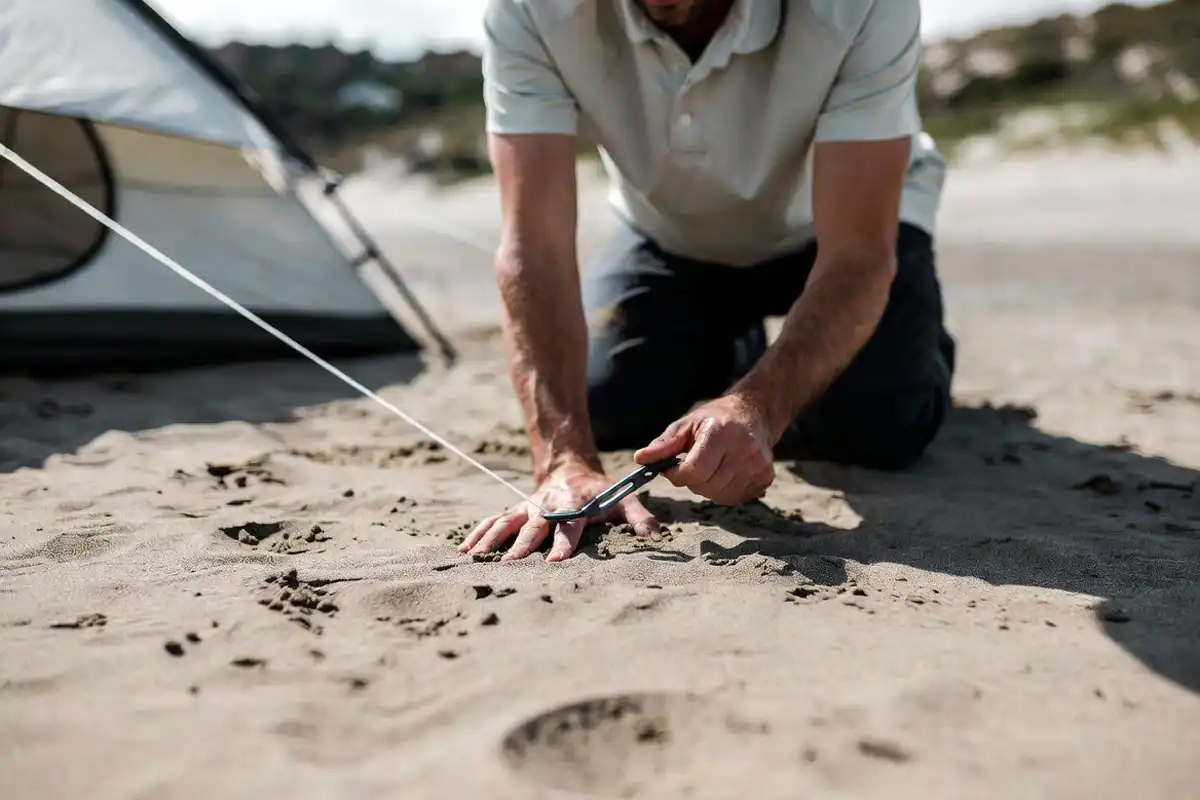
Drive wide sand stakes deep. Keep the pull direction in line with the guyline.
If the stake has holes, thread the guyline through a lower hole. A lower tie point reduces leverage.
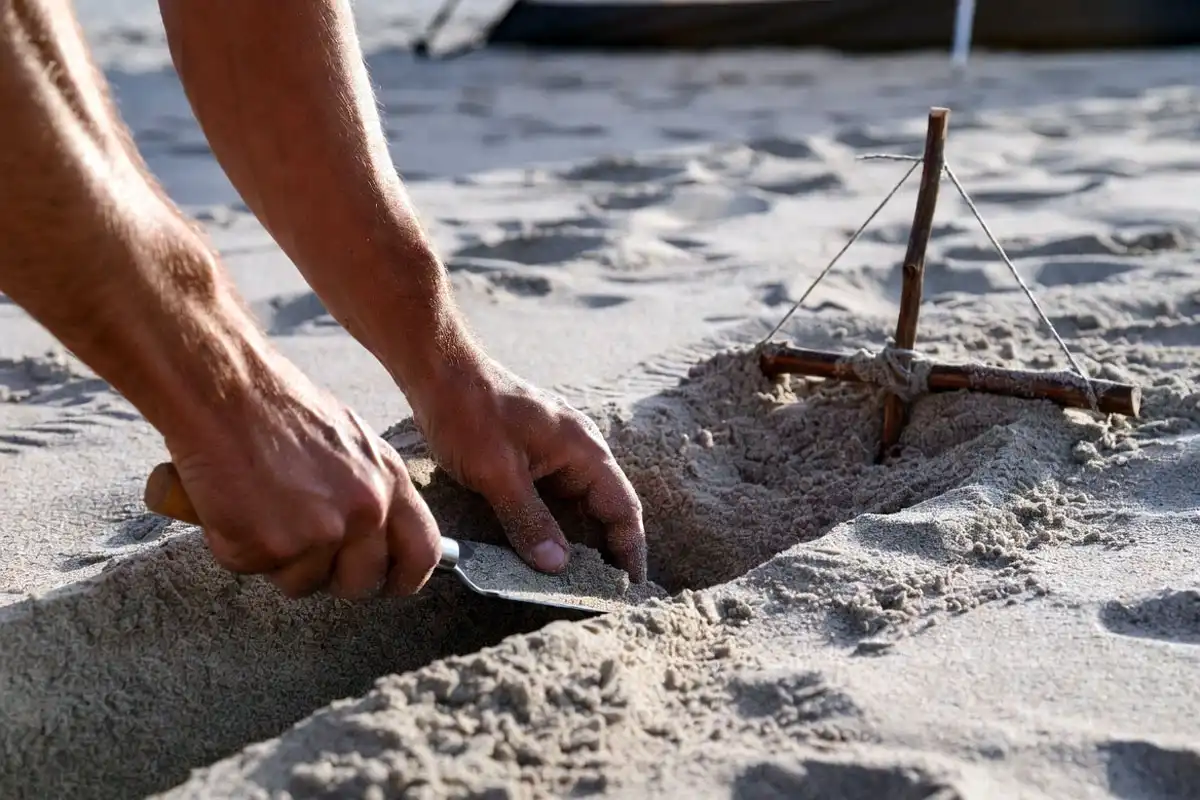
Step 4: Build deadman anchors when stakes fail
A deadman anchor works with almost any item: a stake, a stick, a pouch, or a gear sack.
- Dig a trench across the pull direction.
- Tie the guyline to your anchor item.
- Place the anchor sideways in the trench, like a log.
- Bury it deep enough to reach firmer sand.
- Pack sand hard with your hands and feet.
Leave the guyline exiting the sand at a shallow angle. A sharp angle saws through sand and loosens the pack.
Step 5: Let the sand settle, then re-tension
Sand compacts after you load it.
Wait 10 minutes, then tension the guylines again. Check once more after the first strong gust.
Step 6: Manage sand inside the tent
Keep the inner door closed while you adjust lines.
Brush sand off the fly edges before you unzip. This keeps grit out of zippers.
Solutions for tricky setups
No rocks on a hard site
Use trees, logs, or your pack as anchors. Tie a line low around the anchor so it does not roll.
If the ground has small gravel, bury a stake as a deadman in the gravel and top it with stones.
No stakes on a sandy site
Fill two durable bags with sand and tie guylines to the handles. Bury the bags as deadmen.
Water bottles also work. Wrap a line around the bottle neck and bury the bottle sideways.
Strong wind on rock or sand
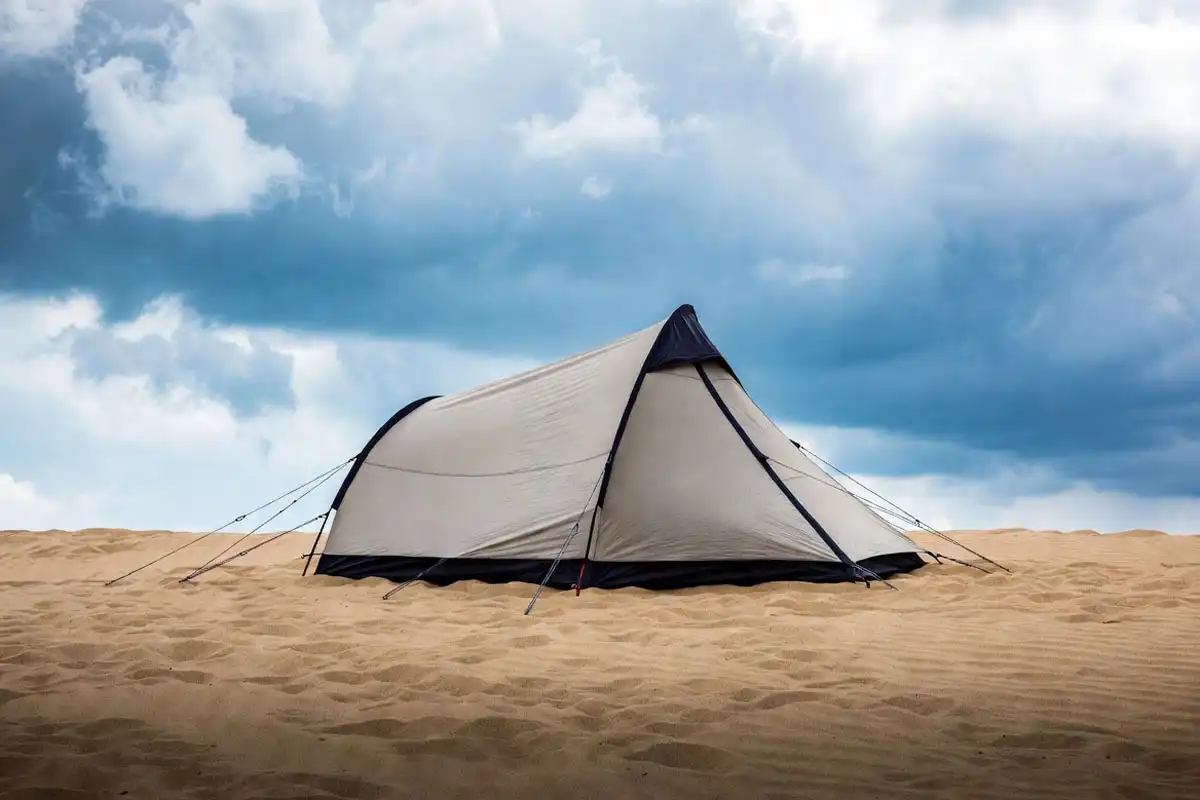
Wind finds weak points fast.
- Pitch the narrow end of the tent into the wind.
- Use every guy point on the fly.
- Shorten guylines where possible, so they stretch less.
- Add friction knots or line tensioners to stop slipping.
A lower profile pitch reduces flapping and reduces anchor load.
Troubleshooting: what to fix when the tent shifts
The rock anchor slides
Use a heavier rock with a flat base. Move it onto rougher ground.
Add the small locking rock on top of the line. That pinch often fixes the slide.
The sand anchor pulls out
Bury the deadman deeper and make the trench longer.
Pack sand hard. Loose backfill fails first.
Switch to a wider anchor item, like a stick or a sand stake, so the sand grips more surface.
The fly flaps all night
Tension the guylines until the fly panels stay smooth.
Guy out the middle of large panels if your tent has those points. Panel pull-outs reduce drum-like flapping.
The floor gets pinholes on rock
Use a footprint. Clear sharp grit before you lay the tent.
If you already have a hole, patch it when the fabric is clean and dry.
Common mistakes to avoid
- Camping on a beach without checking the tide line.
- Anchoring to a loose boulder that moves when you lean on it.
- Using one giant rock for multiple guylines. Separate anchors hold better.
- Leaving guylines rubbing over sharp edges. Abrasion cuts cords fast.
- Tensioning once and walking away. Fabric relaxes and sand compacts.
- Pitching in a dry wash because it looks flat.
Safety and low-impact habits
Keep guylines visible. Use bright cord or hang a small bandanna on lines near foot paths.
Watch the sky and the terrain. Rock faces shed stones after rain and during freeze-thaw.
On beaches, respect waves and tides. Set camp higher than the last wet sand, not near it.
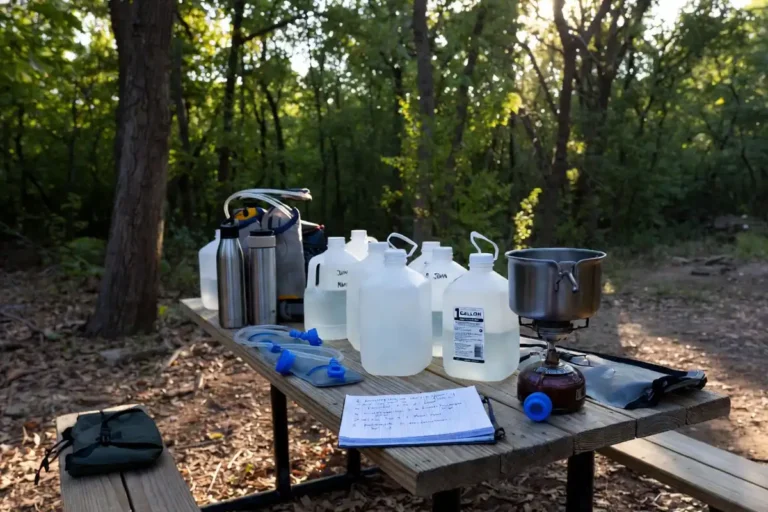
In desert sand, heat dehydrates fast. My water-per-person guide helps you plan a safe carry.
Leave anchors behind clean. Scatter moved rocks back where you found them. Avoid tearing plants for deadmen when driftwood or spare cord works.
FAQs about Pitch a Tent on Rocky or Sandy Ground

Do you need special sand stakes?
Wide sand stakes hold better because they spread load across more sand. Deadman anchors also hold well when you bury and pack them.
Does a freestanding tent still need anchors?
A freestanding tent holds shape, but wind still pushes it. Corner anchors and fly guylines stop the tent from rolling or lifting.
What knot works best for rock anchors?
A bowline makes a fixed loop that stays easy to untie. A trucker’s hitch tensions a line fast when wind rises.
Conclusion
Rock and sand demand different anchors, but the goal stays the same: keep tension steady and prevent movement. Pick the best micro-site first. Protect the floor from abrasion. Use rocks to pinch and hold guylines on hard ground. Use buried deadmen and packed sand on soft ground. Finish with a tug test and recheck after wind or settling.