How to Purify Water in the Wild: 5 Practical Ways to Treat Water

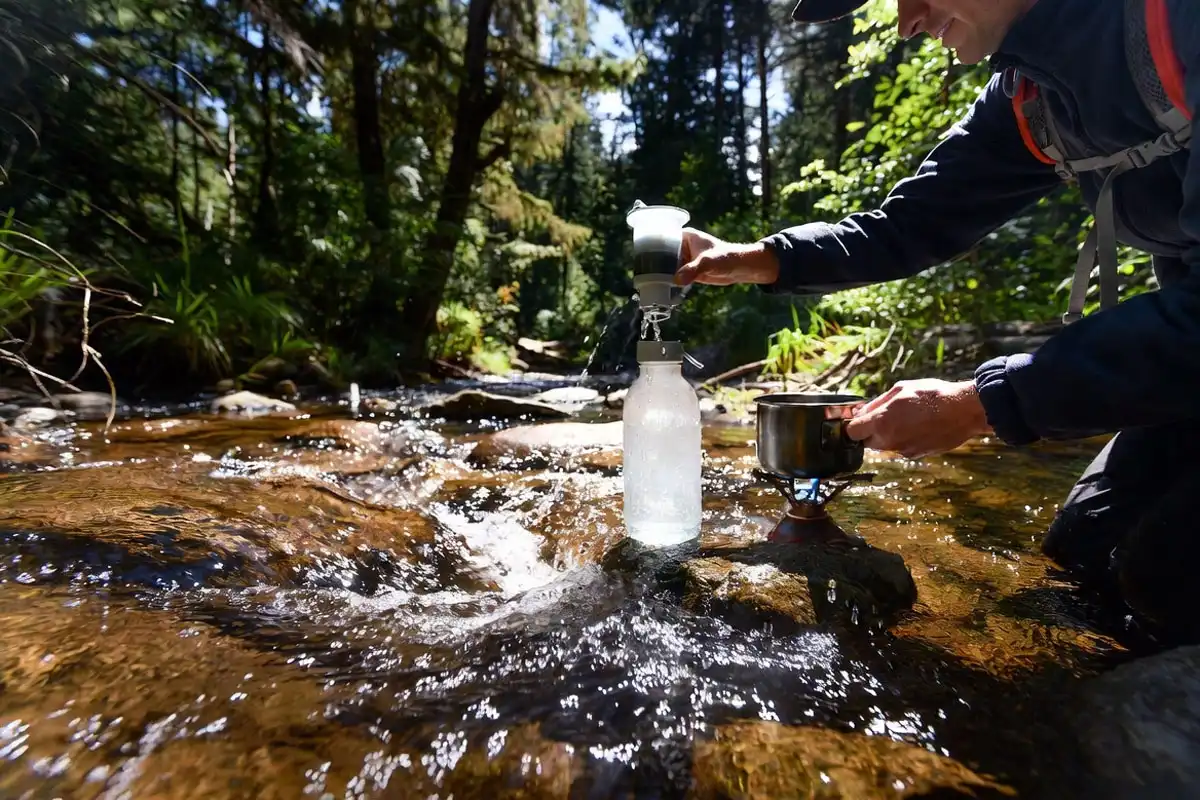
Safe wild water comes from a clean source plus a treatment step that removes or inactivates germs. This guide covers how to collect water, clarify it, treat it with heat, filters, chemicals, or UV, and store it without recontamination. You will also learn decision points for muddy water, freezing weather, and areas with heavy human activity. The goal is simple: drink enough water and avoid stomach illness on the trail.
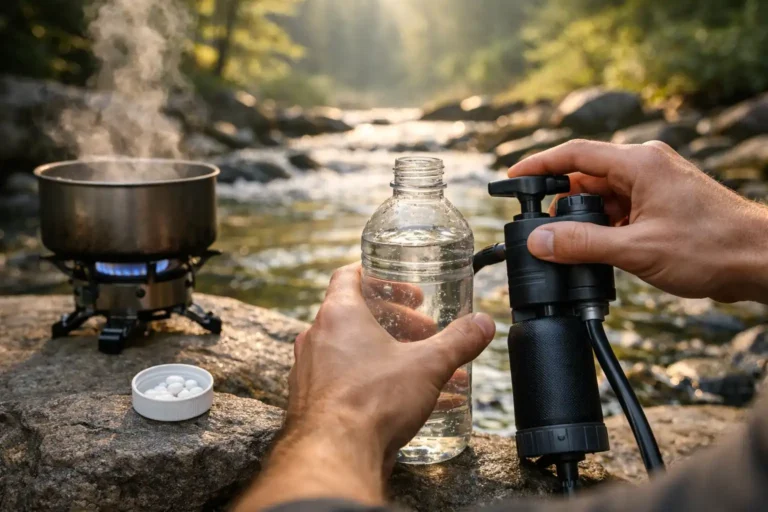
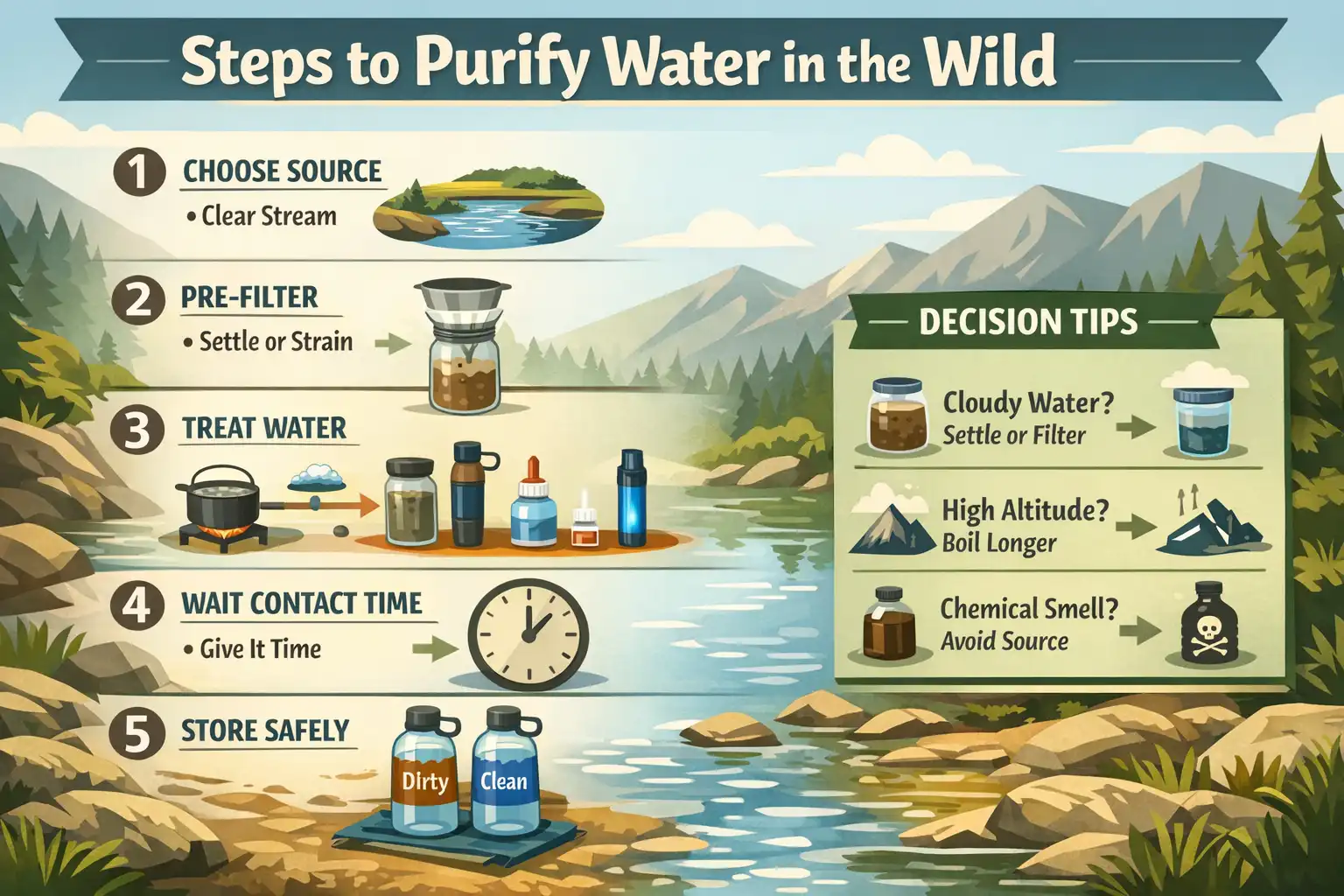
Collect the clearest water available. Pre-filter sediment with a cloth or coffee filter. Boil clear water 1 minute, or 3 minutes above 6,500 feet. Without heat, use a backpacking filter, then disinfect filtered water with chlorine dioxide, bleach, or UV per directions. Store treated water in a clean bottle and keep dirty threads separate.
What does “purify water” mean in the backcountry?
Backcountry water purification means making natural water safer to drink by removing or killing germs.
Germs enter water from human or animal waste, even in places that look pristine. Clear water still carries bacteria, viruses, and parasites.
Purification usually combines two actions:
- Filtration removes organisms by trapping them.
- Disinfection kills or inactivates organisms using heat, chemicals, or UV.
Boiling kills viruses, bacteria, and parasites. CDC describes boiling as the best way to kill germs in water.
One hard limit matters: boiling and disinfectants do not make water safe when harmful chemicals, toxins, or radioactive materials contaminate it.
Know more: How to Signal for Help in the Backcountry: 7 Fast Ways Rescuers Notice
When do you need to treat wild water?
Treat any water when you do not know it is safe, even water that looks clean.
CDC lists common exposures that cause illness: drinking, cooking, washing produce, making ice, mixing drinks, and brushing teeth with untreated water.
Treat water every time in these situations:
- You collect from lakes, rivers, streams, or camp spigots without posted treatment.
- You hike near campgrounds, farms, or popular trail corridors.
- Heavy rain or snowmelt turns water cloudy.
- You travel where sanitation and water treatment infrastructure is limited.
Higher-risk campers include children, pregnant women, adults 65+, and people with a weakened immune system.
Planning helps. Carry enough water between sources, then treat refills on the move using a guide on daily water needs per person.
Where do you collect safer raw water?
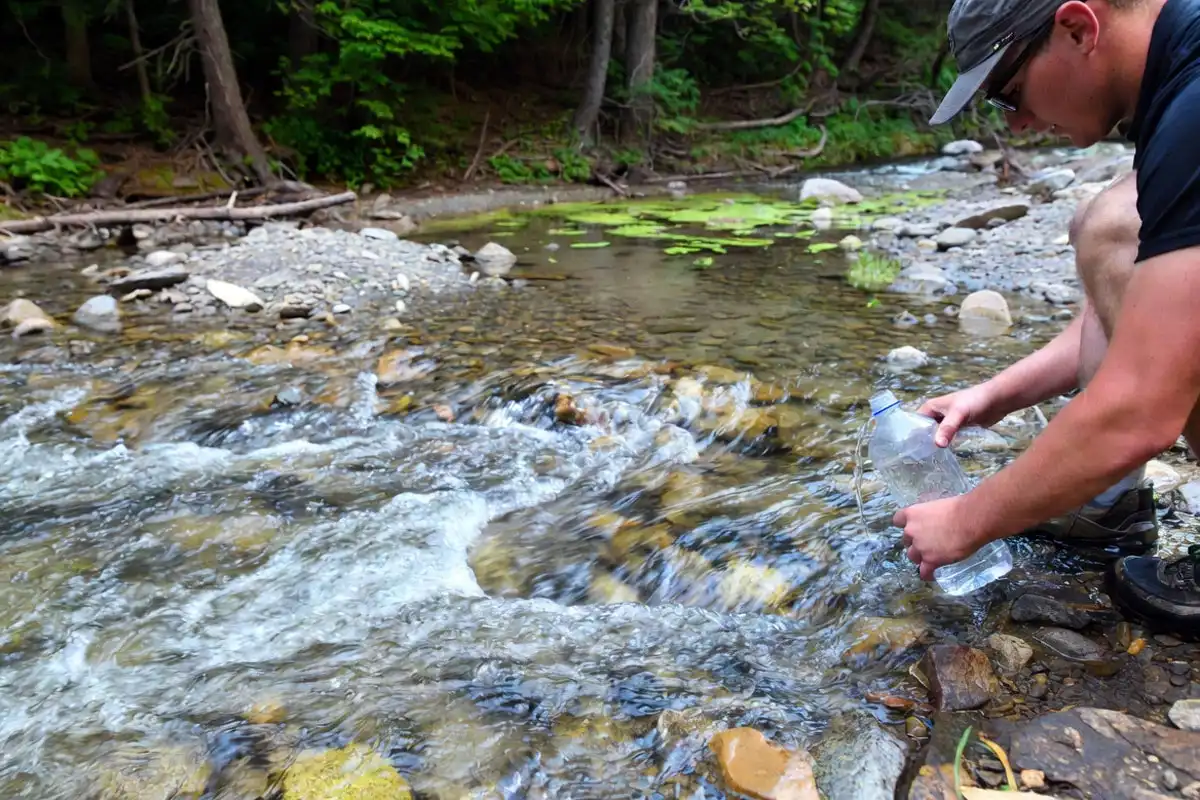
Choose the cleanest source you can reach, then treat it anyway.
Use these source habits:
- Prefer moving water over stagnant water.
- Collect upstream from trails, campsites, and crossings.
- Avoid the shoreline soup. Scoop from the main flow where possible.
- Avoid obvious contamination signs like a chemical smell, an oily sheen, or heavy algae.
CDC gives a clear warning: boiling and disinfection do not fix water contaminated with harmful chemicals. Move to a different source.
How do you handle cloudy or muddy water before treatment?
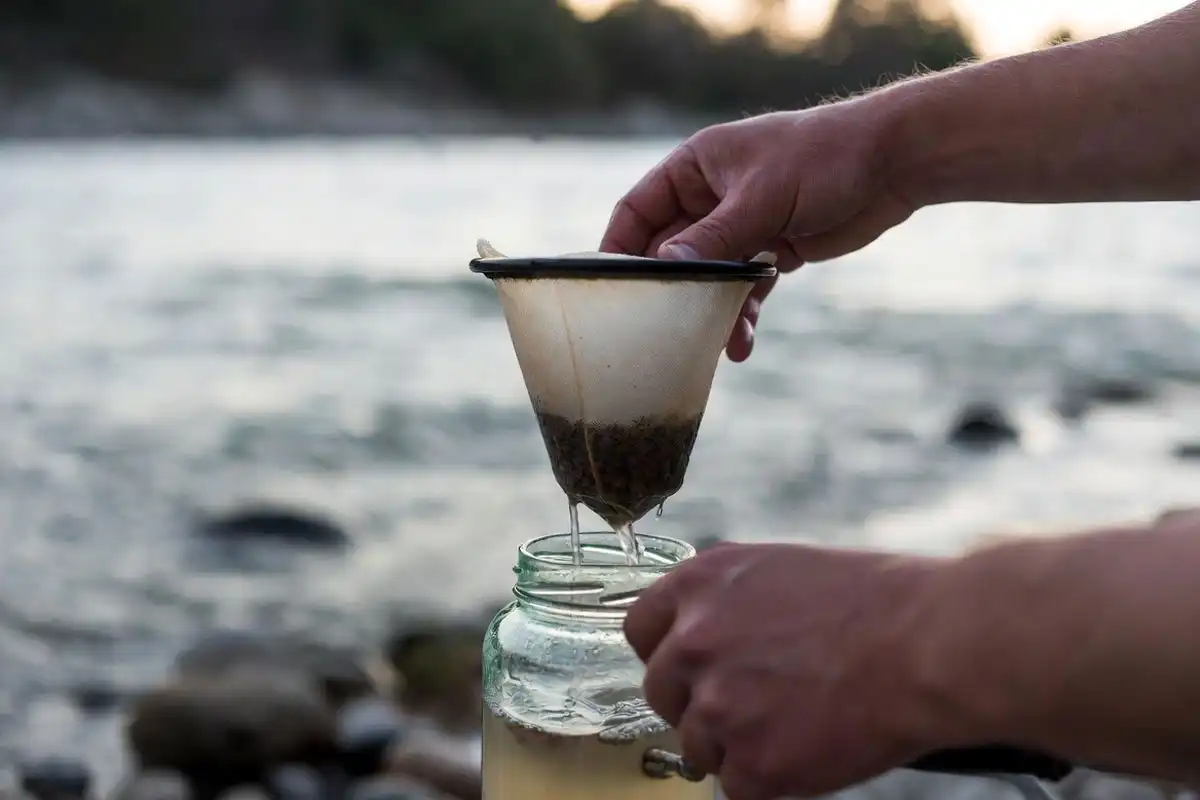
Cloudy water reduces the effectiveness of chemical disinfection and UV because particles block contact and light.
EPA recommends this simple pre-treatment:
- Let cloudy water settle.
- Pour off the clearer water.
- Filter it through a clean cloth, paper towel, or coffee filter.
When daylight runs short, campsite choices affect your water options. This guide on picking a campsite when you arrive late helps you balance water access and safety.
How do you purify water in the wild?
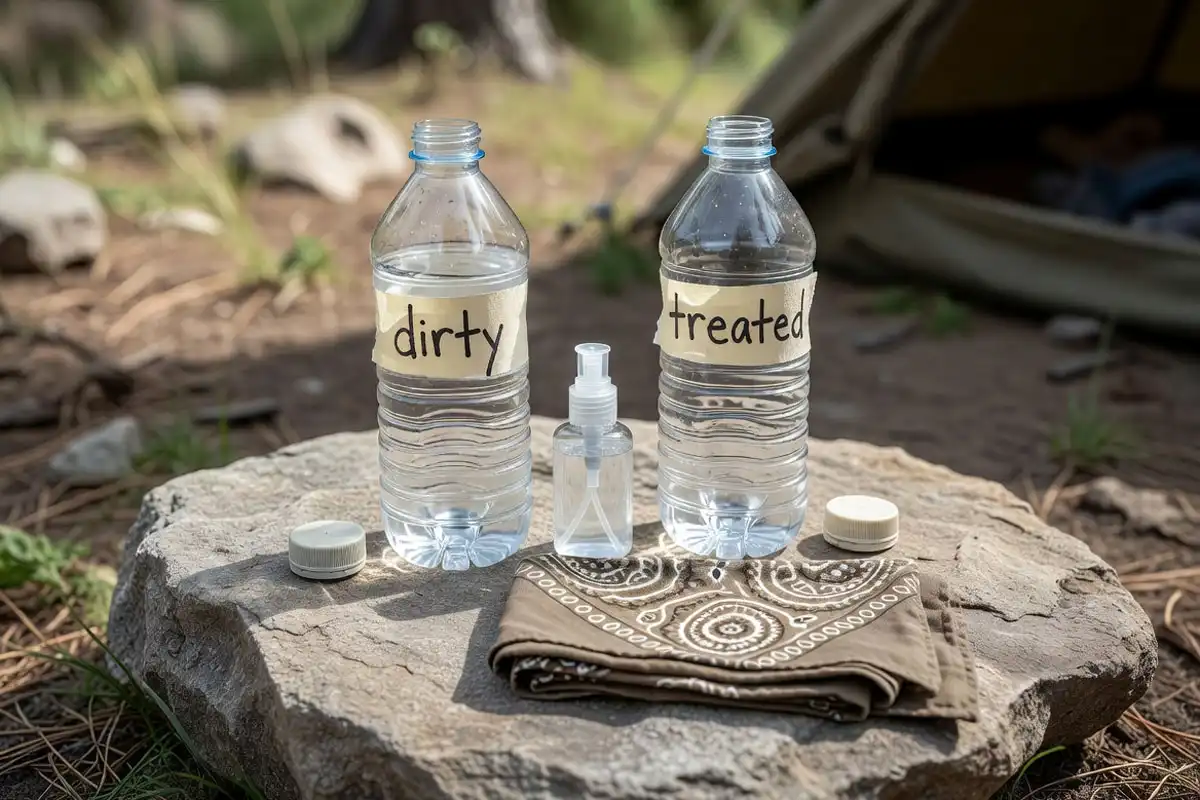
A reliable routine follows four moves: collect, clarify, treat, protect.
1) Prep a clean system
Use a simple “dirty side / clean side” setup:
- One bottle or bladder for untreated water
- One bottle for treated water
- One treatment method (stove, filter, tablets, UV)
- One small pre-filter (bandana or coffee filters)
A packing routine prevents forgotten parts. I keep water treatment on my two-night essentials checklist.
2) Collect without stirring the bottom
Fill from moving water when possible. Keep your intake above silt.
3) Clarify when water looks cloudy
Settle. Decant. Pre-filter. EPA lists cloth, paper towel, and coffee filter as effective pre-filters for cloudy water before disinfection.
4) Choose a treatment method
Use these decision points:
- Fuel and time available: boil.
- Fast treatment needed: filter, then disinfect.
- Water looks cloudy: clarify first, then boil or filter.
- Chemical contamination suspected: switch sources.
CDC ranks methods in plain terms: boiling is the best way to kill germs, and the next best option is filtering then disinfecting.
5) Treat, then protect treated water
Store treated water in a clean container with a cover. EPA highlights clean containers with covers after boiling or disinfection.
Keep dirty threads and caps away from treated water. Recontamination happens fast in camp.
Learn more: What to Do When You Get Lost on a Hike: 9 Smart Moves
Which purification method fits your situation?
Boiling gives the highest margin against germs. Filtering plus disinfection gives speed and broad coverage with less fuel.
Here is a quick field guide:
- Boil when you have fuel, cold weather complicates chemicals, or you want one-step germ kill.
- Filter + disinfect when you hike in busy areas, travel internationally, or want better virus protection.
- UV when water is clear and you want speed without chemical taste.
- Chemical only when you lack a filter and you have clear water.
- Switch sources when water shows chemical contamination signs.
How does boiling purify water?
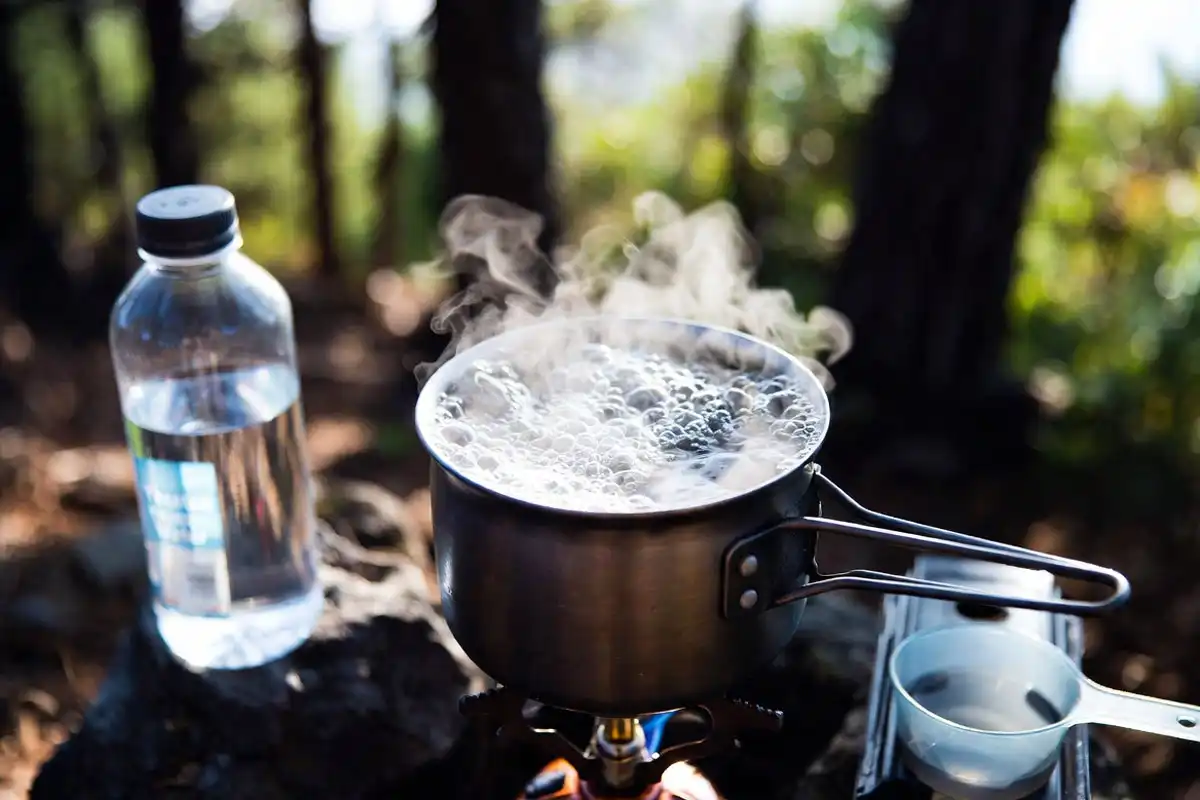
Boiling kills viruses, bacteria, and parasites when water reaches a rolling boil.
Boiling steps that work on trail
- Pre-filter cloudy water first.
- Bring clear water to a rolling boil.
- Boil 1 minute.
- Boil 3 minutes above 6,500 feet.
- Cool before drinking to avoid burns.
Boiling does not remove heavy metals, salts, or most other chemicals. EPA states this clearly for emergency water guidance.
A stable pot matters when you boil on fire. If your setup needs an upgrade, see these kettle options for open fire cooking.
How does filtration purify wild water?
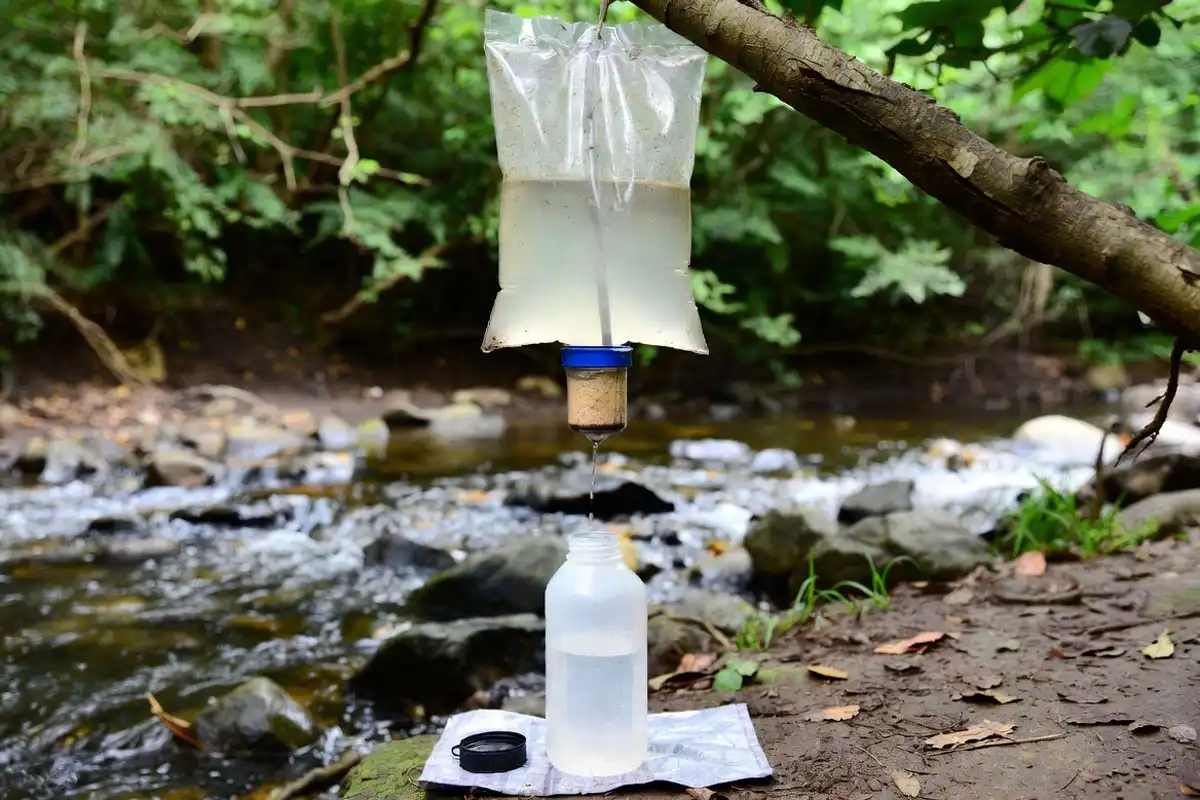
A portable filter removes parasites and, with small pore size, bacteria by trapping them.
CDC gives practical filter benchmarks:
- 1 micron or smaller: removes parasites, but not viruses or all bacteria.
- 0.3 micron or smaller: removes bacteria and parasites, but not viruses.
- Reverse osmosis: removes parasites, bacteria, and viruses, and it removes salt.
Filtration runs faster and tastes better than chemical-only treatment. CDC also recommends filtering, then disinfecting as the next best option after boiling.
Filter habits that prevent failures
- Pre-filter silty water to slow clogging.
- Keep the clean outlet away from your hands and the “dirty” bottle mouth.
- Backflush or clean on schedule based on the manufacturer instructions.
- Store filters where freezing temperatures do not reach them.
How does chemical disinfection work in the wild?
Chemical disinfectants inactivate germs during a measured contact time. CDC lists bleach, iodine, and chlorine dioxide as common disinfectants for backcountry and travel use.
Chemical disinfection works best after filtration or clarification because cloudy water reduces effectiveness.
How do you disinfect water with household bleach?
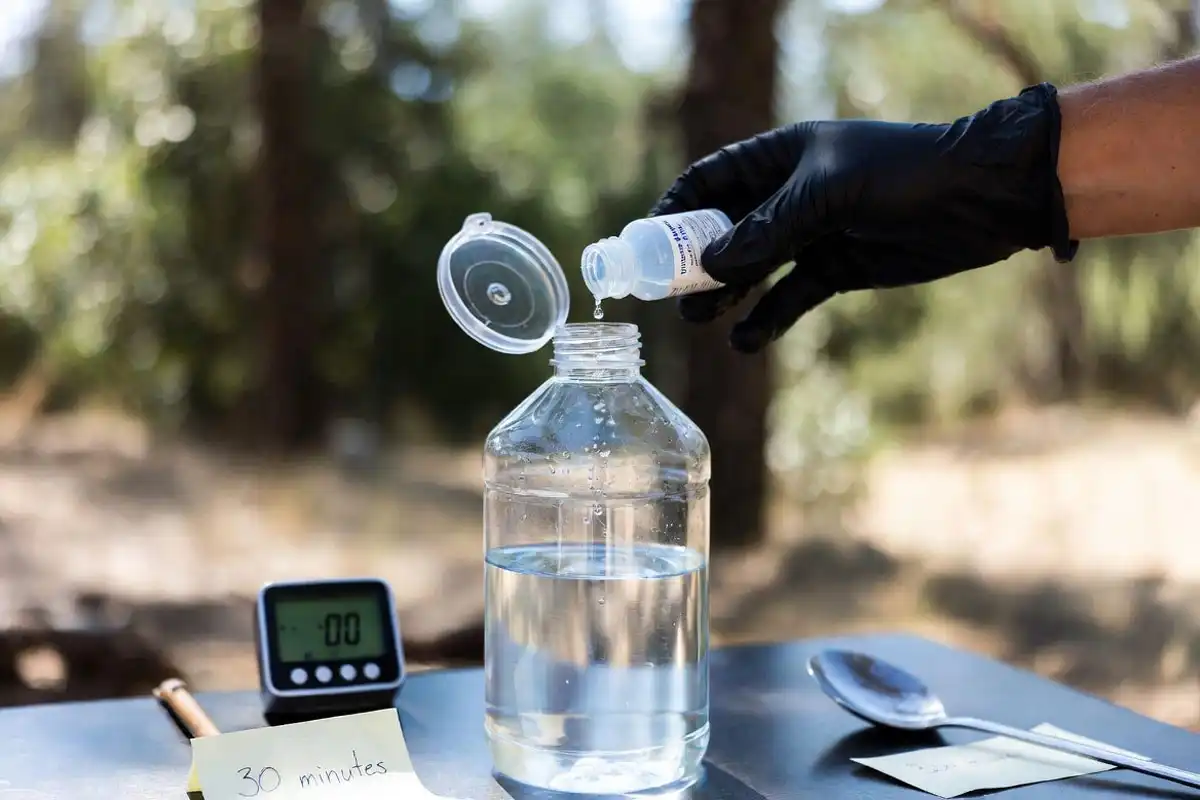
EPA provides a clear bleach method for emergencies. Use regular, unscented bleach labeled for disinfection and sanitization. Avoid scented, color-safe, or cleaner-added bleach.
Steps
- Clarify cloudy water first.
- Add bleach using the EPA dosing table.
- Stir.
- Wait 30 minutes.
- Smell for a slight chlorine odor.
- If no odor, repeat the dose and wait 15 more minutes.
EPA bleach dosing (regular unscented bleach)
- 1 liter (or 1 quart): 2 drops (6% or 8.25%)
- 1 gallon: 8 drops (6%) or 6 drops (8.25%)
- 2 gallons: 16 drops (1/4 tsp, 6%) or 12 drops (1/8 tsp, 8.25%)
- 4 gallons: 1/3 tsp (6%) or 1/4 tsp (8.25%)
- 8 gallons: 2/3 tsp (6%) or 1/2 tsp (8.25%)
EPA also notes doubling the bleach amount when water is cloudy, colored, or cold.
How do chlorine dioxide tablets work?
Chlorine dioxide tablets disinfect water and often cover a wider range of pathogens than chlorine alone, but contact time varies by product and water conditions.
CDC’s hiking and camping guidance says:
- Disinfectants kill viruses and bacteria, but parasites often resist disinfection.
- Chlorine dioxide tablets kill Giardia and show some effectiveness against Cryptosporidium.
- Filtering first adds safety for these parasites.
CDC’s Yellow Book notes that chlorine dioxide tablets and drops often require contact times measured in hours.
A real example from a chlorine dioxide tablet label lists 4 hours contact time for 1 liter to control bacteria, viruses, and cysts. Follow the directions on your specific tablets.
When does iodine make sense?
Iodine disinfects water, but it carries limits.
CDC says these people avoid iodine-disinfected water:
- Pregnant people
- People with thyroid problems
- People with iodine hypersensitivity
CDC also sets a time limit: no one drinks iodine-disinfected water for more than a few weeks.
EPA lists a field option for 2% tincture of iodine:
- 5 drops per liter (or quart)
- 10 drops when water is cloudy or colored
- Stand at least 30 minutes
CDC’s Yellow Book also notes that iodine does not inactivate Cryptosporidium well at field concentrations, and it recommends limiting iodine use because iodine affects the body.
How does UV light purify water in the wild?
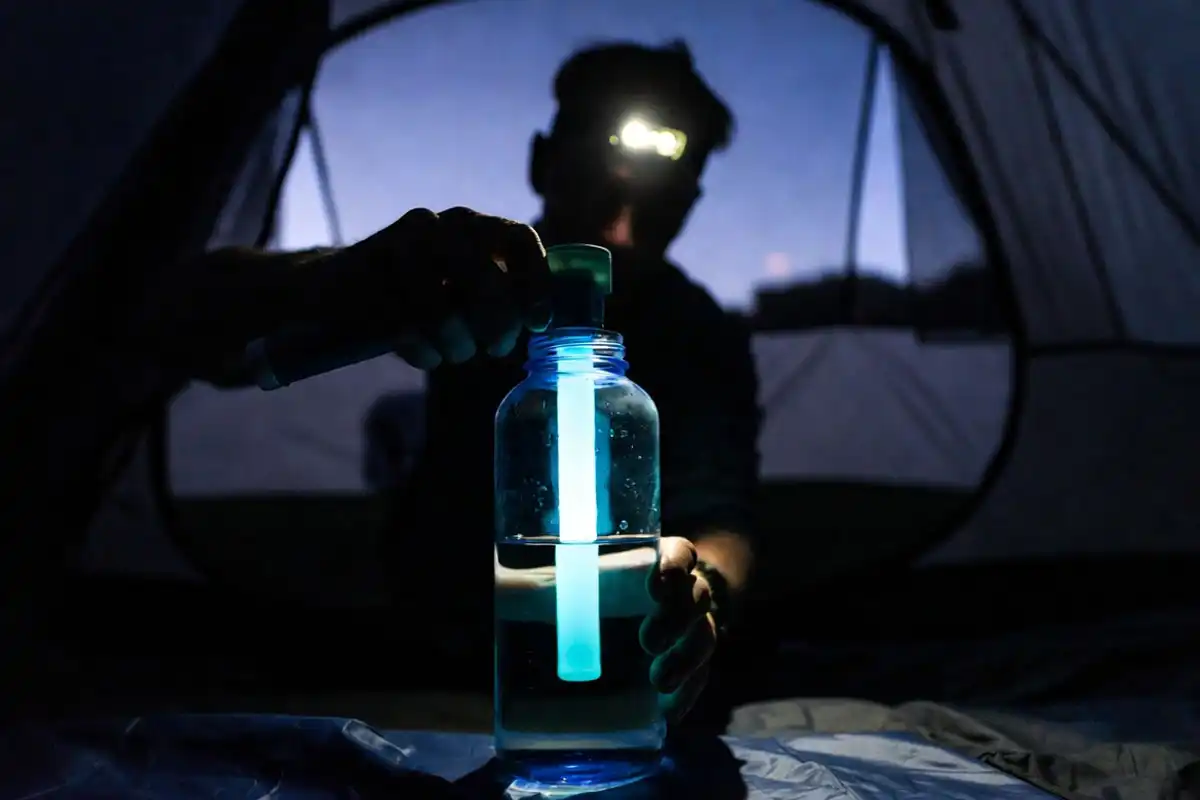
Portable UV units inactivate parasites, bacteria, and viruses in small volumes of clear water.
CDC highlights two field rules:
- Filter water before UV treatment.
- UV treatment loses effectiveness in cloudy water because particles block germs from the light.
CDC’s Yellow Book adds that field UV units deliver a timed dose and usually treat 1 to 2 liters at a time.
When does solar disinfection help?
Solar disinfection (SODIS) improves microbiologic water quality using sunlight and clear bottles during low-resource emergencies.
CDC’s Yellow Book gives the practical method:
- Use transparent bottles.
- Lay bottles on their side in sunlight.
- Expose for at least 6 hours with occasional agitation.
- Use 2 consecutive days under cloudy conditions.
- Clarify turbid water first because particles block UV.
SODIS is slow. It fits a fixed camp or a true gear failure scenario, not a fast-moving hike.
What if you suspect chemicals, fuel, or saltwater?
Boiling and disinfectants do not make chemically contaminated water safe to drink. CDC states this for harmful chemicals, toxins, and radioactive materials.
Use one of these safer moves:
- Change sources and move upstream.
- Use bottled water when available.
- Use treatment designed for chemicals and salt, such as reverse osmosis.
Distillation removes microbes that resist boiling and chlorination and removes heavy metals, salts, and most other chemicals, according to Ready.gov. Distillation takes time and fuel, so treat it as a last-resort camp solution.
Troubleshooting: common backcountry water problems
What if the water is muddy?
Mud blocks UV and reduces chemical disinfection performance. Clarify first, then treat.
Use this order:
- Let water settle.
- Pour off clearer water.
- Pre-filter through cloth or a coffee filter.
- Boil, or filter then disinfect.
What if the water is cold and you rely on bleach?
EPA recommends doubling bleach when water is cold, cloudy, or colored, and keeping the full contact time before drinking.
Warm the bottle inside your jacket while waiting, then drink.
What if your filter output slows down?
Filters slow when sediment fills pores. Improve flow by pre-filtering, cleaning the intake, and following the manufacturer backflush steps.
What if treated water tastes like chlorine?
EPA suggests pouring water between clean containers and letting it stand to reduce strong chlorine taste.
If the source smells like fuel, chemicals, or rot, switch sources instead of masking taste.
Mistakes that cause treatment failure
These errors show up every season:
- Skipping treatment because water looks clear. CDC warns that clear water still carries germs.
- Disinfecting cloudy water without clarifying first.
- Using UV in cloudy water. CDC says particles block germs from UV light.
- Using scented or cleaner-added bleach. EPA warns against it.
- Drinking iodine-treated water for long periods. CDC sets a “few weeks” limit.
- Treating water, then touching the bottle mouth with dirty hands.
- Mixing treated and untreated water in the same container.
Safety notes for purifying water in the wild
Boiling prevents illness, but it also creates burn risk. Let boiled water cool before drinking.
Bleach and iodine demand careful handling. Measure doses and keep chemicals away from food and children. EPA lists correct bleach types and doses for emergency disinfection.
Protect your water sources too. CDC recommends burying human waste at least 8 inches deep and at least 200 feet from lakes, rivers, and other natural waters.
If you camp alone, treatment routines reduce risk. This guide on solo camping safety habits fits well with a clean “dirty side / clean side” water system.
Conclusion
Purifying water in the wild starts with source choice and ends with clean storage. Collect the clearest water you can, clarify it when it looks cloudy, then use boiling or a filter plus disinfection to reduce germs. Keep treated water protected from dirty threads and hands. That routine keeps hydration steady and keeps your trip on track.