How to Treat a Bee Sting or Allergic Reaction While Camping

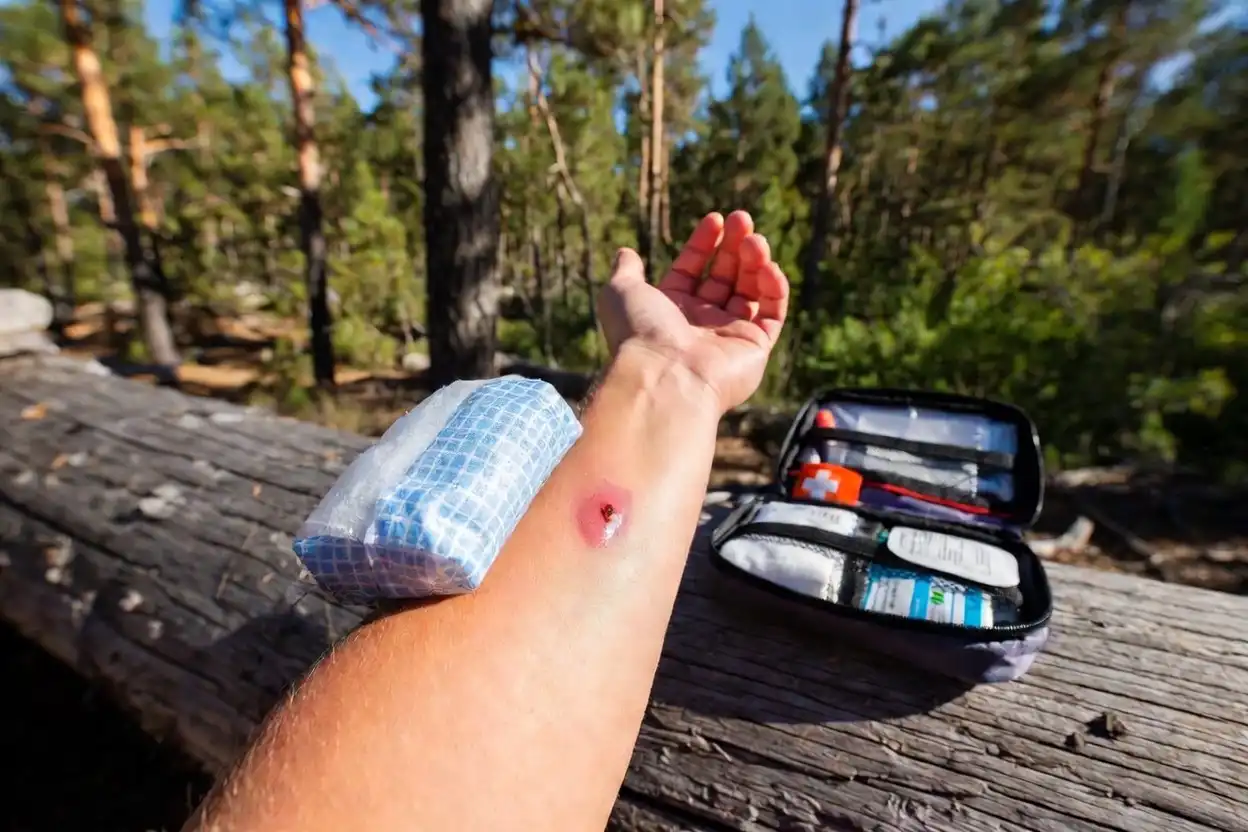
A bee sting while camping is treatable on the spot when you act fast, treat it with the right supplies, and stay alert for any allergic reaction. This guide covers how to identify a normal sting versus a severe allergic reaction, the exact steps to treat both situations, what to keep in your first aid kit, and when to call for emergency help. Whether you camp solo or with a group, knowing this process gives you the confidence to handle a sting miles from the nearest clinic.
Remove the stinger by scraping it out with a credit card or fingernail. Wash the area with soap and water. Apply a cold pack for 10 to 15 minutes. Take an oral antihistamine like diphenhydramine to reduce itching and swelling. If the person develops hives beyond the sting site, throat tightening, or trouble breathing, use an epinephrine auto-injector and call emergency services immediately.
What Is the Difference Between a Normal Sting and an Allergic Reaction?
A normal bee sting causes localized pain, redness, and swelling at the sting site. These symptoms appear within minutes and stay near the wound.
An allergic reaction spreads beyond the sting area. Hives on the chest, face swelling, and dizziness indicate the immune system is overreacting to bee venom.
Anaphylaxis is the most severe form. It becomes life-threatening within minutes and requires epinephrine, not antihistamine alone.
What Are the Signs of Anaphylaxis After a Bee Sting?
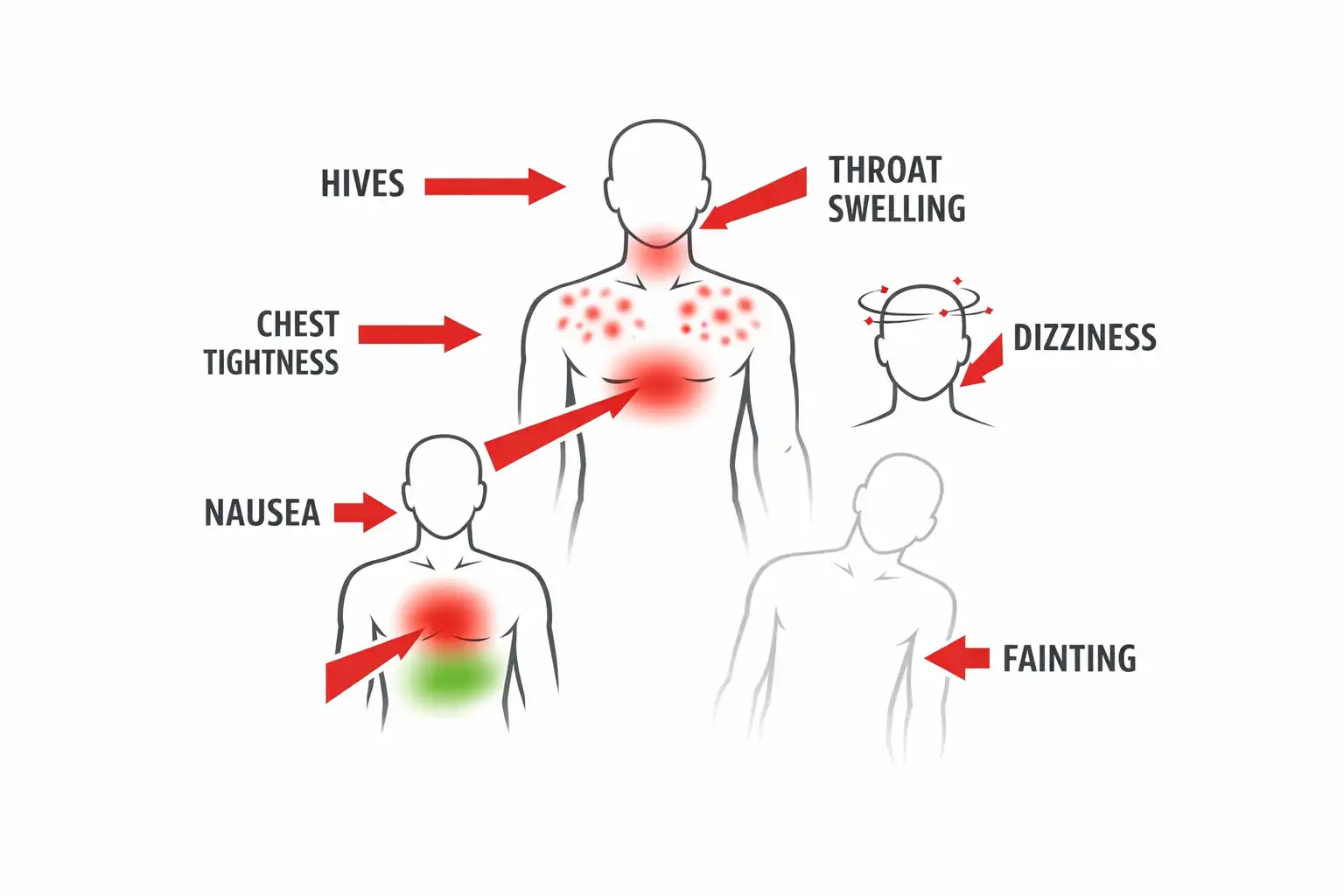
Anaphylaxis produces multiple symptoms that progress fast. Watch for these warning signs:
- Hives or rash spreading across the body, away from the sting site
- Swelling in the throat, lips, or tongue
- Difficulty breathing, wheezing, or a tight chest
- Sudden dizziness or drop in blood pressure
- Nausea, vomiting, or pale skin
- Fainting or loss of consciousness
Any two of these signs together indicate anaphylaxis. Do not wait for all symptoms to appear before using epinephrine.
How to Treat a Bee Sting at Camp
These steps apply to a normal, localized sting with no signs of a spreading reaction.
Step 1: Remove the stinger
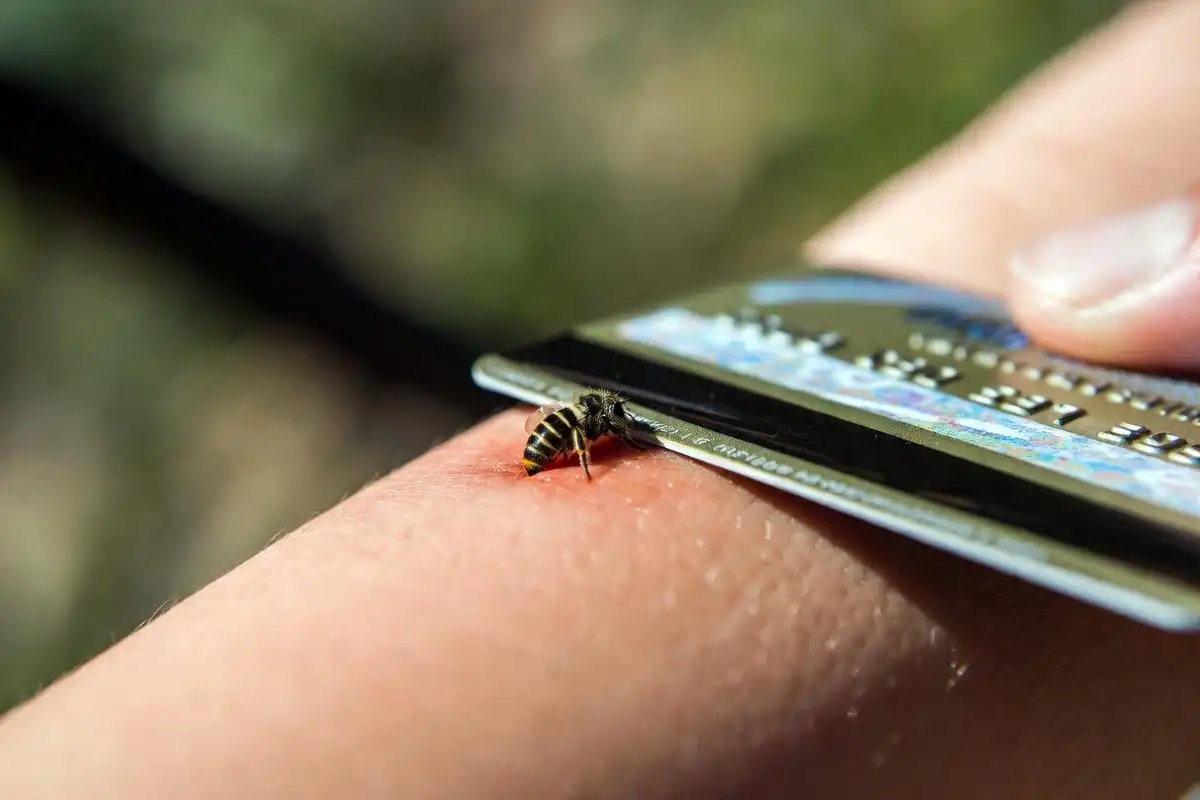
Scrape the stinger out using a credit card, fingernail, or the flat edge of a knife. Do not use tweezers. Tweezers compress the venom sac and push additional venom into the skin.
Step 2: Clean the sting site
Wash the area with soap and water for 30 seconds. This reduces the risk of infection at the puncture point.
Step 3: Apply cold
Place an instant cold pack or a damp cloth over the sting for 10 to 15 minutes. Cold decreases swelling and numbs pain.
Step 4: Take an antihistamine
Diphenhydramine (Benadryl) at 25 to 50 mg reduces itching and controls the histamine response. Cetirizine (Zyrtec) works as a non-drowsy option. I carry both in my kit on every trip.
Step 5: Apply a topical treatment
Hydrocortisone 1% cream decreases local inflammation. Calamine lotion also reduces itch at the sting site.
Step 6: Monitor for 30 minutes
Watch the person closely after treatment. If symptoms stay localized and stable, no further action is needed.
I covered other common camp injuries in my article on treating minor cuts and blisters at camp, which pairs well with this guide for a complete camp first aid reference.
How to Treat a Severe Allergic Reaction While Camping
A severe reaction requires immediate action. Do not wait to see if symptoms improve on their own.
Step 1: Use the epinephrine auto-injector (EpiPen)
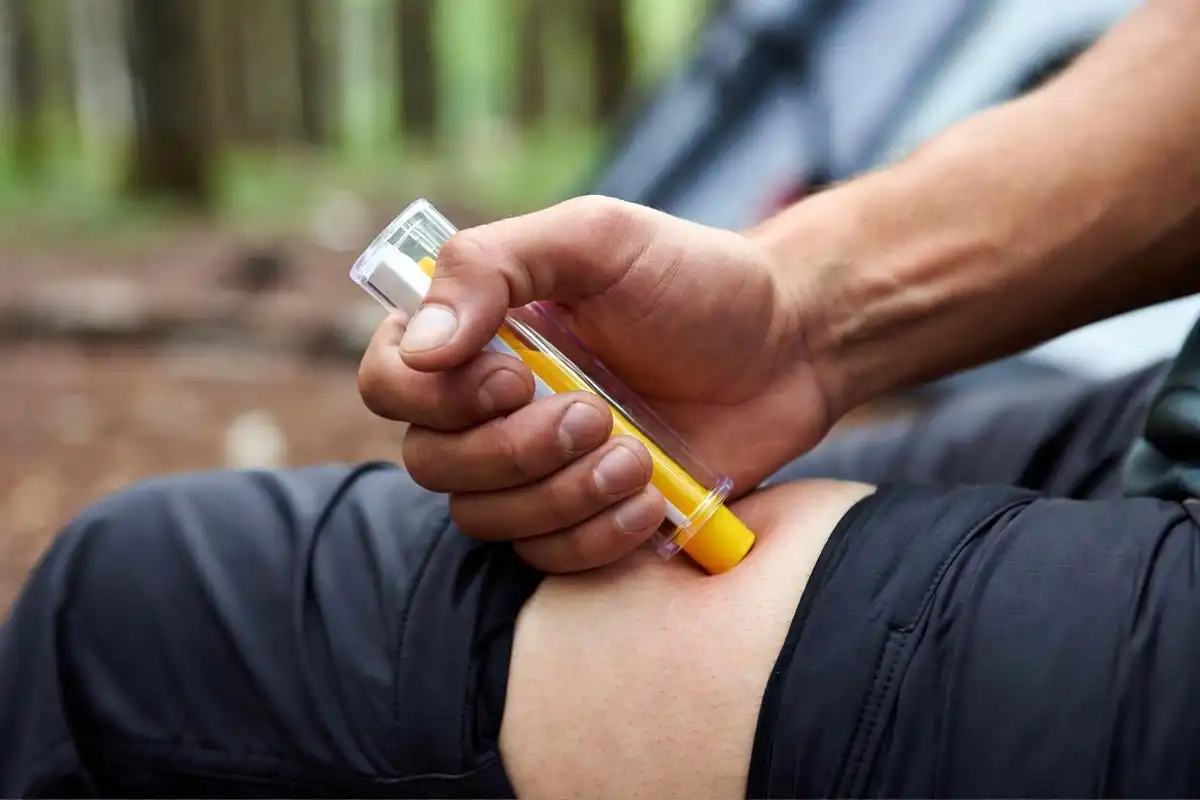
Inject into the outer thigh, through clothing if needed. Press the auto-injector firmly and hold it in place for 10 seconds. Epinephrine reverses throat swelling and raises blood pressure within minutes.
Step 2: Call emergency services
Call 911 or the local emergency number right away. If you are in a remote area without cell coverage, send someone to find a signal or get help. My guide on signaling for help in the backcountry covers options beyond a cell phone.
Step 3: Position the person correctly
Lay the person flat on their back. Raise their legs unless they have breathing difficulty. If they are vomiting or losing consciousness, turn them onto their side.
Step 4: Give a second dose if needed
A second EpiPen dose is appropriate if symptoms do not improve within 5 to 15 minutes. Carry two auto-injectors when anyone in the group has a known bee allergy.
Step 5: Add antihistamine after epinephrine
Diphenhydramine provides secondary support after epinephrine stabilizes the reaction. It does not replace epinephrine as the first treatment for anaphylaxis.
Step 6: Keep the person still and warm
Movement increases venom absorption and worsens shock. Keep them calm and covered until emergency help arrives.
What Should Your Camping First Aid Kit Include for Bee Stings?
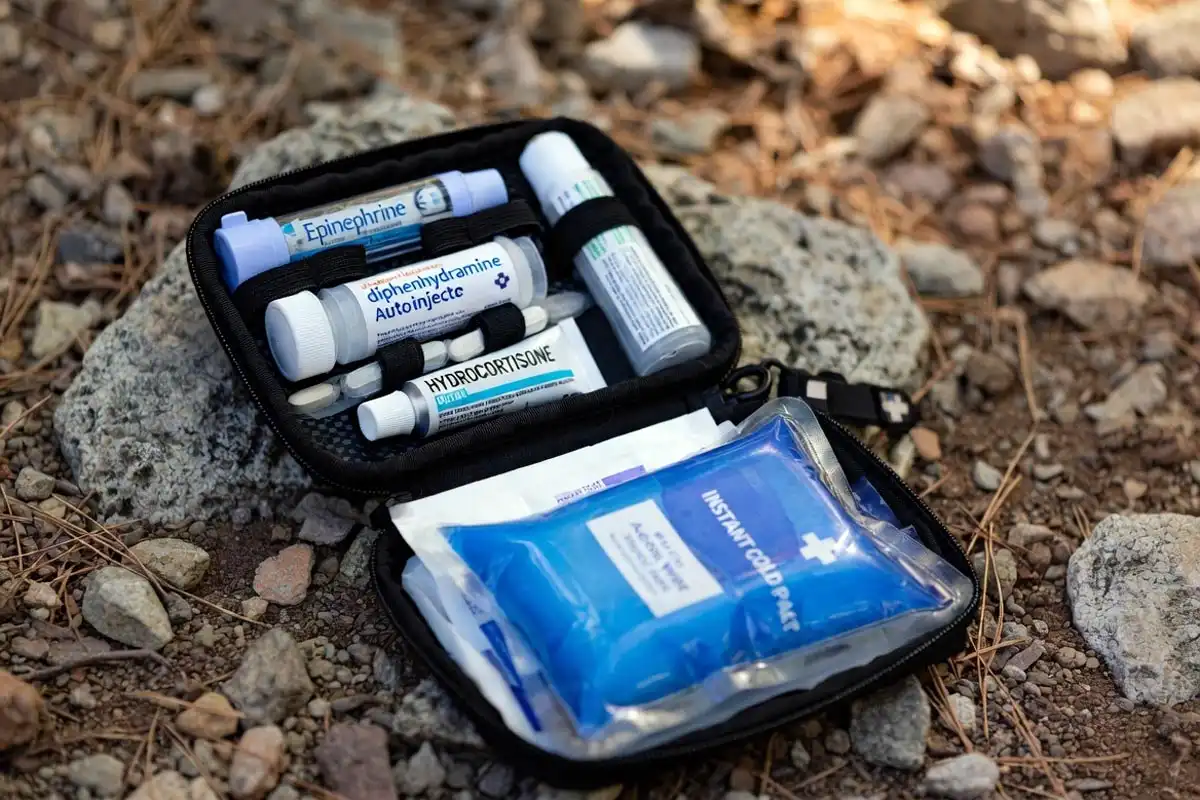
| Item | Purpose |
|---|---|
| Epinephrine auto-injector (EpiPen) | Treats anaphylaxis |
| Diphenhydramine (Benadryl) | Reduces histamine response |
| Cetirizine (Zyrtec) | Non-drowsy antihistamine option |
| Hydrocortisone 1% cream | Decreases local swelling and itch |
| Instant cold pack | Numbs pain, reduces swelling |
| Alcohol wipes | Cleans the sting site |
| Spare credit card | Scrapes stinger out safely |
If any group member has a confirmed bee or wasp allergy, carry two epinephrine auto-injectors. One dose sometimes falls short if the reaction is severe or if help is far away.
What Mistakes Should You Avoid After a Bee Sting?
Using tweezers on the stinger. Tweezers compress the venom sac and inject additional venom. Use a flat edge instead.
Applying mud, butter, or toothpaste. These folk remedies introduce bacteria and do not neutralize venom. They increase infection risk.
Relying on antihistamine alone for anaphylaxis. Antihistamine controls mild reactions. It does not stop throat swelling or anaphylactic shock. Only epinephrine does.
Ignoring a mild first reaction. A mild reaction does not guarantee safety next time. Repeated stings from the same species increase allergic sensitivity over time.
Heading out solo without telling anyone your location. If a reaction happens alone, no one can assist. I covered this risk in my guide on staying safe while camping solo.
How to Reduce the Risk of Bee Stings at Camp
Bees sting in defense. Most stings happen because someone disturbs a nest or swats at an insect near camp.
- Set up your campsite away from flowering plants and standing water
- Keep food, sweet drinks, and fruit sealed or covered at all times
- Wear neutral-colored clothing; bright floral patterns attract bees and wasps
- Move away slowly if a bee approaches; do not swat
- Check shoes, sleeping bags, and packed gear for insects before use
- Skip strong perfumes and scented lotions on hiking days
FAQs about Treat a Bee Sting or Allergic Reaction While Camping

How long does bee sting swelling last while camping?
Normal swelling peaks at 24 to 48 hours and decreases over 3 to 5 days. Swelling that spreads or worsens after 48 hours indicates infection or a delayed allergic reaction. Seek medical attention if red streaks appear around the site.
Can you use a credit card to remove a bee stinger?
A credit card works well for stinger removal. Scrape it at a low angle across the skin to flick the stinger free without squeezing the venom sac. A fingernail or dull knife edge produces the same result.
What if I don't have an EpiPen at camp?
Without epinephrine, anaphylaxis cannot be reversed in the field. Get the person to emergency services as fast as possible. High-dose oral antihistamine and keeping the person still provides partial support, but it does not substitute for epinephrine.
Is a wasp or hornet sting treated the same way?
Yes. Wasp and hornet stings follow the same treatment steps. Wasps do not leave a stinger in the skin, so the removal step does not apply. Multiple wasp stings in quick succession increase the risk of a toxic reaction, even in people without known bee allergies.
How do I know if a bee sting is getting infected?
Infected stings produce increasing redness, warmth, pus, or red streaks extending from the sting site. These signs typically appear 24 to 72 hours after the sting. Clean the area and get medical attention if red streaks appear, as they indicate the infection is spreading.
Final Thoughts
A bee sting ranges from a minor inconvenience to a life-threatening emergency, and the difference comes down to preparation. Carry an epinephrine auto-injector when anyone in your group has a known allergy. Learn the signs of anaphylaxis before you need to recognize them. Treat every sting promptly and watch the person for at least 30 minutes.
Camp emergencies extend beyond stings. Keeping your skills sharp across different situations, from bee stings to knowing what to do when responding to a snake bite while camping, builds the kind of preparedness that makes every trip safer.