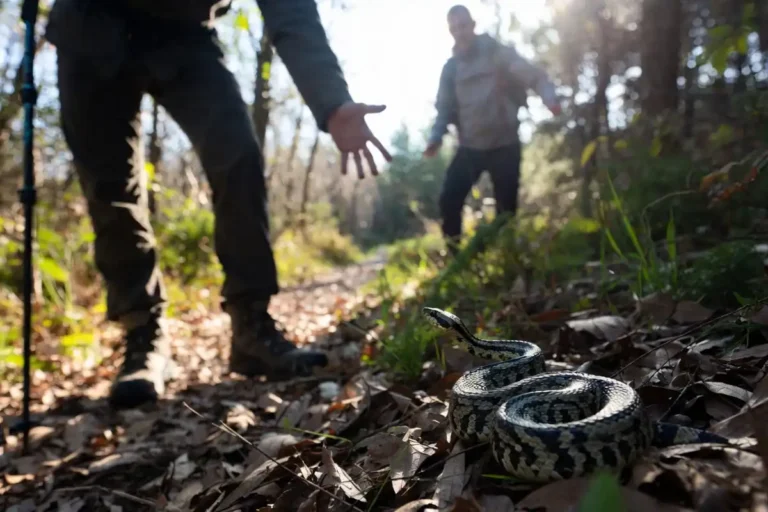
What to Do If You Encounter a Black Bear at Your Campsite

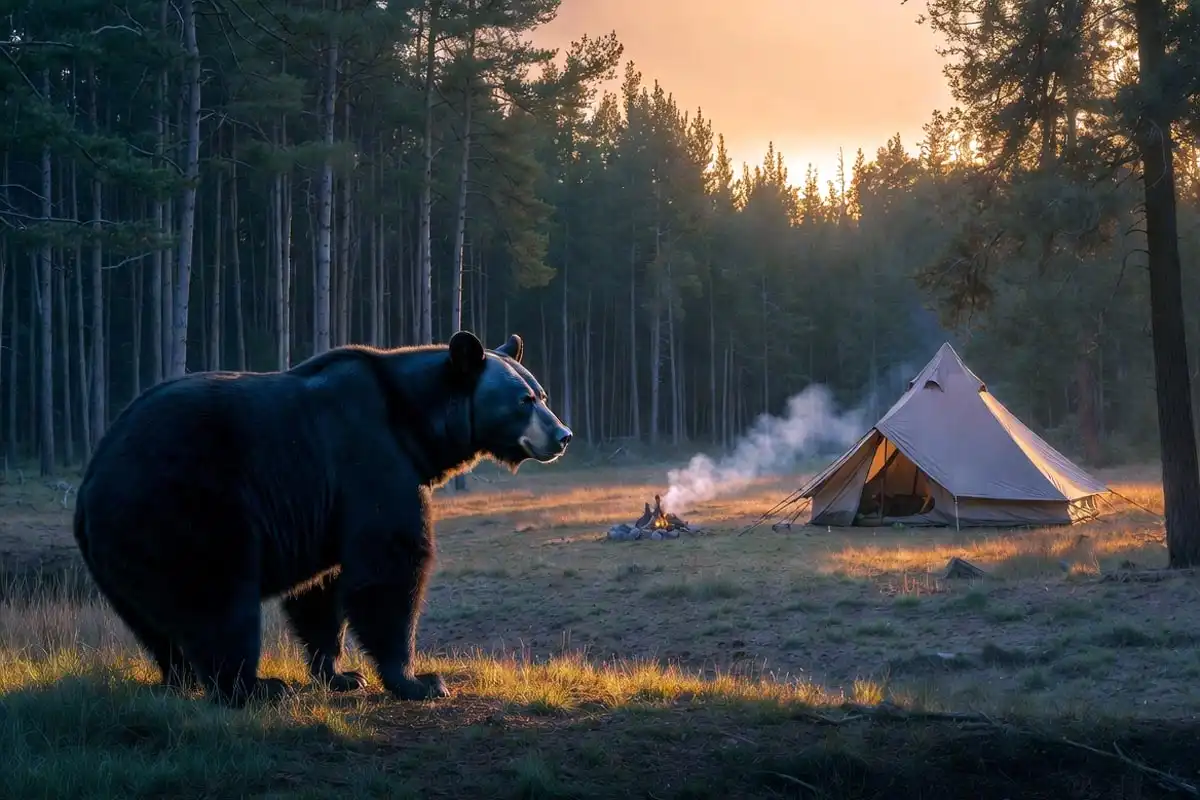
Black bears visit campsites so often that first-time campers encounter a black bear at the campsite sooner than they expect. I’ve heard them outside my tent in the middle of the night near forested camp spots, and the first few seconds determine how it plays out. This guide covers black bear behavior, prevention, a step-by-step response for active encounters, how to handle a charge, what to do after the bear leaves, and the mistakes that turn a simple visit into a dangerous situation.
Stand tall, face the bear, and make firm noise. Do not run. Back away slowly and give the bear a clear exit. Deploy bear spray when the bear closes within 30 to 60 feet. Most black bears retreat when a person holds ground and responds confidently. Never play dead with a black bear.
Why Do Black Bears Enter Campsites?
Black bears approach campsites to find food. They detect odors from up to a mile away. Food, trash, cooking gear, toothpaste, and even deodorant draw them in.
Most visiting bears are curious, not aggressive. A bear that finds food at a campsite once learns to return. Wildlife managers call this food conditioning, and it puts both campers and bears at long-term risk.
How to Prevent a Bear Encounter Before It Starts
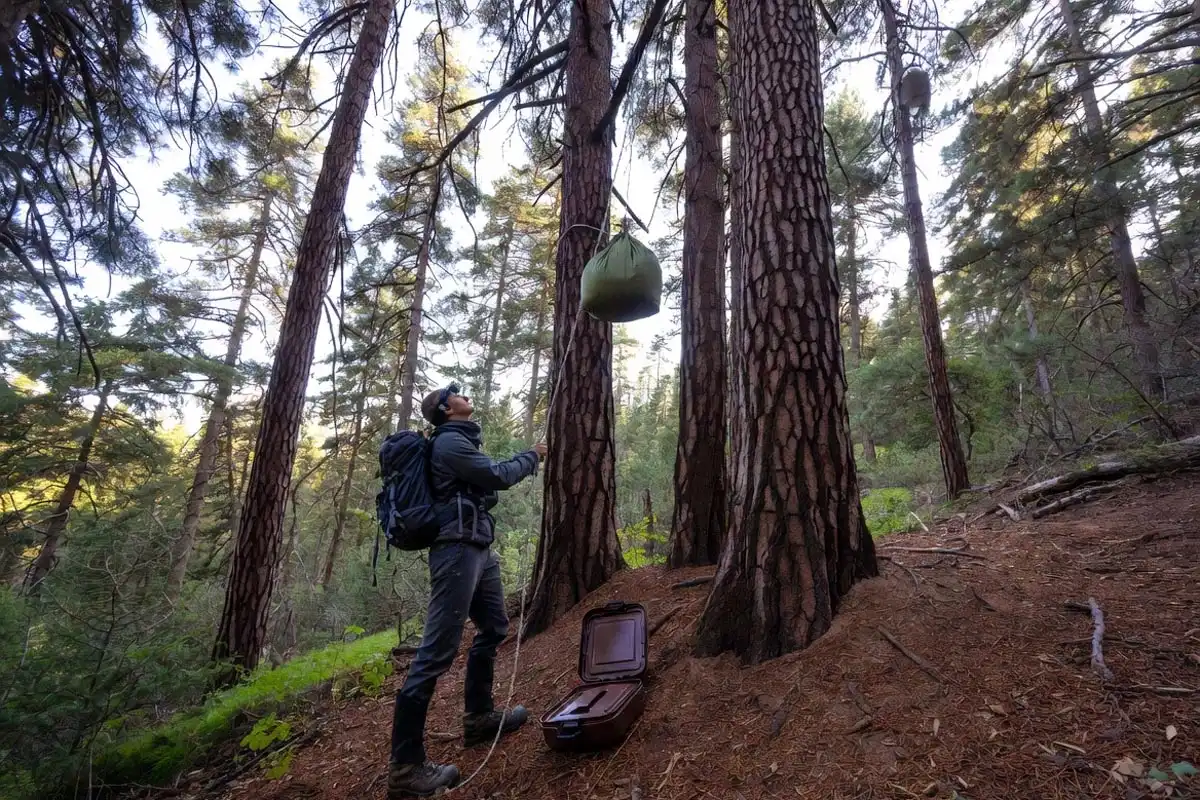
Prevention removes the main reason a bear enters your site.
Store food correctly:
- Hang food bags at least 10 feet high and 4 feet out from the tree trunk
- Use a certified bear canister when trees are unavailable
- Keep all food, trash, and scented items out of your tent
Set up your camp correctly:
- Cook and eat at least 200 feet from your sleeping area
- Never sleep in the same clothes you cooked in
- Pack out all food scraps and trash; do not bury them
Keep dogs on a leash. A loose dog can agitate a bear and send it toward your sleeping area. I covered tent options that hold up well in wildlife-active environments in my article on the best tents for dog camping.
What to Do When a Black Bear Appears at Your Campsite
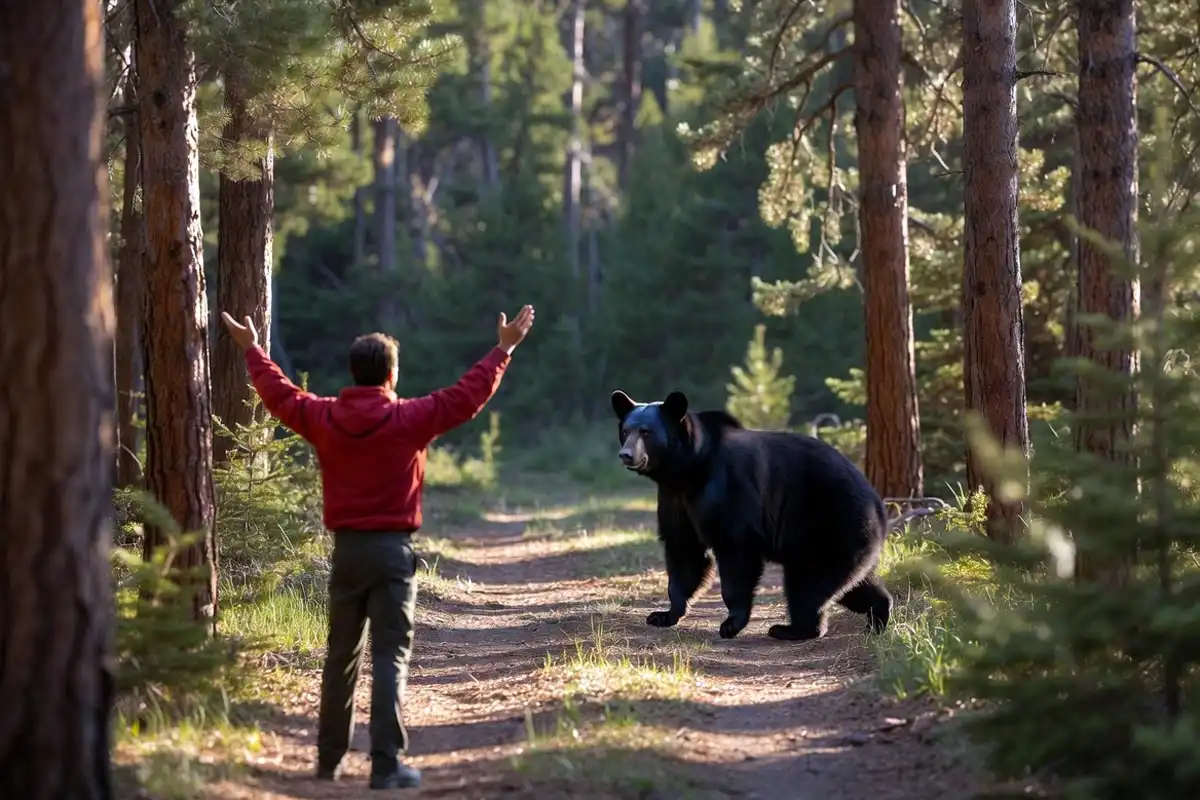
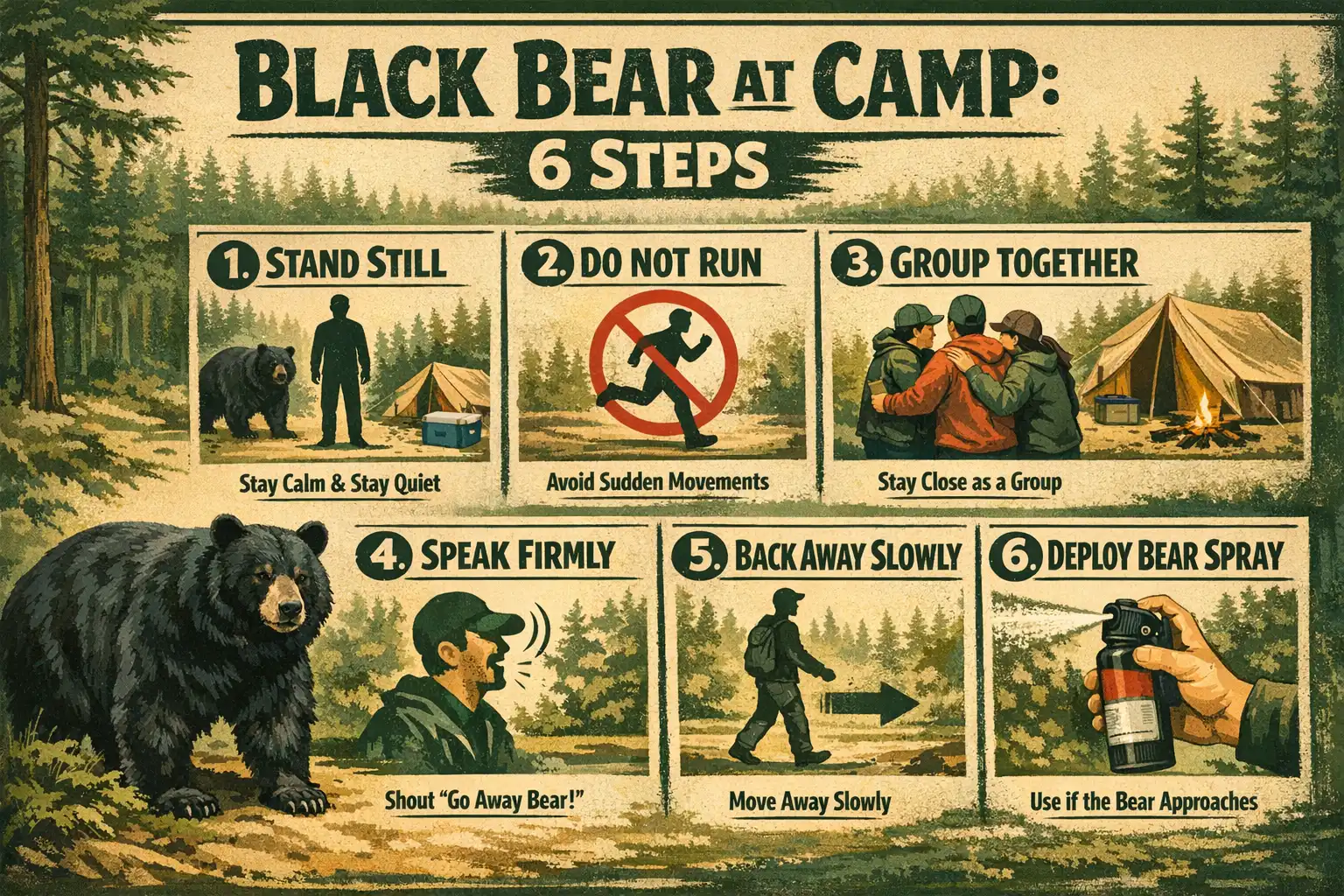
Follow these steps in order. Stay calm through each one.
Step 1: Stay still and assess. Is the bear aware of you? If not, make low noise from a distance so it knows you’re present. Surprised bears react more defensively.
Step 2: Do not run. Running triggers a predatory chase response. This is the most important rule.
Step 3: Stand tall and group up. If others are with you, move together. Look large. Raise your arms.
Step 4: Speak in a firm, low voice. Say something like “Hey bear, move along.” Avoid high-pitched sounds. They can mimic prey.
Step 5: Back away slowly. Move at an angle, not straight backward. Keep your face toward the bear. Leave it a clear path to exit.
Step 6: Deploy bear spray if the bear advances. Release a one-to-two second burst when the bear reaches 30 to 60 feet. Aim slightly downward to create a cloud at nose level. A 2008 study in the Journal of Wildlife Management found bear spray stopped aggressive behavior in 92 percent of encounters.
If you are camping alone, the steps above become even more critical. I covered the full solo camp safety framework in my guide on stay safe when solo camping.
What If a Black Bear Enters Your Tent?
A bear that enters an occupied tent treats the situation as predatory, not exploratory. This scenario is rare but requires a completely different response.
Do not play dead. Fight back with everything available: bear spray, trekking poles, rocks, fists, or any hard object. Target the bear’s nose and eyes.
Get out of your sleeping bag immediately so you can move. Shout loudly. Anyone outside the tent should create noise and use bear spray from a safe angle.
What Is the Difference Between a Bluff Charge and a Real Charge?
A bluff charge stops short. The bear veers sideways, its ears stay upright, and it may huff or pop its jaws.
A real charge is direct and silent. The bear’s head drops low, its ears flatten, and it does not deviate.
In both cases: hold your position, do not turn away, and deploy bear spray when the bear closes within 30 to 60 feet.
What to Do After a Black Bear Encounter
Report the encounter to the campground host or park ranger immediately. A bear that has accessed human food or repeatedly approaches campsites poses ongoing risk to others.
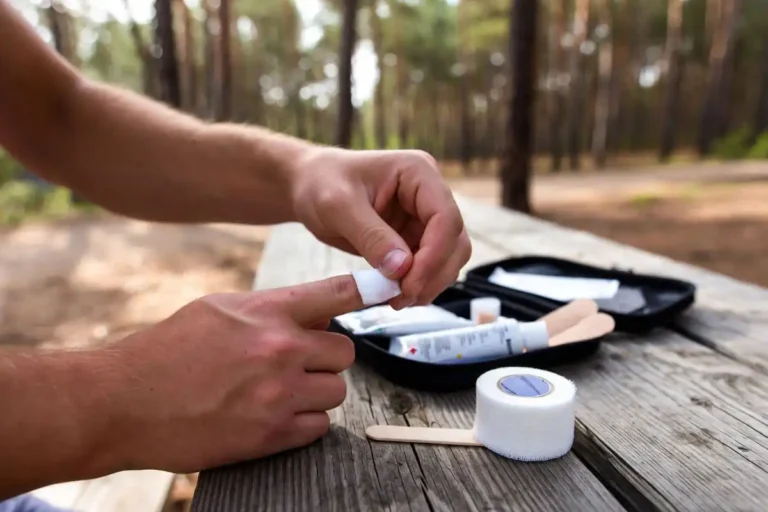
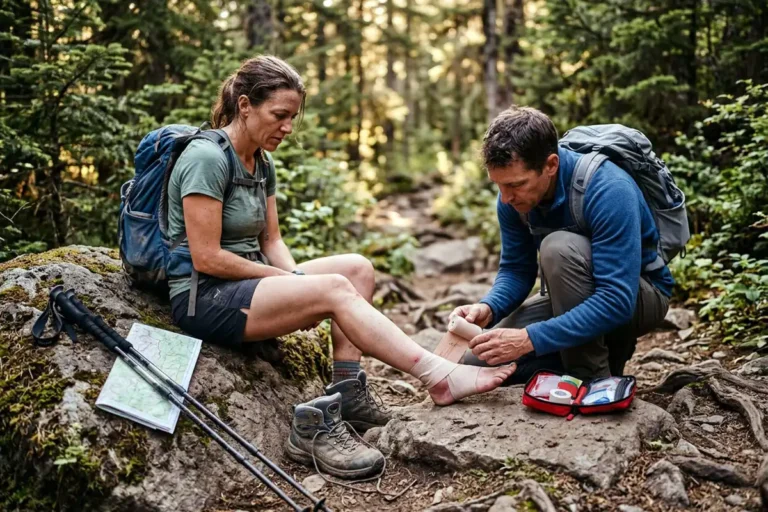
Check for injuries. Scratches and punctures from wildlife contact need immediate cleaning and medical evaluation. I covered field wound care in my article on treat minor cuts and blisters at campsite.
Inspect and reinforce your food storage before the next night. If the bear accessed anything, assume it will return.
Common Mistakes Campers Make During a Black Bear Encounter
Running away. This single mistake escalates more encounters than any other response.
Playing dead. Playing dead reduces injury in grizzly bear defensive attacks. With black bears, it invites harm. Fight back.
Extended direct eye contact. Prolonged staring reads as aggression. Maintain awareness without fixing your gaze.
Leaving food in the tent. Sealed packaging still produces scent. Bears detect odor through tent walls.
Getting close for a photo. A calm-looking bear at close range can charge without warning.
How to Carry Bear Spray Correctly
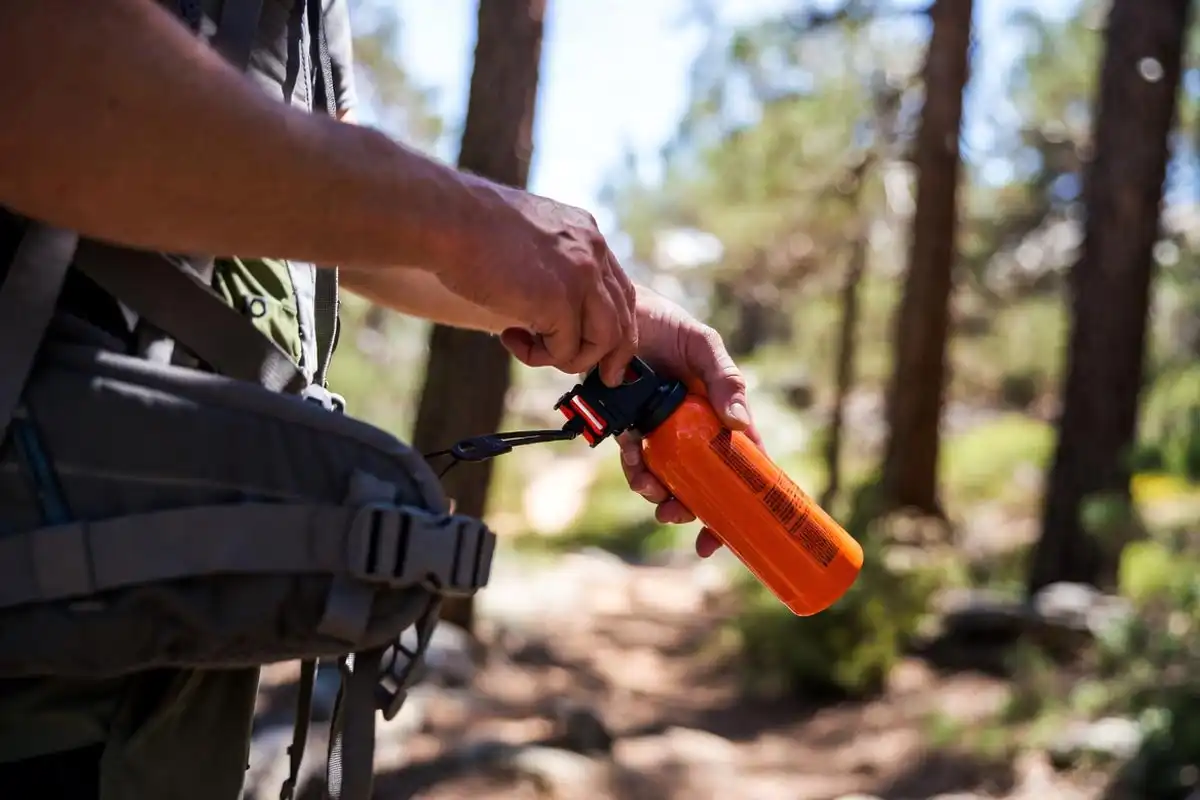
Bear spray works only when it is accessible. Clip it to your hip belt, not buried in your pack.
Check the safety clip before each outing. Practice drawing it in one motion. At the end of each trip, store it away from direct heat.
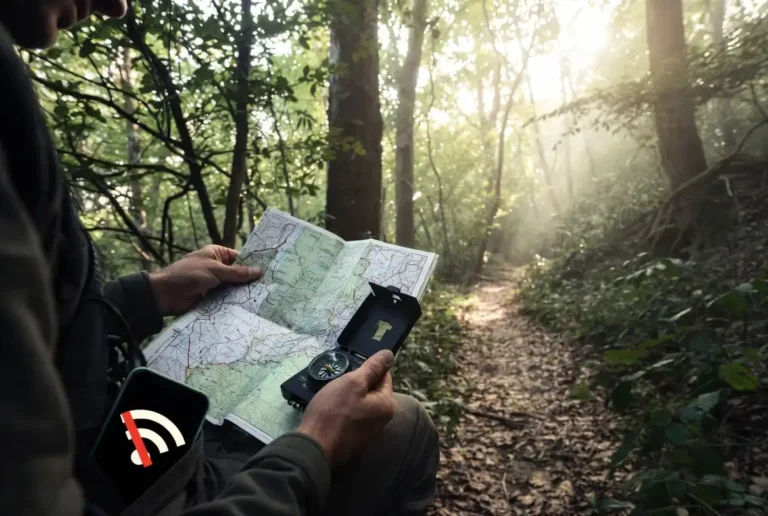
If you head deeper into the backcountry and lose your bearings after an incident, knowing how to call for help matters. I covered those options in my guide on signal for help in the backcountry.
Frequently Asked Questions

Should I play dead if a black bear attacks me?
No. Play dead only applies to grizzly bear defensive attacks. With black bears, fight back. Use bear spray, rocks, poles, or your hands. Target the nose and eyes.
Does bear spray actually work against black bears?
Yes. A 2008 study in the Journal of Wildlife Management documented bear spray stopping aggressive behavior in 92 percent of cases. It outperforms most other deterrents at close range.
What smells attract black bears to a campsite?
Food, garbage, cooking residue, toothpaste, sunscreen, deodorant, and pet food all attract black bears. Store every scented item in a bear canister or hung food bag, not in your tent.
Are black bear attacks common?
Fatal black bear attacks are rare. The North American Bear Center reports fewer than one fatal attack per year across North America on average. Non-fatal encounters increase when food is left unsecured.
What time of day are black bears most active near campsites?
Black bears are most active at dawn and dusk. They also move at night in campgrounds where they have learned that darkness means less human activity.
Conclusion
A black bear at your campsite is not automatically dangerous. Most bears come looking for food, not conflict. Secure your food before night falls, respond calmly if one appears, hold your ground, and use bear spray if the situation moves toward contact.
Report every encounter to park staff. Your report helps rangers track behavior patterns and protects the next group at that site.