Easy Healthy Meals for Camping: Cook in 25 Minutes or Less

Camp food fails for two reasons. Either it’s all sugar and sodium (chips, instant noodles, hot dogs), or it’s so ambitious you end up eating a granola bar at 10 p.m. because dinner never came together. After enough trips in the Bandarban hills and weekends on Kaptai Lake, I settled on a middle path: meals that hit real nutrition, cook in 25 minutes or less, and survive without a fridge. This guide gives you the recipes, exact cook times, storage rules, dietary swaps, and the fixes for when things go wrong.
What counts as a healthy camping meal?
A healthy camp meal delivers roughly 25 to 35 grams of protein, complex carbs, at least one real vegetable, and 15 to 25 grams of fat from nuts, oil, or fish. That balance keeps blood sugar steady so you don’t crash mid-hike. Easy means under 25 minutes of active cooking, one pot or one foil packet, and no perishables that demand below 40°F for the full trip.
The reason most “camping meals” fail nutritionally: they swap real food for ultra-processed shelf-stable substitutes. Real food with smart packing works better than freeze-dried packets at four times the price.
Know more: Camping Meals for Large Groups: Plan for Feeding 6 to 20 People
Plan and prep before you leave
Spend 45 minutes the night before. So much of camp cooking is just chopping at home. Here’s my home-prep routine:
- Hard-boil eggs (good for 5 to 7 days refrigerated, 1 day in a cool cooler)
- Cook a batch of quinoa or brown rice (3 days refrigerated)
- Chop bell peppers, onions, carrots, zucchini into separate zip bags
- Marinate chicken or paneer in oil, lemon, and spices, then freeze flat
- Portion oats, nuts, and spices into small jars or labeled bags
This is where a solid two-night camp checklist routine saves a trip. Missing salt and oil ruins more meals than missing meat does.

Pantry staples that earn their weight
- Rolled oats, quinoa, brown rice, red lentils (red lentils cook in 15 minutes)
- Whole grain tortillas, whole wheat pita
- Canned tuna in olive oil, canned chickpeas, canned black beans
- Almond butter or peanut butter in single-serve packets
- Olive oil, ghee, salt, black pepper, smoked paprika, cumin, chili flakes
- Hard cheese (cheddar, parmesan keep 5+ days unrefrigerated in cool weather)
Healthy breakfasts (with real cook specs)
Overnight oats in a jar (zero cook)
Ratio: 1/2 cup rolled oats, 3/4 cup milk, 1 tablespoon chia, 1 tablespoon nut butter, chopped fruit. Mix at home the night before. Eats cold straight from the jar after 8 hours. Protein: 12 to 15 g.
Stovetop oatmeal that doesn’t gum up
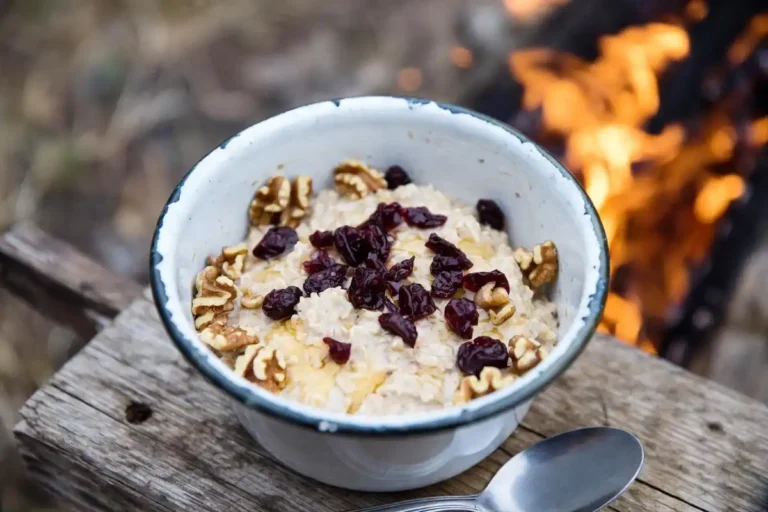
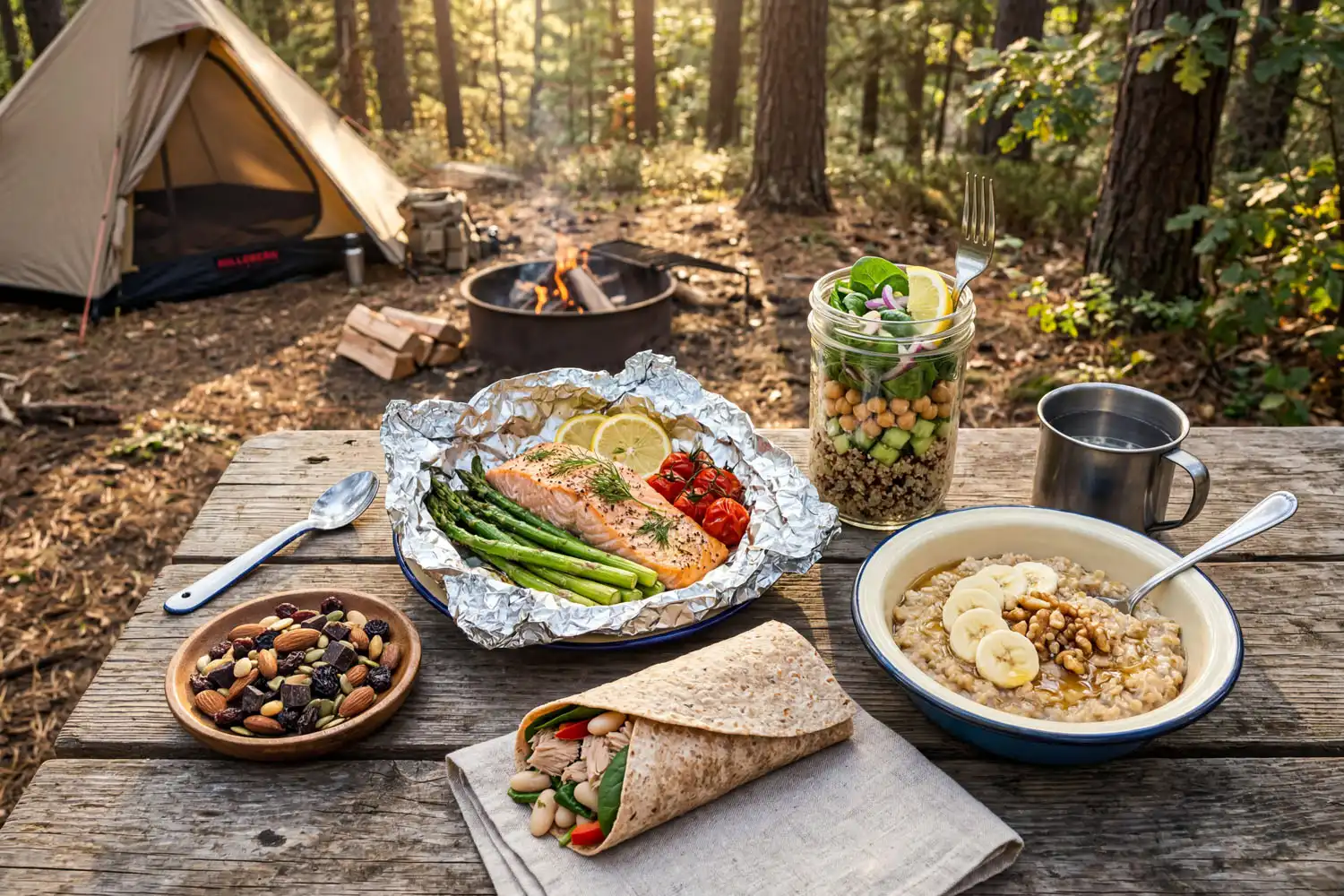
Use 1 part oats to 2 parts water. Salt the water, bring to a simmer, stir for the first minute only, then leave alone for 4 minutes on low. Stirring constantly is what turns oatmeal to paste. Top with banana, walnuts, and honey.
Veggie scramble wrap
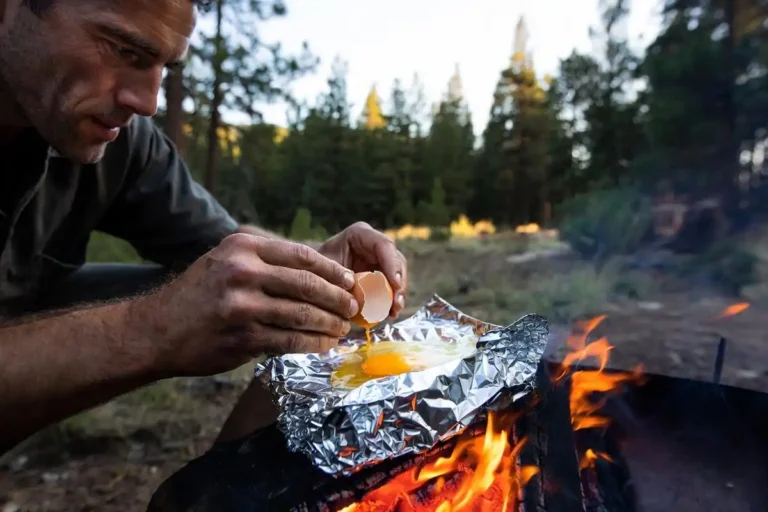
Two eggs, a handful of pre-chopped peppers and onions, pinch of salt. Cook in 1 teaspoon ghee over medium heat for 3 minutes, folding gently. Wrap in a warmed tortilla with salsa. Protein: ~18 g.
Healthy lunches (no second cook needed)
Lunch should be cold and quick. So I avoid lighting the stove twice a day.
Tuna and white bean wrap
Mash 1 can tuna in olive oil with 1/2 cup cannellini beans, lemon juice, black pepper, and chopped parsley. Fills two wraps. Protein: ~30 g.
Mason jar salad (good for 48 hours in a cold cooler)
Layer 2 tablespoons vinaigrette on the bottom, then carrots and cucumber, then 1/2 cup cooked quinoa, then chickpeas, then greens on top. Dressing on the bottom prevents soggy greens.
Hummus and roasted veg pita
Pre-roast zucchini, eggplant, and red onion at home with olive oil and cumin. Stuff cold into a pita with 3 tablespoons hummus and a squeeze of lemon. Hearty produce holds up better than salad greens, which is why I lean on my picks for vegetables that travel best on multi-day trips.
Healthy dinners (real cook specs)

Foil packet salmon with vegetables
Per packet: 1 salmon fillet (5 to 6 oz), 8 asparagus spears, 6 cherry tomatoes, 2 lemon slices, 1 tablespoon olive oil, salt, pepper, garlic. Seal with a double fold. Cook on a bed of medium-hot coals (you can hold your hand 6 inches above for 5 seconds) for 10 to 12 minutes. Salmon is done at 145°F internal, or when it flakes with a fork. My step-by-step foil packet cooking method covers heat reading in detail.
One-pot chicken and quinoa
Brown 1 pound diced chicken thigh in 1 tablespoon oil for 5 minutes. Add chopped onion and garlic, cook 2 minutes. Then add 1 cup quinoa, 2 cups broth, 1 cup frozen mixed vegetables, 1 teaspoon Italian seasoning. Bring to a boil, cover, simmer 15 minutes on low heat, then rest 5 minutes off heat. Feeds 4. The structure follows my one-pot meal for feeding a group.
Lentil and sweet potato curry
Heat 1 tablespoon oil, sauté 1 chopped onion 3 minutes, add 2 teaspoons curry powder for 30 seconds, then add 1 diced sweet potato, 1 cup red lentils, 1 can diced tomatoes, and 3 cups water. Simmer 20 minutes uncovered. Season with salt and lemon. Plant-based, ~18 g protein per bowl, holds in a covered pot overnight in cool weather.
Smart snacks that fuel hikes
Combine protein and fat with a fast carb so energy lasts. My pack always carries: roasted almonds, beef or paneer jerky, hard cheese cubes (safe 4 to 6 hours out of the cooler at moderate temps), apples, oranges, dark chocolate, and homemade trail mix. For day hikes I pack lighter, denser options from my list of fast-fuel hiking snacks that won’t bog down your pack.
Dietary swaps that still hit the nutrition
- Vegan: Swap salmon for pressed firm tofu marinated in soy, sesame, and ginger (cook same time in foil). Swap chicken for chickpeas in the one-pot recipe.
- Gluten-free: Replace tortillas with corn tortillas or large lettuce leaves. Use certified gluten-free oats.
- Low-sodium: Skip canned beans or rinse them twice, use unsalted butter, and season with lemon, herbs, smoked paprika, and chili flakes instead of salt.
- Higher protein for long treks: Add a scoop of milk powder to oatmeal, a boiled egg to lunch, and double the meat at dinner. Aim for 1.2 to 1.6 g protein per kg of body weight.
Food safety that actually matters
Cold foods stay safe below 40°F; hot foods above 140°F. The danger zone, 40 to 140°F, is where bacteria multiply fast. Practical rules I follow:
- Raw meat: keep frozen for the first 24 hours, then cook on day 1
- Cooked food: eat within 2 hours of cooking, 1 hour if ambient is above 90°F
- Hard-boiled eggs: 1 day in a cool cooler; toss if the shell sweats heavily
- Hard cheese, nut butter, dried fruit, jerky: shelf-stable for the whole trip
Bear, monkey, or rodent intrusion ruins more food than spoilage does, so I lock everything in a hard cooler or hang it. My full routine on safe food storage at the campsite covers the specifics.
What goes wrong and how I fix it

- Eggs cracked in the cooler. Pack hard-boiled instead of raw, or carry raw eggs pre-cracked into a sealed water bottle.
- Tortillas molded by day 3. Pack them in a paper bag inside a zip bag; plastic alone traps moisture.
- Rice burned at the bottom. Heat was too high. Bring to a boil, then move to the edge of the fire or lowest stove setting and don’t peek for 15 minutes.
- Foil packet stuck and tore. Use heavy-duty foil or double-wrap; coat the inside lightly with oil before adding food.
- Oatmeal turned to glue. You stirred too much. Stir once, walk away, come back.
On a 3-day Nafakhum trek two seasons back, I burned a pot of rice the first night because I tried to “watch” it on full flame. The second night I built two heat zones in the fire and parked the pot on the cooler edge. Perfect rice. Lesson stuck.
Sample 3-day healthy menu
First Day
- Breakfast: Veggie scramble wrap
- Lunch: Tuna and white bean wrap
- Dinner: Foil packet salmon with asparagus
Day 2
- Breakfast: Stovetop oatmeal, banana, walnuts
- Lunch: Mason jar quinoa salad
- Dinner: One-pot chicken and quinoa
Day 3
- Breakfast: Overnight oats with chia and fruit
- Lunch: Hummus and roasted veg pita
- Dinner: Lentil and sweet potato curry
Daily totals: roughly 2,000 to 2,400 calories, 90 to 120 g protein, plenty of fiber and produce.
Final thoughts
Healthy camp meals aren’t about fancy ingredients. They’re about chopping and portioning at home, owning a short list of recipes that actually work, and knowing the cook times cold. Plan one strong meal a day instead of three half-finished ones. After two or three trips, the rotation becomes second nature, and you’ll eat better outside than most people eat at home.