How to Make Camp Water Safer: 5 Fast Steps for Any Trip

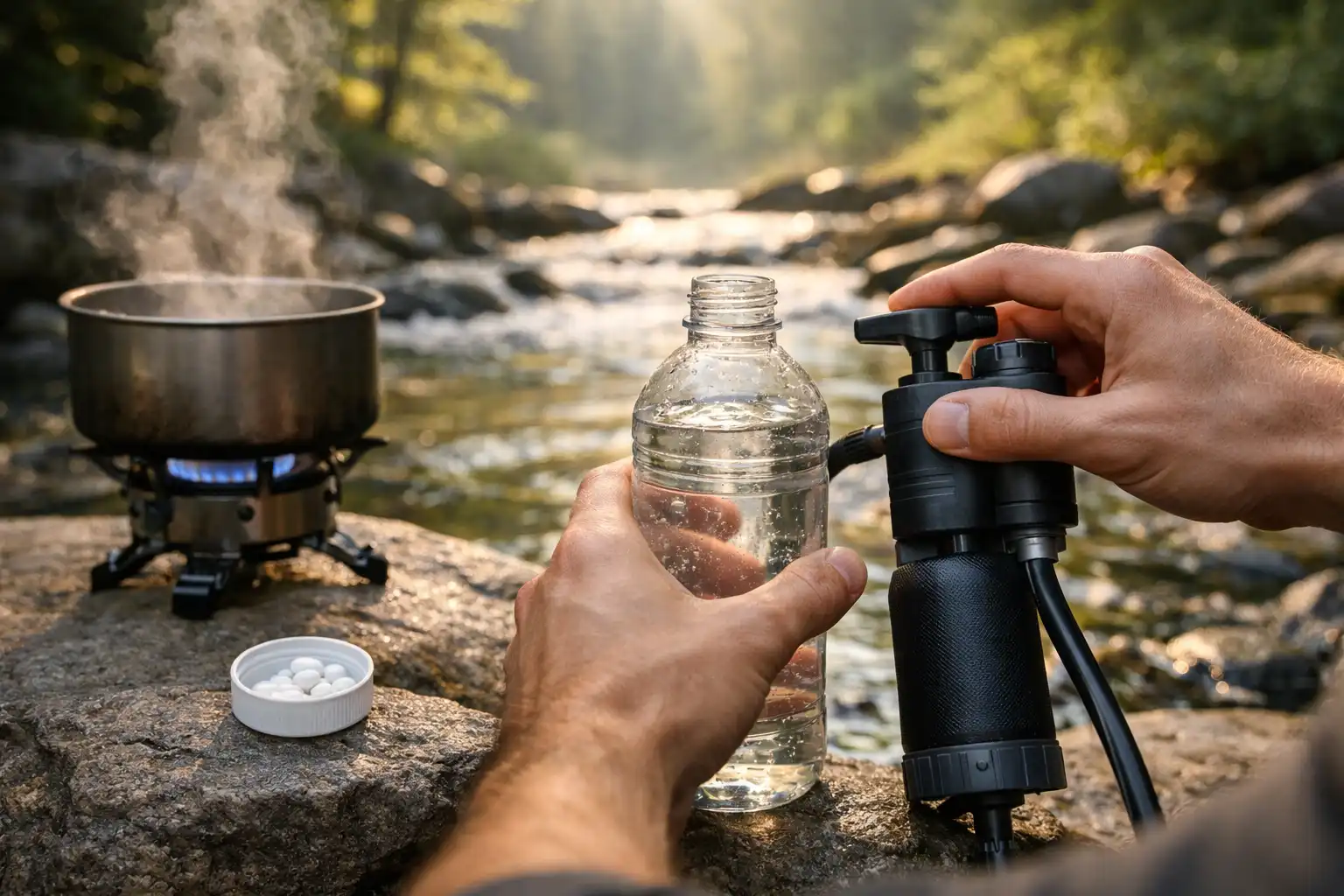
Make camp water safer by removing dirt, then killing germs with boiling, a purifier, or a filter plus disinfectant. In this guide, you will learn a simple backcountry workflow: collect, pre-filter, then make water safer with a filter, a rolling boil, or disinfectant tablets, followed by smart storage. I compare filter vs boil vs tablets, explain when each one fits, and list the mistakes that contaminate “clean” bottles. Use this before every trip so your drinking water stays consistent from trailhead to last night.
To make camp water safer: Choose the best source, pre-filter cloudy water, then treat it. Boil clear water 1 minute, or 3 minutes above 6,500 feet. A 0.1–0.2 micron filter handles bacteria and protozoa, not viruses. For higher risk, add a disinfectant or use a purifier. Store in a clean bottle.
What makes camp water unsafe?
Untreated water can carry germs like bacteria, parasites (Giardia, Cryptosporidium), and viruses. Boiling kills these germs when water reaches a rolling boil for the recommended time.
Camp water becomes unsafe when germs or toxins enter it, even when it looks clean. The CDC explains that germs from human or animal feces can contaminate lakes, rivers, and streams, and clear water can still carry bacteria, viruses, and parasites.
Camp water also becomes unsafe when chemicals contaminate it. Boiling and disinfectants kill germs, but they do not make water safe when fuel, toxic chemicals, radioactive materials, or similar hazards are present. In that case, use a different source.
One more hazard surprises new campers: harmful algal blooms. The Minnesota Department of Health warns that cyanotoxins from blooms are not removed by typical backcountry devices, and boiling does not remove these toxins.
Learn more: How to Purify Water in the Wild: 5 Practical Ways to Treat Water
When do you need to treat water at camp?
Treat camp water any time you do not know it came from a treated, potable tap. The CDC lists hiking, camping, and remote areas as places where water quality is often unknown, and it recommends treating water when you are not sure it is safe.
Treat water for more than drinking. The CDC lists common exposure routes such as cooking, brushing teeth, washing produce, and making ice.
Plan for extra care when people in your group face higher risk. The CDC lists children, pregnant women, adults 65+, and people with weakened immune systems as groups at higher risk of getting sick from unsafe water.
Where should you collect water so it starts cleaner?
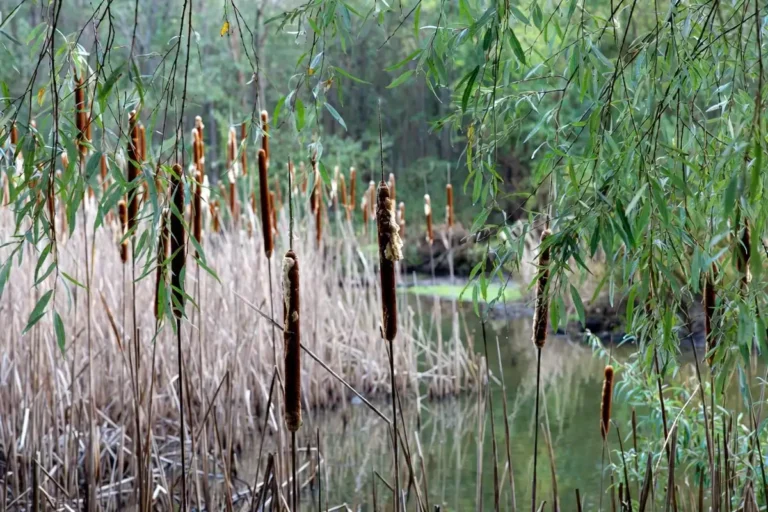
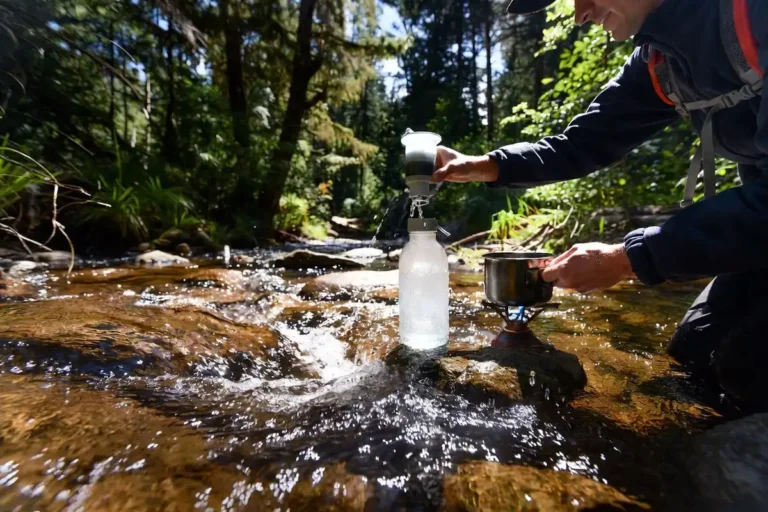
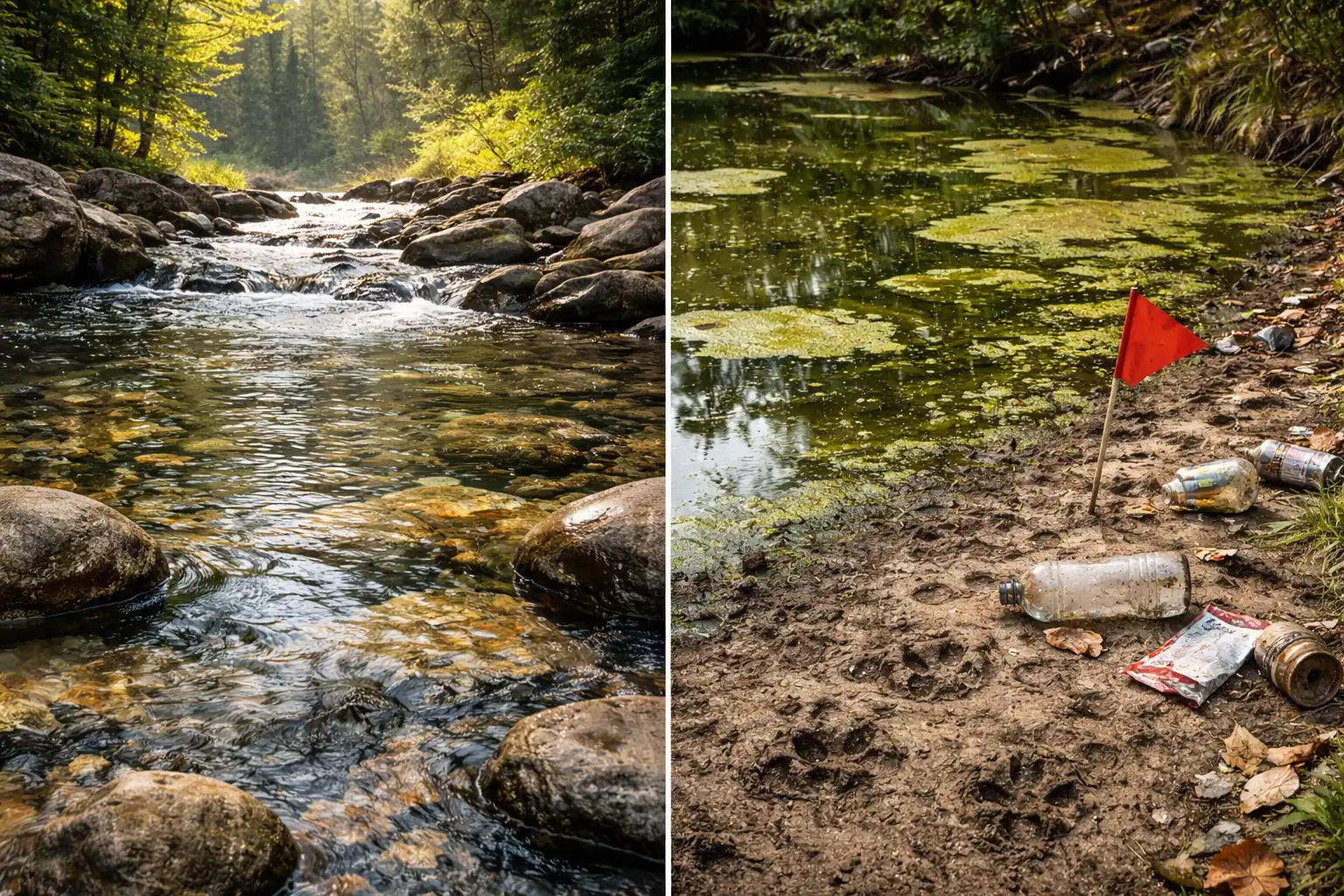
Choose the cleanest source you can find because every treatment method works better with clearer water. The National Park Service recommends collecting from moving water in rivers and streams, or from the top few inches of a lake, and avoiding stagnant water.
Pick your collection spot with camp hygiene in mind. The NPS recommends collecting away from established campsites and away from animal grazing areas, and it suggests higher elevations or near the water source when possible.
Use a clean container and clean hands before you start. The NPS calls out clean containers and hand cleaning before collecting water. The CDC also recommends handwashing and, when needed, hand sanitizer that contains at least 60% alcohol.
How to make camp water safer step by step
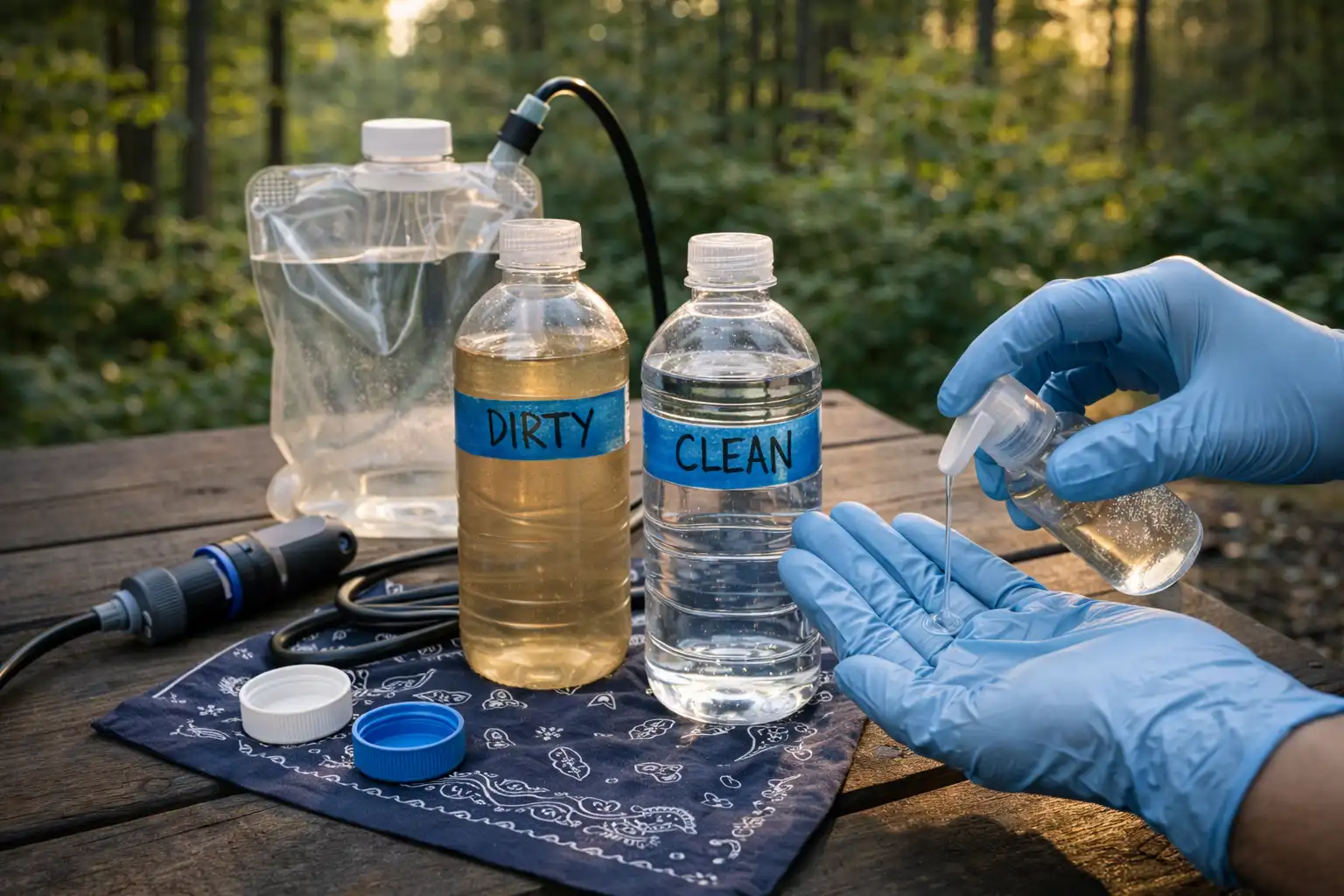
This workflow keeps you from fixing water and then re-contaminating it five minutes later.
Step 0: Plan your water so you treat less
Carrying more water reduces how often you depend on questionable sources. If you want a simple planning target, use my guide on how much water to bring per person.
Step 1: Set up a “dirty side” and a “clean side”
Use one bottle or bag for raw water (“dirty”). Use a separate bottle for treated water (“clean”). Keep caps and mouthpieces separate.
This one habit prevents most backcountry stomach problems in my experience.
Step 2: Pre-filter cloudy water
Cloudy water slows filters and reduces chemical disinfection performance. The CDC recommends filtering cloudy water through a clean cloth, paper towel, or coffee filter, or letting it settle and pouring off the clear water.
If the water looks like pea soup or spilled green paint, treat it as a harmful algal bloom risk and choose another source.
Step 3: Choose your main treatment method
Use one of these options:
- Boil when you want the most reliable germ kill and you have fuel.
- Filter, then disinfect when you want speed for daily drinking but also want virus coverage.
- Tablets when weight matters, you need a backup, or you travel through higher virus-risk areas.
The CDC calls boiling the best way to kill germs in water and calls filtering plus disinfection the next best option.
Step 4: Store treated water so it stays treated
Store treated water in a clean container with a tight cover. The CDC includes this step after boiling and after disinfecting.
Option 1: Filtering camp water
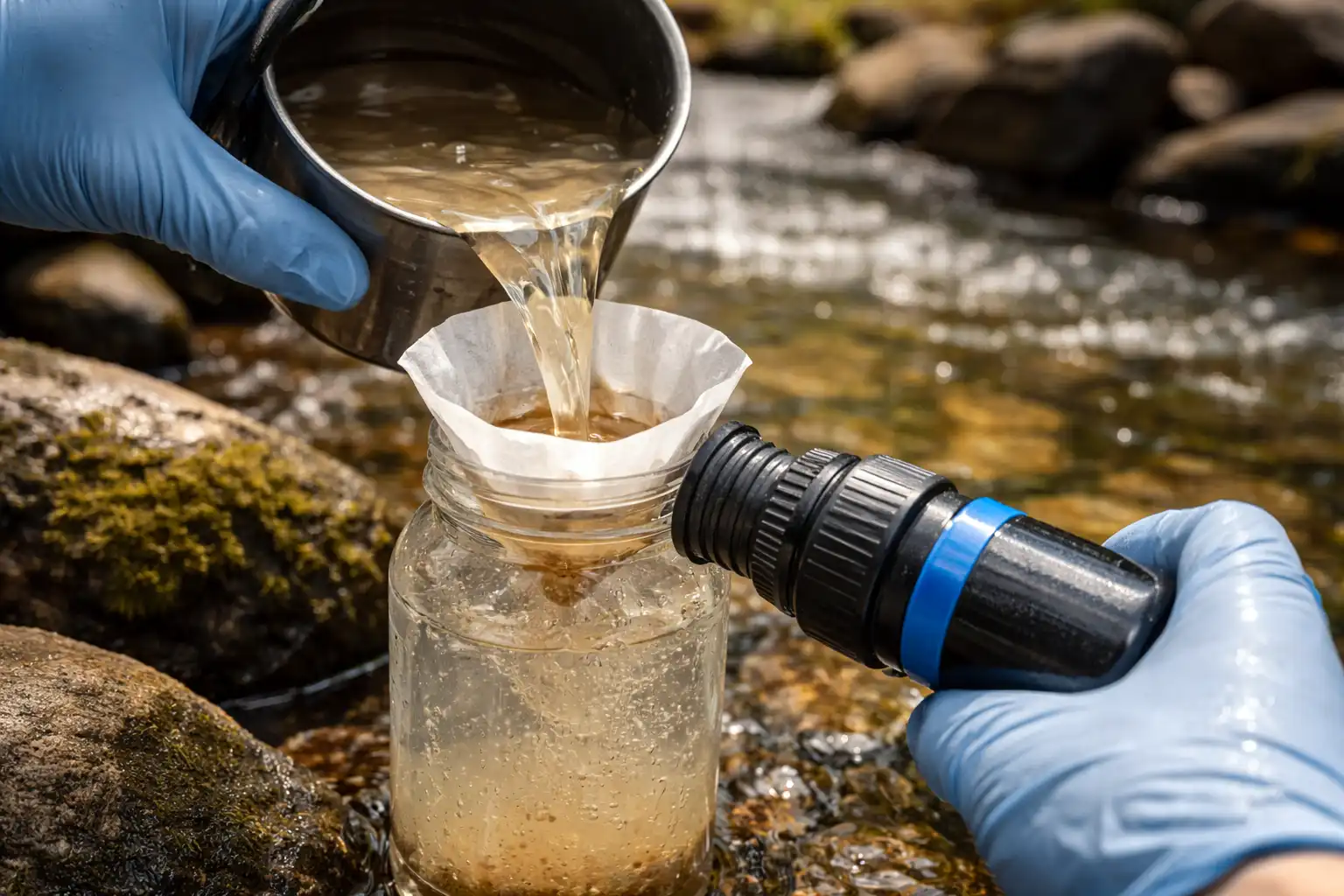
Filtering makes water clearer and removes many organisms, but it has limits.
What does a camp filter remove?
A filter removes organisms based on pore size.
- The CDC says an absolute pore size of 1 micron or smaller removes parasites, and a 0.3 micron or smaller filter removes bacteria and parasites, but not viruses.
- The Minnesota Department of Health adds that only filters with a chemical disinfectant matrix work against some viruses.
In plain camp terms: a standard backcountry microfilter handles protozoa (Giardia, Cryptosporidium) and bacteria when it meets the right pore size, but viruses need another step.
When is filtering a good primary method?
Filtering fits well when:
- You hike in areas where virus risk is low but protozoa risk exists.
- You want fast water for long days.
- Your source water carries silt and you want it to taste better.
If you want virus protection, pair the filter with a disinfectant step. The CDC recommends filtering and then disinfecting filtered water as the next best option after boiling.
How to keep a filter working in camp
Most filter failures in the field come from clogging or damage.
- Protect hollow fiber filters from freezing. Cascade Designs warns that freezing can burst hollow fibers and damage a filter. Katadyn’s BeFree manual warns that a frozen membrane can allow microorganism bypass.
- Pre-filter dirty water. Both the CDC and NPS recommend filtering out debris first when water is cloudy, even if you plan to boil or disinfect later.
- Keep dirty hoses and caps away from clean water. Cross-contamination ruins good treatment.
Option 2: Boiling camp water
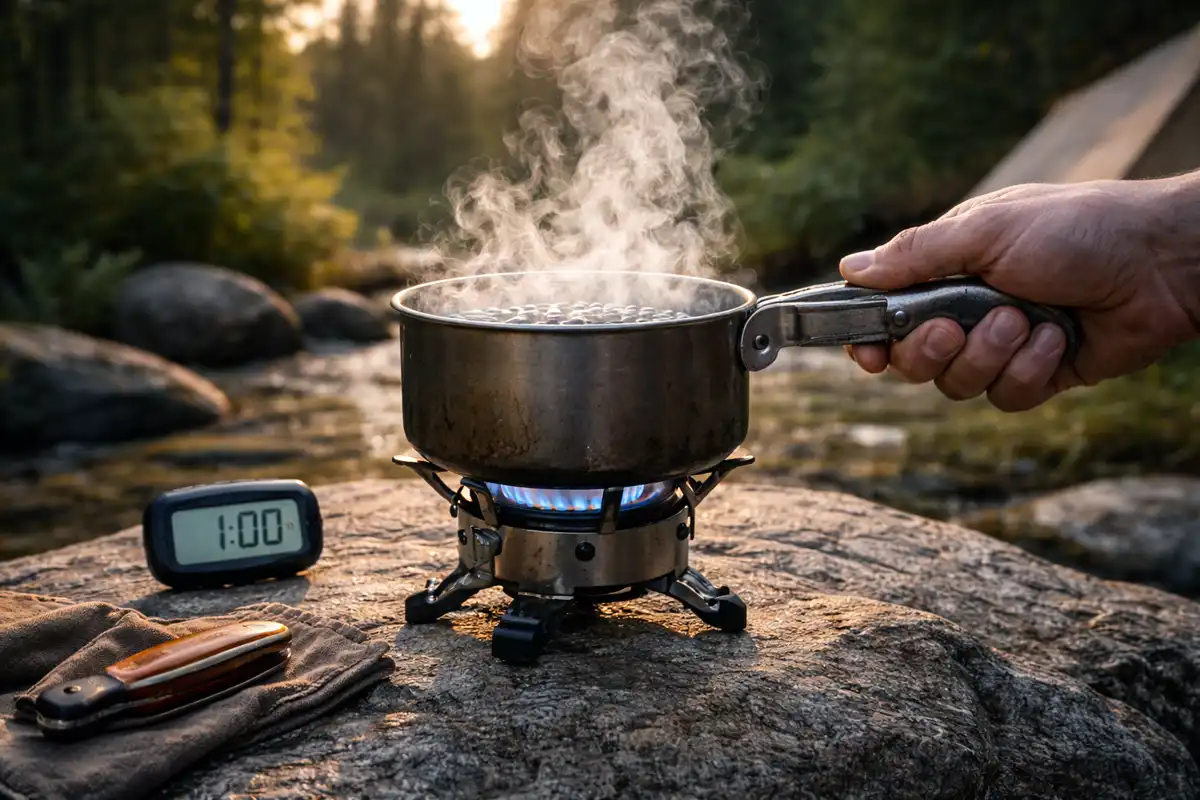
Boiling uses heat to inactivate bacteria, viruses, and parasites. The CDC calls it the best way to kill germs in water.
How long do you boil water when camping?
Bring clear water to a rolling boil for 1 minute. Boil for 3 minutes above 6,500 feet. The CDC repeats this guidance across its hiking and emergency pages.
The NPS gives the same timing and also notes that boiling still works when water is cloudy or murky.
A safe boiling routine at camp
- Pre-filter cloudy water or let it settle, then pour off clearer water.
- Bring it to a rolling boil for the correct time.
- Let it cool.
- Store it in a clean, covered bottle.
If you boil water often on trips, a stable pot or kettle helps. If you want options, see my guide to camp kettles that work over open fire.
What boiling does not fix
Boiling does not remove chemicals, fuel, toxins, or radioactive materials. If you suspect that type of contamination, change sources.
Boiling also does not remove cyanotoxins from harmful algal blooms, and boiling can worsen toxin concentration according to Minnesota health guidance. Avoid the water instead.
Option 3: Tablets and drops
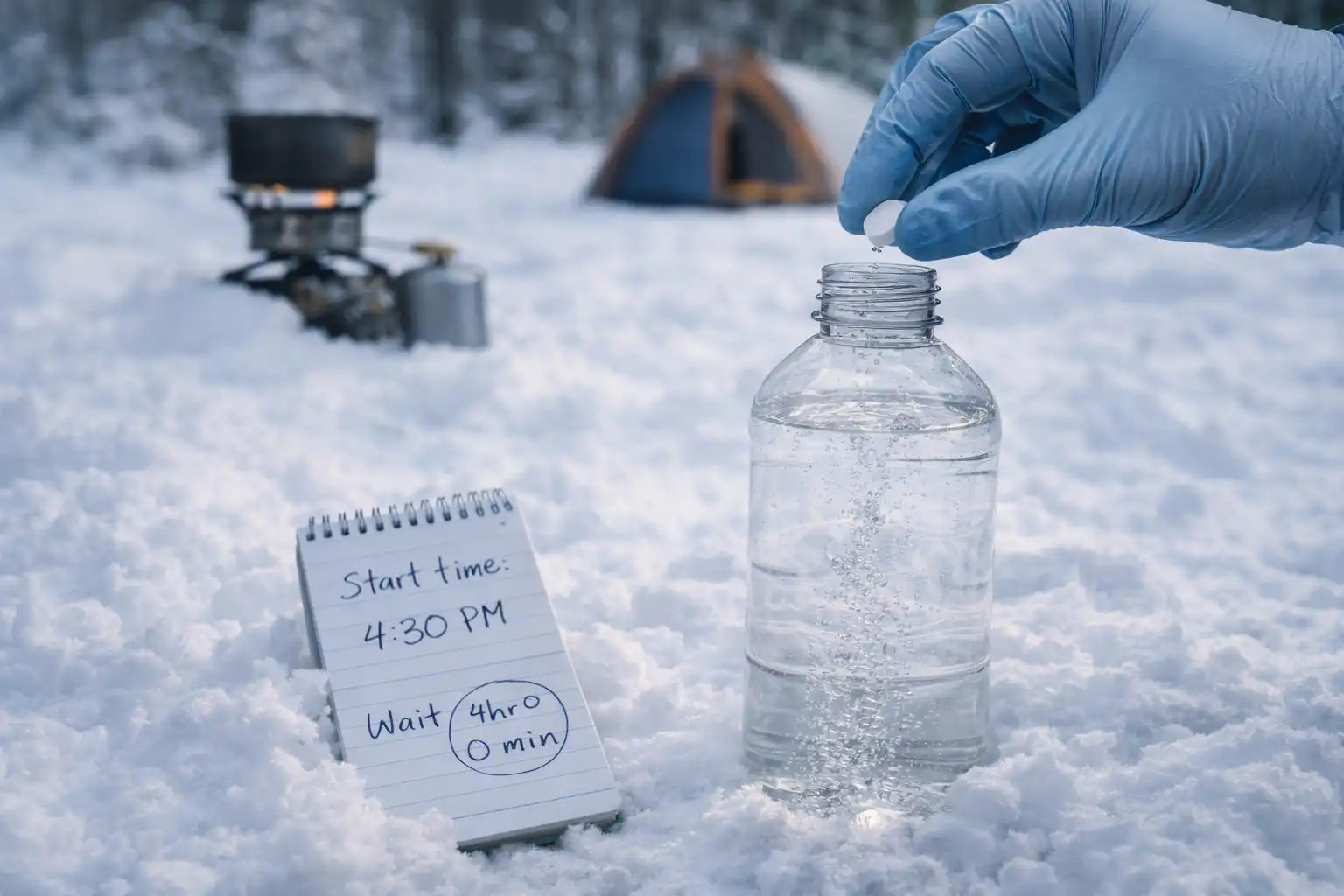
Chemical disinfection adds an oxidant or iodine to kill germs. It works well as a lightweight backup, but contact time decides success.
What do tablets kill?
The CDC explains that chemical disinfectants kill viruses and bacteria, but they may not kill parasites. Chlorine dioxide performs better against Giardia and can work against Cryptosporidium when used correctly.
The Minnesota Department of Health adds a clear warning: chlorine and iodine are not effective against Cryptosporidium, and chlorine dioxide has low to moderate effectiveness against Cryptosporidium.
How long do tablets take?
Contact time varies by product and water conditions. The NPS gives a useful range: 30 minutes to 4 hours, depending on the disinfectant and conditions.
Some chlorine dioxide tablet labels require the longer end of that range for full protection. For example, a Micropur MP1 label states 1 tablet treats 1 liter and requires 4 hours of treatment time for effectiveness.
Cold water slows chemical reactions, and cloudy water shields organisms. That is why pre-filtering helps.
Iodine safety notes
Iodine works for some germs, but it has user limits. The CDC says pregnant people, people with thyroid problems, and people with iodine hypersensitivity should avoid iodine-treated water. The CDC also states that no one should drink iodine-disinfected water for more than a few weeks at a time.
A simple tablet routine at camp
- Pre-filter cloudy water.
- Add tablets for the exact volume of water you treat.
- Wait the full label contact time.
- Store water in a clean bottle with a tight cap.
Filter vs boil vs tablets: which one fits your trip?
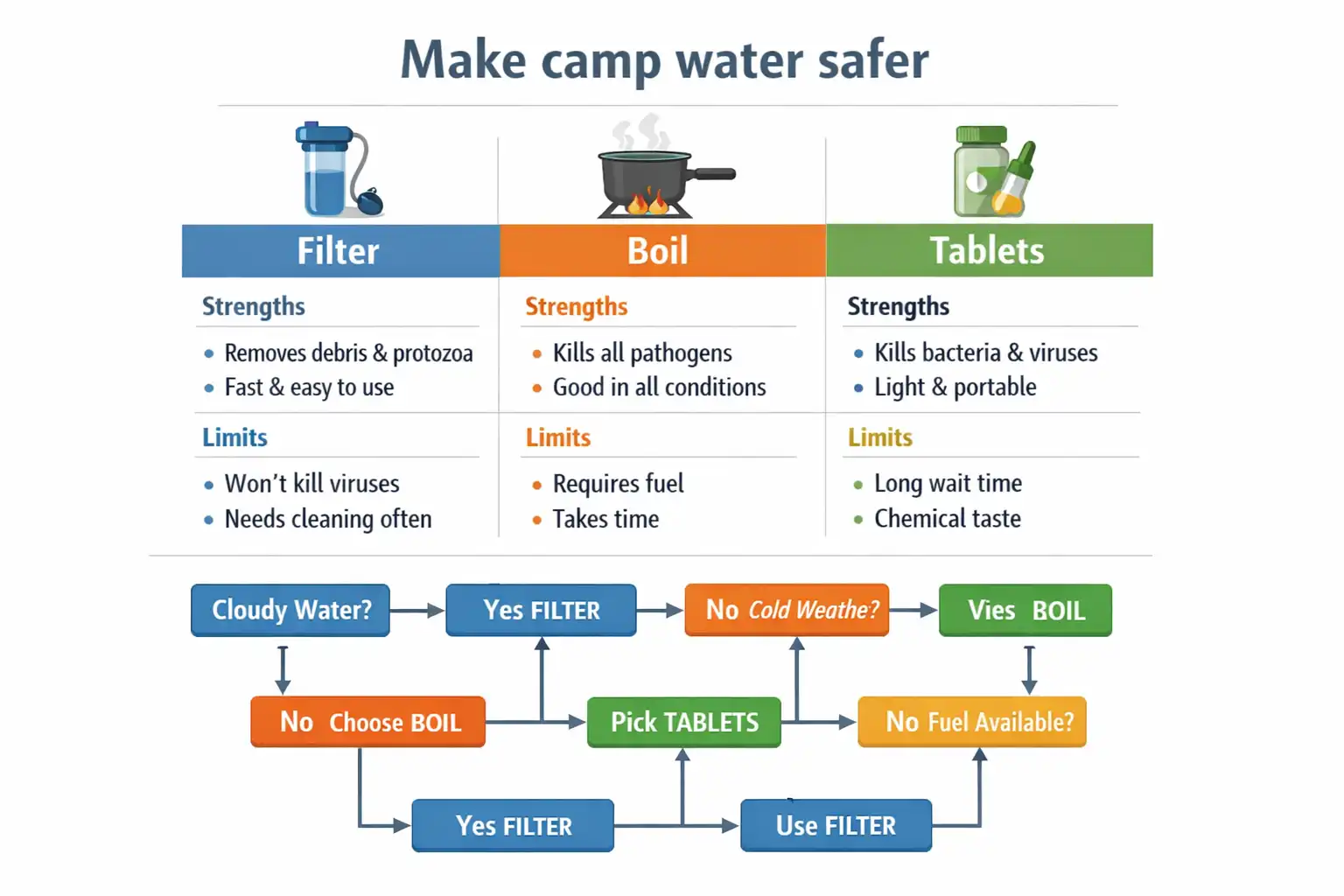
Here is how I decide at camp.
| Method | Strength | Weak spot | Best use |
|---|---|---|---|
| Boil | Kills bacteria, viruses, parasites when timed correctly | Needs fuel and time to cool | Base camp, winter trips, high-risk water |
| Filter | Fast, improves clarity, removes parasites and some bacteria at correct pore size | Viruses pass through most filters | Daily hydration in typical backcountry |
| Tablets | Light, good backup, helps cover viruses | Contact time slows you down | Emergency kit, travel, virus-risk areas |
Key decision points from the CDC:
- Boiling is the best way to kill germs.
- Filtering plus disinfection is the next best option.
- Filters do not remove all germs, and most do not remove viruses.
The safest practical upgrade: filter, then disinfect
Layering methods raises your safety margin without carrying a huge setup.
- The CDC recommends filtering and then disinfecting filtered water as the next best option after boiling.
- The Minnesota Department of Health states that filtration followed by disinfection provides high effectiveness for removing microorganisms.
This combo also helps when water looks clean but you camp near heavy use. Popular sites increase the chance of fecal contamination in water.
How to store treated water and keep it safe
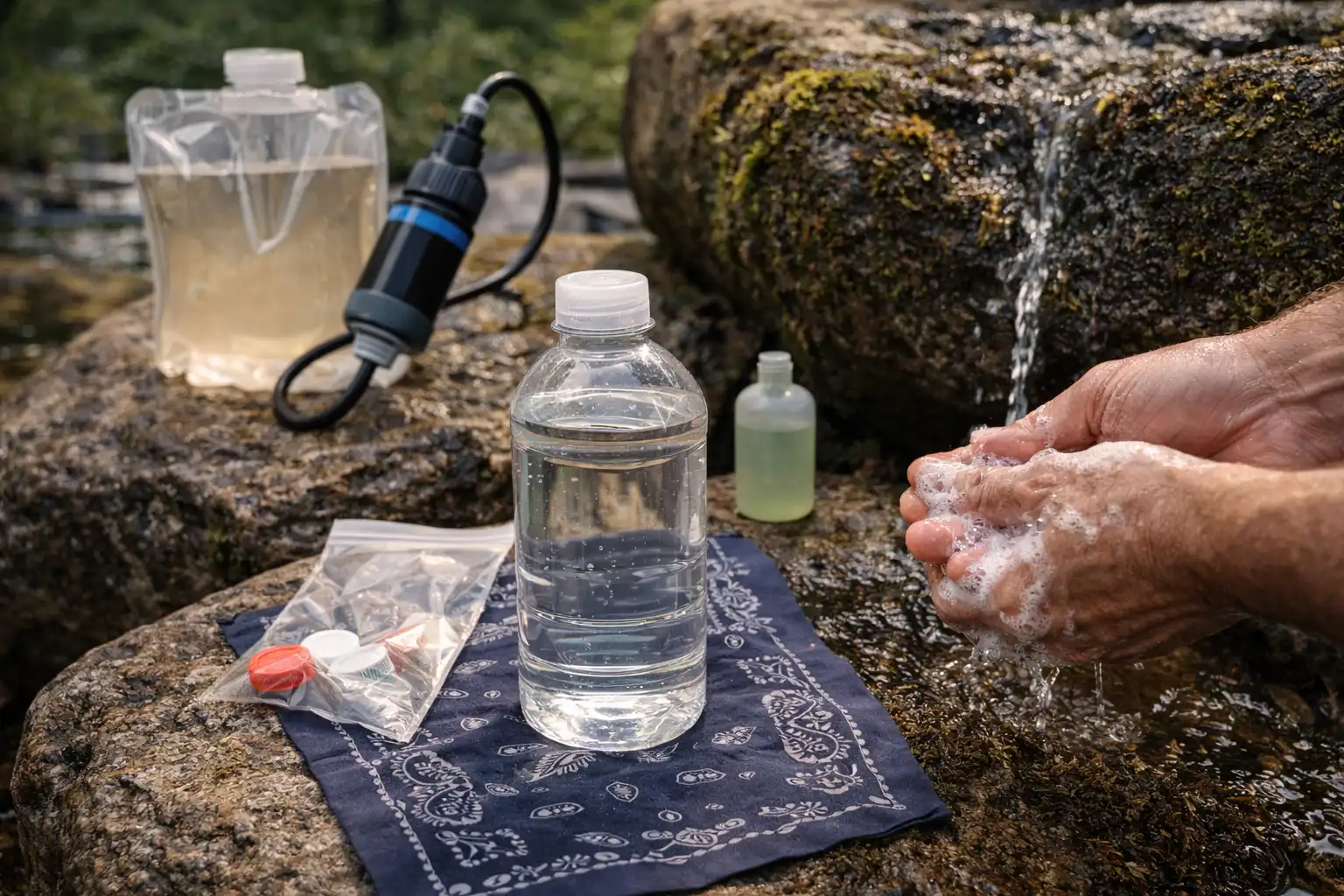
Safe treatment fails when you re-contaminate the bottle.
- Store boiled or disinfected water in clean, sanitized containers with tight covers, as the CDC advises.
- Keep your “dirty bottle” mouth away from your “clean bottle” mouth.
- Avoid dipping a clean cup into a dirty container.
- Clean your hands before handling caps. The CDC recommends washing hands and, when needed, using sanitizer with at least 60% alcohol.
If you want a camp setup that supports safe boiling and storage, my campfire cooking kit guide covers practical pots, gloves, and small add-ons that make hot water handling easier.
Troubleshooting in the field
Your filter runs slow
Slow flow usually means sediment loads the filter.
- Pre-filter cloudy water through cloth, paper towel, or coffee filter, or let it settle, as the CDC recommends.
- Backflush or clean using the maker’s instructions.
- Switch to boiling if you cannot restore flow.
Your filter froze overnight
Treat a frozen hollow fiber filter as damaged until you verify integrity.
- Cascade Designs warns that freezing can burst hollow fibers and damage filters.
- Katadyn’s BeFree manual warns that a frozen membrane can lead to microorganism bypass.
Boil water or use chemical disinfection while you sort out gear.
Tablets “do not work” fast enough
Chemical disinfection depends on contact time.
- NPS notes that tablet contact time varies and can range from 30 minutes to 4 hours.
- Cold and cloudy water slow results, so pre-filter first.
If you need water fast, boil instead.
Water tastes flat after boiling
The CDC suggests improving taste by pouring boiled water between containers and letting it stand, or adding a pinch of salt per quart or liter.
Mistakes that make “treated” water unsafe
These mistakes happen on real trips:
- Relying on filtration alone when virus risk is present. The CDC notes that portable filters do not remove viruses, and it recommends disinfecting filtered water.
- Skipping the wait time for tablets. NPS and product labels rely on full contact time for effectiveness.
- Using pool-cleaning tablets. The NPS warns against using pool chemicals for drinking water.
- Treating water that has chemical contamination or algal toxins. Boiling and disinfectants do not solve that risk.
- Cross-contaminating clean water with dirty caps, hoses, or hands. Keep dirty gear away from the clean bottle.
Safety notes for your group
- Burns: Boiling water causes serious burns. Cool water before pouring into soft bottles.
- Iodine use: Avoid iodine for pregnancy, thyroid problems, and iodine hypersensitivity. Avoid long-term use beyond a few weeks.
- Illness after the trip: If someone develops severe diarrhea, dehydration signs, blood in stool, or fever, contact a clinician. The CDC notes waterborne illness symptoms such as diarrhea and stomach pain.
If you camp alone, your margin for error shrinks. My solo camping safety guide helps you plan backup water and emergency steps.
Sources and further reading
These official pages give the same core guidance I use in camp:
- CDC: Water treatment options when hiking, camping, or traveling
- CDC: How to make water safe in an emergency
- National Park Service: Two ways to purify water
Conclusion
Camp water safety comes from a clean source, a reliable treatment method, and clean storage. Boiling gives the broadest germ kill when you time it correctly.
Filtering gives speed, but viruses need an extra step. Tablets save weight, but the label contact time decides success. Build a routine that keeps dirty water away from clean bottles, and your stomach will thank you.