How to Store Food Safely at Camp Without Attracting Wildlife
When you store food safely at camp, you protect your meals from spoilage, keep wildlife away from your site, and prevent foodborne illness. This guide covers every step, from packing your cooler to securing food overnight in bear country. I have used these methods on multi-day trips across different terrains, and they work.
To store food safely at camp, store perishable food in an insulated cooler below 40°F (4°C). Keep all food, trash, and scented items at least 100 feet from your sleeping area. Use bear canisters, bear boxes, or the bear hang method in wildlife areas. Never store food inside your tent.
Why Camp Food Storage Matters
Poor food storage creates two problems: spoiled food and wildlife encounters.
Bacteria multiply fast on perishable food between 40°F and 140°F. The USDA calls this the “danger zone.” Food left in this range for over 2 hours becomes unsafe. At temperatures above 90°F, that window drops to 1 hour.
Wildlife adds another risk. Bears have a sense of smell roughly 2,000 times stronger than humans, according to the National Park Service. Raccoons, rodents, and birds also raid campsites. Animals that eat human food lose their foraging instincts and become aggressive. Bears that grow dependent on campsites often get euthanized by park authorities.
I wrote about what to do if a black bear shows up at campsite. Proper food storage prevents that situation entirely.
What Counts as “Food” for Storage
Bears treat anything with a scent as food. Store these items the same way you store meals: toothpaste, sunscreen, lip balm, deodorant, insect repellent, soap, cooking oil, pet food, and garbage. If it has a scent, treat it as a food attractant.
How to Store Food Safely at Camp: Step by Step
Step 1: Plan Meals and Pack Smart
Calculate meals and snacks for each day. Pack only what you plan to eat. Eat perishable items like fresh meat and dairy within the first 1 to 2 days. Schedule non-perishable meals like rice, canned goods, and dried food for later days. I covered practical trail snacks that provide fast energy in a separate article.
Step 2: Pack Your Cooler Correctly
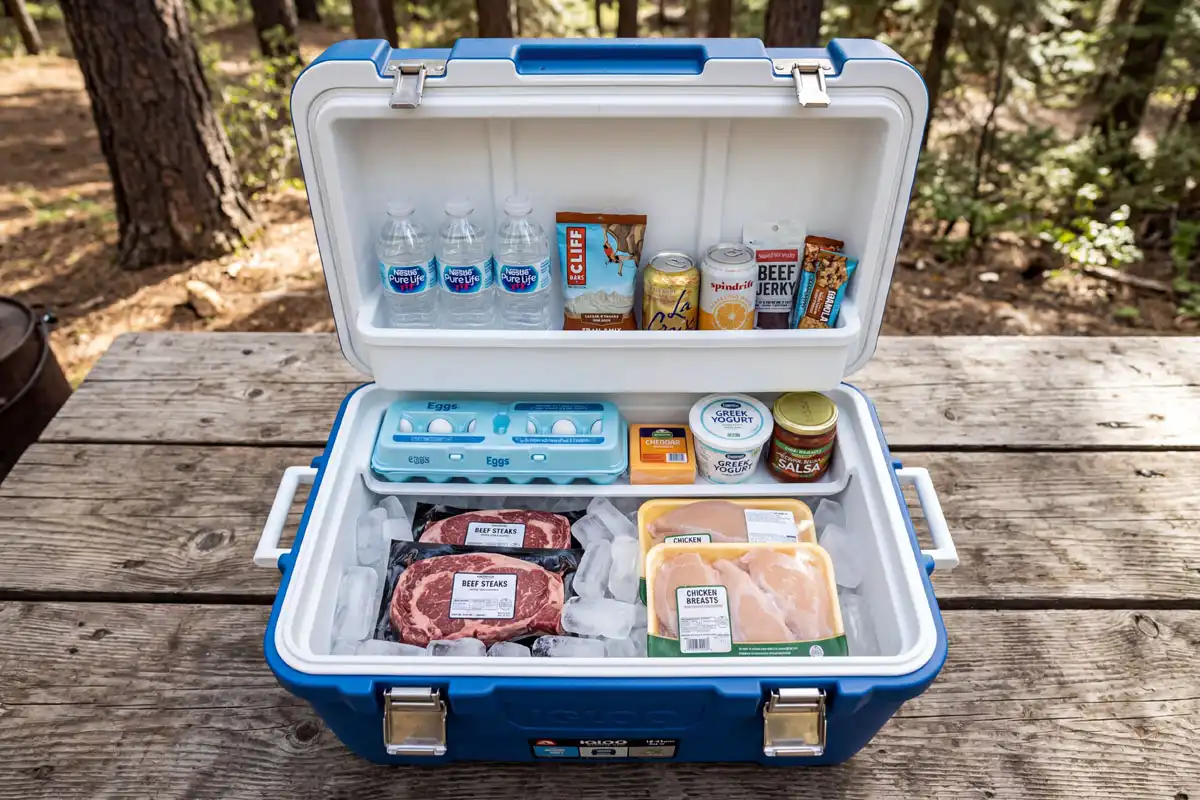
Pre-chill the cooler 12 to 24 hours before loading. A warm cooler melts ice faster.
Pack raw meat on the bottom in sealed, waterproof containers. Place dairy and eggs in the middle. Put drinks and snacks on top. This layering prevents cross-contamination from raw meat juices.
Use block ice instead of cubed ice. Block ice melts slower. Frozen water bottles work as both ice packs and drinking water. Keep the cooler in shade at all times. If you need alternatives, I wrote a guide on keeping food cold without a cooler.
Step 3: Set Up a Camp Kitchen Away from Your Tent
Place your cooking and eating area at least 100 feet from your sleeping area. Set food storage at the same distance. The ideal layout creates a triangle: tent, cooking area, and food storage each in a separate corner.
Step 4: Secure All Food Before Dark
Lock everything away before nightfall. Animals are most active at dusk, night, and dawn.
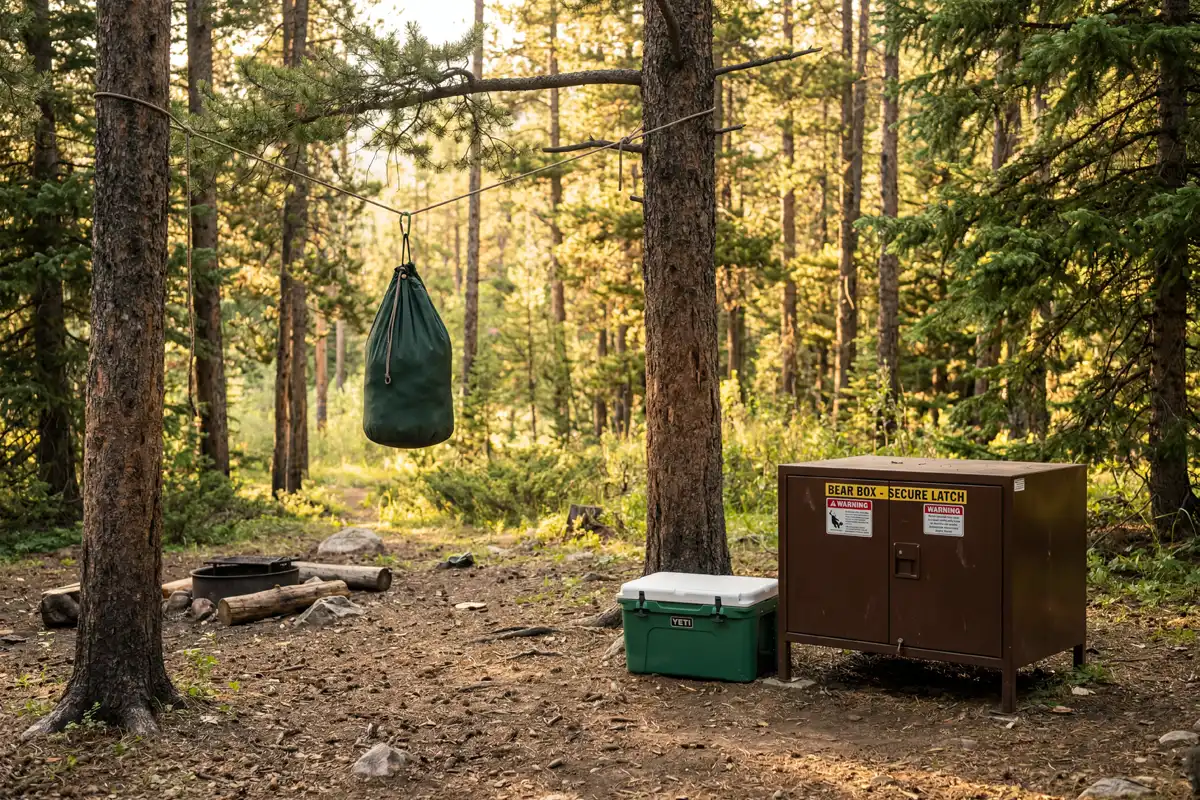
At established campgrounds, use the provided bear boxes or metal food lockers. For car camping, store food in a hard-sided vehicle with all windows sealed. Check with local rangers first, as some areas prohibit vehicle storage where bears have learned to break in.
Step 5: Hang Food in the Backcountry
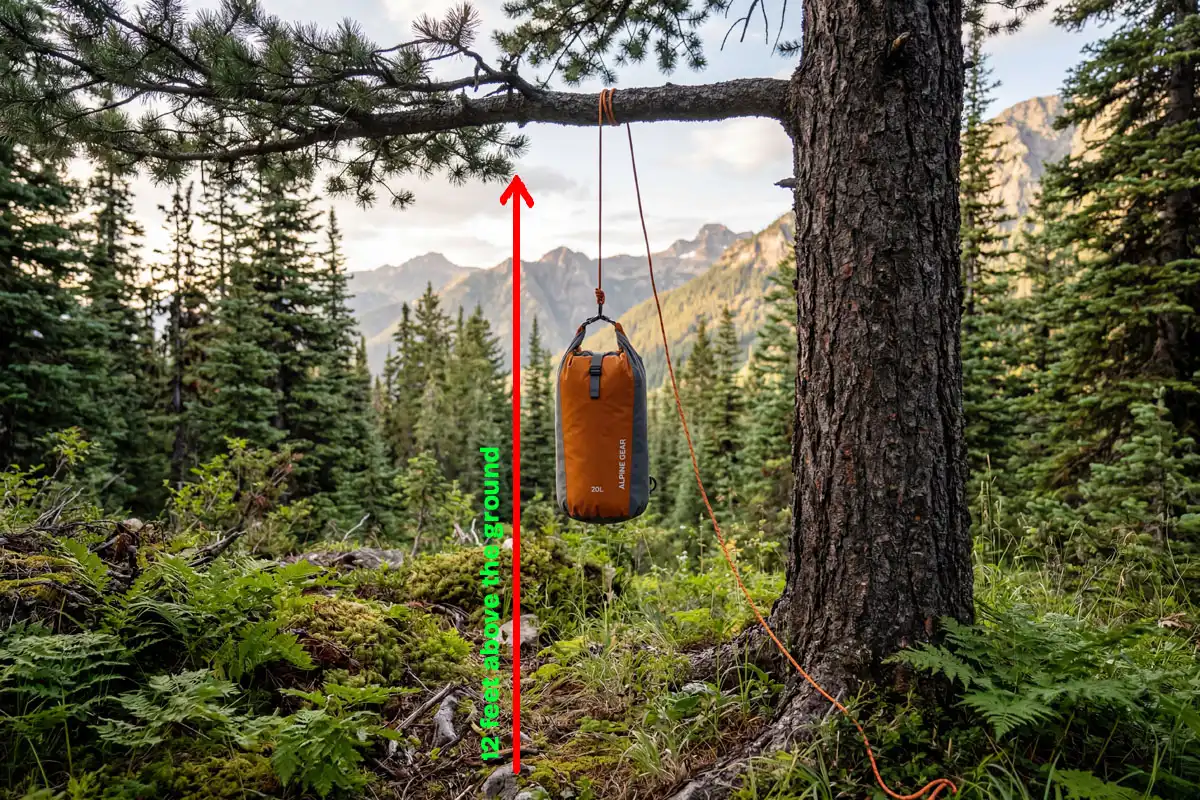
When no bear box or vehicle is available, hang your food from a tree. Place all food, trash, and scented items in a waterproof stuff sack. Hoist the bag at least 12 feet high and 6 feet from the tree trunk. Secure the rope to a separate tree.
Step 6: Use a Bear Canister When Required
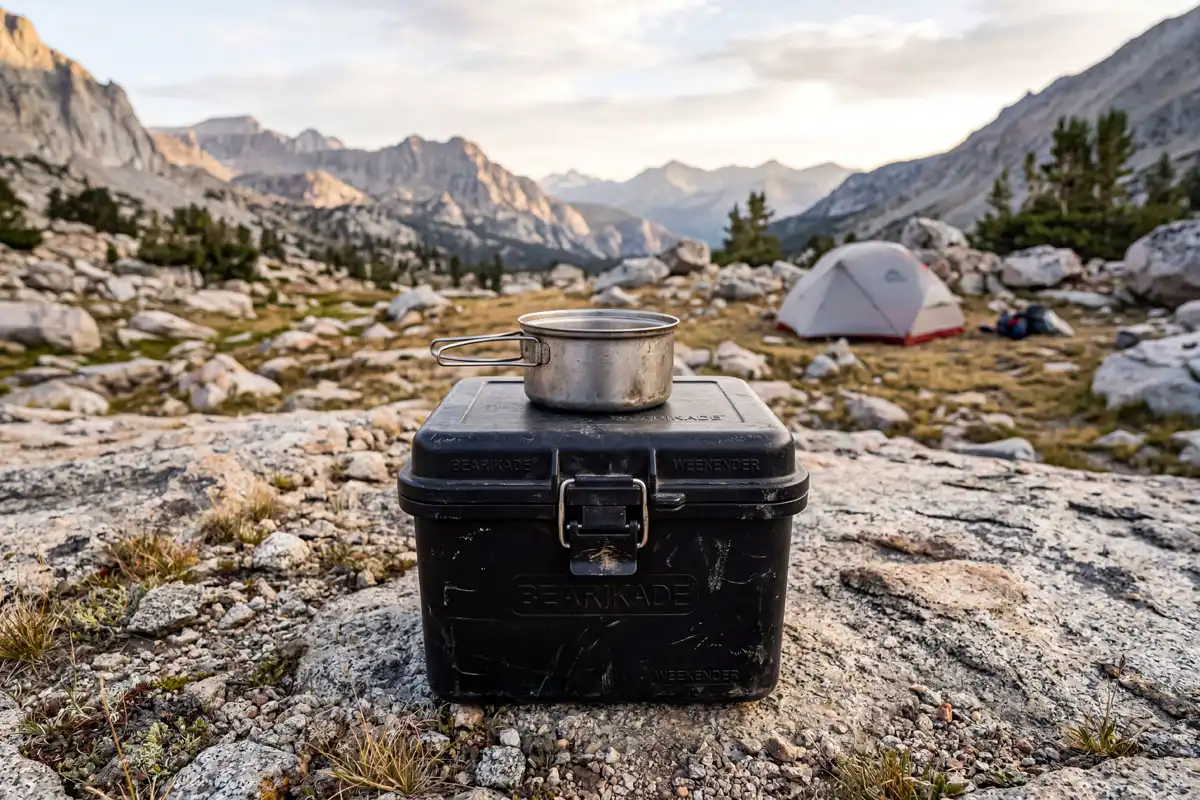
Bear canisters are hard-sided containers that bears cannot open. Parks like Yosemite and Grand Teton require them in the backcountry.
Place the canister on flat ground at least 100 feet from your tent. Do not attach ropes to it. Set a pot on top as a noise alarm. Bear canisters weigh 2 to 3 pounds and double as a camp seat.
How to Keep Perishable Food Fresh Longer
Use two coolers on trips longer than 2 days. One for drinks (opened often), one for perishable food (opened less). Keeping the food cooler sealed extends ice life.
Store perishable food in waterproof containers inside the cooler. This prevents contact with melting ice water. The USDA Food Safety and Inspection Service recommends keeping items like cooked chicken and pasta salads in the cooler at all times.
Cook fresh meat on day 1 and 2. Switch to canned and dried food from day 3 onward. I shared more detail in my guide on preventing food poisoning while camping.
Common Food Storage Mistakes to Avoid
Storing food inside your tent. This is the most dangerous mistake. Food scent lingers in fabric and attracts animals to your sleeping area.
Leaving food on the picnic table. Raccoons and birds steal food within seconds. Clean up immediately after every meal.
Burning food scraps in the campfire. Campfires do not burn hot enough to incinerate food waste. Partially burned scraps still attract animals. Pack all food waste out in sealed bags.
Forgetting scented non-food items. Toothpaste and dish soap attract wildlife the same way food does. Store them with your food, not in your tent.
If you camp alone, staying organized with food storage matters even more. I covered broader practices in my guide to staying safe while solo camping.
Safety Reminders
Wash your hands with soap before handling food. Use hand sanitizer with at least 60% alcohol if water is limited. Clean pots and utensils right after cooking. Dump strained dishwater at least 200 feet from water sources.
Keep raw meat separate from other food at all times. If ice fully melts and the cooler feels warm, discard perishable food. You cannot tell whether food in the danger zone is safe by smell or appearance.
FAQs on Store Food Safely At Campsite

Can you store food inside your tent while camping?
No. Food inside your tent attracts bears, raccoons, and rodents to your sleeping area. Store all food and scented items in bear boxes, vehicles, or canisters at least 100 feet away.
How far from your tent should you store food?
At least 100 feet (about 30 meters). Set up cooking, eating, and storage in separate zones to reduce wildlife encounters near your sleeping site.
How do you keep perishable food cold without electricity?
Use a cooler packed with ice or frozen gel packs. Place it in shade and cover with a light tarp. Check ice daily and drain water to maintain cold temperatures below 40 degrees Fahrenheit.
What is the proper way to hang food from a tree?
Tie a rope over a branch 10 feet high and 4 feet from the trunk. Hang the bag at least 6 feet off the ground. Use two bags balanced on the line for easy retrieval.
Do I need a bear canister for every camping trip?
Use one in areas with active bears or required rules. In regular campgrounds a locked cooler works. Check park signs before you pack to match the site needs.
How long does food stay safe in a camping cooler?
Perishable food stays safe for 2 to 4 days in a well-packed cooler with ice. Use block ice, pre-chill the cooler, keep it shaded, and limit how often you open it.
What scented items attract wildlife besides food?
Toothpaste, sunscreen, lip balm, deodorant, insect repellent, soap, cooking oil, pet food, and garbage all attract wildlife. Store them the same way you store food.
Final Thoughts
Safe food storage at camp comes down to three priorities: keep perishable food cold, keep all food and scented items away from your sleeping area, and secure everything in wildlife-resistant containers overnight.
These steps protect your health, your trip, and the animals that share the land with you. If you are new to outdoor trips, my beginner’s guide to starting camping covers the full picture from gear to planning.