Tent Camping With an Air Conditioner: What Actually Works

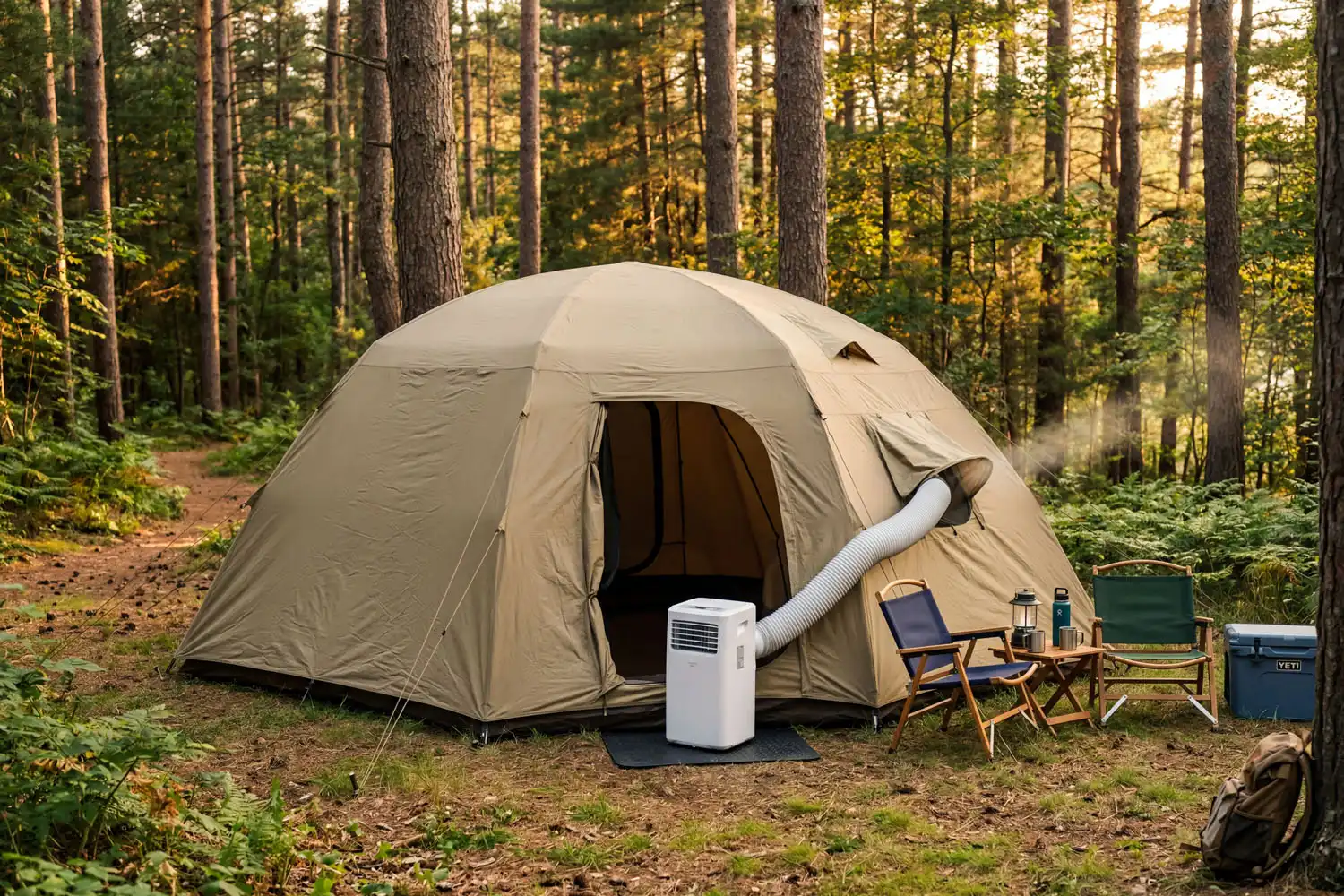
Tent camping with an air conditioner sounds odd until your first muggy summer night in a closed tent. I learned this the hard way during a July trip near Kaptai Lake, when the air inside the tent felt heavier than the air outside. Since then, I have tested portable AC units, window-style units, and small evaporative coolers for tent use. This guide covers what actually works, what to skip, and how to set everything up safely so you sleep cool without burning out your gear or your generator.
Can you use an air conditioner in a tent?
Yes, you can run an air conditioner inside a tent, but it only works well with the right tent, the right AC unit, and a power source that can handle the load. Most portable ACs need a vent port, a flat surface, and consistent power. Without those three, the setup turns into a noisy heat machine that drains your battery and frustrates everyone in the tent.
What kind of tent works best with an AC?
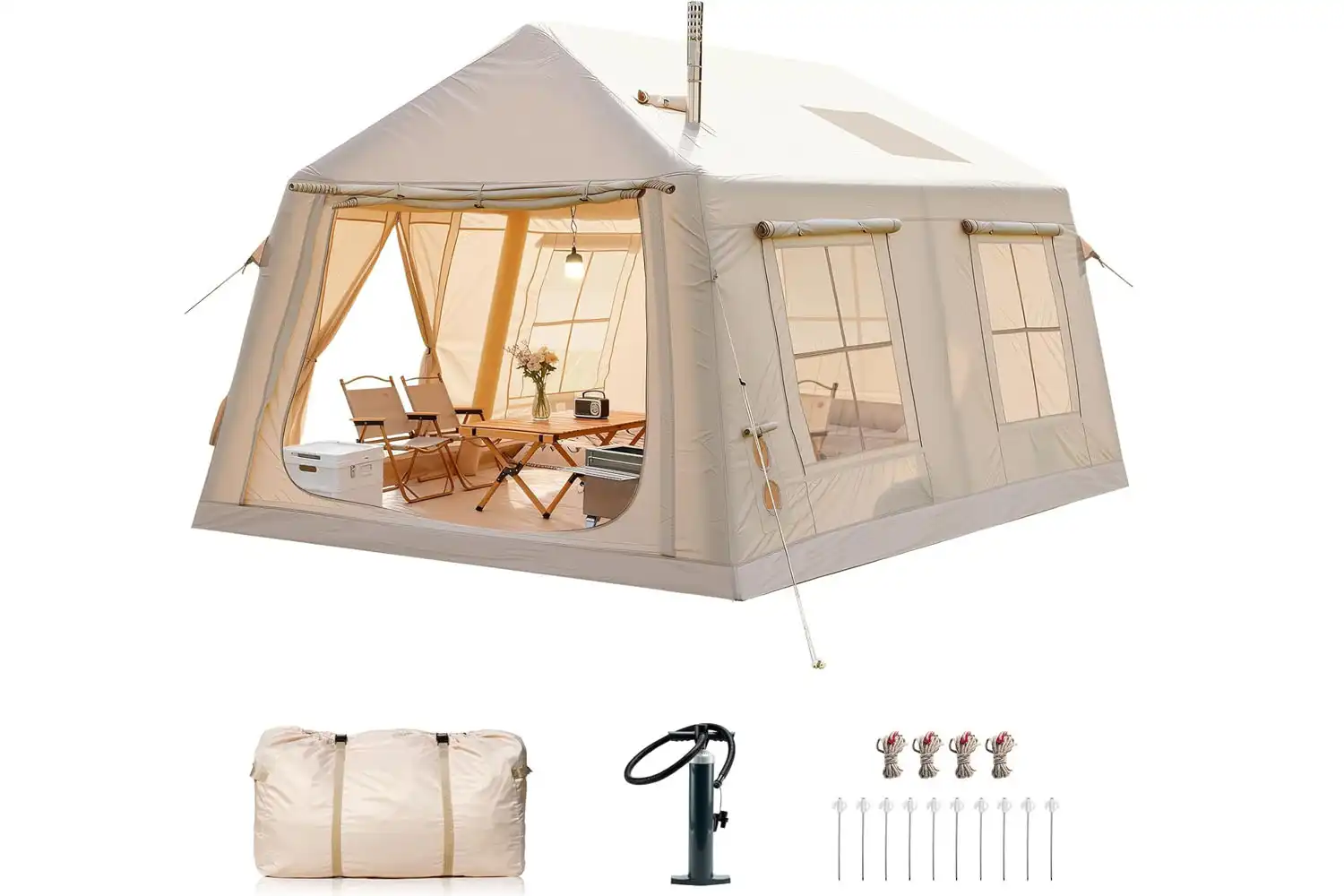
A tent works best with an AC when it has a sealed floor, a dedicated AC port or low window, and tight zippers. Cabin-style canvas tents and large dome tents handle cooled air better than ultralight backpacking shelters. Thin single-wall tents leak cold air almost as fast as you can pump it in, so they are not worth the trouble.
Here is what I look for in a tent meant for AC use:
- A floor area of at least 8 by 10 feet so the cool air has room to circulate.
- A built-in AC port near the floor, ideally on a shaded side.
- Heavy-duty fabric, 150D polyester or better, to slow heat transfer.
- Mesh windows that fully close with a solid panel behind them.
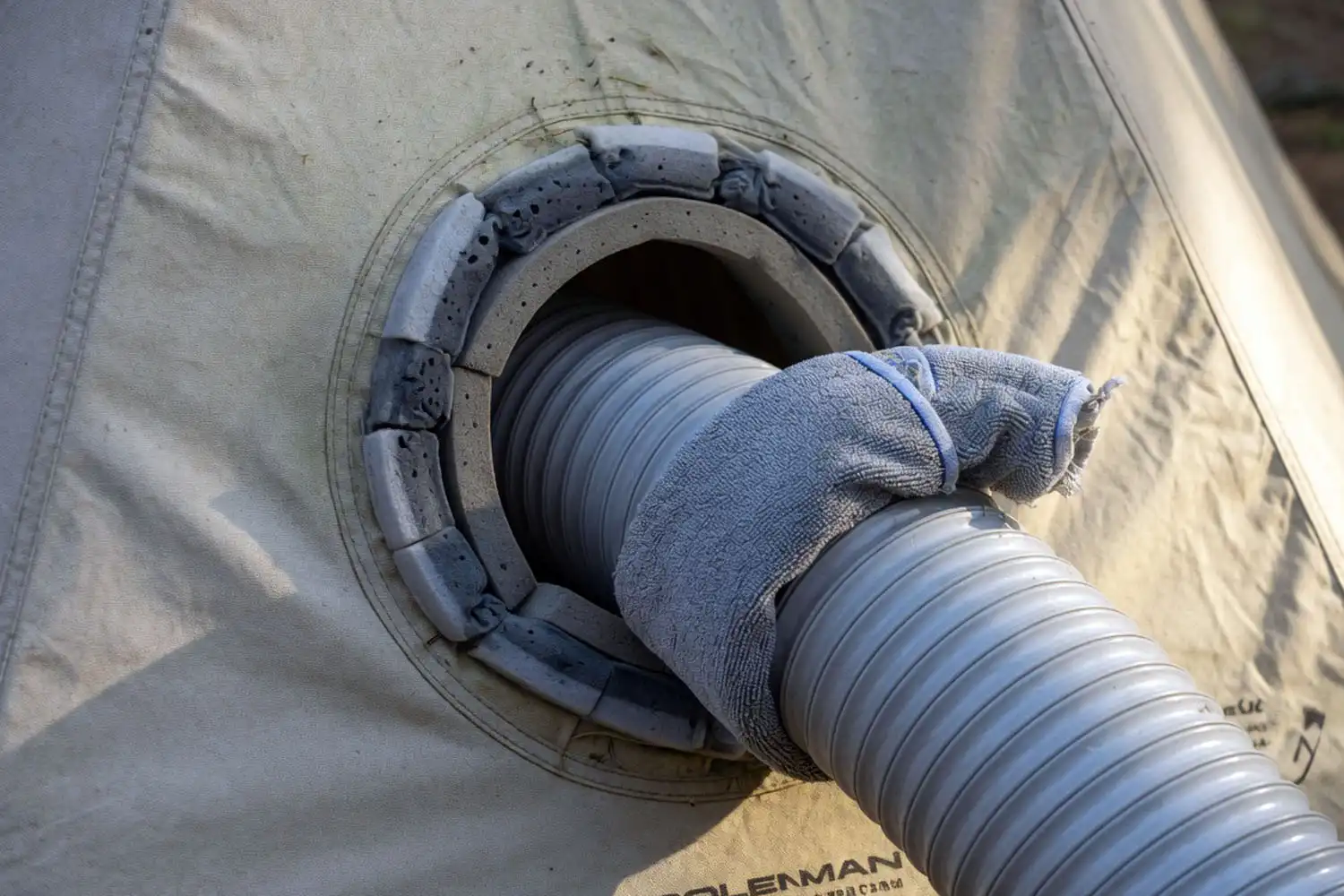
If your current tent does not have an AC port, you can still vent through a low window using a foam board cut to fit around the hose. I have done this with a six-person dome, and it held cool air well for about four hours before the seal started leaking.
For more on sizing, my notes on picking a tent that fits two campers plus gear apply here too. Bumping up one size gives you space for the AC unit and the hose without crowding the sleeping area.
Which type of AC unit should you choose?
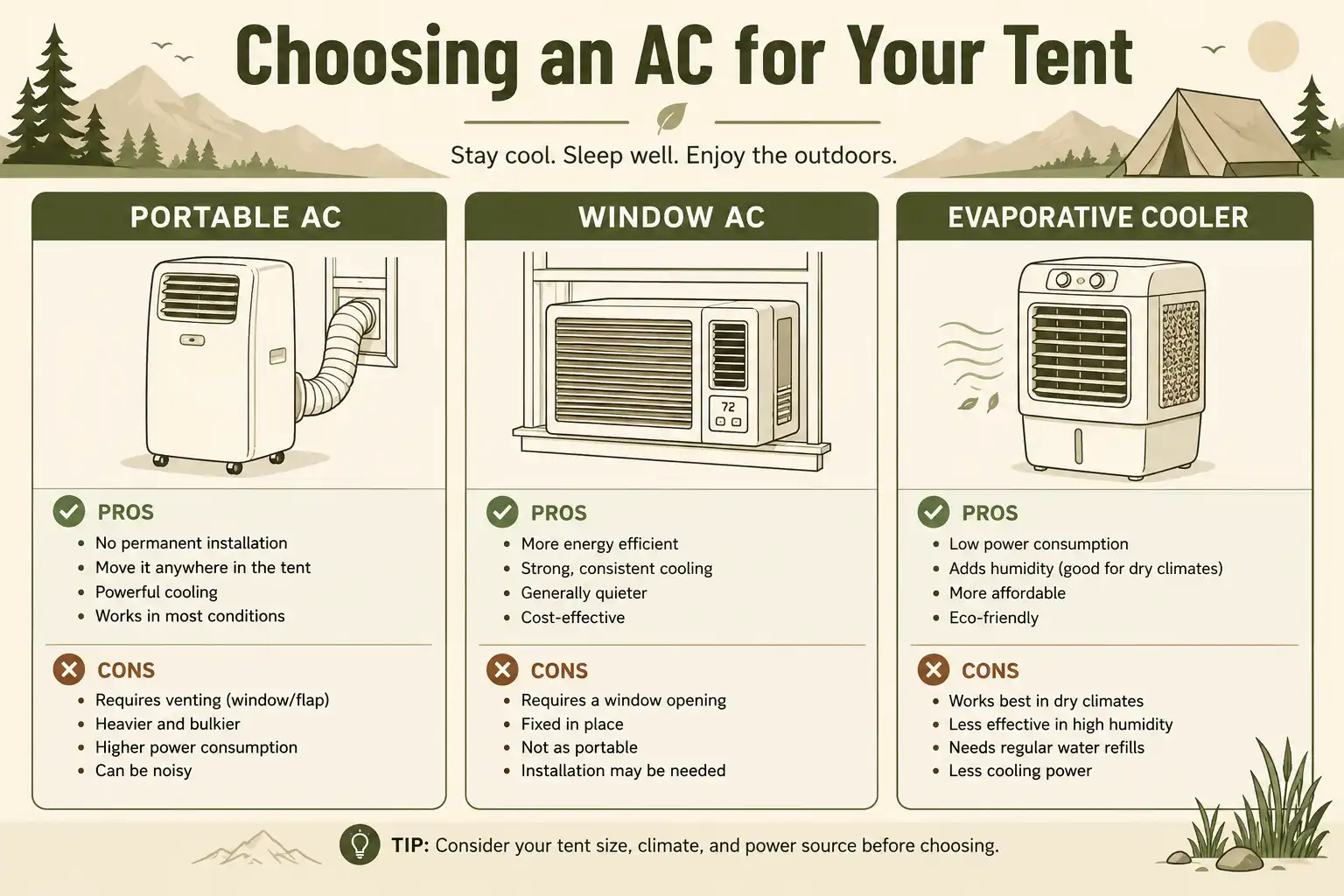
Choose a portable AC for sealed tents, a window unit for canvas tents with a frame, and an evaporative cooler only in dry climates. Each type behaves differently inside a tent, and matching the unit to the tent style matters more than chasing the highest BTU number.
Portable AC units
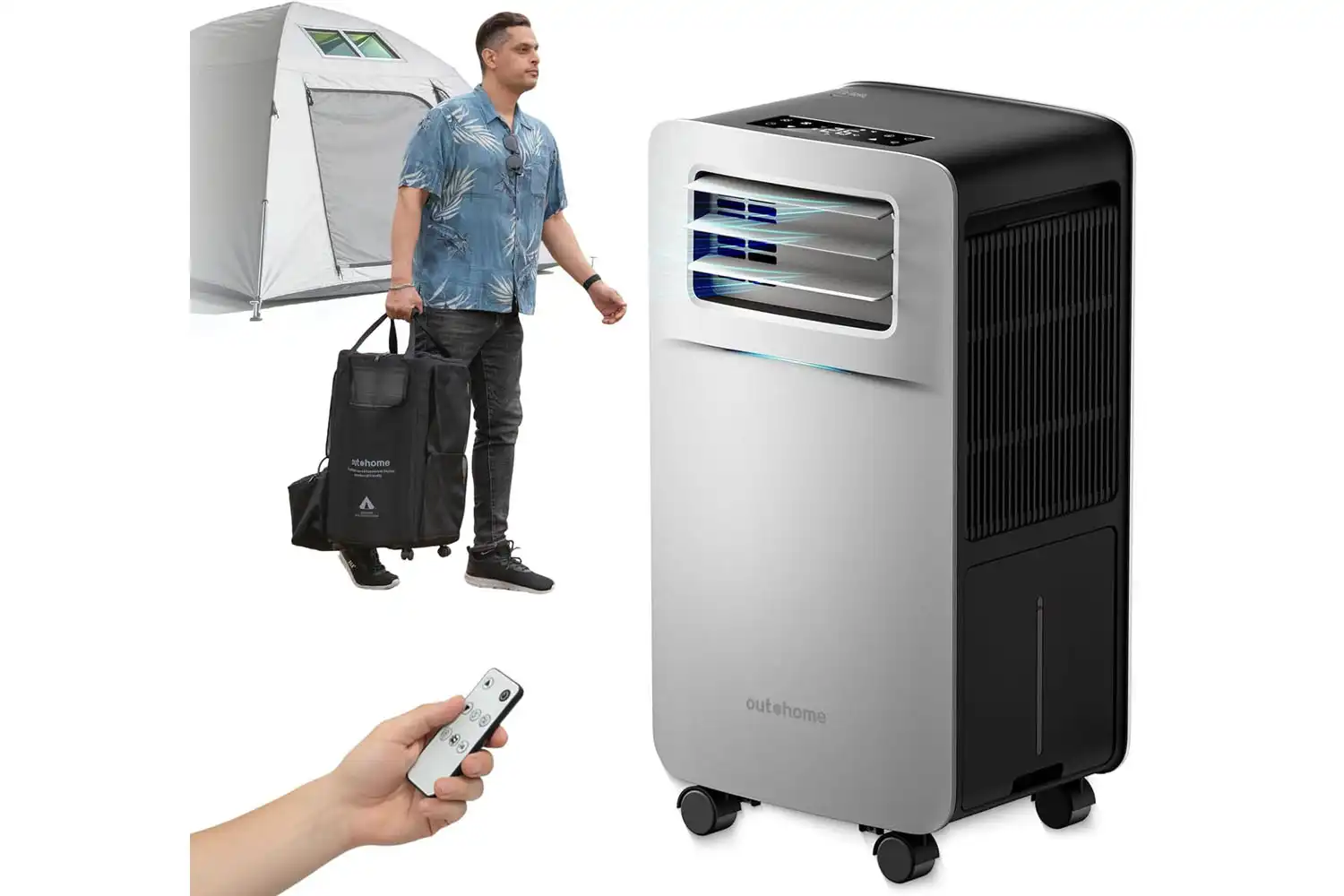
Portable ACs are the most common choice for tent camping. They sit on the tent floor, push hot air out through a single hose, and run on standard household current. Look for 5,000 to 8,000 BTU for a two- to four-person tent. Anything bigger draws too much power for typical camping setups, so resist the urge to oversize.
Window AC units
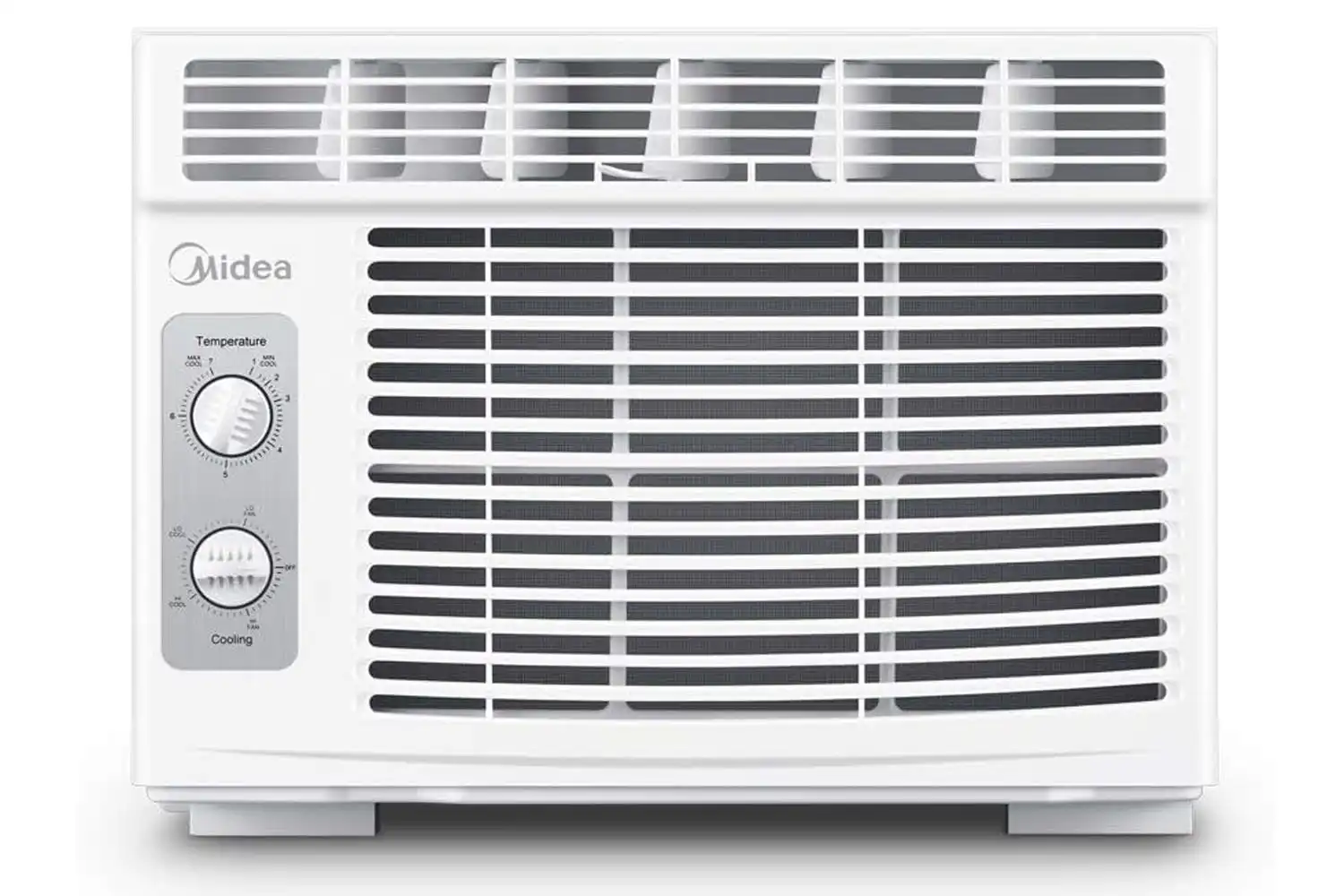
Window units cool faster and run more efficiently, but they need a sturdy frame to sit on. I once mounted a small 5,000 BTU window unit on a wooden crate at the tent entrance, with the back end outside and the front facing in. It worked, but the setup took almost an hour, so plan extra time before sunset.
Evaporative coolers
Evaporative coolers, also called swamp coolers, only work in dry climates. In humid places like coastal Bangladesh or the Gulf Coast in the United States, they add moisture without dropping temperature much. So if you camp where summers feel sticky, skip this option entirely.
What power source do you need?
You need a power source that can deliver at least 500 to 1,200 watts continuously, depending on the AC’s BTU rating. This rules out most small solar setups and almost all camping batteries unless you stack them. The realistic options are a campsite power hookup, a portable power station, or a small inverter generator.
A campground with 30-amp or 50-amp electric service handles any tent AC easily. A 2,000Wh lithium power station runs a 5,000 BTU AC for about three to four hours before tapping out. A small inverter generator covers a full night, but it adds noise and fuel needs.
Since this kind of setup needs a vehicle to haul all the gear, it sits firmly in car camping territory. My notes on the gap between car camping and backpacking-style trips explain that contrast in more detail.
How do you set up an AC in a tent?
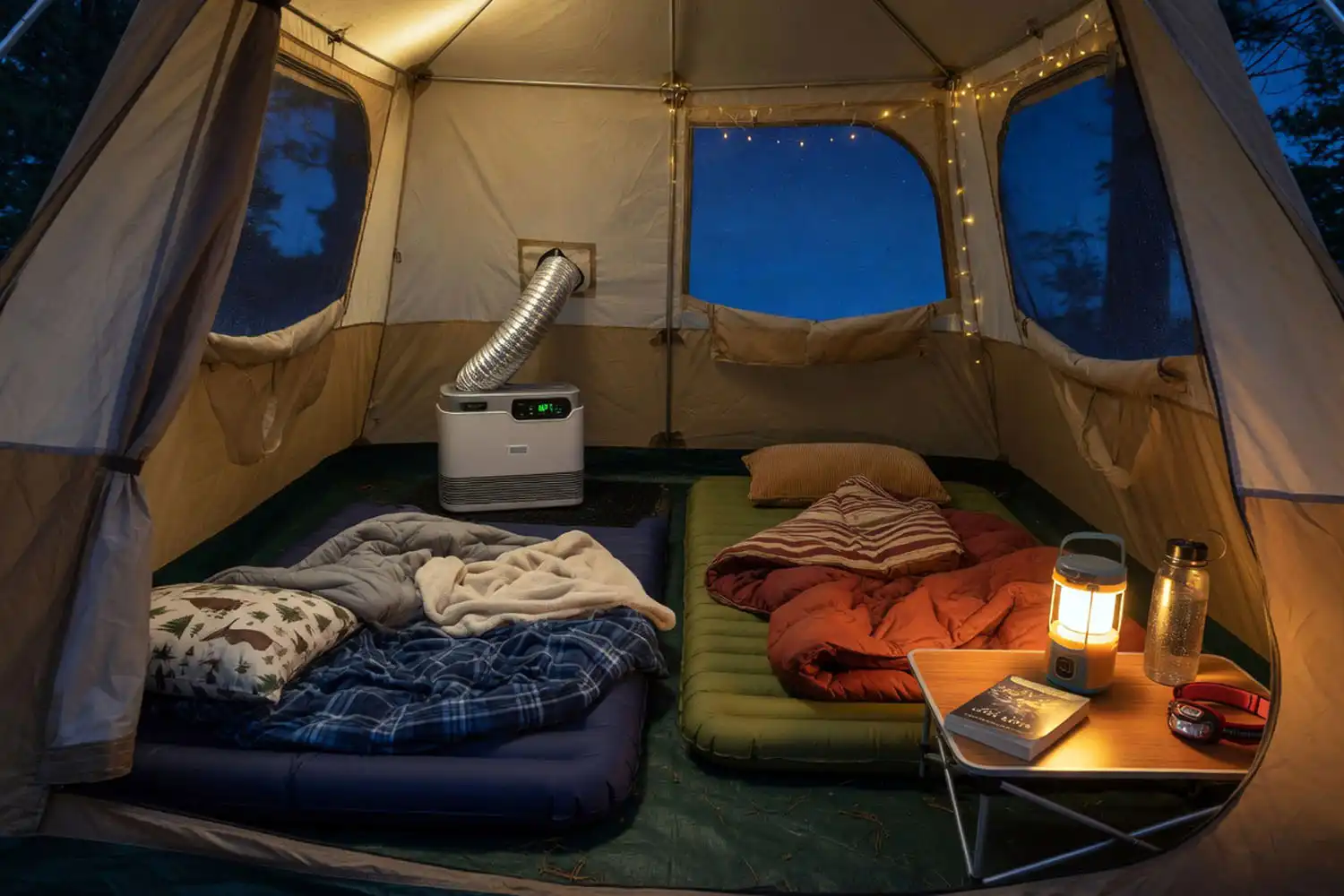
Set up an AC in a tent by placing the unit on a flat raised surface, sealing the vent hose at the tent port or window, and using insulation around any gaps. The goal is keeping warm outside air from sneaking back in while the AC works.
Here is the order I follow:
- Pitch the tent in shade if possible. A shaded tent stays 10 to 15 degrees cooler before the AC even starts. My guide on how tent fabric color affects heat in different conditions explains why this matters.
- Place a tarp or rubber mat under the AC to catch condensation.
- Run the exhaust hose out through the AC port, low window, or a vent panel.
- Seal any gap with foam strips, painter’s tape, or a rolled towel.
- Plug into your power source through a heavy-gauge extension cord, 12-gauge or thicker.
- Set the thermostat 15 to 20 degrees below outside temperature, not lower. Pushing it harder wastes power and creates moisture problems.
What about moisture and condensation?
Moisture and condensation build up fast when you run an AC inside a sealed tent, so you need a drain plan and steady airflow management. Cold air meeting warm tent walls creates droplets along the ceiling and seams within an hour.
To manage it:
- Empty the AC’s drain pan or hose every few hours.
- Keep a small mesh vent open at the top of the tent for slow airflow.
- Wipe down condensation in the morning before packing up.
If you also camp in colder months, the same airflow logic applies. My notes on keeping a tent properly ventilated when it gets cold cover principles that work year-round.
Is tent camping with an AC safe?
Tent camping with an AC is safe when you use proper power cords, vent exhaust outside the tent, and never run a generator near the tent door. The main risks are electrical fires, carbon monoxide from generators, and tripping hazards from hoses and cords running across the floor.
Use a GFCI-protected outlet or adapter, keep the AC at least a foot away from tent walls, and place generators at least 20 feet downwind. Heat-related issues still apply when you step outside the tent during the day, so my safety notes on staying safe while hiking in extreme heat are worth a read if you are camping through a heat wave.
When is it actually worth bringing an AC camping?
An AC is worth bringing when you camp in heat above 90°F with high humidity, when you have small kids or older campers along, or when sleep quality directly affects the trip. For a single cool-weather night, it is overkill.
I bring one only on summer car-camping trips with my family. For solo trips into the Bandarban hills, I rely on shade, airflow, and a good sleep system instead.
Final thoughts
Tent camping with an AC is a fair compromise between comfort and the outdoors when summer heat turns sleep into a struggle. Pick the right tent, match the AC to its size, and plan your power source before the trip. Then seal the vent, manage moisture, and keep safety basics in mind. Done right, you get the campfire and stars at night, and a cool tent to actually rest in afterward.