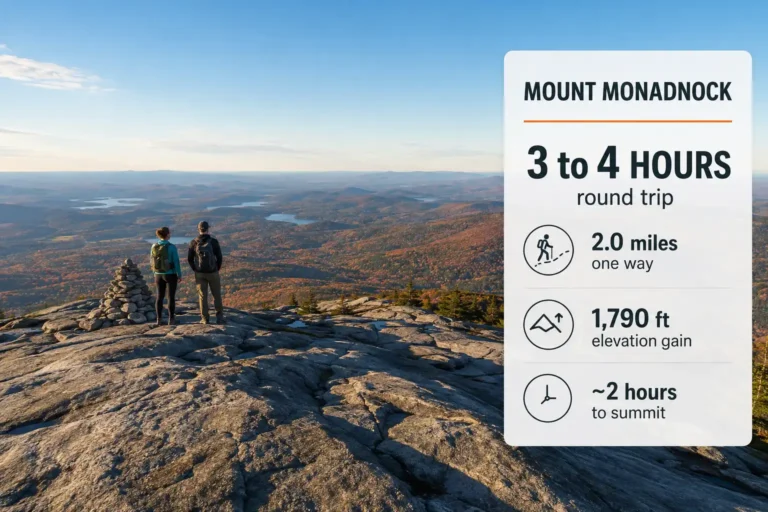
How to Avoid Common Hiking Mistakes: 12 Beginner Trail Tips

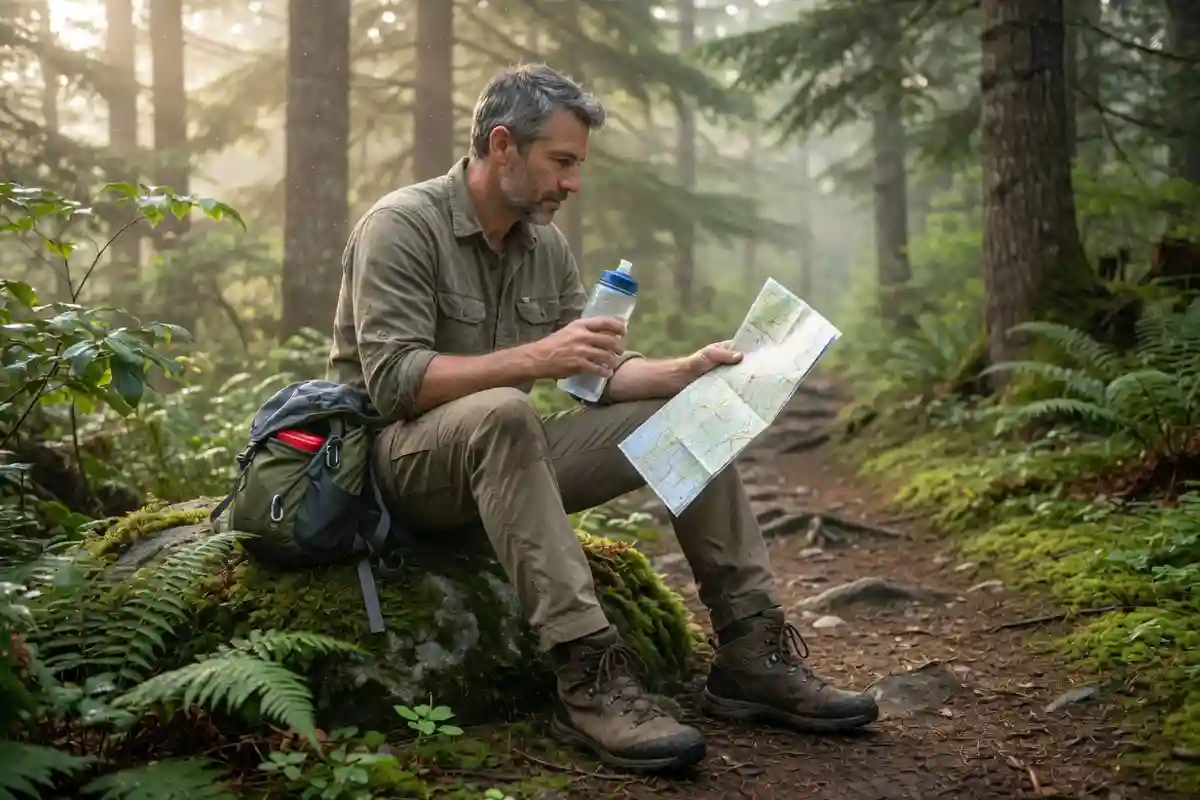
Most hiking problems start before you reach the trailhead: a skipped weather check, too little water, or fresh boots straight from the box. This guide covers the most common hiking mistakes I see on Bangladesh hill trails and overseas routes, with practical fixes, safety notes, and gear tips you can apply on your next day hike or weekend trip.
To avoid common hiking mistakes, plan your route, check the weather forecast, pack the Ten Essentials, drink water before you feel thirsty, and pace yourself early. Wear broken-in hiking boots, tell someone your plan, carry a paper map as backup, and turn back if conditions worsen on the trail.
What Are the Most Common Hiking Mistakes?
The most common hiking mistakes include poor planning, wrong footwear, underestimating distance, and skipping water. New hikers often pack heavy, start fast, and ignore weather warnings. Experienced hikers slip up by trusting GPS alone, hiking past dusk, or pushing through pain.
Here is the short list I keep in mind on every trip:
- Starting without a clear route or map
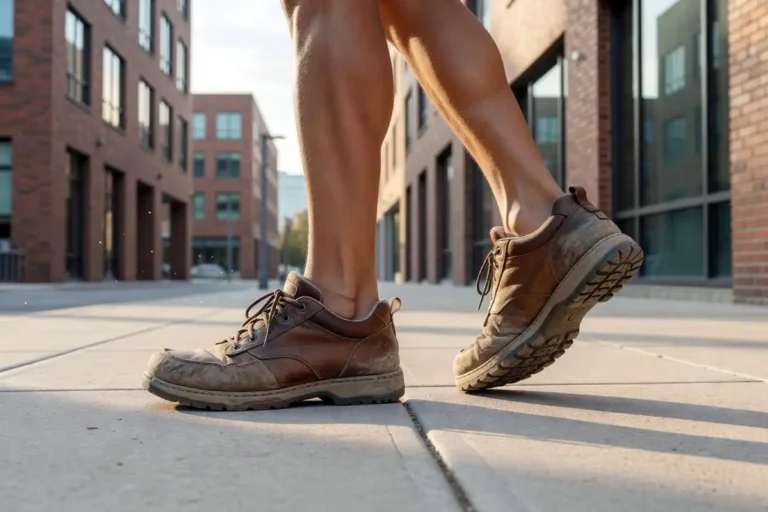
- Wearing new boots on a long trail
- Carrying too little water and food
- Packing heavy with gear you will not use
- Hiking faster than your fitness allows
- Ignoring weather changes mid-trip
- Skipping rest breaks and hydration
If you can fix even three of these, your trail days will feel calmer and safer. I have detailed planning a day hike properly in another guide, which pairs well with this one.
Why Hikers Make These Mistakes
Most hiking mistakes come from three sources: rushed planning, copied advice, and overconfidence. People watch a 5-minute video, then try a 15 km trail. Others borrow gear without testing it. A few trust their phone GPS in dense forest where signals drop.
Beginners face one risk. Returning hikers face another: complacency. After ten safe trips, it feels easy to skip the headlamp or rain shell. That is when one wet rock or one wrong turn costs an evening.
How to Avoid Common Hiking Mistakes Step by Step
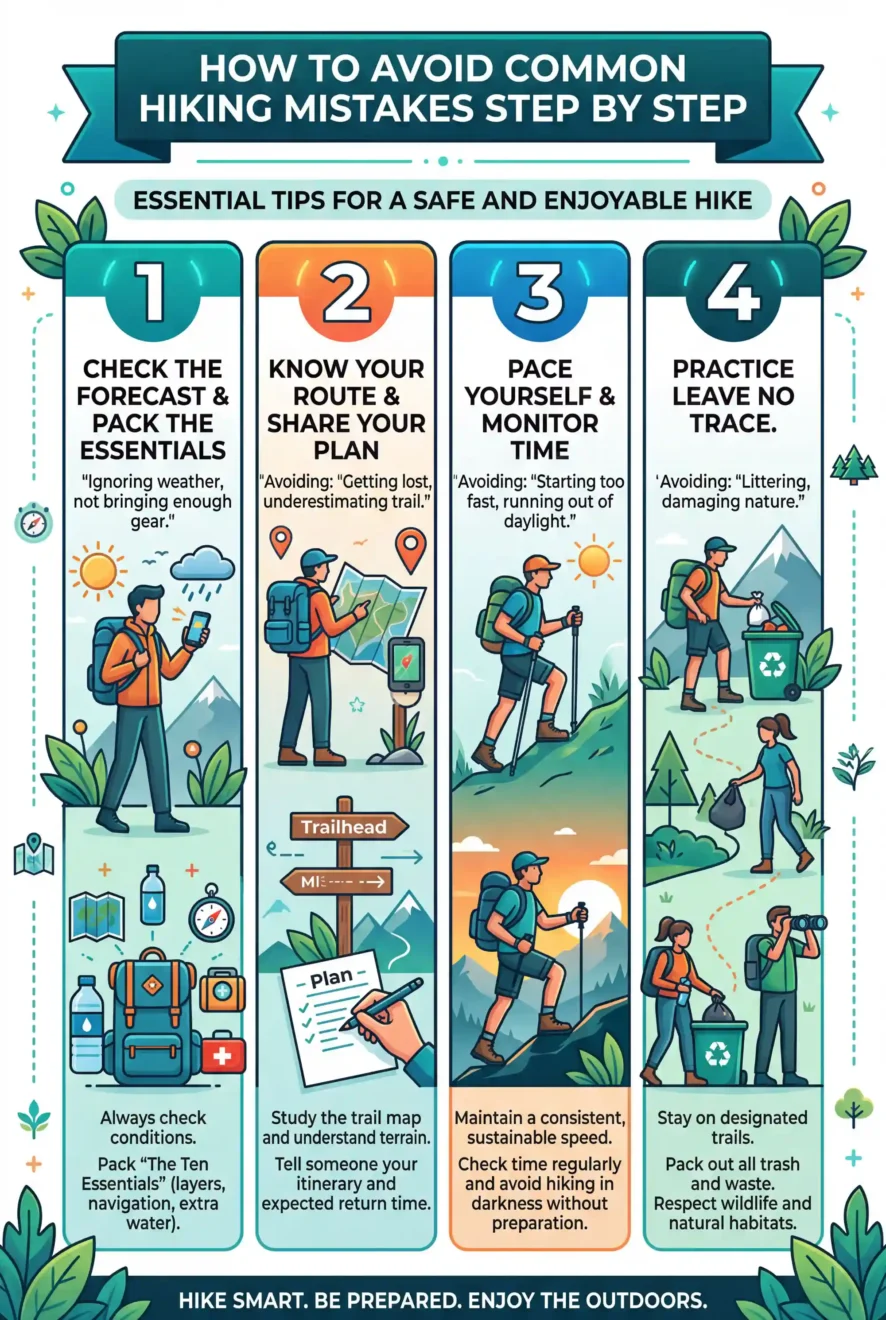
This is the workflow I follow before any hike, short or long. It takes 30 minutes the night before and saves hours of trouble on the trail.
Step 1: Plan Your Route the Night Before
Open a topo map or hiking app and note distance, elevation gain, water sources, and exit points. Save the GPX file offline. Print a backup paper map. Write start time, expected finish, and trailhead address on a card and leave it with someone at home.
Step 2: Check the Weather Forecast Twice
Check the forecast 24 hours and 2 hours before departure. Look at wind, rain probability, and temperature swings between trailhead and ridge. In hill country, valley sun and ridge fog can sit 5 km apart. If thunderstorms appear, pick a lower trail or a different day.
Step 3: Pack the Ten Essentials
The National Park Service recommends the Ten Essentials for every hiker: navigation, sun protection, insulation, illumination, first-aid, fire, repair kit, nutrition, hydration, and emergency shelter. Skip none of these on a full-day hike. For a 2-hour neighborhood trail, you can trim, but keep water, light, and first-aid.
| Preview |
#1

|
#2

|
#3

|
#4

|
|---|---|---|---|---|
| Title | Garmin 010-02256-00 eTrex 22x | SLONIK Rechargeable Headlamp | Badger Reef Safe Mineral Sunscreen | ATEPA Wearable Sleeping Bag |
| Price |
$199.99
See Latest Price
|
$6,355.26
See Latest Price
|
$2.23
See Latest Price
|
$59.99
See Latest Price
|
| Star Rating |
4.3
(2,058)
|
4.6
(12,315)
|
4.5
(2,919)
|
4.6
(151)
|
| Preview |
#5

|
#6

|
#7

|
#8

|
| Title | Protect Life First Aid Kit | Peak Refuel Biscuits & Sausage Gravy | LcFun Electric Lighter Windproof, Waterproof | CHERAINTI 3 L Hydration Bladder |
| Price |
$9.99
See Latest Price
|
$1,332.62
See Latest Price
|
$1,356.45
See Latest Price
|
$1,357.40
See Latest Price
|
| Star Rating |
4.7
(19,487)
|
4.5
(1,494)
|
4.5
(5,641)
|
4.5
(23,144)
|
Step 4: Wear Broken-In Footwear
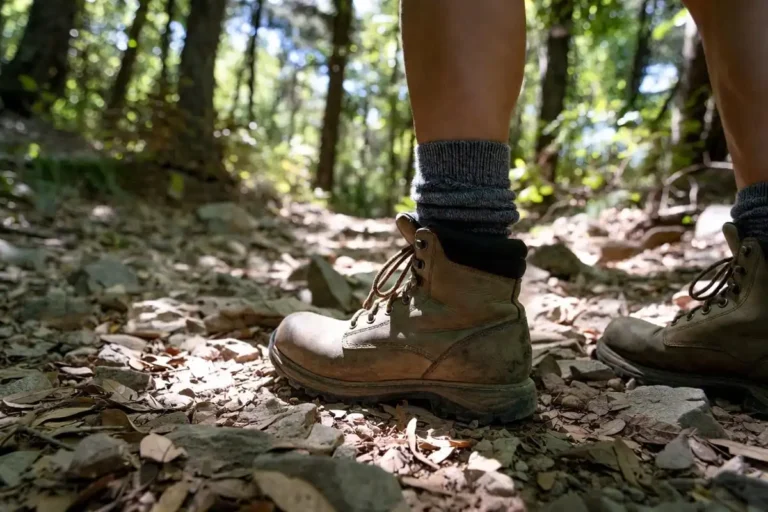
New hiking boots cause blisters within 5 km. Wear boots for 30 to 50 km of short walks before a big trail. Pair with merino wool or synthetic hiking socks. Cotton socks hold sweat and rub the heel raw. I covered preventing blisters on the trail in detail elsewhere.
Step 5: Eat and Drink Before You Need It
Drink 500 ml of water in the first hour. Sip every 20 minutes after that. Eat a 200-calorie snack every 90 minutes: dates, peanuts, trail bars, or boiled eggs work fine. Waiting until thirst hits means you are already 1% to 2% dehydrated. My notes on eating well on long hikes cover full meal planning.
Step 6: Start Slow, Then Settle Into a Rhythm
Walk the first 15 minutes at a slow pace. Your heart rate, breathing, and pack adjust during this window. Then move into a steady rhythm where you can speak full sentences. If you cannot talk, you are pushing too hard. See my notes on pacing yourself on long hikes for full pace strategy.
Step 7: Watch the Time and the Sky
Set a turnaround time before you leave. If you have not reached the summit by that hour, head back. Log clouds, wind shifts, and temperature drops every 30 minutes. Most rescues I read about start with hikers ignoring weather changes between 2 and 4 p.m.
Common Gear and Packing Mistakes
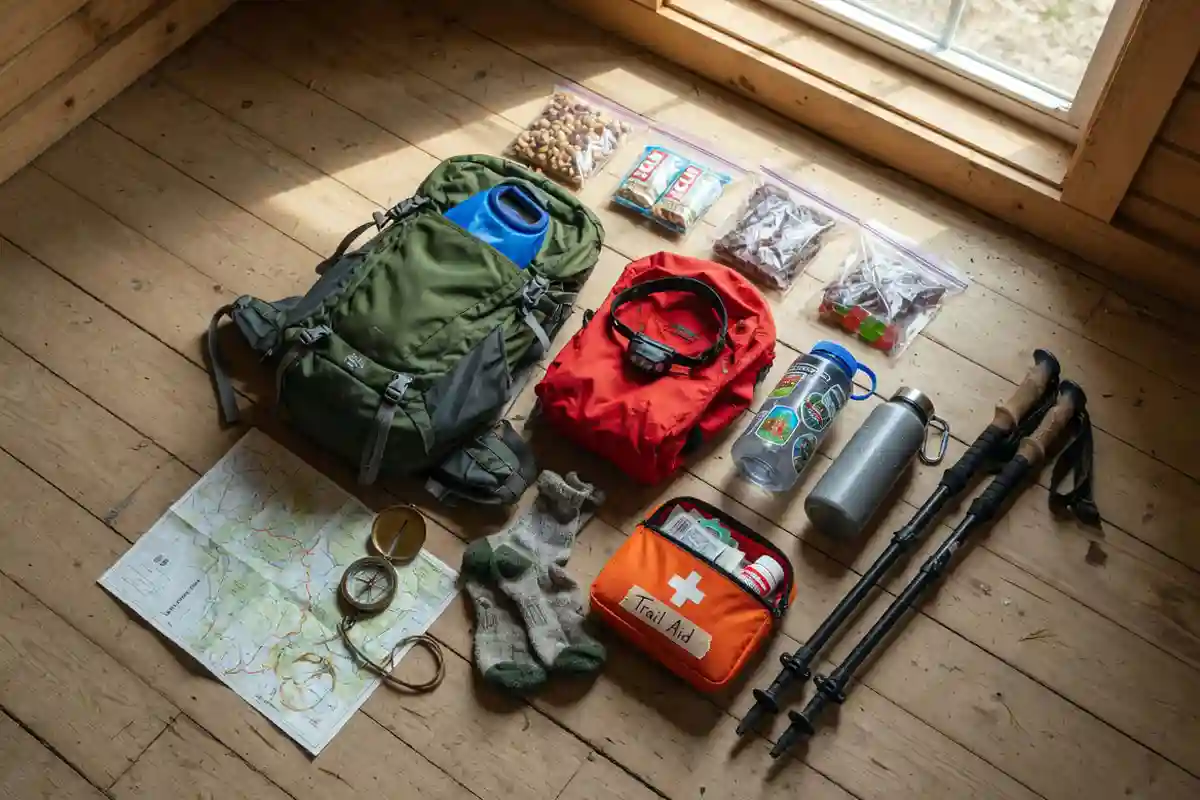
Bad packing causes shoulder pain, balance issues, and a slower pace. Heavy items belong close to your back at shoulder-blade height. Light items fill the bottom and edges. Water sits on one side; food balances the other.
I see four packing errors often:
- Carrying a 3 kg first-aid kit for a 6-hour hike
- Skipping the rain shell on a sunny morning
- Strapping a sleeping pad outside the pack so it snags branches
- Wearing jeans or cotton shirts that hold sweat
A 7 kg day pack is enough for most full-day hikes with food, water, and weather gear. I covered packing a hiking backpack in another article with full weight zones.
Safety Mistakes That Cause Injuries
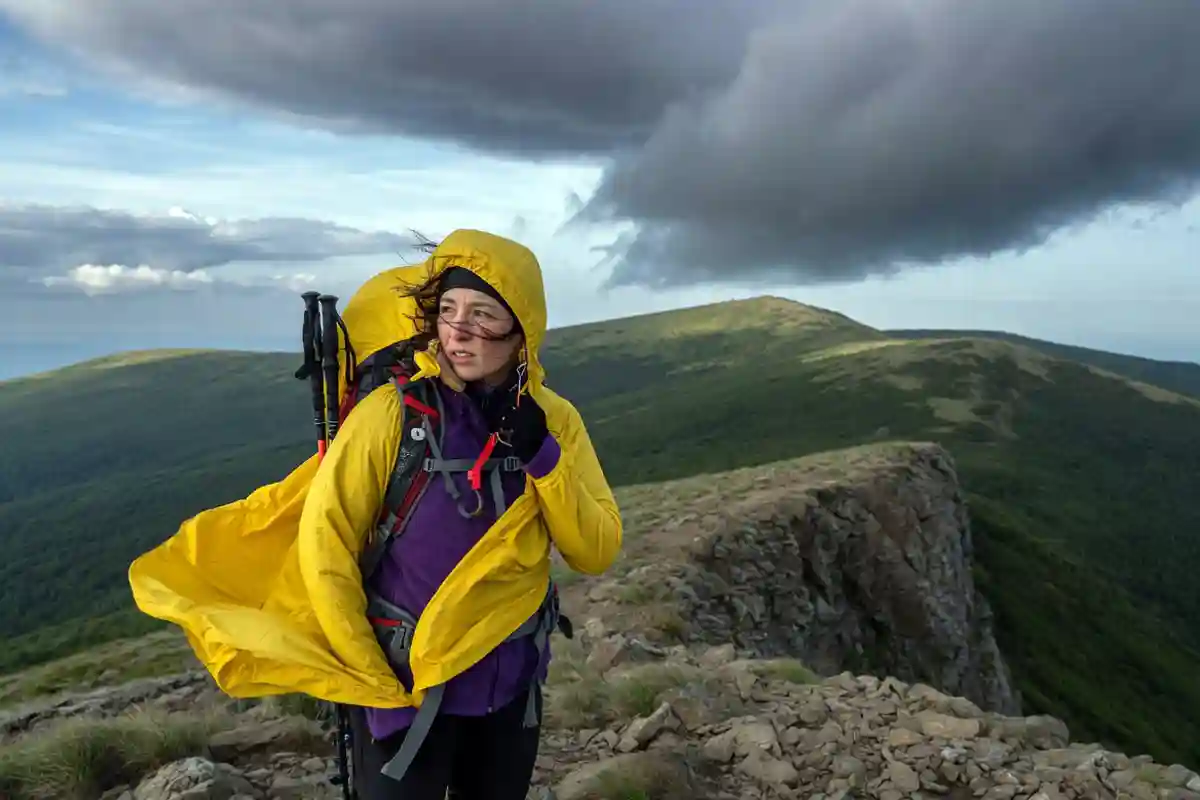
Three safety mistakes account for most trail injuries: hiking alone without telling anyone, skipping the headlamp, and ignoring early signs of heat illness or hypothermia.
Heat illness can begin at 32°C with humidity above 60%. Symptoms include headache, nausea, and heavy sweating. Stop, find shade, drink water with electrolytes, and cool the neck. The CDC NIOSH heat stress page has full first-aid steps.
Cold weather brings the opposite risk. Hypothermia begins at body temperatures below 35°C. Wet clothes plus wind drop core temperature fast, even at 10°C air. Carry a dry layer in a waterproof bag.
Tell at least one person your route and finish time. Carry a whistle. Three blasts mean help. A fully charged phone in airplane mode lasts 24 hours and can still ping GPS.
Troubleshooting Problems on the Trail
Problems happen on trails. The fix is a calm, simple process.
If you lose the trail: Stop. Sit down. Look at your map. Backtrack to the last known marker before pushing forward. I wrote a guide on navigation without GPS signal for forest conditions where phones fail.
If your knee hurts on descent: Shorten your stride. Use trekking poles. Sit and stretch the quads for 2 minutes.
If a blister forms: Stop at the first hot spot. Cover with athletic tape or moleskin before it breaks. Do not pop it on the trail.
If a storm hits: Move off ridges and away from lone trees. Crouch on your pack with feet together until the lightning passes.
FAQs about Common Hiking Mistakes

What is the biggest mistake new hikers make?
How much water should I carry on a day hike?
Are hiking poles worth using?
Should I hike alone as a beginner?
What should I do if I get lost?
Final Thoughts
Avoiding common hiking mistakes is less about gear and more about habits. Plan twice, pack light, drink early, and turn back when something feels off. Every safe hike I have done in Kaptai, Bandarban, or abroad followed those four habits. Start small, log your trips, and let the trail teach you the rest.