How Many Miles Can You Hike in a Day Safely? Full Guide

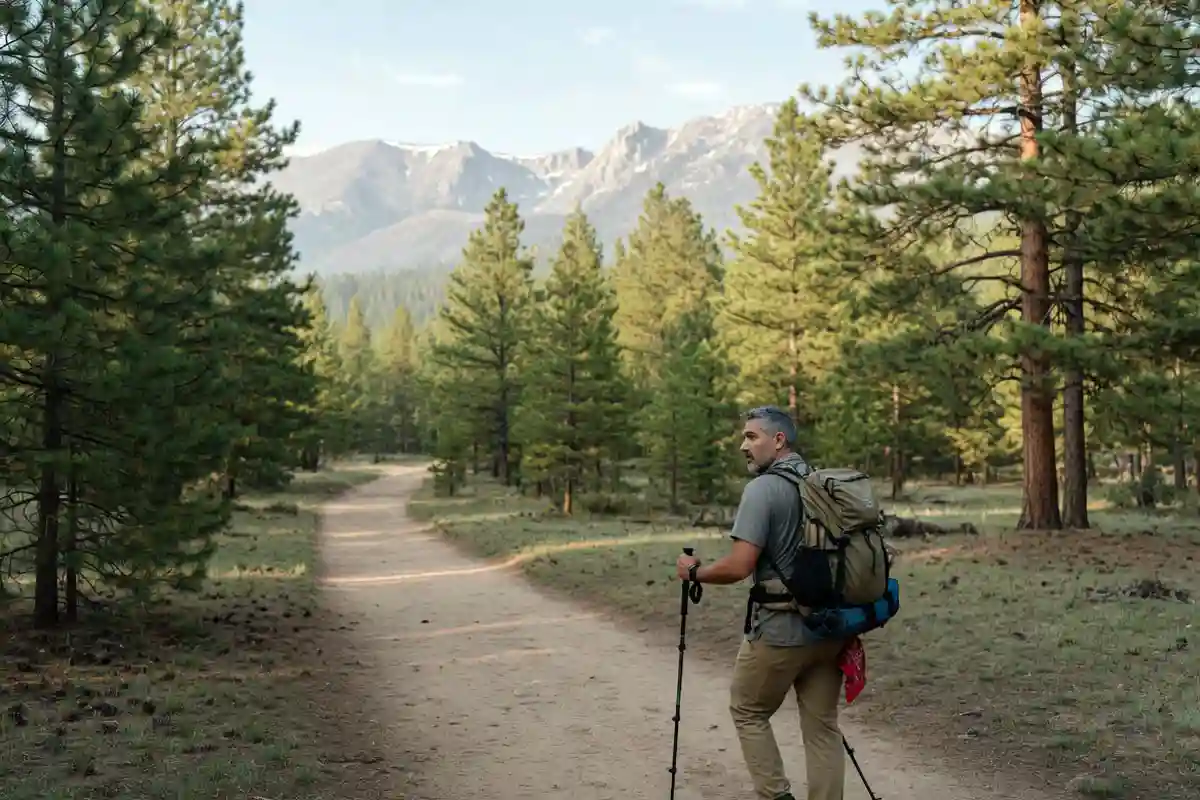
Most hikers cover 8 to 12 miles in a day on moderate terrain with a light pack. Your real distance depends on fitness, elevation gain, trail conditions, weather, and daylight. This guide breaks down realistic mileage by experience level, explains how terrain changes your pace, and gives you a planning method to use before your next hike.
Beginners hike 3 to 5 miles per day. Average hikers cover 8 to 12 miles. Fit hikers manage 15 to 20 miles on flat trails. Mountainous terrain cuts those numbers by 30 to 50 percent. Your safe daily limit depends on pack weight, elevation gain, and total daylight hours available.
What Determines How Far You Can Hike in a Day
Six factors set your real daily mileage:
- Fitness level: cardiovascular endurance and leg strength
- Pack weight: each extra 5 pounds above 20 slows pace by 15 to 20 percent
- Elevation gain: every 2,000 feet of climbing adds about 1 hour
- Terrain type: rocks, roots, mud, snow, and stream crossings cut speed
- Weather: heat, humidity, and wind drain energy faster
- Daylight hours: shorter winter days limit safe trail time
A flat 10 mile trail near sea level feels different from a 10 mile trail with 3,000 feet of climbing. The numbers below assume average conditions. Adjust them to your reality.
Average Daily Miles by Hiking Experience
Beginner hikers: 3 to 5 miles
New hikers without trail conditioning cover 3 to 5 miles in 2 to 4 hours. Short trips build foot toughness and pack tolerance before bigger goals. If your shoulders ache by mile 2, packing a hiking backpack the right way fixes most of the pain.
Intermediate hikers: 8 to 12 miles
Hikers with steady fitness and 1 to 2 years of trail time cover 8 to 12 miles per day. This range works for most state park trails, rim hikes, and weekend objectives. A 10 mile day with 1,500 feet of gain takes 5 to 6 hours including breaks.
Advanced hikers: 15 to 20 miles
Experienced hikers with conditioned legs and lightweight packs cover 15 to 20 miles per day. Long-distance backpackers on the Appalachian Trail and Pacific Crest Trail average 16 to 22 miles daily across thousands of miles.
Ultra hikers: 25+ miles
Trail runners and ultra-distance hikers cover 25 to 40 miles in single pushes. These efforts need months of preparation, careful nutrition, and strong navigation skills.
How Terrain Changes Your Daily Mileage
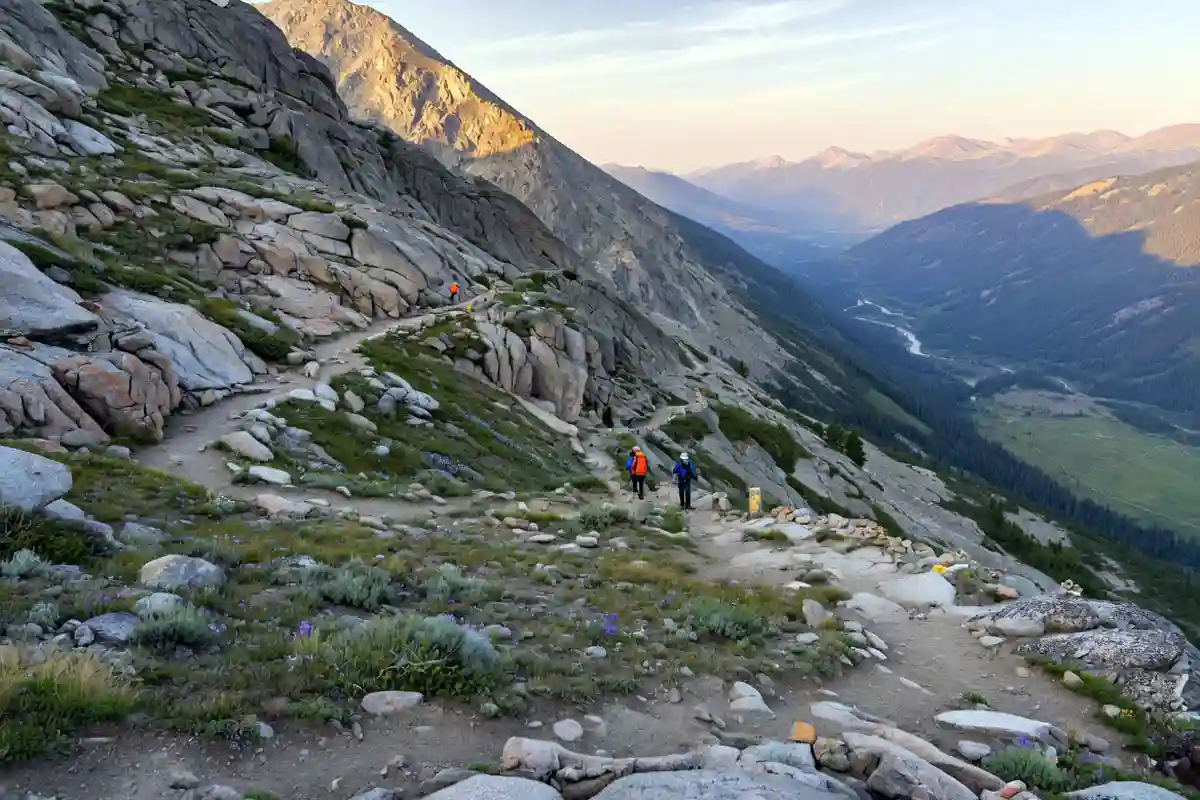
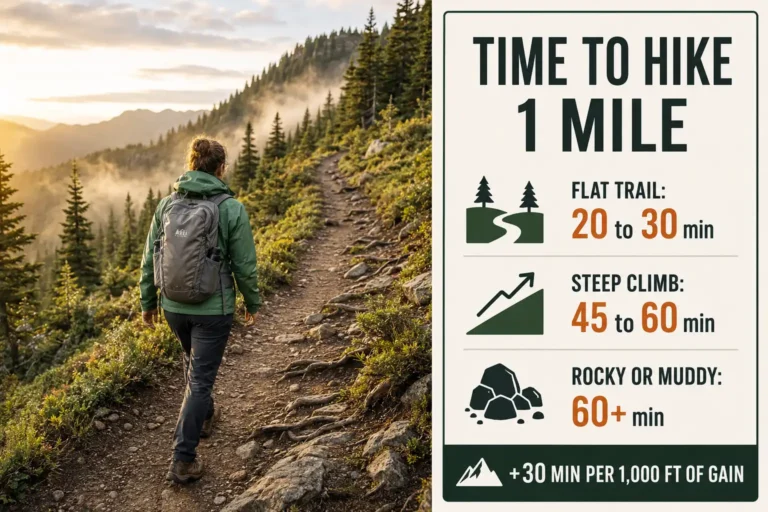
Terrain often matters more than fitness. Use these adjustments from a flat baseline:
- Flat dirt or gravel paths: 100 percent of baseline pace
- Rolling hills (under 1,000 ft gain): 80 to 90 percent
- Steep climbs (over 2,000 ft gain): 50 to 70 percent
- Rocky scrambles or talus: 40 to 60 percent
- Snow, mud, or sand: 50 to 70 percent
- Bushwhacking off-trail: 25 to 40 percent
A hiker who covers 12 miles on a flat trail drops to 6 miles on talus with 3,000 feet of gain. Plan around the slowest section, not the average.
How to Calculate Your Daily Hiking Distance
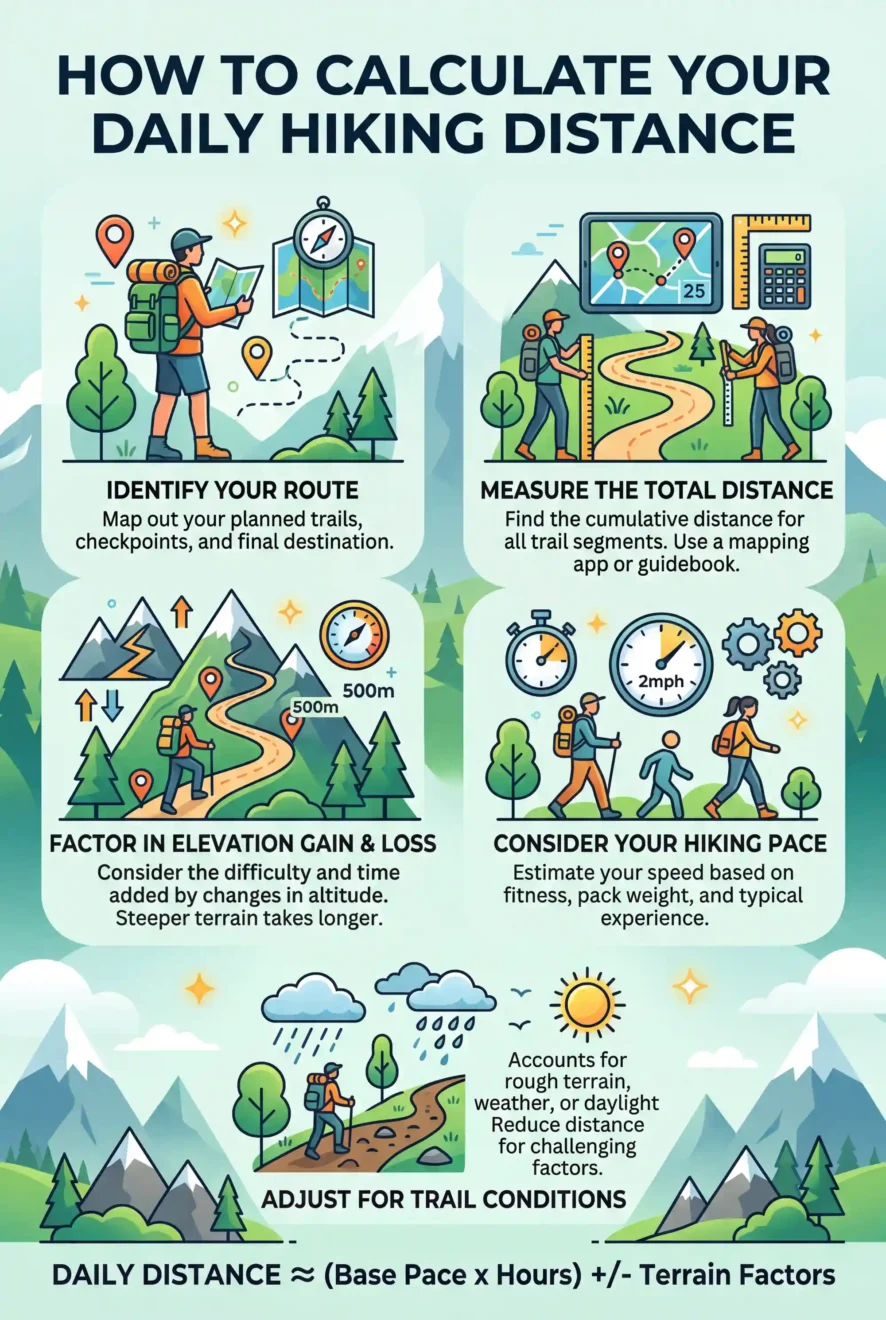
Use Naismith’s Rule, a 130-year-old planning method still used by the National Park Service and search and rescue teams.
Step 1: Estimate base time
Allow 1 hour for every 3 miles of distance on flat terrain. A 9 mile flat hike takes 3 hours.
Step 2: Add climbing time
Add 1 hour for every 2,000 feet of elevation gain. A 9 mile hike with 2,000 feet of climbing takes 4 hours.
Step 3: Add break time
Add 15 minutes per hour for breaks, snacks, photos, and navigation checks. A 4 hour base time becomes 5 hours total.
Step 4: Subtract for conditions
Drop your pace 20 to 40 percent for rain, heat above 85°F, snow, or heavy packs over 30 pounds.
Step 5: Match to daylight
Compare total time against available daylight. The CDC notes that adults benefit from 150 minutes of moderate activity per week, so 5 to 6 hour day hikes fit most weekend schedules safely.
When to Hike Fewer Miles Than You Can
Cut your daily mileage in these conditions:
- First trip of the season: drop 30 percent until your legs adapt
- High altitude (above 8,000 ft): drop 25 to 40 percent
- Hot weather (above 85°F): drop 20 to 30 percent
- Group with mixed fitness: match the slowest hiker
- New boots not broken in: stay under 6 miles
The fitness gap between trips matters. I covered this in detail when discussing the fitness level needed for multi-day backpacking, and the same logic applies to single-day mileage.
Common Mistakes That Cut Your Mileage Short
Starting too fast
New hikers burn out by mile 4 because they hike at 3.5 mph for the first hour. A steady 2.5 mph from the start adds 4 miles to your day. Pacing yourself on long hikes is the single biggest fix for short trips.
Underestimating elevation
A 10 mile trail with 3,500 feet of gain takes longer than a 14 mile flat trail. Always check the elevation profile, not only the distance number.
Skipping food and water
A calorie deficit drops your pace 20 to 30 percent after hour 3. Most adults burn 400 to 600 calories per hour while hiking. Eating before and during a long day hike keeps your pace steady.
Wrong footwear
Stiff new boots cause blisters by mile 4. Worn-out tread slips on wet rocks. Test your shoes on shorter hikes first, and learn way to prevent blisters on your feet while hiking before the bigger day.
Ignoring daylight
A late start in October leaves you finishing in the dark. Plan to be off-trail 1 hour before sunset.
Safety Notes for Long Day Hikes
Long day hikes carry higher risk than short ones. Three rules cover most situations:
- Tell someone your plan: route, expected return time, and group size
- Carry the 10 essentials: navigation, sun protection, insulation, headlamp, first aid, fire, repair kit, food, water, shelter
- Turn around at a fixed time, not a fixed mile: daylight runs out faster than miles do
Most backcountry rescues happen because hikers pushed past their turn-around time hoping to reach the summit. Daylight, water, and energy run out at the same rate going back as they did going in. Good day hike planning starts with a route map, and planning a day hike to avoid getting lost covers the navigation side in full.
FAQs on Miles Can Hike in a Day Safely

Can a beginner hike 10 miles in a day?
How long does it take to hike 10 miles?
Is 20 miles a day too much for hiking?
How many miles do thru-hikers cover daily?
Does pack weight affect daily mileage?
Final Thoughts
Plan around the four numbers that matter: distance, elevation gain, daylight, and pack weight. Beginners start near 5 miles, intermediate hikers near 10, and advanced hikers near 18. Adjust down for rough terrain, hot weather, or short days. The strongest day hikers I know finish well before sunset, eat steadily, and never push past their planned turn-around time.