How Many Women Have Summited Everest? The Full Count and Records

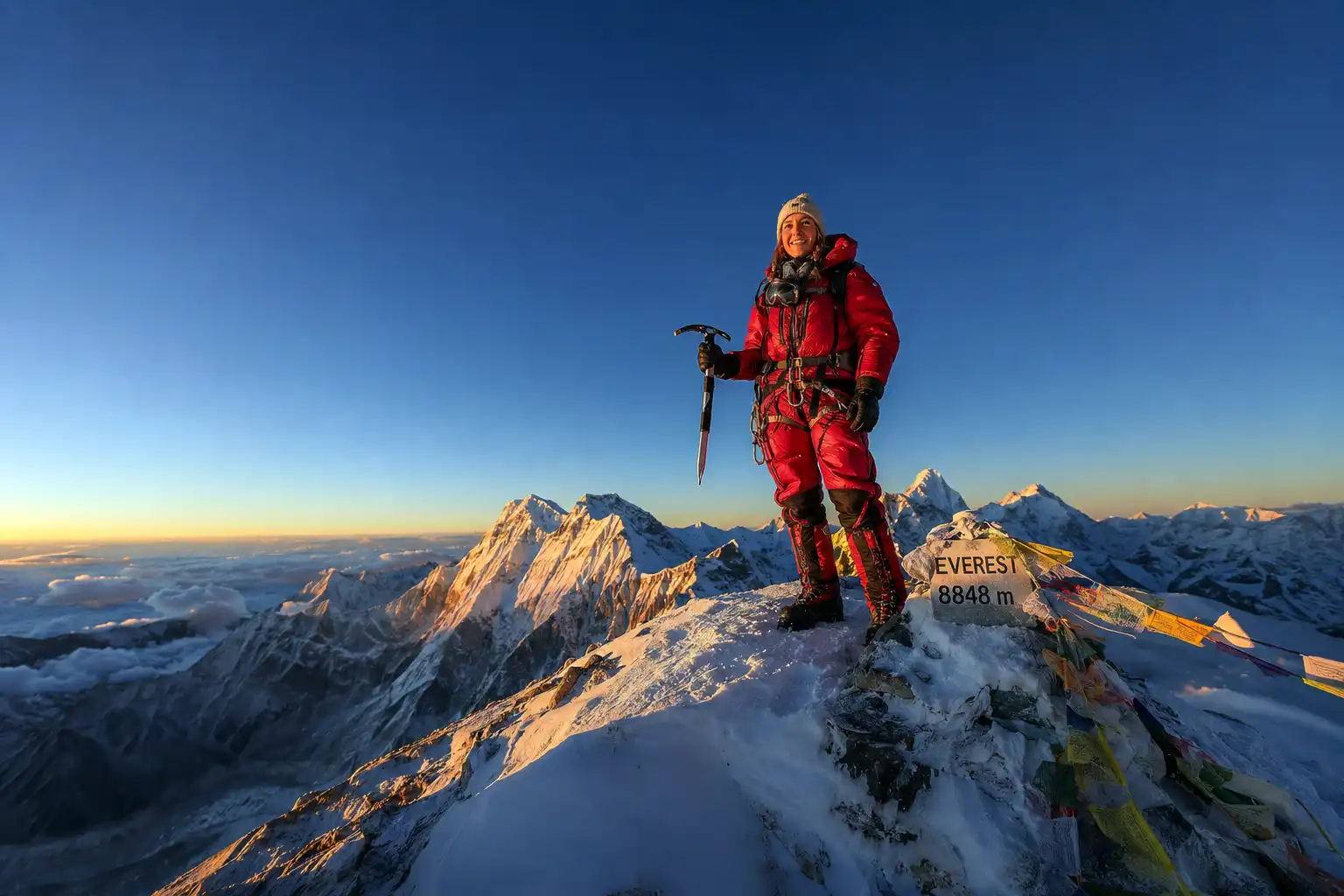
The count climbs each May, so I’ll share the clearest answer I have. As of the 2025 climbing season, women have reached the summit of Mount Everest just under a thousand times across fifty years, starting with one Japanese climber in 1975.
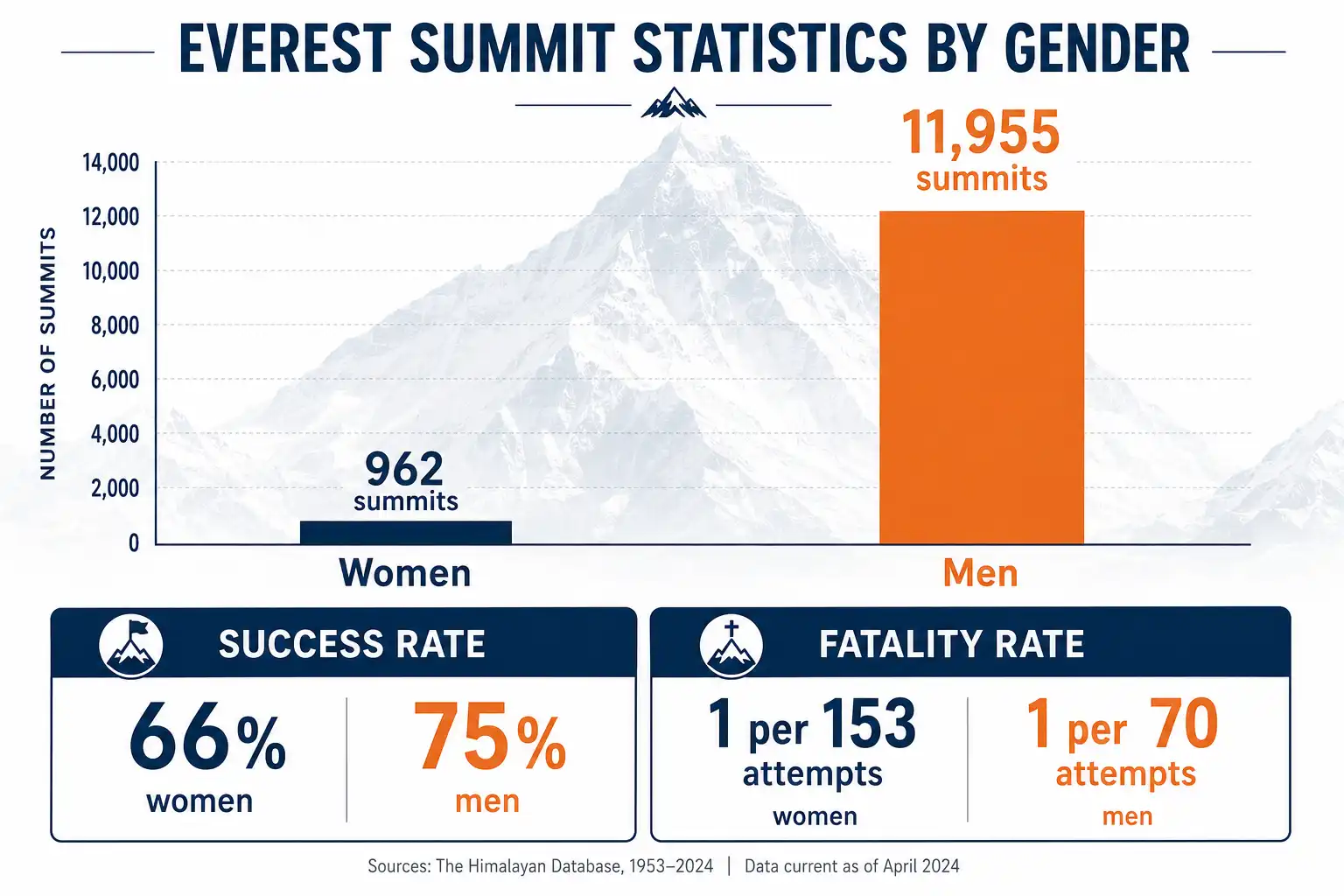
Around 870 different women have stood on the summit of Mount Everest, totaling roughly 962 summits as of May 2025, based on Himalayan Database figures reported by AFP. Because some women have climbed it more than once, the summit count is higher than the count of individual climbers. For context, men account for nearly 12,000 ascents over the same fifty-year window. So women still make up only about 7 to 8% of all Everest summits, though the share has grown sharply since 2010.
These numbers shift every spring as the climbing window opens. The 2025 season alone was on track to push the female ascent count past 1,000 for the first time, exactly fifty years after the first woman ever reached the top.
The first woman: Junko Tabei, May 16, 1975
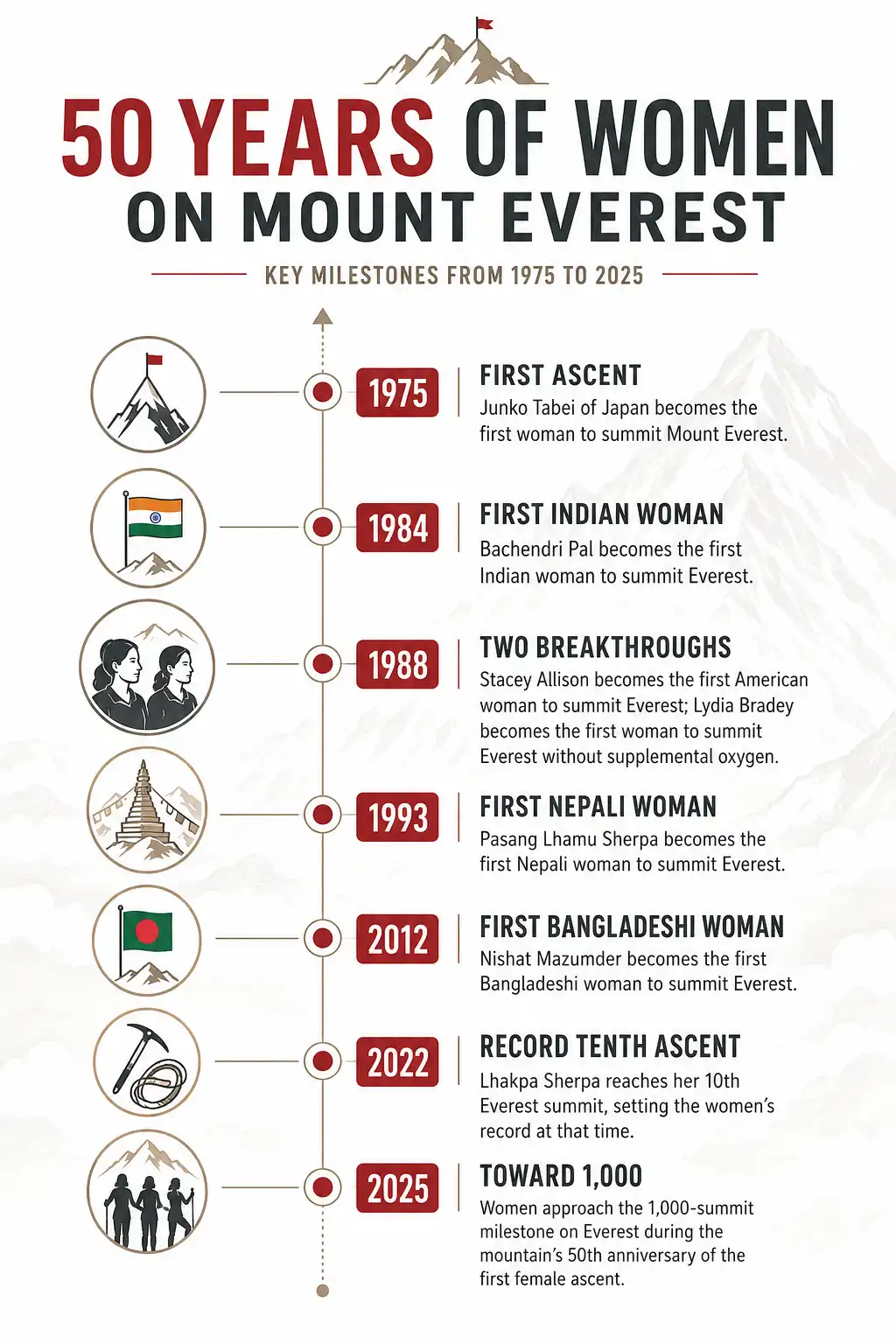
Junko Tabei of Japan became the first woman to summit Everest on May 16, 1975. She was just the 36th person ever to make it to the top, climbing with an all-female Japanese expedition called JWEE. Twelve days before her summit push, an avalanche buried her at Camp 2 and left her briefly unconscious. With Sherpa guide Ang Tsering, she reached 29,032 feet at 12:35 pm.
Interestingly, Tabei was not chasing the “first woman” title. She later said she preferred being remembered simply as the 36th person to reach the peak. After Everest, in 1992, she also became the first woman to complete the Seven Summits, climbing the highest point on every continent. She kept climbing into her seventies and passed away in 2016 at age 77.
Notable firsts and records by women on Everest
A few names stand out across fifty years of female mountaineering history.
Most summits by a woman: Lhakpa Sherpa with 10
Lhakpa Sherpa of Nepal holds the world record for most Everest ascents by any woman, with ten summits. Her tenth came on May 12, 2022. She also became the first Nepali woman to summit and survive the descent, in 2000. Before her, Pasang Lhamu Sherpa had summited in 1993 but died on the way down. Lhakpa later climbed K2 in 2023, joining a small group of women who have topped both of the two highest mountains on Earth. The 2024 Netflix documentary “Mountain Queen” follows her tenth climb.
First woman without supplemental oxygen: Lydia Bradey
New Zealander Lydia Bradey became the first woman to summit Everest without bottled oxygen on October 14, 1988. Her solo push was disputed at first, but the climb has since been recognized.
Other notable firsts
- Wanda Rutkiewicz of Poland: third woman to summit, October 1978.
- Bachendri Pal: first Indian woman, May 22, 1984.
- Stacy Allison: first American woman, September 29, 1988.
- Pasang Lhamu Sherpa: first Nepali woman to summit, April 22, 1993.
- Melissa Arnot: first American woman to summit without oxygen, and the American woman with the most ascents (six).
- Malavath Poorna of India: youngest female to summit, age 13, in 2014.
- Nishat Majumder: first Bangladeshi woman, May 2012.
Which countries send the most women to Everest?
After Nepali Sherpas, who are almost all men, the United States, India, and China have sent the most climbers to Everest overall. Together, women from those three countries make up about 39% of all female summits. Nepal itself accounts for roughly half of all male ascents but only 9% of female ones. So while Sherpa men dominate the guiding workforce, Sherpa women are still a small share of summits.
India has sent more women per capita than most, partly because of state-supported expeditions like the one that put Bachendri Pal on top in 1984. Bangladesh, my home country, joined the list in 2012 when Nishat Majumder and Wasfia Nazreen both summited that spring.
Why fewer women than men summit Everest
The gap is mostly about access, not capability. Climbing Everest costs roughly $45,000 to $100,000 per person, and traditional gatekeeping meant fewer women had sponsorship pipelines or expedition spots. Tabei was repeatedly told she should be “raising children instead.” Lhakpa Sherpa was beaten by a husband who didn’t want her climbing. Pasang Lhamu Sherpa fought through religious objections about women on a sacred mountain.
Notably, when women do attempt Everest, their success and fatality rates are not what most people assume. Women succeed at about 66% of attempts versus 75% for men. However, their fatality rate is lower: roughly one woman dies per 153 attempts, compared to one man per 70 attempts. The numbers carry caveats since fewer attempts make the female rate noisier, but the broad pattern holds across decades of records.
Are the numbers shifting?
Yes, and fast. In 2010, women made up about 5% of Everest climbers. By 2023, that share was around 12%. Permit data from Nepal’s Department of Tourism has shown steady year-over-year growth in female permits since 2017. More all-female expeditions, more Sherpa women on rope-fixing teams, and stronger sponsorship for female climbers have all contributed.
For deeper background and historic ascent data, the Himalayan Database is the source of record for every Himalayan summit since 1905.
What it takes to attempt Everest
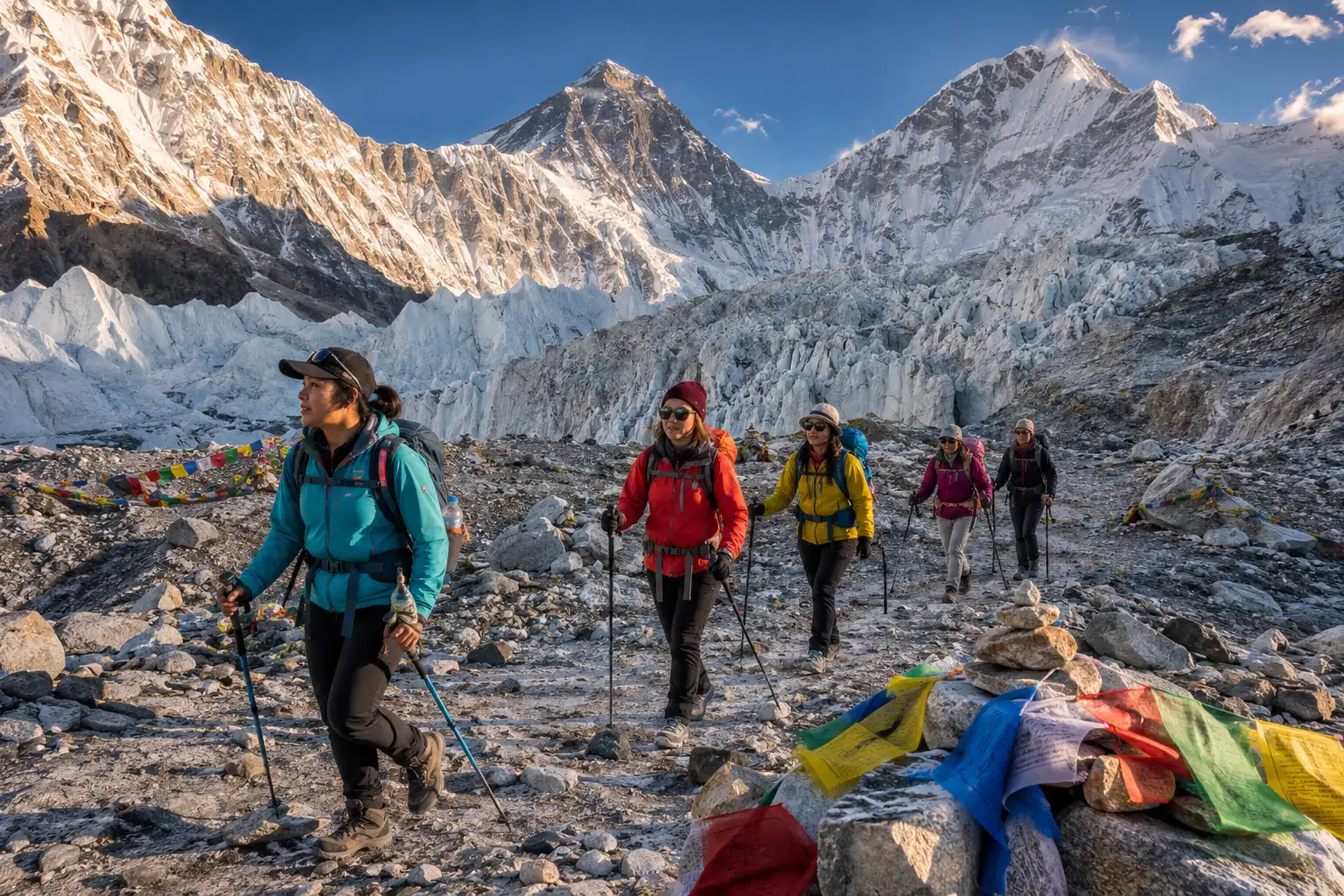
I’m not going anywhere near 8,000 meters myself, so this section sticks to what I’ve gathered from experienced high-altitude climbers. The basics:
- Years of progressive climbing experience, usually starting with smaller Himalayan peaks like Island Peak or Ama Dablam.
- A strong aerobic base. Most summit climbers spend months learning to pace a steep climb without burning out early and building legs for sustained ascent.
- Cold-weather skill, including smart layering for biting wind and avoiding sweat-soaked baselayers above 7,000 meters.
- UV protection. Sun at altitude is brutal, so most pros are particular about sun protection above the treeline and eye gear made for alpine glare.
- A serious outer shell. The summit ridge tests gear in ways no weekend trip will, so climbers are picky about a hardshell that can take alpine punishment.
- A physical fitness baseline far beyond what a long backpacking trip asks of you, which only scratches the surface of what Everest demands.
A note from my side of the world
I camp and hike in the hills of Rangamati and Bandarban, and the steepest climb I’ve done is Keokradong. So I’m writing about Everest as a fan, not as a summiter. Watching the women’s story unfold over the last fifty years has been one of the more inspiring threads in mountaineering. From Tabei’s homemade gear sewn out of old curtains to Lhakpa Sherpa funding her tenth climb through crowdfunding, the pattern is the same: women climbing through obstacles men did not have to deal with.
FAQ about Women Have Summited Everest

Who was the first American woman to summit Everest?
Who is the youngest woman to summit Everest?
How many women have climbed Everest without supplemental oxygen?
Has any Bangladeshi woman summited Everest?
Final thoughts
Just under 1,000 women have summited Mount Everest in the fifty years since Junko Tabei stood on top in 1975. Female climbers now make up over 12% of new ascents, and more all-women expeditions launch each season. The count will keep moving every May. But the story of how women got there, from Tabei’s avalanche-survived push to Lhakpa Sherpa’s ten ascents, is what gives the number its weight.